
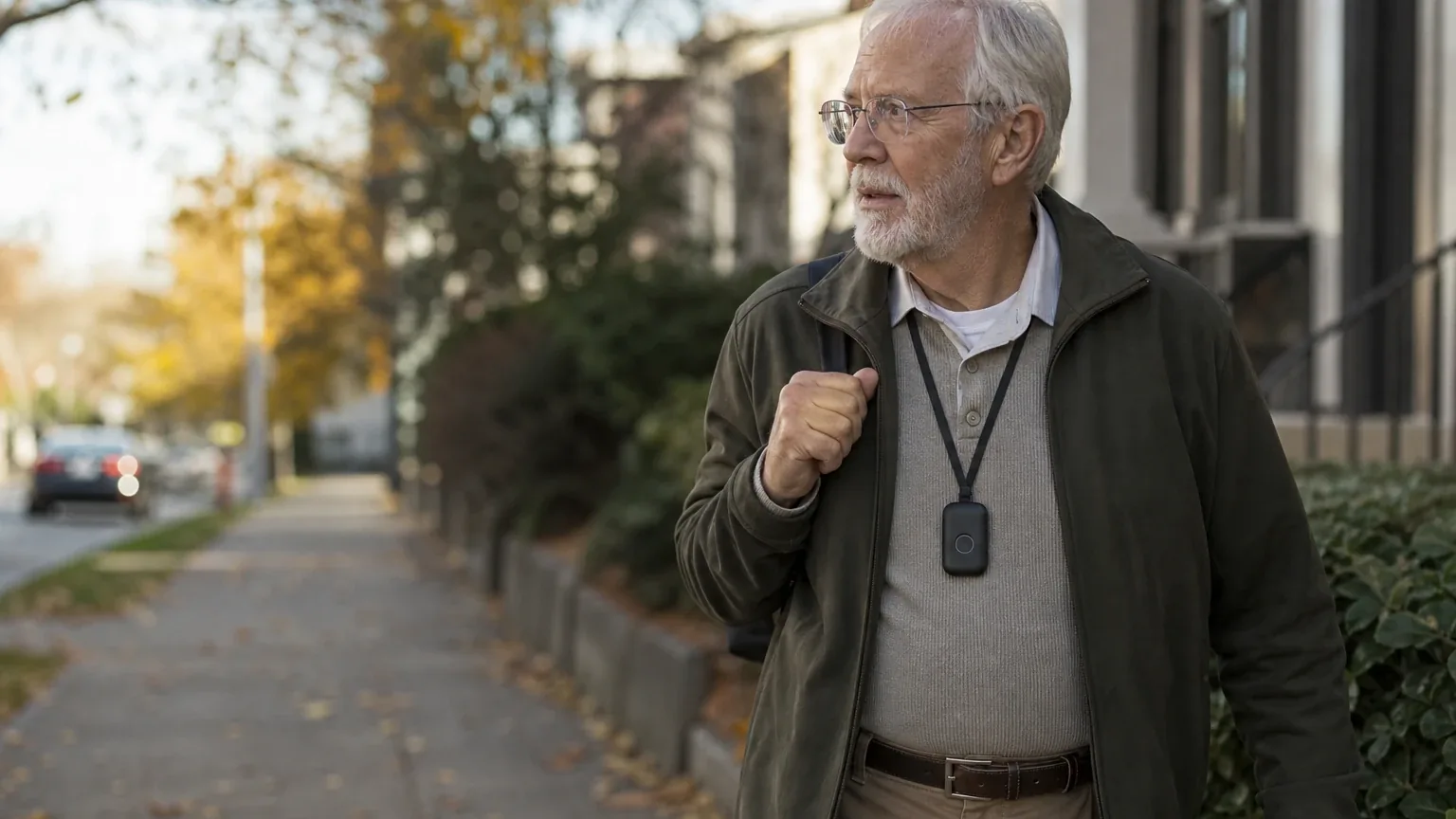
Answer Capsule
AngelSense is a good fit for Portable GPS & Wander Management when a caregiver needs continuous remote tracking, geofence and routine-deviation alerts, tamper-resistant wearing options, and optional two-way voice for an adult with dementia or cognitive decline. Six of the seven platforms in this study named AngelSense during the ranking stage, and it finished first overall with an average listed rank of 1.33. The strongest reason to consider it is the combination of continuous tracking (updates as often as every 10 seconds), non-removable wearing hardware, and auto-answer voice. The main limitation is daily charging: company figures state up to 24 hours for the GPS4 and up to 16 hours for the Watch, and pricing is inconsistent across public pages.
Research Snapshot
| Field | Detail |
|---|---|
| Platform mentions in ranking stage | 6 of 7 platforms (anthropic, google, grok, kimi, openai, perplexity) |
| Share of included platform responses | 85.7% |
| Average listed rank | 1.33 |
| Best listed rank | 1 |
| Relevant product/model/plan | AngelSense GPS4 Wearable or AngelSense Watch with an AngelSense service plan |
| Overall use-case fit | Good (platform fit ratings: strong for google and grok; good for anthropic, deepseek, kimi, openai, perplexity) |
| Research date | 2026-09-26 |
What Changed Since August 2026
AngelSense remained at No. 1, and platform mentions were unchanged at 6. The September 2026 review keeps AngelSense as a good fit for Portable GPS & Wander Management, with the same buyer profile: caregivers of adults with dementia who need continuous tracking, geofence alerts, tamper-resistant wearing, and auto-answer voice. Pricing evidence shifted rather than the product. The current review newly reports $39.99 per month, while the previous range of $39.99 to $64.99 is no longer repeated. Battery and accuracy details were also restated, including company estimates of up to 24 hours for the GPS4, and the previous review's 90-second geofence alert claim is no longer repeated. Otherwise, the buyer-facing substance is largely unchanged. Differences between the two editions reflect what each article reports; they do not by themselves prove that the product, service, or price changed.
The August 2026 review preserves the earlier article for reference.
Why AngelSense Qualified for This Study
Questions This Section Answers
- Is AngelSense a good choice for Portable GPS & Wander Management?
- How many AI platforms ranked AngelSense for senior GPS trackers in 2026?
AngelSense qualified because it was named by six of the seven platforms during the ranking stage and placed first overall with an average listed rank of 1.33 and a best rank of 1 (grok:1). No platform ranked it lower than second.
The entity is a company, and the ranking unit was a tracking device model plus its service platform. AngelSense appears in this study only because of its wearable tracker and monitoring subscription, not because of any broader company assessment. Every platform that named it evaluated it as a wander-management tool for vulnerable people who may elope or miss expected destinations (anthropic:30-6, grok:2).
Platform fit ratings were not unanimous: google and grok rated the fit "strong," while anthropic, deepseek, kimi, openai, and perplexity rated it "good." That split is the honest headline. AngelSense is a leading option in this category, but the platforms that called it strong were emphasizing tamper-resistance and continuous tracking, while those calling it good flagged cost, battery, and evidence gaps.
The Product, Model, Plan, or Service Most Relevant to Portable GPS & Wander Management
Questions This Section Answers
- Which AngelSense device is best for a senior who pulls off a wristwatch?
- Is the AngelSense GPS4 or the AngelSense Watch the better choice for dementia wandering?
The GPS4 Wearable with a current AngelSense service plan is the most relevant configuration for this use case. The GPS4 attaches to clothing, pockets, bags, sleeves, belts, or armbands, while the Watch is intended for wrist wear [1]. For a senior who removes or refuses a watch, the GPS4's attachment approach is the more practical option.
The GPS4 kit includes a protective sleeve, magnetic key, three non-removable fasteners, and a charging cable. Optional wearing formats include belt, undershirt, armband, lanyard, and waterproof options [1]. The Watch includes a charging cradle and protective screen cover, with alternative straps including a lockable strap option [1]. The Watch carries an IPX7 water-resistance rating (anthropic:24-10).
Product naming is a genuine problem in the retrieved evidence. The ranking brief referenced names such as "Assistive Technology Watch & GPS 4" and "GPS Watch 2," but those names were not all identifiable as current product names on retrieved official pages, which refer primarily to GPS4 Wearable and AngelSense Watch [1]. Buyers should confirm the exact current model name at checkout rather than relying on third-party listing titles.
What the AI Platforms Agreed About
Questions This Section Answers
- What do AI platforms agree AngelSense does well for dementia wandering?
- Does AngelSense provide real-time tracking and geofence alerts for seniors who wander?
Agreement was strong, though not unanimous, on five capabilities.
Continuous real-time tracking. AngelSense states its plans include continuous real-time GPS tracking through iOS, Android, and web applications using an embedded cellular SIM and unlimited data [4]. Company materials describe updates as frequent as every 10 seconds [6]. One independent review reported update frequency of every 10–30 seconds when actively tracking (anthropic:27-3).
Geofence and routine-deviation alerts. The service includes unlimited automated geofencing, unlimited alerts, schedule learning, location timelines, and notifications for unexpected places [7]. Independent reviews describe routine-learning alerts that flag early departure or unusual detours (anthropic:7-14, anthropic:18-7).
Tamper-resistant wearing. The clip-on fastener requires a magnetic key tool to remove, which independent reviewers identify as solving the problem of keeping a device on someone who pulls off watches (anthropic:35-1, anthropic:35-2). The Watch variant remains removable by design (anthropic:35-2).
Caregiver access and voice. Plans support unlimited guardians, unlimited mobile and email alerts, live location sharing, daily timeline history, remote alarm activation, and 60 voice minutes per month for one-way or two-way voice [4]. Auto-answer speakerphone lets a caregiver communicate with or listen to a disoriented senior without the senior answering a call (anthropic:32-16, anthropic:32-17).
Battery figures. Company sources state up to 24 hours for the GPS4 and up to 16 hours for the Watch, depending on usage (anthropic:21-1, anthropic:21-2, grok:11). Independent testing reported 18–30 hours with moderate tracking (anthropic:27-19).
Where the AI Platforms Disagreed or Were Uncertain
Questions This Section Answers
- Why do AI platforms disagree about AngelSense pricing and battery life?
- Is AngelSense GPS accuracy independently verified for adult dementia use?
Pricing conflicts are material. The AngelSense Help Center states service plans start at approximately $39.99 per month and the Guardian Kit costs $229 [9]. Independent reviews list three tiers: month-to-month at $64.99, monthly with a one-year contract at $49.99, and an annual plan at about $44.99 per month [10]. One AngelSense review page displayed $49.99 per month [9]. One customer reportedly described a nearly $90 monthly bill, which may have included accessories, extra voice minutes, or taxes (anthropic:23-1). The pricing page content retrieved by search did not expose current numeric prices for each device and plan [9].
Battery estimates conflict. Company figures are 16–24 hours (anthropic:21-1, anthropic:21-2). Independent testing reported 18–30 hours (anthropic:27-19). One user reported roughly three days when not actively tracked (anthropic:23-1). No independent battery test was located by openai [9].
Accuracy evidence is thin and mixed. One independent review reported 95%+ outdoor accuracy and 50–100 feet indoors (anthropic:27-1, anthropic:27-2). Some customers reported slow updates or incorrect positions (anthropic:23-2). AngelSense itself notes GPS limitations indoors or in remote areas without strong GPS or cellular service (anthropic:20-3). No independently verified GPS accuracy, geofence false-alert rate, or dementia-specific outcome data was located in the reviewed sources [9].
Fall detection status is unclear. Some independent reviews describe fall detection as an included feature (anthropic:7-3, anthropic:32-2), while google reported that AngelSense lists fall detection as in development or beta testing, with availability and reliability unconfirmed in official standard specifications [11].
Senior-specific positioning is uneven. Most public marketing and reviews emphasize kids and special-needs use; the product can still serve Seniors, but senior-first positioning is less prominent in the sources checked [12]. Deepseek noted that some sources conflate the autism and senior/dementia use cases [14].
Use-Case-Specific Features and Capabilities
Questions This Section Answers
- Does AngelSense work indoors and in cellular dead zones for a senior who wanders?
- How often does AngelSense update location during an active wandering episode?
Location technology. AngelSense combines GPS, WiFi triangulation, cellular tower triangulation, and Assisted GPS (anthropic:27-6). In the United States, devices use AT&T and T-Mobile networks, and cellular coverage is required for current location updates and voice features [15]. AngelSense recommends a drive of at least 1.5 miles from home for the device to connect to cell towers (anthropic:26-4).
Alerting. The service includes unlimited geofences, early-warning mode, unexpected-location alerts, and late arrival or departure warnings (kimi:AS1, anthropic:27-13). One independent review reported geofence arrival and departure alerts firing within seconds (anthropic:18-7). Caregivers can customize button press duration and wait time between calls to reduce false alarms (anthropic:26-9).
Voice. All plans include 60 voice minutes per month for one-way and two-way voice [16]. Additional minutes are charged at $0.30 per minute in the US (anthropic:23-1). On GPS4 and Watch hardware, up to 10 guardians can use voice features, versus 2 on older GPS 1 hardware (kimi:AS1).
Emergency features. An SOS button is available on the device (anthropic:32-18). One independent review cautions that the SOS button requires the wearer to remember its location and how to use it, which limits usefulness in advanced dementia (anthropic:32-19). Auto-answer lets a caregiver listen to surroundings if the wearer cannot respond (anthropic:32-17).
Startup behavior. During the first one to two weeks, the device learns locations and routines and consumes more battery; battery life and alert reliability stabilize afterward [18]. AngelSense recommends using the device for the full 30-day trial for this reason [18].
Indoor limits. No dedicated indoor beacon tracking is specified in available materials; the system relies on GPS plus WiFi and cellular triangulation (kimi:AS1, anthropic:27-6). Indoor accuracy degrades to roughly 50–100 feet in one independent test (anthropic:27-2).
Pricing, Fees, Contracts, and Ongoing Costs
Questions This Section Answers
- How much does AngelSense cost per month, and are there setup or cancellation fees?
- What is the early termination fee if a buyer cancels an AngelSense annual contract?
Pricing is the least reliable part of the public record, and buyers should treat every figure below as needing checkout confirmation.
| Cost item | Reported figure | Source type |
|---|---|---|
| Guardian Kit hardware | $229, subject to promotions | Company [19] |
| Service plans starting price | Approximately $39.99/month | Company [19] |
| Month-to-month plan | $64.99/month | Independent (anthropic:12-2, grok:3) |
| Monthly plan with 1-year contract | $49.99/month | Independent (anthropic:12-2, grok:3) |
| Annual plan paid upfront | About $44.99/month (~$540/year) | Independent (anthropic:13-1, grok:3) |
| Second device subscription | $39.99/month plus device cost | Company [20] |
| Activation fee | $59 on month-to-month; reduced on other plans | Company [21] |
| Extra voice minutes | $0.30/minute beyond 60/month | Independent (anthropic:23-1) |
| Shipping | Free standard (2+ weeks); $20–$70 for faster tiers | Independent (anthropic:13-17) |
Contract terms. Month-to-month service is described as cancellable anytime but carries a $59 activation fee [21]. Annual contracts automatically renew unless properly terminated, and early termination of a yearly contract can result in charges equal to the remaining payments [21]. Either party may terminate with 30 days written notice (anthropic:37-1). After the 30-day trial, service converts to a one-year contract or month-to-month depending on the plan selected (anthropic:39-5, anthropic:40-7).
Trial terms. AngelSense describes a 30-day money-back guarantee requiring return of the complete kit in substantially new condition, with return shipping at the customer's expense [21]. The refund applies to the first device only (anthropic:23-1). Accessories purchased during the trial are generally non-refundable [21].
Free device eligibility. AngelSense states that first-time purchasers who are not eligible for third-party funding may qualify for a free device with a monthly or annual subscription, automatic payments and renewals, and a 12-month service contract (official:C3).
Best Suited For
Questions This Section Answers
- Who gets the most value from AngelSense for dementia wandering management?
- Is AngelSense worth it for a caregiver who needs two-way voice with a disoriented senior?
AngelSense is best suited to caregivers monitoring an adult with moderate-to-advanced dementia or cognitive decline who may wander or miss expected destinations [24]. The platforms converged on four buyer profiles.
First, caregivers who need remote tracking from an iOS, Android, or web app rather than Bluetooth-only proximity tracking [24]. Second, families who need the device to stay on a wearer who removes watches, which the magnetic-key clip addresses (anthropic:35-1, anthropic:35-2). Third, caregivers who want auto-answer voice so they can reach or listen to a disoriented senior without the senior operating anything [25]. Fourth, households that can sustain a recurring subscription and daily charging [26].
The 30-day trial is a practical fit test for coverage, wearability, alert behavior, and charging burden [27].
Probably Not Best Suited For
Questions This Section Answers
- Who should not choose AngelSense for Portable GPS & Wander Management?
- Is AngelSense a poor fit for a senior who will not charge a device daily?
AngelSense is probably not the best choice in five situations, and the platforms were consistent on these limits.
Buyers seeking a no-subscription tracker should look elsewhere; the device does not function without a service plan [28]. Seniors who will not reliably charge a device daily are a poor match, given the 16-hour Watch and up-to-24-hour GPS4 figures [29]. Locations with weak AT&T or T-Mobile coverage are unsuitable because current location updates and voice depend on cellular service [30]. Buyers wanting a conventional consumer smartwatch experience with broad health features and multi-day battery should consider mainstream wearables instead [29]. Finally, buyers who need professional 24/7 monitoring-center response will not find it here; alerts go to designated guardians only (kimi:AS1).
Budget-first buyers comparing on lowest hardware cost are also a weak match, since the value proposition rests on the subscription [28].
When Another Option May Be Better
Questions This Section Answers
- What is a better alternative to AngelSense for a buyer who needs multi-day battery life?
- When is a cheaper GPS tracker or a smartphone app better than AngelSense?
Several platforms named specific alternatives, and these are platform-reported suggestions rather than tested comparisons.
If budget is the primary constraint and monthly cost must stay under $30–$40, anthropic suggested Jiobit or Tracki (anthropic:23-1). If extended battery life matters more than continuous tracking, anthropic suggested Tack GPS (up to one month) or Jiobit (10–14 days), and grok suggested Medical Guardian for 5+ days (anthropic:26-3, anthropic:27-20, grok:3). If the senior is independent and smartphone-capable, native phone location sharing may be sufficient [33]. If medical emergency response is required, a medical alert system with fall detection may be more appropriate [33]. If the device must be fully concealed, anthropic suggested a GPS SmartSole shoe insert or hidden clip alternatives (anthropic:23-1). Kimi listed Lifeline On The Go with wandering, StaySafe Compact SOS Watch, Zembro Wander Alert, TrackMe Care, and Lil Tracker 4G as alternatives for monitoring, battery, indoor beacon, cost, and standalone-simplicity needs respectively (kimi:AS1).
These are platform-reported suggestions. This review did not test any of them.
Questions to Verify Before Buying
Questions This Section Answers
- What should a buyer confirm with AngelSense before signing a contract?
- Which AngelSense plan should a buyer choose if they need month-to-month flexibility?
The platforms produced a long verification list. The highest-value items:
- What is the exact delivered price today for the GPS4 versus the Watch, including kit, activation fee, taxes, shipping, and promotion [34]?
- What is the exact monthly or annual service price after any introductory offer, and does it auto-renew at that price [36]?
- Is the selected plan month-to-month or a 12-month commitment, and what is the exact early-termination charge [36]?
- Does the senior's home, usual routes, care facility, and travel area have reliable AT&T or T-Mobile coverage [37]?
- What battery life should be expected with continuous tracking, frequent alerts, voice use, and indoor operation [34]?
- Can the senior wear and charge the device consistently, and is the GPS4 attachment harder to remove than the Watch [34]?
- How are geofence boundaries configured, and what delay or false-alert behavior should caregivers expect [34]?
- Can multiple caregivers receive alerts without separate subscriptions [38]?
- What happens when the battery is low, the device is offline, removed, or outside cellular coverage [34]?
- What warranty, replacement-device, accessory, and return-shipping costs apply [36]?
- Is fall detection actually available on the current model, or still in development [39]?
- Does the current device support the exact SOS, voice, indoor-location, and caregiver-sharing functions the care plan requires [34]?
Final AI Consensus Verdict
AngelSense is a good, but not universally strong, fit for Portable GPS & Wander Management. Six of seven platforms named it in the ranking stage, it finished first overall, and no platform ranked it below second. Two platforms rated the fit strong and five rated it good.
The consensus case for AngelSense rests on continuous remote tracking, unlimited geofences and alerts, routine learning, tamper-resistant wearing hardware, unlimited guardian access, and auto-answer voice [40]. The consensus case against it rests on daily charging, cellular dependence, recurring cost with annual-contract exposure, and thin independent evidence on accuracy and dementia-specific usability [40].
The GPS4 Wearable with a current service plan is the configuration most platforms described as relevant. The Watch is less attractive when battery longevity or discreet non-wrist wear matters [40]. Buyers should verify current pricing, contract terms, coverage, and battery expectations directly before committing, and should use the 30-day trial to test wearability and alert behavior in the actual care environment [42].
How This Review Was Produced
This report evaluates AngelSense only for the Portable GPS & Wander Management use case within the broader Portable GPS & Wander Management study. It is not a broad company review.
Seven platforms evaluated fit for this use case: anthropic, deepseek, google, grok, kimi, openai, and perplexity. Six of the seven named AngelSense during the ranking stage. Each platform supplied its own fit rating, use-case findings, pricing notes, limitations, and verification questions. Those inputs were consolidated here without independent testing.
The study sits inside the senior technology category, which covers trackers, monitoring devices, and related tools for older adults and their caregivers.
Methodology Limitations
Several limitations apply, and they are material to how the verdict should be read.
Company-owned citations dominate. Of the deduplicated citations in this study, 31 are company-owned, 16 are independent, and 1 is unclear. Company claims about tracking, alerts, battery, and wearing options are not independently verified.
Pricing is inconsistent and partly stale. Public pages conflict on monthly pricing, and the retrieved pricing page did not expose current numeric prices for each device and plan [43]. One customer-reported bill was far above published rates (anthropic:23-1).
Product naming is unresolved. Names in the ranking brief, including "Assistive Technology Watch & GPS 4" and "GPS Watch 2," were not all identifiable as current official product names [43].
Independent evidence is thin. No independently verified GPS accuracy, geofence false-alert rate, dementia-specific outcome data, or caregiver usability study was located in the reviewed sources [43]. One independent accuracy test exists but covers a different population (anthropic:27-1, anthropic:27-2).
Research dates differ. The authoritative run research date is 2026-09-26. Deepseek's platform-reported research date was 2026-06-01, and deepseek ran without search enabled, so its claims are platform-reported rather than retrieved [45]. Platform-reported dates are provenance metadata and do not independently prove freshness.
URLs were not validated. The supplied URLs were collected from platform responses and were not independently validated by the writer stage.
AI-platform agreement is not quality proof. Agreement among platforms reflects shared source material and similar retrieval, not verified product performance.
Sources
Company-Owned Sources
- Help Center - AngelSense: https://faq.angelsense.com/Pricing-and-Logistics/38172299/How-much-does-the-service-cost.htm
- Service Plans Explained - AngelSense: https://support.angelsense.com/Ordering-and-Shipping/880985381/Pricing-Plans-Explained.htm
- AngelSense Official Website: https://www.angelsense.com/
- AngelSense Watch GPS Tracking Device: Features and Benefits: https://www.angelsense.com/angelsense-gps-watch-features-benefits/
- AngelSense Guardian Kit: https://www.angelsense.com/angelsense-guardian-kit/
- Angelsense Review: https://www.angelsense.com/angelsense-review/
- The best gps watch for special needs - AngelSense: https://www.angelsense.com/best-gps-watch-for-special-needs/
- New 2022 AngelSense GPS - Longer Battery Life & New Features: https://www.angelsense.com/blog/new-2022-angelsense-gps/
- Maximum Safety - Why AngelSense GPS Service Costs More: https://www.angelsense.com/blog/premium-gps-service-plan-price/
- Benefits for Dementia and Alzheimer's - AngelSense: https://www.angelsense.com/dementia-gps-tracker/
- Tracker Watch for Seniors With Dementia & Alzheimer - AngelSense: https://www.angelsense.com/gps-tracker-for-elderly/
- Device Specifications - AngelSense: https://www.angelsense.com/gps-tracker-specifications/
- AngelSense Help Center: https://www.angelsense.com/help/
- AngelSense Watch FAQ - AngelSense: https://www.angelsense.com/help/angelsense-gps-tracker-watch/
- GPS Tracker Battery Life - AngelSense: https://www.angelsense.com/help/battery-life/
- Benefits for Dementia and Alzheimer's - AngelSense: https://www.angelsense.com/help/benefits-for-alzheimer/
- Canceling Service – AngelSense: https://www.angelsense.com/help/cancelling-service/
- Device Specifications - AngelSense: https://www.angelsense.com/help/device-options/
- Ordering Accessories and Minutes: https://www.angelsense.com/help/ordering-accessories-minutes/
- Ordering Multiple Subscriptions for US Customers - AngelSense: https://www.angelsense.com/help/ordering-multiple-subscriptions-us/
- Premium Watch Battery Life, Power Saving Modes, and Charging: https://www.angelsense.com/help/premium-watch-battery-life-power-saving-modes-and-charging/
- Preserving the Battery Life of the GPS Tracker - AngelSense: https://www.angelsense.com/help/preserving-battery-life/
- Selecting Device Cellular Carrier: https://www.angelsense.com/help/selecting-device-cellular-carrier/
- Service Plans Explained: https://www.angelsense.com/help/service-plans-explained/
- Trial Terms: https://www.angelsense.com/help/trial-terms/
- Choose Your Plan - AngelSense: https://www.angelsense.com/plans/
- AngelSense Pricing & Plans: https://www.angelsense.com/pricing/
- Real Reviews & Testimonials by Parents – AngelSense GPS Tracker: https://www.angelsense.com/reviews/
- Service Plans Explained - AngelSense: https://www.angelsense.com/service-plans-explained/
- AngelSense GPS Tracker | Terms and Conditions: https://www.angelsense.com/term-and-conditions/
- Official pricing and terms source: https://www.angelsense.com/es/pricing/
Additional AI research evidence45 records
- AI research evidence record openai:c5
- AI research evidence record openai:c8
- AI research evidence record perplexity:c2
- AI research evidence record openai:c6
- AI research evidence record openai:c10
- AI research evidence record google:1.3.8
- AI research evidence record openai:c5
- AI research evidence record openai:c2
- AI research evidence record openai:c5
- AI research evidence record perplexity:c3
- AI research evidence record google:1.3.4
- AI research evidence record perplexity:c10
- AI research evidence record perplexity:c12
- AI research evidence record deepseek:c1
- AI research evidence record openai:c10
- AI research evidence record openai:c2
- AI research evidence record perplexity:c15
- AI research evidence record openai:c3
- AI research evidence record openai:c5
- AI research evidence record perplexity:c8
- AI research evidence record openai:c1
- AI research evidence record google:1.1.6
- AI research evidence record openai:c3
- AI research evidence record openai:c5
- AI research evidence record google:1.3.4
- AI research evidence record perplexity:c2
- AI research evidence record openai:c3
- AI research evidence record deepseek:c1
- AI research evidence record openai:c5
- AI research evidence record openai:c10
- AI research evidence record google:1.1.6
- AI research evidence record perplexity:c2
- AI research evidence record deepseek:c1
- AI research evidence record openai:c5
- AI research evidence record perplexity:c2
- AI research evidence record openai:c1
- AI research evidence record openai:c10
- AI research evidence record openai:c6
- AI research evidence record google:1.3.4
- AI research evidence record openai:c5
- AI research evidence record openai:c6
- AI research evidence record openai:c3
- AI research evidence record openai:c5
- AI research evidence record perplexity:c2
- AI research evidence record deepseek:c1
Independent Sources
- 8 Best GPS Trackers for Elderly Parents and Dementia Patients in 2026: https://caringvillage.com/product-reviews/gps-trackers/
- AngelSense GPS Tracker Review: Eye Opening Verdict 2026: https://elderlivinghub.com/reviews/angelsense-gps-tracker-review/
- 5 Best GPS Trackers for Dementia Patients | ElderlyDaily: https://elderlydaily.com/reviews/best-gps-trackers-for-dementia-patients
- AngelSense GPS Tracker for Autism Review 2026: Is $579/Year Worth It?: https://gpsdad.com/reviews/angelsense-review-2026/
- AngelSense GPS Review: Subscription Cost Guide 2026: https://hotairtag.com/angelsense-reviews/
- Best GPS Trackers & Watches For Elderly (2026 Guide) – SpaceHawk GPS: https://spacehawkgps.com/blogs/post/gps-tracker-for-elderly
- Amazon.com: AngelSense GPS Watch for Teens & Elderly: https://www.amazon.com/AngelSense-Watch-GPS-Tracker-Speakerphone/dp/B0DTHMDK3B
- Amazon.com: AngelSense: Watch GPS: https://www.amazon.com/stores/AngelSense/WatchGPS/page/AA8A502A-6C0B-4A08-A29A-F01471B52BF0
- AngelSense Watch Review - SafeWise: https://www.safewise.com/angelsense-watch-review/
- AngelSense GPS Tracker and Watch Review | SafeWise.com: https://www.safewise.com/blog/angelsense-review/
- AngelSense GPS Tracker and Watch Review | SafeWise.com: https://www.safewise.com/kids-safety/gps-trackers/angelsense/
- AngelSense Watch Review | SafeWise: https://www.safewise.com/kids-safety/smartwatches/angelsense/
- Best GPS Trackers of 2026 | SafeWise: https://www.safewise.com/personal-safety/best-gps-trackers/
- 4 Best GPS Trackers for Dementia Patients (2026 Review) | SafeWise: https://www.safewise.com/senior-safety/gps-trackers-dementia/
- AngelSense Reviews | Trustpilot: https://www.trustpilot.com/review/angelsense.com
- AngelSense Watch GPS Tracking Device App Overview - YouTube: https://www.youtube.com/watch?v=angelsense_app_overview
Additional AI research evidence45 records
- AI research evidence record openai:c5
- AI research evidence record openai:c8
- AI research evidence record perplexity:c2
- AI research evidence record openai:c6
- AI research evidence record openai:c10
- AI research evidence record google:1.3.8
- AI research evidence record openai:c5
- AI research evidence record openai:c2
- AI research evidence record openai:c5
- AI research evidence record perplexity:c3
- AI research evidence record google:1.3.4
- AI research evidence record perplexity:c10
- AI research evidence record perplexity:c12
- AI research evidence record deepseek:c1
- AI research evidence record openai:c10
- AI research evidence record openai:c2
- AI research evidence record perplexity:c15
- AI research evidence record openai:c3
- AI research evidence record openai:c5
- AI research evidence record perplexity:c8
- AI research evidence record openai:c1
- AI research evidence record google:1.1.6
- AI research evidence record openai:c3
- AI research evidence record openai:c5
- AI research evidence record google:1.3.4
- AI research evidence record perplexity:c2
- AI research evidence record openai:c3
- AI research evidence record deepseek:c1
- AI research evidence record openai:c5
- AI research evidence record openai:c10
- AI research evidence record google:1.1.6
- AI research evidence record perplexity:c2
- AI research evidence record deepseek:c1
- AI research evidence record openai:c5
- AI research evidence record perplexity:c2
- AI research evidence record openai:c1
- AI research evidence record openai:c10
- AI research evidence record openai:c6
- AI research evidence record google:1.3.4
- AI research evidence record openai:c5
- AI research evidence record openai:c6
- AI research evidence record openai:c3
- AI research evidence record openai:c5
- AI research evidence record perplexity:c2
- AI research evidence record deepseek:c1
Other Sources
- AngelSense Assistive Technology Watch with Personal GPS Tracker: https://www.amazon.com/AngelSense-Assistive-Technology-Speakerphone-User-Friendly/dp/B0BSTLCLVX
Additional AI research evidence45 records
- AI research evidence record openai:c5
- AI research evidence record openai:c8
- AI research evidence record perplexity:c2
- AI research evidence record openai:c6
- AI research evidence record openai:c10
- AI research evidence record google:1.3.8
- AI research evidence record openai:c5
- AI research evidence record openai:c2
- AI research evidence record openai:c5
- AI research evidence record perplexity:c3
- AI research evidence record google:1.3.4
- AI research evidence record perplexity:c10
- AI research evidence record perplexity:c12
- AI research evidence record deepseek:c1
- AI research evidence record openai:c10
- AI research evidence record openai:c2
- AI research evidence record perplexity:c15
- AI research evidence record openai:c3
- AI research evidence record openai:c5
- AI research evidence record perplexity:c8
- AI research evidence record openai:c1
- AI research evidence record google:1.1.6
- AI research evidence record openai:c3
- AI research evidence record openai:c5
- AI research evidence record google:1.3.4
- AI research evidence record perplexity:c2
- AI research evidence record openai:c3
- AI research evidence record deepseek:c1
- AI research evidence record openai:c5
- AI research evidence record openai:c10
- AI research evidence record google:1.1.6
- AI research evidence record perplexity:c2
- AI research evidence record deepseek:c1
- AI research evidence record openai:c5
- AI research evidence record perplexity:c2
- AI research evidence record openai:c1
- AI research evidence record openai:c10
- AI research evidence record openai:c6
- AI research evidence record google:1.3.4
- AI research evidence record openai:c5
- AI research evidence record openai:c6
- AI research evidence record openai:c3
- AI research evidence record openai:c5
- AI research evidence record perplexity:c2
- AI research evidence record deepseek:c1
Verify This Research
Review the study details behind this page or download the public machine-readable verification record.
- Study date
- September 26, 2026
- Platforms analyzed
- 7
- Source records
- 48
- Ranking mentions
- 6 of 7
- Platform share
- 86%
- Final consensus rank
- #1
Research trail and source mix
Configured platforms
openai, anthropic, deepseek, grok, perplexity, kimi, google
Source mix
16 independent · 31 company-owned · 1 unclear
Evidence support
21 direct · 3 partial
Important limitation
Use the run research_date as the study date. Platform-reported dates are provenance metadata and do not independently prove freshness.
Source snapshot SHA-256 eeb7803641c3d9debd7ce2aa111a4ac79f46f4b2deb993eb1bcc831b72861e2c