
Answer Capsule
Apple AirTag is a weak fit as a primary solution for Portable GPS & Wander Management for seniors with cognitive decline or dementia. Three of seven AI platforms (43%) named Apple AirTag during the ranking stage, with an average listed rank of 8.3 and a best rank of 5. The strongest reason to consider it is its low cost—$29 for a single unit with no monthly subscription—making it an affordable supplemental locator in Apple-heavy environments. The main limitation is fundamental: AirTag is a Bluetooth item tracker, not an independent cellular GPS device, and it lacks real-time tracking, native geofence alerts, SOS capability, and caregiver-specific monitoring features. All seven platforms that evaluated fit rated it "weak" for this use case.
Research Snapshot
| Metric | Value |
|---|---|
| Platform mentions in ranking stage | 3 of 7 platforms (anthropic, deepseek, perplexity) |
| Share of included platform responses | 43% (3 of 7) |
| Average listed rank | 8.3 |
| Best listed rank | 5 (deepseek) |
| Relevant product/model/plan | Apple AirTag (2nd generation/AirTag 2) with Find My network via iPhone hub |
| Overall use-case fit | Weak (unanimous across all 7 evaluating platforms) |
| Research date | 2026-08-12 |
Why Apple AirTag Qualified for This Study
Apple AirTag qualified for this study because three of the seven AI platforms (anthropic, deepseek, and perplexity) named it during the ranking discovery stage for best GPS trackers for seniors. Its inclusion reflects real-world caregiver interest: the device is inexpensive, widely available, and integrated into the Apple Find My ecosystem, which many families already use. However, qualification for ranking does not imply suitability—all seven platforms that evaluated its fit for Portable GPS & Wander Management rated it "weak" (anthropic, deepseek, google, grok, kimi, openai, perplexity).
The Product, Model, Plan, or Service Most Relevant to Portable GPS & Wander Management
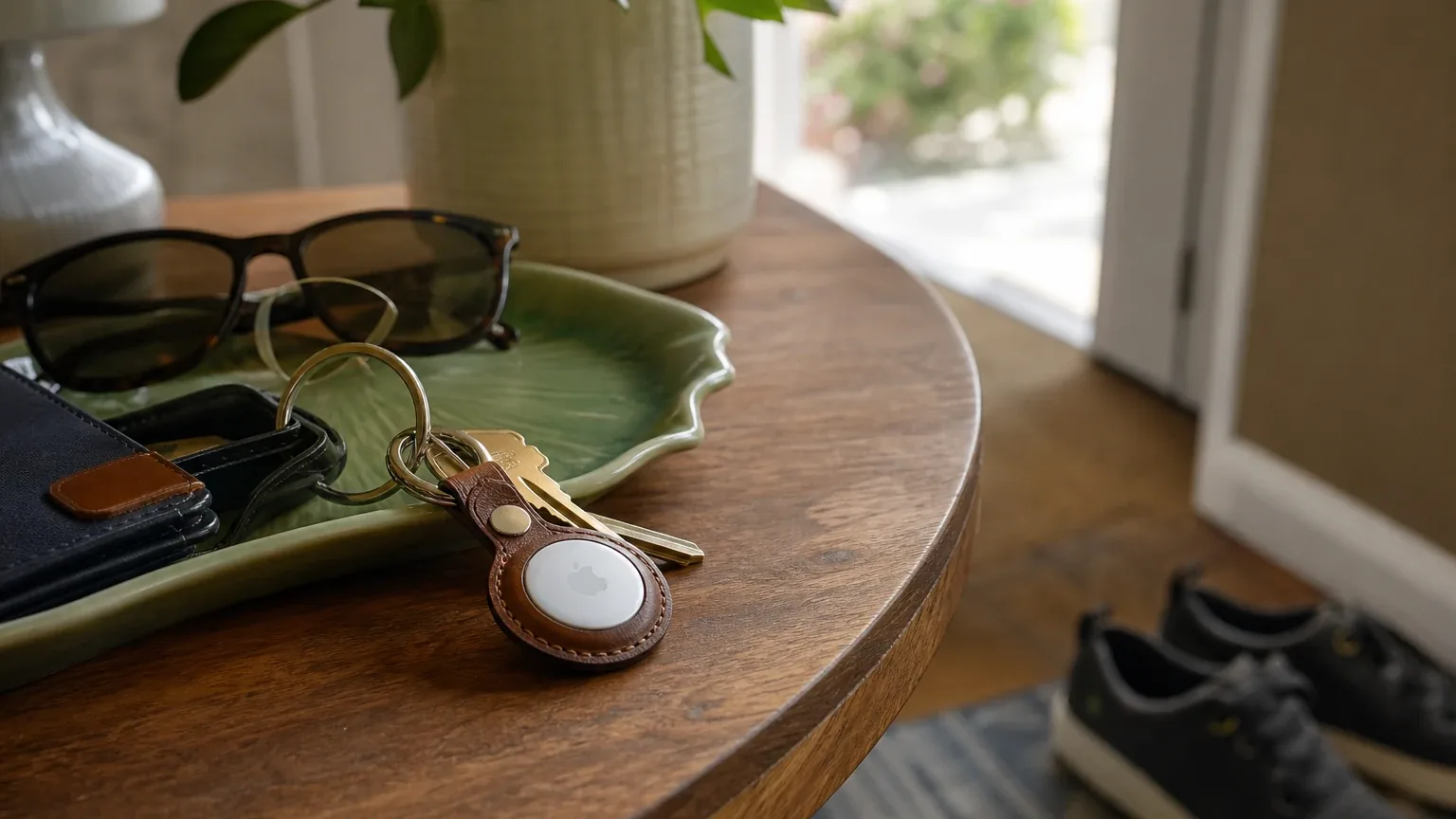
The most relevant product is the Apple AirTag (2nd generation/AirTag 2) used with an iPhone and the Find My network. Apple's support documentation identifies the AirTag 2nd generation model number A2937 [1]. The AirTag 2 (2026 model) was mentioned in ranking-stage responses as a supplemental tracking option, not a primary solution (anthropic, deepseek, grok). All platforms described the relevant configuration as "Apple AirTag + iPhone as hub" or "Apple AirTag with Find My network" for supplemental tracking only.
What the AI Platforms Agreed About
Unanimous: AirTag is not a real-time GPS tracker
All seven platforms agreed that Apple AirTag does not contain GPS hardware and cannot provide real-time location tracking. Apple's own documentation states AirTag uses the Find My network and is designed to locate items through nearby Apple devices rather than operate as a standalone cellular GPS tracker [2]. Independent reviews confirm the AirTag 2 does not contain integrated GPS and relies on Bluetooth detection by nearby Apple devices [3]. Location updates depend on proximity to other Apple devices in the Find My network, meaning updates can be delayed by hours or unavailable entirely in low-density areas [4].
Unanimous: No native geofence boundary alerts
All seven platforms agreed that AirTag does not support true geofencing. Apple's Find My offers only "Notify When Left Behind" for predefined trusted locations, not configurable boundary entry/exit alerts [10]. Third-party services like Airpinpoint can add geofencing via a $11.99/month per-device subscription, but this is not native functionality [14].
Unanimous: Apple advises against tracking people
All platforms noted that Apple explicitly states AirTag is designed for personal belongings, includes unwanted-tracking protections, and should not be used to track people without consent [15]. This creates an ethical and functional mismatch for dementia wander management.
Strong agreement: No SOS, two-way communication, or emergency response
Six of seven platforms explicitly noted the absence of SOS buttons, two-way voice communication, fall detection, or professional emergency monitoring (openai, anthropic, deepseek, grok, kimi, google). Kimi noted that AirTag has "no professional monitoring integration or emergency escalation" [8].
Strong agreement: Battery life approximately one year
Six platforms cited approximately one year of battery life from a user-replaceable CR2032 coin cell [18]. Estimates range from 12-18 months depending on usage [19]. The AirTag 2's louder speaker may cause slightly faster drain [18].
Strong agreement: No monthly subscription for basic tracking
All platforms that addressed pricing agreed there is no monthly AirTag subscription for basic Find My functionality [23]. The one-time hardware cost is $29 for a single unit or $99 for a four-pack [27].
Where the AI Platforms Disagreed or Were Uncertain
AirTag 2 pricing and availability
OpenAI noted that the ranking-stage mention of "Apple AirTag 2 (2026 model)" is consistent with Apple's support documentation identifying the 2nd generation model number A2937, but the reviewed U.S. store result did not confirm its current price. Anthropic reported the AirTag 2 pricing remains $29 for a single unit or $99 for a four-pack, unchanged from the first generation [28]. Perplexity stated the "AirTag 2 (2026 model)" was not verified in its checked sources and should be treated as unclear.
Precision Finding range improvement
Anthropic reported the AirTag 2 provides 1.5x to 4x longer Precision Finding range compared to the original, extending usable range to roughly 60 meters [29]. However, anthropic also noted that "some sources state 1.5x improvement, others claim 4x," and Apple's official spec pages show "expanded" range without exact meters. Kimi cited a typical Precision Finding range of approximately 30-100 feet [30].
Battery life estimates
Anthropic reported battery life ranges from "12-18 months" per Invoxia (2026) versus "more than a year" per Apple, with actual longevity depending on feature usage. OpenAI noted the reviewed sources did not verify a current official battery-life estimate for the 2nd-generation model.
Whether "Notify When Left Behind" counts as geofencing
Anthropic noted inconsistent phrasing across sources: some describe "Notify When Left Behind" as a form of geofencing, while others explicitly state AirTag "does not support true geofencing." The technical truth is that it supports trusted-location leave alerts only, not arbitrary boundary entry/exit alerts.
Caregiver adoption anecdotes
Anthropic noted that some caregivers report successful use of AirTag for dementia monitoring in populated areas, contradicting professional warnings. The Wall Street Journal (2022) reported caregivers adopted AirTag due to phone-dependency of other apps, yet this reflects necessity, not suitability.
Use-Case-Specific Features and Capabilities
Real-time GPS accuracy: Limitation
AirTag does not contain standalone cellular GPS. Its location is relayed through nearby Apple devices participating in the Find My network, so updates depend on network coverage and nearby devices rather than continuous tracking of the wearer [31]. Location is inferred from whichever Apple device relayed the ping last, not GPS coordinates, causing location jitter of tens of meters and only "last known location" updates [39].
Geofence boundary alerts: Limitation
Find My supports item-location features such as Notify When Left Behind and Notify When Found, but Apple does not document a caregiver-facing dementia wander geofence or automatic alert when a person crosses a defined safe boundary [40]. Third-party geofencing via Airpinpoint costs $11.99/month per device [46].
Battery longevity: Advantage
The AirTag uses a user-replaceable CR2032 coin-cell battery lasting approximately one year under typical use [47]. Apple documents the battery as user-replaceable [52]. This exceeds many dedicated GPS trackers, but battery status monitoring requires the Find My app and does not proactively alert designated caregivers—only the Apple ID owner receives low battery notifications [37].
Wearability options: Limitation
The small tag can be placed in or attached to clothing, a bag, keys, or an accessory, but Apple sells the AirTag itself without a built-in wearable attachment [53]. A separate holder, loop, bracelet, or sewn-in mount is required [54]. Attachment to bracelets, necklaces, or pockets offers no guarantee of secure wear, particularly for seniors with cognitive decline who may remove it [56]. No lockable or tamper-resistant options exist [37].
Monthly subscription cost: Advantage
Apple's listed AirTag purchase price is $29 for a one-pack on its U.S. accessories store, and the reviewed sources identify no recurring AirTag service subscription [57]. An iPhone, cellular service, accessories, and replacement batteries may create separate costs.
Caregiver app usability: Limitation
Find My supports viewing an AirTag's location, playing a sound, Precision Finding when compatible hardware is nearby, and sharing an AirTag with other Apple users [40]. However, it lacks dedicated caregiver features like event notifications, care team access, or multi-elder management [62]. There is no web dashboard for remote monitoring [35]. The interface is designed for finding items, not monitoring vulnerable people [37].
Privacy and anti-stalking behavior: Limitation
Apple explicitly states that AirTag and Find My accessories are designed for belongings and should not be used to track people without consent [63]. Separation alerts and audible warnings may reveal the tag to the wearer or others [63]. AirTags beep when separated from owner after 8-24 hours, notify nearby Android users via Tracker Detect, and iPhone users get automatic "AirTag Found Moving With You" alerts [37]. For a senior who does not carry the pairing iPhone, the AirTag will eventually announce itself audibly, potentially causing distress or leading to discarding [37].
Pricing, Fees, Contracts, and Ongoing Costs
| Cost Item | Amount | Source |
|---|---|---|
| AirTag single unit | $29.00 | [66], [67], [68], [69] |
| AirTag 4-pack | $99.00 | [67], [68], [69] |
| Monthly AirTag subscription | None required | All platforms |
| Third-party geofencing (Airpinpoint) | $11.99/month per device | [70] |
| CR2032 replacement battery | ~$1.50-$5.00 per year | [68], [71] |
| Accessories (holders, keychains, bracelets) | $5-$40+ | , |
| iPhone (if not already owned) | Separate cost |
No contract or cancellation requirements were identified for AirTag itself (openai, anthropic, deepseek, grok, kimi, google). Any iPhone cellular plan is governed by the carrier's separate terms. Kimi estimated total first-year cost at $39-$69 for basic functionality versus $299-$400+ with subscriptions for dedicated solutions.
Pricing confidence varies by platform: anthropic, grok, kimi, and google rated confidence "high"; openai and deepseek rated "moderate"; perplexity rated "low" because its verified source set did not include an exact AirTag sale price.
Best Suited For
- Low-cost backup tracking for clothing, a handbag, keys, or another item the senior reliably carries (openai, anthropic, deepseek, grok, google)
- Active seniors who use an iPhone and need occasional location recovery rather than continuous monitoring (openai, perplexity)
- Short day trips or family events as a supplemental "last seen" reference point in dense urban areas with many Apple devices (anthropic, grok)
- Apple households where caregivers already use iPhones and need no additional hardware (anthropic, deepseek, kimi)
- Tracking belongings (wallet, purse, keys, cane) that seniors reliably carry with them (anthropic, google)
Probably Not Best Suited For
- Primary safety monitoring for seniors with diagnosed dementia or high wandering risk (all platforms)
- Rural or low-population-density areas with sparse Apple device coverage (anthropic, deepseek, grok, kimi, google)
- Caregivers requiring real-time location updates or immediate alerts (all platforms)
- Geofence boundary notifications when seniors leave safe zones (all platforms)
- Seniors who may not reliably carry the tracked item or iPhone (anthropic, deepseek, kimi)
- Emergency response needs including SOS, two-way communication, or professional monitoring (openai, anthropic, kimi, google)
- Situations requiring immediate emergency response coordination (kimi)
When Another Option May Be Better
Choose a dedicated cellular GPS senior tracker when continuous or frequent location updates are required (openai, anthropic, deepseek, grok, kimi, google). Specific alternatives mentioned include Jiobit, Tracki, AngelSense, and GPS SmartSole (anthropic, deepseek). Kimi cited Zembro Wander Alert ($18/month + $299 device), Otiom (€29/month rent or €299 buy), Alzheimer's Society Safer Walking GPS Locator (£12.99/month), Careium 500, and Lifeline On the Go with Wandering as substantially better fits despite higher cost.
Choose a device with configurable geofences and caregiver push notifications when boundary breaches are the main concern (openai, anthropic). Choose a tracker with SOS, two-way calling, fall detection, or professional monitoring when emergency communication is important (openai, anthropic, kimi). Choose a platform with independent cellular connectivity when the senior does not reliably carry an iPhone (openai, anthropic, deepseek, perplexity). Consider Apple Watch with cellular or another dedicated wearable when the senior will consistently wear and charge it and the needed safety features are supported (openai).
Questions to Verify Before Buying
- Does the senior reliably carry an iPhone or a tagged item whenever leaving home? (openai, anthropic, deepseek, kimi)
- What is the population density (urban/suburban/rural) of the area where the senior spends most time? AirTag functionality varies dramatically by Apple device proximity. (anthropic)
- Is the buyer seeking occasional item recovery or dependable real-time person tracking? (openai)
- Does the exact AirTag generation being purchased support the buyer's iPhone and iOS version? (openai)
- What wearable holder or attachment is least likely to be removed or left behind? (openai)
- How often are location updates received in the senior's normal home, neighborhood, rural, and indoor environments? (openai)
- Can the caregiver receive the needed notifications, and are they item-separation alerts rather than true safe-zone breach alerts? (openai)
- What is the verified battery-life expectation and replacement-battery procedure for the exact model? (openai)
- Does the senior understand and consent to the tracking arrangement, and how will privacy concerns be handled? (openai, anthropic)
- What dedicated cellular GPS alternative will be used if the AirTag cannot provide a current location? (openai)
- Is a third-party geofencing service ($11.99/month) acceptable if native boundary alerts are critical? (anthropic)
- Would a primary cellular GPS tracker + AirTag as backup be a better investment than AirTag alone? (anthropic)
- Does your state or jurisdiction have legal/ethical requirements for consent when tracking an adult with dementia? (anthropic)
- Will the senior be confused or distressed if the device sounds an audible anti-stalking chime? (google)
Final AI Consensus Verdict
Apple AirTag is a weak fit for Portable GPS & Wander Management as a primary device. All seven AI platforms that evaluated fit rated it "weak" (anthropic, deepseek, google, grok, kimi, openai, perplexity). The consensus is unanimous: AirTag is a Bluetooth item tracker, not an independent cellular GPS safety device, and it does not provide dependable real-time tracking or caregiver geofence alerts.
The device is reasonable as a low-cost supplemental locator in an Apple household where the senior reliably carries an iPhone or a tagged item. Its $29 price and absence of monthly fees make it an affordable backup layer. However, for dementia-related wandering or any situation requiring dependable current location and caregiver boundary alerts, a dedicated cellular GPS tracker is the better match (openai, anthropic, deepseek, grok, kimi, google, perplexity).
For caregivers monitoring adults with cognitive decline, the investment in a purpose-built GPS tracker with geofencing, real-time tracking, and multi-caregiver access significantly reduces caregiver stress and improves safety outcomes versus relying on AirTag as the primary tool.
For more context on how Apple AirTag compares with other options, see the full Portable GPS & Wander Management consensus index.
How This Review Was Produced
This review was produced by aggregating fit-research responses from seven AI platforms (anthropic, deepseek, google, grok, kimi, openai, perplexity) that evaluated Apple AirTag for Portable GPS & Wander Management. Each platform provided use-case findings across six criteria: real-time GPS accuracy, geofence boundary alerts, battery longevity, wearability options, monthly subscription cost, and caregiver app usability. The research date for this study is 2026-08-12. Platform-reported research dates differ: deepseek reported 2026-04-17 while all other platforms reported 2026-08-12; this is a methodology limitation.
The supplied URLs were collected from platform responses and were not independently validated by the writer stage. Citation sources include company-owned documentation from Apple (support.apple.com, apple.com, cdsassets.apple.com) and independent reviews from sources including Invoxia, MacRumors, Konnect GPS, Airpinpoint, CaringVillage, HotAirTag, Concierge Care Advisors, and others. For broader context on related products, see the senior technology category directory.
Methodology Limitations
- Platform mention count: Only 3 of 7 platforms named Apple AirTag during ranking discovery (anthropic, deepseek, perplexity). The other 4 platforms (google, grok, kimi, openai) evaluated fit but did not rank the entity.
- Platform-reported research dates differ: Deepseek reported a research date of 2026-04-17, while all other platforms reported 2026-08-12. Platform-reported dates are provenance metadata and do not independently prove freshness.
- AirTag 2 pricing uncertainty: The reviewed U.S. Apple store result confirmed $29 for a one-pack but did not independently confirm pricing for the 2nd-generation model.
- No independent long-term testing: Anthropic noted no independent long-term testing for AirTag 2 battery life is available yet.
- Official-site retrieval failure: The deterministic identity audit notes that official-site retrieval failed for one or more mentions; no failed fetch was used as a verified domain key.
- No personal testing: This review does not include personal testing, customer experience, or independent verification of product performance.
- AI agreement does not prove quality: Agreement among AI platforms reflects consistency in evaluating available evidence, not independent verification of product claims.
Sources
Company-Owned Sources
- Use AirTag and Find My to keep track of your personal items: https://support.apple.com/en-au/109021
- Set separation alerts in case you leave an AirTag or item behind: https://support.apple.com/en-au/guide/iphone/iph5fe280d90/ios
- Find My features available for your missing device or item: https://support.apple.com/en-ca/126302
- How to find the model or serial number of an AirTag: https://support.apple.com/en-us/102170
- What to do if you get an alert that an AirTag or compatible location-tracking device is with you: https://support.apple.com/en-us/119874
- Sharing an AirTag or other item in Find My: https://support.apple.com/et-ee/guide/iphone/iph419cc5f28/ios
- An update on AirTag and unwanted tracking - Apple: https://vertexaisearch.cloud.google.com/grounding-api-redirect/AUZIYQEn8kAlQv8oyzPKZOzRKwFKuZZMaWEX3Euy0Fdh4Zuquoc0FT0vVhDYu3TPOcBrG8LPoHQ1F9JrUh0lpBbjLLJhPUUfozzKZ1pplMc-uPyWPq_rjaOJ41cX7X3y73N1orVVHRlCuWx6Z-Yo0lyH6ZtkX6NezbCc4fukY1Wkg1KYJWaboV4CXg==
- AirTag: https://www.apple.com/airtag/
- AirTag accessories: https://www.apple.com/airtag/accessories/
- How to use AirTag to track items (includes limitations of Bluetooth-based tracking: https://www.apple.com/airtag/how-to-track-items/
- Apple Accessories: https://www.apple.com/shop/accessories/all
- Wander Alert with 4 BLE Beacons: https://zembro.com/products/wander-alert
Additional AI research evidence71 records
- AI research evidence record openai:c6
- AI research evidence record openai:c1
- AI research evidence record anthropic:c1
- AI research evidence record anthropic:c2
- AI research evidence record anthropic:c13
- AI research evidence record deepseek:c1
- AI research evidence record grok:c1
- AI research evidence record kimi:c1
- AI research evidence record google:c1
- AI research evidence record anthropic:c4
- AI research evidence record anthropic:c5
- AI research evidence record openai:c5
- AI research evidence record deepseek:c2
- AI research evidence record anthropic:c6
- AI research evidence record openai:c2
- AI research evidence record anthropic:c14
- AI research evidence record google:c5
- AI research evidence record anthropic:c7
- AI research evidence record anthropic:c8
- AI research evidence record anthropic:c9
- AI research evidence record grok:c2
- AI research evidence record perplexity:c1
- AI research evidence record openai:c11
- AI research evidence record anthropic:c11
- AI research evidence record google:c4
- AI research evidence record google:c6
- AI research evidence record anthropic:c16
- AI research evidence record anthropic:c16
- AI research evidence record anthropic:c15
- AI research evidence record kimi:c1
- AI research evidence record openai:c1
- AI research evidence record openai:c3
- AI research evidence record anthropic:c1
- AI research evidence record anthropic:c2
- AI research evidence record deepseek:c1
- AI research evidence record grok:c1
- AI research evidence record kimi:c1
- AI research evidence record google:c1
- AI research evidence record anthropic:c3
- AI research evidence record openai:c4
- AI research evidence record openai:c5
- AI research evidence record anthropic:c4
- AI research evidence record anthropic:c5
- AI research evidence record deepseek:c2
- AI research evidence record google:c2
- AI research evidence record anthropic:c6
- AI research evidence record anthropic:c7
- AI research evidence record anthropic:c8
- AI research evidence record anthropic:c9
- AI research evidence record grok:c2
- AI research evidence record perplexity:c1
- AI research evidence record openai:c7
- AI research evidence record openai:c8
- AI research evidence record openai:c9
- AI research evidence record deepseek:c3
- AI research evidence record anthropic:c10
- AI research evidence record openai:c11
- AI research evidence record anthropic:c11
- AI research evidence record google:c4
- AI research evidence record google:c6
- AI research evidence record openai:c10
- AI research evidence record anthropic:c12
- AI research evidence record openai:c2
- AI research evidence record google:c3
- AI research evidence record google:c5
- AI research evidence record openai:c11
- AI research evidence record anthropic:c16
- AI research evidence record google:c4
- AI research evidence record kimi:c1
- AI research evidence record anthropic:c6
- AI research evidence record anthropic:c7
Independent Sources
- AirTags Don't Support Geofencing, But You Can Still Do Some Things: https://9meters.com/technology/airtags-dont-support-geofencing
- AirTag Battery: CR2032 (3V) Type, Life, and Best Brands Tested (2026: https://airpinpoint.com/blog/what-batteries-last-longest-airtags
- AirTag Cost Per Month vs GPS Trackers 2026: https://airpinpoint.com/compare/airtags-vs-gps-trackers
- AirTag Geofence: How to Set Up Location Alerts for Any AirTag (2026: https://airpinpoint.com/guides/geofence-alerts-with-airtags
- 8 Best GPS Trackers for Elderly Parents and Dementia Patients in 2026: https://caringvillage.com/product-reviews/gps-trackers/
- Should You Use AirTags to Track Seniors Who Wander? | Concierge Care Advisors: https://conciergecareadvisors.com/air-tags/
- AirTags for Elderly: Tracking Guide and Limits (2026: https://hotairtag.com/airtags-elderly/
- Can AirTag Be Used For Dementia Patients? – Konnect GPS: https://konnect.com/blogs/news/can-airtag-be-used-for-dementia-patients
- Can AirTag Be Used for Dementia Patients? Safety & Limits: https://konnectgps.com/blogs/news/can-airtag-be-used-for-dementia-patients
- At-a-Glance: Tools and Technology for Safety and Wandering Prevention: https://lacrossecounty.org/docs/default-source/adrc/tools-technology-for-safety-wandering-prevention.pdf
- AirTag 2: Range, Speaker & Apple Watch Upgrades Explained: https://the5krunner.com/2026/01/26/apple-airtag-2-opinion-review-specs/
- Can AirTag Be Used for Dementia Patients? Safety & Limits - Konnect GPS: https://vertexaisearch.cloud.google.com/grounding-api-redirect/AUZIYQE2ErAbZBdGZxrNBmEDBpnPAORYZPX1at42Y3d7mAu6JNX9kL_p_XEunJDIfgbulhUi3kRlTihXshiwCGNOynEew0o56HwR5NJ7TCy9L8w5DnZDgXlJp3FUV6sZ7GqVlcr8den8BEcU9zSoZHdtyU2DxWBtFTTDhas8PJhWOBhZ
- AirTags for Elderly: Tracking Guide and Limits (2026) - HotAirTag: https://vertexaisearch.cloud.google.com/grounding-api-redirect/AUZIYQE4ZyiGItA2e8XE1l6OZfIYnacb1__bXWbbJYl-NO_FceFXhg4SiFj8p6Gg9QlbP4u1tLgsu51UVcOgWvVkj6bUD7NHXaHK_GCX-i3R98Q6RBqlfNSVJL8GvSLz
- Do Apple AirTags Have a Monthly Fee? Full Cost (2026) - HotAirTag: https://vertexaisearch.cloud.google.com/grounding-api-redirect/AUZIYQG5SaMboY2Oaz5ZraLTcuOODWXSO2HdTteAoThhkZ-kQtsDqfQaW5oNyN3pjMcm8W5CPzxNdn3mRSVvWD_IvbP1SzpcOuSZob4nD1Z-Wq3VntmCJBz8Z1lhR7LxLJzq
- GPS Tracker vs AirTag: Why Real Tracking Needs More | Tack: https://vertexaisearch.cloud.google.com/grounding-api-redirect/AUZIYQGtZhAWKCcfjBHWKMh20YnwM3yve6RTZtGwNr4rhNyiadifBkTErNrShhcyrOhwocwBUFtYYsoOMoCCeqxrWk2a_2RoPNMsSFPKe5xZf3PYJUKr8_1emKuz-wb8oYbX-u2wRa2FgliGxMDWZHSDVlJI2GEAsKio8QW0vzT2A09R6uY5Z40p-xUOa6XgQ1eh7A==
- Can you use AirTag to track someone with dementia? Risks & Alternatives: https://wis.it.com/can-you-use-airtag-to-track-someone-with-dementia
- AirTag 2: features, price, battery life, and reviews on the new Apple tracker (2026: https://www.invoxia.com/blog/gpstrackers/all-you-need-to-know-about-airtag-2/
- AirTags: Apple's Item Trackers - Everything You Need to Know - MacRumors: https://www.macrumors.com/guide/airtags/
Additional AI research evidence71 records
- AI research evidence record openai:c6
- AI research evidence record openai:c1
- AI research evidence record anthropic:c1
- AI research evidence record anthropic:c2
- AI research evidence record anthropic:c13
- AI research evidence record deepseek:c1
- AI research evidence record grok:c1
- AI research evidence record kimi:c1
- AI research evidence record google:c1
- AI research evidence record anthropic:c4
- AI research evidence record anthropic:c5
- AI research evidence record openai:c5
- AI research evidence record deepseek:c2
- AI research evidence record anthropic:c6
- AI research evidence record openai:c2
- AI research evidence record anthropic:c14
- AI research evidence record google:c5
- AI research evidence record anthropic:c7
- AI research evidence record anthropic:c8
- AI research evidence record anthropic:c9
- AI research evidence record grok:c2
- AI research evidence record perplexity:c1
- AI research evidence record openai:c11
- AI research evidence record anthropic:c11
- AI research evidence record google:c4
- AI research evidence record google:c6
- AI research evidence record anthropic:c16
- AI research evidence record anthropic:c16
- AI research evidence record anthropic:c15
- AI research evidence record kimi:c1
- AI research evidence record openai:c1
- AI research evidence record openai:c3
- AI research evidence record anthropic:c1
- AI research evidence record anthropic:c2
- AI research evidence record deepseek:c1
- AI research evidence record grok:c1
- AI research evidence record kimi:c1
- AI research evidence record google:c1
- AI research evidence record anthropic:c3
- AI research evidence record openai:c4
- AI research evidence record openai:c5
- AI research evidence record anthropic:c4
- AI research evidence record anthropic:c5
- AI research evidence record deepseek:c2
- AI research evidence record google:c2
- AI research evidence record anthropic:c6
- AI research evidence record anthropic:c7
- AI research evidence record anthropic:c8
- AI research evidence record anthropic:c9
- AI research evidence record grok:c2
- AI research evidence record perplexity:c1
- AI research evidence record openai:c7
- AI research evidence record openai:c8
- AI research evidence record openai:c9
- AI research evidence record deepseek:c3
- AI research evidence record anthropic:c10
- AI research evidence record openai:c11
- AI research evidence record anthropic:c11
- AI research evidence record google:c4
- AI research evidence record google:c6
- AI research evidence record openai:c10
- AI research evidence record anthropic:c12
- AI research evidence record openai:c2
- AI research evidence record google:c3
- AI research evidence record google:c5
- AI research evidence record openai:c11
- AI research evidence record anthropic:c16
- AI research evidence record google:c4
- AI research evidence record kimi:c1
- AI research evidence record anthropic:c6
- AI research evidence record anthropic:c7
Verify this research
Review the study details behind this page or download the public machine-readable verification record.
- Study date
- Aug 12, 2026
- Platforms analyzed
- 7
- Source records
- 32
- Ranking mentions
- 3 of 7
- Platform share
- 43%
- Final consensus rank
- #4
Research trail and source mix
Platforms
openai, anthropic, deepseek, grok, perplexity, kimi, google
Source mix
19 independent · 13 company-owned
Evidence support
29 direct · 3 partial
Important limitation
Use the run research_date as the study date. Platform-reported dates are provenance metadata and do not independently prove freshness.
Source snapshot SHA-256 4c39064956106c83505ff062d69781e594b68b1d073747684f4234fe6efebdde