
Answer Capsule
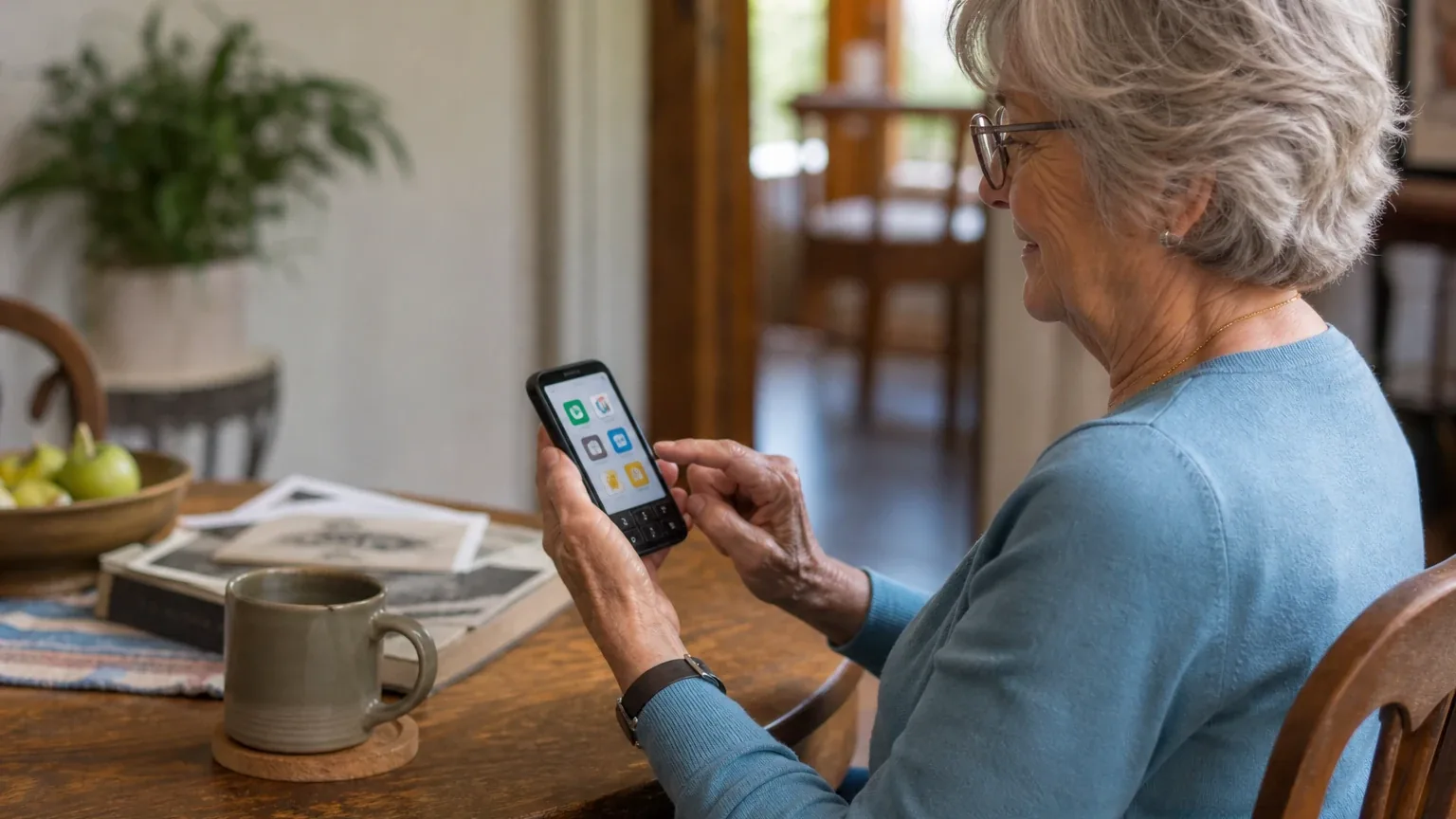
The RAZ Mobility Memory Cell Phone is a mixed fit for older adults seeking Simplified Smartphone Access with app support, video calls, maps, photos, and family messaging. Four of seven AI platforms named it during the ranking stage (57% platform share), with an average listed rank of 5.25 and a best rank of 4. Its strongest reason for consideration is the exceptionally simplified, caregiver-controlled interface that eliminates menus and app confusion entirely—ideal for seniors with dementia or cognitive decline. The main limitation is fundamental: the phone cannot install ordinary apps, has no camera, no user-facing maps, and no web browser, directly conflicting with the stated buyer need for app access, photos, and navigation. Buyers wanting those features should choose a simplified mainstream smartphone instead.
Research Snapshot
| Metric | Value |
|---|---|
| Platform mentions in ranking stage | 4 of 7 platforms (anthropic, deepseek, google, grok) |
| Share of included platform responses | 57.1% |
| Average listed rank | 5.25 |
| Best listed rank | 4 (google, grok) |
| Relevant product/model/plan | RAZ Memory Cell Phone (~$309–$369) with Affinity Cellular plan (3 months free, then $20/month) or major carrier compatibility |
| Overall use-case fit | Mixed (2 good, 3 mixed, 2 uncertain) |
| Research date | 2026-08-13 |
Why RAZ Mobility Memory Cell Phone Qualified for This Study
The RAZ Mobility Memory Cell Phone qualified for the Simplified Smartphone Access ranking because four of seven AI platforms named it during the discovery stage. It appeared in rankings from anthropic (rank 8), deepseek (rank 5), google (rank 4), and grok (rank 4). Three platforms—openai, perplexity, and kimi—evaluated it for fit but did not name it during the ranking stage. The phone was assessed against criteria including simplified interface, display size, font scaling, voice assistant support, hearing aid compatibility, emergency features, battery life, and carrier plan cost (topic configuration).
The Product, Model, Plan, or Service Most Relevant to Simplified Smartphone Access
The most relevant configuration is the RAZ Memory Cell Phone, an unlocked device compatible with Verizon, AT&T, T-Mobile, and selected resellers including Affinity Cellular, Consumer Cellular, Mint Mobile, Cricket Wireless, and Straight Talk [1]. The phone runs Android 14 but is restricted so that users cannot install ordinary mobile applications [2]. It is sold directly by RAZ Mobility and also through Lively from Best Buy Health [4].
The recommended service option is the Affinity Cellular plan: three months free with purchase, then $20 per month [5]. The phone requires a data-enabled wireless plan because remote caregiver management depends on data connectivity [7]. No proprietary carrier is required; the device is fully unlocked [8].
What the AI Platforms Agreed About
Strong Agreement: Extreme Interface Simplification
All platforms that provided substantive findings agreed that the RAZ Memory Cell Phone offers an exceptionally restricted interface. The phone uses a single-screen design with photo-based contact dialing—users tap and hold a contact picture to call [9]. There are no menus, no settings accessible to the user, and no app icons [12]. Google described it as "a world-class device for seniors experiencing moderate-to-severe cognitive decline who need basic, distraction-free calling" (google final verdict).
Strong Agreement: No App Installation
Four platforms independently confirmed that the phone cannot install ordinary mobile applications. OpenAI documented that RAZ states apps such as Facebook and Amazon Shopping cannot be installed [9]. Anthropic confirmed no mobile app installation is supported, including Google Maps, email apps, or third-party applications [14]. Google noted there is no app store or web browser [16]. Grok stated the base model excludes texting, photos, video calls, and internet [11].
Strong Agreement: Caregiver Remote Management
Multiple platforms documented that the RAZ Care app gives caregivers full remote control. Caregivers can configure contacts, settings, reminders, phone status, and location [9]. The user cannot access settings; the caregiver has full control [18]. At least one secondary user is required to set up the phone and add contacts [19]. GPS location tracking is available only to the caregiver, not the user [20].
Majority Agreement: Video Calls Are Caregiver-Initiated Only
OpenAI and anthropic both documented that video calls are supported but only approved contacts can initiate them; the senior cannot place video calls independently [9]. Grok noted the base model lacks video call support entirely, though optional features may be available via caregiver selection [11].
Majority Agreement: No Camera or User-Facing Maps
Anthropic and google both confirmed the phone has no camera [23]. GPS tracking exists but only for caregiver monitoring through RAZ Care; there is no user-facing navigation or map interface [20]. OpenAI noted the reviewed product information does not document an on-device maps application [9].
Where the AI Platforms Disagreed or Were Uncertain
Pricing Conflicts
The platforms reported materially different prices. OpenAI's ranking-stage estimate was approximately $240, but the current RAZ shop listing shows $369.00 [28]. Anthropic cited $309 (Caring.com) to $349 (The Senior List, SeniorLiving.org) depending on bundle (anthropic pricing summary). Google reported $369 retail with a range of $309–$369 across listings (google pricing summary). Grok noted $349 versus $369 across sources (grok pricing summary). Kimi could not verify the Memory Cell Phone at all and instead evaluated the SmartVision3 at $539–$669 (kimi pricing summary). These discrepancies likely reflect different bundle packages or publication timing, but buyers should verify the current price directly.
Hearing Aid Compatibility Conflict
This is a direct factual conflict. OpenAI reported that RAZ lists a HAC rating of M3/T3 [29]. Anthropic found no published FCC hearing aid compatibility rating in manufacturer specs or independent sources, noting Verizon recommends the phone but does not list it with a HAC rating [30]. Deepseek stated hearing aid compatibility details are not published on the RAZ website [32]. Buyers with hearing aids should verify compatibility with their specific device before purchase.
Battery Capacity Conflict
OpenAI documented a 5,000mAh battery [29]. Anthropic cited a 4,000mAh battery from UpPhone and phonecompass.com [33]. Anthropic also reported 15 hours talk time versus 44 hours on a Samsung Galaxy A15 [34]. Grok reported approximately 15 hours talk time or 200 hours standby [35]. These specifications conflict and were not independently verified.
Product Identity Uncertainty
Kimi could not verify that a "Memory Cell Phone" product exists as described, noting the search results only documented the SmartVision3 (kimi final verdict). Perplexity similarly marked the product details as unverified [36]. These platforms rated the fit "uncertain" due to insufficient evidence, not because they found negative evidence.
Voice Assistant Support Conflict
Deepseek claimed the phone supports Google Assistant [37]. Anthropic found no voice assistant mentioned in official documentation or independent reviews [38]. OpenAI noted speech-to-text is documented for texting but a general-purpose voice assistant was not verified [29]. This is a direct conflict; buyers should verify voice assistant support with RAZ directly.
Use-Case-Specific Features and Capabilities
Simplified Interface (Advantage)
The phone is designed around a primary contact-picture interface rather than conventional menus and apps [39]. The single home screen shows only contact photos, an emergency button, time, and battery status [40]. Up to 50 contacts can be stored, with 6 visible per screen by default [42]. Low-vision mode displays only 2 large rectangular icons per screen with white text on colored backgrounds [43].
Display Size and Font Scaling (Advantage)
The device has a 6.5-inch display [39]. It offers super-large, high-contrast controls, low-vision and hand-tremor modes, adjustable color schemes, and customizable text size for messaging and reminders [39]. The screen dims after 2 minutes idle but remains clearly visible [44].
App Access (Critical Limitation)
Ordinary mobile applications cannot be installed, including Facebook, Google Maps, email apps, and shopping apps [39]. There is no web browser [46]. This directly conflicts with the stated buyer need for app access.
Video Calls and Family Messaging (Partial Advantage)
The phone supports caregiver-initiated video calls through RAZ Care [39]. Simplified texting includes large letters, customizable keyboard options, speech-to-text, and quick replies [39]. Group texts and photo messages are not available [39]. The caregiver controls which contacts can text the user [49].
Maps and Location (Limitation)
Caregivers can view the phone's location through RAZ Care, but there is no on-device maps application or turn-by-turn navigation [39].
Photos and Camera (Limitation)
The phone has no camera and no photo-taking capability [53]. Contact photos can be uploaded by caregivers to serve as the visual dialer [55].
Hearing Aid Compatibility (Unclear)
OpenAI reported an M3/T3 HAC rating [39]. Anthropic found no published FCC HAC rating [56]. The phone does feature an extra-loud loudspeaker at 126.5 dB with automatic speaker mode on all calls [58]. Buyers should verify compatibility with their specific hearing aid model.
Emergency Features (Advantage)
Documented options include an emergency button, manual 911 dialing, RAZ Alert notifications to caregivers, and an optional RAZ Emergency Service that routes emergency calls through a private dispatch service [39]. The red emergency button is on the home screen [60]. Optional auto-answer after 3–5 rings routes calls to speakerphone [61]. Google noted the prominent 911 button cannot be easily resized or hidden, which has led to accidental dials for some users (google limitations).
Battery and Charging (Mixed)
RAZ lists a 5,000mAh battery with charging-management features including low-battery reminders, charging confirmation, and caregiver battery-status monitoring [39]. Anthropic cited 4,000mAh with 15 hours talk time [62]. Wireless charging is available as a separately sold accessory at $67.00 [64].
Carrier Compatibility (Advantage)
The phone is unlocked and compatible with Verizon, AT&T, T-Mobile, and many MVNOs including Affinity Cellular, Consumer Cellular, Mint Mobile, Cricket Wireless, and Straight Talk [65]. No carrier lock-in [66]. A data-enabled plan is required for caregiver management [50].
Pricing, Fees, Contracts, and Ongoing Costs
Known Costs
| Item | Cost | Source |
|---|---|---|
| RAZ Memory Cell Phone | $369.00 (current RAZ shop); $309–$349 in other listings | [67] |
| Affinity Cellular plan | 3 months free, then $20/month | [68] |
| RAZ Emergency Service | $13/month or $130/year; $20 activation fee if monthly | [70] |
| Wireless charging accessory | $67.00 | [67] |
| Replacement device (within 12 months, with protective case) | $175 | (anthropic pricing) |
Additional Fees
A compatible carrier plan with data is required; pricing depends on the selected carrier and plan [68]. Wireless charging requires a separately purchased charging set [67]. Optional RAZ Emergency Service costs extra [70]. Carrier taxes and regulatory fees vary by provider and state (anthropic pricing). The wall charger block is sold separately by default (google pricing).
Contract and Cancellation Terms
The phone is unlocked and use of Affinity Cellular is not required [68]. Affinity Cellular plans are contract-free (google pricing). RAZ offers a 30-day return and exchange window for devices in perfect condition with original packaging (google pricing). Specific carrier contract, cancellation, taxes, activation, return, and refund terms were not fully verified from the reviewed sources [68].
Pricing Confidence
Pricing confidence is moderate. The current RAZ shop listing shows $369.00, which is materially higher than the approximately $240 ranking-stage estimate [67]. Anthropic estimated total first-year cost at $389–$429 before taxes and fees, including the device, Affinity Cellular service, and optional emergency service (anthropic pricing summary).
Best Suited For
The RAZ Mobility Memory Cell Phone is best suited for:
- Seniors with dementia, Alzheimer's, or significant cognitive decline who need distraction-free calling (google final verdict, anthropic final verdict)
- Older adults overwhelmed by conventional smartphone menus who mainly need family calling, approved-contact texting, and caregiver-supported video calls (openai fit assessment)
- Seniors with low vision, hand tremors, or motor control challenges who benefit from large, high-contrast controls and large touch targets (openai fit assessment, anthropic fit assessment)
- Families wanting remote management, location monitoring, and call restrictions through the RAZ Care app (openai fit assessment, anthropic fit assessment)
- Users concerned about scam calls and phone complexity—incoming calls are restricted to approved contacts only (anthropic strengths)
Probably Not Best Suited For
The RAZ Mobility Memory Cell Phone is probably not best suited for:
- Seniors who want to install and use apps such as Google Maps, Facebook, WhatsApp, or banking apps (openai fit assessment, anthropic fit assessment)
- Users who want independent turn-by-turn navigation (openai fit assessment, anthropic fit assessment)
- Seniors who want to take photos or access photo apps (anthropic fit assessment, google fit assessment)
- Users who want conventional smartphone camera, photo-gallery, and social-media workflows (openai fit assessment)
- Seniors who are capable of using a simplified mainstream Android or iPhone interface and want room to grow (openai fit assessment)
- Tech-independent users who prefer not to rely on a caregiver app for setup and management (anthropic fit assessment)
- Those needing verified hearing aid compatibility certification—no published FCC HAC rating was found by anthropic (anthropic fit assessment)
When Another Option May Be Better
Several platforms identified specific alternatives for buyers whose needs exceed the RAZ Memory Cell Phone's capabilities:
- For maps and navigation: Consider the iPhone SE (M3/T4 hearing aid compatible, Apple Maps included, ~$399) or Android phones with Google Maps pre-installed (anthropic better alternatives).
- For photo capabilities: Consider RAZ's SmartVision3 or MiniVision2+ (which include cameras), or mainstream smartphones like iPhone SE, Samsung Galaxy, or Google Pixel (anthropic better alternatives).
- For app ecosystem: Any mainstream smartphone (iPhone or Android) with a simplified launcher; the iPhone SE is recommended for seniors due to large buttons and accessibility features (anthropic better alternatives).
- For voice assistant support: The iPhone SE (Siri) or Android phones with Google Assistant, such as the Jitterbug Smart4 from Lively (anthropic better alternatives).
- For fuller smartphone features with senior design: The Lively Jitterbug Smart4 offers Google Assistant, M4/T4 hearing aid compatibility, a larger 6.75-inch screen, and medical alert features, but locks users into Lively plans starting at $24.99/month (anthropic better alternatives).
- For integrated medical alert features: Lively phones include a 24/7 urgent response button, nurse hotline, and caregiver tracking; RAZ requires a separate Emergency Service add-on (anthropic better alternatives).
- For very limited budgets: The IRIS Easy Flip ($59, basic flip phone with large keys, camera, Bluetooth) or budget Android phones on Consumer Cellular plans starting at $20/month (anthropic better alternatives).
- For voice-operated use: RealSAM Pocket (voice-operated Samsung base) or SpeakEasy Smart at $99.95 may be better for seniors with intact or mildly reduced vision (kimi better alternatives).
Questions to Verify Before Buying
Before purchasing the RAZ Mobility Memory Cell Phone, buyers should verify:
- What is the exact current device price? Sources range from $240 to $369; confirm directly with RAZ Mobility [71].
- Does the current retail price include a SIM card, setup assistance, shipping, and activation fees? (openai questions)
- Is the three-month Affinity Cellular promotion still available on the exact phone variant being purchased? (openai questions)
- What are the total monthly costs, taxes, data allowance, and cancellation terms for Affinity Cellular or another carrier? (openai questions)
- Can the intended hearing aid be confirmed compatible with the phone's HAC rating? Note the M3/T3 claim conflicts with the absence of a published FCC rating [72].
- Can the senior receive and send photo messages, group texts, or photos through the current software version? (openai questions)
- Can the senior independently initiate video calls, or must approved contacts start them? [74]
- Does the senior need turn-by-turn navigation? If so, a separate conventional smartphone is required (openai questions).
- What are the current return window, warranty, repair, and replacement terms? RAZ offers a 30-day return window per google (google pricing).
- Is RAZ Emergency Service appropriate, and what exactly is included in the $13 monthly or $130 annual fee? (openai questions)
- Which exact software and hardware version will be shipped? Features may differ from older user guides (openai questions).
- Can multiple family members manage the phone via RAZ Care, or only one secondary user? (anthropic questions)
- What happens to the phone if the caregiver's RAZ Care account is deleted or the secondary user passes away? (anthropic questions)
- Are video calls limited to RAZ Care app video calls only, or can the senior receive calls from WhatsApp, FaceTime, or other platforms? (anthropic questions)
- Does the phone support voice commands (e.g., "Call Mom") if the caregiver enables a dial pad? (anthropic questions)
Final AI Consensus Verdict
The AI platforms reached a mixed consensus: the RAZ Mobility Memory Cell Phone is an excellent device for a narrow but important subset of seniors—those with dementia, Alzheimer's, or significant cognitive decline who need distraction-free calling and caregiver-managed communication. It is not a good fit for the stated buyer need of app access, maps, photos, and broad smartphone functionality.
Two platforms rated it "good" (anthropic, deepseek), three rated it "mixed" (openai, google, grok), and two rated it "uncertain" (kimi, perplexity). The strongest endorsements came from platforms emphasizing the phone's extreme simplicity and caregiver controls. The strongest criticisms came from platforms noting the fundamental absence of apps, camera, maps, and user-initiated video calls.
As anthropic summarized: "The RAZ Memory Cell Phone is best positioned as the simplest possible phone for caregivers managing seniors with dementia or Alzheimer's, not as a general simplified senior smartphone" (anthropic final verdict). Google concurred: "For a senior who wants independent app access, camera features, and map navigation, it is overly restrictive and a poor fit" (google final verdict).
For the specific target buyer in this review—older adults who want app access, video calls, maps, photos, and family messaging without overwhelming menus—the RAZ Memory Cell Phone is not the right choice unless the senior's cognitive limitations make the extreme simplification more valuable than the missing features. Buyers who need the full feature set should explore the alternatives listed above.
How This Review Was Produced
This review was produced by aggregating fit-research responses from seven AI platforms: anthropic, deepseek, google, grok, kimi, openai, and perplexity. Each platform evaluated the RAZ Mobility Memory Cell Phone against the Simplified Smartphone Access use case using criteria including simplified interface, display size, font scaling, voice assistant support, hearing aid compatibility, emergency features, battery life, and carrier plan cost. The authoritative research date is 2026-08-13. Platform responses were synthesized into this report, with factual claims cited to their original sources.
The entity ranking statistics reflect the discovery stage: 4 of 7 platforms named the RAZ Mobility Memory Cell Phone in their rankings, with an average rank of 5.25 and a best rank of 4. The final rank was 3.
Methodology Limitations
Several limitations apply to this review:
- Platform-reported dates differ from the authoritative run date. Deepseek's research date is 2026-04-10, while the authoritative run date is 2026-08-13. This discrepancy is disclosed as a methodology limitation.
- Company-owned citations materially outnumber independent citations. Of the 25 deduplicated sources, 15 are company-owned (RAZ Mobility, Lively, Verizon, SpeakEasy, RealSAM) and 10 are independent. Company claims should not be treated as independently verified.
- The supplied URLs were collected from platform responses and were not independently validated by the writer stage.
- Pricing conflicts were not resolved by guessing. Sources range from $240 to $369 for the device; buyers should verify directly.
- Hearing aid compatibility claims conflict. OpenAI reported M3/T3; anthropic found no published FCC rating. This remains unresolved.
- Battery specifications conflict. OpenAI reported 5,000mAh; anthropic cited 4,000mAh. Neither was independently verified.
- Kimi could not verify the product identity and evaluated the SmartVision3 instead, contributing an "uncertain" rating based on insufficient evidence.
- AI-platform agreement does not prove product quality. This review reports what the platforms found; it does not constitute independent testing.
Explore more senior technology guidance in the category directory.
Sources
Company-Owned Sources
- RealSAM USA - Friendly voice-operated smartphone features: https://realsam.us/
- RAZ Memory Cell Phone – Lively from Best Buy Health: https://shop.lively.com/pages/raz-memory-cell-phone
- RAZ Mobility - Memory Cell Phone: https://www.razmobility.com/
- 4 Best Cell Phones for Seniors in 2026: https://www.razmobility.com/assistive-technology-blog/4-simple-cell-phones-for-seniors-a-review/
- RAZ Mobility - Features: https://www.razmobility.com/features/
- RAZ Mobility - Memory Cell Phone (Specifications section: https://www.razmobility.com/memory-cell-phone/
- RAZ Mobility - Plans: https://www.razmobility.com/plans/
- RAZ Memory Cell Phone | Easy-to-use phone for seniors with dementia: https://www.razmobility.com/product/raz-memory-cell-phone-verizon/
- SmartVision3 Premium - Accessible Smartphone for Vision Loss: https://www.razmobility.com/product/smartvision3-smartphone-premium/
- SmartVision3 Basic - Accessible Smartphone for Vision Loss: https://www.razmobility.com/product/smartvision3basic/
- RAZ Mobility Shop: https://www.razmobility.com/shop/
- RAZ Memory Cell Phone | Easy-to-use phone for seniors with dementia: https://www.razmobility.com/solutions/memory-cellphone/
- Memory Cell Phone - RAZ Mobility Support: https://www.razmobility.com/support/memorycellphone/
- Easy Smartphone for Seniors | SpeakEasy: https://www.speakeasymobile.com/smartphone
- Deaf and Hard-of-Hearing | Verizon Accessibility: https://www.verizon.com/about/accessibility/hearing
Additional AI research evidence74 records
- AI research evidence record anthropic:c27
- AI research evidence record openai:c1
- AI research evidence record anthropic:c18
- AI research evidence record anthropic:c3
- AI research evidence record openai:c2
- AI research evidence record anthropic:c14
- AI research evidence record openai:c3
- AI research evidence record anthropic:c28
- AI research evidence record openai:c1
- AI research evidence record anthropic:c1
- AI research evidence record grok:c1
- AI research evidence record anthropic:c2
- AI research evidence record anthropic:c3
- AI research evidence record anthropic:c18
- AI research evidence record anthropic:c19
- AI research evidence record google:c1
- AI research evidence record google:c2
- AI research evidence record anthropic:c30
- AI research evidence record anthropic:c29
- AI research evidence record anthropic:c22
- AI research evidence record anthropic:c20
- AI research evidence record anthropic:c21
- AI research evidence record anthropic:c23
- AI research evidence record anthropic:c24
- AI research evidence record google:c4
- AI research evidence record google:c3
- AI research evidence record openai:c3
- AI research evidence record openai:c4
- AI research evidence record openai:c1
- AI research evidence record anthropic:c10
- AI research evidence record anthropic:c11
- AI research evidence record deepseek:c2
- AI research evidence record anthropic:c16
- AI research evidence record anthropic:c15
- AI research evidence record grok:c1
- AI research evidence record perplexity:c1
- AI research evidence record deepseek:c1
- AI research evidence record anthropic:c7
- AI research evidence record openai:c1
- AI research evidence record anthropic:c2
- AI research evidence record anthropic:c3
- AI research evidence record anthropic:c4
- AI research evidence record anthropic:c5
- AI research evidence record anthropic:c6
- AI research evidence record anthropic:c18
- AI research evidence record anthropic:c19
- AI research evidence record anthropic:c20
- AI research evidence record anthropic:c25
- AI research evidence record anthropic:c26
- AI research evidence record openai:c3
- AI research evidence record anthropic:c22
- AI research evidence record google:c2
- AI research evidence record anthropic:c23
- AI research evidence record anthropic:c24
- AI research evidence record google:c4
- AI research evidence record anthropic:c10
- AI research evidence record anthropic:c11
- AI research evidence record anthropic:c9
- AI research evidence record openai:c2
- AI research evidence record anthropic:c12
- AI research evidence record anthropic:c13
- AI research evidence record anthropic:c15
- AI research evidence record anthropic:c16
- AI research evidence record openai:c4
- AI research evidence record anthropic:c27
- AI research evidence record anthropic:c28
- AI research evidence record openai:c4
- AI research evidence record openai:c2
- AI research evidence record anthropic:c14
- AI research evidence record openai:c5
- AI research evidence record openai:c4
- AI research evidence record openai:c1
- AI research evidence record anthropic:c10
- AI research evidence record anthropic:c20
Independent Sources
- Raz Simplified Memory Mobile Phone - Eugeria Care: https://eugeria.ca/products/raz-simplified-memory-mobile-phone
- Simplified Mobile Phone - Eugeria Care: https://eugeria.care/products/simplified-mobile-phone
- RAZ Memory Cell Phone — Grokipedia: https://grokipedia.com/page/RAZ_Memory_Cell_Phone
- SmartVision 3 Smartphone – My Tools for Living Retail Store: https://mytoolsforliving.com/products/smartvision-3-smartphone
- Access Tech Review: SmartVision 3: https://nfb.org/blog/access-tech-review-smartvision-3
- RealSAM Pocket Voice-Operated Unlocked 5G Smartphone: https://www.icanconnect.org/equipment/realsam-pocket-voice-operated-unlocked-5g-smartphone/
- RAZ Mobility review | SeniorLiving.org: https://www.seniorliving.org/cell-phone/raz-mobility/
- RAZ Mobility Cell Phone Review 2026 - SeniorLiving.org: https://www.seniorliving.org/cell-phones/raz-mobility-review/
- RAZ Memory Cell Phone Review and Pricing | Hands-On Test: https://www.theseniorlist.com/cell-phones/raz-memory-phone/
- Raz Memory Cell Phone Review: Specs, Prices & Where to Buy | UpPhone: https://www.upphone.com/compare-cell-phones/raz-memory-cell-phone/
Additional AI research evidence74 records
- AI research evidence record anthropic:c27
- AI research evidence record openai:c1
- AI research evidence record anthropic:c18
- AI research evidence record anthropic:c3
- AI research evidence record openai:c2
- AI research evidence record anthropic:c14
- AI research evidence record openai:c3
- AI research evidence record anthropic:c28
- AI research evidence record openai:c1
- AI research evidence record anthropic:c1
- AI research evidence record grok:c1
- AI research evidence record anthropic:c2
- AI research evidence record anthropic:c3
- AI research evidence record anthropic:c18
- AI research evidence record anthropic:c19
- AI research evidence record google:c1
- AI research evidence record google:c2
- AI research evidence record anthropic:c30
- AI research evidence record anthropic:c29
- AI research evidence record anthropic:c22
- AI research evidence record anthropic:c20
- AI research evidence record anthropic:c21
- AI research evidence record anthropic:c23
- AI research evidence record anthropic:c24
- AI research evidence record google:c4
- AI research evidence record google:c3
- AI research evidence record openai:c3
- AI research evidence record openai:c4
- AI research evidence record openai:c1
- AI research evidence record anthropic:c10
- AI research evidence record anthropic:c11
- AI research evidence record deepseek:c2
- AI research evidence record anthropic:c16
- AI research evidence record anthropic:c15
- AI research evidence record grok:c1
- AI research evidence record perplexity:c1
- AI research evidence record deepseek:c1
- AI research evidence record anthropic:c7
- AI research evidence record openai:c1
- AI research evidence record anthropic:c2
- AI research evidence record anthropic:c3
- AI research evidence record anthropic:c4
- AI research evidence record anthropic:c5
- AI research evidence record anthropic:c6
- AI research evidence record anthropic:c18
- AI research evidence record anthropic:c19
- AI research evidence record anthropic:c20
- AI research evidence record anthropic:c25
- AI research evidence record anthropic:c26
- AI research evidence record openai:c3
- AI research evidence record anthropic:c22
- AI research evidence record google:c2
- AI research evidence record anthropic:c23
- AI research evidence record anthropic:c24
- AI research evidence record google:c4
- AI research evidence record anthropic:c10
- AI research evidence record anthropic:c11
- AI research evidence record anthropic:c9
- AI research evidence record openai:c2
- AI research evidence record anthropic:c12
- AI research evidence record anthropic:c13
- AI research evidence record anthropic:c15
- AI research evidence record anthropic:c16
- AI research evidence record openai:c4
- AI research evidence record anthropic:c27
- AI research evidence record anthropic:c28
- AI research evidence record openai:c4
- AI research evidence record openai:c2
- AI research evidence record anthropic:c14
- AI research evidence record openai:c5
- AI research evidence record openai:c4
- AI research evidence record openai:c1
- AI research evidence record anthropic:c10
- AI research evidence record anthropic:c20
Verify this research
Review the study details behind this page or download the public machine-readable verification record.
- Study date
- Aug 13, 2026
- Platforms analyzed
- 7
- Source records
- 25
- Ranking mentions
- 4 of 7
- Platform share
- 57%
- Final consensus rank
- #3
Research trail and source mix
Platforms
openai, anthropic, deepseek, grok, perplexity, kimi, google
Source mix
10 independent · 15 company-owned
Evidence support
19 direct · 6 partial
Important limitation
Use the run research_date as the study date. Platform-reported dates are provenance metadata and do not independently prove freshness.
Source snapshot SHA-256 50d1bdbfde8db1dbad73cb1b8063f4cb68287d361463656ae744a1e81a5cd2ef