
Answer Capsule
The UnaliWear Kanega Watch is a good fit for U.S. seniors and caregivers who prioritize dedicated wrist-worn fall detection, 24/7 professional monitoring, voice- or button-activated SOS, GPS-assisted response, and continuous wear. Six of the seven platforms in this study named it during the ranking stage, and it finished fourth overall with an average listed rank of 4.83 and a best rank of 1. The strongest reason to consider it is that automatic fall detection, cellular connectivity, and monitoring are bundled into one service rather than sold as add-ons. The main limitation is cost: $299 upfront plus $64.95–$84.95 per month, with independent testing detecting 15 of 20 simulated falls rather than all of them.
Research Snapshot
| Field | Finding |
|---|---|
| Platform mentions in ranking stage | 6 of 7 platforms (anthropic, deepseek, google, grok, kimi, openai) |
| Share of included platform responses | 85.7% |
| Average listed rank | 4.83 |
| Best listed rank | 1 (openai) |
| Relevant product/model/plan | Kanega Watch with RealFall fall detection and 24/7 monitoring, Monthly or Annual Plan |
| Overall use-case fit | Good — strong on dedicated fall detection and monitored SOS; limited on health tracking, caregiver app, and cost |
| Research date | 2026-09-27 |
What Changed Since August 2026
UnaliWear Kanega Watch remained at No. 4, and platform mentions increased from 3 to 6. The September 2026 review keeps the same buyer fit for the UnaliWear Kanega Watch but rewrites nearly every section, so the description changed more than the underlying recommendation. The recommended configuration is unchanged: the watch with RealFall fall detection and 24/7 monitoring. Standout strengths and limitations carry over — bundled fall detection, three activation paths, standalone cellular, swappable batteries, no caregiver app, and minimal health tracking — while the current review drops previously reported battery runtime figures such as 24–36 hours per battery. Pricing is newly reported at $64.95 per month for the annual plan, while the earlier $79.95 to $84.95 monthly range is no longer repeated. Differences between the two editions reflect what each article reports; they do not by themselves prove that the product, service, or price changed.
The August 2026 review preserves the earlier article for reference.
Why UnaliWear Kanega Watch Qualified for This Study
Questions This Section Answers
- Why did the UnaliWear Kanega Watch qualify for this wearable fall detection and SOS study?
- How many AI platforms named the UnaliWear Kanega Watch during the ranking stage?
The UnaliWear Kanega Watch qualified because six of the seven included platforms named it during ranking discovery, clearing the two-mention minimum with a wide margin. It appeared on anthropic, deepseek, google, grok, kimi, and openai, giving it an 85.7% share of included platform responses. Its average listed rank was 4.83, with ranks ranging from 1 (openai) to 9 (anthropic), and it finished fourth in the final ordering.
Qualification reflects visibility in platform answers, not verified product quality. The ranking-stage recommendations also described the entity inconsistently — as "Kanega Watch with Annual Plan," "Kanega Watch with monitoring plan," "Kanega Watch with RealFall Fall Detection Plan," and "UnaliWear Kanega Watch with 24/7 Monitoring Plan" — which the platforms did not reconcile. This review treats those as one product with one service model, because no supplied source explains them as distinct tiers.
The Product, Model, Plan, or Service Most Relevant to Wearable Fall Detection & SOS
Questions This Section Answers
- Which UnaliWear Kanega Watch plan should a buyer choose for fall detection and 24/7 SOS monitoring?
- Is the UnaliWear Kanega Watch a good choice for wearable fall detection and SOS?
The relevant configuration is the Kanega Watch with RealFall fall detection and 24/7 monitoring, sold on either a Monthly Plan or an Annual Plan. Every platform converged on that same core bundle, even when the plan labels differed.
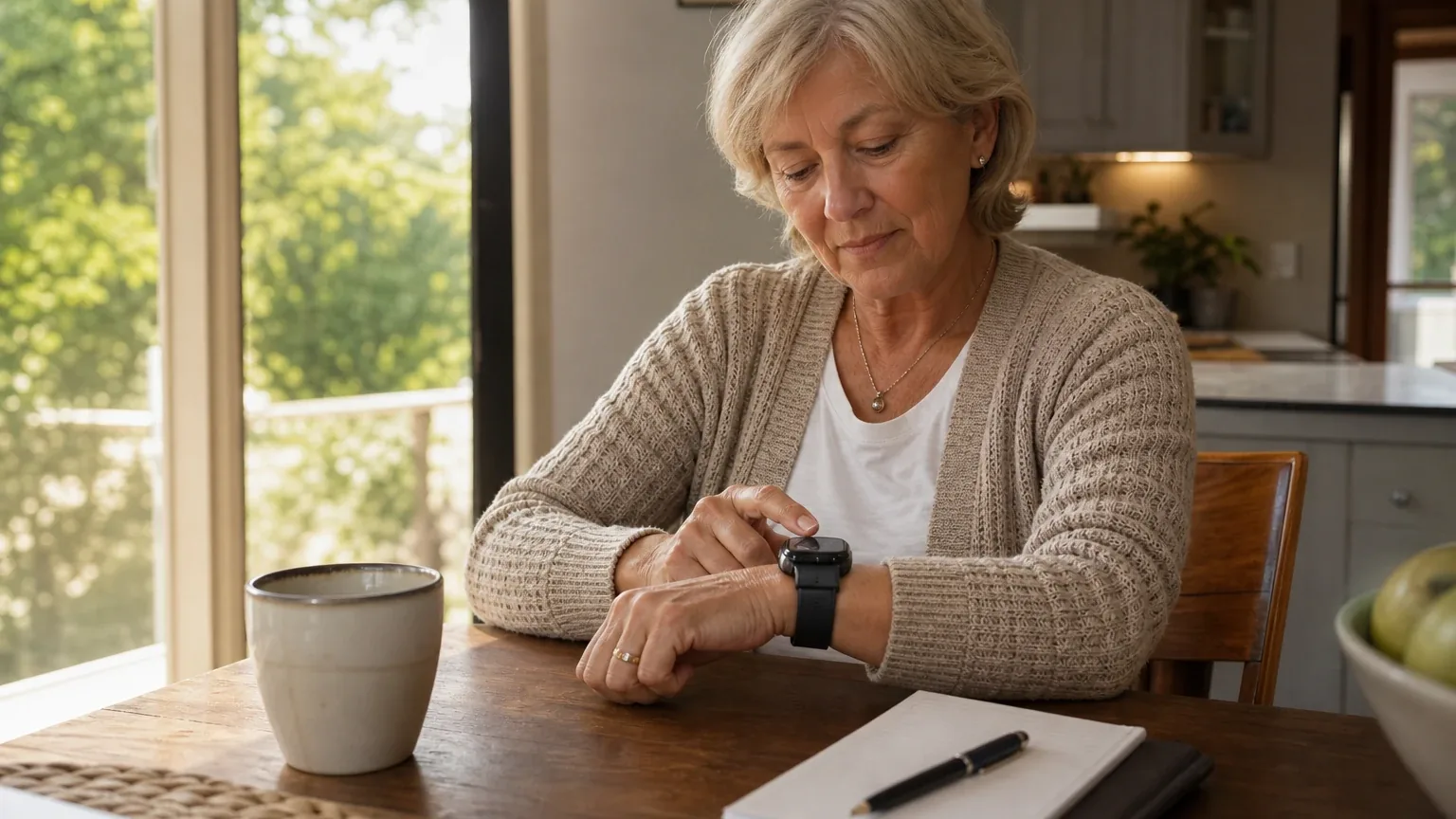
The watch is a wrist-worn medical alert device, not a general-purpose smartwatch. It combines automatic fall detection, a physical crown button, and voice activation as three separate ways to summon help, and it connects to a U.S.-based monitoring center rather than dialing 911 directly [1]. It carries built-in cellular service and GPS so it does not require a paired smartphone or a personal Verizon account [1].
RealFall is UnaliWear's own fall-detection technology. The company says it is trained on real wearer falls rather than lab simulations, adapts to individual movement patterns, and receives remote updates [6]. That is a company claim. The only independent accuracy figure in the supplied evidence comes from The Senior List, which detected 15 of 20 test falls [8].
What the AI Platforms Agreed About
Questions This Section Answers
- What do AI platforms agree the UnaliWear Kanega Watch does well for fall detection and SOS?
- Does the UnaliWear Kanega Watch include fall detection and cellular service in the base plan?
Agreement was strongest on four points: fall detection is included rather than an add-on, help can be triggered three ways, the watch works without a smartphone, and the swappable battery system supports near-continuous wear.
On fall detection inclusion, openai, anthropic, google, grok, and perplexity all reported that RealFall is part of the base service with no separate fee [10]. On activation paths, openai, anthropic, google, grok, and deepseek described automatic detection, a physical button, and voice commands [10].
On independence from a phone, openai, google, grok, and deepseek all stated the watch uses built-in cellular service and does not need a paired smartphone [10]. On battery design, openai, anthropic, google, grok, and deepseek described removable or swappable batteries that let the wearer keep the watch on while another battery charges [20].
Two independent reviews converged on response speed and battery runtime. The Senior List reported an average response time of about 30 seconds across 10 test calls and roughly 32 hours of battery life per battery [20]. Those are single-review findings, not replicated measurements.
Where the AI Platforms Disagreed or Were Uncertain
Questions This Section Answers
- Why do AI platforms disagree about UnaliWear Kanega Watch pricing and fall detection accuracy?
- Is UnaliWear Kanega Watch still available to buy in 2026?
Platforms disagreed on price, accuracy, availability, and company stability. Buyers should treat all four as open questions.
Monthly pricing was reported at $79.95 by openai, grok, and The Senior List, and at $84.95 by anthropic, google, and Caring.com [23]. Perplexity reported both figures appearing on different UnaliWear pages and flagged the conflict directly [27]. Annual pricing was more consistent at $64.95 per month prepaid, though anthropic and perplexity both noted the first-year total is quoted as $1,078.40 in some places and $779.40 for service alone in others [25].
On accuracy, UnaliWear markets improving detection while independent testing found 15 of 20 falls detected [30]. Grok described test results as "inconsistent" across reviews [32]. A 2026 meta-analysis of 20 wearable-device studies reported pooled sensitivity of 0.55 and specificity of 0.89, and concluded such devices suit screening and risk stratification rather than standalone fall prevention [33].
Anthropic reported significant 2026 financial difficulties at UnaliWear and stated that product availability was uncertain, recommending buyers verify directly with the company [34]. No other platform corroborated that finding, and it is platform-reported rather than independently confirmed here.
Kimi retrieved no usable source material and rated fit "uncertain" on that basis alone (kimi:unverified). That is a research failure, not a negative finding about the product.
Use-Case-Specific Features and Capabilities
Questions This Section Answers
- How accurate is UnaliWear Kanega Watch RealFall fall detection in independent testing?
- Does the UnaliWear Kanega Watch work without a smartphone or home Wi-Fi?
Fall detection and monitored SOS are the watch's clear strengths; health tracking, display quality, and caregiver tools are its clear weaknesses.
| Criterion | Finding | Assessment |
|---|---|---|
| Fall detection accuracy | 15 of 20 simulated falls detected in independent testing; RealFall adapts to individual movement [35] | Advantage, with caveats |
| SOS calling | Three activation paths; ~30-second average response across 10 test calls [38] | Advantage |
| GPS precision | GPS included; no standardized accuracy specification published [38] | Unclear |
| Cellular availability | Verizon data included; no personal Verizon account or phone needed [38] | Advantage |
| Battery life | ~32 hours per battery reported independently; swappable design supports continuous wear [35] | Advantage |
| Health monitoring | Medication reminders and a step counter; no heart rate, SpO2, ECG, or sleep tracking [42] | Limitation |
| Display readability | Large round screen but visibly pixelated per reviewers; voice wake phrase "Fred Astaire" must be remembered [35] | Mixed |
| Monthly service cost | $64.95–$84.95 depending on plan and source [38] | Limitation |
| Water resistance | IP67 — hand washing and showering only, not swimming or bathing [38] | Limitation |
| Caregiver app | None reported; no routine location tracking or caregiver-to-watch messaging [35] | Limitation |
UnaliWear's own terms state that its AI-based fall detection and activity monitoring "does not detect one-hundred percent (100%) of falls" and is not intended to replace a caregiver (official:C2). That is the company's own limitation language, and it aligns with the independent test result.
Pricing, Fees, Contracts, and Ongoing Costs
Questions This Section Answers
- How much does the UnaliWear Kanega Watch cost per month, and what is the total first-year cost?
- What fees apply if a buyer returns or cancels an UnaliWear Kanega Watch plan?
Cost is the watch's most consistent weakness across platforms. The structure is a $299 upfront equipment and setup charge plus recurring service, with no contract required.
| Cost Item | Amount | Source |
|---|---|---|
| Upfront equipment and setup | $299 | [46] |
| Monthly Plan service | $79.95–$84.95/month | [46] |
| Annual Plan service | $64.95/month prepaid | [46] |
| First-year total, Annual Plan | $1,078.40 | [46] |
| 30-day return restocking fee | $75 | [46] |
| Replacement after user-caused damage | Up to $199 plus shipping (openai); up to $650 (official terms) | [46] |
Contract terms are favorable. UnaliWear states there is no contract or minimum commitment, cancellation is allowed at any time, and annual plans receive prorated refunds for unused full months after equipment return [46]. The company's terms add that cancellation after May 13, 2024 requires a signed Cancellation Letter, and that equipment returned in working order may earn a refund of up to 40% of the original purchase price at UnaliWear's sole discretion (official:C2).
Two cost conflicts remain unresolved. Anthropic reported a $650 loss-or-damage fee from ConsumerAffairs that was not confirmed on an official pricing page [53], while UnaliWear's own terms cap replacement at $650 (official:C2). Perplexity also noted that older lease terms referenced equipment-return obligations that current public terms appear to have changed [55].
For comparison, anthropic reported Bay Alarm Medical's SOS Smartwatch at $199 plus $34.95 per month and Medical Guardian's MGMini Lite at $149.95 plus $46.95 per month [53]. Kimi cited SecuLife's SOS Wristband at $89.50 plus $20–$34 per month and Lifeline's On the Go at $39.95 per month (kimi:seculife-wristband, kimi:lifeline-ongo). Those competitor figures are platform-reported and were not independently verified for this review.
Best Suited For
Questions This Section Answers
- Who is the UnaliWear Kanega Watch best suited for in a fall detection and SOS use case?
- Is the UnaliWear Kanega Watch worth it for a senior who cannot reliably press a button during an emergency?
The watch fits buyers who value dedicated monitoring and continuous wear over low cost or broad smartwatch features.
It suits active seniors who want a wrist-worn medical alert device rather than a pendant, and who may struggle to press a button or operate a phone mid-emergency — the automatic and voice activation paths address exactly that [57]. It suits caregivers who want 24/7 professional monitoring and built-in cellular connectivity without managing a phone plan [57]. It suits wearers who will not tolerate charging downtime, since the swappable battery design keeps the watch on the wrist [60]. And it suits buyers who want fall detection bundled into the base price rather than added on [62].
Probably Not Best Suited For
Questions This Section Answers
- Who should not choose the UnaliWear Kanega Watch for fall detection and SOS?
- Is the UnaliWear Kanega Watch a poor fit for caregivers who need location tracking?
Budget-sensitive buyers should look elsewhere. At $64.95–$84.95 per month, the watch costs roughly twice what anthropic reported for comparable medical-alert watches [63].
Caregivers who want a companion app should also look elsewhere. Openai, anthropic, and google all reported no caregiver app for routine location tracking or caregiver-to-watch communication [64]. Buyers seeking ECG, blood oxygen, heart-rate trends, or activity tracking will not find them here [64]. Swimmers and anyone needing immersion-rated hardware should avoid it, since IP67 covers hand washing and showering only [67]. And buyers who need independently validated accuracy data before purchase will not find population-level sensitivity or false-alert rates in the supplied evidence [64].
When Another Option May Be Better
Questions This Section Answers
- What is a better alternative to the UnaliWear Kanega Watch for a buyer who needs lower monthly costs?
- When should a buyer choose a mainstream smartwatch instead of the UnaliWear Kanega Watch?
Choose a mainstream smartwatch when health tracking, caregiver location sharing, or app ecosystems matter more than dedicated monitoring. Openai and deepseek both pointed to Apple Watch or comparable devices for ECG, heart-rate features, and broader health functionality, with the caveat that those devices require an iPhone and use different monitoring arrangements [69].
Choose a lower-cost medical-alert watch when price is the deciding factor. Anthropic named Bay Alarm Medical's SOS Smartwatch and Medical Guardian's MGMini Lite as 30–50% cheaper per month [71]. Kimi named SecuLife's SOS Wristband for transparent plan structure and Lifeline's On the Go for up to four days of battery (kimi:seculife-wristband, kimi:lifeline-ongo). Kimi also named Theora Care's Connect Wearable for a published neural-network fall-detection approach (kimi:theora-connect). All of these are platform-reported comparisons drawn from vendor pages, not head-to-head tests.
Choose a device with a caregiver app when routine family tracking or remote device management is essential [69]. Buyers comparing across the broader Wearable Fall Detection & SOS category should weigh those tradeoffs against the Kanega Watch's monitoring bundle.
Questions to Verify Before Buying
Questions This Section Answers
- What should a buyer confirm with UnaliWear before signing up for the Kanega Watch?
- Which fall types is the UnaliWear Kanega Watch most likely to miss?
Verify these directly with UnaliWear, because the supplied evidence does not resolve them.
Ask what fall types are most likely to be missed, including slow collapses, falls onto soft surfaces, and falls without strong impact [73]. Ask for current false-alert and missed-fall rates for wearers with similar age, mobility, and activity patterns [73]. Confirm Verizon coverage at the wearer's home, neighborhood, and travel areas, and ask how GPS performs indoors and in weak-signal locations [73]. Confirm the exact current monthly and annual price, since sources conflict between $79.95 and $84.95 [76].
Ask whether the company is currently shipping and whether monitoring service is active, given anthropic's report of 2026 financial difficulties [74]. Ask what health measurements exist beyond medication reminders [73]. Ask whether caregivers can receive any notification — push, SMS, or email — when an alert fires, or whether dispatch is the only path [74]. Ask what happens if the wearer cannot remember or pronounce the "Fred Astaire" wake phrase [79]. Finally, confirm the exact cancellation steps, return requirements, and whether the $75 restocking fee is waived for defective units [80].
Final AI Consensus Verdict
The UnaliWear Kanega Watch is a good — not best-in-class — fit for Wearable Fall Detection & SOS. Six of seven platforms named it, and five of seven rated fit as good or strong, with anthropic and kimi rating it uncertain. The core bundle matches the buyer need closely: automatic fall detection included at no extra cost, three activation paths, 24/7 monitored response, built-in cellular and GPS, and a swappable battery system built for continuous wear.
The case against it is cost and unverified performance. At $64.95–$84.95 per month it sits at the premium end of the category, independent testing detected 15 of 20 simulated falls, no caregiver app exists, health tracking is minimal, and pricing, availability, and company-stability questions remain unresolved across platforms. Buyers who prioritize monitored fall response and wearability should shortlist it and verify current pricing, coverage, and availability directly with UnaliWear. Buyers who prioritize low cost, caregiver visibility, or broad health metrics should compare it against the alternatives named above. Readers exploring the wider senior technology market can weigh it against other categories of devices.
How This Review Was Produced
This review evaluates UnaliWear Kanega Watch only for the Wearable Fall Detection & SOS use case. It is not a broad company review. Seven AI platforms were asked to assess fit for this use case: anthropic, deepseek, google, grok, kimi, openai, and perplexity. Six named the entity during ranking discovery, which is the count reported in the Research Snapshot. All seven evaluated fit, but platform_mentions counts only platforms that named the entity during ranking.
Fit ratings by platform were: grok strong; openai, deepseek, google, and perplexity good; anthropic and kimi uncertain. No platform reported hands-on testing by this review. All factual claims are drawn from the supplied platform responses and their cited sources, and are labeled as company-owned or independent where the evidence allows.
Methodology Limitations
Platform-reported research dates differ from the authoritative run date of 2026-09-27. Anthropic's responses are dated 2026-01-15 and deepseek's 2026-02-14; the remaining platforms are dated 2026-09-27. Those dates are provenance metadata and do not independently prove freshness.
Company-owned citations materially outnumber independent citations in the supplied evidence, so company claims should not be read as independently verified. The supplied URLs were collected from platform responses and were not independently validated by the writer stage. Citations are platform-reported evidence, not verified facts.
Kimi retrieved no usable source material and rated fit uncertain on that basis; this is a research gap, not a negative finding. Deepseek ran without search enabled, so its claims rest on model knowledge rather than retrieved sources. Anthropic's report of 2026 UnaliWear financial difficulties is platform-reported and uncorroborated by other platforms in this study. Pricing conflicts between $79.95 and $84.95 per month remain unresolved, and no supplied source explains the difference between the plan labels used in ranking-stage recommendations. Availability, pricing, discounts, cellular coverage, and policies may have changed after the research date.
See the broader Seniors With Fall Detection consensus index for comparisons across qualified options.
Sources
Company-Owned Sources
- Senior SOS Wristband – Fall Detection & GPS | SecuLife: https://seculife.com/products/sos-gps-wristband
- Theora Connect Wearable - Theora Care: https://theoracare.com/product/theora-connect-wearable/
- On the Go | Mobile Medical Alert for Seniors: https://www.lifeline.com/product/on-the-go/
- Medical Alert Smartwatch | Fall Detection & GPS | Lifeline: https://www.lifeline.com/product/smartwatch/
- UnaliWear Kanega Watch official site: https://www.unaliwear.com
- Other Affiliates - UnaliWear: https://www.unaliwear.com/affiliate-landing-page/
- Consumer Cancelations and Returns: https://www.unaliwear.com/consumer-cancelations-returns/
- Consumer Terms and Conditions - UnaliWear: https://www.unaliwear.com/consumer-terms-n-conditions/
- The Kanega Watch: Medical Alert Watch with Fall Detection: https://www.unaliwear.com/product/kanega-watch/
- The Kanega Watch with Fall Detection: https://www.unaliwear.com/product/the-kanega-watch/
- RealFall Detection Technology for Seniors: https://www.unaliwear.com/realfall/
- The Best Fall Detection Devices for Seniors: 2026 Guide: https://www.unaliwear.com/senior-safety-101/fall-detection-device/
- GPS Medical Alert Systems: How to Track a Senior in an Emergency: https://www.unaliwear.com/senior-safety-101/gps-medical-alert-systems/
- Medical Alert Systems for Active Seniors: Stay Safe Anywhere: https://www.unaliwear.com/senior-safety-101/medical-alert-systems-for-active-seniors/
- UnaliWear Home - CLP3 - KanegaWatch: https://www.unaliwear.com/unaliwear-home-clp3-copy-kanegawatch/
- Why Kanega Watch: https://www.unaliwear.com/why-kanega-watch/
- Official pricing and terms source: https://www.unaliwear.com/kanega-watch-hub-terms-and-conditions/
Additional AI research evidence80 records
- AI research evidence record openai:c1
- AI research evidence record anthropic:c1
- AI research evidence record google:1.1.2
- AI research evidence record grok:web:0
- AI research evidence record google:1.2.3
- AI research evidence record openai:c2
- AI research evidence record anthropic:c4
- AI research evidence record openai:c3
- AI research evidence record grok:web:4
- AI research evidence record openai:c1
- AI research evidence record anthropic:c2
- AI research evidence record google:1.1.1
- AI research evidence record grok:web:6
- AI research evidence record perplexity:c6
- AI research evidence record anthropic:c5
- AI research evidence record google:1.1.2
- AI research evidence record grok:web:0
- AI research evidence record deepseek:c1
- AI research evidence record google:1.2.3
- AI research evidence record openai:c3
- AI research evidence record grok:web:2
- AI research evidence record deepseek:c4
- AI research evidence record openai:c1
- AI research evidence record grok:web:6
- AI research evidence record anthropic:c3
- AI research evidence record google:1.1.2
- AI research evidence record perplexity:c1
- AI research evidence record perplexity:c2
- AI research evidence record perplexity:c4
- AI research evidence record openai:c2
- AI research evidence record openai:c3
- AI research evidence record grok:web:2
- AI research evidence record anthropic:c6
- AI research evidence record anthropic:c1
- AI research evidence record openai:c3
- AI research evidence record anthropic:c1
- AI research evidence record openai:c2
- AI research evidence record openai:c1
- AI research evidence record perplexity:c4
- AI research evidence record google:1.2.3
- AI research evidence record google:1.1.1
- AI research evidence record google:1.1.5
- AI research evidence record grok:web:0
- AI research evidence record google:1.2.2
- AI research evidence record anthropic:c3
- AI research evidence record openai:c1
- AI research evidence record anthropic:c2
- AI research evidence record google:1.1.2
- AI research evidence record anthropic:c3
- AI research evidence record grok:web:6
- AI research evidence record google:1.1.4
- AI research evidence record google:1.1.1
- AI research evidence record anthropic:c1
- AI research evidence record perplexity:c12
- AI research evidence record perplexity:c8
- AI research evidence record perplexity:c10
- AI research evidence record openai:c1
- AI research evidence record deepseek:c4
- AI research evidence record anthropic:c1
- AI research evidence record google:1.1.1
- AI research evidence record grok:web:2
- AI research evidence record perplexity:c6
- AI research evidence record anthropic:c1
- AI research evidence record openai:c3
- AI research evidence record google:1.1.1
- AI research evidence record google:1.1.5
- AI research evidence record openai:c1
- AI research evidence record deepseek:c1
- AI research evidence record openai:c1
- AI research evidence record deepseek:c1
- AI research evidence record anthropic:c1
- AI research evidence record google:1.1.1
- AI research evidence record openai:c1
- AI research evidence record anthropic:c1
- AI research evidence record grok:web:3
- AI research evidence record perplexity:c1
- AI research evidence record anthropic:c3
- AI research evidence record google:1.1.5
- AI research evidence record openai:c3
- AI research evidence record perplexity:c8
Independent Sources
- Kanega Watch review and comparison for seniors: https://seniorliving.org/tech/medical-alert-systems/unaliwear-kanega-watch/
- Kanega Watch Review 2026 | SeniorsList: https://seniorslist.com/medical-alert-systems/kanega-watch/
- UnaliWear Kanega Watch Reviews - Consumer Affairs: https://www.consumeraffairs.com/medical-alert-systems/unaliwear-kanega-watch.html
- Accuracy of wearable devices in predicting falls in older adults: a systematic review and meta-analysis: https://www.frontiersin.org/journals/public-health/articles/10.3389/fpubh.2026.1778750/full
- The 3 Best Medical Alert Systems of 2026 | Reviews by Wirecutter: https://www.nytimes.com/wirecutter/reviews/the-best-medical-alert-systems/
- UnaliWear Kanega Watch Review (2026: https://www.retirementliving.com/reviews/unaliwear-kanega-watch-review
- Our Hands-on Kanega Watch Review: https://www.seniorliving.org/medical-alert-systems/kanega-watch/
- UnaliWear Kanega Watch review: https://www.tech-enhanced-life.com/unaliwear-kanega-watch/
- UnaliWear Kanega Watch Review: https://www.theseniorlist.com/medical-alert-systems/kanega-watch/
Additional AI research evidence80 records
- AI research evidence record openai:c1
- AI research evidence record anthropic:c1
- AI research evidence record google:1.1.2
- AI research evidence record grok:web:0
- AI research evidence record google:1.2.3
- AI research evidence record openai:c2
- AI research evidence record anthropic:c4
- AI research evidence record openai:c3
- AI research evidence record grok:web:4
- AI research evidence record openai:c1
- AI research evidence record anthropic:c2
- AI research evidence record google:1.1.1
- AI research evidence record grok:web:6
- AI research evidence record perplexity:c6
- AI research evidence record anthropic:c5
- AI research evidence record google:1.1.2
- AI research evidence record grok:web:0
- AI research evidence record deepseek:c1
- AI research evidence record google:1.2.3
- AI research evidence record openai:c3
- AI research evidence record grok:web:2
- AI research evidence record deepseek:c4
- AI research evidence record openai:c1
- AI research evidence record grok:web:6
- AI research evidence record anthropic:c3
- AI research evidence record google:1.1.2
- AI research evidence record perplexity:c1
- AI research evidence record perplexity:c2
- AI research evidence record perplexity:c4
- AI research evidence record openai:c2
- AI research evidence record openai:c3
- AI research evidence record grok:web:2
- AI research evidence record anthropic:c6
- AI research evidence record anthropic:c1
- AI research evidence record openai:c3
- AI research evidence record anthropic:c1
- AI research evidence record openai:c2
- AI research evidence record openai:c1
- AI research evidence record perplexity:c4
- AI research evidence record google:1.2.3
- AI research evidence record google:1.1.1
- AI research evidence record google:1.1.5
- AI research evidence record grok:web:0
- AI research evidence record google:1.2.2
- AI research evidence record anthropic:c3
- AI research evidence record openai:c1
- AI research evidence record anthropic:c2
- AI research evidence record google:1.1.2
- AI research evidence record anthropic:c3
- AI research evidence record grok:web:6
- AI research evidence record google:1.1.4
- AI research evidence record google:1.1.1
- AI research evidence record anthropic:c1
- AI research evidence record perplexity:c12
- AI research evidence record perplexity:c8
- AI research evidence record perplexity:c10
- AI research evidence record openai:c1
- AI research evidence record deepseek:c4
- AI research evidence record anthropic:c1
- AI research evidence record google:1.1.1
- AI research evidence record grok:web:2
- AI research evidence record perplexity:c6
- AI research evidence record anthropic:c1
- AI research evidence record openai:c3
- AI research evidence record google:1.1.1
- AI research evidence record google:1.1.5
- AI research evidence record openai:c1
- AI research evidence record deepseek:c1
- AI research evidence record openai:c1
- AI research evidence record deepseek:c1
- AI research evidence record anthropic:c1
- AI research evidence record google:1.1.1
- AI research evidence record openai:c1
- AI research evidence record anthropic:c1
- AI research evidence record grok:web:3
- AI research evidence record perplexity:c1
- AI research evidence record anthropic:c3
- AI research evidence record google:1.1.5
- AI research evidence record openai:c3
- AI research evidence record perplexity:c8
Verify This Research
Review the study details behind this page or download the public machine-readable verification record.
- Study date
- September 27, 2026
- Platforms analyzed
- 7
- Source records
- 33
- Ranking mentions
- 6 of 7
- Platform share
- 86%
- Final consensus rank
- #4
Research trail and source mix
Configured platforms
openai, anthropic, deepseek, grok, perplexity, kimi, google
Source mix
14 independent · 19 company-owned
Evidence support
27 direct · 6 partial
Important limitation
Use the run research_date as the study date. Platform-reported dates are provenance metadata and do not independently prove freshness.
Source snapshot SHA-256 ec4bff285e47f266265767964460ddf8f69162e754254f0f6626f944f7e9212f
Archived editions
Browse earlier published research snapshots for this article. The latest edition remains at the current URL.