
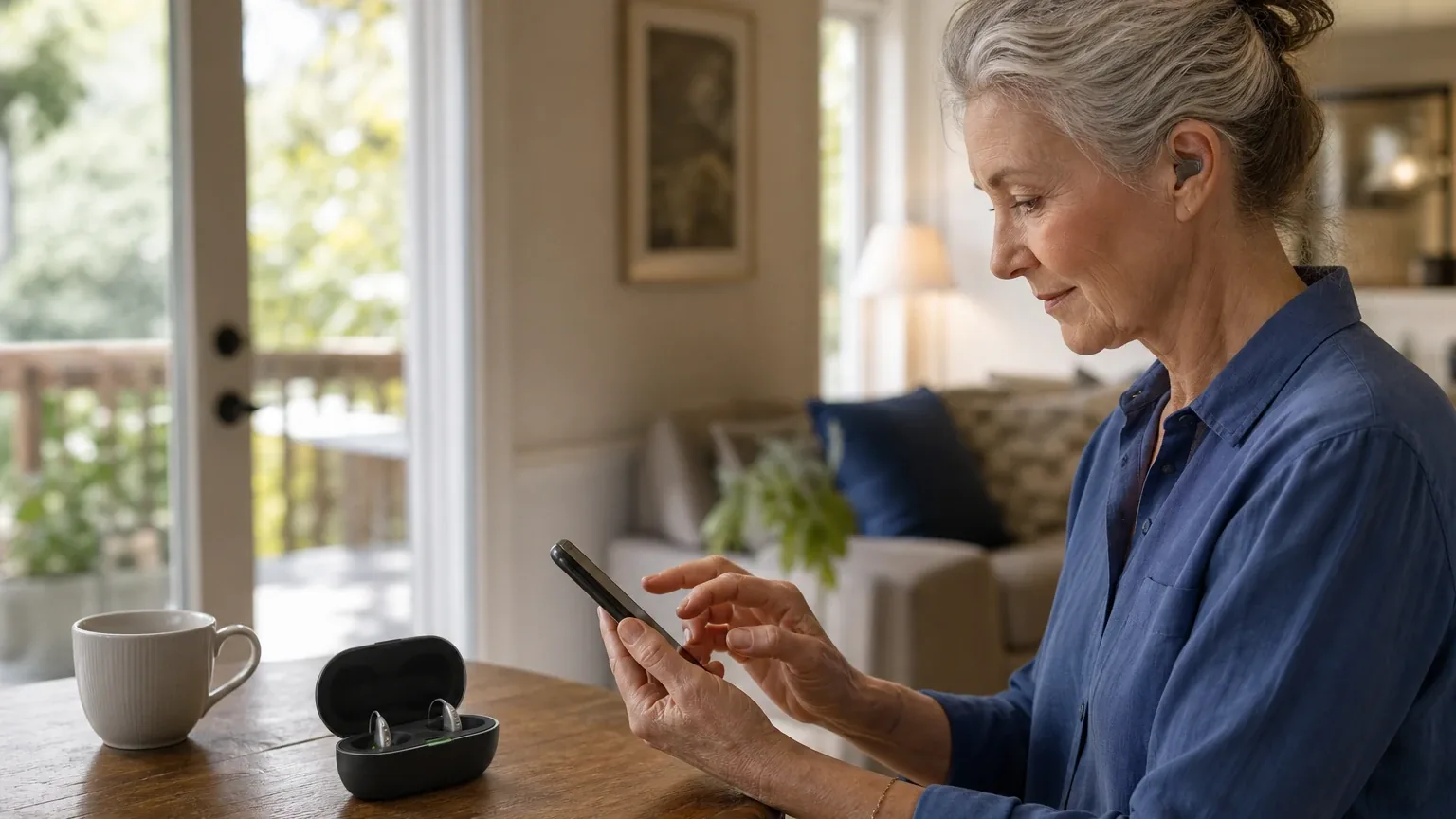
Answer Capsule
Jabra Enhance Select 700 leads the September 2026 consensus ranking for Wireless Streaming & Phone Pairing, followed by Phonak Audéo Lumity and Elehear Beyond Pro. The current study includes 7 valid AI-platform responses and 8 qualifying entities. Compared with August 2026, the leader changed. The current list added Jabra Enhance Select 700, Elehear Beyond Pro, ReSound LiNX Quattro, Starkey Genesis AI, MD Hearing Aid Volt Max 2, and Lexie B2 Plus Powered by Bose and removed Oticon Intent, Starkey Omega AI, Lexie B3 Powered by Bose, ReSound Vivia, and ELEHEAR Delight. This is an immediately preceding-month comparison. Rank movement measures changes in this collection of standardized AI-platform responses. It is not product testing, customer-review evidence, or proof that a provider's underlying quality improved or declined.
What Changed Since August 2026
This comparison uses the immediately preceding completed month.
Jabra Enhance Select 700 remained No. 1 in September 2026. It was named by 7 platforms, compared with not ranked in August 2026. Both studies used 7 valid platform responses.
The largest downward moves were Sennheiser All-Day Clear (down 1).
The current qualifying set added Jabra Enhance Select 700, Elehear Beyond Pro, ReSound LiNX Quattro, Starkey Genesis AI, MD Hearing Aid Volt Max 2, and Lexie B2 Plus Powered by Bose. It no longer includes Oticon Intent, Starkey Omega AI, Lexie B3 Powered by Bose, ReSound Vivia, and ELEHEAR Delight from the earlier top group. Entry or exit reflects the minimum-mention rule and the current response set, not a product launch, discontinuation, or quality finding.
| Current rank | Entity | Previous rank | Rank movement | Current mentions | Previous mentions | Mention change |
|---|---|---|---|---|---|---|
| 1 | Jabra Enhance Select 700 | — | New | 7 | — | — |
| 2 | Phonak Audéo Lumity | 2 | No change | 6 | 4 | +2 |
| 3 | Elehear Beyond Pro | — | New | 4 | — | — |
| 4 | ReSound LiNX Quattro | — | New | 4 | — | — |
| 5 | Starkey Genesis AI | — | New | 3 | — | — |
| 6 | MD Hearing Aid Volt Max 2 | — | New | 3 | — | — |
| 7 | Sennheiser All-Day Clear | 6 | Down 1 | 2 | 2 | +0 |
| 8 | Lexie B2 Plus Powered by Bose | — | New | 2 | — | — |
| — | Oticon Intent | 1 | Exited | — | 5 | — |
| — | Starkey Omega AI | 3 | Exited | — | 4 | — |
| — | Lexie B3 Powered by Bose | 4 | Exited | — | 4 | — |
| — | ReSound Vivia | 5 | Exited | — | 3 | — |
| — | ELEHEAR Delight | 7 | Exited | — | 2 | — |
The table is calculated directly from the two stored ranking datasets. Positive rank movement means an entity moved closer to No. 1; mention change shows the difference in the number of included platform responses naming it.
The August 2026 edition preserves the complete earlier ranking and methodology for reference.
Research Snapshot
- Topic: Best Bluetooth hearing aids for seniors, scoped to the Wireless Streaming & Phone Pairing use case.
- Target buyer: Older adults who want hearing aids that pair with smartphones, stream calls or TV audio, and support app-based adjustments.
- Geography: United States.
- Platforms included (7): openai, anthropic, deepseek, grok, perplexity, kimi, google.
- Research date: 2026-09-27 (authoritative run date).
- Unique entities named across platforms: 19.
- Qualifying entities: 8.
- Eligibility rule: An entity qualified only if it was named by at least two platforms during ranking discovery.
- Ranking unit: Bluetooth hearing aid model and provider.
- Consolidated deduplicated citations: 277.
Platform mentions count only ranking-discovery mentions. All 7 platforms evaluated fit, but a platform that did not name an entity during ranking discovery does not add to that entity's mention count.
The Consensus Ranking
Questions This Section Answers
- What are the best Bluetooth hearing aids for seniors who want wireless streaming and phone pairing in 2026?
- Which Bluetooth hearing aid for seniors was named by the most AI platforms, and how many platforms named it?
- Which hearing aids for phone pairing and TV streaming qualified for this index by being named by at least two platforms?
The table below is the sole authority for rank, platform mentions, platform share, average listed position, and best position. It is reproduced exactly as calculated.
| Rank | Entity | Platform mentions | Share of platform responses | Average listed position | Best position | Best considered for |
|---|---|---|---|---|---|---|
| 1 | Jabra Enhance Select 700 | 7 | 100.0% | 1.86 | 1 | Older adults using a compatible iPhone or Android phone who prioritize app-based adjustments, remote audiology support, and hands-free calls over premium music quality.; Buyers who want a direct-to-consumer OTC hearing-aid trial period and an optional dedicated TV streamer.; Users willing to verify exact phone compatibility before purchase. |
| 2 | Phonak Audéo Lumity | 6 | 85.7% | 3.17 | 1 | Seniors needing prescription hearing aids with direct phone and media streaming.; Buyers using either iPhone or many compatible Android phones and wanting hands-free calls.; Users who value Phonak's universal Bluetooth approach and myPhonak controls. |
| 3 | Elehear Beyond Pro | 4 | 57.1% | 2.25 | 2 | Adults with mild to moderate hearing loss who want direct Bluetooth phone calls and music without a separate streaming accessory.; Buyers who want app-based volume, listening-mode, noise-control, and sound customization.; Users who value rechargeable hearing aids and approximately 20 hours of stated use per charge. |
| 4 | ReSound LiNX Quattro | 4 | 57.1% | 5.0 | 3 | iPhone users who want direct calls and media streaming without a phone clip.; Buyers who can receive professional fitting and local ReSound support.; Users willing to verify smartphone compatibility before purchase. |
| 5 | Starkey Genesis AI | 3 | 42.9% | 5.0 | 3 | Older adults using a compatible iPhone who want direct call and media streaming.; Buyers who want a prescription-fitted device, My Starkey controls, remote care, and optional TV or remote-microphone accessories.; Users who value long rechargeable runtime and professional follow-up more than lowest price. |
| 6 | MD Hearing Aid Volt Max 2 | 3 | 42.9% | 6.67 | 4 | Older adults who mainly want app-based volume, program, and personalization controls.; Buyers who want rechargeable OTC hearing aids with remote support and do not require direct audio streaming.; Users with compatible iPhones, iPads, or Android devices who can manage app-based setup. |
| 7 | Sennheiser All-Day Clear | 2 | 28.6% | 5.5 | 4 | Older adults with mild to moderate hearing loss who want rechargeable OTC hearing aids with smartphone streaming.; Buyers using a reasonably current iPhone or Android phone and willing to complete app-based self-fitting.; Users who want a dedicated TV-streaming accessory rather than relying only on a television's Bluetooth output. |
| 8 | Lexie B2 Plus Powered by Bose | 2 | 28.6% | 7.0 | 7 | Older adults who primarily want streamed phone calls rather than music, podcasts, or TV audio; iPhone users seeking rechargeable OTC hearing aids with app-based self-fitting and remote adjustments; Buyers who value phone, text, video-chat, and email support |
Which Option Is Best for Which Version of the Buyer Need?
Questions This Section Answers
- Which Bluetooth hearing aid should a senior choose if they need hands-free calls on both iPhone and Android without a separate accessory?
- Which hearing aid for seniors is best if the buyer wants the lowest published upfront price with direct Bluetooth streaming?
- Is a prescription-fitted hearing aid or an over-the-counter hearing aid better for a senior who wants TV audio streamed to both ears?
Buyer needs in this use case split along four axes: phone ecosystem, whether TV audio must reach the aids, whether the buyer wants prescription fitting or self-fitting, and how much the buyer will pay.
| Buyer situation | Best-matched ranked option | Why, from the evidence |
|---|---|---|
| Wants the most-named option and a direct-to-consumer trial with remote audiology | Jabra Enhance Select 700 | Named by all 7 platforms; app control, remote care, optional TV Streamer, 100-day trial terms advertised for current Select products [e1:openai:c9] |
| Uses Android and wants hands-free calls without a neck-worn accessory | Phonak Audéo Lumity | Universal Bluetooth approach with hands-free profile support; one pairing covers calls and streaming to both aids [e2:anthropic:c1] |
| Wants the lowest published upfront price with direct Bluetooth streaming | Elehear Beyond Pro | Official page lists $599 per pair with a 45-day trial [e3:openai:C1] |
| iPhone-centered, wants professional fitting and local support | ReSound LiNX Quattro | Made for iPhone direct streaming plus ReSound Smart 3D app and provider network [e4:perplexity:c1] |
| iPhone-centered, wants long rechargeable runtime and remote care | Starkey Genesis AI | Reported up to 51 hours without streaming and up to 45 hours with streaming. |
1. Jabra Enhance Select 700
Questions This Section Answers
- Is Jabra Enhance Select 700 worth it for a senior who wants Bluetooth phone pairing and app-based hearing aid adjustments, and what are its main drawbacks?
- Is Jabra Enhance Select 700 or Phonak Audéo Lumity better for a senior who needs hands-free calls on Android?
- Which Bluetooth hearing aid for seniors has the lowest published cost for a dedicated TV streamer accessory?
Verdict. Jabra Enhance Select 700 is the consensus leader for this use case and the only entity named by all 7 platforms. It combines direct smartphone call and media streaming, app-based adjustment, remote audiology support, and an optional dedicated TV streamer. The fit is mixed rather than clean because public evidence conflicts on streaming audio quality, connection reliability is reported inconsistently, and the model appears to have been superseded by the Select M3, leaving current price and support terms uncertain.
Why it ranked here. Seven of seven platforms named it, with an average listed position of 1.86 and a best position of 1. It was ranked first by anthropic, grok, kimi, openai, and perplexity, third by google, and fifth by deepseek [e1:openai:c1] [e1:anthropic:C1] [e1:deepseek:c1] [e1:grok:web:0] [e1:perplexity:c1] [e1:google:1.1.3]. No other entity in this index was named by more than six platforms.
Best suited for. Older adults on a compatible iPhone or Android phone who prioritize app-based adjustments, remote audiology support, and hands-free calls over premium music quality; direct-to-consumer OTC buyers who want a trial period; and users willing to verify exact phone compatibility before purchase.
Main strengths for this use case. Direct smartphone call and media streaming is supported on compatible iOS and Android devices, with Android streaming requiring Android 10 or later per Jabra's user guide [e1:openai:c1]. The Jabra Enhance Select app provides environmental programs, independent left/right volume control, frequency adjustment, and access to support [e1:openai:c5]. TapControl enables double-tap call answering on iPhone 11 or newer and compatible Android devices [e1:anthropic:C3]. The optional TV Streamer sends TV, computer, or stereo audio to compatible Select hearing aids, supports app-based balancing of TV volume against background sound, and is rated for up to 22 feet [e1:openai:c10]. Reported battery life is approximately 24 hours with a charging case adding roughly 72 hours [e1:openai:c7].
Main limitations. Independent app-store reviews report recurring issues including one hearing aid dropping during calls or streaming and difficulty maintaining bilateral audio [e1:openai:c6]. WIRED found the Select 700's media-streaming quality poor, while HearingTracker reported above-category measured music-streaming performance, so public evidence conflicts [e1:openai:c7] [e1:openai:c4]. Only one active Bluetooth connection is supported at a time, requiring manual switching between devices [e1:anthropic:C3]. There is no telecoil option, limiting compatibility with hearing loop systems [e1:anthropic:C5]. Android hands-free calling requires Android 13 or later [e1:anthropic:C3]. The device is designed for mild to moderate hearing loss only [e1:anthropic:C5].
Pricing or cost summary. A third-party review listed the Select 700 at $1,795 sale price or $1,995 regular price per pair in 2025 [e1:openai:c12].
2. Phonak Audéo Lumity
Questions This Section Answers
- Is Phonak Audéo Lumity worth it for a senior who wants direct Bluetooth streaming on both iPhone and Android, and what are its main drawbacks?
- Which prescription hearing aid for seniors has the most transparent published price for wireless streaming and phone pairing?
- Does Phonak Audéo Lumity support Auracast or Bluetooth LE Audio for public venue streaming?
Verdict. Phonak Audéo Lumity is the strongest prescription-fitted alternative in this index and the second-most-named entity, appearing on 6 of 7 platforms. Its core advantage is a universal Bluetooth approach that pairs directly with iPhone and many Android phones for calls and media without a neck-worn intermediary. Its main weaknesses are that it is a prior-generation Phonak platform, lacks Auracast and Bluetooth LE Audio, may require a separate TV Connector, and has no standardized U.S. retail price.
Why it ranked here. Six platforms named it, with an average listed position of 3.17 and a best position of 1. It was ranked first by deepseek and google, second by anthropic and openai, third by perplexity, and tenth by kimi [e2:deepseek:c1] [e2:google:1.1.5] [e2:anthropic:c1] [e2:openai:c1] [e2:perplexity:c1] [e2:kimi:phonak_lumity_legacy].
Best suited for. Seniors needing prescription hearing aids with direct phone and media streaming, buyers using either iPhone or many compatible Android phones who want hands-free calls, and users who value Phonak's universal Bluetooth approach and myPhonak controls.
Main strengths for this use case. Lumity supports universal Bluetooth connectivity with Hands-Free Profile and A2DP for phone calls and audio streaming, pairing directly with iPhone (iOS 15+) and Android (8.0+) devices via Bluetooth 4.2 or newer, with only one pairing required for both call and streaming audio to reach both aids [e2:anthropic:c1] [e2:anthropic:c2]. The DuoPhone feature streams phone signals in real time to both ears with an average 3.1 dB SNR benefit [e2:anthropic:c4]. The myPhonak app provides volume control, program selection, noise cancellation adjustment, speech focus, scenario-based programs, and remote support appointments [e2:anthropic:c6]. Independent lab testing by HearAdvisor awarded Lumity 4.1/5 for music streaming, above the prescription category average [e2:google:1.1.2]. Phonak brochure material states rechargeable models can provide up to 16 hours on a charge including 4 hours of Bluetooth streaming and 4 hours of TV streaming [e2:perplexity:c6].
Main limitations. Lumity lacks newer Auracast and Bluetooth LE Audio capabilities according to independent 2026 coverage [e2:openai:c11]. A separate TV Connector may be required for dependable TV listening, creating extra cost and another device to operate [e2:perplexity:c13]. For earlier Lumity generations, users must access "See instructions" or "Optional settings" after app pairing to enable call and streaming functionality, a step that newer Infinio models automate [e2:anthropic:c11] [e2:anthropic:c12]. Independent lab testing indicated mixed speech-in-noise performance (2.1/5) and poor own-voice comfort (1.0/5) [e2:google:1.1.2]. Bluetooth troubleshooting can require forgetting three distinct connections ("R-Phonak", "LE_R-Phonak", "LE_L-Phonak") after OS updates [e2:google:3.2.5].
Pricing or cost summary. Phonak does not publish U.S.
What Changed Since August 2026
Phonak Audéo Lumity remained at No. 2, and platform mentions increased from 4 to 6. The September 2026 article reframes this item as the Phonak Audéo Lumity, replacing the earlier Infinio Ultra Sphere write-up, while keeping the same practical pitch: universal Bluetooth pairing with iPhone and Android without a neck-worn streamer. The recommended use case is largely unchanged, but the current article is more specific about drawbacks, noting Lumity is a prior-generation platform without Auracast or Bluetooth LE Audio and may need a separate TV Connector. Reported battery evidence shifted to up to 16 hours per charge with 4 hours of Bluetooth streaming; the earlier 56-hour, 27-hour, and 10–11-hour figures are no longer repeated. The prior $2,499–$4,898, $4,898, and $2,499–$2,899 price ranges are also no longer repeated. Differences between the two editions reflect what each article reports; they do not by themselves prove that the product, service, or price changed.
3. Elehear Beyond Pro
Questions This Section Answers
- Is Elehear Beyond Pro worth it for a senior who wants direct Bluetooth phone calls and music streaming without a separate accessory, and what are its main drawbacks?
- Which Bluetooth hearing aid for seniors has the lowest published per-pair price with direct streaming and a trial period?
- Is Elehear Beyond Pro or Jabra Enhance Select 700 better for a senior who wants to stream TV audio?
Verdict. Elehear Beyond Pro is the strongest value option in this index and the third-ranked entity overall, despite being named by only 4 of 7 platforms. It offers Bluetooth 5.3 direct streaming for calls and media on Apple and Android phones, app-based controls, and a $599 per-pair price. The fit is limited by single-device pairing, a relatively bulky design, mixed independent findings on noise performance, and a one-year warranty.
Why it ranked here. Four platforms named it, with an average listed position of 2.25 and a best position of 2. It was ranked second by grok, kimi, and perplexity, and third by anthropic [e3:grok:0] [e3:kimi:elehear_official] [e3:perplexity:c8] [e3:anthropic:c1]. Its average position is the second-best in the index, but its mention count is lower than the top two entities.
Best suited for. Adults with mild to moderate hearing loss who want direct Bluetooth phone calls and music without a separate streaming accessory, buyers who want app-based volume, listening-mode, noise-control, and sound customization, and users who value rechargeable hearing aids with approximately 20 hours of stated use per charge.
Main strengths for this use case. The product uses Bluetooth 5.3, supports Apple and Android phone-call streaming, and automatically reconnects after pairing [e3:openai:C1]. Independent lab testing by HearAdvisor rated music streaming at 3.8/5.0 and speech in quiet at 4.3/5.0, with an overall SoundGrade of "A" (4.8/5.0) placing it in the top 5% of tested devices [e3:anthropic:c2]. WIRED found phone calls "crisp and clear" and music playback better than many pure hearing aids [e3:openai:C3]. The ELEHEAR App provides volume, listening modes, noise-control, directionality, sound customization, firmware updates, and audiologist-related support [e3:openai:C1]. Battery is specified at up to 20 hours per charge with approximately four additional charges from the case, and a 15-minute quick charge provides up to 6 hours of use [e3:anthropic:c5].
Main limitations. The aids connect to only one smart device at a time [e3:openai:C2]. TV audio can be attempted through a compatible smart TV's Bluetooth connection or the app's Remote Sound Capture feature, but ELEHEAR warns that TVs may have lower-quality Bluetooth implementation and may cause compatibility or connection problems [e3:openai:C2]. WIRED reported scratchy, gravelly hiss and static distortion at high amplification levels above level four on a 19-step scale [e3:anthropic:c4]. Consumer Reports reported that noise reduction was not especially strong [e3:openai:C6]. Independent review found the hearing aids relatively large and uncomfortable after extended use, especially with glasses [e3:openai:C3]. The warranty is one year, shorter than some competing products [e3:openai:C1]. There is no telecoil or Auracast support [e3:anthropic:c2].
4. ReSound LiNX Quattro
Questions This Section Answers
- Is ReSound LiNX Quattro worth it for a senior iPhone user who wants direct call and media streaming, and what are its main drawbacks?
- Which hearing aid for seniors requires a separate Phone Clip+ accessory for hands-free calling on some phones?
- Is ReSound LiNX Quattro or Starkey Genesis AI better for a senior who wants a prescription-fitted device with app-based adjustments?
Verdict. ReSound LiNX Quattro is a capable but aging prescription platform that fits iPhone-centered seniors who receive professional fitting and local support. It offers Made for iPhone direct streaming, compatibility with some Android phones, and ReSound Smart 3D app control. Its age, device-specific Android requirements, accessory dependence for TV audio, and reported pairing problems reduce its value against newer platforms.
Why it ranked here. Four platforms named it, with an average listed position of 5.00 and a best position of 3. It was ranked third by openai, fourth by deepseek and perplexity, and ninth by anthropic [e4:openai:c1] [e4:deepseek:c1] [e4:perplexity:c1] [e4:anthropic:1]. It tied with Starkey Genesis AI on average position but ranked higher because its best position was 3 versus Starkey's 3 and its mention count was higher.
Best suited for. iPhone users who want direct calls and media streaming without a phone clip, buyers who can receive professional fitting and local ReSound support, and users willing to verify smartphone compatibility before purchase.
Main strengths for this use case. LiNX Quattro supports direct Bluetooth streaming from iOS devices (MFi-certified) without intermediate accessories, and from compatible Android devices with Bluetooth 5.0 and Android 10 or later using Bluetooth Low Energy [e4:anthropic:1]. Hands-free calling is supported on iPhone 11 or later and select iPad models [e4:anthropic:2]. The ReSound Smart 3D app provides personalized listening adjustments, battery status monitoring for Model 61 rechargeable units, mix-in streaming volume control, and remote fine-tuning via ReSound Assist [e4:anthropic:5]. Model 61 delivers 24 hours of battery life with up to 12 hours of streaming time, and a 30-minute quick charge yields 8 hours [e4:anthropic:5]. Extended bandwidth up to 9.5 kHz is described as the broadest among Made for Apple hearing aids [e4:anthropic:4].
Main limitations. Direct Android streaming is limited to Bluetooth 5.0 and Android 10 or later, and ReSound explicitly states it cannot guarantee full compatibility with all Android devices [e4:anthropic:1]. Android users without direct streaming capability require the Phone Clip+ accessory [e4:anthropic:2]. TV audio is supported through a separate ReSound TV Streamer accessory rather than ordinary direct pairing to most televisions [e4:openai:c7]. Independent user reports describe pairing failures, intermittent one-sided streaming, and reconnection problems [e4:openai:c5]. LiNX Quattro is a 6th-generation product released in the 2018–2019 era, and ReSound now markets Nexia (9/7/5) with Bluetooth LE Audio and Auracast [e4:anthropic:7]. No current, standardized U.S. retail price was verified [e4:openai:c1].
Pricing or cost summary. No current, standardized U.S.
5. Starkey Genesis AI
Questions This Section Answers
- Is Starkey Genesis AI worth it for a senior who wants iPhone call streaming and app-based adjustments, and what are its main drawbacks?
- Which hearing aid for seniors supports two-way hands-free calling on iPhone but not on Android?
- Is Starkey Genesis AI or ReSound LiNX Quattro better for a senior who wants long rechargeable battery life during streaming?
Verdict. Starkey Genesis AI is a sensible prescription option for iPhone-centered seniors who want long battery life, app adjustments, TV-accessory support, and professional care. It is less compelling for Android users, heavy music streamers, or buyers who want the latest LE Audio and Auracast capabilities.
Why it ranked here. Three platforms named it, with an average listed position of 5.00 and a best position of 3. It was ranked third by deepseek, fifth by openai, and seventh by anthropic [e5:deepseek:c1] [e5:openai:c1] [e5:anthropic:c1]. Its mention count of 3 is lower than the four entities above it.
Best suited for. Older adults using a compatible iPhone who want direct call and media streaming, buyers who want a prescription-fitted device with My Starkey controls, remote care, and optional TV or remote-microphone accessories, and users who value long rechargeable runtime and professional follow-up more than lowest price.
Main strengths for this use case. Genesis AI supports audio streaming on compatible iOS and Android devices, with hands-free two-way calling available for compatible iPhones [e5:openai:c1]. Reported rechargeable runtime for the RIC RT model is up to 51 hours without streaming and up to 45 hours with streaming; smaller rechargeable models have lower reported streaming runtime, including approximately 33 hours for the mRIC R [e5:openai:c1]. The My Starkey app supports pairing, volume and program adjustments, manual customization, Edge Mode+, health-related functions, and remote fine-tuning through a hearing-care professional [e5:anthropic:c3]. Genesis AI can pair with Starkey wireless accessories, including TV-streaming and remote-microphone products [e5:perplexity:c5]. Starkey claims a 40% longer wireless range compared to previous generations [e5:google:1.2.1].
Main limitations. Android users generally need the phone microphone for their own voice, so hands-free calling is weaker than the iPhone experience [e5:openai:c1]. Genesis AI does not provide the newest LE Audio and Auracast experience associated with newer Starkey platforms; Auracast is exclusive to Omega AI and Edge AI [e5:anthropic:c1]. Independent user reports are mixed, including complaints about dropouts, one-ear streaming, and phone-distance sensitivity [e5:openai:c3] [e5:openai:c4]. The smallest non-wireless IIC/CIC models do not support the full app experience [e5:openai:c1]. Genesis AI launched in February 2023 and has been superseded by Edge AI (October 2024) and Omega AI [e5:anthropic:c7].
Pricing or cost summary. U.S. pricing is provider-dependent and is not published as a single official MSRP [e5:deepseek:c1]. An independent marketplace listing showed Genesis AI 24 at $2,798 per pair and Genesis AI 20 at $2,598 per pair, with audiologist programming, remote fine-tuning, a 60-day trial, and 0% financing for that seller [e5:openai:c1].
6. MD Hearing Aid Volt Max 2
Questions This Section Answers
- Is MD Hearing Aid Volt Max 2 worth it for a senior who wants Bluetooth phone pairing, and what are its main drawbacks?
- Which hearing aid for seniors uses Bluetooth only for app control and cannot stream phone calls or music?
- Which Bluetooth hearing aid for seniors has the lowest published per-pair price but no direct audio streaming?
Verdict. MD Hearing Aid Volt Max 2 is a weak fit for this specific use case. It supports Bluetooth app control and smartphone adjustments but does not support direct streaming of phone calls, music, or TV audio to the hearing aids. It should be considered only when app-based adjustments are the real priority and streaming is optional.
Why it ranked here. Three platforms named it, with an average listed position of 6.67 and a best position of 4. It was ranked fourth by grok and eighth by kimi and perplexity [e6:grok:web:0] [e6:kimi:MDH-1] [e6:perplexity:c1]. Its average position is the second-worst in the index.
Best suited for. Older adults who mainly want app-based volume, program, and personalization controls, buyers who want rechargeable OTC hearing aids with remote support and do not require direct audio streaming, and users with compatible iPhones, iPads, or Android devices who can manage app-based setup.
Main strengths for this use case. Bluetooth is used for connection to the MDHearing app and remote control; the manufacturer identifies the VOLT MAX second generation as Bluetooth-compatible [e6:openai:c1]. The app supports volume and program changes, personalization, device setup, and remote-adjustment requests [e6:openai:c2]. The app manual lists compatibility with iPhones and iPads running iOS 12 or later and Android devices running Android 8 or later [e6:openai:c5]. MDHearing claims more than 15 hours per charge and up to three additional charges from the case [e6:openai:c2]. Consumer Reports found good daily-use performance and good tested sound quality, while also reporting more distortion and interference in loud environments [e6:openai:c3].
Main limitations. The VOLT MAX 2 does not support direct streaming of phone calls to the hearing aids, according to independent Consumer Reports testing [e6:openai:c3]. Direct streaming of music and TV audio is not supported; Bluetooth functionality is primarily for app control rather than audio streaming [e6:openai:c3]. MDHearing documents connection requirements including adequate battery, proximity within about six feet, and use with only one connected mobile device at a time, and documents low-battery and reconnection problems [e6:openai:c8]. Consumer Reports classifies the device as not water resistant [e6:openai:c3]. Independent lab testing scored speech clarity in quiet at 1.9/5 and speech in noise at 1.0/5, both below category averages, and music streaming at 0.0/5 [e6:anthropic:C4].
Pricing or cost summary. The official product page lists $597 per pair, with a 60-day trial, one-year warranty, free return shipping, and lifetime support [e6:openai:c2]. Consumer Reports estimates approximately $140 per year for replacement accessories [e6:openai:c3].
7. Sennheiser All-Day Clear
Questions This Section Answers
- Is Sennheiser All-Day Clear worth it for a senior who wants Bluetooth streaming and a dedicated TV connector, and what are its main drawbacks?
- Which hearing aid for seniors has the shortest reported Bluetooth range and the lowest streaming battery allowance?
- Is Sennheiser All-Day Clear or Elehear Beyond Pro better for a senior who wants direct Bluetooth streaming on both iPhone and Android?
Verdict. Sennheiser All-Day Clear is a good fit for older adults who prioritize direct smartphone streaming, hands-free calls on supported iOS and Android phones, and app-based self-adjustment. It is less compelling for buyers who need the simplest pairing experience, highly refined music reproduction, or extensive in-person support.
Why it ranked here. Two platforms named it, with an average listed position of 5.50 and a best position of 4. It was ranked fourth by google and seventh by kimi [e7:google:1.1.1] [e7:kimi:no-source-found]. Its mention count of 2 is the joint-lowest in the index.
Best suited for. Older adults with mild to moderate hearing loss who want rechargeable OTC hearing aids with smartphone streaming, buyers using a reasonably current iPhone or Android phone who are willing to complete app-based self-fitting, and users who want a dedicated TV-streaming accessory rather than relying only on a television's Bluetooth output.
Main strengths for this use case. The product supports Bluetooth connectivity, hands-free calls, and streaming from iOS and Android smartphones [e7:openai:c1]. The All-Day Clear app requires a Bluetooth-enabled smartphone running at least iOS 14 or Android 8.0, with Android devices supporting Bluetooth 4.2 [e7:openai:c2]. The app supports self-fitting, volume, independent left/right volume, low/mid/high-frequency adjustment, ambient-awareness control while streaming, and a Live Music program [e7:openai:c8]. A dedicated TV Connector can route television audio directly to the hearing aids [e7:openai:c6]. Independent review coverage describes strong speech clarity and good everyday performance [e7:perplexity:c6].
Main limitations. Independent reviews criticize basic app functionality and limited streaming bass or music quality; WIRED found calls and media streaming workable but criticized the streaming sound for having very little bass [e7:openai:c4]. The TV Connector adds $349.95 to the direct purchase price [e7:openai:c6]. The instruction manual states a rechargeable battery life of up to 16 hours including 2–3 hours of streaming, which conflicts with marketing claims of up to 24 hours [e7:anthropic:c2]. Technical specifications document Bluetooth range as approximately 1 meter, significantly shorter than typical Bluetooth 4.2 devices [e7:anthropic:c2]. The hearing aids can pair with up to 2 devices but only connect to one at a time, and there is no true simultaneous Bluetooth multipoint connection [e7:google:2.1.4]. The charging case lacks an internal battery and uses a legacy micro-USB port [e7:google:1.1.7]. The one-year standard warranty is shorter than some buyers may expect for a $999.95 device [e7:openai:c11].
Pricing or cost summary. The current U.S. direct price shown for All-Day Clear is $999.95 [e7:openai:c11].
What Changed Since August 2026
Sennheiser All-Day Clear moved down from No. 6 to No. 7, and platform mentions were unchanged at 2. The September 2026 article reframes Sennheiser All-Day Clear as a good fit mainly for older adults who prioritize direct smartphone streaming, hands-free calls, and app-based self-adjustment, and it now treats extensive in-person support as a weaker area. Its limitations discussion is more specific, citing a manual-stated battery life of up to 16 hours including 2–3 hours of streaming and an approximately 1-meter Bluetooth range. The current section reports a $999.95 direct price, while the earlier write-up's $799.95–$999.95 range and $1,099.95 Slim figure are not repeated. Differences between the two editions reflect what each article reports; they do not by themselves prove that the product, service, or price changed.
8. Lexie B2 Plus Powered by Bose
Questions This Section Answers
- Is Lexie B2 Plus Powered by Bose worth it for a senior who wants streamed phone calls, and what are its main drawbacks?
- Which hearing aid for seniors is discontinued with support guaranteed only through September 15, 2026?
- Is Lexie B2 Plus Powered by Bose or Sennheiser All-Day Clear better for a senior who wants TV audio streamed to both ears?
Verdict. Lexie B2 Plus Powered by Bose is a mixed fit for this use case. It supports app control and phone-call streaming from compatible iPhone and Android devices, but Lexie states that music and media streaming is not optimal, Android compatibility varies by device, and independent testing reports setup and compatibility friction. A reported company wind-down adds material long-term support risk.
Why it ranked here. Two platforms named it, with an average listed position of 7.00 and a best position of 7. It was ranked seventh by both deepseek and perplexity [e8:deepseek:C1] [e8:perplexity:c1]. It has the lowest average position in the index.
Best suited for. Older adults who primarily want streamed phone calls rather than music, podcasts, or TV audio; iPhone users seeking rechargeable OTC hearing aids with app-based self-fitting and remote adjustments; and buyers who value phone, text, video-chat, and email support.
Main strengths for this use case. Lexie identifies the B2 Plus as supporting direct phone-call streaming from iPhone and Android devices, and the company expressly says streaming is designed for phone calls [e8:openai:c1]. iPhone pairing is supported through iOS hearing-device settings; Android call streaming requires Android 11 or later [e8:openai:c3]. The Lexie app provides connection, hearing-aid controls, an in-app hearing test, and settings customized to the user's hearing profile [e8:openai:c1]. HearAdvisor measured speech-in-quiet at 4.3/5 and own-voice comfort at 4.8/5 [e8:anthropic:C4]. Consumer Reports rated ease of use "especially easy" with good directions and intuitive setup [e8:anthropic:C7]. The device is advertised for up to 18 hours of runtime, with the charging case providing an additional 18-hour charge [e8:anthropic:C3].
Main limitations. Lexie says music and media streaming is not optimal, and the user manual says streaming is designed for phone calls [e8:openai:c2]. Android call streaming requires Android 11 or later, and the manual warns that not all Android phones support the feature [e8:openai:c3]. WIRED reported setup problems requiring technical-support intervention, although the reviewer still found the app easy to use after setup [e8:openai:c5]. Streaming reduces battery life of both the smartphone and the hearing aids [e8:openai:c1]. HearAdvisor testing shows feedback handling scored 2.8/5, below the OTC average of 4.54 [e8:anthropic:C4]. No verified product-specific TV-streaming accessory or optimized TV-streaming mode was identified [e8:openai:c1]. Google reported that in July 2026 Lexie's parent company, LXE Hearing, announced it was winding down U.S. operations, with official customer support and active warranties only guaranteed through September 15, 2026 [e8:google:2.2.4] [e8:google:2.2.9].
What the Cross-Platform Study Reveals About This Market
Questions This Section Answers
- What does the cross-platform AI consensus reveal about which Bluetooth hearing aids for seniors are most recommended in 2026?
- Which Bluetooth hearing aid brands for seniors appear across the most AI platforms, and which appear on only two?
- How much do AI platform recommendations for senior hearing aids with phone pairing diverge on price and streaming capability?
Three patterns stand out across the 7 platforms and 8 qualifying entities.
First, mention breadth and fit quality diverge. Jabra Enhance Select 700 was named by all 7 platforms but received mixed fit ratings from three of them. Elehear Beyond Pro was named by only 4 platforms but received the second-best average listed position (2.25) and strong fit ratings from anthropic and grok. A buyer reading only the ranking order would miss that the third-ranked entity has a better average position than the second-ranked one.
Second, the market splits cleanly into prescription and OTC tiers, and the split maps onto price. The prescription entities in this index — Phonak Audéo Lumity, ReSound LiNX Quattro, and Starkey Genesis AI — all have provider-set pricing with no published U.S. MSRP, and all three carry unresolved questions about current product generation. The OTC entities — Jabra Enhance Select 700, Elehear Beyond Pro, MD Hearing Aid Volt Max 2, Sennheiser All-Day Clear, and Lexie B2 Plus Powered by Bose — all have published per-pair prices ranging from $597 to $999.95.
Third, direct audio streaming is not universal even among ranked entities.
Where the AI Platforms Agreed
Questions This Section Answers
- Which Bluetooth hearing aid for seniors did all 7 AI platforms agree on as the top recommendation?
- What do AI platforms agree are the main limitations of Bluetooth hearing aids for seniors who want phone pairing?
Platforms converged on several points.
- Jabra Enhance Select 700 belongs at or near the top. All 7 platforms named it, and 5 of 7 ranked it first. Even deepseek, which ranked it fifth, described it as plausibly addressing the use case through Bluetooth hands-free calling, app-based adjustments, and remote care [e1:deepseek:c1].
- App-based adjustment is a core requirement, not a bonus. Every ranked entity's evidence bundle discusses companion-app controls, and the topic configuration lists companion app usability as a criterion.
- Streaming reduces battery life. Anthropic, openai, perplexity, and google all noted that Bluetooth streaming drains hearing-aid batteries faster than non-streaming use across multiple entities [e1:anthropic:C3] [e3:perplexity:c14] [e7:anthropic:c2] [e8:openai:c1].
- Phone compatibility must be verified per model. Platforms repeatedly warned that compatibility is device-specific and not guaranteed by operating-system version alone [e1:openai:c1] [e2:openai:c1] [e4:anthropic:1] [e5:openai:c1].
- TV audio usually requires an accessory. Jabra, Phonak, ReSound, Starkey, and Sennheiser all route TV audio through a separate streamer or connector rather than ordinary direct pairing [e1:openai:c10] [e2:perplexity:c13] [e4:openai:c7] [e5:perplexity:c5] [e7:openai:c6].
Where the AI Platforms Disagreed
Questions This Section Answers
- Why do AI platforms disagree about whether Jabra Enhance Select 700 has good streaming audio quality?
- Which Bluetooth hearing aid for seniors has the most conflicting evidence about whether it streams audio at all?
- Why do AI platforms disagree about whether Lexie B2 Plus Powered by Bose is a good choice for seniors in 2026?
Material disagreements in this study were not forced into false consensus.
- Jabra Enhance Select 700 streaming quality. WIRED reported poor media-streaming quality, while HearingTracker reported above-category measured music-streaming performance [e1:openai:c7] [e1:openai:c4]. Grok noted one review calling streaming quality "terrible" while others called it excellent [e1:grok:web:0].
- Whether MD Hearing Aid Volt Max 2 streams audio at all. Some third-party pages describe it as supporting Bluetooth streaming, but Consumer Reports states that it does not stream phone calls or music directly, and MDHearing's own blog states the company uses Bluetooth solely for app control [e6:openai:c3] [e6:google:md_blog_bluetooth_savings].
- Lexie B2 Plus Powered by Bose viability. Google rated it weak due to the reported company wind-down and calls-only streaming, while anthropic and perplexity rated it good for call-focused users [e8:google:2.2.4] [e8:anthropic:C1] [e8:perplexity:c1].
- Phonak Audéo Lumity generation relevance. Kimi ranked it tenth and called it a legacy platform superseded by Audéo Sphere Infinio, while google ranked it first and emphasized universal Bluetooth as decisive [e2:kimi:phonak_lumity_legacy] [e2:google:1.1.5].
How Buyers Should Choose
Questions This Section Answers
- What should a senior check before buying a Bluetooth hearing aid for phone pairing and TV streaming?
- Which Bluetooth hearing aid for seniors is best if the buyer's exact Android phone model is not confirmed compatible?
- How should a senior decide between an over-the-counter and a prescription Bluetooth hearing aid for streaming?
Work through these decision points in order.
- Confirm your exact phone model and OS version against the manufacturer's compatibility list. This is the single most repeated warning across all 8 entity bundles. Jabra requires Android 10 or later for streaming and Android 13 or later for hands-free calls [e1:anthropic:C3]. ReSound requires Android 10 and Bluetooth 5.0 for direct Android streaming and explicitly cannot guarantee full compatibility [e4:anthropic:1]. Lexie requires Android 11 or later and warns that not all Android phones support call streaming [e8:openai:c3].
- Decide whether you need TV audio, and budget for the accessory. Jabra's TV Streamer is $299 [e1:openai:c10]. Sennheiser's TV Connector is $349.95 [e7:openai:c6]. ReSound's TV Streamer+ is approximately $233.99–$249.99 but is incompatible with the legacy LiNX Quattro, which needs the TV Streamer 2 [e4:google:2.1.3] [e4:google:2.1.5].
- Decide whether you need music and media streaming or only phone calls. Lexie states streaming is designed for phone calls and that music and media streaming is not optimal [e8:openai:c1]. MD Hearing Aid Volt Max 2 does not stream calls or music at all [e6:openai:c3].
Methodology
This index was produced from a single standardized prompt sent once to each of 7 AI platforms on 2026-09-27: openai, anthropic, deepseek, grok, perplexity, kimi, and google. Each platform was asked to identify and rank Bluetooth hearing aid models and providers for the Wireless Streaming & Phone Pairing use case for older adults in the United States.
Ranking rule. Entities were ranked by platform mentions first, then by average listed position, then by best listed position. The final ranking table is the sole authority for rank, platform mentions, platform share, average rank, and best rank. No values were recalculated or changed.
Eligibility. An entity qualified only if it was named by at least two platforms during ranking discovery. Nineteen unique entities were named; 8 qualified.
Evidence. Each qualifying entity has an evidence bundle containing platform-reported claims, use-case findings, pricing and terms, strengths, limitations, alternative guidance, factual conflicts, verification questions, and a final verdict. Citations are platform-reported evidence, not independently verified facts. Company-owned citations materially outnumber independent citations in most bundles; company claims are not described as independently verified.
Platform research capabilities. Platforms differed in search configuration. Anthropic, google, kimi, openai, and perplexity ran with search enabled. Grok ran with a server-side search tool. Deepseek ran without search enabled, so its claims require explicit verification before being treated as current facts.
Source ownership. The consolidated catalog distinguishes company-owned sources from independent sources. Where a claim rests only on a company-owned source, this article says so.
Methodology Limitations
- One prompt, one run. The study used one standardized prompt sent once to each included platform. AI answers can vary by date, wording, location, account state, model, interface, browsing configuration, and the sources retrieved. Repeating the study could produce different results.
- Platform mentions count ranking-discovery naming only. All 7 platforms evaluated fit, but a platform that did not name an entity during ranking discovery does not add to that entity's mention count. Mention counts therefore understate how many platforms considered an entity relevant.
- Platform-reported research dates differ from the run date. Several platforms reported earlier internal research dates than the authoritative run date of 2026-09-27. These dates are provenance metadata and do not independently prove freshness.
- Company-owned citations outnumber independent citations. Across the entity bundles, owned sources materially outnumber independent ones. Company claims about streaming quality, battery life, compatibility, and support terms should be verified directly.
- URLs were not independently validated. The URLs in the source catalog were collected from platform responses and were not independently validated by the writer stage.
- Conflicts were preserved, not resolved. Where platforms disagreed about pricing, product generation, or whether a device streams audio at all, this article describes the conflict and tells buyers what to verify rather than picking a winner.
- No-search model claims. Deepseek ran without search enabled. Its claims about product features, pricing, and availability are platform-reported and require verification.
- Identity normalization. Company-name variants were collapsed onto one canonical brand before minimum-mentions qualification. Official-site retrieval failed for one or more mentions in several bundles; no failed fetch was used as a verified domain key.
Final Verdict
Jabra Enhance Select 700 is the consensus leader for Bluetooth hearing aids built around wireless streaming and phone pairing for seniors, named by all 7 platforms studied. It is the safest starting point for a buyer who wants app-based adjustments, remote audiology support, and an optional dedicated TV streamer, provided they verify exact phone compatibility and confirm current inventory and terms given the apparent transition to the Select M3.
Phonak Audéo Lumity is the strongest prescription alternative for buyers who want universal Bluetooth across iPhone and Android, but it is a prior-generation platform without Auracast or LE Audio and has no published U.S. price. Elehear Beyond Pro is the best value option at $599 per pair with direct Bluetooth 5.3 streaming, tempered by single-device pairing and conflicting independent reports on audio quality at high amplification. ReSound LiNX Quattro and Starkey Genesis AI serve iPhone-centered buyers who want professional fitting, with ReSound carrying more obsolescence risk and Starkey carrying a weaker Android hands-free experience.
MD Hearing Aid Volt Max 2, Sennheiser All-Day Clear, and Lexie B2 Plus Powered by Bose each fail or partially fail the core streaming requirement in ways buyers must understand before purchase: Volt Max 2 does not stream audio at all, All-Day Clear requires a $349.95 accessory for TV audio and has a reported 1-meter Bluetooth range, and Lexie B2 Plus is optimized for phone calls only with a reported company wind-down limiting long-term support.
Frequently Asked Questions
Which Bluetooth hearing aid for seniors was named by the most AI platforms?
Jabra Enhance Select 700, named by all 7 platforms studied (100.0% share), with an average listed position of 1.86 and a best position of 1.
How many platforms were studied in this index?
Seven: openai, anthropic, deepseek, grok, perplexity, kimi, and google. The study used one standardized prompt sent once to each platform on 2026-09-27.
How many entities qualified for the ranking?
Nineteen unique entities were named across platforms, and 8 qualified by being named by at least two platforms.
Which ranked hearing aid does not stream phone calls or music at all?
MD Hearing Aid Volt Max 2. Independent Consumer Reports testing states it does not stream phone calls or music directly, and MDHearing's own blog states the company uses Bluetooth solely for app control and remote personalization [e6:openai:c3] [e6:google:md_blog_bluetooth_savings].
Which ranked hearing aid has the lowest published per-pair price?
Elehear Beyond Pro at $599 per pair, per its official product page [e3:openai:C1]. MD Hearing Aid Volt Max 2 is listed at $597 per pair but does not stream audio [e6:openai:c2].
Do any ranked hearing aids stream TV audio without a separate accessory?
The evidence does not confirm a ranked entity that streams TV audio without an accessory. Jabra, Phonak, ReSound, Starkey, and Sennheiser all route TV audio through a separate streamer or connector [e1:openai:c10] [e2:perplexity:c13] [e4:openai:c7] [e5:perplexity:c5] [e7:openai:c6].
Consolidated Sources
Company-Owned Sources
- AirMirror — Wireless Screen Mirroring for Every Screen: https://airmirror.app/
- Sennheiser All-Day Clear - App Store: https://apps.apple.com/us/app/sennheiser-all-day-clear/id1632398035
- Jabra Enhance Select 700 User Guide: https://cdn.jabraenhance.com/shared/userguides/enhance-select-700.pdf
- Learn more about the My Starkey app: https://cdn.mediavalet.com/usil/starkeyhearingtech/0jqUqiNTC0-5uQY_JdnhYw/teXKOo2fEEaPAtb8HI-BDg/Original/MyStarkey%20App%20Brochure.pdf
- My Starkey Mobile App Product Overview: https://cdn.mediavalet.com/usil/starkeyhearingtech/Wah5D1UYtkGB-GxZCIJlag/ty_yAfcWIUOnHGFznuV2Zg/Original/My%20Starkey%20App%20Getting%20Started%20Guide.pdf
- Check if your smartphone is compatible with your hearing aids: https://cms.pro.resound.com/en-us/products/compatibility
- ELEHEAR Beyond Pro OTC Hearing Aids: https://elehear.com/
- ELEHEAR Beyond Pro: Award-Winning AI Hearing Aid: https://elehear.com/blogs/news/elehear-introduces-beyond-pro
- ELEHEAR Beyond Series: https://elehear.com/pages/elehear-beyond-series
- FAQ – Frequently Asked Questions: https://elehear.com/pages/faq
- Support Center – Customer Services: https://elehear.com/pages/support
- Official pricing and terms source: https://elehear.com/policies/terms-of-service
- ELEHEAR Beyond Pro - Best OTC Hearing Aids 2026: https://elehear.com/products/beyond-pro
- Pairr Max Pro Wireless CarPlay/Android auto with video: https://getpairr.com/products/pairr-max-pro-netflix-youtube-iptv-wireless-carplay-android-auto-car-box-copy
- Sennheiser Hearing - All-Day Clear: https://global.sennheiser-hearing.com/
- All-Day Clear Smart Hearing Aids: https://global.sennheiser-hearing.com/pages/all-day-clear-smart-hearing-aids
- Official pricing and terms source: https://global.sennheiser-hearing.com/policies/terms-of-service
- Sennheiser All Day Clear FDA-Approved OTC Hearing Aids: https://global.sennheiser-hearing.com/products/sennheiser-all-day-clear
- Evidence for clearer, fuller and richer sound with ReSound LiNX Quattro: https://gs.resound.com/-/media/resound/resound-us/downloads/va/legacy-forms/mk605104_wp_linxquattro_evidenceforclearersound.ashx?hash=B9E4B58690AB8D0C709210F05086F422&la=en-us
- ReSound LiNX Quattro Support: https://gs.resound.com/en-us/support/resound-linxquattro-support
- What to do if your hearing aids aren't connecting to the app: https://help.jabraenhance.com/app-phone-connectivity/troubleshooting-your-connection-to-the-jabra-enhance-select-app
- How to connect your hearing aids with your smartphone - Jabra ...: https://help.jabraenhance.com/connecting-to-your-phone-app/how-do-i-connect-my-hearing-aids-with-my-phone
- How to Connect to the Jabra Enhance Select App: https://help.jabraenhance.com/connecting-to-your-phone-app/how-to-connect-to-the-jabra-enhance-select-app
- How to connect to the Jabra Enhance Select app: https://help.jabraenhance.com/en_US/connecting-to-your-phone-app/how-to-connect-to-the-jabra-enhance-select-app
- Top features of your hearing aid explained: https://help.jabraenhance.com/using-your-hearing-aids/top-features-of-your-hearing-aid-explained
- Lexie B2 Plus Powered by Bose User Manual: https://lexiehearing.com/documents/user-manual/Lexie_Bose_B2_Plus_User_Manual.pdf
- Lexie B2 Powered by Bose OTC Hearing Aid: https://lexiehearing.com/us
- Lexie App - Self-Fitting Hearing Aid Control: https://lexiehearing.com/us/lexie-app
- Lexie B2 Plus Powered by Bose: https://lexiehearing.com/us/lexie-b2-plus-powered-by-bose-hearing-aids
- How to connect your TV streamer to Lexie B3 Hearing Aids: https://lexiehearing.com/us/library/how-to-connect-your-tv-to-your-lexie-b3-hearing-aids
- Why Choose Lexie Hearing For...: https://lexiehearing.com/us/library/lexie-hearing-gift-guide
- Turn Up Life with Lexie B2 Plus Hearing Aids Powered by Bose: https://lexiehearing.com/us/library/the-ultimate-guide-to-lexie-b2-plus-hearing-aids-powered-by-bose
- Lexie Hearing Returns and Warranty: https://lexiehearing.com/us/returns
- Lexie B2 Plus Powered by Bose Self-fitting OTC Hearing Aids: https://lexiehearing.com/walgreens/us/lexie-b2-plus-powered-by-bose-hearing-aids
- Lexie B2 Plus Powered by Bose User Manual: https://m.media-amazon.com/images/I/81gbq-U1lOL.pdf
- Lexie B2 Plus User Manual: https://old.lexiehearing.com/documents/Lexie_Bose_B2_Plus_User%20Manual_v4.0.pdf
- Play2Video X Wireless CarPlay/Android Auto All-in-1 Adapter: https://ottoscreen.com/products/play2video-x-wireless-carplay-android-auto-all-in-1-adapter
- Lexie – Apps on Google Play: https://play.google.com/store/apps/details?id=com.hearx.lexie
- ReSound LiNX Quattro Custom Hearing Aid User Guide: https://pro.resound.com/-/media/partnerportal/resound/products/linx-quattro/user-guides/us%20version/401175011usca1908revcweb.ashx?hash=3486DBF259307FBEC4AC200C03D45052&la=en-us
- ReSound LiNX Quattro product details: https://pro.resound.com/en-US/products/hearing-aids/linx-quattro
- ReSound Nexia - Next-era hearing: https://pro.resound.com/en-us/products/hearing-aids/nexia
- Connecting to your smartphone for phone calls, audio, and the app: https://product-support.phonak.com/s/article/Connecting-to-your-smartphone-for-phone-calls-audio-and-the-app
- Starkey Product OS Compatibility Details: https://sfhearing.com/hearing-aid-use-and-care/smartphone-compatibility
- 9 Benefits of Bluetooth Hearing Aids: https://starkeyhearcareshakopee.com/9-benefits-of-bluetooth-hearing-aids/
- Starkey Hearing Aid Smartphone Compatibility Chart: https://starkeypro.com/products/wireless-accessories/smartphone-compatibility
- VOLT MAX 2 Hearing Aids Series AV App Manual: https://static.mdhearingaid.com/collateral/VOLTMAX2-SeriesAV-AppManual_Web.pdf.pdf
- Does my MDHearing hearing aid have an app or work with Bluetooth?: https://support.mdhearingaid.com/hc/en-us/articles/10448921802263-Does-my-MDHearing-hearing-aid-have-an-app-or-work-with-Bluetooth
- MDHearing App Manuals: https://support.mdhearingaid.com/hc/en-us/articles/25811380031767-MDHearing-App-Manuals
- Why am I unable to personalize my VOLT MAX (2nd generation) hearing aids?: https://support.mdhearingaid.com/hc/en-us/articles/27582701736471-Why-am-I-unable-to-personalize-my-VOLT-MAX-2nd-generation-hearing-aids
- Why am I unable to personalize my VOLT MAX (2nd generation) hearing aids?: https://support.mdhearingaid.com/hc/en-us/articles/27584603722903-Why-am-I-unable-to-personalize-my-VOLT-MAX-2nd-generation-hearing-aids
- VOLT MAX 2nd Generation Video Guides & Tutorials: https://support.mdhearingaid.com/hc/en-us/articles/31996908312599-VOLT-MAX-2nd-Generation-Video-Guides-Tutorials
- Will the VOLT MAX and NEO XS PRO hearing aids work without using the app?: https://support.mdhearingaid.com/hc/en-us/articles/5328203492631-Will-the-VOLT-MAX-and-NEO-XS-PRO-hearing-aids-work-without-using-the-app
- Why isn't the MDHearing app connecting to my hearing aid?: https://support.mdhearingaid.com/hc/en-us/articles/5435004571927-Why-isn%E2%80%99t-the-MDHearing-app-connecting-to-my-hearing-aid
- ADC Hearing Aids FAQ: https://us.sennheiser-hearing.com/pages/adc-hearing-aids-faq
- All-Day Clear App: https://us.sennheiser-hearing.com/pages/all-day-clear-app
- All Day Clear OTC Hearing Aids TV Connector: https://us.sennheiser-hearing.com/products/all-day-clear-tv-connector
- Sennheiser All Day Clear OTC Hearing Aids: https://us.sennheiser-hearing.com/products/sennheiser-all-day-clear
- Troubleshoot problems with connectivity to Bluetooth or the app - Support - Phonak: https://vertexaisearch.cloud.google.com/grounding-api-redirect/AUZIYQELAqj19M_BLzmtLGuJwXEK4RQq6OHooQ7F368btJjw6dhrRZxJY_HFVX9FNwUI5b6uGiPek-y79q5MPjprKSoLkHl0ISRiQirtyiGJzV6q83EB1ks3Dv9mkmU78DDh5mQpF2CuIeRp7I_4qYiZgP91nrzBHaA5LNs26SW0S6Kgfz0BESxjAvXKWQa507-SCjckkM9C7SGQOspbg98UXOnIlVc_IcGrvBt49jEyeLvAoAw=
- How to repair connection issues with the myPhonak app on Android™ smartphones: https://vertexaisearch.cloud.google.com/grounding-api-redirect/AUZIYQERcdCeswhY6xo5cKXKkmLn8YRGeYztzJ6xxRRR6GQ0k8izG-d4XTLRYJzKc971OhljFQJSbHEIKFL41p6HpG8I-r338mGf1hRinLP9Lp46peAEkqSfIaI8u2QETorwSHlxW0RZOiacJti2LY4Nl4tbTdFJACb9TSfV5JoMFEI6Gn7Cxq6Ke4Jl3mLnaFpMYSR9xxUGky_1ndB7mtPF50jGkJ4I9_ZGsy2LoQPIWk26zmsVugK3s7LIZxLsrJ6XiIE=
- Bose SoundControl / Lexie Hearing Aids: https://www.bose.com/en_us/products/headphones/hearing_aids.html
- Help & support for TV Streamers: https://www.declarations.resound.com/sitecore/content/resound/resound/frontpage/help/accessories/tv-streamer-2?sc_lang=en
- FlooGoo FMA120 — Dual-Mode LE Audio / Auracast™ USB Transmitter/Receiver & Relay: https://www.flairmesh.com/Dongle/FMA120.html
- GN Hearing pioneers the next era of hearing through sound, design and connectivity with the launch of ReSound Nexia: https://www.gnhearing.com/en/news/press-releases/2023/september/resound-nexia
- Official pricing and terms source: https://www.jabraenhance.com
- Accessories: https://www.jabraenhance.com/accessories
- TV Streamer: https://www.jabraenhance.com/accessories/tv-streamer
- TV Streamer+ - Jabra Enhance: https://www.jabraenhance.com/accessories/tv-streamer-plus
- Frequently Asked Questions: https://www.jabraenhance.com/faq
- Jabra Enhance hearing aids: https://www.jabraenhance.com/hearing-aids
- Jabra Enhance Select Hearing Aids: https://www.jabraenhance.com/product
- Jabra Enhance Select 700 Product Page: https://www.jabraenhance.com/product/enhanceselect700
- Jabra Enhance Select 700: https://www.jabraenhance.com/product/enhanceselect700?color=bronze
- Jabra Enhance Select 700: https://www.jabraenhance.com/product/select-700
- Terms and Conditions: https://www.jabraenhance.com/terms-and-conditions
- Lexie B2 Resources: https://www.lexiehearing.com/us/support-lexie-b2-resources
- MDHearing official website: https://www.mdhearingaid.com/
- Bluetooth Hearing Aids: How MDHearing Uses Bluetooth Tech to Save You Money: https://www.mdhearingaid.com/blog/bluetooth-hearing-aids/
- Introducing the VOLT MAX 2: The Smallest, Most High-Tech BTE Hearing Aid from MDHearing: https://www.mdhearingaid.com/blog/introducing-the-volt-max-2
- Introducing the VOLT MAX 2: The Smallest, Most High-Tech BTE Hearing Aid from MDHearing: https://www.mdhearingaid.com/blog/introducing-volt-max-2/
- Official pricing and terms source: https://www.mdhearingaid.com/care-plans/
- MDHearing hearing aid models and app: https://www.mdhearingaid.com/collections/hearing-aids
- MDHearing VOLT MAX 2: Advanced Custom Fit Hearing Aids: https://www.mdhearingaid.com/hearing-aids/mdhearing-volt-max/
- Shop the MDHearing VOLT MAX - Personalized Smart Hearing Aid: https://www.mdhearingaid.com/hearing-aids/mdhearing-volt-max/care/
- MDHearing VOLT MAX 2: Advanced Custom Fit Hearing Aids: https://www.mdhearingaid.com/hearing-aids/volt-max/
- Volt Max 2 - Bluetooth App-Controlled Hearing Aids: https://www.mdhearingaid.com/products/volt-max-2
- Hörsysteme mit verbessertem Sprachverstehen - Audéo Lumity: https://www.phonak.com/de-de/hoerloesungen/hoersysteme/audeo-lumity
- MyPhonak Hearing Aid App: https://www.phonak.com/en-ca/hearing-devices/apps/myphonak
- Connecting to your smartphone for phone calls, audio, and the app: https://www.phonak.com/en-ca/support/knowledge-base/articles/connecting-to-your-smartphone-for-phone-calls-audio-and-the-app
- Phonak — Hearing aids and wireless accessories: https://www.phonak.com/en-in
- Phonak Audéo Infinio hearing aids: https://www.phonak.com/en-in/hearing-aids/audeo-infinio
- Official pricing and terms source: https://www.phonak.com/en-in/terms-of-use
- Features - Phonak Audéo Lumity hearing aids: https://www.phonak.com/en-int/hearing-devices/hearing-aids/audeo-lumity/features
- How to pair Phonak hearing aids to Android for phone calls and media streaming - Phonak Support: https://www.phonak.com/en-int/support/knowledge-base/articles/connecting-phonak-hearing-aid-to-an-android-smartphone
- Connecting to your smartphone for phone calls, audio, and the app - Phonak Support: https://www.phonak.com/en-int/support/knowledge-base/articles/connecting-to-your-smartphone-for-phone-calls-audio-and-the-app
- Which health-tracking features in the myPhonak app are supported by my hearing aids - Phonak: https://www.phonak.com/en-sg/support/knowledge-base/articles/which-health-tracking-features-in-the-myphonak-app-are-supported-by-my-hearing-aids
- TV Connector for Hearing Aids - Phonak: https://www.phonak.com/en-us/hearing-devices/accessories/tv-connector-for-hearing-aids
- MyPhonak Hearing Aid App - Phonak US: https://www.phonak.com/en-us/hearing-devices/apps/myphonak
- Phonak Audéo Lumity Hearing Aids: https://www.phonak.com/en-us/hearing-devices/hearing-aids/audeo-l
- Phonak Audéo Lumity Hearing Aids - Phonak US: https://www.phonak.com/en-us/hearing-devices/hearing-aids/audeo-lumity
- Features - Phonak Audéo Lumity hearing aids: https://www.phonak.com/en-us/hearing-devices/hearing-aids/audeo-lumity/features
- Phonak Audéo Lumity | Phonak: https://www.phonak.com/en-us/products/hearing-aids/audeo-lumity
- Phonak Audéo Sphere Infinio | Phonak: https://www.phonak.com/en-us/products/hearing-aids/audeo-sphere-infinio
- Hearing Aid Phone Compatibility - Phonak: https://www.phonak.com/en-us/support/bluetooth-connectivity
- Hearing Aid Phone Compatibility - Phonak: https://www.phonak.com/en-us/support/compatibility
- ReSound official website: https://www.resound.com
- Quick guide to connectivity and the ReSound Smart 3D™ app: https://www.resound.com/-/media/resound/resound-international/products/hearing-aids/resound-linx-quattro/m102558gb1806revhp68hi.ashx
- Support for ReSound LiNX Quattro: https://www.resound.com/en-ca/help/hearing-aids/linx-quattro
- ReSound Official Site (India region): https://www.resound.com/en-in/
- Big Announcement: Direct Streaming to Hearing Aids for Android Users: https://www.resound.com/en-us/blog/direct-streaming-android
- ReSound find a hearing care professional: https://www.resound.com/en-us/find-a-professional
- ReSound TV-Streamer+: https://www.resound.com/en-us/hearing-aids/accessories
- ReSound TV Streamers - stream to hearing aid: https://www.resound.com/en-us/hearing-aids/accessories/tv-streamer
- ReSound TV Streamer 2 - stream to hearing aid: https://www.resound.com/en-us/hearing-aids/accessories/tv-streamer-2
- ReSound Smart 3D app product page: https://www.resound.com/en-us/hearing-aids/apps
- ReSound Smart 3D hearing aid app: https://www.resound.com/en-us/hearing-aids/apps/smart-3d
- ReSound LiNX Quattro - Unrivaled full spectrum of streaming: https://www.resound.com/en-us/hearing-aids/resound-hearing-aids/quattro/stay-connected-to-all-your-audio-devices
- Help & support for hearing aids, apps & accessories: https://www.resound.com/en-us/help
- Check if your device is compatible with your hearing aids: https://www.resound.com/en-us/help/compatibility
- Help & support for your ReSound LiNX Quattro | ReSound: https://www.resound.com/en-us/help/hearing-aids/linx-quattro
- ReSound LiNX Quattro Support: https://www.resound.com/en-us/help/hearing-aids/resound-linx-quattro
- ReSound support: https://www.resound.com/en-us/support
- Stream sound from Android devices to your Bluetooth hearing aids | ReSound International: https://www.resound.com/en/hearing-aids/bluetooth-hearing-aid-android
- Auracast hearing aids | ReSound International: https://www.resound.com/en/hearing-aids/connectivity/auracast-hearing-aids
- Unrivalled full spectrum of streaming: https://www.resound.com/en/hearing-aids/resound-hearing-aids/quattro/stay-connected-to-all-your-audio-devices
- Help & support for the Smart 3D app | ReSound: https://www.resound.com/en/help/apps/smart-3d
- Connect digital hearing aids to smartphone | ReSound International: https://www.resound.com/en/help/connectivity
- Starkey Genesis AI Hearing Aids: https://www.starkey.com/
- Tap Into Better Hearing with the My Starkey App: https://www.starkey.com/blog/articles/2023/04/my-starkey-hearing-aid-app
- Device Compatibility | Starkey: https://www.starkey.com/compatibility
- Apple Smartphone Compatibility: https://www.starkey.com/hearing-aid-use-and-care/smartphone-compatibility
- Wireless Accessories for Hearing Aids | Starkey: https://www.starkey.com/hearing-aids/accessories/wireless-accessories
- My Starkey App for Hearing Aids: https://www.starkey.com/hearing-aids/apps/my-starkey/overview
- Bluetooth and Auracast Hearing Aids: https://www.starkey.com/hearing-aids/bluetooth-hearing-aids
- Starkey Genesis AI: https://www.starkey.com/hearing-aids/genesis-ai
- Auracast & Bluetooth LE Audio: https://www.starkey.com/hearing-aids/technologies/bluetooth-hearing-aids/auracast
- Official pricing and terms source: https://www.starkey.com/privacy-and-terms
- Hearing Aid Connectivity & Pairing: https://www.starkey.com/support/connectivity-and-pairing
- My Starkey App Smartphone Compatibility: https://www.starkeymea.com/hearing-aids/apps/my-starkey/compatibility
- Apps: My Starkey | StarkeyPro - Gov: https://www.starkeypro.com/government/contract-overview/mobile-apps/my-starkey
- Apps: My Starkey: https://www.starkeypro.com/products/mobile-apps/my-starkey
- All-Day Clear OTC Hearing Aids Instruction Manual: https://www.uhchearing.com/on/demandware.static/-/Sites-masterCatalog_UHCHearing/default/dwf0464dc8/pdfs/All-Day-Clear-OTC-Hearing-Aids-Instruction-Manual.pdf
- PJ-WPD-700: Wireless Screen Casting Kit with plug-and-play technology: https://www.viewsonic.com/main/pj-wpd-700.html
- WiiM Pro/Pro Plus | Versatile Audiophile Streaming: Unleash the Brilliance: https://www.wiimhome.com/wiimpro/overview
Independent Sources
- myPhonak - App Store - Apple: https://apps.apple.com/at/app/myphonak/id1332662924?l=en
- Jabra Enhance Select App: https://apps.apple.com/us/app/jabra-enhance-select/id1502033340
- Jabra Enhance Select Ratings and Reviews: https://apps.apple.com/us/app/jabra-enhance-select/id1502033340?platform=iphone&see-all=reviews
- myPhonak app (App Store listing): https://apps.apple.com/us/app/myphonak/id1226259671
- ReSound Smart 3D - Ratings & Reviews: https://apps.apple.com/us/app/resound-smart-3d/id1134918918?see-all=reviews
- ReSound Hearing Aids Review: https://audiologists.org/brand-reviews/resound-hearing-aids-review
- MDHearing Volt Max 2 Hearing Aids Review: https://comparehearingaids.net/mdhearing-volt-max-2-hearing-aids-review/
- Phonak Audéo Lumity Review: https://earandhearing.com.au/review/phonak-audeo-lumity/
- Jabra Enhance Select 700 User Guide: https://epichearing.com/on/demandware.static/-/Sites-EPICHearing-Library/default/dw6d6a7541/pdf/jes-700-userguide.pdf
- Starkey Genesis AI Hearing Aids: https://fithearing.com/hearing-aids/starkey-genesis-ai/
- 2024 Starkey Genesis Review and Comparison: https://forum.hearingtracker.com/t/2024-starkey-genesis-review-and-comparison/89985
- Review: ReSound LiNX Quattro: https://hackandhear.com/2020/05/12/review-resound-linx-quattro/
- Jabra Enhance Select 700 Review 2026: Price, Specs & Alternatives - Hearing Buddy: https://hearingbuddyapp.com/hearing-aids/jabra-enhance-select-700
- Lexie B2 Plus Powered by Bose Review: Discontinued — What Happened & Alternatives: https://hearingbuddyapp.com/hearing-aids/lexie-b2-plus
- Lexie B2 Plus Powered by Bose Review: Discontinued: https://hearingbuddyapp.com/hearing-aids/lexie-b2-plus-powered-by-bose
- MDHearing VOLT MAX 2 Review 2026: Price, Specs & Alternatives: https://hearingbuddyapp.com/hearing-aids/mdhearing-volt-max-2
- Sennheiser All-Day Clear Review 2026: Price, Specs & Alternatives: https://hearingbuddyapp.com/hearing-aids/sennheiser-all-day-clear
- Jabra Enhance Select 700 Review 2026: Price, Specs & Alternatives | Hearing Buddy: https://hearingbuddyapp.com/images/icon.png
- Starkey Genesis AI: https://hearingrevolution.com/hearing-aids/starkey-genesis-ai
- Best OTC Hearing Aids 2026: Top 8 Picks: https://hearliferestored.com/best-otc-hearing-aids/
- Genesis AI Hearing Aid Prices: https://merithearing.com/starkey-genesis-ai-prices/
- Starkey Hearing Aid Prices & Costs (2026) | Merit Hearing: https://merithearing.com/starkey-hearing-aid-prices/
- ELEHEAR - Apps on Google Play: https://play.google.com/store/apps/details?id=com.elehear.beyond
- ReSound Smart 3D – Apps on Google Play: https://play.google.com/store/apps/details?id=com.resound.smart3d
- myPhonak - Apps on Google Play: https://play.google.com/store/apps/details?id=com.sonova.phonak.dsapp
- Phonak Hearing Aids Not Bluetoothing HELP? : r/HearingAids: https://vertexaisearch.cloud.google.com/grounding-api-redirect/AUZIYQECeM4gwUJncRgJdt_8EnH4Fjp5P7DqBSLxQpsmXuHTdmVLyHgqU-hle9PjvQRdoBCfn6prQaw56pA_Yby_ecg99DqGAhe3RbweccohHK_M3v9ZcFD-xyJRD9ZiHzpvQrgHNNYkwZi9R7-XhwzCXxWfrO0OM8c6RfIfEYhHuaj8keZVi4PkZOt0riMaVjtvOtiAGzhVug==
- Sennheiser All-Day Clear Hearing Aid: Review & Prices - Soundly: https://vertexaisearch.cloud.google.com/grounding-api-redirect/AUZIYQEGiOSCSSYOU1Kd43JlOJiZ40cHNWjANRM2srMTa2gZ_BUcOGTZwFBOJMh8GO5xFe5PC1SHYYNOZrp4TnMKEtV3GoqL5wS7nygw0ouc7S6whdqmkq8BOXDQHOtc58Jyw1x9Q_KdnyhzdtD5HE1bAQ==
- Sennheiser All-Day Clear Review 2026: Price, Specs & Alternatives | Hearing Buddy: https://vertexaisearch.cloud.google.com/grounding-api-redirect/AUZIYQEJeLaHSFubIUaR8V3jMIYPyp3xBZKNZi1dTwBfdsxKrKEvHmKcT9YzhCEGU2jqLeQs3KBwWPgnt_kJ5oqCXbtiw0joU8cd-F_qU8PndFcj1eOLqZzkNvGwhm-LFihpyolG6fJRGie0CkGiIkenp8BMIrbYrMUD3A==
- Phonak Audeo Lumity Review - Ear and Hearing Australia: https://vertexaisearch.cloud.google.com/grounding-api-redirect/AUZIYQENApiszHodDgkkYAJDiQZ937tGpO3M83Qd8YuBJ5oZRBB-d_JQfxKljLRlzv6XhniMUOiSYd4N-svtTD1YYppjHQrK0Hz_lkIjIl2oYt19s3RxyL8JB3JGm7e4FcxMPO0dhwvWooNZIcAXNjCTWA==
- Phonak Audéo Lumity L90-R Review 2026 - HearClear India: https://vertexaisearch.cloud.google.com/grounding-api-redirect/AUZIYQEYSmmim9WYeYrEOBrQeBSe2Pl37m26vdwcf-ZDjX9lDGxVqeOdIghZxfpnIoWwvkNo5HdOZLMvn9HecikZD322wmXwqRvVQNc3nHfqbKMhdqEBuu_QbQdYeqwgKRdCeknIJpzSTx5h1gVJg1o=
- Sennheiser All-Day Clear OTC Hearing Aid: Lab and Real-Life Tested: https://vertexaisearch.cloud.google.com/grounding-api-redirect/AUZIYQFhSC_H3nyQHjBxL8vT9EYOR0KbeT0j-n9bEf3CElz-_PI-vPpntQXYxxcb_ZXjKEvXsxo5xqkPzbGxxb-qGW10FlZA1CNf1G5GKDw_N0NZn8245GqHY1sOFx_uBGo8u7r6cYMfaSbCA_PVd7Wu8uQhcpiQj44gfpL-Wg==
- Sennheiser All-Day Clear Hearing Aid review: Android streaming delight: https://vertexaisearch.cloud.google.com/grounding-api-redirect/AUZIYQFP1B9uJirvYMY-BzvCWMP-zdAgCvugoWRLj4lZpvZOY8cgc2Biin4YCpHrOvPnw-l3sQrD8ffd5YKtgzkIDQbLxKStLmJXENwXlJ1NYuiTT3SWPIKY1xD9-qB6LKAwtsnpwEQamFaiKvtvbf6aWx8bpmvCgE8afJg22d7iYBS4sI5fAIl8P_4D2pb7aB1GDVg=
- Best Bluetooth Hearing Aids of 2026 (Audiologist Tested): https://vertexaisearch.cloud.google.com/grounding-api-redirect/AUZIYQG2UVbe-FiCgFw4wLu2dlOx_JTpBKz9GBqhqwYDwdB4EFmlblYhzmG4tcFjSOJQKprbiT5x6BlCmJu-ngTMxoGrzYN24b5bNdH93X8ScS9syPAV-fGiaEYcxlFEQHYIT0eDsKCmbqLYJE8gcg==
- Jabra Enhance Select 700 Review: Premium OTC Sound - HearingTracker: https://vertexaisearch.cloud.google.com/grounding-api-redirect/AUZIYQGlRDiB81DZqvt-4F-MM7ZISbnN_leHiTTAeIy6sKPR8KgDZS-K8I0S-AjJPKkDZQFW0bjzBKxRr7JAM8LzIuv6xAdhRDPorbuAX1nd-qlcjoPB1wGy-z2O73du7N3OBcG-yGpUOh9F8urKhBXhuSXDVIn8m38r2L5iyg==
- Sennheiser All-Day Clear OTC Hearing Aids - Sweetwater: https://vertexaisearch.cloud.google.com/grounding-api-redirect/AUZIYQGrZJ5g0KqXb4Hy9hH3ZXSsj8zA7dNIAxiXVbXysrkocYMzkS30BfJFTVP81sdLrgpu2Yzm9acYGQ2KSDl3SJ8c_N3ZHM0_LurNNvQobwPpaA-wz6v3OQ414G-tSHyHEhkufoObUJNm8J-AmYUVqkcD2fYOW9x3wUwJm6NOqexuef2BZWdYmHd9T1Z88K_oKuGXaGnv
- Phonak Audéo Lumity Hearing Aids — Price in India: https://vertexaisearch.cloud.google.com/grounding-api-redirect/AUZIYQGuAtrd5lA-7Rzqh-5HZrihKWBWO-DRCoXVt9tK8lLe0yTIhCiRkiBMcxEe0YcOpcr3F3V03URWoBXlbs9cjGABR9tSQ9Ogu_s596ZgQQwRMISkP7hcX1CGvegR3hiO
- Jabra Enhance Select 700 vs Sennheiser All-Day Clear Slim | HearAdvisor: https://vertexaisearch.cloud.google.com/grounding-api-redirect/AUZIYQH6MrpdgZdi39RpzqCfoM9dF3LcFaJPusnazsWiwzay1VaKkJZDnqnit49DvUSpV64ghzj1H5VUd1c1SQEgf34jEhDv0xnOjowrRHAdFAdinc3uTfOOtRTlbvip6q2b1PTcVCzqNGYrW3mTDn5RBiM3xnZdGPJlN4QY0vlae1984gR4GKDMF830sXaSZK80NIR_1OZMaaya9owmdiY=
- Eargo vs. Jabra Enhance - Hearing Aids - SeniorLiving.org: https://vertexaisearch.cloud.google.com/grounding-api-redirect/AUZIYQHAEQcBwM8TH66NHEUhA4y_H7oo2nvoKk5X3M29JfGkX0bhzCFYt21A5wbHUCJ_bvHClkECeNGeXyQRqPD6aPqfSC5iP758ow74cmL7bX-iC9W6W4tcFBFOIdke-r0QlVpecGBVfhxMtYFC5sOMiVvO
- All Best Buy OTC Hearing Aids, Lab Tested and Ranked - HearingTracker: https://vertexaisearch.cloud.google.com/grounding-api-redirect/AUZIYQHbYHlKxBOeSUsdmVi-dP6ei-EMFAdFUpolmqLZz3dQRQxArI_sRVQVL9ApE_jkciNKCzVRJX3CNZ-eiYzJi3Uf5_OEa_32Yta-bZYLZ-dwdE9sdCNxrkV_Ysyo0UWj_9rJNFcu59HeNp32n_XFrgJtsPa_ZMwVM0CpQKw=
- Audiologist's Review of the Phonak Lumity hearing aid - HearingUp: https://vertexaisearch.cloud.google.com/grounding-api-redirect/AUZIYQHfAWSqE_8tFkBiozQuwooEr5541A4UZ5eiAKGpFV_qNIwyFtuElzH98AMHTK0URXXkP4Nn5Hmhz2CUCbWtEqhi_UzznoyjOf4rG0Qf7gcD9oaWTLBfD-m5rwHzRocL83cJe0wCGl69ENwpcgWEelug7pwsVUyEbLGmstfr9a5nKOTrOcZE
- Sennheiser All Day Clear Review: A Top-Tier OTC Hearing Aid at a Better Price: https://vertexaisearch.cloud.google.com/grounding-api-redirect/AUZIYQHFceOq2wTDhqZOJ-GNj2fI0mamyJmPsBghwgk1COMypjPbCc8AGr-pE1CPVbLTR-XeJZiMR6z9BR_BfX5h3DA7QAUAj-XA87Md_KDlTcrT9HCk8D9Q9Gb6bBs73wjcBL6TRkBscUjKAoVOGoflPpn8OnIiahA=
- What have been the positives and negatives of the Jabra Enhance Select 700? - Reddit: https://vertexaisearch.cloud.google.com/grounding-api-redirect/AUZIYQHgWOehYm7lWCYJ0rYcSdlUF6g4OJd-vK_1l1OeMvq1nORACyTc5fxgK025XTc-l_SW7an84I6C8DMgBnPqW35u22uUsJXIUxaxkK2cYmQXwAgOdvEAkjhop6Flcm-XMLLEEHdujr5TyAPev4oyiYOhgeQV7HK1NfNjWfe6JtaXIOVGKSzB7iUTk28WYaEkDHFIhYLCm-m59WY5XrJ40Q==
- Guide to Waterproof and Water-Resistant Hearing Aids - ZipHearing: https://vertexaisearch.cloud.google.com/grounding-api-redirect/AUZIYQHwzPqxM0LU5MxrPoJxylXOzqxE3x4IQyOjrbU_M4EkHf7Ws6Z4QCfShA15MGz0ogzKQ0r9DdxqNgQrO_5k-OX1HjMTyxTUtNI1R3y9G3_eOz4o3RAxZPDSVL-iD9KSUuU2w2qbaeBwiPsOBD_akl5baEVAertawvAlTeg_Vog=
- ReSound TV Streamer+ - ASH Audiology: https://www.ashaud.com/shop/resound-tv-streamer
- Elehear Beyond Pro OTC Hearing Aids with VOCCLEAR 2.0 AI ...: https://www.bestbuy.com/product/elehear-beyond-pro-otc-hearing-aids-with-vocclear-2-0-ai-speech-enhancement-music-mode-tinnitus-masking-bluetooth-5-3-silver/J3R8ZWR8PS
- Lexie Hearing - Lexie B2 Plus Powered by Bose - Gray - Best Buy: https://www.bestbuy.com/product/lexie-hearing-lexie-b2-plus-powered-by-bose-gray/J3R8TG9WFF
- Customer Reviews: Lexie Hearing Lexie B2 Plus Powered by Bose Gray - Best Buy: https://www.bestbuy.com/site/reviews/lexie-hearing-lexie-b2-plus-powered-by-bose-gray/12015481
- Lexie B2 Plus Powered by Bose Self-fitting OTC Hearing Aids: https://www.carewell.com/product/lexie-b2-plus-powered-by-bose-self-fitting-otc-hearing-aids/
- Elehear Beyond Pro Hearing Aid Review: https://www.consumerreports.org/health/hearing-aids/elehear-beyond-pro/m418998/
- Lexie B2 Plus Powered by Bose Self-fitting OTC Hearing Aids Hearing Aid Review - Consumer Reports: https://www.consumerreports.org/health/hearing-aids/lexie-b2-plus-powered-by-bose-self-fitting-otc-hearing-aids/m418939/
- MDHearing VOLT MAX 2 Hearing Aid Review: https://www.consumerreports.org/health/hearing-aids/mdhearing-volt-max-2/m418940/
- Best Hearing Aids of 2026 | Consumer Reports: https://www.consumerreports.org/hearing-aids/best-hearing-aids-of-the-year-a7820741503.html
- Lexie B2 Plus Self-fitting rechargeable over-the-counter hearing aids, Powered by Bose at Crutchfield: https://www.crutchfield.com/p_384LBS1B2P/Lexie-B2-Plus.html
- Jabra Enhance Select 700 hearing aids: price, models, review: https://www.earpros.com/hearing-aid-brands/jabra-enhance-hearing-aids/select-700
- ReSound LiNX Quattro: Price, Features & Reviews | US - EarPros.com: https://www.earpros.com/hearing-aids/resound/resound-linx-quattro
- Starkey Genesis AI 24 pricing and discussions: https://www.facebook.com/groups/hearingaidforum/posts/starkey-genesis-ai-24
- FDA Final Rule: Over-the-Counter Hearing Aids: https://www.fda.gov/medical-devices/hearing-aids/over-counter-otc-hearing-aids
- Best OTC Hearing Aids of 2026: https://www.health.com/best-otc-hearing-aids-7552245.html
- Starkey Genesis AI Hearing Aids Review: https://www.healthyhearing.com/
- Lexie B2 Plus Expert Review | HearAdvisor: https://www.hearadvisor.com/products/lexie-b2-plus
- MDHearing VoltMax Expert Review | HearAdvisor: https://www.hearadvisor.com/products/mdhearing-voltmax
- Phonak Audéo Lumity Expert Review: https://www.hearadvisor.com/products/phonak-audeo-lumity
- Sennheiser All Day Clear Expert Review - HearAdvisor: https://www.hearadvisor.com/products/sennheiser-all-day-clear
- Starkey Genesis AI Expert Review: https://www.hearadvisor.com/products/starkey-genesis-ai
- Phonak Audéo Lumity Review: Specs, Prices & Who It's For: https://www.hearingaids.md/brands/phonak/lumity
- Hearing Tracker hearing aid reviews and pricing: https://www.hearingtracker.com
- Sennheiser All-Day Clear vs Sennheiser Sonite Rise: https://www.hearingtracker.com/hearing-aids/compare/sennheiser-all-day-clear-vs-sennheiser-sonite-rise
- Elehear Beyond Pro Review: Top OTC Hearing Aid, Lab Tested: https://www.hearingtracker.com/hearing-aids/elehear-beyond-pro
- Jabra Enhance hearing aid reviews: https://www.hearingtracker.com/hearing-aids/jabra-enhance
- Jabra Enhance Select 700 Review: Premium OTC Sound: https://www.hearingtracker.com/hearing-aids/jabra-enhance-select-700
- Lexie Hearing Aids in 2026: Models, Features, Prices, and Reviews: https://www.hearingtracker.com/hearing-aids/lexie
- Lexie B2 Hearing Aid Review: https://www.hearingtracker.com/hearing-aids/lexie-b2
- Lexie B1, B2, and B2 Plus Hearing Aids Review: https://www.hearingtracker.com/hearing-aids/lexie-powered-by-bose
- Phonak Hearing Aids: Models, Prices, and Reviews: https://www.hearingtracker.com/hearing-aids/phonak
- Phonak Audéo Lumity Review: Expert Review, Prices, and Sound Samples: https://www.hearingtracker.com/hearing-aids/phonak-audeo-lumity
- Sennheiser Hearing Aids Review: https://www.hearingtracker.com/hearing-aids/sennheiser
- Sennheiser All-Day Clear: Expert Review, Prices, and Sound Samples: https://www.hearingtracker.com/hearing-aids/sennheiser-all-day-clear
- Starkey Hearing Aids: Models, Prices, and Reviews: https://www.hearingtracker.com/hearing-aids/starkey
- Starkey Edge AI Hearing Aids Review: https://www.hearingtracker.com/hearing-aids/starkey-edge-ai
- Starkey Genesis AI Hearing Aids | Reviews, Prices & Sound Samples: https://www.hearingtracker.com/hearing-aids/starkey-genesis-ai
- Best OTC Hearing Aids 2026: https://www.hearingtracker.com/otc-hearing-aids
- ReSound Smart 3D App | Hearing Aid FAQs - HearingUp: https://www.hearingup.com/faqs/resound-smart-3d-app
- MDHearing Hearing Aids Review 2026: VOLT MAX 2, VOLT 4, NEO & AIR Compared: https://www.hearwelllab.com/best/mdhearing-hearing-aids/
- Lexie Hearing B2 Plus Powered • See the best prices: https://www.klarna.com/us/shopping/pl/cl340/3268315846/Health/Lexie-B2-Plus-OTC-Hearing-Aid-Powered-by-Bose/
- BOSE LEXIE B2 PLUS USER MANUAL Pdf Download: https://www.manualslib.com/manual/3561919/Bose-Lexie-B2-Plus.html
- MD Hearing Aid Volt Max Review: Tested by Experts: https://www.ncoa.org/adviser/hearing-aids/md-hearing-aid-review/
- Why Elehear Hearing Aids Stand Out in the OTC Market: https://www.ncoa.org/product-resources/hearing-aids/elehear-review/
- Lexie Hearing Aids Review 2026: https://www.ncoa.org/product-resources/hearing-aids/lexie-review/
- MDHearing Review 2026: https://www.ncoa.org/product-resources/hearing-aids/mdhearing-review/
- Has anyone used the Starkey Genesis AI?: https://www.reddit.com/r/HearingAids/comments/12p0xmg/has_anyone_used_the_starkey_genesis_ai/
- What options do I have to connect GN Resound Linx Quattro 5 HA with TV?: https://www.reddit.com/r/HearingAids/comments/1sz7fgv/what_options_do_i_have_to_connect_gn_resound_linx_quattro_5_ha_with_tv/
- Jabra Enhance Select 700 review: https://www.reviewed.com/accessibility/content/jabra-enhance-select-500-review
- Best Over-The-Counter (OTC) Hearing Aids in 2026: https://www.seniorliving.org/hearing-aids/best/otc/
- ELEHEAR Hearing Aids Review (2026) - SeniorLiving.org: https://www.seniorliving.org/hearing-aids/elehear/
- MDHearing Hearing Aids Cost and Pricing in 2026: https://www.seniorliving.org/hearing-aids/mdhearing/cost/
- Phonak Hearing Aid Review in 2026: https://www.seniorliving.org/hearing-aids/phonak/reviews/
- Elehear Beyond Hearing Aid: Review & Prices - Soundly: https://www.soundly.com/
- Best OTC Hearing Aids for Seniors: https://www.soundly.com/blog/best-otc-hearing-aids
- Beyond Pro From ELEHEAR - Full Review - Talk Android: https://www.talkandroid.com/519211-elehear-beyond-pro-hearing-aids-review/
- Lexie Hearing : OTC Hearing Aids - Target: https://www.target.com/c/otc-hearing-aids-ear-care-health/lexie-hearing/-/N-yle38Zq643ley9st7
- Review: Sennheiser All-Day Clear - High-Quality Sound with a Catch: https://www.techlicious.com/review/sennheiser-all-day-clear-otc-hearing-aids-review/
- Tuning in to ReSound's LiNX Quattro: https://www.testedtechnology.co.uk/audio/tuning-in-to-resounds-linx-quattos/
- Audiologist-Reviewed: https://www.theseniorlist.com/hearing-aids/best/
- Jabra Enhance Hearing Aid Review: https://www.theseniorlist.com/hearing-aids/lively/reviews/
- Starkey Hearing Aids Review: https://www.theseniorlist.com/hearing-aids/starkey/
- Walgreens | Walgreens: https://www.walgreens.com/store/c/productlist/N=9000156841
- ELEHEAR Beyond Pro review: The best mid-priced OTC hearing aid?: https://www.wareable.com/health-tech/elehear-beyond-pro-review
- Review: Elehear Beyond Pro: https://www.wired.com/review/elehear-beyond-pro/
- Review: Jabra Enhance Select 700: https://www.wired.com/review/jabra-enhance-select-700/
- Lexie B2 Plus Review: Good Value Hearing Aids: https://www.wired.com/review/lexie-b2-plus/
- Sennheiser All-Day Clear Hearing Aids Review: Quirky, Noisy, Ineffective: https://www.wired.com/review/sennheiser-all-day-clear-otc-hearing-aids/
- The NEW Bluetooth Standard for Hearing Aids: Auracast Explained: https://www.youtube.com/watch?v=amRqkUYk-OE
- Elehear Beyond Pro Review - YouTube: https://www.youtube.com/watch?v=dQw4w9WgXcQ
- Lexie B2 Plus from a Best Practices Audiologist - HearingUp: https://www.youtube.com/watch?v=OTpDdQroLtE
Other Sources
- Lexie - Apps on Google Play: https://play.google.com/store/apps/details?id=com.hearxgroup.lexie&hl=en_US
- ReSound Smart 3D – Apps on Google Play: https://play.google.com/store/apps/details?id=dk.resound.smart3d&hl=en_GB
- Phonak Audeo Lumity Fit In-Office: https://www.clarityhearingcare.com/online-store/Phonak-Audeo-Lumity-Fit-In-Office-p754927756
- Phonak Audéo Lumity hearing aids: https://www.earpros.com/au/hearing-aid-brands/phonak-hearing-aids/audeo-lumity Explore more senior technology guidance in the category directory.
Verify This Research
Review the study details behind this page or download the public machine-readable verification record.
- Study date
- September 27, 2026
- Platforms analyzed
- 7
- Source records
- 277
- Candidates reviewed
- 19
- Qualified finalists
- 8
Research trail and source mix
Configured platforms
openai, anthropic, deepseek, grok, perplexity, kimi, google
Source mix
116 independent · 157 company-owned · 4 unclear
Evidence support
205 direct · 70 partial
Important limitation
Exactly 7 platforms were included in this run: openai, anthropic, deepseek, grok, perplexity, kimi, google. The configured source value 7 is provenance only and must never be described as the number of platforms studied.
Source snapshot SHA-256 0a86ee7f9cc6585751f83e33588e1393f95622d4a67d8c92ffa7f3c98ba8e67c
Archived editions
Browse earlier published research snapshots for this article. The latest edition remains at the current URL.