
Answer Capsule
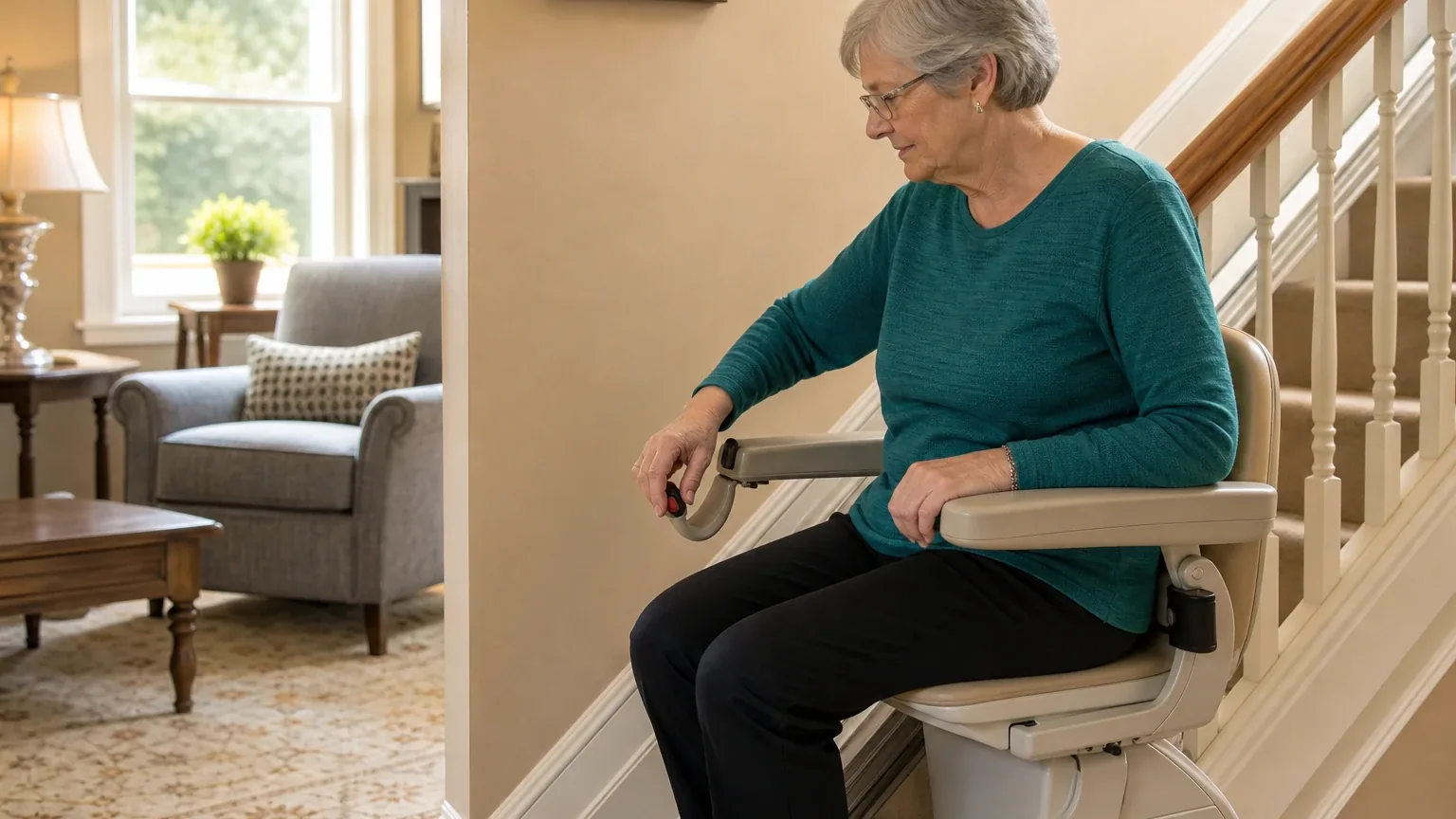
The Acorn 130 Stairlift is a good fit for arthritis-friendly controls and seating on a straight staircase, provided the buyer can operate the controls and swivel mechanism or upgrades to powered options. Six of seven platforms named it during the ranking stage (86% of included platform responses), with an average listed rank of 2.0 and a best rank of 1. The strongest reason to consider it is the Arthritis Foundation Ease of Use listing combined with large armrest paddle controls and remote operation [1]. The main limitation is that the standard swivel seat appears to be manual, and powered swivel-seat availability, pricing, and seat-height customization are not clearly confirmed in public U.S. materials [3].
Research Snapshot
| Field | Finding |
|---|---|
| Platform mentions in ranking stage | 6 of 7 platforms (anthropic, deepseek, google, grok, kimi, openai) |
| Share of included platform responses | 86% (0.86) |
| Average listed rank | 2.0 |
| Best listed rank | 1 (anthropic, grok, kimi) |
| Relevant product/model/plan | Acorn 130 Straight Stairlift, preferably configured with powered swivel seat and powered footrest where manual operation is difficult |
| Overall use-case fit | Good (platform fit ratings: strong for anthropic and grok; good for google and openai; mixed for deepseek, kimi, and perplexity) |
| Research date | 2026-09-27 |
What Changed Since August 2026
Acorn 130 Stairlift remained at No. 2, and platform mentions increased from 5 to 6. The September 2026 review keeps the same buyer-facing guidance: the Acorn 130 Stairlift is a good fit for arthritis-friendly controls and seating on straight stairs, with a powered swivel seat and powered footrest as the key configuration question. The essential strengths and limitations are unchanged. Reported pricing evidence shifted, with straight-staircase installation estimates newly reported at $3,000 to $5,000, while the earlier $2,500 to $5,000 estimate is no longer repeated. Warranty registration timing is now reported as 30 to 60 days, replacing several lifecycle and installation figures the prior review carried. Treat these as evidence updates rather than confirmed product changes. Differences between the two editions reflect what each article reports; they do not by themselves prove that the product, service, or price changed.
The August 2026 review preserves the earlier article for reference.
Why Acorn 130 Stairlift Qualified for This Study
Questions This Section Answers
- Why did the Acorn 130 Stairlift qualify for an arthritis-friendly controls and seating review?
- How many AI platforms named the Acorn 130 Stairlift during the ranking stage?
The Acorn 130 qualified because six of seven included platforms named it during ranking discovery, clearing the two-mention minimum with a wide margin. Its average listed rank was 2.0, and three platforms placed it first (anthropic, grok, kimi). Only perplexity did not name it in the ranking stage, though perplexity still evaluated the Acorn 130 in its fit research.
The entity also qualified on substance rather than frequency alone. Multiple platforms cited the Arthritis Foundation Ease of Use listing for Acorn stairlifts, which the Arthritis Foundation describes as evaluated by experts and people with arthritis [5]. Acorn states its stairlifts were tested with a panel of eight people with moderate to severe arthritis, evaluating torque, grip, endurance, muscle strength, pinch force, and range of motion [7]. That is company-reported testing, not independent verification, but it is directly relevant to this use case.
The Acorn 130 is the straight-staircase model in Acorn's lineup; the Acorn 180 is the curved-staircase model [8]. This review covers only the 130 and only the arthritis-friendly controls and seating use case. For the broader category, see the Arthritis-Friendly Controls & Seating consensus index.
The Product, Model, Plan, or Service Most Relevant to Arthritis-Friendly Controls & Seating
Questions This Section Answers
- Which Acorn 130 Stairlift configuration is most relevant for arthritis-friendly controls and seating?
- Is the powered swivel seat included on the Acorn 130 Stairlift or an added-cost option?
The relevant configuration is the Acorn 130 Straight Stairlift, ideally specified with a powered swivel seat and powered footrest when hand, hip, knee, or back limitations make manual operation difficult. Platforms converged on this framing: openai recommended the powered swivel and powered footrest configuration, kimi called the powered swivel seat option critical for hip and knee arthritis, and google advised buyers to anticipate the added cost of upgrading to powered swivel and powered footrest [10].
The standard configuration includes large paddle controls on both armrests, a remote control, a folding footrest, a seat belt, a diagnostic display, and a backup battery [12]. The seat swivels manually via a lever that locks at 45 and 90 degrees for exit [14]. Acorn's public 130 page does not clearly confirm whether a powered swivel seat is standard, optional, or available on every U.S. configuration [16]. Buyers should treat the powered swivel seat as the single most important configuration question for this use case.
What the AI Platforms Agreed About
Questions This Section Answers
- What did the AI platforms agree on about the Acorn 130 Stairlift for arthritis-friendly controls?
- Does the Acorn 130 Stairlift have Arthritis Foundation recognition for ease of use?
Platforms agreed on four points. First, control effort is low: Acorn describes large paddle controls on both armrests requiring a light touch, and a two-button up/down remote is included [17]. Google's sources describe direction-sensitive toggle paddles requiring only light pressure, eliminating the need to grip or twist a joystick [19].
Second, the swivel seat supports seated transfers at the top of the stairs, and a powered swivel option exists for users who cannot manually pivot [21].
Third, the ride uses smooth start and stop, which matters for users sensitive to jarring movement [24]. This is primarily a company claim; independent comparative testing of vibration and control force was not found.
Fourth, the Arthritis Foundation lists Acorn Stairlifts as an Ease of Use product, and Acorn states it was the first and only stairlift company to earn the commendation across all models [26]. This is independent recognition of the brand's ease-of-use positioning, not proof that every 130 configuration suits every user.
Where the AI Platforms Disagreed or Were Uncertain
Questions This Section Answers
- What is uncertain about the Acorn 130 Stairlift's powered swivel seat and weight capacity?
- Did any AI platform rate the Acorn 130 Stairlift as a mixed fit for arthritis?
Fit ratings split: anthropic and grok rated the Acorn 130 a strong fit; google and openai rated it good; deepseek, kimi, and perplexity rated it mixed. The disagreement tracks how much each platform could verify about powered options and ergonomic detail.
Four unresolved conflicts matter to buyers. Weight capacity: Acorn's current U.S. 130 product page publishes a 280-pound maximum, while an independent 2026 review refers to 300 pounds, and technical specifications also reference a 350-pound heavy-duty version whose regional availability varies [28]. Powered swivel availability: Acorn's public materials describe swivel-seat and powered-footrest functions but do not clearly state whether powered swivel is standard, optional, or available on every U.S. 130 configuration (openai, perplexity). Seat height: anthropic cites multiple seat post heights (short 410mm, standard 445mm, tall 505mm), while kimi and perplexity found no documented seat-height adjustability [29]. Warranty scope: Acorn states a 12-month manufacturer warranty beginning at installation covering covered callouts, parts, labor, and scheduled first-year service, but one platform notes a parts-only characterization and a lifetime warranty on the motor and gearbox [30].
Deepseek reported no independent arthritis-specific testing or certification for the Acorn 130, which conflicts with the Arthritis Foundation listing other platforms cited. The most likely explanation is source coverage rather than a factual dispute, but buyers should verify the current Arthritis Foundation listing directly.
Use-Case-Specific Features and Capabilities
Questions This Section Answers
- How do the Acorn 130 Stairlift's paddle controls and remote work for arthritic hands?
- What seat height and swivel options does the Acorn 130 Stairlift offer for hip and knee arthritis?
Control ease of use is the strongest documented advantage. Acorn states the lift uses large paddle controls on both armrests and that movement requires a light touch [32]. The remote uses two-button up/down operation [33]. Google's sources describe the paddles as direction-sensitive, with pushing toward the stairs moving the unit up [34]. The actual force required for a specific user remains untested in the reviewed sources and should be demonstrated in person.
Seat height and transfer position are partially documented. Acorn publishes a seat height of approximately 17.25 inches and a seat depth of 16 inches for the 130 [35]. Anthropic's sources cite three seat post heights — short at 410mm (16.25 inches), standard at 445mm (17.5 inches), and tall at 505mm (19.75 inches) — plus standard and wide armrest widths [36]. Kimi and perplexity found no documented seat-height adjustability, so buyers should confirm which heights are available in the U.S. quotation.
Swivel seat operation is the key limitation. The manual swivel locks at 45 and 90 degrees via a lever at the side of the seat pad [37]. A powered swivel seat option exists, and the powered footrest is controlled by buttons on both sides of the seat, sparing users from bending [39]. Neither powered option's U.S. price is published.
Ride smoothness is company-reported. Acorn describes smooth start and stop operation [35]. No independent comparative testing of ride smoothness or vibration for users with back or hip arthritis was found.
Warranty terms are documented at a high level. New stairlifts include a 12-month manufacturer warranty beginning at installation, covering covered callouts, parts, labor, and scheduled first-year service, subject to terms [41]. Annual servicing and extended warranty options are available, with coverage depending on the selected agreement [43].
Pricing, Fees, Contracts, and Ongoing Costs
Questions This Section Answers
- How much does the Acorn 130 Stairlift cost installed, and is pricing published online?
- What ongoing service, warranty, and cancellation costs should a buyer expect after buying the Acorn 130 Stairlift?
Acorn does not publish a U.S. list price for the Acorn 130. The reviewed official product page directs buyers to a free home survey and quotation (openai). Independent sources place straight-staircase installations at roughly $3,000 to $5,000, with one source citing $3,000 to $4,500 and another citing $3,000 to $15,000 across the full Acorn range [44]. These are third-party estimates, not official Acorn pricing, and should be treated as approximate.
Known and estimated add-on costs vary in reliability. Anthropic's sources estimate the powered swivel seat at $500 to $1,500 and the powered footrest at $300 to $800, both described as industry estimates rather than published Acorn prices (anthropic). A hinged rail is cited at $350 on a discount retailer site (anthropic). Financing is cited by industry sources at as low as $79.99 per month, but Acorn-specific terms, interest rates, and credit requirements were not found on the official website (anthropic).
Contract terms are thin. Acorn advertises a free, no-obligation home survey and quote, and its public terms page instructs customers to call for current terms and conditions (openai). Cancellation, deposit, refund, removal, relocation, and installation-delay terms were not verified. One independent source states Acorn does not offer refunds and that bumper-to-bumper warranty registration must be completed within 30 to 60 days, with a conflicting 30-day versus 60-day window noted across materials [47]. Ongoing costs after year one include annual service and extended warranty agreements whose U.S. prices were not published in the reviewed sources [48].
Best Suited For
Questions This Section Answers
- Who is the Acorn 130 Stairlift best suited for among seniors with arthritis?
- Is the Acorn 130 Stairlift a good choice for a senior with hand arthritis on a straight staircase?
The Acorn 130 is best suited for Seniors With Arthritis who can use a light-touch paddle or large remote buttons and who have a straight staircase (openai). It fits users who need seated transfers at the upper landing and who prioritize simple controls, battery backup, remote operation, and a lockable swivel seat [49]. It also suits buyers willing to request powered swivel-seat and powered-footrest options rather than accepting the standard configuration [50].
Platforms specifically flagged hand arthritis as a good match for the paddle controls, and hip or knee arthritis as a good match for the powered swivel upgrade [50]. Buyers who value independent third-party validation of arthritis-friendly design have a concrete reason to shortlist it, given the Arthritis Foundation listing [51].
Probably Not Best Suited For
Questions This Section Answers
- Who should not choose the Acorn 130 Stairlift for arthritis-friendly controls and seating?
- Is the Acorn 130 Stairlift suitable for a curved staircase or a user above 280 pounds?
The Acorn 130 is probably not the best choice for users who cannot operate a manual seat swivel or maintain hand pressure on a control, unless the powered swivel and powered footrest are confirmed and purchased (openai, kimi). It is not a curved-staircase solution; the Acorn 130 is a straight-staircase model, and buyers with bends, landings, or multiple flights need the Acorn 180 or another curved-rail model [53].
It is also a weaker fit for users needing a highly customized seat, unusually high transfer position, or independently verified long-term service-cost comparisons (openai). Buyers above the published 280-pound capacity should verify whether the 350-pound heavy-duty version is available in their region before committing [55]. Users with very limited hand function who need fully powered controls without any manual lever operation should confirm powered options in writing first (anthropic).
When Another Option May Be Better
Questions This Section Answers
- When is the Acorn 180 Curved Stairlift a better choice than the Acorn 130 Stairlift?
- What should a buyer do if they need published pricing or fully powered controls instead of the Acorn 130 Stairlift?
Choose a curved-stairlift model such as the Acorn 180 when the staircase has bends, intermediate landings, or multiple flights requiring a custom rail [56]. Compare another manufacturer or local dealer when the buyer needs independently published pricing, broader seat-height choices, a different transfer geometry, or more transparent long-term service costs (openai, perplexity).
Prioritize a configuration with powered swivel and powered footrest, or consider another model, when hand arthritis or back and hip limitations make manual swiveling or footrest operation difficult (openai, kimi). If a transparent fixed-price online quote without an in-home sales consultation is the priority, another vendor may be a better fit (google). If extended warranty with labor coverage is critical, verify plan options with an authorized dealer before deciding (grok).
Questions to Verify Before Buying
- Is the quoted model specifically an Acorn 130 Straight for this staircase, and what is the confirmed current weight capacity?
- Is a powered swivel seat available for the 130 in the United States, what does it cost, and can the user operate it without twisting or gripping hard?
- Is a powered footrest available, what does it cost, and are its controls reachable without bending?
- What are the final seat height, seat depth, armrest spacing, and transfer clearance after installation?
- Can the user test the exact seat, armrest paddles, remote, swivel mechanism, and footrest before signing?
- How much force or sustained pressure is required on the armrest controls, and can either hand operate them?
- What exactly is covered by the 12-month warranty, including batteries, seat mechanisms, remotes, callouts, labor, and accidental damage?
- What are the prices and renewal terms for annual service and extended warranty plans after the first year?
- What are the deposit, cancellation, refund, installation-delay, removal, relocation, and stairlift-return terms?
- Will a hinged rail be needed to preserve foot clearance at the bottom of the stairs, and is it included in the quote?
Final AI Consensus Verdict
The Acorn 130 Stairlift is a good fit for arthritis-friendly controls and seated transfers when the staircase is straight and the user can operate the controls and swivel mechanism. It becomes a stronger candidate if Acorn confirms a powered swivel seat, powered footrest, suitable seat height, and acceptable transfer clearance. It should not be selected without an in-home trial or detailed written confirmation for users with substantial hand weakness, hip or back pain, or difficulty manually swiveling.
The consensus is not unanimous. Two platforms rated it strong, two rated it good, and three rated it mixed, with the split driven by unverified powered-option availability and limited independent ergonomic data rather than disagreement about the core features. Platform agreement reflects how consistently the entity was described across AI systems; it does not prove product quality or individual suitability.
How This Review Was Produced
This review used the supplied platform fit-research responses for the Arthritis-Friendly Controls & Seating use case under the Best Stairlifts for Seniors With Arthritis topic. Seven platforms were configured, and six named the Acorn 130 during ranking discovery. Fit ratings, feature findings, pricing estimates, and verification questions were taken from the platform responses and their cited sources. Ranking statistics came from the supplied entity ranking data. No personal testing, customer interviews, or independent verification were performed. For related models and the full category, see the stairlifts directory.
Methodology Limitations
Company-owned citations materially outnumber independent citations in the supplied evidence, so company claims are not described as independently verified. Platform-reported research dates differ from the authoritative run date of 2026-09-27: anthropic reported 2026-01-15 and deepseek reported 2026-06-12, while the remaining platforms reported 2026-09-27. Platform-reported dates are provenance metadata and do not independently prove freshness. The supplied URLs were collected from platform responses and were not independently validated. One platform (deepseek) ran without search enabled, so its claims require explicit verification before being treated as current facts. Platform mentions count only platforms that named the entity during ranking discovery, not all platforms that evaluated fit. Conflicting product names, pricing, and capabilities were preserved rather than resolved by guessing.
Sources
Company-Owned Sources
- Manufacturer Warranty | Acorn Stairlifts USA: https://acorn-stairlifts.com/service/warranty
- Stairlift | Custom-Fit Stairlift Options | Acorn Stairlifts USA: https://acorn-stairlifts.com/stairlift
- Straight Stairlift | Acorn 130: https://acorn-stairlifts.com/stairlift/straight
- Quick User Guide 130 straight: https://acornstairlifts.com/F509.0.1-Quick-User-Guide.pdf
- Acorn 130 Straight Stairlift Quick Start Guide: https://vertexaisearch.cloud.google.com/grounding-api-redirect/AUZIYQE_8S4PueU0_cpYgQRCgO-b2H5pOW87PMtXYWsTes0ghRx6MZYCu0ImRtFj7-Sf1gtFOYkVLguPigWc-ub3SNopS8pUjiJ2Hk1RfkVdVLuFEWi43o6yXzZqTxhCoc1C61D1W1wC7nQOrnLTOfM1O_jeYMCtHJ8xi-UjOLfG344Gs8yTey-uP8hRTg9R0VxU7lQBvg==
- Why Should You Invest in Your Stairlift? Service Agreements: https://vertexaisearch.cloud.google.com/grounding-api-redirect/AUZIYQErFVX40YdPnH0aUlsr1DrDrztJ4FpuVe25Ra_Hx0UJpbJZcCb5TrXiwq11mGxIECN5zztEplLHMPzNj7Z1UF9ndg7YXOITiNLrYFIH3dukel8iIV0UzOZa6If65KZ91siqudjgFF75JlRD5WMfsGtn7VzTyHslPSJDHtTz_vBiqtZ1sp42kGYo7raPBv1BcnMFFXw39n6hNjKZZH_md9Hd
- Straight Stairlifts | Price & Installation | Acorn Stairlifts UK: https://www.acornstairlifts.co.uk/stairlift/stairlift-straight-staircase
- Acorn Stairlifts official website: https://www.acornstairlifts.com/
- Acorn 130 User Manual: https://www.acornstairlifts.com/assets/130/22-078_AC_TC_130%20user%20manual_0225_ENG.pdf
- Acorn Stairlifts Are Arthritis-Friendly: https://www.acornstairlifts.com/blog/post/4206/Tips-and-Advice/Acorn-Stairlifts-Fact-of-the-Week:-All-Acorn-Stairlifts-Are-Arthritis-Friendly-
- Remote and Chair-controls stairlifts: https://www.acornstairlifts.com/blog/post/4346/Tips-and-Advice/Acorn-Stairlifts-Cares-About-Your-Comfort%E2%80%94Remote-Controls-Vs-Chair-Controls
- Stairlift Warranties & Guarantees: https://www.acornstairlifts.com/stairlift/stairlift-extended-warranties/
- Stairlift Service & Repairs: https://www.acornstairlifts.com/stairlift/stairlift-servicing
- Acorn 130 Straight Stairlift: https://www.acornstairlifts.com/stairlift/stairlift-straight-staircase
- Acorn 130 Straight Stairlift: https://www.acornstairlifts.com/stairlift/stairlift-straight-staircase/scid/11020
- Acorn Stairlifts official website - Acorn 130 Straight Stairlift: https://www.acornstairlifts.com/stairlifts/acorn-130/
- Acorn Stairlifts official website - Acorn 180 Curved Stairlift: https://www.acornstairlifts.com/stairlifts/acorn-180-curved/
- Acorn 130 Straight Stairlift - Product Information: https://www.acornstairlifts.com/us/en/stairlifts/acorn-130-straight-stairlift.php
- Acorn Stairlifts official website - Warranty: https://www.acornstairlifts.com/warranty/
Additional AI research evidence56 records
- AI research evidence record openai:c1
- AI research evidence record openai:c2
- AI research evidence record openai:c6
- AI research evidence record perplexity:c1
- AI research evidence record openai:c2
- AI research evidence record anthropic:c2
- AI research evidence record anthropic:c7
- AI research evidence record deepseek:c2
- AI research evidence record perplexity:c3
- AI research evidence record kimi:c1
- AI research evidence record google:1.3.2
- AI research evidence record openai:c1
- AI research evidence record openai:c3
- AI research evidence record perplexity:c1
- AI research evidence record google:1.3.1
- AI research evidence record openai:c6
- AI research evidence record openai:c1
- AI research evidence record openai:c4
- AI research evidence record google:1.1.3
- AI research evidence record google:1.1.4
- AI research evidence record anthropic:c3
- AI research evidence record kimi:c1
- AI research evidence record grok:web:11
- AI research evidence record openai:c5
- AI research evidence record google:1.1.1
- AI research evidence record openai:c2
- AI research evidence record anthropic:c2
- AI research evidence record google:1.1.1
- AI research evidence record anthropic:c4
- AI research evidence record openai:c7
- AI research evidence record google:1.2.5
- AI research evidence record openai:c1
- AI research evidence record openai:c4
- AI research evidence record google:1.3.4
- AI research evidence record openai:c5
- AI research evidence record anthropic:c4
- AI research evidence record perplexity:c1
- AI research evidence record google:1.3.1
- AI research evidence record google:1.3.2
- AI research evidence record openai:c6
- AI research evidence record openai:c7
- AI research evidence record perplexity:c4
- AI research evidence record openai:c8
- AI research evidence record anthropic:c8
- AI research evidence record grok:web:4
- AI research evidence record google:1.2.1
- AI research evidence record google:1.2.5
- AI research evidence record openai:c8
- AI research evidence record anthropic:c1
- AI research evidence record kimi:c1
- AI research evidence record openai:c2
- AI research evidence record anthropic:c2
- AI research evidence record deepseek:c2
- AI research evidence record perplexity:c3
- AI research evidence record anthropic:c4
- AI research evidence record deepseek:c2
Independent Sources
- Acorn 130 Stairlift User Manual: https://ableplus.ie/wp-content/uploads/2022/04/Acorn-Stairlifts-User-Manuals-130.pdf
- Acorn Stairlift Review: Does It Live Up to the Hype?: https://millennialhawk.com/acorn-stairlift-review/
- Acorn Stairlift Review 2026: Cost, Models, Pros & Cons: https://modernize.com/stair-lifts/best-brands/acorn
- Acorn Stairlifts Review: Prices, Models and Warranty (2026: https://stairliftguru.co.uk/stairlift-companies/acorn-stairlifts/
- Acorn Superglide 130 Straight Stairlift User Manual Overview: https://vertexaisearch.cloud.google.com/grounding-api-redirect/AUZIYQEL1nK8bVm6RqyBnPxATgkkhC-ctrtST-dOoVLrY-w97Pw8OQg9ETcbwmo3MXPWXuzVBVzDVl8-XAxbU88ok-mCZTWyrzgps0DUAUJyXluWp-oI6Rz_nq8Rl1fj9tkWHKefsI23nKFPV_HbkBckNUICi8bxwG6vwkqDO0usGW8Sa3D4P0msSlVPCDWW6gAa3wq0VfHcVfbRH1CRXaXIfeF15G-k9gMGOe8FGAEmPw==
- Acorn Stairlifts Warranty Exclusions and Registration Policy: https://vertexaisearch.cloud.google.com/grounding-api-redirect/AUZIYQESpzGjMEMnrnRZ_L0rPV0On22dwzYaYhycG0U32wU_lcxNMjc1QgqEqc0ne45iwcdc7j1dLceIcZamUbdP2_3Hj3yVRBE_fBDPLXqZJBAqpvKKlxxQk0BqAf3bV-93hTKznHzGcRkrbQ==
- The Acorn 130 Straight Stairlift Features: https://vertexaisearch.cloud.google.com/grounding-api-redirect/AUZIYQGXQptm7CEYfannZQbpx09Q3PeurV0Ei6VlNW91oEK4rqOgtPCJ4WDZys_8Ce_Esiw0h2JWkYI47_r1NFZAGz985RixNom2pQS06FoTcvAVKLTxVzNPjHOwH8hIFQmPoh1-S3-b9fgqDFshJn-nV--cuABPAkLUFGdhAxiWgknAE3gFiJa0ENXWE-0IGw==
- Brooks / Acorn 130 straight stairlift features: https://vertexaisearch.cloud.google.com/grounding-api-redirect/AUZIYQHp2tYgpQRDij0OOZaBDc7BQo4bgjLx4qtsj3G6EbXkK_Ntt-wWp2ZG160o4JPcFgTg0ocRyptVe4VIRcFMfEoEXeLJHunYLueRhtKoNaPWJv1e0H4yKLz8Y_4Yqxh-1tfNbQ9-amJN1Hl3Y6BK4qAdycBfDZYVYmA-sjremubBJkn5r9Iq5bI7qowHE4a6xhjaQDfHb0yvYuglYUTB-vHQUd6PNVxly3yH471CeJeh6SXe
- Acorn 130 Stairlift Features and Benefits Demonstration Video: https://vertexaisearch.cloud.google.com/grounding-api-redirect/AUZIYQHqGNtrLyohYDqrWviuTJLkgnA1KDe3PhsZQ8ysD9Q1SUje7BKaLHenaMJIcZrCYJIl3N0EgT-uxZ1LeomkRharrXn3SPh0R702rWlW22q2gclwxUKb7PMThFovYOQluPGxtXZKWg==
- Acorn Stairlift - Ease of Use Products: https://www.arthritis.org/partnership/ease-of-use-products/acorn-stairlifts
- ConsumerAffairs - Acorn Stairlifts reviews: https://www.consumeraffairs.com/health/acorn-stairlifts.html
Additional AI research evidence56 records
- AI research evidence record openai:c1
- AI research evidence record openai:c2
- AI research evidence record openai:c6
- AI research evidence record perplexity:c1
- AI research evidence record openai:c2
- AI research evidence record anthropic:c2
- AI research evidence record anthropic:c7
- AI research evidence record deepseek:c2
- AI research evidence record perplexity:c3
- AI research evidence record kimi:c1
- AI research evidence record google:1.3.2
- AI research evidence record openai:c1
- AI research evidence record openai:c3
- AI research evidence record perplexity:c1
- AI research evidence record google:1.3.1
- AI research evidence record openai:c6
- AI research evidence record openai:c1
- AI research evidence record openai:c4
- AI research evidence record google:1.1.3
- AI research evidence record google:1.1.4
- AI research evidence record anthropic:c3
- AI research evidence record kimi:c1
- AI research evidence record grok:web:11
- AI research evidence record openai:c5
- AI research evidence record google:1.1.1
- AI research evidence record openai:c2
- AI research evidence record anthropic:c2
- AI research evidence record google:1.1.1
- AI research evidence record anthropic:c4
- AI research evidence record openai:c7
- AI research evidence record google:1.2.5
- AI research evidence record openai:c1
- AI research evidence record openai:c4
- AI research evidence record google:1.3.4
- AI research evidence record openai:c5
- AI research evidence record anthropic:c4
- AI research evidence record perplexity:c1
- AI research evidence record google:1.3.1
- AI research evidence record google:1.3.2
- AI research evidence record openai:c6
- AI research evidence record openai:c7
- AI research evidence record perplexity:c4
- AI research evidence record openai:c8
- AI research evidence record anthropic:c8
- AI research evidence record grok:web:4
- AI research evidence record google:1.2.1
- AI research evidence record google:1.2.5
- AI research evidence record openai:c8
- AI research evidence record anthropic:c1
- AI research evidence record kimi:c1
- AI research evidence record openai:c2
- AI research evidence record anthropic:c2
- AI research evidence record deepseek:c2
- AI research evidence record perplexity:c3
- AI research evidence record anthropic:c4
- AI research evidence record deepseek:c2
Other Sources
- Acorn Superglide 130 manual PDF: https://cdn.shopify.com/s/files/1/0047/8298/1208/files/superglide_130.pdf?548
Additional AI research evidence56 records
- AI research evidence record openai:c1
- AI research evidence record openai:c2
- AI research evidence record openai:c6
- AI research evidence record perplexity:c1
- AI research evidence record openai:c2
- AI research evidence record anthropic:c2
- AI research evidence record anthropic:c7
- AI research evidence record deepseek:c2
- AI research evidence record perplexity:c3
- AI research evidence record kimi:c1
- AI research evidence record google:1.3.2
- AI research evidence record openai:c1
- AI research evidence record openai:c3
- AI research evidence record perplexity:c1
- AI research evidence record google:1.3.1
- AI research evidence record openai:c6
- AI research evidence record openai:c1
- AI research evidence record openai:c4
- AI research evidence record google:1.1.3
- AI research evidence record google:1.1.4
- AI research evidence record anthropic:c3
- AI research evidence record kimi:c1
- AI research evidence record grok:web:11
- AI research evidence record openai:c5
- AI research evidence record google:1.1.1
- AI research evidence record openai:c2
- AI research evidence record anthropic:c2
- AI research evidence record google:1.1.1
- AI research evidence record anthropic:c4
- AI research evidence record openai:c7
- AI research evidence record google:1.2.5
- AI research evidence record openai:c1
- AI research evidence record openai:c4
- AI research evidence record google:1.3.4
- AI research evidence record openai:c5
- AI research evidence record anthropic:c4
- AI research evidence record perplexity:c1
- AI research evidence record google:1.3.1
- AI research evidence record google:1.3.2
- AI research evidence record openai:c6
- AI research evidence record openai:c7
- AI research evidence record perplexity:c4
- AI research evidence record openai:c8
- AI research evidence record anthropic:c8
- AI research evidence record grok:web:4
- AI research evidence record google:1.2.1
- AI research evidence record google:1.2.5
- AI research evidence record openai:c8
- AI research evidence record anthropic:c1
- AI research evidence record kimi:c1
- AI research evidence record openai:c2
- AI research evidence record anthropic:c2
- AI research evidence record deepseek:c2
- AI research evidence record perplexity:c3
- AI research evidence record anthropic:c4
- AI research evidence record deepseek:c2
Verify This Research
Review the study details behind this page or download the public machine-readable verification record.
- Study date
- September 27, 2026
- Platforms analyzed
- 7
- Source records
- 36
- Ranking mentions
- 6 of 7
- Platform share
- 86%
- Final consensus rank
- #2
Research trail and source mix
Configured platforms
openai, anthropic, deepseek, grok, perplexity, kimi, google
Source mix
13 independent · 22 company-owned · 1 unclear
Evidence support
29 direct · 7 partial
Important limitation
Use the run research_date as the study date. Platform-reported dates are provenance metadata and do not independently prove freshness.
Source snapshot SHA-256 b624635fb350b2fe271d509405e80e6407f91322c715945de3dc45d481264d9d