
Answer Capsule
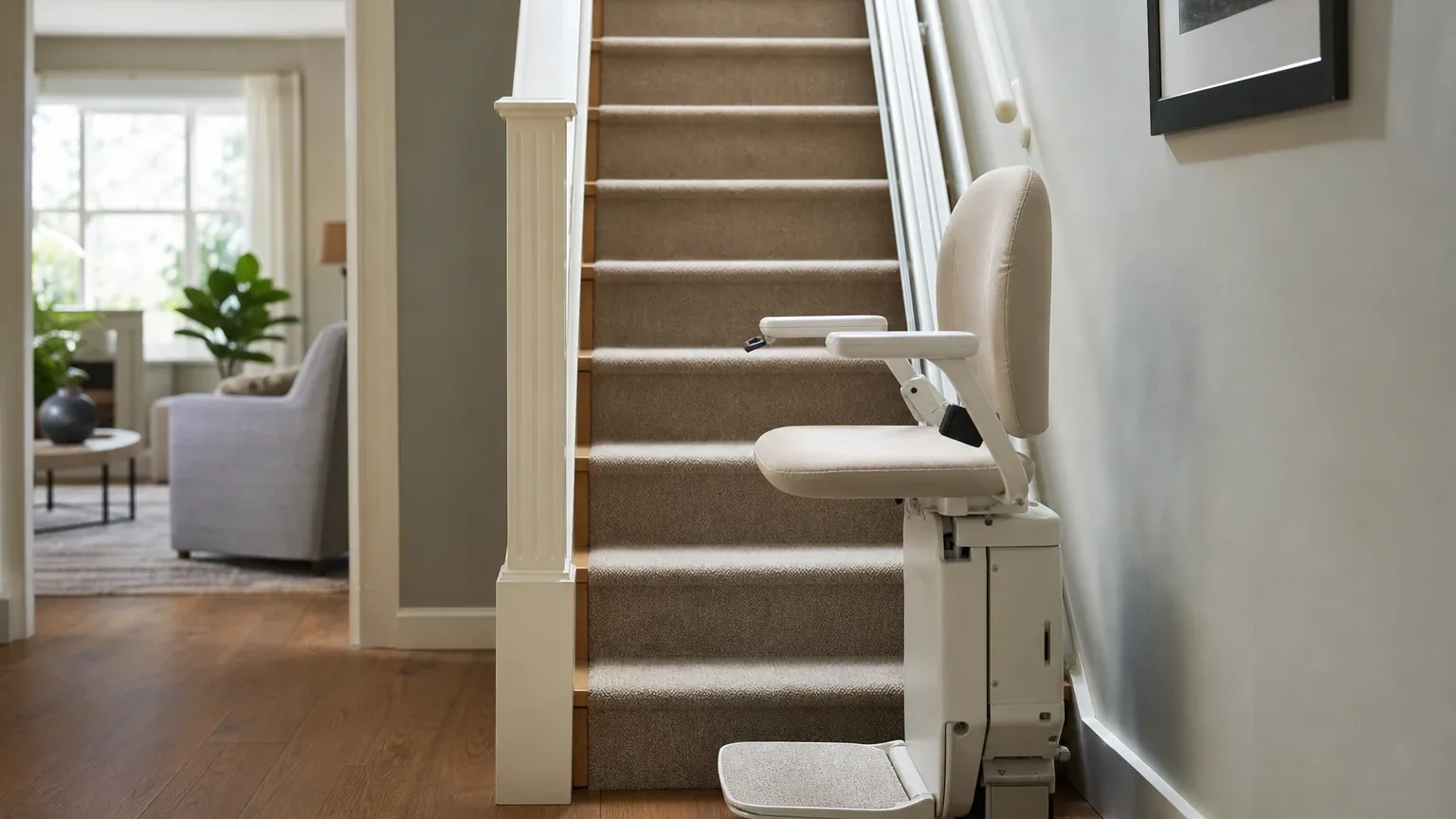
The Handicare 1100 is a good fit for arthritis-friendly controls and seating when it is configured with the Powered Swivel Seat and Powered Footrest options and installed after an in-home transfer assessment. Four of the seven platforms in this study named it during the ranking stage (anthropic, deepseek, google, kimi), and five of seven rated it a "good" fit for this use case. Its strongest advantage is a low-pressure joystick plus optional powered swivel and footrest functions that reduce bending, twisting, and manual grip effort. The main limitation is that those arthritis-friendly functions are paid upgrades rather than standard equipment, and U.S. pricing, warranty terms, and seat-comfort specifications are inconsistent or unpublished across sources.
Research Snapshot
| Field | Finding |
|---|---|
| Platform mentions in ranking stage | 4 of 7 platforms (anthropic, deepseek, google, kimi) |
| Share of included platform responses | 57.1% |
| Average listed rank | 5.25 |
| Best listed rank | 4 (google) |
| Relevant product/model/plan | Handicare 1100 Straight Stairlift, preferably configured with Powered Swivel Seat and Powered Footrest |
| Overall use-case fit | Good with powered upgrades; mixed-to-unclear in base configuration |
| Research date | 2026-09-27 |
Why Handicare 1100 Qualified for This Study
Questions This Section Answers
- Why did the Handicare 1100 qualify for a 2026 arthritis-friendly stairlift study?
- How many AI platforms named the Handicare 1100 for arthritis-friendly controls and seating?
The Handicare 1100 qualified because it cleared the study's minimum-mention threshold and was named by four of the seven platforms during ranking discovery: anthropic, deepseek, google, and kimi. Its listed ranks ranged from 4 (google) to 6 (anthropic and kimi), producing an average listed rank of 5.25 and a final rank of 6. That is a mid-pack qualification, not a top-of-list result.
Qualification was based on the model's documented control and seating architecture rather than on arthritis-specific certification. Platform responses describe an armrest joystick for travel, remote controls at the stair landings, a manual swivel seat, and optional powered swivel and powered footrest modules [1]. Those features map directly onto the study's category criteria: joystick/button ease of use, swivel seat operation, footrest controls, and remote control availability.
Two qualification caveats matter. First, deepseek's official-site retrieval failed for one or more mentions, so its 1100 page content could not be fully verified (deepseek:handicare_1100_page). Second, platform_mentions counts only platforms that named the entity during ranking discovery; all seven platforms evaluated fit, but only four surfaced the entity by name in the ranking stage. This review sits inside the broader Arthritis-Friendly Controls & Seating consensus index, which covers the full field of models evaluated for this buyer profile.
The Product, Model, Plan, or Service Most Relevant to Arthritis-Friendly Controls & Seating
Questions This Section Answers
- Which Handicare 1100 configuration is most relevant for arthritis-friendly controls and seating?
- Is the powered swivel seat and powered footrest included on the Handicare 1100 or sold as an upgrade?
The relevant configuration is the Handicare 1100 Straight Stairlift equipped with the Powered Swivel Seat and the Powered Footrest. OpenAI states this preference explicitly, describing the 1100 as "preferably configured with the Powered Swivel Seat and Powered Footrest options" [2]. Anthropic, google, grok, perplexity, and kimi all identify the same two upgrades as the features that matter most for this use case [3].
The base model is a straight-rail indoor stairlift with an armrest joystick, a manual swivel seat operated by pushing down a lever, and a manually folded footplate [2]. The powered swivel rotates the seat automatically when the joystick is held in the direction of travel, and the powered footrest is operated by a switch under the armrest [2]. Anthropic describes both as retrofit modules that can be added after installation (anthropic:cite_5, anthropic:cite_6).
Kimi's response names a wider Handicare set — the 1100, 2000, 2000 Curved, 950, Freecurve with Active Seat, and Xclusive — and positions the Freecurve with Active Seat as better suited to powered-swivel needs [5]. That is a model-family observation, not a claim about the 1100 itself. Buyers should treat the 1100 as the straight-staircase option and confirm which powered modules the specific dealer quote includes.
What the AI Platforms Agreed About
Questions This Section Answers
- What do AI platforms agree the Handicare 1100 does well for arthritis-friendly controls and seating?
- Does the Handicare 1100 include two remote controls and a low-effort joystick as standard?
Five of seven platforms rated the 1100 a "good" fit for this use case: anthropic, google, grok, openai, and perplexity. Two rated it "mixed": deepseek and kimi. No platform rated it poor.
Agreement was strongest on four points.
Low-effort joystick control. OpenAI, anthropic, google, grok, and perplexity all describe an armrest joystick or toggle that requires minimal pressure [7]. Google's response describes a "Sterling" ergonomic toggle or large paddle switch requiring minimal operating pressure [10]. Anthropic states the joystick "only requires minimal pressure to operate" (anthropic:cite_1).
Powered swivel and powered footrest as the key arthritis features. Every platform that discussed seating mechanics identified these two upgrades as the functions that reduce bending, twisting, and hip or knee load [7].
Two remote controls. OpenAI, anthropic, grok, perplexity, and google report two remote controls, with installation documentation describing remotes mounted at the top and bottom of the stairs [15].
Smooth friction-drive travel. Google, grok, and kimi describe a gearless or friction-drive system with soft start and soft stop that avoids the discrete steps of rack-and-pinion travel [18]. Anthropic lists soft start and soft stop as standard features and cites a 56 dB noise level (anthropic:cite_2).
Agreement among AI platforms reflects shared source material, not verified product quality. Several of these claims trace to the same Handicare sales guide and brochure documents, which reduces the independence of the apparent consensus.
Where the AI Platforms Disagreed or Were Uncertain
Questions This Section Answers
- Why do AI platforms disagree about the Handicare 1100 warranty and pricing for arthritis buyers?
- Is the Handicare 1100 seat height and armrest comfort verified for arthritis-friendly seating?
Platforms diverged on warranty, pricing, seat comfort, and control suitability for severe hand arthritis.
Warranty. OpenAI cites a 24-month warranty from factory shipment covering defective parts at the manufacturer's discretion, excluding labor, normal wear, overloading, misuse, and remote-control battery replacement, and stating the warranty is non-transferable [20]. Perplexity found conflicting descriptions: one U.S. dealer page states 24 months on parts, another states 24 months on parts plus limited lifetime powertrain coverage, and a brochure-style source states 2 years with 10 years on motor and gearbox [21]. Grok reports 2 years on parts and 10 years on motor/gearbox for indoor models (grok:8, grok:16). Google reports parts at 24 months and a lifetime motor and gearbox warranty [25]. Anthropic states warranty information was not publicly disclosed in the product literature it reviewed (anthropic:cite_1). These are unresolved conflicts, not a consensus.
Pricing. No platform found an official U.S. list price. Perplexity cites a dealer-reported unit-only figure of about $3,190 and installation of about $345–$445 [26]. Google reports a base range of roughly $3,299–$3,999, a powered swivel upgrade near $650, a powered footrest upgrade near $650, and a combined powered upgrade kit near $1,295 [25]. Grok cites a $2,500–$4,500 installed range from dealer reviews (grok:16). Kimi places the base model within an industry straight-stairlift range of roughly $2,500–$5,000, unconfirmed by an official source [27]. OpenAI, anthropic, and deepseek found no verified pricing at all [28].
Seat height and comfort. Anthropic and grok report four seat-height positions at 430, 460, 490, and 520 mm (anthropic:cite_5, grok:1). OpenAI states the available material identifies seat and footrest dimensions but does not establish whether the standard seat height suits a given buyer's hip, knee, or back limitations [29]. Kimi states seat height range and adjustability are not publicly specified [27]. Anthropic notes internal armrest width of 17.7 inches and external width of 22.6 inches but no padding, cushion material, or ergonomic testing data (anthropic:cite_4, anthropic:cite_5).
Severe hand arthritis. Anthropic warns that remote buttons require precise finger dexterity and that no large-button or adaptive remote option is documented (anthropic:cite_1). OpenAI states a hold-to-run joystick may still be difficult for users with severe hand weakness, pain, tremor, or limited endurance [28]. Google takes the opposite position, describing the paddle control as suitable for severe hand or wrist arthritis [30]. That is a direct conflict between platforms.
Use-Case-Specific Features and Capabilities
Questions This Section Answers
- How does the Handicare 1100 joystick, swivel seat, and footrest reduce effort for arthritis in the hands, hips, or knees?
- Does the Handicare 1100 seat swivel independently from the footrest during transfers?
The 1100's arthritis relevance rests on four mechanisms: a low-pressure joystick, a push-down manual swivel, optional powered swivel, and optional powered footrest.
Joystick and controls. The armrest joystick is hold-to-run and takes priority over the remote control (anthropic:cite_2). Anthropic describes it as operable from the hand or wrist with minimal pressure (anthropic:cite_1). Google describes a large paddle or toggle switch requiring minimal operating pressure [31]. OpenAI cautions that directional control and sustained pressure are still required, so suitability for weak or painful hands should be tested in person [32].
Swivel seat. The standard seat swivels manually via a lever that is pushed down rather than pulled up, which anthropic identifies as reducing upper-body strength demand (anthropic:cite_1, anthropic:cite_5). The Powered Swivel Seat rotates the seat automatically when the joystick is held in the travel direction, and a manual override button is available on the powered version [32]. Google describes an 80-degree swivel that rotates away from the stairs to support safer transfers [33]. Anthropic notes the seat swivels independently from the footrest (anthropic:cite_5).
Footrest. The standard footplate folds manually with a maximum force of 0.5 kg (about 1.1 lbs) per anthropic's source (anthropic:cite_5). The Powered Footrest is operated by a switch under the armrest and follows the same direction-of-movement logic as the joystick (anthropic:cite_1). Anthropic reports a footrest-to-seat gap range of 17–20.5 inches, which it flags as potentially uncomfortable for users with significant knee or hip stiffness (anthropic:cite_1).
Seat height. Four positions are reported at 430, 460, 490, and 520 mm, roughly 17–20.5 inches (anthropic:cite_5, grok:1). OpenAI states transfer height should be measured during an in-home assessment rather than assumed from published dimensions [35].
Seat belt. Anthropic and grok report an optional Velcro seat belt intended for users with reduced dexterity, arthritis, reduced grip, or ulnar deviation, allowing no-twist fastening (anthropic:cite_1, anthropic:cite_5, grok:1).
Ride smoothness. Google, grok, and kimi describe a gearless friction drive that avoids the jerks and vibration of geared tracks [33]. OpenAI states the sources checked do not provide independent comparative testing of ride smoothness or vibration for users with back or joint pain [32]. Perplexity likewise found no independently verified U.S. statement on ride smoothness [37].
Safety features. The manual identifies an emergency stop, seat-position sensing, obstruction switches, and footrest safety edges [32]. These are safeguards, not evidence of medical suitability.
Pricing, Fees, Contracts, and Ongoing Costs
Questions This Section Answers
- How much does a Handicare 1100 with powered swivel and powered footrest cost installed in the U.S.?
- What fees and warranty exclusions apply to the Handicare 1100 beyond the base price?
No platform found an official manufacturer-published U.S. price for the 1100. All pricing below is dealer-reported or platform-reported and should be treated as configuration-specific.
| Cost item | Reported figure | Source platform |
|---|---|---|
| Base unit (dealer-reported) | About $3,190 unit-only | [38] |
| Base installed range | About $3,299–$3,999 | [39] |
| Installed range (dealer reviews) | $2,500–$4,500 | (grok:16) |
| Straight-lift installation | About $345–$445 | [38] |
| Powered swivel upgrade | About $650 | [39] |
| Powered footrest upgrade | About $650 | [39] |
| Combined powered upgrade kit | About $1,295 | [39] |
| Track extension (7-meter rail) | About $500 | [39] |
| Manual folding EZ-Hinge or Slide Track | About $750–$950 | [39] |
| Specialized installation (concrete or tile) | About $195 | [39] |
| Removal and disposal of old stairlift | About $150 | [39] |
Kimi places the base model within an industry straight-stairlift range of roughly $2,500–$5,000, unconfirmed by an official source, and notes curved models typically run $8,000–$15,000+ [40]. OpenAI, anthropic, and deepseek found no verified pricing [41].
Ongoing and excluded costs. The manual recommends servicing at least annually, or twice annually when more than two users share the lift [42]. Remote-control battery replacement is excluded from the stated warranty [42]. OpenAI lists potential dealer charges for installation, stair modifications, unusual rail configurations, removal, service calls, and post-warranty labor, with exact amounts unclear [41]. Perplexity notes batteries and consumables may be excluded under some warranty terms [43].
Contract terms. OpenAI reports the manufacturer's stated warranty is non-transferable and administered through an authorized dealer, and that no verified U.S. cancellation, return, rental, financing, or service-contract terms were found [42]. Perplexity found no clear manufacturer-direct U.S. contract or cancellation terms and describes warranty coverage as dealer-dependent [43]. Kimi found no publicly available cancellation or return policy and an unconfirmed potential restocking fee [40]. Google notes return policies and local labor warranties vary by region because sales run through regional dealers [39].
Best Suited For
Questions This Section Answers
- Who is the Handicare 1100 best suited for among seniors with arthritis?
- Is the Handicare 1100 a good choice for a straight indoor staircase with hand arthritis?
The 1100 is best suited to a specific buyer profile that most platforms described consistently.
- Seniors with a straight indoor staircase who need a seated transfer rather than stair climbing [44].
- Users with hand arthritis who can operate a hold-to-run joystick but struggle to turn a seat or fold a footrest manually [44].
- Buyers willing to pay for the Powered Swivel Seat and Powered Footrest upgrades, which is where the arthritis benefit concentrates [44].
- Households wanting remote controls at both stair landings so the user does not have to walk or bend to retrieve the chair [47].
- Users with hip, knee, or back arthritis who benefit from a push-down swivel lever rather than a pull-up handle (anthropic:cite_1, anthropic:cite_5).
- Buyers who value a slim rail and a compact footprint on narrow stairs [49].
Probably Not Best Suited For
Questions This Section Answers
- Who should not choose the Handicare 1100 for arthritis-friendly controls and seating?
- Is the Handicare 1100 unsuitable for severe hand arthritis or curved staircases?
Several platform responses identified buyer situations where the 1100 is a weak match.
- Users unable to maintain a firm grip or sustained pressure on a joystick. OpenAI states a hold-to-run joystick may still be difficult for users with severe hand weakness, pain, tremor, or limited endurance [51]. Anthropic notes remote buttons require precise finger dexterity and no large-button or adaptive remote is documented (anthropic:cite_1).
- Users with curved or L-shaped staircases. The 1100 is a straight-only model [51].
- Buyers who need powered swivel and powered footrest as standard equipment. Perplexity and kimi both flag that these are optional rather than standard [54].
- Buyers requiring transparent published pricing or an all-inclusive U.S. warranty. OpenAI, anthropic, and perplexity all identify this as a gap [51].
- Users needing a very specific seat height or unusually supportive seating without an in-home assessment [51].
- Buyers prioritizing documented ride-smoothness testing. Anthropic notes Handicare does not publicly emphasize suspension or shock-absorption technology (anthropic:cite_1).
- Users with broader frames. Anthropic reports internal armrest width of 17.7 inches, which it flags as potentially restrictive (anthropic:cite_4, anthropic:cite_1).
When Another Option May Be Better
Questions This Section Answers
- What is a better alternative to the Handicare 1100 for a curved staircase or severe hand arthritis?
- When should a buyer choose a different Handicare model or brand instead of the 1100?
Platforms named several situations where a different product is the better answer.
Curved or multi-landing staircases. OpenAI, anthropic, perplexity, kimi, and google all point to curved Handicare models — the Freecurve or 2000 — when the staircase bends or has intermediate landings [55].
Powered swivel as a non-negotiable requirement. Kimi suggests the Handicare Freecurve with Active Seat when powered swivel is essential, and notes the Active Seat upgrade pricing and availability timeline are unspecified [57].
Severe hand arthritis with grip weakness. Kimi recommends verifying Stannah ergonomic toggle or Bruno toggle-arm designs against the Handicare joystick before purchase [57]. Anthropic suggests large-button or voice-activated remotes from other brands may suit severe hand arthritis better (anthropic:cite_1).
Confirmed seat-height adjustability. Kimi points to Bruno Elite or Stannah models with powered seat-height options [57].
Budget-sensitive straight-staircase buyers. Kimi suggests comparing local Bruno or Acorn quotes for potentially lower installed cost [57].
Perch-style seating. Kimi notes the Stannah Sadler perch seat reduces seated hip and knee flexion but requires standing tolerance [57].
Transparent pricing and warranty. OpenAI, anthropic, and perplexity all indicate that a buyer whose priority is published pricing and a clearly documented all-inclusive U.S. service contract should compare other manufacturers [55].
Questions to Verify Before Buying
Questions This Section Answers
- What should a buyer confirm with the Handicare 1100 dealer before signing a contract?
- Which Handicare 1100 upgrades and warranty terms must be confirmed in writing before purchase?
The platforms converged on a verification list. Buyers should get written answers before signing.
- Does the quote include the Powered Swivel Seat and Powered Footrest, or are they separate upgrades, and at what price? [60]
- What exact seat height, seat depth, seat width, cushion type, and armrest dimensions will be installed? [60]
- Can the user operate the joystick comfortably for the full ride, and can the control be configured for the stronger hand? [60]
- Does the powered swivel activate automatically at the landing, from the joystick, or from the remote? [60]
- Can the footrest switch and other controls be positioned on the user's preferred side? [60]
- Are two remote controls included, and who pays for replacement batteries or replacement remotes? [60]
- What is the total installed price, including electrical work, rail options, delivery, taxes, removal, and unusual stair conditions? [60]
- What labor, travel, battery, and service-call costs apply during and after the warranty period? [60]
- Is the current warranty 24 months in the United States, and does the dealer provide separate labor coverage? [62]
- What annual maintenance schedule and service response time does the local authorized dealer provide? [62]
- Can the user perform a supervised transfer trial before signing, including standing up from the seat at the top landing? [60]
- If the staircase is curved or L-shaped, must a different model such as the 2000 or Freecurve be purchased instead? [67]
Final AI Consensus Verdict
The Handicare 1100 is a good — not clearly best-in-class — fit for arthritis-friendly controls and seating, and only when configured with the Powered Swivel Seat and Powered Footrest. Five of seven platforms rated it good for this use case; two rated it mixed. Four of seven named it during ranking discovery, at an average listed rank of 5.25.
The strongest reason to consider it is the combination of a low-pressure armrest joystick, two remote controls, a push-down manual swivel, and optional powered swivel and footrest modules that directly reduce bending, twisting, and grip effort [68]. The strongest reason for caution is that the arthritis-relevant functions are paid upgrades, and U.S. pricing, warranty duration, labor coverage, seat comfort, and ride smoothness are either unpublished or in direct conflict across sources [68].
Buyers with severe hand weakness, curved staircases, or a requirement for published all-inclusive warranty coverage should evaluate alternatives before committing. Buyers with a straight staircase, moderate hand arthritis, and willingness to pay for powered upgrades can treat the 1100 as a reasonable candidate pending an in-home transfer assessment and a written, itemized quote.
How This Review Was Produced
This review was produced from seven AI platform responses collected for the topic "Best Stairlifts for Seniors With Arthritis," use case "Arthritis-Friendly Controls & Seating," in the United States. The authoritative research date is 2026-09-27. Platforms evaluated fit for the use case and, separately, named entities during ranking discovery. Only platforms that named Handicare 1100 during ranking discovery are counted in the platform-mentions figure.
Platform research dates differ from the authoritative run date: anthropic reported 2025-01-10 and deepseek reported 2026-05-20, while google, grok, kimi, openai, and perplexity reported 2026-09-27. Platform-reported dates are provenance metadata and do not independently prove freshness.
All citations are platform-reported evidence, not independently verified facts. The supplied URLs were collected from platform responses and were not independently validated at the writing stage. No personal testing, customer experience, medical benefit, or guaranteed performance is claimed anywhere in this review.
Methodology Limitations
- Platform-reported evidence only. No claim in this review was independently verified by the writer. Citations reflect what each platform reported and the sources it retrieved.
- Consensus is not quality. Agreement among AI platforms reflects shared source material, not proven product performance. Several platforms cited the same Handicare sales guide and brochure documents.
- Ranking mentions are not fit ratings. Only four of seven platforms named Handicare 1100 during ranking discovery, but all seven evaluated fit.
- Date discrepancies. Anthropic's research date (2025-01-10) and deepseek's (2026-05-20) precede the authoritative run date of 2026-09-27.
- Failed retrieval. Deepseek's official-site retrieval failed for one or more mentions, so its 1100 page content could not be fully verified.
- No-search platform. Deepseek ran with search disabled, so its findings are model-reported rather than retrieval-backed.
- Unresolved conflicts. Warranty duration, labor coverage, pricing, seat height, and control suitability for severe hand arthritis conflict across platforms and were not resolved.
- Missing data. No official U.S. list price, no verified U.S. cancellation or return terms, and no independent comparative testing of ride smoothness or arthritis-specific comfort were located.
- Unverified official page. The Handicare USA homepage was retrieved but not verified, and no excerpts were captured.
Explore more stairlifts guidance in the category directory.
Sources
Company-Owned Sources
- Handicare 1100 Stairlift: https://handicare-stairlifts.co.uk/stairlifts/straight-stairlifts/1100/
- About Handicare: https://handicareusa.com/about-us/
- Handicare USA Stairlifts: https://handicareusa.com/stairlifts/
- Handicare 1100 - Handicare USA: https://handicareusa.com/stairlifts/handicare-1100/
- Handicare 1100 Straight Stairlift: https://handicareusa.com/stairlifts/straight-stairlifts/1100/
- Handicare 1100 User Manual: https://user.handicaretechtool.com/wp-content/uploads/2023/11/h1100_usermanual_july_2023.pdf
- Handicare 1100 Straight Stairlift | Advanced Mobility: https://www.savaria.com/stairlifts/products/straight-handicare-1100
Additional AI research evidence71 records
- AI research evidence record openai:c1
- AI research evidence record openai:c1
- AI research evidence record google:1.2.5
- AI research evidence record perplexity:c2
- AI research evidence record kimi:c1
- AI research evidence record kimi:c2
- AI research evidence record openai:c1
- AI research evidence record google:2.2.1
- AI research evidence record perplexity:c4
- AI research evidence record google:1.2.6
- AI research evidence record google:2.2.4
- AI research evidence record google:1.2.5
- AI research evidence record perplexity:c2
- AI research evidence record kimi:c1
- AI research evidence record openai:c2
- AI research evidence record openai:c3
- AI research evidence record google:2.2.3
- AI research evidence record google:1.1.1
- AI research evidence record google:1.1.3
- AI research evidence record openai:c5
- AI research evidence record perplexity:c1
- AI research evidence record perplexity:c6
- AI research evidence record perplexity:c13
- AI research evidence record perplexity:c14
- AI research evidence record google:1.2.6
- AI research evidence record perplexity:c12
- AI research evidence record kimi:c1
- AI research evidence record openai:c1
- AI research evidence record openai:c4
- AI research evidence record google:2.2.4
- AI research evidence record google:2.2.4
- AI research evidence record openai:c1
- AI research evidence record google:1.1.1
- AI research evidence record google:1.2.6
- AI research evidence record openai:c4
- AI research evidence record kimi:c1
- AI research evidence record perplexity:c1
- AI research evidence record perplexity:c12
- AI research evidence record google:1.2.6
- AI research evidence record kimi:c1
- AI research evidence record openai:c1
- AI research evidence record openai:c5
- AI research evidence record perplexity:c1
- AI research evidence record openai:c1
- AI research evidence record google:1.2.5
- AI research evidence record perplexity:c2
- AI research evidence record openai:c2
- AI research evidence record perplexity:c4
- AI research evidence record kimi:c1
- AI research evidence record google:1.2.6
- AI research evidence record openai:c1
- AI research evidence record perplexity:c5
- AI research evidence record kimi:c1
- AI research evidence record perplexity:c1
- AI research evidence record openai:c1
- AI research evidence record perplexity:c1
- AI research evidence record kimi:c1
- AI research evidence record google:1.2.6
- AI research evidence record kimi:c2
- AI research evidence record openai:c1
- AI research evidence record google:1.2.6
- AI research evidence record openai:c5
- AI research evidence record perplexity:c12
- AI research evidence record perplexity:c1
- AI research evidence record perplexity:c13
- AI research evidence record perplexity:c14
- AI research evidence record kimi:c1
- AI research evidence record openai:c1
- AI research evidence record google:2.2.4
- AI research evidence record perplexity:c1
- AI research evidence record kimi:c1
Independent Sources
- US consumer 1100 brochure: https://callbeforeyoufall.com/wp-content/uploads/2023/01/US_consumer_1100brochure_1019.pdf
- 15 Best Lift Chairs for Seniors with Arthritis and Easy Remote in 2026: https://caregiversupportnetwork.org/vetted/best-lift-chair-for-seniors-with-arthritis-in-hands-easy-remote/
- Handicare 1100 Style Sales Guide US: https://manuals.plus/m/9988b54cb9ca241b1b3314eb140f27b7db4e6698a9d6b422497525faf4c0af99
- Best Seating Solutions for Seniors with Arthritis: https://mobilitywithease.com/seating-solutions-for-seniors-with-arthritis/
- Handicare Stairlifts Review 2026: https://modernize.com/stair-lifts/best-brands/handicare
- Handicare 1100 Stairlift: https://stairliftstore.com/chair-lifts/straight-indoor-stairlifts/handicare-1100/
- Handicare 1100 Stairlift | Slim, Stylish & Reliable Mobility - Med Mart: https://vertexaisearch.cloud.google.com/grounding-api-redirect/AUZIYQGgqIz_taVLwjD0kBM0dsmaLGU5_qMEV_OVSxba3CiH16DYrZ664XgUUec5kNu0R6HGPrnWP9-YVyvaop1c7EJcpMmGDZH7lXYuHZOle3-8O9ih0mfeo1Z0jnZvdIIhhBKoduF6tWGqXjiIBp5lobXh4w==
- How much will a stair lift cost? Contact Beechfield Stairlifts today: https://vertexaisearch.cloud.google.com/grounding-api-redirect/AUZIYQHR2FZO-X2lKRT5dJP_rS0_RL4J00ZtrV8ya1O5cVtI2tR3WQKtR_qldptWbg5ArdgyAJjqx8fcDbgbu2MGJL10yRIPb2nCBQLSgRFeQUc4mnKCa_r83Y3pOSVvhm-Y
- Handicare 1100 Indoor Straight Stairlift – Thealbanyliftcompany: https://vertexaisearch.cloud.google.com/grounding-api-redirect/AUZIYQHSWCk5b7Arz6NfugTuFxbZJWkPCckhOGRqdCxsB8_QBFTLfaKFFKqCstufAU9zwx1ykKBlt5rOaplHhJYV78l0dpYVJdTRD3nIuWYYReByvqJWI0xGteCvBqhemkoOVH9FrlL56CNHvG_iach2ylB5lIoTsTi9mGUBB1UZExykabPp_XRVG5BS
- The Best Stairlifts of 2024: https://www.caring.com/senior-products/best-stairlifts
- Handicare 1100 Installation Manual: https://www.manualslib.com/manual/3428152/Handicare-1100.html
- Handicare 1100 Straight Stairlift Product Guide: https://www.peakmobility.com/pdfs/1100.pdf
Additional AI research evidence71 records
- AI research evidence record openai:c1
- AI research evidence record openai:c1
- AI research evidence record google:1.2.5
- AI research evidence record perplexity:c2
- AI research evidence record kimi:c1
- AI research evidence record kimi:c2
- AI research evidence record openai:c1
- AI research evidence record google:2.2.1
- AI research evidence record perplexity:c4
- AI research evidence record google:1.2.6
- AI research evidence record google:2.2.4
- AI research evidence record google:1.2.5
- AI research evidence record perplexity:c2
- AI research evidence record kimi:c1
- AI research evidence record openai:c2
- AI research evidence record openai:c3
- AI research evidence record google:2.2.3
- AI research evidence record google:1.1.1
- AI research evidence record google:1.1.3
- AI research evidence record openai:c5
- AI research evidence record perplexity:c1
- AI research evidence record perplexity:c6
- AI research evidence record perplexity:c13
- AI research evidence record perplexity:c14
- AI research evidence record google:1.2.6
- AI research evidence record perplexity:c12
- AI research evidence record kimi:c1
- AI research evidence record openai:c1
- AI research evidence record openai:c4
- AI research evidence record google:2.2.4
- AI research evidence record google:2.2.4
- AI research evidence record openai:c1
- AI research evidence record google:1.1.1
- AI research evidence record google:1.2.6
- AI research evidence record openai:c4
- AI research evidence record kimi:c1
- AI research evidence record perplexity:c1
- AI research evidence record perplexity:c12
- AI research evidence record google:1.2.6
- AI research evidence record kimi:c1
- AI research evidence record openai:c1
- AI research evidence record openai:c5
- AI research evidence record perplexity:c1
- AI research evidence record openai:c1
- AI research evidence record google:1.2.5
- AI research evidence record perplexity:c2
- AI research evidence record openai:c2
- AI research evidence record perplexity:c4
- AI research evidence record kimi:c1
- AI research evidence record google:1.2.6
- AI research evidence record openai:c1
- AI research evidence record perplexity:c5
- AI research evidence record kimi:c1
- AI research evidence record perplexity:c1
- AI research evidence record openai:c1
- AI research evidence record perplexity:c1
- AI research evidence record kimi:c1
- AI research evidence record google:1.2.6
- AI research evidence record kimi:c2
- AI research evidence record openai:c1
- AI research evidence record google:1.2.6
- AI research evidence record openai:c5
- AI research evidence record perplexity:c12
- AI research evidence record perplexity:c1
- AI research evidence record perplexity:c13
- AI research evidence record perplexity:c14
- AI research evidence record kimi:c1
- AI research evidence record openai:c1
- AI research evidence record google:2.2.4
- AI research evidence record perplexity:c1
- AI research evidence record kimi:c1
Other Sources
- Handicare Stairlift Review 2026: The Quiet Alternative: https://allamericanstairlifts.com/brands/handicare-stairlift-review/
- Handicare 1100 Style Sales Guide: https://device.report/m/9988b54cb9ca241b1b3314eb140f27b7db4e6698a9d6b422497525faf4c0af99.pdf
- Handicare 1100 User Manual: https://dmastairlifts.co.uk/wp-content/uploads/2022/04/DMA-1100-Manual.pdf
- Handicare 1100 Stairlift | Slim, Stylish & Reliable Mobility: https://medmartonline.com/handicare-1100-straight-stairlift
- 1100 Straight Stairlift User Manual: https://mobilitymasters.com/content/1100-user-manual-1.pdf
- 1100 Straight Stairlift Consumer Brochure: https://mobilitymasters.com/content/US_consumer_1100brochure_1019.pdf
- Handicare 1100 Seat Dimensions: https://mobilityspecialties.ca/wp-content/uploads/Handicare-1100-Seat-Dimensions.pdf
- HANDICARE 1100 - Obam Stairlifts: https://obam.co.uk/wp-content/uploads/2020/08/Handicare-1100-User-Manual.pdf
- Handicare 1100 Indoor Straight Stairlift: https://thealbanyliftcompany.com/products/handicare-1100-indoor-straight-stairlift
- Handicare 1100 Straight Stairlift | Brampton: https://westinhealthcare.ca/handicare-1100-stairlift-straight/
- Handicare Stairlift Cost (2026): 1000, 1100 & Freecurve Prices: https://www.chairliftforstairs.com/handicare-stairlift-cost
- handicare 1100 - Stairlifts: https://www.hudsonsurgical.com/product/1100-stairlift
- PDF 1100 Straight Stairlift: https://www.hudsonsurgical.com/uploads/userfiles/files/documents/products/US_consumer_1100brochure_1019.pdf
- Handicare 1100 Style Sales Guide: https://www.rehabmart.com/pdfs/1100_product_guide.pdf
Additional AI research evidence71 records
- AI research evidence record openai:c1
- AI research evidence record openai:c1
- AI research evidence record google:1.2.5
- AI research evidence record perplexity:c2
- AI research evidence record kimi:c1
- AI research evidence record kimi:c2
- AI research evidence record openai:c1
- AI research evidence record google:2.2.1
- AI research evidence record perplexity:c4
- AI research evidence record google:1.2.6
- AI research evidence record google:2.2.4
- AI research evidence record google:1.2.5
- AI research evidence record perplexity:c2
- AI research evidence record kimi:c1
- AI research evidence record openai:c2
- AI research evidence record openai:c3
- AI research evidence record google:2.2.3
- AI research evidence record google:1.1.1
- AI research evidence record google:1.1.3
- AI research evidence record openai:c5
- AI research evidence record perplexity:c1
- AI research evidence record perplexity:c6
- AI research evidence record perplexity:c13
- AI research evidence record perplexity:c14
- AI research evidence record google:1.2.6
- AI research evidence record perplexity:c12
- AI research evidence record kimi:c1
- AI research evidence record openai:c1
- AI research evidence record openai:c4
- AI research evidence record google:2.2.4
- AI research evidence record google:2.2.4
- AI research evidence record openai:c1
- AI research evidence record google:1.1.1
- AI research evidence record google:1.2.6
- AI research evidence record openai:c4
- AI research evidence record kimi:c1
- AI research evidence record perplexity:c1
- AI research evidence record perplexity:c12
- AI research evidence record google:1.2.6
- AI research evidence record kimi:c1
- AI research evidence record openai:c1
- AI research evidence record openai:c5
- AI research evidence record perplexity:c1
- AI research evidence record openai:c1
- AI research evidence record google:1.2.5
- AI research evidence record perplexity:c2
- AI research evidence record openai:c2
- AI research evidence record perplexity:c4
- AI research evidence record kimi:c1
- AI research evidence record google:1.2.6
- AI research evidence record openai:c1
- AI research evidence record perplexity:c5
- AI research evidence record kimi:c1
- AI research evidence record perplexity:c1
- AI research evidence record openai:c1
- AI research evidence record perplexity:c1
- AI research evidence record kimi:c1
- AI research evidence record google:1.2.6
- AI research evidence record kimi:c2
- AI research evidence record openai:c1
- AI research evidence record google:1.2.6
- AI research evidence record openai:c5
- AI research evidence record perplexity:c12
- AI research evidence record perplexity:c1
- AI research evidence record perplexity:c13
- AI research evidence record perplexity:c14
- AI research evidence record kimi:c1
- AI research evidence record openai:c1
- AI research evidence record google:2.2.4
- AI research evidence record perplexity:c1
- AI research evidence record kimi:c1
Verify This Research
Review the study details behind this page or download the public machine-readable verification record.
- Study date
- September 27, 2026
- Platforms analyzed
- 7
- Source records
- 36
- Ranking mentions
- 4 of 7
- Platform share
- 57%
- Final consensus rank
- #6
Research trail and source mix
Configured platforms
openai, anthropic, deepseek, grok, perplexity, kimi, google
Source mix
15 independent · 7 company-owned · 14 unclear
Evidence support
26 direct · 10 partial
Important limitation
Use the run research_date as the study date. Platform-reported dates are provenance metadata and do not independently prove freshness.
Source snapshot SHA-256 79a1c335c5188a2c33f925dc6a83c5d80fc9e6414fed2eeb897aa9c41e64d0ba