
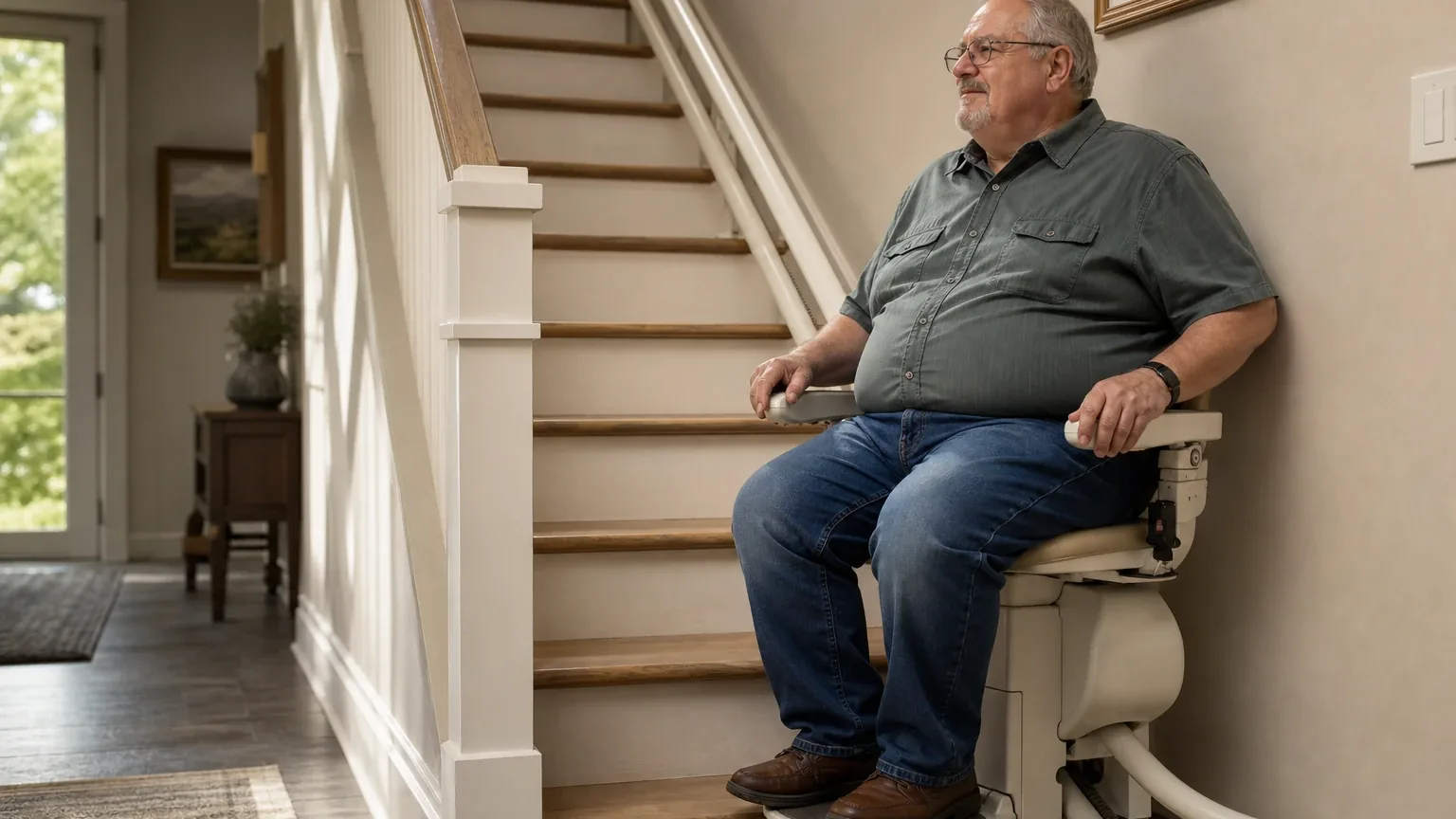
Answer Capsule
Stannah stairlifts is a weak-to-mixed fit for the Bariatric & High-Weight Capacity use case. Three of seven platforms named Stannah during ranking discovery (anthropic, deepseek, perplexity), and no platform rated it a strong fit: openai rated it weak, kimi uncertain, and the remaining five mixed. The strongest reason to consider Stannah is its documented warranty and service structure — lifetime carriage motor and gearbox coverage on new direct-purchase units, plus manufacturer call-out service language [1]. The main limitation is capacity: current U.S. materials top out at 350 lb straight and 352 lb curved with the 260 Plus option, below the 400+ lb threshold this use case requires [3].
Research Snapshot
| Field | Finding |
|---|---|
| Platform mentions in ranking stage | 3 of 7 platforms (anthropic, deepseek, perplexity) |
| Share of included platform responses | 42.9% |
| Average listed rank | 6.33 |
| Best listed rank | 2 (deepseek) |
| Relevant product/model/plan | Stannah Model 600 Siena or Starla straight stairlift; Model 260 Siena or Starla curved with 260 Plus heavy-duty configuration; Siena 600 XL armrest option |
| Overall use-case fit | Weak to mixed; no platform rated it strong |
| Research date | 2026-09-26 |
What Changed Since August 2026
Stannah Stairlifts moved down from No. 5 to No. 6, and platform mentions were unchanged at 3. The September 2026 review keeps Stannah Stairlifts a weak-to-mixed fit for heavy users, with the same conclusion that published U.S. capacity tops out below 400 lb. The description now centers on the Model 600 Siena or Starla straight and the Model 260 Plus curved configuration, and it drops the earlier framing of the Siena's wide seat as a defining strength, treating seat width as a limitation instead. Reported installed pricing for straight stairlifts is newly given as $3,400–$5,500, while the prior $3,200–$6,200 range is no longer repeated. Buyers should expect lead times exceeding 48 hours after an in-home survey. Differences between the two editions reflect what each article reports; they do not by themselves prove that the product, service, or price changed.
The August 2026 review preserves the earlier article for reference.
Why Stannah Stairlifts Qualified for This Study
Questions This Section Answers
- Is Stannah Stairlifts a good choice for Bariatric & High-Weight Capacity?
- Why did only three of seven AI platforms name Stannah Stairlifts for heavy users?
Stannah qualified because it is a long-established stairlift manufacturer that markets heavy-duty and higher-capacity configurations, and because three of the seven included platforms named it during ranking discovery for this use case. It did not qualify on capacity leadership. The ranking-stage description referenced a "Stannah 600 Heavy-Duty straight stairlift with 400 lb capacity," but that specific claim was not confirmed in the U.S. sources most platforms checked [6].
Stannah has manufactured stairlifts since 1975 and is described by independent reviewers as a UK-based manufacturer with a strong build-quality reputation, wider-than-standard seating on heavy-duty models, and reinforced mounting brackets (anthropic:10-9, anthropic:20-1). Those are brand-strength claims, not bariatric-capacity claims.
The entity's ranking profile is modest: average listed rank 6.33, best rank 2, and a 42.9% share of included platform responses. That pattern — named by some platforms, ranked low by most — is consistent with a company that is relevant to the category but not a category leader for this specific buyer.
The Product, Model, Plan, or Service Most Relevant to Bariatric & High-Weight Capacity
Questions This Section Answers
- Which Stannah Stairlifts model should a buyer choose if they need the highest available weight capacity?
- Does Stannah sell a 400 lb stairlift in the United States?
The most relevant Stannah options for this use case are the straight Model 600 Siena or Starla and the curved Model 260 Siena or Starla with the 260 Plus heavy-duty configuration [8]. The Siena 600 also offers an XL armrest option that widens the space between armrests [10].
Platforms did not agree on which model matters most. Anthropic pointed to a "Stannah 420 Heavy-Duty" straight model at 350 lb, dropping to 300 lb with powered options (anthropic:39-5). Deepseek and kimi both referenced a "Stannah 600 Heavy-Duty" straight stairlift rated at 400 lb / 18 stone, citing a Stannah page (deepseek:s1, kimi:stannah_unverified). Google pointed to the Siena 600 with the XL armrest option [10]. Perplexity concluded the most relevant U.S. options are the Siena/Starla straight models at 350 lb and the 260 Plus curved configuration at 352 lb, and that the 400 lb Stannah 600 Heavy-Duty claim was not verified in U.S. sources [11].
The practical takeaway: the model name a buyer hears depends on which platform or dealer they ask. Buyers should treat the model number and its U.S. rated capacity as the first thing to confirm in writing.
What the AI Platforms Agreed About
Questions This Section Answers
- What do AI platforms agree on about Stannah Stairlifts weight capacity for heavy users?
- Is Stannah Stairlifts worth it for a buyer who weighs under 350 lb?
Platforms broadly agreed on three points.
First, published U.S. capacity tops out below 400 lb. Stannah's own U.S. weight-limit page states most straight stairlifts support up to 350 lb, with some heavy-duty curved configurations such as the 260 Plus accommodating up to 352 lb [13]. Multiple platforms independently cited this same range.
Second, no verified 400+ lb U.S. model was identified. OpenAI, perplexity, kimi, and grok all reached this conclusion from the sources they checked [13]. Anthropic stated that AbleData, Veterans Affairs, and Aging.org consistently specify 350 lb for the Model 420, with 300 lb on powered options (anthropic:39-5).
Third, warranty and service coverage are genuine strengths. Stannah states lifetime coverage for the carriage motor and gearbox on new stairlifts purchased directly, plus parts and labor coverage terms, with optional extensions [16]. Perplexity noted Stannah says its new stairlift warranty includes call-out service anywhere in the USA [18].
Agreement among platforms does not establish product quality. It reflects that the same company-owned pages were widely retrievable.
Where the AI Platforms Disagreed or Were Uncertain
Questions This Section Answers
- Is the Stannah 600 Heavy-Duty 400 lb model actually available in the United States?
- Why do AI platforms disagree about Stannah Stairlifts weight limits?
The central conflict is the 400 lb claim. Deepseek cited a Stannah page stating the Stannah 600 Heavy-Duty straight stairlift is rated to 18 stone (400 lb / 254 kg) (deepseek:s1). OpenAI, perplexity, and kimi could not verify a current U.S. 400+ lb Stannah model, and openai noted the ranking-stage description conflicts with current official U.S. pages stating 350 lb straight and 352 lb curved [19]. Deepseek itself flagged that the 400 lb rating is published on the UK site and that whether it maps to the U.S. SKU is unclear (deepseek:s1).
A second conflict concerns the "Model 420." Anthropic cited a third-party guide describing the Stannah 420 as a heavy-duty straight model rated at 400 lb, while AbleData lists the same model at 350 lb, or 300 lb with fold-up track or powered swivel seat (anthropic:3-3, anthropic:39-5). Google described similar confusion around "Saxon 400" and "Model 400" designations, noting those model numbers refer to older lifts actually rated at 350 lb [21].
Warranty wording also differs across Stannah pages. One page states two years for other parts, while another states one year for parts and labor [23]. Perplexity noted the same discrepancy between lifetime gearbox coverage plus 1-year parts/labor and separate 2-year product warranty language [25].
Seat width is a third uncertainty. Stannah publishes approximately 20.5 inches between armrests for standard straight and curved configurations [27]. Google cited a Siena 600 XL arm spacing of 496 mm (about 19.5 inches) versus a standard 425 mm [28]. Independent heavy-duty guides describe 22–25 inch seat widths on dedicated bariatric lifts [29]. Whether Stannah offers a true bariatric-width seat in the U.S. was not confirmed.
Use-Case-Specific Features and Capabilities
Questions This Section Answers
- Does Stannah Stairlifts offer a wide enough seat and adjustable armrests for a bariatric user?
- What motor and track specifications does Stannah publish for its heavy-duty stairlifts?
On the six criteria this study uses, Stannah's evidence is uneven.
Maximum weight capacity (400+ lb): limitation. Published U.S. figures are 350 lb straight, 300 lb standard curved, and 352 lb curved with the 260 Plus option [30]. This does not meet the 400+ lb threshold.
Heavy-duty motor performance: unclear. Stannah uses a battery-powered rack-and-pinion drive system [33]. No independent motor or performance test data for a heavy-duty Stannah configuration was located (deepseek:s1, deepseek:s2). Anthropic noted that Stannah does not publish engineering margins, and that independent sources observe running motors at 90%+ of capacity reduces service life (anthropic:2-1).
Seat width: limitation or unclear. Published inside-armrest width is approximately 20.5 inches on standard configurations [35]. The Siena 600 XL arm option widens arm spacing to 496 mm [36]. Independent guides place dedicated heavy-duty seats at 21–26 inches (anthropic:2-12, anthropic:2-1).
Adjustable armrests: neutral. Published materials identify armrest safety features, seat-height adjustment, swivel seating, folding components, and optional powered footrests [35]. They do not establish bariatric-width armrests or a reinforced extra-wide seat in U.S. configurations. Anthropic noted that on 400 lb and 600 lb competitor models, armrests are mounted 1–2 inches higher for a larger seated profile, and that this is documented for those models, not Stannah (anthropic:2-12).
Reinforced track stability: unclear. Stannah uses a stair-mounted rail with model-specific configurations and safety sensors [34]. No independent structural or load-test evidence for a reinforced heavy-duty track was located (deepseek:s1, deepseek:s2). Anthropic noted most staircases handle the load because weight distributes across multiple mounting brackets, and that older or lightweight construction may need reinforcement assessed during the in-home survey (anthropic:10-9).
Warranty coverage: advantage. For new stairlifts purchased directly from Stannah, the company states lifetime coverage for critical carriage motor and gearbox components, one year for parts, and one year of labor, with an upgrade to five years potentially available through service plans [38]. Anthropic cited five-year parts coverage with a five-year motor warranty and a one-year labor limit, plus service agreements extending total coverage to seven years at $150–$250 per year (anthropic:20-1). Distributor terms can differ [38].
Pricing, Fees, Contracts, and Ongoing Costs
Questions This Section Answers
- How much does a Stannah Stairlifts heavy-duty stairlift cost, and are there ongoing service fees?
- What warranty and cancellation terms should a buyer confirm before signing a Stannah Stairlifts contract?
Stannah publishes starting prices but not a confirmed price for any bariatric configuration. Published starting figures are approximately $4,700 for straight stairlifts, $10,800 for curved, and $6,300 for outdoor models [41]. Independent reporting places straight Stannah stairlifts at $3,400–$5,500 installed, with most purchases in the $3,500–$5,000 range (anthropic:40-1). Modernize reported average installed costs of $4,700–$6,000 for the Siena and $5,500–$8,500+ for the Starla [43].
Pricing confidence is low to moderate. Perplexity checked Stannah's U.S. pricing page and found no verifiable public price for the relevant models [44]. Deepseek found Stannah directs U.S. buyers to request a quote or book a survey rather than publishing list prices (deepseek:s3). Kimi described all pricing as requiring in-home consultation (kimi:stannah_unverified).
Additional costs platforms flagged include optional comfort or safety features, ongoing service plans, and distributor-specific charges outside Stannah's direct service areas [45]. Anthropic listed an optional annual service plan at $150–$250 per year and out-of-warranty repairs such as motor replacement at $800–$1,500 and control board swaps at $500–$900 including labor (anthropic:20-1).
Contract terms are inconsistently documented. The initial home survey and quote are described as free and no-obligation [45]. Anthropic reported a 7-day money-back guarantee, rental and rent-to-own options through authorized dealers, and financing with dealer-variable terms (anthropic:40-1). OpenAI stated that a specific cancellation policy, deposit requirement, financing APR, rental term, and service-plan price were not verified in the sources reviewed [45]. Perplexity noted warranties may depend on purchase and installation by Stannah in the U.S. or Canada, require registration within 30 days, are described as non-transferable, and may vary if purchased through a distributor [47].
Best Suited For
Questions This Section Answers
- Who is Stannah Stairlifts actually best for among heavier stairlift buyers?
Stannah is best suited for buyers below the 400 lb threshold who value service and warranty structure over maximum capacity. Specifically:
- Users weighing up to approximately 350 lb who want a professionally surveyed and installed straight stairlift [49].
- Users needing a curved stairlift whose weight falls within the published 300–352 lb range, using the 260 Plus configuration [49].
- Buyers prioritizing direct-company support and substantial warranty coverage over maximum bariatric capacity [52].
- Buyers who want customization options including fabric, wood trim, and seat configurations, and who value an established manufacturer with a long production history (anthropic:10-9, anthropic:20-1).
Probably Not Best Suited For
Questions This Section Answers
- Who should not choose Stannah Stairlifts for Bariatric & High-Weight Capacity?
Stannah is probably not the right choice for:
- Users at or above 400 lb. No verified current U.S. Stannah model at 400 lb or above was identified [55].
- Users requiring a wide bariatric seat or a specifically documented 400+ lb safety rating. Published inside-armrest width is approximately 20.5 inches, narrower than the 22–25 inch widths associated with dedicated heavy-duty lifts [57].
- Buyers who need a curved stairlift above Stannah's published 352 lb capacity [55].
- Buyers who need clearly published U.S. pricing before contacting a dealer [59].
- Buyers needing rapid installation. Anthropic noted Stannah requires an in-home survey before quoting, with typical lead times exceeding 48 hours (anthropic:40-1).
When Another Option May Be Better
Questions This Section Answers
- What is a better alternative to Stannah Stairlifts for a buyer who needs verified 400+ lb capacity?
- Is there a curved stairlift alternative to Stannah for a buyer above 352 lb?
Another option is likely better in several specific situations, based on platform-reported comparisons.
If the buyer weighs 400+ lb or needs safety margin at 380+ lb, anthropic reported the Harmar Pinnacle SL600HD (600 lb, 26-inch seat, commercial-grade motor) as the only U.S. residential option at that capacity, with the Bruno Elite curved reaching 400 lb and the Harmar SL350HD at 500 lb straight-only (anthropic:2-1, anthropic:3-12). Google similarly identified Harmar and Bruno as primary alternatives for heavier bariatric individuals requiring 400–600 lb thresholds [60].
If the buyer needs 400 lb capacity on curved stairs, anthropic reported the Bruno Elite curved offers 400 lb with a custom rail, while the Harmar SL350HD offers 500 lb straight only (anthropic:3-12).
If the buyer is budget-constrained and weighs under 350 lb, anthropic reported the Acorn 130 and other budget brands start at $1,995+ versus Stannah's $3,400+ (anthropic:40-1).
If the buyer needs extended curved coverage above 300–352 lb, anthropic stated no standard option exists and custom solutions from specialized dealers are required (anthropic:3-12).
These alternatives are platform-reported and were not independently verified in this study.
Questions to Verify Before Buying
Questions This Section Answers
- What should a buyer confirm with Stannah Stairlifts before signing a contract for a heavy-duty stairlift?
Platforms converged on a similar verification list. Buyers should obtain written answers to all of the following before signing:
- What is the exact model number and U.S. rated safe working load for this buyer's staircase? [61]
- Can Stannah provide written confirmation that the proposed configuration is rated for the buyer's fully clothed weight plus any carried items? [61]
- Is the claimed 400 lb Stannah 600 Heavy-Duty configuration actually available in the United States, and what official specification sheet supports it? [62]
- What is the clear seat width between armrests, and are wider seat, armrest, or seat-depth options available? [63]
- What motor, carriage, rail, bracket, and structural specifications apply to the high-weight configuration? [65]
- What are the exact warranty periods for the motor, gearbox, rail, batteries, parts, labor, and service call-outs? [66]
- Will Stannah itself or a local distributor provide installation and ongoing service at the buyer's address? [69]
- Are annual maintenance, battery replacement, emergency call-outs, travel charges, or extended service plans extra? [71]
- What is the complete installed price, including all options, taxes, permits if applicable, and future service costs? [72]
- What is the cancellation, deposit, refund, rental, and removal policy? [71]
Final AI Consensus Verdict
Stannah Stairlifts is a weak-to-mixed fit for the Bariatric & High-Weight Capacity use case. No platform rated it strong. OpenAI rated it weak, kimi uncertain, and anthropic, deepseek, google, grok, and perplexity rated it mixed.
The consensus position is that Stannah is credible for users up to roughly 350–352 lb who value professional fitting, customization, and strong warranty and service coverage, but that current official U.S. evidence does not verify the required 400+ lb capacity, a bariatric-width seat, or the described 400 lb Model 600 Heavy-Duty configuration. The 400 lb claim appears in one platform's citation to a Stannah page (deepseek:s1) and was not confirmed by the other platforms that checked U.S. sources.
For buyers at or above 400 lb, the platform-reported consensus points to Harmar and Bruno models explicitly engineered and marketed for bariatric use [74]. Buyers should verify every capacity, seat-width, and warranty claim in writing before purchase.
How This Review Was Produced
This review was produced from a structured multi-platform research run dated 2026-09-26. Seven AI platforms evaluated Stannah Stairlifts for the Bariatric & High-Weight Capacity use case: openai, anthropic, deepseek, google, grok, kimi, and perplexity. Each platform returned a fit assessment, use-case findings against six criteria, pricing and terms, and a list of questions to verify before buying.
Three of the seven platforms named Stannah during ranking discovery: anthropic, deepseek, and perplexity. Ranking statistics reflect only those platforms. All seven platforms evaluated fit.
The study used the run research date of 2026-09-26 as the study date. Platform-reported research dates are provenance metadata and do not independently prove freshness. Deepseek reported a research date of 2026-05-19, which differs from the run date.
This review is part of a broader Bariatric & High-Weight Capacity consensus study covering multiple stairlift manufacturers. Related reports are organized under the stairlifts category directory.
Methodology Limitations
Several limitations apply to this review.
Company-owned citations materially outnumber independent citations in the underlying research. Stannah's own pages supplied most capacity, warranty, and pricing claims. Company claims should not be read as independently verified.
Citations are platform-reported evidence, not independently verified facts. The supplied URLs were collected from platform responses and were not independently validated by the writer stage.
Platform-reported research dates differ from the authoritative run date. Deepseek's research date of 2026-05-19 is roughly four months earlier than the run date, and its findings may reflect older page content.
Deepseek reported that search was not enabled for its run, so its claims require explicit verification before being described as current facts.
Conflicting product names, capacities, and warranty terms were not resolved by guessing. The 400 lb Stannah 600 Heavy-Duty claim, the Model 420 capacity discrepancy, and the warranty-period differences are described as conflicts, with verification steps provided.
Missing research is not treated as disagreement. Where platforms did not address a criterion, that is noted as unclear rather than as a negative finding.
No personal testing, customer experience, medical benefit, or guaranteed performance is claimed in this review.
See the broader Heavy Users consensus index for comparisons across qualified options.
Sources
Company-Owned Sources
- Emerald Infinity Max Bed – Bariatric Hospital Bed (1,000 lb Capacity: https://independentlivingsuperstore.com/products/infinity-max-bed-by-emerald
- THE ULTIMATE 2025 BARIATRIC HOSPITAL BED SELECTION GUIDE: https://rotecbeds.com/craft-assets/general/2025-Bariatric-Hospital-bed-selection-guide.pdf
- ComfortWide CW1000 Bariatric Bed - 1000lb: https://store.med-mizer.com/products/comfortwide
- Stannah Stairlifts official site: https://www.stannah.com
- How much does it cost to run a Stannah stairlift?: https://www.stannah.com/en-gb/resources/stairlift-running-costs/
- Contact Stannah Stairlifts USA: https://www.stannah.com/en-us/contact-us
- Customer Support & Stairlift Aftercare: https://www.stannah.com/en-us/customer-support
- Free Stairlift Quote: https://www.stannah.com/en-us/free-quote
- Distributor warranty registration: https://www.stannah.com/en-us/register
- How Much Does a Stair Lift Cost? Find Your Perfect Fit - Stannah: https://www.stannah.com/en-us/resources/stairlift-cost/
- Stairlift dimensions: Perfect fit guide for your home: https://www.stannah.com/en-us/resources/stairlift-dimensions
- The Complete Stair Lift Guide - Stannah: https://www.stannah.com/en-us/resources/stairlift-guide/
- Stannah Stairlift User Manuals: https://www.stannah.com/en-us/resources/stairlift-user-manuals
- Stairlift weight limits: Capacity, safety, and heavy-duty options explained: https://www.stannah.com/en-us/resources/stairlift-weight-limits
- Stairlift Guide: Types of Stair Lifts & Installation: https://www.stannah.com/en-us/resources/stairlifts-complete-guide
- Stair Lift & Chair Lift Installation: https://www.stannah.com/en-us/stairlifts/installation
- How Much Does a Stair Lift Cost?: https://www.stannah.com/en-us/stairlifts/stairlift-prices-and-cost
- Stairlift Warranty: Protection for Your Stannah Stairlift: https://www.stannah.com/en-us/warranty
- Stannah 600 Heavy-Duty straight stairlift: https://www.stannah.com/straight-stairlifts/stannah-600-heavy-duty
- Stannah Stairlifts US - request a quote: https://www.stannah.com/us/stairlifts
Additional AI research evidence74 records
- AI research evidence record openai:c8
- AI research evidence record perplexity:c1
- AI research evidence record openai:c1
- AI research evidence record perplexity:c4
- AI research evidence record google:1.2.1
- AI research evidence record openai:c1
- AI research evidence record perplexity:c4
- AI research evidence record openai:c1
- AI research evidence record openai:c3
- AI research evidence record google:2.2.7
- AI research evidence record perplexity:c3
- AI research evidence record perplexity:c4
- AI research evidence record openai:c1
- AI research evidence record perplexity:c4
- AI research evidence record google:1.2.1
- AI research evidence record openai:c8
- AI research evidence record perplexity:c1
- AI research evidence record perplexity:c5
- AI research evidence record openai:c1
- AI research evidence record perplexity:c4
- AI research evidence record google:2.1.5
- AI research evidence record google:2.4.3
- AI research evidence record openai:c8
- AI research evidence record openai:c9
- AI research evidence record perplexity:c1
- AI research evidence record perplexity:c2
- AI research evidence record openai:c4
- AI research evidence record google:2.2.7
- AI research evidence record openai:c5
- AI research evidence record openai:c1
- AI research evidence record perplexity:c4
- AI research evidence record google:1.2.1
- AI research evidence record google:1.1.6
- AI research evidence record openai:c7
- AI research evidence record openai:c4
- AI research evidence record google:2.2.7
- AI research evidence record openai:c6
- AI research evidence record openai:c8
- AI research evidence record openai:c9
- AI research evidence record perplexity:c2
- AI research evidence record openai:c12
- AI research evidence record google:3.2.1
- AI research evidence record google:3.2.3
- AI research evidence record perplexity:c7
- AI research evidence record openai:c10
- AI research evidence record openai:c11
- AI research evidence record perplexity:c1
- AI research evidence record perplexity:c2
- AI research evidence record openai:c1
- AI research evidence record perplexity:c4
- AI research evidence record google:1.2.1
- AI research evidence record openai:c8
- AI research evidence record perplexity:c1
- AI research evidence record perplexity:c5
- AI research evidence record openai:c1
- AI research evidence record perplexity:c4
- AI research evidence record openai:c4
- AI research evidence record openai:c5
- AI research evidence record perplexity:c7
- AI research evidence record google:2.4.6
- AI research evidence record openai:c1
- AI research evidence record perplexity:c4
- AI research evidence record openai:c4
- AI research evidence record google:2.2.7
- AI research evidence record openai:c7
- AI research evidence record openai:c8
- AI research evidence record perplexity:c1
- AI research evidence record perplexity:c2
- AI research evidence record openai:c11
- AI research evidence record perplexity:c5
- AI research evidence record openai:c10
- AI research evidence record openai:c12
- AI research evidence record perplexity:c7
- AI research evidence record google:2.4.6
Independent Sources
- Stannah Straight Stairlift (Model 420: https://abledata.acl.gov/product/stannah-straight-stairlift-model-420
- Heavy-Duty Stairlifts: 400 lb & 600 lb Models & Prices (2026: https://allamericanstairlifts.com/guides/heavy-duty-stairlifts/
- Stannah Stairlift Review: Warranty, Cost & Models - Modernize: https://modernize.com/stairlift/stannah-stairlifts-review
- Residential Stairlift Warranty Comparison Guide 2026: https://porchlightathome.com/blog/stairlift-warranty-comparison-guide/
- Heavy Duty Stairlifts | Increased Weight Limit On Stairlifts: https://stairliftguru.co.uk/heavy-duty-stairlifts/
- Heavy-Duty Stairlifts Guide: https://stairliftresource.com/guides/heavy-duty-stairlifts/
- Stairlifts for Larger Users: Beyond Standard Weight Limits: https://stairliftresource.com/guides/stairlift-for-obesity/
- Stairlift Weight Limits Explained: https://stairliftresource.com/guides/stairlift-weight-capacity/
- Stannah 600 Stairlift Specifications: https://vivamobilityusa.com/pages/florida-stair-lifts-straight-stannah-600-siena-starla
- Reconditioned Stannah Stairlifts from £975 from Assured Stairlifts: https://www.assuredstairlifts.co.uk/stairlifts/reconditioned-stairlifts/
- Stannah Stairlifts Reviews (From First-hand Experiences: https://www.consumeraffairs.com/homeowners/stannah-stairlifts.html
- eBay Stannah Model 600 Sitting Stairlift, 350lb Listing: https://www.ebay.com/itm/366311961116
- Stairlifts - HME Mobility: https://www.hmemobility.com/stairlifts/
- Stannah Siena Curved Stairlifts | Osborne Park, Joondalup & Mandurah - Motobility: https://www.motobility.com.au/products/stairlifts/stannah-siena-curved-stairlifts
- Stannah Stair Lifts Review 2026: Tested: https://www.ncoa.org/product-resources/mobility/stannah-stair-lift-review/
- Best Bariatric and High-Weight-Capacity Stairlifts: 7-AI Consensus: https://www.youtube.com/watch?v=vSa-Z5hepOw
Additional AI research evidence74 records
- AI research evidence record openai:c8
- AI research evidence record perplexity:c1
- AI research evidence record openai:c1
- AI research evidence record perplexity:c4
- AI research evidence record google:1.2.1
- AI research evidence record openai:c1
- AI research evidence record perplexity:c4
- AI research evidence record openai:c1
- AI research evidence record openai:c3
- AI research evidence record google:2.2.7
- AI research evidence record perplexity:c3
- AI research evidence record perplexity:c4
- AI research evidence record openai:c1
- AI research evidence record perplexity:c4
- AI research evidence record google:1.2.1
- AI research evidence record openai:c8
- AI research evidence record perplexity:c1
- AI research evidence record perplexity:c5
- AI research evidence record openai:c1
- AI research evidence record perplexity:c4
- AI research evidence record google:2.1.5
- AI research evidence record google:2.4.3
- AI research evidence record openai:c8
- AI research evidence record openai:c9
- AI research evidence record perplexity:c1
- AI research evidence record perplexity:c2
- AI research evidence record openai:c4
- AI research evidence record google:2.2.7
- AI research evidence record openai:c5
- AI research evidence record openai:c1
- AI research evidence record perplexity:c4
- AI research evidence record google:1.2.1
- AI research evidence record google:1.1.6
- AI research evidence record openai:c7
- AI research evidence record openai:c4
- AI research evidence record google:2.2.7
- AI research evidence record openai:c6
- AI research evidence record openai:c8
- AI research evidence record openai:c9
- AI research evidence record perplexity:c2
- AI research evidence record openai:c12
- AI research evidence record google:3.2.1
- AI research evidence record google:3.2.3
- AI research evidence record perplexity:c7
- AI research evidence record openai:c10
- AI research evidence record openai:c11
- AI research evidence record perplexity:c1
- AI research evidence record perplexity:c2
- AI research evidence record openai:c1
- AI research evidence record perplexity:c4
- AI research evidence record google:1.2.1
- AI research evidence record openai:c8
- AI research evidence record perplexity:c1
- AI research evidence record perplexity:c5
- AI research evidence record openai:c1
- AI research evidence record perplexity:c4
- AI research evidence record openai:c4
- AI research evidence record openai:c5
- AI research evidence record perplexity:c7
- AI research evidence record google:2.4.6
- AI research evidence record openai:c1
- AI research evidence record perplexity:c4
- AI research evidence record openai:c4
- AI research evidence record google:2.2.7
- AI research evidence record openai:c7
- AI research evidence record openai:c8
- AI research evidence record perplexity:c1
- AI research evidence record perplexity:c2
- AI research evidence record openai:c11
- AI research evidence record perplexity:c5
- AI research evidence record openai:c10
- AI research evidence record openai:c12
- AI research evidence record perplexity:c7
- AI research evidence record google:2.4.6
Other Sources
- Stannah Straight Stairlift Brochure: https://www.liftsofil.com/wp-content/uploads/2024/07/Stannah-Straight-Brochure.pdf
Additional AI research evidence74 records
- AI research evidence record openai:c8
- AI research evidence record perplexity:c1
- AI research evidence record openai:c1
- AI research evidence record perplexity:c4
- AI research evidence record google:1.2.1
- AI research evidence record openai:c1
- AI research evidence record perplexity:c4
- AI research evidence record openai:c1
- AI research evidence record openai:c3
- AI research evidence record google:2.2.7
- AI research evidence record perplexity:c3
- AI research evidence record perplexity:c4
- AI research evidence record openai:c1
- AI research evidence record perplexity:c4
- AI research evidence record google:1.2.1
- AI research evidence record openai:c8
- AI research evidence record perplexity:c1
- AI research evidence record perplexity:c5
- AI research evidence record openai:c1
- AI research evidence record perplexity:c4
- AI research evidence record google:2.1.5
- AI research evidence record google:2.4.3
- AI research evidence record openai:c8
- AI research evidence record openai:c9
- AI research evidence record perplexity:c1
- AI research evidence record perplexity:c2
- AI research evidence record openai:c4
- AI research evidence record google:2.2.7
- AI research evidence record openai:c5
- AI research evidence record openai:c1
- AI research evidence record perplexity:c4
- AI research evidence record google:1.2.1
- AI research evidence record google:1.1.6
- AI research evidence record openai:c7
- AI research evidence record openai:c4
- AI research evidence record google:2.2.7
- AI research evidence record openai:c6
- AI research evidence record openai:c8
- AI research evidence record openai:c9
- AI research evidence record perplexity:c2
- AI research evidence record openai:c12
- AI research evidence record google:3.2.1
- AI research evidence record google:3.2.3
- AI research evidence record perplexity:c7
- AI research evidence record openai:c10
- AI research evidence record openai:c11
- AI research evidence record perplexity:c1
- AI research evidence record perplexity:c2
- AI research evidence record openai:c1
- AI research evidence record perplexity:c4
- AI research evidence record google:1.2.1
- AI research evidence record openai:c8
- AI research evidence record perplexity:c1
- AI research evidence record perplexity:c5
- AI research evidence record openai:c1
- AI research evidence record perplexity:c4
- AI research evidence record openai:c4
- AI research evidence record openai:c5
- AI research evidence record perplexity:c7
- AI research evidence record google:2.4.6
- AI research evidence record openai:c1
- AI research evidence record perplexity:c4
- AI research evidence record openai:c4
- AI research evidence record google:2.2.7
- AI research evidence record openai:c7
- AI research evidence record openai:c8
- AI research evidence record perplexity:c1
- AI research evidence record perplexity:c2
- AI research evidence record openai:c11
- AI research evidence record perplexity:c5
- AI research evidence record openai:c10
- AI research evidence record openai:c12
- AI research evidence record perplexity:c7
- AI research evidence record google:2.4.6
Verify This Research
Review the study details behind this page or download the public machine-readable verification record.
- Study date
- September 26, 2026
- Platforms analyzed
- 7
- Source records
- 37
- Ranking mentions
- 3 of 7
- Platform share
- 43%
- Final consensus rank
- #6
Research trail and source mix
Configured platforms
openai, anthropic, deepseek, grok, perplexity, kimi, google
Source mix
16 independent · 20 company-owned · 1 unclear
Evidence support
29 direct · 5 partial
Important limitation
Use the run research_date as the study date. Platform-reported dates are provenance metadata and do not independently prove freshness.
Source snapshot SHA-256 cd0ac07e0e09e11da191828265bae47fbe00470954f4b25c2b670f853bff7fd3