
Answer Capsule
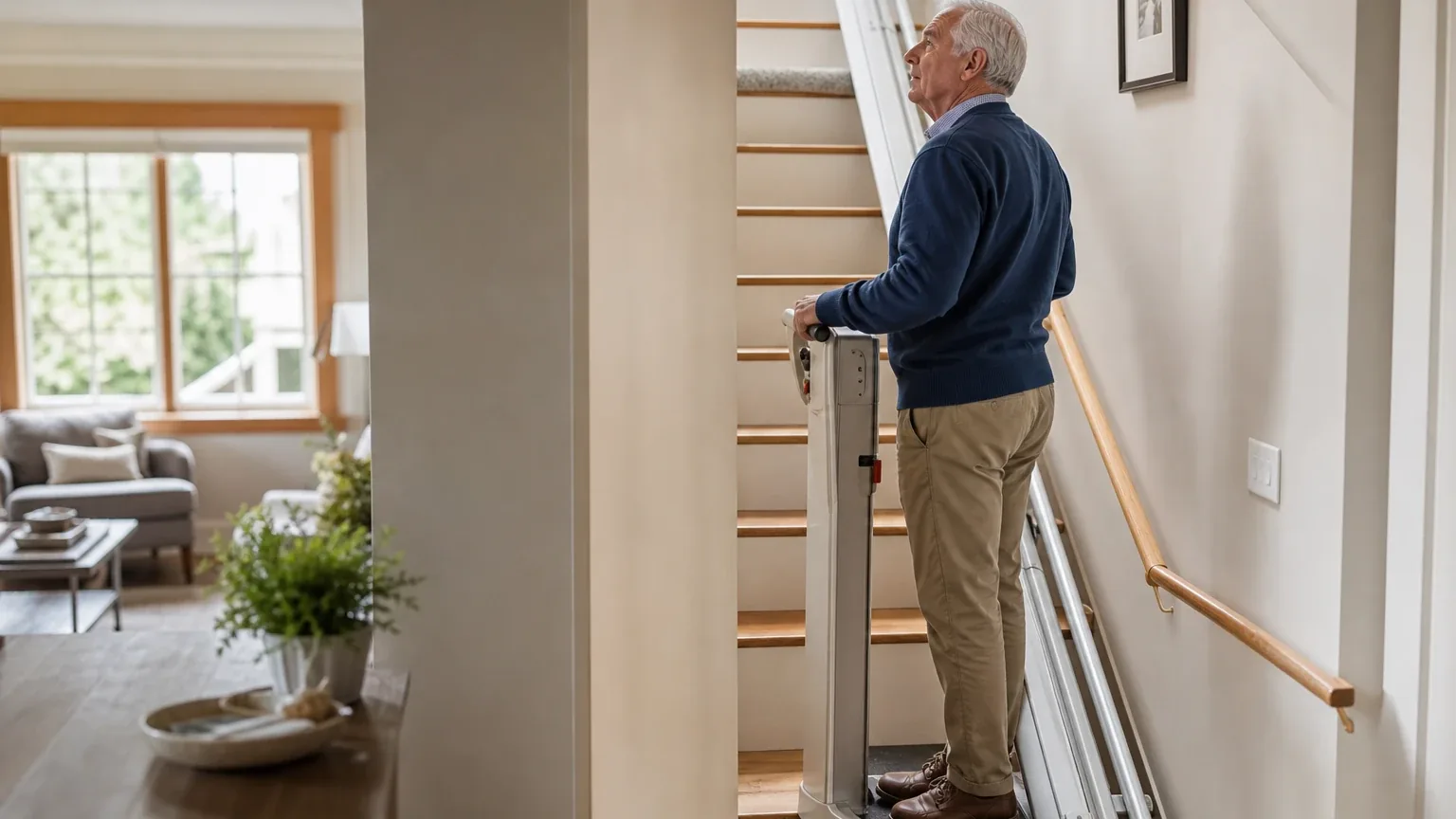
Arrow Lift Standing Solutions is a good fit for Standing & Semi-Standing Stair Travel, with material model-specific uncertainty. Two of seven AI platforms named Arrow Lift in the ranking stage (a 28.6% share), with an average listed rank of 3.0. The strongest reason to consider Arrow Lift is its purpose-aligned supported perch design: the company mandates custom curved rails for standing installations so riders dismount on level ground without swiveling, and includes a safety-belt immobilizer switch and power footrest as standard. The main limitation is transparency: Arrow Lift does not publish the exact installed model, weight capacity, minimum stair width, obstruction-sensor details, or ride-smoothness specifications, and the $14,000–$20,000 price range is company-reported. Buyers must verify the exact manufacturer and model in a written proposal before purchasing.
Research Snapshot
| Metric | Value |
|---|---|
| Platform mentions in ranking stage | 2 of 7 (anthropic, grok) |
| Share of included platform responses | 28.6% |
| Average listed rank | 3.0 |
| Best listed rank | 3 |
| Relevant product/model/plan | Arrow Lift perch/standing stairlift installation (Stannah or equivalent perch models; exact model unconfirmed) |
| Overall use-case fit | Good (5 platforms), Strong (1), Uncertain (2) |
| Research date | 2026-08-13 |
Why Arrow Lift Standing Solutions Qualified for This Study
Arrow Lift qualified because it is a U.S.-based stairlift dealer and installer that explicitly markets standing and perch-style stairlifts for users who have difficulty bending their knees or sitting fully [1]. The company describes its solution as a supported perch seat with a small seat and back support that allows a semi-standing ride while reducing knee bending [1]. Arrow Lift states that good balance and endurance are required [1].
The entity was named by two of seven platforms during the ranking stage: anthropic ranked it 3rd and grok ranked it 3rd. Five of seven platforms rated it a "good" fit, one rated it "strong," and two rated it "uncertain." The two "uncertain" ratings (perplexity, kimi) were driven by the absence of published specifications rather than by negative evidence about the product itself [8].
The Product, Model, Plan, or Service Most Relevant to Standing & Semi-Standing Stair Travel
The most relevant offering is Arrow Lift's professional installation of a supported perch/standing stairlift. Arrow Lift does not publish a dedicated proprietary standing model; instead, it appears to convert existing models by changing the seat type and sources perch mechanisms from manufacturers such as Stannah and possibly Bruno [10]. The Stannah is the most frequently cited specific model across platform responses [13].
The exact installed model is not confirmed by Arrow Lift's own published material. The ranking-stage description references Stannah or Bruno perch mechanisms, but Arrow Lift's reviewed official page does not identify a specific current model or confirm that Bruno is offered [16]. Buyers should treat the specific model as unverified until confirmed in writing.
What the AI Platforms Agreed About
Strong agreement: Arrow Lift's supported perch design directly addresses the target use case. All seven platforms recognized that Arrow Lift's standing stairlift offering is designed for users who cannot comfortably sit fully but can maintain balance in a semi-standing position [18]. The Stannah, which Arrow Lift appears to source, uses a semi-standing perch-style design with a sprung, non-slip seat and adjustable seat height [25].
Strong agreement: Custom curved rails are mandatory for standing installations. Arrow Lift states that it uses custom curved rails for all standing stairlift installations so the lift can travel beyond the top landing and stop on level ground, avoiding a standing pivot or swivel during dismount [18]. Straight rails are not suitable for standing users [28].
Strong agreement: A safety-belt immobilizer switch is standard. Arrow Lift installs a special safety switch on every standing stairlift that prevents movement unless the safety belt is fastened [18]. This is a critical safety feature for standing users.
Strong agreement: A power footrest is standard. Every standing lift from Arrow Lift includes a power footrest that folds automatically at the push of a button, reducing the need to bend down [18].
Strong agreement: The rider must maintain balance throughout the ride. Arrow Lift explicitly advises that standing stairlifts require users to maintain balance, and individuals with balance concerns, dizziness, or fatigue may be better suited for a seated stairlift [18].
Majority agreement: Standing installations are suitable for narrow staircases. Arrow Lift states that standing stairlifts are designed with a smaller footprint and suited for narrow staircases [20]. Reported minimum widths range from 26 to 30 inches depending on the source and model [34].
Majority agreement: The price range is $14,000–$20,000. Arrow Lift states that standing stairlift installations typically cost approximately $14,000 to $20,000 because they use custom curved rails [18]. Anthropic reported curved stairlift pricing starting at $12,000 [35].
Where the AI Platforms Disagreed or Were Uncertain
Disagreement: Weight capacity. Sources conflict on the standing-model weight limit. Some report 300 pounds [36], others report 300–350 pounds [38], and one notes that standard standing stairlifts typically range from 250–300 pounds [39]. Stannah reports that its Sadler perch stairlift has a 300-pound capacity [40]. Arrow Lift does not publish a standing-model weight limit on its reviewed page [41]. The applicable limit for a specific installation must be confirmed in writing.
Disagreement: Minimum stair width. Reported figures vary. Google cites the Stannah fitting stairways as narrow as 26 inches [42]. Kimi reports the Sadler's minimum staircase width as 26–28 inches [43]. Anthropic reports Arrow Lift can fit standing chairs on staircases as narrow as 28–30 inches [44]. Arrow Lift itself does not publish a specific minimum width for its standing configuration [41].
Disagreement: Whether a seat belt is required. Kimi flagged a potential conflict: Arrow Lift's blog claims standing stairlifts "don't require a seat belt," but the Stannah (the likely sourced product) requires a retractable seat belt to be fastened before movement [45]. This may be a description simplification or a different product. Buyers should verify the belt requirement for the exact installed model.
Uncertainty: Obstruction sensors. Arrow Lift's general stairlift safety features include sensor switches on the footrest and carriage sides [46], but the specific application of obstruction sensors to standing stairlift models is not documented in public sources [46]. The Stannah and Handicare 1000 include obstacle sensors on the footrest and carriage [43], but Arrow Lift's blog does not specify which safety features are included in its standing installations [45].
Uncertainty: Ride smoothness. No platform found published data on ride smoothness, acceleration, deceleration, noise, or vibration characteristics specific to Arrow Lift's standing systems [41]. Stannah states that its stairlifts generally operate at approximately 18 feet per minute [51], and the Handicare 1000 uses a battery-powered rack and pinion drive described as smooth [48], but the exact Arrow Lift installation is not confirmed.
Uncertainty: The exact installed model. Arrow Lift does not publish a specific standing stairlift model name [52]. Public sources describe Arrow Lift's standing offerings as "conversions" of existing models rather than proprietary standing designs [52]. The relationship between Arrow Lift and Stannah/Bruno (authorized dealer vs. partner) is not clarified [53].
Use-Case-Specific Features and Capabilities
Standing support design and perch seat stability (advantage). Arrow Lift describes its solution as a supported perch seat with a small seat and back support that allows a semi-standing ride while reducing knee bending [54]. The Stannah perch seat supports users in a near-standing position with adjustable height and non-slip seating [56]. The Sadler's seat height adjusts from 22.75" to 31.33" [57].
Safety belt and movement interlock (advantage). Arrow Lift states that its standing lifts include a safety belt and an immobilizer or safety switch that prevents movement when the belt is not fastened [54]. All standing stairlifts include retractable seat belts with one-hand operation [58]. Additional safety features available include weight sensors and multi-point harness seat belts [60].
Rail and landing safety (advantage). Arrow Lift says it uses custom curved rails for standing installations so the lift can stop on level ground, avoiding a standing pivot or swivel during dismount [54]. This is a meaningful advantage for this use case, but the claim is company-provided rather than independently tested evidence [54].
Power footrest (advantage). Arrow Lift states that its standing lifts include a power footrest operated by a button, intended to reduce the need to bend down to fold the footrest [54].
Minimum stair width (unclear). Arrow Lift does not publish a specific minimum width for its standing configuration [54]. Stannah publishes approximately 27 to 30 inches for curved configurations depending on layout [64]. The Sadler's folded depth from wall is 16", unfolded is 26.7" [57]. Actual clearance must account for handrails, trim, landings, turns, and the rider's body position [54].
Obstruction sensors (unclear). The reviewed Arrow Lift standing-stairlift page does not specify obstruction sensors or safety-edge details [54]. Arrow Lift's general stairlift safety features include sensor switches on the footrest and carriage sides [60], but whether these apply to standing mode is not documented [60].
Weight capacity (unclear). Arrow Lift does not publish a standing-model weight limit [54]. Reported figures range from 300 to 350 pounds [65]. Stannah reports the Sadler perch stairlift has a 300-pound capacity [66]. The Handicare 1000 Perch seat has a maximum 300-pound capacity [67].
Ride smoothness (unclear). No published speed, acceleration, deceleration, noise, or ride-quality specification exists for Arrow Lift's standing models [54]. Stannah states its stairlifts generally operate at approximately 18 feet per minute [64].
Outdoor suitability (limitation). Arrow Lift states that standing stairlifts are typically not designed for outdoor use [54]. Outdoor suitability should be treated as unlikely unless a specific weather-rated model is documented [54].
Door at top of stairs (limitation). Arrow Lift explicitly does not recommend a standing lift if there is a door located at the top of the stairs, because the door complicates the pivot and dismount process and increases fall risks [69].
Pricing, Fees, Contracts, and Ongoing Costs
Known costs. Arrow Lift states that standing stairlift installations typically cost approximately $14,000 to $20,000 because they use custom curved rails [70]. Anthropic reports curved stairlift pricing starting at $12,000 [73]. The final price depends on staircase layout, number of turns, and total staircase length [70]. All prices reportedly include professional installation, warranty, and lift permit/inspection fees [73].
Pricing confidence is moderate to low. The $14,000–$20,000 range is company-reported and may not include every site-specific charge [70]. Anthropic rated pricing confidence as "low" because standing stairlift pricing is not explicitly stated and buyers must request a custom quote [73]. Deepseek, kimi, and perplexity found no published pricing at all [74].
Additional fees. Potential additional costs for complex rail layouts, extra turns, unusual landing configurations, electrical work, or accessibility modifications are not itemized [70]. Power swivel seat upgrades are available as a typical add-on cost of $200–$500 [77]. Maintenance, battery replacement, repairs, warranty extensions, and removal or replacement costs are not publicly specified [70].
Contract and cancellation terms. Deposit requirements, cancellation rights, refund policy, installation schedule, warranty terms, and service-contract obligations are not stated on the reviewed page [70]. Arrow Lift offers free removal of lifts installed by the company, lift relocation to another home, and a buy-back option [77]. Warranties and service maintenance plans are available, but specific terms are not detailed in public sources [77].
Ongoing costs. Annual professional servicing is recommended by Arrow Lift, but no service price is published [70]. Arrow Lift says a later conversion to a seated stairlift may require a new custom rail, which could create additional cost [70].
Best Suited For
Arrow Lift is best suited for users who have difficulty lowering into or rising from a full seated position but can stand with reliable balance and endurance [78]. Specific best-fit profiles include:
- Users with limited knee or hip flexibility who can maintain balance while standing or semi-standing [81]
- Users who struggle to bend their knees or sit fully but have strong core stability [79]
- Narrow or space-constrained indoor staircases where a perch configuration may reduce the need for a full chair [83]
- Buyers seeking a professionally surveyed and custom curved-rail installation with a landing-oriented dismount [78]
- Buyers who prefer working with a regional dealer/installer rather than purchasing directly from a manufacturer [86]
Probably Not Best Suited For
Arrow Lift is probably not best suited for:
- Users with significant balance problems, dizziness, fatigue, uncontrolled weakness, or inability to stand for the full ride [87]
- Users who need full seated support, substantial back support, or a transfer-free boarding experience [87]
- Outdoor installations unless Arrow Lift confirms a suitable weather-rated product [87]
- Staircases with a door situated directly at the top landing [91]
- Budget-conscious buyers, as standing stairlifts require curved rails starting around $12,000 versus straight options at $3,500–$7,500 [92]
- Users with stairways narrower than 26 inches, unless special equipment can accommodate them [93]
- Buyers who need confirmed specifications before purchase, especially minimum stair width, weight capacity, and safety features [95]
When Another Option May Be Better
- A fully seated stairlift is better when the user has unreliable balance, fatigue, dizziness, or needs continuous back and seat support [97].
- A different dealer or manufacturer may be better when the buyer requires a clearly documented model-specific weight limit, obstruction-sensor specification, or published technical drawings [97].
- An inclined platform lift or another accessibility solution may be better when the rider cannot safely stand or perch, although those options generally require more space and may cost more [97].
- A competing local installer may be better if it provides a lower verified quote, stronger warranty, clearer service coverage, or an in-home demonstration of the exact perch model [97].
- Buyers who prefer direct-to-consumer options for potentially lower initial cost may prefer purchasing directly from manufacturers like Stannah or Savaria/Handicare with published perch seat specifications [100].
- A traditional seated stairlift is better when there is a doorway at the top of the stairs, requiring safe swiveling and dismounting away from the stairs [102].
Questions to Verify Before Buying
- What exact manufacturer and model will be installed: Stannah, another Stannah perch model, Bruno, or a different product? [103]
- What are the model-specific maximum user weight, seat or perch dimensions, usable stair width, and incline limits for this staircase? [103]
- Does the proposed unit include obstruction sensors or safety edges, and where are they located? [103]
- What type of safety belt is supplied, can it be operated one-handed, and does the belt interlock prevent movement when unfastened? [103]
- What physical back support, arm support, handholds, and foot positioning are provided during the ride? [103]
- Can the buyer test the exact model while wearing normal footwear and using the actual top and bottom landings? [103]
- What are the required landing clearances and the minimum usable stair width after accounting for handrails, trim, and the rider's body? [103]
- What are the quoted installation price, taxes, electrical work, permits if applicable, removal charges, and any recurring service fees? [103]
- What warranty applies to the lift, batteries, rail, labor, and service response, and who performs repairs in the buyer's area? [103]
- What happens if the buyer later needs a seated lift, and what would rail replacement or conversion cost? [103]
- Is the proposed installation approved for indoor use only, and what written documentation supports any outdoor-use claim? [103]
- What balance, transfer, and emergency-use assessment does the installer require before approving a standing configuration? [103]
- Does my physical therapist or doctor agree that I have the required balance and leg endurance to safely use a perch-style lift? [107]
- Are there reconditioned or refurbished perch models available to help reduce the $14,000–$20,000 cost? [107]
Final AI Consensus Verdict
Arrow Lift is a good fit for Standing & Semi-Standing Stair Travel, with material model-specific uncertainty. Five of seven platforms rated it "good," one rated it "strong," and two rated it "uncertain." The company's described supported perch approach directly addresses difficulty bending the knees or sitting fully, and its stated curved-rail, belt-interlock, landing-safety, and power-footrest features are relevant advantages [108].
However, the buyer should not purchase based only on the generic standing-stairlift description. The exact model, width requirement, weight capacity, sensor package, warranty, service terms, and final installed price must be verified in a written proposal and demonstrated in the home [108]. The $14,000–$20,000 price range is company-reported and may not include every site-specific charge [108]. No independent clinical, regulatory, accident-rate, or comparative ride-quality evidence was located in the reviewed sources [108].
For a broader view of how Arrow Lift compares to other standing stairlift options, see the Standing & Semi-Standing Stair Travel consensus index. You can also browse other options in the stairlifts category directory.
How This Review Was Produced
This review was produced by aggregating fit-research responses from seven AI platforms (openai, anthropic, deepseek, grok, perplexity, kimi, and google) that evaluated Arrow Lift Standing Solutions for the Standing & Semi-Standing Stair Travel use case. Each platform assessed the entity against category criteria including standing support design, perch seat stability, safety harness or grab bar quality, minimum stair width, obstruction sensors, ride smoothness, and weight capacity. The research date for this study is 2026-08-13.
Platform responses drew on 15 deduplicated sources: 11 company-owned sources (primarily Arrow Lift and Stannah) and 4 independent sources (Retirement Living, Consumer Affairs). Company-owned citations materially outnumber independent citations; company claims should not be treated as independently verified.
Methodology Limitations
- Company-owned evidence dominates. Eleven of 15 sources are company-owned (Arrow Lift or Stannah). Independent sources include Retirement Living reviews and Consumer Affairs listings, but no independent clinical, regulatory, accident-rate, or comparative ride-quality evidence was located [113].
- Platform-reported research dates differ. Deepseek's research date is 2026-04-08, while the authoritative run date is 2026-08-13. This discrepancy is disclosed as a methodology limitation.
- Platform mentions count only ranking-stage naming. Two of seven platforms named Arrow Lift during ranking discovery, but all seven platforms evaluated fit. The platform_mentions figure (2) reflects ranking-stage visibility, not fit evaluation coverage.
- The supplied URLs were collected from platform responses and were not independently validated by the writer stage.
- Conflicting product names, pricing, and capabilities were not resolved by guessing. Where sources conflict (weight capacity, minimum stair width, seat belt requirement), the conflict is described and buyers are told what to verify.
- AI-platform agreement does not prove product quality. This review reports what the platforms found in the supplied sources; it does not constitute independent testing or verification.
Sources
Company-Owned Sources
- Stair Lift with Door at Top: Safe Installation Guide: https://arrowlift.com/blog/stair-lift-door-at-top/
- What to Know About Standing Stair Lifts: https://arrowlift.com/blog/standing-stair-lift/
- Standing Stair Lifts: What You’re Seeing Online vs. What’s Actually Safe: https://arrowlift.com/blog/truth-about-standing-stair-lifts/
- Stair Lifts | Best Chair Stair Lifts For Home | Arrow Lift: https://arrowlift.com/stair-lifts/
- Curved Stair Lifts | Cost, Benefits & Features | Arrow Lift: https://arrowlift.com/stair-lifts/curved-stair-lifts/
- Why choose a perched or standing stairlift?: https://blog.stannah.com/why-choose-a-perched-or-standing-stairlift
- Standing Stairlift | Stair Chair with Perch Seat | Stannah: https://en.stannah.com.cy/stairlifts/sadler-chair/
- Handicare 1000 Straight Stairlift | Indoor & Outdoor Use - Savaria: https://www.savaria.com/stairlifts/products/straight-handicare-1000
- Stairlift Dimensions: Perfect Fit Guide for Your Home: https://www.stannah.com/en-us/resources/stairlift-dimensions
- Stairlift Weight Limit: How Much Weight Can a Stairlift Hold: https://www.stannah.com/en-us/resources/stairlift-weight-limits
- Compact Standing Stair Lift for Narrow Stairs | The Sadler: https://www.stannah.com/en-us/stairlifts/sadler-chair
Additional AI research evidence113 records
- AI research evidence record openai:c1
- AI research evidence record anthropic:c1
- AI research evidence record deepseek:c1
- AI research evidence record grok:c1
- AI research evidence record google:c1
- AI research evidence record openai:c2
- AI research evidence record anthropic:c6
- AI research evidence record perplexity:c1
- AI research evidence record kimi:c1
- AI research evidence record anthropic:c2
- AI research evidence record deepseek:c1
- AI research evidence record kimi:c1
- AI research evidence record google:c2
- AI research evidence record kimi:c2
- AI research evidence record anthropic:c8
- AI research evidence record openai:c1
- AI research evidence record openai:c2
- AI research evidence record openai:c1
- AI research evidence record anthropic:c2
- AI research evidence record deepseek:c1
- AI research evidence record grok:c1
- AI research evidence record perplexity:c1
- AI research evidence record kimi:c1
- AI research evidence record google:c1
- AI research evidence record kimi:c2
- AI research evidence record openai:c2
- AI research evidence record anthropic:c5
- AI research evidence record anthropic:c11
- AI research evidence record anthropic:c3
- AI research evidence record anthropic:c9
- AI research evidence record anthropic:c1
- AI research evidence record anthropic:c6
- AI research evidence record anthropic:c4
- AI research evidence record google:c2
- AI research evidence record anthropic:c13
- AI research evidence record grok:c2
- AI research evidence record anthropic:c3
- AI research evidence record anthropic:c9
- AI research evidence record anthropic:c14
- AI research evidence record openai:c4
- AI research evidence record openai:c1
- AI research evidence record google:c2
- AI research evidence record kimi:c2
- AI research evidence record anthropic:c4
- AI research evidence record kimi:c1
- AI research evidence record anthropic:c10
- AI research evidence record grok:c1
- AI research evidence record kimi:c4
- AI research evidence record anthropic:c1
- AI research evidence record perplexity:c1
- AI research evidence record openai:c3
- AI research evidence record anthropic:c2
- AI research evidence record deepseek:c1
- AI research evidence record openai:c1
- AI research evidence record openai:c2
- AI research evidence record anthropic:c8
- AI research evidence record kimi:c2
- AI research evidence record anthropic:c3
- AI research evidence record anthropic:c9
- AI research evidence record anthropic:c10
- AI research evidence record anthropic:c5
- AI research evidence record anthropic:c11
- AI research evidence record anthropic:c1
- AI research evidence record openai:c3
- AI research evidence record grok:c2
- AI research evidence record openai:c4
- AI research evidence record kimi:c4
- AI research evidence record grok:c1
- AI research evidence record google:c3
- AI research evidence record openai:c1
- AI research evidence record grok:c1
- AI research evidence record google:c1
- AI research evidence record anthropic:c13
- AI research evidence record deepseek:c1
- AI research evidence record kimi:c1
- AI research evidence record perplexity:c1
- AI research evidence record anthropic:c9
- AI research evidence record openai:c1
- AI research evidence record anthropic:c6
- AI research evidence record grok:c1
- AI research evidence record anthropic:c8
- AI research evidence record google:c2
- AI research evidence record deepseek:c1
- AI research evidence record anthropic:c4
- AI research evidence record anthropic:c5
- AI research evidence record kimi:c1
- AI research evidence record openai:c1
- AI research evidence record anthropic:c6
- AI research evidence record grok:c1
- AI research evidence record google:c1
- AI research evidence record google:c3
- AI research evidence record anthropic:c13
- AI research evidence record kimi:c2
- AI research evidence record google:c2
- AI research evidence record perplexity:c1
- AI research evidence record kimi:c1
- AI research evidence record openai:c1
- AI research evidence record anthropic:c6
- AI research evidence record perplexity:c1
- AI research evidence record kimi:c1
- AI research evidence record deepseek:c1
- AI research evidence record google:c3
- AI research evidence record openai:c1
- AI research evidence record kimi:c1
- AI research evidence record anthropic:c3
- AI research evidence record anthropic:c10
- AI research evidence record google:c1
- AI research evidence record openai:c1
- AI research evidence record anthropic:c3
- AI research evidence record anthropic:c5
- AI research evidence record perplexity:c1
- AI research evidence record kimi:c1
- AI research evidence record openai:c1
Independent Sources
- Arrow Lift Reviews & Complaints: https://www.consumeraffairs.com/homeowners/arrow-lift.html
- Best Stair Lifts of 2026 (With Costs) | Retirement Living: https://www.retirementliving.com/best-stair-lifts
- Arrow Lift Review (2026): With Costs: https://www.retirementliving.com/reviews/arrow-lift
- 3 Best Standing Stair Lifts of 2026: https://www.retirementliving.com/stair-lifts/standing-stair-lifts
Additional AI research evidence113 records
- AI research evidence record openai:c1
- AI research evidence record anthropic:c1
- AI research evidence record deepseek:c1
- AI research evidence record grok:c1
- AI research evidence record google:c1
- AI research evidence record openai:c2
- AI research evidence record anthropic:c6
- AI research evidence record perplexity:c1
- AI research evidence record kimi:c1
- AI research evidence record anthropic:c2
- AI research evidence record deepseek:c1
- AI research evidence record kimi:c1
- AI research evidence record google:c2
- AI research evidence record kimi:c2
- AI research evidence record anthropic:c8
- AI research evidence record openai:c1
- AI research evidence record openai:c2
- AI research evidence record openai:c1
- AI research evidence record anthropic:c2
- AI research evidence record deepseek:c1
- AI research evidence record grok:c1
- AI research evidence record perplexity:c1
- AI research evidence record kimi:c1
- AI research evidence record google:c1
- AI research evidence record kimi:c2
- AI research evidence record openai:c2
- AI research evidence record anthropic:c5
- AI research evidence record anthropic:c11
- AI research evidence record anthropic:c3
- AI research evidence record anthropic:c9
- AI research evidence record anthropic:c1
- AI research evidence record anthropic:c6
- AI research evidence record anthropic:c4
- AI research evidence record google:c2
- AI research evidence record anthropic:c13
- AI research evidence record grok:c2
- AI research evidence record anthropic:c3
- AI research evidence record anthropic:c9
- AI research evidence record anthropic:c14
- AI research evidence record openai:c4
- AI research evidence record openai:c1
- AI research evidence record google:c2
- AI research evidence record kimi:c2
- AI research evidence record anthropic:c4
- AI research evidence record kimi:c1
- AI research evidence record anthropic:c10
- AI research evidence record grok:c1
- AI research evidence record kimi:c4
- AI research evidence record anthropic:c1
- AI research evidence record perplexity:c1
- AI research evidence record openai:c3
- AI research evidence record anthropic:c2
- AI research evidence record deepseek:c1
- AI research evidence record openai:c1
- AI research evidence record openai:c2
- AI research evidence record anthropic:c8
- AI research evidence record kimi:c2
- AI research evidence record anthropic:c3
- AI research evidence record anthropic:c9
- AI research evidence record anthropic:c10
- AI research evidence record anthropic:c5
- AI research evidence record anthropic:c11
- AI research evidence record anthropic:c1
- AI research evidence record openai:c3
- AI research evidence record grok:c2
- AI research evidence record openai:c4
- AI research evidence record kimi:c4
- AI research evidence record grok:c1
- AI research evidence record google:c3
- AI research evidence record openai:c1
- AI research evidence record grok:c1
- AI research evidence record google:c1
- AI research evidence record anthropic:c13
- AI research evidence record deepseek:c1
- AI research evidence record kimi:c1
- AI research evidence record perplexity:c1
- AI research evidence record anthropic:c9
- AI research evidence record openai:c1
- AI research evidence record anthropic:c6
- AI research evidence record grok:c1
- AI research evidence record anthropic:c8
- AI research evidence record google:c2
- AI research evidence record deepseek:c1
- AI research evidence record anthropic:c4
- AI research evidence record anthropic:c5
- AI research evidence record kimi:c1
- AI research evidence record openai:c1
- AI research evidence record anthropic:c6
- AI research evidence record grok:c1
- AI research evidence record google:c1
- AI research evidence record google:c3
- AI research evidence record anthropic:c13
- AI research evidence record kimi:c2
- AI research evidence record google:c2
- AI research evidence record perplexity:c1
- AI research evidence record kimi:c1
- AI research evidence record openai:c1
- AI research evidence record anthropic:c6
- AI research evidence record perplexity:c1
- AI research evidence record kimi:c1
- AI research evidence record deepseek:c1
- AI research evidence record google:c3
- AI research evidence record openai:c1
- AI research evidence record kimi:c1
- AI research evidence record anthropic:c3
- AI research evidence record anthropic:c10
- AI research evidence record google:c1
- AI research evidence record openai:c1
- AI research evidence record anthropic:c3
- AI research evidence record anthropic:c5
- AI research evidence record perplexity:c1
- AI research evidence record kimi:c1
- AI research evidence record openai:c1
Verify this research
Review the study details behind this page or download the public machine-readable verification record.
- Study date
- Aug 13, 2026
- Platforms analyzed
- 7
- Source records
- 15
- Ranking mentions
- 2 of 7
- Platform share
- 29%
- Final consensus rank
- #4
Research trail and source mix
Platforms
openai, anthropic, deepseek, grok, perplexity, kimi, google
Source mix
4 independent · 11 company-owned
Evidence support
13 direct · 2 partial
Important limitation
Use the run research_date as the study date. Platform-reported dates are provenance metadata and do not independently prove freshness.
Source snapshot SHA-256 a133434ea83896bf6beaec348124dd2f56aba8e769cda29d10b67831036b0379