
Answer Capsule
The Savaria Handicare 1000 with the optional Perch seat is a good fit for standing and semi-standing stair travel, according to 6 of 7 AI platforms that evaluated it (one rated it "uncertain" due to insufficient evidence). Two of seven platforms named it during the ranking stage, with an average listed rank of 2.0. The strongest reason to consider it: the Perch seat is one of the few mainstream straight-stairlift configurations explicitly designed for users with limited knee or hip flexion who cannot comfortably sit fully. The main limitation: it is not a true standing stairlift—users must still bear weight on the shortened seat—and the Perch configuration is capped at 300 lb, restricted to indoor use, and incompatible with swivel seats and curved staircases.
Research Snapshot
| Metric | Value |
|---|---|
| Platform mentions in ranking stage | 2 of 7 (deepseek, openai) |
| Share of included platform responses | 28.6% |
| Average listed rank | 2.0 |
| Best listed rank | 2 |
| Fit ratings | 1 strong, 5 good, 1 uncertain |
| Relevant product/model/plan | Handicare 1000 straight stairlift with optional Perch seat |
| Overall use-case fit | Good (6 of 7 platforms) |
| Research date | 2026-08-13 |
Why Savaria Handicare 1000 Qualified for This Study
The Savaria Handicare 1000 qualified because it offers an optional Perch seat specifically designed for semi-standing stair travel. The Perch seat is positioned higher and is shallower than a conventional seat, allowing the user to ride in an almost-standing or semi-standing position [1]. It is explicitly marketed for users with limited knee or hip flexibility who struggle with the transition from standing to sitting [3]. The product was named by two platforms during the ranking stage (deepseek and openai), both placing it at rank 2.
The Product, Model, Plan, or Service Most Relevant to Standing & Semi-Standing Stair Travel
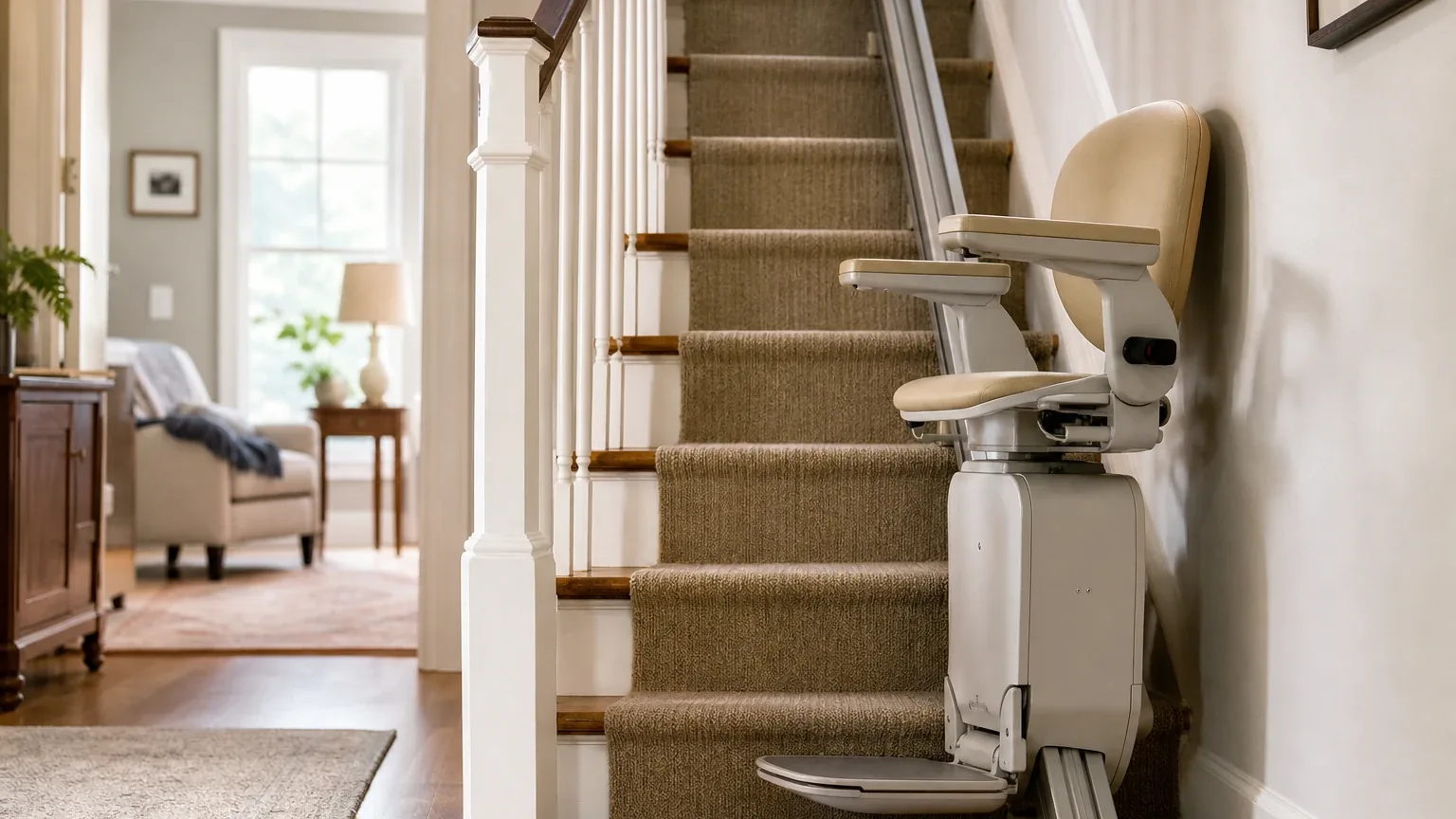
The relevant configuration is the Handicare 1000 straight stairlift with the optional indoor Perch seat. This is a straight-rail stairlift (not suitable for curved stairs) with a shortened, higher seat that supports a semi-standing riding posture [5]. The Perch seat is available on indoor models only [7]. The standard Smart seat supports 350 lb with an optional 440 lb upgrade, but the Perch seat is strictly limited to 300 lb [5].
What the AI Platforms Agreed About
Strong agreement: Perch seat addresses knee/hip flexion limitations
All platforms that provided substantive findings agreed that the Perch seat is designed for users who cannot comfortably sit at a 90-degree angle. The seat is less deep and higher than a traditional seat, allowing users to ride in a semi-standing "perched" position [13]. Google's platform noted the footplate-to-seat height is adjustable from 26.57 to 34.44 inches (675–875 mm) [16].
Strong agreement: Not a true standing stairlift
Multiple platforms independently noted that the Handicare 1000 Perch is not a fully standing stairlift. Users must still bear weight on the shortened seat during travel [18]. This was described as a key limitation by anthropic, kimi, and openai.
Strong agreement: 300 lb Perch seat weight limit
The Perch seat capacity is consistently reported at 300 lb (136 kg) across platforms [15]. This is significantly lower than the standard seat's 350 lb and the optional 440 lb heavy-duty configuration, which apply only to the Smart seat, not the Perch seat [15].
Strong agreement: Straight staircases only
All platforms agreed the Handicare 1000 is a straight stairlift and cannot accommodate curved or multi-turn staircases [15].
Majority agreement: Perch seat is indoor-only
Five platforms (anthropic, google, kimi, openai, grok) reported that the Perch seat option is available on indoor models only [26]. The base Handicare 1000 has an outdoor package, but the Perch configuration cannot be used outdoors [27].
Majority agreement: Safety features are standard
Platforms agreed the unit includes obstruction sensors on the footrest and carriage that stop the lift when an obstruction is detected [15]. A retractable seat belt is standard, and a 5-point safety harness is available as an option [15].
Majority agreement: Slim profile for narrow stairs
The Handicare 1000 is described as having one of the slimmest straight stairlift tracks, with approximately 4.5 inches of rail intrusion from the wall [34]. The folded width is approximately 15.1–15.25 inches [36].
Where the AI Platforms Disagreed or Were Uncertain
Fit rating disagreement
Grok rated the Handicare 1000 a strong fit, while five platforms (openai, anthropic, deepseek, google, kimi) rated it good, and perplexity rated it uncertain due to insufficient verifiable evidence [38].
Weight capacity conflict
Deepseek reported a 375 lb weight capacity, which conflicts with the 300 lb Perch seat limit reported by all other platforms [39]. The 375 lb figure appears to apply to a different configuration or is an error; the Perch seat limit of 300 lb is consistently documented across openai, anthropic, google, and kimi sources.
Minimum stair width
No platform could verify a universal minimum stair width for the Perch configuration. Deepseek reported approximately 28 inches based on dealer specifications [40], but openai and kimi noted that no explicit minimum is published for the Perch seat [41]. An in-home measurement and dealer survey are required.
Motor specification discrepancy
The official product page describes a 0.6 hp motor, while the 2026 brochure describes a 1/3 hp motor [41]. This discrepancy does not by itself establish a performance difference but should be confirmed.
Perch seat swivel compatibility
Google's platform reported that the Perch seat configuration cannot be used with manual or powered swivel options, meaning users must exit the lift directly without the seat rotating [45]. This was not mentioned by other platforms and is a critical safety consideration for top-landing transfers.
Perch seat outdoor availability
While most platforms reported the Perch seat is indoor-only, grok noted the outdoor availability was "unclear across sources" [46]. The preponderance of evidence supports indoor-only.
Use-Case-Specific Features and Capabilities
Standing support design (advantage)
The Perch seat is shallower and positioned higher than a conventional seat, allowing the user to ride in a semi-standing position [47]. The footplate-to-seat height is adjustable from 26.57 to 34.44 inches [50]. This reduces the knee and hip flexion needed to board and ride [47].
Perch seat stability (advantage with caveats)
The Perch seat provides a fixed support surface with a seat back and armrests, plus a retractable seat belt [47]. Stability while riding depends on the user's ability to remain positioned against the support surfaces. No independent testing of real-world stability was found [47].
Harness or grab-bar quality (advantage with caveats)
A retractable seat belt is standard, and a 5-point safety harness or body-harness option is available [47]. Dealer pricing for the body harness is approximately $650–$695 [56]. The reviewed sources do not establish comparative harness quality or provide independent assessment of buckle usability [47].
Minimum stair width (unclear)
The Perch configuration is approximately 15.1 inches folded and 25.6 inches open to the footplate, with approximately 4.5 inches of rail intrusion [52]. Internal armrest width is 18.30 inches [57]. A single universal minimum staircase width was not clearly stated [47]. Deepseek reported approximately 28 inches based on dealer specifications [58].
Obstruction sensors (advantage)
Sensors on the footrest and carriage are designed to stop the lift when an obstruction is detected [47]. An overspeed governor ensures the lift does not exceed rated speed on descent [62].
Ride smoothness (neutral)
Savaria describes the battery-powered rack-and-pinion drive as smooth and reliable [47]. This is a company claim; no independent comparative ride-quality testing was identified [47].
Weight capacity (limitation)
The Perch seat is limited to 300 lb [47]. The optional 440 lb high-capacity configuration applies to the Smart seat, not the Perch seat [47].
Swivel seat compatibility (limitation)
The Perch seat configuration cannot be combined with manual or powered swivel options [68]. Users must exit the lift directly without the seat rotating, which may make top-landing transfers more difficult [68].
Pricing, Fees, Contracts, and Ongoing Costs
Known cost estimates
| Item | Reported Price | Source |
|---|---|---|
| Base Handicare 1000 straight stairlift | ~$3,490–$3,505 | [69], google |
| Straight stairlift typical range | $2,500–$5,000 | [70] |
| Sterling (Handicare) 1000 installed | Just over $3,000 | [71] |
| Perch Seat upgrade | $500–$1,280 | google, [72] |
| Power Folding Footrest | $495 | [69] |
| Power Swivel Seat | $660 | [69] |
| Body Harness | $650–$695 | [69] |
| Additional arm spacers | ~$185–$250 | |
| Annual maintenance/service contract | $150–$300 per year | deepseek |
Pricing confidence
Pricing confidence is low to moderate. Savaria does not publish a U.S. list price for the Handicare 1000 with Perch seat on the reviewed official product page [73]. Pricing is obtained through a local dealer and varies with installation conditions and options [73]. Grok reported no verified U.S. pricing [74].
Warranty terms
The manufacturer warranty is described as 24 months for defective parts through the local dealer, with limited lifetime coverage on the rail and powertrain [75]. The warranty is void if regular inspection and maintenance are not carried out by an Authorized Savaria Dealer; the owner must keep records of all service [78]. The purchase price must be paid in full to the manufacturer to release parts under warranty [79].
Contract and cancellation terms
The reviewed official materials do not state a standard U.S. cancellation, return, rental, or financing policy [77]. Terms vary by independent dealer. Some regional distributors include a 1-year limited service warranty in addition to the manufacturer's parts warranty (google). Deepseek reported that no long-term contract is required for the unit itself, but service agreements are optional and can be canceled with notice (deepseek).
Best Suited For
- Users with limited knee or hip flexion who cannot comfortably sit at a 90-degree angle but can maintain a supported semi-standing posture [80]
- Straight indoor staircases where a shallow, higher perch seat is preferable to a conventional seat [80]
- Narrow staircases where standard seated stairlifts lack knee clearance or knees may collide with the opposite banister [84]
- Users under 300 lb seeking semi-standing mobility [86]
- Buyers who want a retractable belt, optional body harness, obstruction sensors, and a non-slip footrest [80]
Probably Not Best Suited For
- Users who need true full-standing support without seat contact—the Perch seat requires weight-bearing on the seat [91]
- Users over 300 lb when the Perch seat is required [93]
- Outdoor installations—the Perch seat is indoor-only [97]
- Curved or multi-turn staircases—the Handicare 1000 is a straight stairlift only [93]
- Users who require a swivel seat to safely turn and step off onto the top landing [98]
- Users who cannot safely bear weight or stabilize their trunk while semi-standing [93]
When Another Option May Be Better
- For true standing support without seat weight-bearing: Consider the Stannah, which offers a sprung standing-assistance seat with soft grip ridges and specifies a 26–28 inch minimum stair width [102].
- For curved staircases: Consider a curved-rail standing lift such as the Handicare Freecurve with Perch option (google).
- For users over 300 lb needing semi-standing support: The Perch seat's 300 lb limit is not upgradable; a competing model with higher standing-option capacity may be needed [103].
- For outdoor semi-standing installation: The Perch seat is indoor-only; alternatives with outdoor standing options should be evaluated [105].
- For budget-conscious buyers: Base straight stairlifts typically cost $2,500–$5,000, and the Perch upgrade adds $500–$1,280; a basic seated stairlift may be acceptable if knee/hip flexion is not a limitation [107].
Questions to Verify Before Buying
- Does the user's weight, height, leg length, balance, and transfer ability fit the Perch seat safely? The 300 lb limit is firm [109].
- What is the exact installed width, rail intrusion, swivel radius, and landing clearance on this staircase? No universal minimum stair width is published [109].
- Will the Perch seat be supplied with the standard retractable belt, a 5-point harness, or another restraint, and can the user operate the buckle independently? [109]
- Is the Perch seat configuration approved for the user's stair angle and exact staircase layout? [109]
- How will the user exit at the top landing without a swivel seat? The Perch configuration is incompatible with swivel options [113].
- What are the itemized prices for the lift, Perch seat, harness, installation, electrical work, rail extensions, and optional power features? [114]
- What maintenance schedule is required, what does it cost, and who services the unit after the selling dealer is no longer available? The warranty requires authorized dealer maintenance [116].
- What exactly is covered by the U.S. warranty, including labor, batteries, rail, powertrain, outdoor use, and transferability? [117]
- What happens during a power failure, and how many trips can the battery provide under the buyer's expected load? [109]
- Can the buyer perform an in-home demonstration or trial using the actual Perch configuration before signing? [109]
- What are the written cancellation, return, removal, relocation, rental, financing, and refund terms? These are not stated in official materials [120].
Final AI Consensus Verdict
The Savaria Handicare 1000 with Perch seat is a good fit for standing and semi-standing stair travel, with 6 of 7 evaluating platforms rating it good or strong. It is one of the few mainstream straight stairlift configurations explicitly designed for users with limited knee or hip flexion, offering a semi-standing riding position, compact track design, and comprehensive safety features including obstruction sensors, a retractable seat belt, and an optional 5-point harness.
However, the product is not a true standing stairlift—users must still bear weight on the shortened seat—and the Perch configuration has meaningful limitations: a 300 lb weight cap, indoor-only availability, no swivel seat compatibility, and straight-stair-only operation. No independent clinical, laboratory, or comparative evidence was found validating the Perch seat for a particular medical condition or proving superior stability [121]. Pricing is dealer-dependent and not published by Savaria [122].
For users under 300 lb with indoor straight staircases and moderate knee or hip mobility restrictions, this is a strong specialized solution. For users seeking full standing travel, outdoor installation, heavier body weights, or swivel-seat transfers, alternatives should be evaluated. An in-home assessment and demonstration with the actual Perch configuration are essential before purchase.
For a broader comparison of standing and semi-standing stair travel options, see the Standing & Semi-Standing Stair Travel consensus index. You can also browse other stairlifts reviews in the category directory.
How This Review Was Produced
This review was produced by aggregating fit-research responses from seven AI platforms (openai, anthropic, deepseek, grok, perplexity, kimi, and google), each of which evaluated the Savaria Handicare 1000 against the stated use case of standing and semi-standing stair travel. Each platform assessed the entity against category criteria including standing support design, perch seat stability, safety harness or grab bar quality, minimum stair width, obstruction sensors, ride smoothness, and weight capacity. Platform responses were compiled on 2026-08-13, with the exception of deepseek, which reported a research date of 2026-02-15.
The evidence base includes 34 deduplicated sources: 13 company-owned sources (primarily Savaria product pages, brochures, manuals, and warranty documents) and 20 independent sources (dealer directories, review sites, and third-party specification documents), plus 1 source of unclear ownership. All supplied URLs were collected from platform responses and were not independently validated by the writer stage.
Methodology Limitations
- Platform-reported research dates differ: Deepseek reported a research date of 2026-02-15, while all other platforms reported 2026-08-13. This date discrepancy is disclosed as provenance metadata and does not independently prove freshness.
- Platform mentions vs. fit evaluations: All seven platforms evaluated fit, but only two (deepseek and openai) named the entity during ranking discovery. The ranking statistics reflect only those two platforms.
- No independent verification of URLs: The supplied URLs were collected from platform responses and were not independently validated by the writer stage.
- Official-site retrieval failure: The deterministic identity audit notes that official-site retrieval failed for one or more mentions; no failed fetch was used as a verified domain key.
- Limited independent evidence: No independent clinical, laboratory, or comparative testing data was found validating perch-seat stability, ride smoothness, harness quality, or user outcomes. Company claims of smoothness and reliability are not independently verified.
- Pricing uncertainty: No official U.S. list price is published. Pricing estimates from third-party dealers vary significantly, and actual pricing requires dealer consultation.
- Specification conflicts: Motor specification (0.6 hp vs. 1/3 hp), weight capacity (375 lb vs. 300 lb Perch), and minimum stair width figures conflict across sources and should be confirmed with the dealer.
- AI agreement does not prove product quality: Agreement among AI platforms reflects consistency in evaluating available sources, not independent verification of product performance.
Explore more stairlifts guidance in the category directory.
Sources
Company-Owned Sources
- Handicare 1000 Straight Stairlift Brochure: https://files.savaria.com/wp-content/uploads/2026/01/Handicare-1000-straight-stairlift-Brochure.pdf
- Handicare 1000 Owners Manual: https://files.savaria.com/wp-content/uploads/2026/01/Handicare-1000-straight-stairlift-Owners-Manual.pdf
- Manufacturer's Limited Product Warranty - North America: https://files.savaria.com/wp-content/uploads/2026/02/Savaria_Warranty_NorthAmerica-EN2025.pdf
- Handicare 1000 Straight Stairlift | Indoor & Outdoor Use - Savaria: https://savaria.com/products/handicare-1000-straight-stairlift
- Handicare 1000 Straight Stairlift - Savaria: https://savaria.com/products/stairlifts/straight/handicare-1000/
- Handicare 1000 Straight Stairlift | Savaria Stairlift: https://savariastairlift.com/product/handicare-1000-straight-stairlift/
- Learn more about stair lift warranty | Savaria Stairlift: https://savariastairlift.com/warranty/
- Straight Stairlift | Handicare 1000: https://www.handicareusa.com/stairlifts/straight-stairlifts/1000/
- 1000 • Handicare Straight Stairlift: https://www.savaria.asia/product/1000-straight-stairlift/
- Home Accessibility FAQ: https://www.savaria.com/home-accessibility/faq
- Handicare 1000 Brochure PDF: https://www.savaria.com/site/assets/files/1052/handicare_1000_brochure.pdf
- Handicare 1000 Straight Stairlift | Indoor & Outdoor Use: https://www.savaria.com/stairlifts/products/straight-handicare-1000
- Compact Standing Stair Lift for Narrow Stairs | The Sadler: https://www.stannah.com/en-us/stairlifts/sadler-chair
Additional AI research evidence122 records
- AI research evidence record openai:c1
- AI research evidence record openai:c2
- AI research evidence record anthropic:c1
- AI research evidence record anthropic:c3
- AI research evidence record openai:c1
- AI research evidence record anthropic:c3
- AI research evidence record anthropic:c16
- AI research evidence record kimi:c7
- AI research evidence record openai:c2
- AI research evidence record anthropic:c5
- AI research evidence record google:c1
- AI research evidence record google:c2
- AI research evidence record anthropic:c3
- AI research evidence record anthropic:c4
- AI research evidence record openai:c1
- AI research evidence record google:c1
- AI research evidence record google:c2
- AI research evidence record anthropic:c2
- AI research evidence record kimi:c4
- AI research evidence record openai:c2
- AI research evidence record anthropic:c5
- AI research evidence record kimi:c2
- AI research evidence record anthropic:c15
- AI research evidence record anthropic:c1
- AI research evidence record deepseek:c1
- AI research evidence record anthropic:c16
- AI research evidence record google:c4
- AI research evidence record kimi:c7
- AI research evidence record anthropic:c8
- AI research evidence record anthropic:c12
- AI research evidence record google:c5
- AI research evidence record anthropic:c6
- AI research evidence record anthropic:c7
- AI research evidence record anthropic:c9
- AI research evidence record anthropic:c10
- AI research evidence record openai:c3
- AI research evidence record grok:c2
- AI research evidence record perplexity:c1
- AI research evidence record deepseek:c1
- AI research evidence record deepseek:c2
- AI research evidence record openai:c1
- AI research evidence record openai:c3
- AI research evidence record kimi:c2
- AI research evidence record openai:c2
- AI research evidence record google:c4
- AI research evidence record grok:c1
- AI research evidence record openai:c1
- AI research evidence record openai:c2
- AI research evidence record anthropic:c3
- AI research evidence record google:c1
- AI research evidence record google:c2
- AI research evidence record openai:c3
- AI research evidence record anthropic:c4
- AI research evidence record deepseek:c1
- AI research evidence record anthropic:c6
- AI research evidence record anthropic:c20
- AI research evidence record anthropic:c10
- AI research evidence record deepseek:c2
- AI research evidence record anthropic:c8
- AI research evidence record anthropic:c12
- AI research evidence record google:c5
- AI research evidence record anthropic:c13
- AI research evidence record anthropic:c14
- AI research evidence record deepseek:c3
- AI research evidence record kimi:c2
- AI research evidence record anthropic:c5
- AI research evidence record anthropic:c15
- AI research evidence record google:c4
- AI research evidence record anthropic:c20
- AI research evidence record anthropic:c18
- AI research evidence record anthropic:c19
- AI research evidence record deepseek:c2
- AI research evidence record openai:c5
- AI research evidence record grok:c4
- AI research evidence record anthropic:c22
- AI research evidence record anthropic:c23
- AI research evidence record openai:c4
- AI research evidence record anthropic:c24
- AI research evidence record anthropic:c25
- AI research evidence record openai:c1
- AI research evidence record anthropic:c3
- AI research evidence record grok:c1
- AI research evidence record kimi:c3
- AI research evidence record anthropic:c11
- AI research evidence record google:c3
- AI research evidence record anthropic:c5
- AI research evidence record google:c2
- AI research evidence record openai:c2
- AI research evidence record anthropic:c6
- AI research evidence record anthropic:c7
- AI research evidence record anthropic:c2
- AI research evidence record kimi:c4
- AI research evidence record openai:c1
- AI research evidence record openai:c2
- AI research evidence record anthropic:c5
- AI research evidence record google:c2
- AI research evidence record anthropic:c16
- AI research evidence record google:c4
- AI research evidence record kimi:c7
- AI research evidence record anthropic:c1
- AI research evidence record deepseek:c1
- AI research evidence record kimi:c1
- AI research evidence record openai:c1
- AI research evidence record kimi:c4
- AI research evidence record anthropic:c16
- AI research evidence record google:c4
- AI research evidence record anthropic:c18
- AI research evidence record deepseek:c2
- AI research evidence record openai:c1
- AI research evidence record google:c2
- AI research evidence record openai:c3
- AI research evidence record anthropic:c6
- AI research evidence record google:c4
- AI research evidence record openai:c5
- AI research evidence record anthropic:c20
- AI research evidence record anthropic:c24
- AI research evidence record anthropic:c22
- AI research evidence record anthropic:c23
- AI research evidence record kimi:c2
- AI research evidence record openai:c4
- AI research evidence record openai:c1
- AI research evidence record openai:c5
Independent Sources
- 1000 Straight Stairlift by Handicare - Ability Concepts: https://abilityconcepts.ca/products/1000-straight-stairlift-by-handicare
- Handicare 1000 Stairlift - Comfort & Mobility Shop: https://comfortandmobilityshop.com/stairlifts/handicare-1000-stairlift/
- Handicare 1000 Straight Stairlift | EZ Mobility Solutions: https://ezmobilitysolutions.com/products/stairlifts/handicare-1000-straight-stairlift/
- Search results set provided for this evaluation: https://handbook.fca.org.uk/handbook/cobs9a/cobs9as2
- Perch Seat Stairlift Handicare 1000 (300 lbs. capacity) - MediEquip: https://mediequip.net/products/stair-lifts/straight-stair-lifts/standing-stair-lift/
- Handicare 1000 Indoor Straight Stairlift – Thealbanyliftcompany: https://thealbanyliftcompany.com/products/1000-stairlift-from-sterling-16-standard-track
- Handicare 1000 Outdoor Stairlift: Smooth and Reliable Outdoor Access | 101 Mobility: https://www.101mobility.com/products/handicare-1000-outdoor-stairlift/
- Handicare 1000 Perch - 24 Hour Stairlifts: https://www.24hourstairlifts.com/wp-content/uploads/2020/10/Handicare-1000-Perch.pdf
- 1000 Straight Stairlift by Handicare - Boston Orthopedic Respiratory Equipment LLC: https://www.bostonorthopedic.com/1000-straight-stairlift-by-handicare.html
- Handicare Reviews (From Verified Customers: https://www.consumeraffairs.com/homeowners/handicare.html
- 1000 Straight Stairlift: https://www.freedommobilitysolutions.com/1000-straight-stairlift
- Handicare 1000 Perch Seat Dimensions: https://www.lifewaymobility.com/Customer-Content/www/CMS/files/Savaria/Handicare_SLs/Handicare-1000-Perch-Seat_Dimensions-Lifeway-Mobility.pdf
- 11 Best Stair Lifts of 2026 (With Costs: https://www.retirementliving.com/stair-lifts
- Handicare 1000 Stairlift - South Wales Mobility: https://www.southwalesmobility.com/stairlift-listings/handicare-1000-stairlift/
- Handicare Stairlift Cost 2026 | StairliftCost.co.uk: https://www.stairliftcost.co.uk/handicare-stairlift
- Savaria Handicare 1000 Straight Stairlift | Stairlift Prices: https://www.stairliftprices.com/savaria-handicare-1000-straight-stairlift/
- Sterling Stairlifts from Handicare | Stair Lifts Atlanta, LLC: https://www.stairliftsatlantaga.com/category/sterling-stairlifts-from-handicare/
- Handicare Stairlifts Review and Best Prices 2026 Update: https://www.stairliftsreviews.co.uk/handicare/
- Helix Mobile Stairlift – Top Mobility: https://www.topmobility.com/products/helix-mobile-stairlift
Additional AI research evidence122 records
- AI research evidence record openai:c1
- AI research evidence record openai:c2
- AI research evidence record anthropic:c1
- AI research evidence record anthropic:c3
- AI research evidence record openai:c1
- AI research evidence record anthropic:c3
- AI research evidence record anthropic:c16
- AI research evidence record kimi:c7
- AI research evidence record openai:c2
- AI research evidence record anthropic:c5
- AI research evidence record google:c1
- AI research evidence record google:c2
- AI research evidence record anthropic:c3
- AI research evidence record anthropic:c4
- AI research evidence record openai:c1
- AI research evidence record google:c1
- AI research evidence record google:c2
- AI research evidence record anthropic:c2
- AI research evidence record kimi:c4
- AI research evidence record openai:c2
- AI research evidence record anthropic:c5
- AI research evidence record kimi:c2
- AI research evidence record anthropic:c15
- AI research evidence record anthropic:c1
- AI research evidence record deepseek:c1
- AI research evidence record anthropic:c16
- AI research evidence record google:c4
- AI research evidence record kimi:c7
- AI research evidence record anthropic:c8
- AI research evidence record anthropic:c12
- AI research evidence record google:c5
- AI research evidence record anthropic:c6
- AI research evidence record anthropic:c7
- AI research evidence record anthropic:c9
- AI research evidence record anthropic:c10
- AI research evidence record openai:c3
- AI research evidence record grok:c2
- AI research evidence record perplexity:c1
- AI research evidence record deepseek:c1
- AI research evidence record deepseek:c2
- AI research evidence record openai:c1
- AI research evidence record openai:c3
- AI research evidence record kimi:c2
- AI research evidence record openai:c2
- AI research evidence record google:c4
- AI research evidence record grok:c1
- AI research evidence record openai:c1
- AI research evidence record openai:c2
- AI research evidence record anthropic:c3
- AI research evidence record google:c1
- AI research evidence record google:c2
- AI research evidence record openai:c3
- AI research evidence record anthropic:c4
- AI research evidence record deepseek:c1
- AI research evidence record anthropic:c6
- AI research evidence record anthropic:c20
- AI research evidence record anthropic:c10
- AI research evidence record deepseek:c2
- AI research evidence record anthropic:c8
- AI research evidence record anthropic:c12
- AI research evidence record google:c5
- AI research evidence record anthropic:c13
- AI research evidence record anthropic:c14
- AI research evidence record deepseek:c3
- AI research evidence record kimi:c2
- AI research evidence record anthropic:c5
- AI research evidence record anthropic:c15
- AI research evidence record google:c4
- AI research evidence record anthropic:c20
- AI research evidence record anthropic:c18
- AI research evidence record anthropic:c19
- AI research evidence record deepseek:c2
- AI research evidence record openai:c5
- AI research evidence record grok:c4
- AI research evidence record anthropic:c22
- AI research evidence record anthropic:c23
- AI research evidence record openai:c4
- AI research evidence record anthropic:c24
- AI research evidence record anthropic:c25
- AI research evidence record openai:c1
- AI research evidence record anthropic:c3
- AI research evidence record grok:c1
- AI research evidence record kimi:c3
- AI research evidence record anthropic:c11
- AI research evidence record google:c3
- AI research evidence record anthropic:c5
- AI research evidence record google:c2
- AI research evidence record openai:c2
- AI research evidence record anthropic:c6
- AI research evidence record anthropic:c7
- AI research evidence record anthropic:c2
- AI research evidence record kimi:c4
- AI research evidence record openai:c1
- AI research evidence record openai:c2
- AI research evidence record anthropic:c5
- AI research evidence record google:c2
- AI research evidence record anthropic:c16
- AI research evidence record google:c4
- AI research evidence record kimi:c7
- AI research evidence record anthropic:c1
- AI research evidence record deepseek:c1
- AI research evidence record kimi:c1
- AI research evidence record openai:c1
- AI research evidence record kimi:c4
- AI research evidence record anthropic:c16
- AI research evidence record google:c4
- AI research evidence record anthropic:c18
- AI research evidence record deepseek:c2
- AI research evidence record openai:c1
- AI research evidence record google:c2
- AI research evidence record openai:c3
- AI research evidence record anthropic:c6
- AI research evidence record google:c4
- AI research evidence record openai:c5
- AI research evidence record anthropic:c20
- AI research evidence record anthropic:c24
- AI research evidence record anthropic:c22
- AI research evidence record anthropic:c23
- AI research evidence record kimi:c2
- AI research evidence record openai:c4
- AI research evidence record openai:c1
- AI research evidence record openai:c5
Other Sources
- Straight Stairlift | Handicare 1000: https://handicare-stairlifts.com/stairlifts/straight-stairlifts/1000/
Additional AI research evidence122 records
- AI research evidence record openai:c1
- AI research evidence record openai:c2
- AI research evidence record anthropic:c1
- AI research evidence record anthropic:c3
- AI research evidence record openai:c1
- AI research evidence record anthropic:c3
- AI research evidence record anthropic:c16
- AI research evidence record kimi:c7
- AI research evidence record openai:c2
- AI research evidence record anthropic:c5
- AI research evidence record google:c1
- AI research evidence record google:c2
- AI research evidence record anthropic:c3
- AI research evidence record anthropic:c4
- AI research evidence record openai:c1
- AI research evidence record google:c1
- AI research evidence record google:c2
- AI research evidence record anthropic:c2
- AI research evidence record kimi:c4
- AI research evidence record openai:c2
- AI research evidence record anthropic:c5
- AI research evidence record kimi:c2
- AI research evidence record anthropic:c15
- AI research evidence record anthropic:c1
- AI research evidence record deepseek:c1
- AI research evidence record anthropic:c16
- AI research evidence record google:c4
- AI research evidence record kimi:c7
- AI research evidence record anthropic:c8
- AI research evidence record anthropic:c12
- AI research evidence record google:c5
- AI research evidence record anthropic:c6
- AI research evidence record anthropic:c7
- AI research evidence record anthropic:c9
- AI research evidence record anthropic:c10
- AI research evidence record openai:c3
- AI research evidence record grok:c2
- AI research evidence record perplexity:c1
- AI research evidence record deepseek:c1
- AI research evidence record deepseek:c2
- AI research evidence record openai:c1
- AI research evidence record openai:c3
- AI research evidence record kimi:c2
- AI research evidence record openai:c2
- AI research evidence record google:c4
- AI research evidence record grok:c1
- AI research evidence record openai:c1
- AI research evidence record openai:c2
- AI research evidence record anthropic:c3
- AI research evidence record google:c1
- AI research evidence record google:c2
- AI research evidence record openai:c3
- AI research evidence record anthropic:c4
- AI research evidence record deepseek:c1
- AI research evidence record anthropic:c6
- AI research evidence record anthropic:c20
- AI research evidence record anthropic:c10
- AI research evidence record deepseek:c2
- AI research evidence record anthropic:c8
- AI research evidence record anthropic:c12
- AI research evidence record google:c5
- AI research evidence record anthropic:c13
- AI research evidence record anthropic:c14
- AI research evidence record deepseek:c3
- AI research evidence record kimi:c2
- AI research evidence record anthropic:c5
- AI research evidence record anthropic:c15
- AI research evidence record google:c4
- AI research evidence record anthropic:c20
- AI research evidence record anthropic:c18
- AI research evidence record anthropic:c19
- AI research evidence record deepseek:c2
- AI research evidence record openai:c5
- AI research evidence record grok:c4
- AI research evidence record anthropic:c22
- AI research evidence record anthropic:c23
- AI research evidence record openai:c4
- AI research evidence record anthropic:c24
- AI research evidence record anthropic:c25
- AI research evidence record openai:c1
- AI research evidence record anthropic:c3
- AI research evidence record grok:c1
- AI research evidence record kimi:c3
- AI research evidence record anthropic:c11
- AI research evidence record google:c3
- AI research evidence record anthropic:c5
- AI research evidence record google:c2
- AI research evidence record openai:c2
- AI research evidence record anthropic:c6
- AI research evidence record anthropic:c7
- AI research evidence record anthropic:c2
- AI research evidence record kimi:c4
- AI research evidence record openai:c1
- AI research evidence record openai:c2
- AI research evidence record anthropic:c5
- AI research evidence record google:c2
- AI research evidence record anthropic:c16
- AI research evidence record google:c4
- AI research evidence record kimi:c7
- AI research evidence record anthropic:c1
- AI research evidence record deepseek:c1
- AI research evidence record kimi:c1
- AI research evidence record openai:c1
- AI research evidence record kimi:c4
- AI research evidence record anthropic:c16
- AI research evidence record google:c4
- AI research evidence record anthropic:c18
- AI research evidence record deepseek:c2
- AI research evidence record openai:c1
- AI research evidence record google:c2
- AI research evidence record openai:c3
- AI research evidence record anthropic:c6
- AI research evidence record google:c4
- AI research evidence record openai:c5
- AI research evidence record anthropic:c20
- AI research evidence record anthropic:c24
- AI research evidence record anthropic:c22
- AI research evidence record anthropic:c23
- AI research evidence record kimi:c2
- AI research evidence record openai:c4
- AI research evidence record openai:c1
- AI research evidence record openai:c5
Verify this research
Review the study details behind this page or download the public machine-readable verification record.
- Study date
- Aug 13, 2026
- Platforms analyzed
- 7
- Source records
- 34
- Ranking mentions
- 2 of 7
- Platform share
- 29%
- Final consensus rank
- #2
Research trail and source mix
Platforms
openai, anthropic, deepseek, grok, perplexity, kimi, google
Source mix
20 independent · 13 company-owned · 1 unclear
Evidence support
27 direct · 7 partial
Important limitation
Use the run research_date as the study date. Platform-reported dates are provenance metadata and do not independently prove freshness.
Source snapshot SHA-256 b46bd875cd3382de0ed5787c63856620e06dc3d792a7a2c00df94d65279362a2