
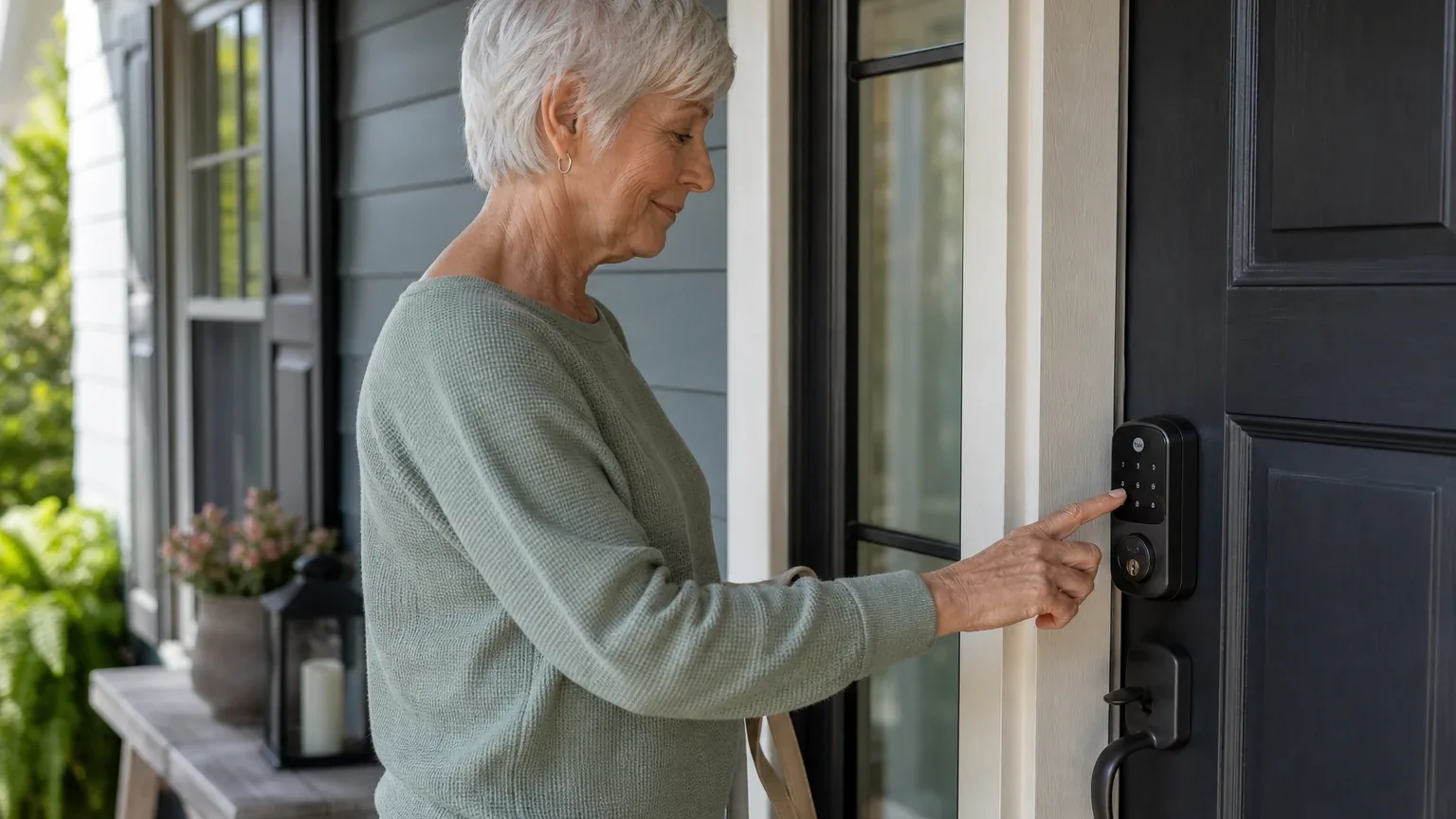
Answer Capsule
The Yale Assure Lock 2 is a good fit for keyless entry and caregiver access, but not a perfect one. All 7 platforms that named it in the ranking stage placed it in their lists, and 6 of 7 returned a usable fit assessment — every one of those rated it "good." Its strongest advantage is PIN-based entry combined with app-managed temporary and recurring caregiver codes, plus a physical-key fallback on keyed models. The main limitation is Wi-Fi dependency: remote and scheduled access require a Wi-Fi module or bridge, Yale documents roughly three months of Wi-Fi battery life, and independent testing found slow or nonresponsive remote commands in one tested setup.
Research Snapshot
| Field | Finding |
|---|---|
| Platform mentions in ranking stage | 7 of 7 included platforms named Yale Assure Lock 2 |
| Share of included platform responses | 100% (7 of 7) |
| Average listed rank | 1.71 |
| Best listed rank | 1 (Google, Kimi) |
| Relevant product/model/plan | Yale Assure Lock 2 Keypad with Wi-Fi, preferably the keyed version, managed through the Yale Access app |
| Overall use-case fit | Good (6 of 7 platforms returned a usable fit assessment; all 6 rated it "good") |
| Research date | 2026-09-27 |
What Changed Since August 2026
Yale Assure Lock 2 moved down from No. 1 to No. 2, and platform mentions increased from 4 to 7. The September 2026 review shifts the described product from the Yale Assure Lock 2 Keyed Wi-Fi to the broader Yale Assure Lock 2, positioning the keypad-with-Wi-Fi configuration as most relevant and the keyed version as preferred for emergency backup. Buyer fit stays "good," and the recommended configuration is unchanged. Pricing evidence was refreshed, with $159.99 newly reported for the base keypad, while the previously cited $240–$290 range is no longer repeated. The battery-life discussion is now framed around Wi-Fi use, with Bluetooth-only models cited at 6–9 months. Most other buyer-facing guidance, strengths, and limitations carry over in substance. Differences between the two editions reflect what each article reports; they do not by themselves prove that the product, service, or price changed.
The August 2026 review preserves the earlier article for reference.
Why Yale Assure Lock 2 Qualified for This Study
Questions This Section Answers
- Why did Yale Assure Lock 2 qualify as a top smart lock for senior keyless entry and caregiver access?
- How many AI platforms named Yale Assure Lock 2 for keyless entry and caregiver access?
Yale Assure Lock 2 qualified because it was named by every included platform during ranking discovery and cleared the study's two-mention minimum with room to spare. It appeared in all 7 platform lists, with ranks of 1 (Google, Kimi), 2 (Anthropic, DeepSeek, Grok, OpenAI, Perplexity), and a final rank of 2. Its average listed rank was 1.71.
The qualification is about topical match, not proven superiority. The study's criteria for this category are keypad readability, remote access reliability, temporary code management, battery life, emergency key backup, installation ease, app simplicity, and security rating — and the platforms mapped Yale Assure Lock 2 against most of them. Six of the seven platforms returned a usable fit assessment; all six rated the fit "good."
One qualification caveat: Official-site retrieval failed for one or more mentions and that some fetched domains were not corroborated by brand-name or site-identity metadata. Those were not used as official identity signals.
The Product, Model, Plan, or Service Most Relevant to Keyless Entry & Caregiver Access
Questions This Section Answers
- Which Yale Assure Lock 2 model is best for caregiver access and emergency key backup?
- Does the Yale Assure Lock 2 Keypad with Wi-Fi include the Wi-Fi module needed for remote caregiver codes?
The most relevant configuration is the Yale Assure Lock 2 Keypad with Wi-Fi, preferably the keyed version, managed through the Yale Access app. Platforms converged on this framing: OpenAI specified the keypad with Wi-Fi and the keyed version; DeepSeek named the keypad with Wi-Fi deadbolt plus keyed variants such as the YRD450 series; Kimi named the YRD450; Perplexity pointed to the keypad with Wi-Fi, touchscreen with Wi-Fi, and Wi-Fi Smart Module versions with keyed backup variants.
The distinction matters because the Assure Lock 2 family spans keypad and touchscreen interfaces, keyed and key-free variants, and Bluetooth-only versus Wi-Fi-included configurations. Remote access and scheduled codes require Wi-Fi connectivity — either a Wi-Fi-enabled model or the Yale Wi-Fi Smart Module (perplexity:2, perplexity:8, perplexity:12). A Bluetooth-only unit does not deliver the away-from-home caregiver management this use case depends on.
For emergency backup, the keyed version provides a conventional mechanical-key override [1]. Key-free versions instead rely on an external 9V battery contact procedure if internal batteries are depleted [2]. Buyers prioritizing a familiar fallback should select the keyed model.
What the AI Platforms Agreed About
Questions This Section Answers
- What do AI platforms agree the Yale Assure Lock 2 does well for caregiver access?
- Is the Yale Assure Lock 2 good for temporary caregiver codes and activity tracking?
Agreement was strong, though not unanimous, on four points.
Temporary and scheduled caregiver codes. OpenAI documented 4–8 digit entry codes with Always, Recurring, and Temporary schedules, and noted that temporary and recurring access require a Wi-Fi bridge or module on the Assure Lock 2 [3]. Anthropic reported up to 250 entry codes per lock with the Wi-Fi Smart Module, schedulable to specific days and time windows, with a real-time activity log [5]. Perplexity reported the same 250-code figure from third-party listings (perplexity:3, perplexity:14). Kimi described app-based temporary and scheduled codes as a core supported use case [6].
Keyless PIN entry. Perplexity found keypad-based entry codes directly aligned with hands-free access for Seniors and caregivers (perplexity:3, perplexity:7, perplexity:12, perplexity:14). OpenAI listed PIN entry avoiding physical key handoff as a strength.
Emergency key backup on keyed models. OpenAI, DeepSeek, Grok, Perplexity, and Kimi all identified the keyed variant's physical-key override as the emergency fallback [7].
DIY deadbolt replacement. Anthropic cited multiple reviewers confirming screwdriver-level installation replacing a standard deadbolt [10]. Yale states the lock electronically determines door handing during setup [12].
Where the AI Platforms Disagreed or Were Uncertain
Questions This Section Answers
- Where do AI platforms disagree about Yale Assure Lock 2 battery life and remote reliability?
- Is the Yale Assure Lock 2 security rating verified for the exact Wi-Fi SKU?
Several material conflicts remain unresolved.
Battery life. Yale's support page states up to approximately three months of battery life with Wi-Fi enabled under typical conditions [13]. Anthropic reported Bluetooth-only models at 6–9 months and Wi-Fi models at 3 months per Yale spec, with real-world Wi-Fi testing burning through batteries in 7 weeks [14]. Perplexity cited a reseller estimate of about one year, which it flagged as model- and usage-dependent (perplexity:3, perplexity:14). These figures cannot all be true for the same configuration. The three-month Wi-Fi estimate is the more relevant planning assumption; the one-year figure should be treated as unverified.
Remote responsiveness. OpenAI cited independent testing finding slow or nonresponsive Wi-Fi commands, with unlock commands taking up to about 10 seconds in the tested setup [15]. Anthropic noted one reviewer describing Auto-Unlock over Wi-Fi as "iffy" [14]. Other platforms reported remote management as a straightforward advantage without reliability caveats [16]. This is a mixed picture, not a consensus.
Security rating. Available Yale documentation identifies ANSI/BHMA Grade 2 for the Assure Lock family [17], and independent coverage lists the Assure Lock 2 as BHMA Grade 2 [18]. Anthropic cited Grade 2 certification with two-factor authentication and encryption [19]. But Perplexity stated the checked sources did not clearly verify the grade for the exact configuration assessed (perplexity:1, perplexity:2, perplexity:14), and DeepSeek labeled Grade 2 a company claim without independent verification located [21]. The exact current certification marking for a specific Assure Lock 2 Wi-Fi SKU was not independently confirmed.
Pricing. The U.S. Yale store listed the Keypad with Wi-Fi at $259.99 sale pricing with $279.99 displayed regular pricing [22]. Anthropic reported $159.99 base keypad, $179.99 touchscreen, $239.99 keypad with Wi-Fi module, $259.99 touchscreen with Wi-Fi, and a $79.99 separate Wi-Fi Smart Module — but flagged that pricing was current as of 2023–2024 reviews and not independently verified for 2026 [23]. Perplexity also noted a base Assure Lock 2 page price of $189.99 whose exact configuration was unclear (perplexity:2). Kimi estimated $130–$250 with low pricing confidence (kimi:august-com).
Subscription status. OpenAI found no recurring Yale Access subscription fee in reviewed official pages [25]. Perplexity found no verified subscription fee (perplexity:2, perplexity:7, perplexity:10). Kimi could not confirm whether the Yale Access app requires a paid subscription for full remote features (kimi:yale-official). This is an unresolved question, not a confirmed absence.
Use-Case-Specific Features and Capabilities
Questions This Section Answers
- How does the Yale Assure Lock 2 keypad perform for seniors with low vision or in direct sunlight?
- What happens to Yale Assure Lock 2 caregiver codes if the Wi-Fi or internet goes down?
Keypad readability. The keypad is backlit and supports PIN entry, but independent testing reported the backlight can be difficult to see in direct sunlight [26]. The keypad requires waking the interface before code entry, which may be unintuitive for some users [27]. Anthropic described the matte, fingerprint-resistant finish as improving readability and hiding smudges, and noted the physical keypad as easier for less intuitive users than a touchscreen [28]. DeepSeek found Yale states backlit numbers light on touch, but located no independent readability testing for low-vision users [31]. Perplexity found no verified large-print or high-contrast senior-specific readability claim (perplexity:14). Kimi flagged touchscreen readability as potentially challenging for vision-impaired seniors (kimi:august-com, kimi:homesecurityreviews).
Remote access reliability. Wi-Fi models connect directly to a home network for remote app control [31]. Independent testing found variable responsiveness, including slow or nonresponsive Wi-Fi commands [32]. Reliability depends on Wi-Fi signal, app version, firmware, and installation conditions.
Temporary code management. Yale documents Always, Recurring, and Temporary schedules [33]. Yale distinguishes app access from personal entry-code-only access for invited guests [35]. Yale has published a troubleshooting notice for an Assure Lock 2 temporary-entry-code issue involving app-managed codes and firmware, indicating scheduled caregiver access can depend on current firmware and may require local Bluetooth proximity or an online bridge during remediation [36].
Battery life. Yale's Wi-Fi support page states up to approximately three months under typical conditions [37]. Independent coverage reports materially shorter Wi-Fi battery life than Bluetooth operation [38]. Anthropic reported a 7-week real-world Wi-Fi result [29].
Emergency key backup. Keyed versions include a traditional mechanical keyhole [39]. Key-free versions require a 9V battery contact procedure [27]. Sources confirm the 9V method temporarily powers the keyless model but do not specify how long it maintains power for code entry.
Installation ease. Yale states the lock electronically determines door handing during setup and provides a compatibility-check process [40]. Anthropic cited reviewers confirming DIY installation with a screwdriver and no locksmith requirement [30]. One reviewer noted DoorSense sensor installation may require door-frame drilling [28].
App simplicity. Independent testing described the Yale Access app as functional but dated, with limited battery-status visibility in the tested version [43]. Anthropic described the app as well-organized and intuitive for code sharing and access history [44]. DeepSeek found no independent usability testing specific to older adults [31].
Security rating. Grade 2 ANSI/BHMA is cited in Yale documentation and independent coverage, with the SKU-level verification caveat noted above [46].
Pricing, Fees, Contracts, and Ongoing Costs
Questions This Section Answers
- How much does the Yale Assure Lock 2 Keypad with Wi-Fi cost, and is there a monthly subscription?
- What ongoing costs should a caregiver budget for beyond the Yale Assure Lock 2 purchase price?
The U.S. Yale store listed the Yale Assure Lock 2 Keypad with Wi-Fi at $259.99 sale pricing with $279.99 displayed regular pricing at the time checked [48]. Pricing varies by finish, keyed versus key-free configuration, and promotions.
Anthropic's broader breakdown, drawn from 2023–2024 reviews and not independently verified for 2026: $159.99 base keypad Bluetooth-only, $179.99 touchscreen Bluetooth-only, $239.99 keypad with Wi-Fi Smart Module preinstalled, $259.99 touchscreen with Wi-Fi preinstalled, and $79.99 for a separately purchased Wi-Fi Smart Module [49]. Perplexity also cited PCMag's $159.99 Bluetooth-only starting point and $239.99 Wi-Fi module version (perplexity:10). Kimi estimated $130–$250 with low confidence (kimi:august-com).
Ongoing costs: replacement AA batteries, with Yale's Wi-Fi support page indicating up to approximately three months under typical conditions [51]. A 9V emergency battery for key-free models, not included, with typical retail cost around $5–8 [50]. Professional installation, door repair, Wi-Fi upgrades, and possible replacement modules are additional costs not included in the listed product price.
No recurring Yale Access subscription fee was identified in the reviewed official product and support pages [52], and Perplexity found no verified subscription fee (perplexity:2, perplexity:7, perplexity:10). Kimi could not confirm whether a subscription is required for full remote features (kimi:yale-official). Buyers should verify current terms before purchase.
The U.S. Yale store advertises a two-year electronics warranty and 30-day returns [52]. Anthropic noted a lifetime limited warranty on lock hardware in one source and a two-year electronics warranty in another, with terms not fully specified [49]. No long-term service contract was identified in the reviewed sources.
Best Suited For
Questions This Section Answers
- Who is the Yale Assure Lock 2 best suited for in a senior caregiver access setup?
- Is the Yale Assure Lock 2 a good choice for a household with multiple caregivers needing scheduled access?
The Yale Assure Lock 2 Keypad with Wi-Fi is best suited for households needing temporary or recurring caregiver access without handing out physical keys; seniors who prefer entering a PIN rather than using a smartphone; caregivers who need remote lock control, activity visibility, and the ability to revoke access; and buyers who want an emergency physical-key backup and are willing to monitor batteries and Wi-Fi reliability.
Platforms converged on similar profiles. Anthropic added multi-caregiver households with family, cleaners, and aides requiring scheduled temporary codes, Apple HomeKit users with a nearby hub, and seniors preferring a large physical keypad over a touchscreen [54]. Perplexity added households wanting a mainstream smart deadbolt with Wi-Fi and app control rather than a full access-control system (perplexity:2, perplexity:7, perplexity:12). DeepSeek added renters or doors with standard deadbolt bores [57].
Probably Not Best Suited For
Questions This Section Answers
- Who should not buy the Yale Assure Lock 2 for senior keyless entry and caregiver access?
- Is the Yale Assure Lock 2 a poor fit for a home without reliable 2.4 GHz Wi-Fi?
It is probably not the best fit for users who need very long battery intervals with minimal maintenance; users with poor Wi-Fi near the door or who require highly predictable remote unlocking; users with significant vision limitations who may struggle with touchscreen or sunlight readability; and buyers wanting the lowest-cost lock or a clearly subscription-free, locally managed system.
Anthropic added homes without 2.4 GHz Wi-Fi, users heavily invested in Alexa or Google Home where integration gaps were noted, budget buyers, seniors averse to smartphone app requirements, and high-turnover rental scenarios [59]. Perplexity added buyers needing the simplest possible experience without app setup or Wi-Fi dependency, and buyers needing fully verified senior-specific accessibility claims (perplexity:1, perplexity:2, perplexity:14). Kimi added seniors with significant vision or dexterity impairments needing large high-contrast physical buttons, and caregiver-heavy scenarios requiring granular schedule-based rules without manual code management (kimi:august-com, kimi:homesecurityreviews).
When Another Option May Be Better
Questions This Section Answers
- What is a better alternative to the Yale Assure Lock 2 for a senior who cannot replace batteries every few months?
- When should a caregiver choose a specialized senior access platform instead of the Yale Assure Lock 2?
Consider alternatives in these situations.
Longer battery intervals or lower-maintenance connectivity. OpenAI recommended choosing a model with longer tested battery life when the senior cannot reliably replace batteries every few months. Anthropic noted Bluetooth-only smart locks offer 6–9 months versus 3 months with Wi-Fi [62].
Better keypad legibility or fingerprint access. OpenAI recommended a more legible high-contrast interface or fingerprint access when vision, dexterity, or PIN recall is a major concern. Anthropic noted the Yale Assure Lock 2 Touch adds fingerprint biometric at higher cost [63].
Stronger documented remote reliability. OpenAI recommended a system with stronger independently documented remote reliability when caregivers must unlock remotely under time pressure.
Local or hub-based management. OpenAI recommended a locally managed or hub-based system when dependence on cloud services, Wi-Fi, or app firmware is unacceptable.
Specialized caregiver platforms. Kimi pointed to Lockly Secure Plus with PIN Genie for large physical buttons and high-contrast displays, Gatewise or SALTO for granular caregiver scheduling with time-bound credentials, cKey for full-service installation and maintenance, and SALTO or ASSA ABLOY QiAccess for integration with existing assisted-living access infrastructure (kimi:lockly, kimi:gatewise, kimi:saltosystems, kimi:evika, kimi:assaabloy-qiaccess). These are different product classes, not direct consumer smart-lock substitutes.
Different smart-home ecosystem. Perplexity recommended another ecosystem when the household already uses a different app or platform and wants tighter integration than Yale Access was clearly shown to provide (perplexity:2, perplexity:8, perplexity:10).
Questions to Verify Before Buying
- Is the exact U.S. SKU keyed or key-free, and does it include the Wi-Fi module rather than Bluetooth-only connectivity?
- Does the existing door meet Yale's bore, backset, thickness, deadbolt, and alignment requirements?
- Can the senior read and operate the keypad in the home's actual lighting, including direct sunlight and nighttime conditions?
- What battery interval should be expected for this door's traffic level and Wi-Fi signal, and how are low-battery alerts delivered?
- Can the caregiver unlock remotely if the lock is offline, the home internet fails, or the Yale cloud service is unavailable?
- Are temporary and recurring codes supported on the exact SKU, and what happens if firmware or the bridge requires an update?
- Is a physical-key cylinder included on the selected keyed model, and can duplicate emergency keys be obtained locally?
- What are the current U.S. warranty, return, replacement, and customer-support terms?
- Does the lock report door-closed status through DoorSense on the exact configuration, and can alerts be customized for caregivers?
- Are there any current app, firmware, or temporary-code incidents affecting the selected model?
- Does the Yale Access app require a paid subscription for remote lock/unlock and temporary code creation?
- How many caregiver codes are needed, and does the chosen configuration support the desired code-management workflow?
Final AI Consensus Verdict
Good fit. The Yale Assure Lock 2 Keypad with Wi-Fi is well aligned with keyless senior entry and caregiver access because it combines PIN entry, remote control, scheduled temporary codes, and activity management. Prefer the keyed Wi-Fi version for emergency backup. Treat battery life, Wi-Fi and app reliability, keypad readability, and firmware-dependent temporary access as material tradeoffs; buyers with low vision, unreliable home Wi-Fi, or limited ability to perform battery maintenance may be better served by another option.
Six of seven included platforms returned a usable fit assessment, and all six rated the fit "good." That agreement reflects consistent topical matching against the study criteria — it does not prove product quality, and it does not resolve the battery-life, pricing, or security-rating conflicts documented above.
For the full category comparison, see the Keyless Entry & Caregiver Access consensus index. Broader coverage of related categories is available in the home safety directory.
How This Review Was Produced
This review evaluates Yale Assure Lock 2 only for the Keyless Entry & Caregiver Access use case, not as a broad company review. Seven AI platforms were queried during the ranking stage: Anthropic, DeepSeek, Google, Grok, Kimi, OpenAI, and Perplexity. All 7 named Yale Assure Lock 2. Six returned a usable fit assessment; Google did not return a usable fit assessment and is excluded from the fit findings.
Platform research dates differ from the authoritative run date of 2026-09-27. Anthropic reported 2026-01-20 and DeepSeek reported 2026-01-28; Grok, Kimi, OpenAI, and Perplexity reported 2026-09-27. Platform-reported dates are provenance metadata and do not independently prove freshness.
Citations are platform-reported evidence, not independently verified facts. Company-owned citations materially outnumber independent citations in the supplied set. No-search model claims require explicit verification before being described as current facts.
Methodology Limitations
- Six of seven included platforms returned a usable fit assessment. Fit findings are not unanimous and should not be described as such. Platform mention counts reflect only platforms that named the entity during ranking discovery.
- Platform-reported research dates differ from the authoritative run date. Anthropic and DeepSeek returned earlier dates than the other platforms.
- The supplied URLs were collected from platform responses and were not independently validated by the writer stage.
- Company-owned citations materially outnumber independent citations. Company claims are not described here as independently verified.
- The available source evidence found that official-site retrieval failed for one or more mentions, and that some fetched domains were not corroborated by brand-name or site-identity metadata. Those were not used as official identity signals.
- The supplied official website is a Yale Singapore/Asia-Pacific page, while the buyer geography is the United States. U.S. model names, availability, warranty, and support should be confirmed from Yale's U.S. store.
- Conflicting product names, pricing, and capabilities were not resolved by guessing. Conflicts are described and buyers are directed to verify.
- The exact current certification marking for the selected Assure Lock 2 SKU was not independently confirmed.
- App behavior, battery reporting, firmware behavior, and remote responsiveness may differ by hardware revision, phone, network, firmware, and region.
Sources
Company-Owned Sources
- Keyless Entry Lock & Keypads | How It Works | August Home: https://august.com/pages/keyless-entry
- cKey Electronic Door Opener - evika.io - Assistive Technology: https://evika.io/product/ckey/
- Caregiver Access in Senior Housing: https://gatewise.com/blog/caregiver-access-control-senior-housing
- Lockly Secure Plus | Special Edition with Card Access | Lockly®: https://lockly.com/products/lockly-secure-plus-card-access
- Home Care / Assisted Living | Salto: https://saltosystems.com/en-us/industries/residential/home-care-assisted-living/
- Yale Locks official online store: https://shopyalehome.com/
- Meet the Yale Assure Lock 2: https://shopyalehome.com/pages/yale-assure-lock-2
- Yale Assure Lock 2 Keypad with Wi-Fi: https://shopyalehome.com/products/yale-assure-lock-2-keypad-with-wi-fi
- Elder Care Facilities Access Management Solution - Sofia part of ISEO: https://sofialocks.com/en/use-cases/elder-care/
- August/Yale Connect Wi-Fi Bridge support documentation: https://support.august.com/
- How to Set Up Your Assure Lock 2 with the Yale Access App: https://support.shopyalehome.com/en_us/how-to-set-up-your-assure-lock-2-with-the-yale-access-app-BkziDeoCq
- Troubleshooting: Assure Lock 2 Temporary Entry Code Issue: https://support.shopyalehome.com/en_us/troubleshooting-assure-lock-2-temporary-entry-code-issue-Skx_zb24a
- How to Invite Guests to Your Smart Lock: https://support.shopyalehome.com/how-do-i-invite-guests-SkmUkaMuE
- How to Create Entry Codes In-App: https://support.shopyalehome.com/how-to-create-entry-codes-S1jy6Zb_2
- How to Set Access Schedules: https://support.shopyalehome.com/temporary-and-recurring-access-ByQUy6MdV
- FAQ: Yale Assure Lock 2 with Wi-Fi: https://support.shopyalehome.com/yale-assure-lock-2-with-wi-fi-faq-B1q1o8M5q
- Yale Smart Module FAQs: https://support.shopyalehome.com/yale-smart-module-faqs-rJyERPDZi
- QiAccess | digital access for independent living | ASSA ABLOY: https://www.assaabloy.com/uk/en/solutions/industries/care-technologies/connected-care-platforms/qiaccess
- Yale Asia-Pacific official site: https://www.yale.com/en-sg/asia-pacific/
- Yale Assure Lock 2 product family (official: https://www.yalehome.com/en/
- Official pricing and terms source: https://www.yale.com/en-sg/asia-pacific/terms-of-use/
Additional AI research evidence63 records
- AI research evidence record openai:c8
- AI research evidence record openai:c7
- AI research evidence record openai:c1
- AI research evidence record openai:c2
- AI research evidence record anthropic:c1
- AI research evidence record deepseek:c1
- AI research evidence record openai:c8
- AI research evidence record deepseek:c2
- AI research evidence record grok:c4
- AI research evidence record anthropic:c7
- AI research evidence record anthropic:c8
- AI research evidence record openai:c10
- AI research evidence record openai:c5
- AI research evidence record anthropic:c5
- AI research evidence record openai:c4
- AI research evidence record grok:c2
- AI research evidence record openai:c13
- AI research evidence record openai:c14
- AI research evidence record anthropic:c7
- AI research evidence record anthropic:c8
- AI research evidence record deepseek:c1
- AI research evidence record openai:c16
- AI research evidence record anthropic:c2
- AI research evidence record anthropic:c4
- AI research evidence record openai:c17
- AI research evidence record openai:c6
- AI research evidence record openai:c7
- AI research evidence record anthropic:c4
- AI research evidence record anthropic:c5
- AI research evidence record anthropic:c7
- AI research evidence record deepseek:c1
- AI research evidence record openai:c4
- AI research evidence record openai:c1
- AI research evidence record openai:c2
- AI research evidence record openai:c3
- AI research evidence record openai:c15
- AI research evidence record openai:c5
- AI research evidence record openai:c9
- AI research evidence record openai:c8
- AI research evidence record openai:c10
- AI research evidence record openai:c11
- AI research evidence record anthropic:c8
- AI research evidence record openai:c12
- AI research evidence record anthropic:c1
- AI research evidence record anthropic:c2
- AI research evidence record openai:c13
- AI research evidence record openai:c14
- AI research evidence record openai:c16
- AI research evidence record anthropic:c2
- AI research evidence record anthropic:c4
- AI research evidence record openai:c5
- AI research evidence record openai:c17
- AI research evidence record anthropic:c8
- AI research evidence record anthropic:c1
- AI research evidence record anthropic:c2
- AI research evidence record anthropic:c6
- AI research evidence record deepseek:c1
- AI research evidence record deepseek:c2
- AI research evidence record anthropic:c1
- AI research evidence record anthropic:c4
- AI research evidence record anthropic:c6
- AI research evidence record anthropic:c5
- AI research evidence record anthropic:c4
Independent Sources
- Best Smart Locks for Caregivers 2026: Named Access, Privacy, Emergencies, and Outages - Home Security Reviews: https://home-security-reviews.com/best-smart-locks-for-caregivers-2026/
- Yale Assure Lock 2 Review: https://smartdeviceranked.com/yale-assure-lock-2-review/
- Yale Assure Lock 2 Keypad with Wi-Fi, Keyed - retailer product listing: https://www.amazon.com/
- Yale Assure Lock 2 Review - Consumer Reports: https://www.consumerreports.org/home-garden/door-locks/yale-assure-lock-2-smart-lock-review-a8409871680/
- Yale Assure Lock 2 Touch Key-Free with Wi-Fi: https://www.crutchfield.com/p_198450WF1R/Yale-Assure-Lock-2-Touch-Key-Free-with-Wi-Fi-Oil-Rubbed-Bronze.html
- Yale Assure Lock 2 Key-Free Touchscreen Deadbolt: https://www.crutchfield.com/p_198Y450WFR/Yale-Assure-Lock-2-Key-Free-Touchscreen-Deadbolt-Oil-rubbed-Bronze.html
- Yale Assure Lock 2, Key-Free Keypad with Wi-Fi: https://www.homecontrols.com/products/yale-assure-lock-2-key-free-keypad-wi-fi-yayrd430wfix
- Yale Assure Lock 2 Keypad with Wi‑Fi - Home Controls: https://www.homecontrols.com/Yale-Assure-Lock-2-Keypad-Wi-Fi-YAYRD410WFIx
- Yale Assure Lock 2 Touchscreen with Wi‑Fi - Home Controls: https://www.homecontrols.com/Yale-Assure-Lock-2-Touchscreen-Wi-Fi-YAYRD420WFIx
- Yale Assure Lock 2 Review: https://www.pcmag.com/reviews/yale-assure-lock-2
- Yale Assure Lock 2 Review: https://www.pcmag.com/reviews/yale-assure-lock-2?taid=63f5a4deee1b6e00013d5a1d
- Yale Assure Lock 2 Review: 8.5/10 Expert Consensus | Smart Home Explorer: https://www.smarthomeexplorer.com/reviews/smart-security/yale-assure-lock-2
- Yale Assure Lock 2 Key-Free Touchscreen with Bluetooth review: https://www.techhive.com/article/2253424/yale-assure-lock-2-key-free-touchscreen-with-bluetooth-review.html
- Yale Assure Lock 2 review: https://www.techradar.com/reviews/yale-assure-lock-2
- Yale Assure Lock 2 review | Tom's Guide: https://www.tomsguide.com/reviews/yale-assure-lock-2
- The best smart home devices: https://www.tomsguide.com/us/best-smart-home-devices%2Creview-2008.html
Additional AI research evidence63 records
- AI research evidence record openai:c8
- AI research evidence record openai:c7
- AI research evidence record openai:c1
- AI research evidence record openai:c2
- AI research evidence record anthropic:c1
- AI research evidence record deepseek:c1
- AI research evidence record openai:c8
- AI research evidence record deepseek:c2
- AI research evidence record grok:c4
- AI research evidence record anthropic:c7
- AI research evidence record anthropic:c8
- AI research evidence record openai:c10
- AI research evidence record openai:c5
- AI research evidence record anthropic:c5
- AI research evidence record openai:c4
- AI research evidence record grok:c2
- AI research evidence record openai:c13
- AI research evidence record openai:c14
- AI research evidence record anthropic:c7
- AI research evidence record anthropic:c8
- AI research evidence record deepseek:c1
- AI research evidence record openai:c16
- AI research evidence record anthropic:c2
- AI research evidence record anthropic:c4
- AI research evidence record openai:c17
- AI research evidence record openai:c6
- AI research evidence record openai:c7
- AI research evidence record anthropic:c4
- AI research evidence record anthropic:c5
- AI research evidence record anthropic:c7
- AI research evidence record deepseek:c1
- AI research evidence record openai:c4
- AI research evidence record openai:c1
- AI research evidence record openai:c2
- AI research evidence record openai:c3
- AI research evidence record openai:c15
- AI research evidence record openai:c5
- AI research evidence record openai:c9
- AI research evidence record openai:c8
- AI research evidence record openai:c10
- AI research evidence record openai:c11
- AI research evidence record anthropic:c8
- AI research evidence record openai:c12
- AI research evidence record anthropic:c1
- AI research evidence record anthropic:c2
- AI research evidence record openai:c13
- AI research evidence record openai:c14
- AI research evidence record openai:c16
- AI research evidence record anthropic:c2
- AI research evidence record anthropic:c4
- AI research evidence record openai:c5
- AI research evidence record openai:c17
- AI research evidence record anthropic:c8
- AI research evidence record anthropic:c1
- AI research evidence record anthropic:c2
- AI research evidence record anthropic:c6
- AI research evidence record deepseek:c1
- AI research evidence record deepseek:c2
- AI research evidence record anthropic:c1
- AI research evidence record anthropic:c4
- AI research evidence record anthropic:c6
- AI research evidence record anthropic:c5
- AI research evidence record anthropic:c4
Other Sources
Additional AI research evidence63 records
- AI research evidence record openai:c8
- AI research evidence record openai:c7
- AI research evidence record openai:c1
- AI research evidence record openai:c2
- AI research evidence record anthropic:c1
- AI research evidence record deepseek:c1
- AI research evidence record openai:c8
- AI research evidence record deepseek:c2
- AI research evidence record grok:c4
- AI research evidence record anthropic:c7
- AI research evidence record anthropic:c8
- AI research evidence record openai:c10
- AI research evidence record openai:c5
- AI research evidence record anthropic:c5
- AI research evidence record openai:c4
- AI research evidence record grok:c2
- AI research evidence record openai:c13
- AI research evidence record openai:c14
- AI research evidence record anthropic:c7
- AI research evidence record anthropic:c8
- AI research evidence record deepseek:c1
- AI research evidence record openai:c16
- AI research evidence record anthropic:c2
- AI research evidence record anthropic:c4
- AI research evidence record openai:c17
- AI research evidence record openai:c6
- AI research evidence record openai:c7
- AI research evidence record anthropic:c4
- AI research evidence record anthropic:c5
- AI research evidence record anthropic:c7
- AI research evidence record deepseek:c1
- AI research evidence record openai:c4
- AI research evidence record openai:c1
- AI research evidence record openai:c2
- AI research evidence record openai:c3
- AI research evidence record openai:c15
- AI research evidence record openai:c5
- AI research evidence record openai:c9
- AI research evidence record openai:c8
- AI research evidence record openai:c10
- AI research evidence record openai:c11
- AI research evidence record anthropic:c8
- AI research evidence record openai:c12
- AI research evidence record anthropic:c1
- AI research evidence record anthropic:c2
- AI research evidence record openai:c13
- AI research evidence record openai:c14
- AI research evidence record openai:c16
- AI research evidence record anthropic:c2
- AI research evidence record anthropic:c4
- AI research evidence record openai:c5
- AI research evidence record openai:c17
- AI research evidence record anthropic:c8
- AI research evidence record anthropic:c1
- AI research evidence record anthropic:c2
- AI research evidence record anthropic:c6
- AI research evidence record deepseek:c1
- AI research evidence record deepseek:c2
- AI research evidence record anthropic:c1
- AI research evidence record anthropic:c4
- AI research evidence record anthropic:c6
- AI research evidence record anthropic:c5
- AI research evidence record anthropic:c4
Verify This Research
Review the study details behind this page or download the public machine-readable verification record.
- Study date
- September 27, 2026
- Platforms analyzed
- 7
- Source records
- 41
- Ranking mentions
- 7 of 7
- Platform share
- 100%
- Final consensus rank
- #2
Research trail and source mix
Configured platforms
openai, anthropic, deepseek, grok, perplexity, kimi, google
Source mix
16 independent · 24 company-owned · 1 unclear
Evidence support
31 direct · 10 partial
Important limitation
Use the run research_date as the study date. Platform-reported dates are provenance metadata and do not independently prove freshness.
Source snapshot SHA-256 bd6f9f09f1859767f58155078d462b5cf94cd6458d2204a68fb650c8e0d35cfa