
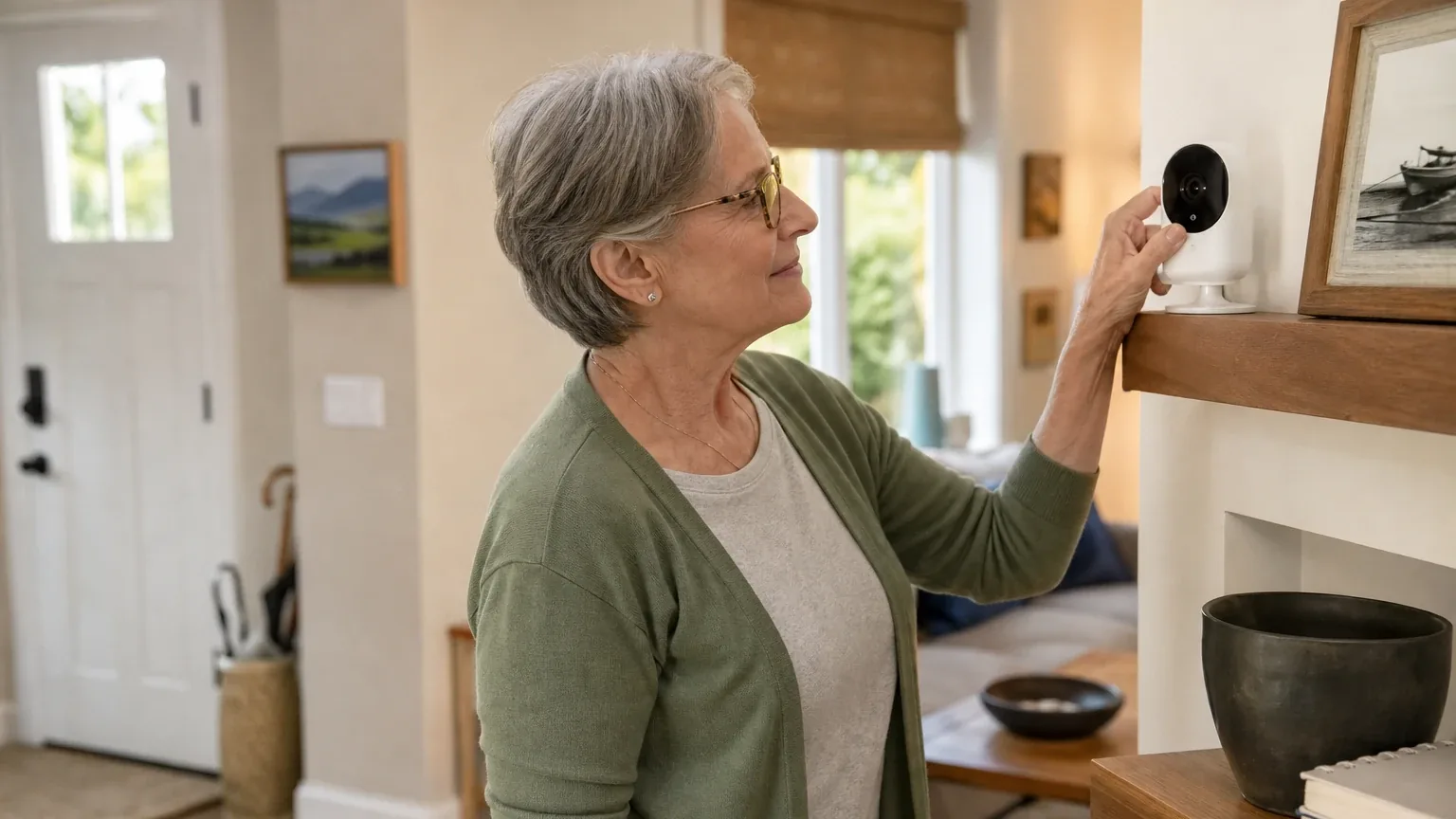
Answer Capsule
Cove is a good fit for Caregivers who mainly need remote alarm status, permissioned app access, sensor and camera visibility, and professional emergency escalation for an aging parent living independently. Three of the seven platforms in this study named Cove during the ranking stage, and all three rated it a good fit for this use case. Its strongest advantage is contract-free professional monitoring paired with multi-user app access and documented emergency dispatch. Its main limitation is that Cove is a home security system, not a senior-care platform: the reviewed evidence does not establish fall detection, medication reminders, inactivity monitoring, or scheduled wellness checks, and camera access requires the higher-priced Plus plan.
Research Snapshot
| Field | Detail |
|---|---|
| Platform mentions in ranking stage | 3 of 7 platforms (anthropic, deepseek, google) |
| Share of included platform responses | 42.9% |
| Average listed rank | 5.67 |
| Best listed rank | 4 (google) |
| Relevant product/model/plan | Cove Security System with professional monitoring; Cove Plus ($32.99/month) is the most relevant documented tier for camera access and 7-day cloud storage |
| Overall use-case fit | Good for remote security visibility and emergency alerts; partial for broader aging-in-place oversight |
| Research date | 2026-11-10 |
Why Cove Qualified for This Study
Questions This Section Answers
- Why did Cove qualify for a caregiver visibility study when it is a home security system rather than a senior-care platform?
- Which AI platforms named Cove for remote caregiver visibility and alerts, and at what rank?
Cove qualified because three of the seven platforms in this study named it during ranking discovery for Remote Caregiver Visibility & Alerts, and all three rated it a good fit. Google listed it highest at rank 4, anthropic at rank 5, and deepseek at rank 8, producing an average listed rank of 5.67 [24].
The qualification rests on documented capabilities that map to caregiver needs rather than on senior-care positioning. Cove's own materials describe app-based remote arm/disarm, system-status checks, camera viewing, and user management [3]. Independent reviews describe contract-free plans, app-based remote management, and camera features [38]. The platform that ranked Cove lowest, deepseek, explicitly noted that official-site retrieval reportedly failed during its ranking and that identity details should be reverified [23].
Cove's marketing does not explicitly position the system for elder care; the caregiver fit is inferred from general security features [24]. That inference is the foundation of this review and the reason the fit is rated good rather than strong.
The Product, Model, Plan, or Service Most Relevant to Remote Caregiver Visibility & Alerts
Questions This Section Answers
- Which Cove plan should a caregiver buy if they need camera access and remote alerts for an aging parent?
- Does Cove Basic give a remote caregiver live camera views of a parent's home?
The most relevant configuration is the Cove Security System with professional monitoring on the Plus plan, which is the documented tier that adds camera support and 7-day cloud video storage [38]. Basic covers sensors and app control but does not include camera access, and Premium adds AI-powered alerts and 30-day storage at a higher monthly rate [16].
The system itself is a DIY-installed security package: a hub and touchscreen panel, entry and motion sensors, environmental sensors, optional cameras, key fobs, and a medical alert pendant accessory [18]. The Cove Connect app is the caregiver-facing layer, supporting remote arm/disarm, status checks, camera viewing, and adding multiple users with access controls [3].
Camera access is plan-dependent, not automatic. One platform stated plainly that cameras will not stream inside the mobile app on the Basic plan [16], and another noted cameras are not necessarily included with the plan or system [14]. A caregiver who needs to see a parent's home remotely should budget for Plus and confirm camera hardware at checkout.
What the AI Platforms Agreed About
Questions This Section Answers
- What do the AI platforms agree Cove does well for remote caregiver visibility and alerts?
- Do the platforms agree that Cove provides professional emergency escalation for an aging parent?
The platforms agreed, with strong consistency, on four points: Cove offers professional monitoring with emergency dispatch, the app supports multiple users and remote status checks, camera access sits behind a higher plan tier, and Cove is not a substitute for medical-alert or wellness-monitoring services.
On monitoring and dispatch, Cove states its service uses trained agents and multiple U.S. monitoring centers with alarm verification and dispatch capability [27]. One independent review reported CSAA Five Diamond certified monitoring on Basic and Plus tiers and agents at three monitoring stations [39]. Another reported RapidSOS technology transmitting data directly to 911 dispatchers, with response times averaging around 30 seconds [34]. These are platform-reported and review-reported figures, not independently audited performance data.
On multi-user access, Cove documents adding users through Settings, then Manage Access, with master and app-only user types [24]. One source states up to 50 new users can be added [25]. A separate support page describes per-user notification selection by email or text [9].
On camera tiering, the platforms converged: Plus adds camera support, cloud storage, and two-way voice [38].
On scope, every platform that addressed the question said Cove is not a senior-care platform. The reviewed materials do not establish fall detection, medication reminders, inactivity monitoring, emergency-call wearables, or routine welfare checks [27].
Where the AI Platforms Disagreed or Were Uncertain
Questions This Section Answers
- Do the AI platforms disagree about whether Cove supports self-monitoring without a subscription?
- Is Cove's monthly monitoring price for caregivers settled across sources, or do the platforms conflict?
The platforms disagreed on self-monitoring, pricing, monitoring-center certification, and the depth of caregiver permission controls. None of these conflicts should be resolved by guessing; each is a verification item.
Self-monitoring produced the sharpest split. One platform stated Cove does not offer a self-monitoring feature and requires a professional monitoring plan [1]. Another platform's research surfaced an older consumer review claiming a self-monitoring option, which that platform flagged as contradicting all other recent sources [1]. A third described app access and notifications as ending or being reduced after monitoring cancellation [10]. The weight of supplied evidence favors mandatory monitoring, but the conflict is disclosed rather than settled.
Pricing conflicts are material. The ranking-stage range of $22.99–$29.99/month conflicts with Cove's current official support page listing $22.99, $32.99, and $42.99 monthly plans [14]. One platform cited Plus at both $27.99 and $32.99 across sources, with the most recent sources converging on $32.99 [38]. Older listings at $17.99 and $19.99 also appear in the supplied research [16]. Deepseek did not reverify pricing at all and rated its pricing confidence low [23].
Monitoring-center details are inconsistent. Cove's own materials describe multiple U.S. monitoring centers [27], one source says three centers [8], another says six, and sources differ on whether Cove operates or outsources monitoring [39]. One platform identified the provider as COPS Monitoring, a wholesale monitoring provider with multiple UL-listed centers [23]. Independent verification of uptime, response-time testing, and certification was not found [27].
Caregiver permission depth is uncertain. One platform found that public documentation does not clearly confirm role-based caregiver permissions or alert routing rules [9]. Another found no clear documentation of receive-only access without arm/disarm authority [24]. A third described role customization as basic, master versus app user, rather than detailed permission scoping [17]. One platform went further, stating Cove lacks native multi-caregiver role-based permissions and requires workarounds [23].
App reliability drew mixed reports. One independent review characterized user reviews as mixed, with some reporting notification failures and app-to-panel sync issues [22]. Another described Cove as generally reliable by most reviewers while noting issues during system updates and with tech support [22].
Use-Case-Specific Features and Capabilities
Questions This Section Answers
- Can a caregiver set up separate Cove app logins for multiple family members with different access levels?
- Does Cove route alerts to family caregivers before calling emergency services?
Cove covers the core caregiver visibility loop, remote status, alerts, camera viewing, and professional escalation, but its alert customization and permission model are shallower than the platforms' descriptions of purpose-built care services.
Multi-user app access. Cove documents adding multiple users through the app, with master users holding administrative controls and app users without them [24]. One source states up to 50 new users can be added [25]. Whether a caregiver can be limited to receive-only access without arm/disarm authority is not clearly documented [24].
Alert customization. Cove documents smartphone alarm and activity notifications, automated alerts for events such as door openings or motion, and emergency-contact outreach by phone, text, email, or app channels [27]. Notification settings can be adjusted in the app, and per-user notification types can be selected [24]. Granular per-sensor, per-zone, time-of-day, or escalation-order rules are not documented as core features [24].
Camera and sensor integration. The system supports intrusion, smoke, carbon monoxide, flood, and motion sensors [37]. Camera access, cloud storage, and two-way voice require Plus or Premium [38]. Cameras are Cove-branded; third-party camera integration is not supported [1].
Emergency contact routing. Cove's legal terms state Cove or the monitoring company will make a reasonable effort to contact the first person reached or notified at the premises or on the emergency-contact list, which is not a guarantee of response time or successful dispatch [4]. One platform found caregiver paging language in Cove materials describing keeping caregivers in the loop during a fall or other emergency [29]. Another found no confirmation of sequential calling of a prioritized caregiver list before dispatch [23]. The control panel panic function offers police, fire, and medical options, and a wearable medical panic button routes a medical alert to dispatch [7].
Privacy controls. Cove states users can control app data permissions, including camera and microphone access, and that recordings may be stored and processed depending on configuration and subscribed services [3]. One platform found no published equivalent to summaries-first, no-footage designs [23].
Monitoring center reliability. Cove claims multiple U.S. monitoring centers and professional agents [27]. Independent verification of uptime, response-time testing, and certification details was not found [27].
Setup support. Cove is designed for DIY setup with online support materials and an Install Wizard; one review reported installation taking about 20 minutes [34]. Professional installation is available through a third party [35]. A caregiver may need to be physically present during setup and troubleshooting [27].
Pricing, Fees, Contracts, and Ongoing Costs
Questions This Section Answers
- How much does Cove Plus cost per month for a caregiver who needs camera access, and what does Basic leave out?
- Can a caregiver cancel Cove monitoring at any time without a penalty, or does notice and a final payment apply?
Cove's current official support page lists three monthly plans: Basic at $22.99, Plus at $32.99, and Premium at $42.99 [14]. Plus is the relevant tier for caregivers who need camera access and 7-day cloud storage; Premium adds AI-powered alerts, 30-day storage, and a $5/month equipment credit according to one product page [14].
Equipment is purchased or financed separately, and the exact system price depends on selected sensors, cameras, and checkout offers [12]. One platform estimated a complete system at $400–$500 before frequent discounts, with individual cameras at $59.99 to $159.99 [38]. Financing is available through Affirm according to one platform [38].
Additional costs to expect: applicable governmental fees and taxes on the subscription, additional cameras or replacement hardware, optional professional installation starting around $129 through HelloTech, and local municipal alarm permit fees where required [14].
Contract terms are advertised as month-to-month with no long-term contract and cancellation at any time [6]. The legal terms add friction: cancellation may still leave the customer responsible for the remainder of the then-current monthly subscription term, fees are billed in advance, and one support page states cancellation requires at least 30 days verbal notice before the next billing date [5]. A 60-day money-back or risk-free trial is advertised, but eligibility, return shipping, financing treatment, and equipment-return conditions should be confirmed before purchase [12].
The most consequential cost fact for caregivers: canceling monitoring can remove app access, notifications, alarm-event contact, and warranty coverage [10]. There is no documented free self-monitoring tier, so the monthly fee is effectively permanent for anyone relying on remote visibility [37].
Best Suited For
Questions This Section Answers
- Is Cove a good choice for a family caregiver who wants professional emergency dispatch and remote status checks for a parent living alone?
- Is Cove worth it for caregivers who want contract-free monitoring and multiple family app users?
Cove is best suited to caregivers whose primary need is monitored security with remote visibility, not clinical or wellness oversight. The strongest fits named across platforms:
- Aging parents living independently in a conventional home where intrusion, fire, carbon monoxide, and flood detection matter [27].
- Caregivers who want multiple authorized app users and remote arm/disarm or status checks [3].
- Households wanting professional alarm response without a long-term monitoring contract [6].
- Situations where cellular backup matters because home internet is unreliable [8].
- Budget-conscious families who want monitored security plus environmental sensors in one system at a lower monthly cost than specialized caregiver services [23].
- Buyers comfortable with DIY installation and a recurring subscription [35].
The common thread across all three ranking platforms is that Cove works as a security backbone for caregiver visibility, with professional dispatch as the safety net behind a caregiver who may miss a phone alert [27].
Probably Not Best Suited For
Questions This Section Answers
- Is Cove a poor fit for a caregiver who needs fall detection or medication reminders for an aging parent?
- Should a caregiver avoid Cove if they want app alerts to keep working after canceling the monitoring subscription?
Cove is probably not the right choice when the care need is medical or behavioral rather than security-related. The platforms were consistent on this boundary.
- Caregivers needing medical-alert, fall-detection, medication, daily check-in, or senior-specific wellness features [27]. The reviewed materials do not establish any of these capabilities.
- Families wanting activity pattern learning, sleep or bathroom trend tracking, or behavioral wellness reports for medical appointments [23].
- Buyers requiring granular, audited, role-based caregiver permissions with distinct visibility levels [23].
- Households that want app access and notifications to continue after canceling professional monitoring [10].
- Caregivers who need deep third-party smart-home or health-device integration; Cove's smart-home compatibility is described as basic, with rule actions largely confined to notifications [38].
- Buyers who need a proven, independently audited monitoring-performance record [27].
- Situations where the older adult cannot manage equipment independently and no caregiver can assist with DIY setup [27].
When Another Option May Be Better
Questions This Section Answers
- When is a dedicated medical-alert or caregiver platform a better choice than Cove for an aging parent living alone?
- Is a camera-centric security brand a better fit than Cove when continuous live video and activity detection matter most?
Another option may be better in four scenarios the platforms identified.
When medical escalation with caregiver acknowledgement is the priority. A dedicated PERS or medical-alert provider is the better fit when the buyer needs timed caregiver acknowledgement, fall detection, or wearable emergency help [23]. One platform named Livindi, Beside Care, Care Daily, and HushCare as stronger alternatives for behavioral visibility, digest-style summaries, and family-first alert routing [32]. These are platform-reported comparisons, not independent testing.
When continuous live video and mature activity detection matter most. A more camera-centric platform may be better when person, package, or activity detection and broader camera ecosystems outweigh professional alarm monitoring [38].
When self-monitoring flexibility is non-negotiable. Buyers who want app alerts without a subscription should look at systems with a documented self-monitoring tier; one platform specifically contrasted Cove with SimpliSafe on this point [37].
When verified monitoring performance is the top priority. A provider with independently documented certifications, testing, and response metrics is the better choice when emergency-response assurance is the deciding factor [27].
For buyers who want to compare Cove against the full field, the Remote Caregiver Visibility & Alerts consensus index ranks every finalist on the same criteria.
Questions to Verify Before Buying
Questions This Section Answers
- What should a caregiver confirm with Cove about user permissions and alert routing before buying for an aging parent?
- What should a buyer verify about Cove's monitoring certification and post-cancellation functionality before signing up?
The platforms collectively produced a verification list. The highest-value items, consolidated and deduplicated:
- Hardware and compatibility. Which exact panel, cameras, sensors, and app version will be supplied, and are all components compatible [14]?
- Plan contents. Does Plus provide the required camera access, storage duration, live view, two-way audio, and alert types [38]?
- User accounts. How many caregiver accounts can be added, and can each receive different permissions and notification routes [9]?
- Alert rules. Can alerts be customized by sensor, time of day, severity, caregiver, phone number, and escalation order [24]?
- Emergency sequence. What is the exact contact sequence, verification process, dispatch policy, and backup procedure if the caregiver does not respond [4]?
- Certification and redundancy. Are the monitoring centers UL-listed or otherwise independently certified, and what redundancy exists for internet, cellular, power, and facility outages [39]?
- Post-cancellation behavior. What happens to cameras, app access, notifications, recordings, warranties, and local panel functions if monitoring is paused or canceled [10]?
- Total cost. What are the complete equipment, shipping, taxes, financing, return, cancellation, and replacement costs [12]?
- Care scope. Can the system detect falls, prolonged inactivity, missed routines, or medical emergencies, or is a separate senior-care service required [27]?
- Testing window. Can the caregiver test all sensors, camera feeds, notification routes, and emergency-contact workflows during the return period [12]?
- Panel usability. Is the touchscreen panel's font size, button layout, and menu clarity suitable for an older adult with vision or dexterity challenges [38]?
- Address changes. How are dispatch address updates handled if the parent moves [7]?
Final AI Consensus Verdict
Cove is a good fit for remote security visibility and emergency alerts, and a partial fit for broader aging-in-place oversight. Three of seven platforms named it during ranking, all three rated it good, and their reasoning converged: multi-user app access, remote status checks, camera and sensor monitoring, and professional dispatch without a long-term contract make Cove a credible security backbone for caregiver visibility [3].
The consensus also converged on the boundary. Cove is not a medical-alert, fall-detection, or wellness-monitoring platform, and the reviewed evidence does not establish those capabilities [27]. Camera access requires Plus at $32.99/month, monitoring is effectively mandatory, and canceling removes app access and notifications [10]. Permission granularity and alert routing depth remain unconfirmed in public documentation [9].
The practical verdict: buy Cove when the caregiver's core need is monitored security with remote visibility and professional escalation, and pair it with a dedicated medical-alert or wellness service when fall detection, medication support, or routine check-ins are required. Verify pricing, permissions, and post-cancellation behavior before purchase, and test every workflow during the return period.
How This Review Was Produced
This review was produced from a seven-platform ranking study on Remote Caregiver Visibility & Alerts, run on 2026-11-10. Each platform independently researched Cove against the use case and returned a fit rating, use-case findings, pricing and terms, limitations, and verification questions. Three platforms named Cove during ranking discovery; all seven returned fit research. The report evaluates Cove only for this use case and does not assess it as a general security provider.
Platform fit ratings were: good from openai, anthropic, google, and grok; mixed from deepseek, perplexity, and kimi. The ranking-stage statistics (three mentions, average rank 5.67, best rank 4) come from the ranking discovery stage and are separate from the fit ratings.
Company-owned citations materially outnumber independent citations in the supplied evidence. Cove's own pages establish plan names, app features, and legal terms; independent reviews and directories provide the outside perspective. No claim in this review should be read as independently verified product testing.
Methodology Limitations
- All included platforms evaluated fit, but the platform mention count reflects only platforms that named Cove during ranking discovery.
- Platform-reported research dates differ from the authoritative run date. Deepseek's research date is 2026-06-01; the other six platforms report 2026-11-10. Platform-reported dates are provenance metadata and do not independently prove freshness.
- Deepseek ran without search enabled, so its findings are model-reported rather than retrieved and should be treated as unverified.
- Official-site retrieval reportedly failed for at least one platform during ranking; identity and plan details should be reverified.
- The supplied URLs were collected from platform responses and were not independently validated by the writer stage.
- Company-owned citations materially outnumber independent citations; company claims are not described as independently verified.
- Pricing conflicts were not resolved by guessing. The ranking-stage range of $22.99–$29.99/month conflicts with current official plan pages listing $22.99, $32.99, and $42.99.
- Monitoring-center count, certification, uptime, and response-time performance lack independent verification in the supplied evidence.
- No personal testing, customer experience, medical benefit, or guaranteed performance is claimed.
- AI-platform agreement does not prove product quality; it reflects the evidence the platforms retrieved.
Explore more home safety guidance in the category directory.
Sources
Company-Owned Sources
- Cove Connect App - Control Your Security From Anywhere: https://get.covesmart.com/cove-app
- Terms and Conditions: https://get.covesmart.com/terms
- Services Overview: https://shop.covestage.com/services/
- Cove App - Notifications: https://support.covesmart.com/en_US/cove-mobile-app/%2Ft%2F18s5gb%2Fcove-app-notifications
- What are Cove's Monitoring Plans? - support.covesmart.com: https://support.covesmart.com/en_US/simple-pre-purchase-information/%2Ft%2F18b77f%2Fwhat-are-coves-monitoring-plans
- Equipment Payment Options: https://support.covesmart.com/en_US/simple-pre-purchase-information/equipment-payment-options
- Frequently Asked Questions (FAQs) - Cove: https://support.covesmart.com/frequently-asked-questions-faqs
- What are Cove's Monitoring Plans?: https://support.covesmart.com/simple-pre-purchase-information/%2Ft%2F18b77f%2Fwhat-are-coves-monitoring-plans
- What are Cove's Monitoring Plans?: https://vertexaisearch.cloud.google.com/grounding-api-redirect/AUZIYQF8MKc6TZnL82H5bmHzUNyl66Ur2dsx_xCS2QJ77DKoflG0lAXB0NCFHmO0OPcvWZYPyOKa-TDtHbifurF-lhE2uJss8ldAqlGSwh84EypH_wo6B_4XLoVJGhbjaAe_LlpbG5B_bS4Wm2f4q64twVqT0XfRuMfkcMBDFJkt9Gwg1lPT8ZHJmb26QXQODAe_z7MPWROxevccFP6x6-Fm8euXd0nS
- Alerta Home | Real-Time Notifications for Family Caregivers at Home: https://www.alertahome.com/
- FAQ | Beside Care for Family Caregivers: https://www.besidecare.com/faq/
- Get Care Daily at Home | Care Daily: https://www.caredaily.ai/services/care-daily-pack
- Cove Smart Security — Official Website: https://www.covesmart.com/
- Cove Connect App: https://www.covesmart.com/cove-app/
- Terms and Conditions of Our Products and Services: https://www.covesmart.com/legal/
- Cove Professionally-Monitored Home Security: https://www.covesmart.com/monitored-security/
- Which plan best meets your needs?: https://www.covesmart.com/monitoring-info/
- How to Cancel Alarm System Service: https://www.covesmart.com/resources/alarm-systems/how-to-cancel-alarm-system-service/
- Monitor Elderly Parents Remotely - Pricing and Features: https://www.envoyathome.com/pricing/
- HushCare | Smart Safety Alerts for Seniors: https://www.hushcare.com.au/
- Medical Alert System That Calls Family, Not a Call Center | Livindi: https://www.livindi.com/pages/medical-alert-system-that-calls-family
Independent Sources
- Cove Security Review (2026): Affordable, DIY Home Protection: https://cybernews.com/best-home-security-systems/cove-review/
- The Top 6 Unmonitored Home Security Systems (2026: https://cybernews.com/best-home-security-systems/unmonitored/
- Cove Review 2026 Update: Equipment, Monitoring, Cameras, and Cost: https://home-security-reviews.com/cove/
- Cove Security Review and Prices 2026: https://realestate.usnews.com/home-services/home-security-systems/cove-security
- Cove Home Security Review 2026: Plans, Cost, Equipment & Monitoring: https://vertexaisearch.cloud.google.com/grounding-api-redirect/AUZIYQE-l6tYpBQT36s6SZ_Dcvc9K6evG6Kkf5vNIMIwXUEDItD38vU0rKAsV_vgbA41e8L8KfOZW12_pXntjDIOysN22Pfs8iStq4mr3p8hF-WDim5gpjtHcWy6etJQM61BqPW1IjaCbofdFhQVRzsITUNXWP7BCEQG
- Cove User Manual: Your Guide to Home Security: https://vertexaisearch.cloud.google.com/grounding-api-redirect/AUZIYQH1U87DFNCNouUHjdE95irKU5SBNLQvkmQlj5DCkOcb45CByzIVDv4ueJAQ4Cru98YHB4zIzCKKGGl-WWHdOCCSDhOAUmRqU8xypgyDsGawTPsuveH1-TdmdqX4MUlOiFiKh_xx14J5kgsNFGZAGmqVzFwLnU_LUv6G6bycNz9IYo0iM8jfJDcszti_tis=
- Cove Reviews & Complaints: https://www.consumeraffairs.com/homeowners/cove.html
- Cove Security Reviews (With Costs: https://www.retirementliving.com/reviews/cove-security
- Cove Security System Pricing & Monthly Monitoring Plan Costs: https://www.safehome.org/security-systems/cove/
- Cove Home Security System Review 2026: https://www.safehome.org/security-systems/cove/reviews/
- Cove Security Review 2026: https://www.safewise.com/home-security-systems/cove/
- Cove Home Security System Cost and Pricing in 2026: https://www.security.org/home-security-systems/cove/
- Cove Home Security System Review 2026: https://www.security.org/home-security-systems/cove/review/
- Cove Security Review 2026: ADT-Quality Monitoring for Less?: https://www.securitycompasshq.com/reviews/cove
Verify This Research
Review the study details behind this page or download the public machine-readable verification record.
- Study date
- November 10, 2026
- Platforms analyzed
- 7
- Source records
- 39
- Ranking mentions
- 3 of 7
- Platform share
- 43%
- Final consensus rank
- #7
Research trail and source mix
Configured platforms
openai, anthropic, deepseek, grok, perplexity, kimi, google
Source mix
14 independent · 25 company-owned
Evidence support
35 direct · 4 partial
Important limitation
Use the run research_date as the study date. Platform-reported dates are provenance metadata and do not independently prove freshness.
Source snapshot SHA-256 e9c66582f09120b7dc8d0b32429f310f9a4732030e576bb91aa57442f1d06061