
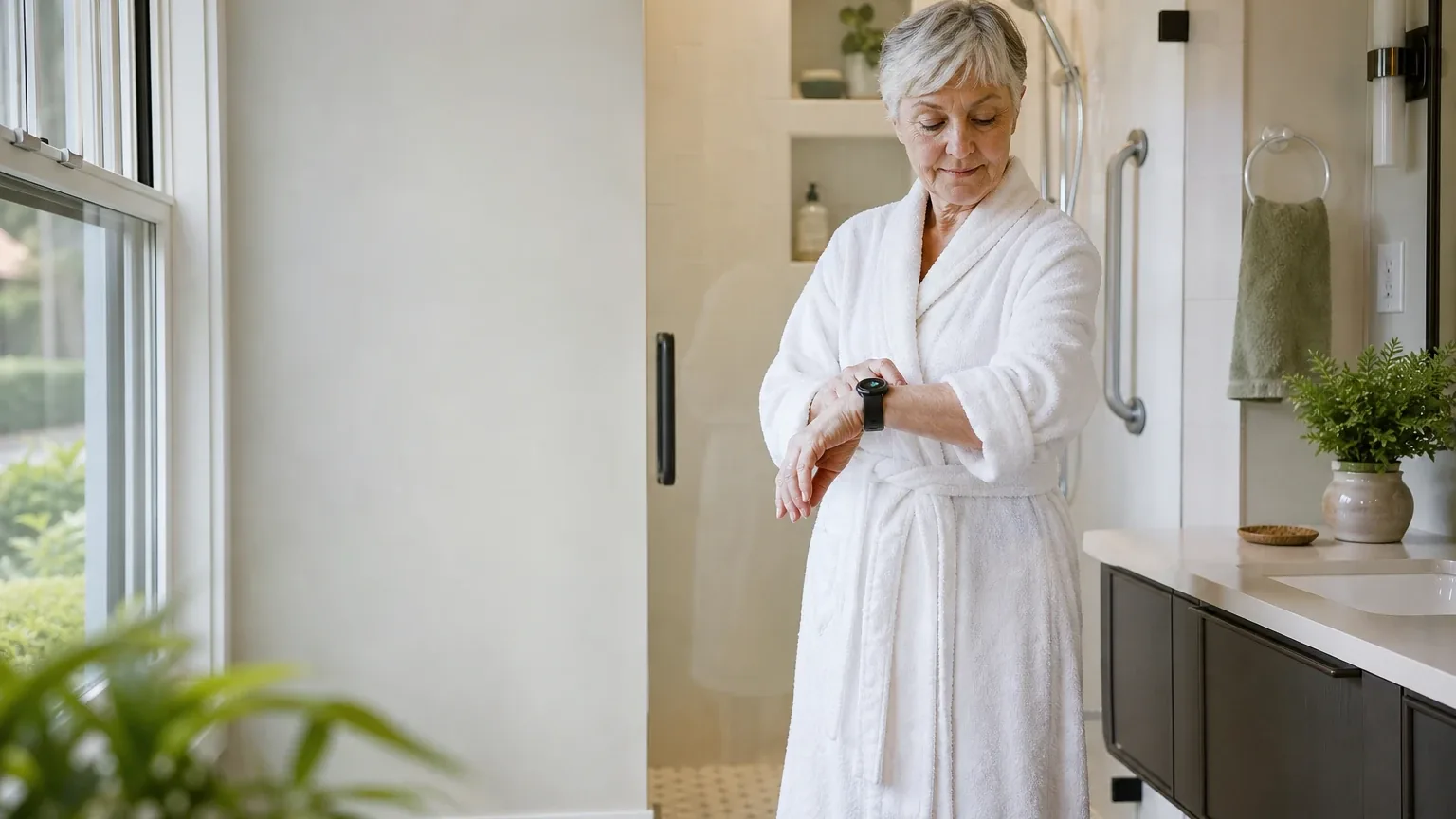
Answer Capsule
Medical Guardian is a good fit for bathroom and shower emergency protection, not an unequivocal one. Six of the seven platforms in this study named Medical Guardian during the ranking stage, and all seven that evaluated fit rated it good or strong. The strongest reason to consider it is the MGMini Lite, an IP67-rated wearable with two-way voice and optional fall detection. The main limitation is that IP67 covers shower spray, not intentional submersion, and published pricing, battery figures, and response-time data conflict across sources. Buyers should confirm the exact device rating, total first-year cost, and contract terms before purchasing.
Research Snapshot
| Field | Finding |
|---|---|
| Platform mentions in ranking stage | 6 of 7 platforms (deepseek, google, grok, kimi, openai, perplexity) |
| Share of included platform responses | 85.7% |
| Average listed rank | 2.5 |
| Best listed rank | 2 |
| Relevant product/model/plan | MGMini Lite or MGMini mobile system with waterproof wearable help button and optional fall detection; Classic Guardian for landline-based in-home use |
| Overall use-case fit | Good |
| Research date | 2026-09-27 |
What Changed Since August 2026
Medical Guardian remained at No. 2, and platform mentions increased from 5 to 6. The September 2026 review describes Medical Guardian's fit much as before: the MGMini Lite remains the leading shower-safe wearable, with two-way voice and optional fall detection, and the same limits on submersion and daily charging persist. What buyers should note is the pricing and performance evidence. Fall detection is now newly reported at $10 per month, while the earlier $42.95/month base figure is no longer repeated amid conflicting published rates, so total first-year cost still needs written confirmation. Reported battery life now extends to three days for some devices, and quoted response times have shifted to roughly 8 to 29 seconds. Differences between the two editions reflect what each article reports; they do not by themselves prove that the product, service, or price changed.
The August 2026 review preserves the earlier article for reference.
Why Medical Guardian Qualified for This Study
Questions This Section Answers
- Is Medical Guardian a good choice for Bathroom & Shower Emergency Protection?
- How many AI platforms named Medical Guardian for shower-safe medical alert systems?
Medical Guardian qualified because it was named by six of the seven platforms during ranking discovery and was evaluated for fit by all seven. Its listed ranks ranged from 2 to 4, producing an average listed rank of 2.5 and a best listed rank of 2 [1].
The qualification rests on a specific, documented capability rather than general brand presence. Medical Guardian publishes shower-use guidance for its wearable devices, and the MGMini Lite carries an explicit IP67 rating [1]. The company also states that all wearable devices are water-resistant and designed to be worn in the shower, while warning that base units must stay dry [6].
Fit ratings were not unanimous at the top. Google and Grok rated Medical Guardian a strong fit; OpenAI, Anthropic, DeepSeek, Kimi, and Perplexity rated it good. That split is itself useful evidence: the product family clearly addresses Shower Use, but the supporting detail is uneven enough that two platforms stopped short of a strong rating.
The Product, Model, Plan, or Service Most Relevant to Bathroom & Shower Emergency Protection
Questions This Section Answers
- Which Medical Guardian device is best for shower use, the MGMini Lite or the MGMove?
- Is the Classic Guardian shower button a better choice than a wearable for bathroom fall protection?
The MGMini Lite is the most relevant single product for this use case. It is described as IP67 certified and marketed for shower use, with instructions to towel-dry it and avoid submersion [8]. It supports a wearable wristband, has a dedicated help button with two-way audio, and offers optional fall detection [11].
The MGMini is the second relevant option. It is described as water-resistant and wearable in the shower, with neck or wrist wear and optional fall detection, though the cited product material does not state an IP rating for it [13]. The MGMove is also described as IP67 and shower-safe, but it is a smartwatch with a touchscreen, and one platform flagged that touchscreen operability with wet or soapy hands is unconfirmed [14].
Classic Guardian is the relevant in-home alternative. It uses a landline-connected base station with a water-resistant pendant, a stated 1,300-foot range, a 32-hour backup battery, no long-term contract, and optional fall detection [15]. DeepSeek specifically identified a dedicated waterproof shower button with the Classic Guardian system (deepseek:mg-classic). Note that Google reported a 1,400-foot range for Medical Guardian home systems, while OpenAI reported 1,300 feet for Classic Guardian — a conflict buyers should verify [16].
What the AI Platforms Agreed About
Questions This Section Answers
- Do AI platforms agree that Medical Guardian wearables are safe to wear in the shower?
- Is fall detection available on Medical Guardian devices for bathroom use?
Platforms agreed on three points. First, Medical Guardian's wearable devices are marketed as water-resistant or shower-safe, and the MGMini Lite carries an IP67 rating [17]. Second, optional fall detection is available across multiple products, generally described at $10 per month [21]. Third, Medical Guardian provides 24/7 monitoring through its own response center [24].
Platforms also agreed on the core limitation. IP67 and "shower-safe" language does not mean the devices are suitable for intentional submersion. OpenAI, Anthropic, Google, and Grok all recorded guidance against prolonged submersion in baths or pools [17].
Agreement here reflects consistent source material, not verified product quality. Most of the supporting citations are company-owned pages.
Where the AI Platforms Disagreed or Were Uncertain
Questions This Section Answers
- Does the MGMini Lite have an IP67 or IP57 water-resistance rating?
- Does the MGMove support fall detection, and what is Medical Guardian's response time?
Water-resistance ratings conflicted. OpenAI, Anthropic, Perplexity, and Grok described the MGMini Lite as IP67 [27]. Google reported the MGMini Lite as carrying an IP57 rating in one specification table while the same page's FAQ says IP67 certified [31]. Anthropic recorded the same internal conflict on the MGMini Lite page. Kimi stated that no specific IP rating is publicly disclosed for the MGMini Lite, MGMove, or shower button (kimi:MG-2026-review). This is a genuine, unresolved documentation conflict.
Fall detection availability on the MGMove conflicted. Perplexity cited an independent review stating fall detection is not an option on the MGMove at any tier [32], while other platforms listed MGMove with optional fall detection [33]. Buyers should confirm this for the specific model.
Response time was not quantified. Medical Guardian states monitoring connects users "in seconds," but no platform located a published average response time, maximum wait time, or service-level agreement [34]. Grok cited independent test figures of roughly 8 to 29 seconds, but that is a single platform's reported range, not a verified benchmark [36].
Battery figures also varied. MGMini Lite was reported at 36 hours by some sources and up to 3 days or 5 days by others [28]. MGMove was reported at 24 hours by most sources and up to 48 hours by Kimi [37].
Use-Case-Specific Features and Capabilities
Questions This Section Answers
- How long does the MGMini Lite battery last, and does it need daily charging?
- Can a Medical Guardian wearable be submerged in a bathtub?
Water resistance is the primary capability. The MGMini Lite is IP67 certified and marketed for shower use, with instructions to towel-dry after exposure and not submerge it [38]. Google's cited explanation of IP67 describes it as allowing submersion in up to 3.3 feet of water for 30 minutes, which is a general IP-standard definition rather than a Medical Guardian shower-specific test result [41]. Medical Guardian's own materials still warn against extended submersion, so the practical limit for bath use is unclear.
Wearability and button access are advantages. The MGMini Lite weighs 0.7 ounces with a 1.5 x 1.4 x 0.5 inch watch face and is marketed as the lightest and most comfortable option [39]. MGMini supports neck or wrist wear; MGMove uses a wristwatch-style band [43]. A physical button is preferable to a wet touchscreen, but no platform located independent testing of button operation with wet or soapy hands [45].
Fall detection is available but imperfect. Medical Guardian states that fall detection does not detect 100% of falls and recommends pressing the button when possible [47]. Kimi noted that fall detection is typically disabled during bathing across the industry due to water movement, and that Medical Guardian does not specify an exception (kimi:MG-2026-review). Grok cited independent tests showing the Lite detects roughly 80% of falls accurately, which is a single platform's reported figure [48].
Battery life is a limitation. MGMini Lite is recommended for daily charging; MGMove is listed at up to 24 hours and requires daily charging; MGMini is listed at up to five days [45]. Protection is interrupted while a device sits on its charger.
Connectivity is a limitation. MGMini Lite requires adequate cellular coverage and should be tested in the buyer's home, which matters for bathrooms with weak indoor reception [45].
Pricing, Fees, Contracts, and Ongoing Costs
Questions This Section Answers
- How much does Medical Guardian cost per month for a shower-safe device, and are there equipment fees?
- Does Medical Guardian require a long-term contract or charge cancellation fees?
Published pricing is inconsistent across official pages, and this is the weakest part of the evidence. The buyer guide lists MGMini Lite at $48.95 per month on a monthly plan plus a $149.95 device fee, MGMini at $43.95 per month plus $149.95, and MGMove at $43.95 per month plus $199.95 [50]. Current product pages separately advertise different starting prices [51]. Anthropic reported MGMini from $39.95 per month and Mobile 2.0 from $44.95 per month [52]. Kimi reported MGMini Lite at $39.95 annual or $44.95 month-to-month, MGMove at $44.95 annual or $49.95 month-to-month, and Classic Guardian at $29.95 per month annual (kimi:MG-2026-review). Google reported monitoring rates from $27.95 to $46.95 per month with equipment fees of $149.95 to $199.95 [53]. Grok reported MGMini Lite at $46.95 per month plus $149.95 equipment [54].
Fall detection is consistently listed at $10 per month for MGMini Lite and MGMini [55]. Optional add-ons listed for MGMini Lite include a $2.99 monthly lockbox, $2.99 monthly OnGuard Alerts, $6.99 monthly protection plan, and $3.99 monthly calendar reminders [56].
Contract terms are mixed. Classic Guardian material states no long-term contracts and no activation fees [57]. Google reported no long-term contracts and no activation fees across the service [53]. However, official site text includes a footnote stating that cancellation fees may apply, and that certain offers exclude specific models (official:C1, official:C3). The applicable cancellation, refund, and equipment-return rules for the recommended mobile devices were not verified from the cited sources [55].
Pricing confidence is low. Buyers should obtain a written checkout quote for the exact device, service term, fall-detection option, and any equipment fee.
Best Suited For
Questions This Section Answers
- Who gets the most value from Medical Guardian for shower and bathroom fall protection?
Medical Guardian is best suited to seniors who want a portable, cellular-connected button usable in the shower, and who prefer a small pendant or wearable with two-way voice communication [58]. It also suits buyers who want optional automatic fall detection and caregiver notifications, and who are comfortable comparing monthly monitoring plus equipment fees across several device tiers [60].
It fits households that want a dedicated in-home shower button alongside a portable device, and buyers who prioritize nationwide cellular coverage with 24/7 U.S.-based monitoring (kimi:MG-2026-review, deepseek:mg-monitoring). It also fits homes with large floor plans where long range from the base station to the bathroom matters [62].
Probably Not Best Suited For
Questions This Section Answers
- Who should not choose Medical Guardian for Bathroom & Shower Emergency Protection?
It is probably not best for users who may submerge the device in a tub or pool, because the MGMini Lite and MGMove are described as shower-safe but not for submersion [63]. It is also a poor fit for users unable to charge a device daily or reliably maintain cellular coverage [65].
Buyers seeking independently verified response-speed comparisons or the lowest predictable monthly cost should look elsewhere [65]. Buyers who need fall detection as a mandatory feature from day one without extra cost, or who want dual-device redundancy with a waterproof backup included in the base plan, will also find the structure unsatisfying [68]. Users with severe vision or dexterity impairments who may struggle with a smartwatch touchscreen when wet should weigh that uncertainty (kimi:MG-2026-review).
When Another Option May Be Better
Questions This Section Answers
- What is a better alternative to Medical Guardian if the buyer needs bathtub submersion protection?
- When should a buyer choose a landline-based system instead of Medical Guardian mobile devices?
Another option may be better when the buyer needs submersion-rated protection for a bathtub or pool, since Medical Guardian's cited materials limit the devices to shower use and warn against submersion [70]. A landline-based system may be more reliable where cellular coverage is poor, because mobile models depend on adequate signal [71].
Buyers who need a longer battery interval without daily charging should compare devices with multi-day or multi-week battery life [72]. Buyers who want fall detection bundled at no extra cost, or who want to avoid upfront equipment fees entirely, should compare providers that lease home equipment with no upfront cost [74]. Buyers who require a published, independently verified IP rating before purchase should verify the specific model's certification directly, given the IP57/IP67 conflict [75].
Questions to Verify Before Buying
Questions This Section Answers
- What should a buyer confirm with Medical Guardian before signing a contract for a shower-safe device?
Confirm whether the exact device is IP67-rated and whether the warranty covers repeated shower exposure [76]. Confirm whether bathtub submersion is prohibited and what happens if the device is accidentally submerged [78]. Confirm that the user can reliably press and hold the physical help button with wet or soapy hands [79].
Confirm which fall-detection hardware is supplied, its exact monthly fee, and whether it functions during shower use [81]. Confirm the exact total monthly and upfront cost, including taxes, shipping, device fees, fall detection, and caregiver features [82]. Confirm whether a minimum term, early-cancellation fee, equipment-return requirement, or refund restriction applies, since official text states cancellation fees may apply (official:C1, official:C3).
Confirm the cellular network and indoor coverage at the buyer's address, and test the device in the bathroom before committing [79]. Confirm the typical and maximum time from button press to a live operator, and whether that figure is independently measured [80]. Confirm how long the wearable can remain off its charger and whether a secondary waterproof button is available during charging [79]. Confirm that the wristband or pendant fits securely and comfortably for the intended user [85].
Final AI Consensus Verdict
Medical Guardian is a good, but not unequivocally strong, fit for Bathroom & Shower Emergency Protection. Six of seven platforms named it during ranking, and all seven rated fit as good or strong. The MGMini Lite is the strongest match because it has an explicit IP67 rating, shower-use guidance, two-way communication, and optional fall detection. MGMini is compelling when longer battery life matters more.
The reservations are material. IP67 and shower-safe language do not mean the devices are suitable for intentional submersion. MGMini Lite and MGMove require frequent charging, and protection is interrupted while a device charges. Fall detection can miss falls and can generate false alarms. Mobile systems depend on adequate cellular coverage. Published prices and product names vary across official pages, making total ownership cost difficult to compare without a current quote. No independently verified response-time measurement was located.
For buyers who need a wearable emergency button usable in a shower or wet room, Medical Guardian is a reasonable candidate. It is less suitable for buyers requiring submersion protection, long battery intervals without charging, independently verified response-time data, or a simple all-in-one fall-detection price.
How This Review Was Produced
This review was produced from a structured multi-platform research run dated 2026-09-27. Seven AI platforms evaluated Medical Guardian for the Bathroom & Shower Emergency Protection use case: OpenAI, Anthropic, Google, Grok, Kimi, DeepSeek, and Perplexity. Each platform returned a fit assessment, use-case findings, pricing and terms, limitations, and questions to verify before buying.
Six of the seven platforms named Medical Guardian during the ranking stage. All seven evaluated fit. Platform-reported research dates differ from the run date: Anthropic reported 2025-01-15 and DeepSeek reported 2026-01-29, while the remaining platforms reported 2026-09-27. Those platform dates are provenance metadata and do not independently prove freshness.
Citations are platform-reported evidence, not independently verified facts. Company-owned citations materially outnumber independent citations in this evidence set, so company claims should not be read as independently verified. The supplied URLs were collected from platform responses and were not independently validated by the writer stage. This review is part of a broader Bathroom & Shower Emergency Protection consensus study, and it sits within the wider directory of medical alert systems research.
Methodology Limitations
Several limitations apply. Platform-reported research dates differ from the authoritative run date, and no-search model claims require explicit verification before being described as current facts. DeepSeek ran without search enabled, so its findings are model-reported rather than retrieved.
Conflicting product names, pricing, and capabilities were not resolved by guessing. Where sources conflicted — including the MGMini Lite IP57 versus IP67 rating, MGMove fall-detection availability, battery life figures, and published monthly prices — the conflict is described and the buyer is directed to verify. The cited sources do not provide a precise, independently measured response-center speed. Comfort and reliable button operation with wet or soapy hands were not supported by independent testing. Current cancellation, return, shipping, tax, and promotional terms for every listed device were not fully verified.
Agreement among AI platforms reflects consistent source material, not proof of product quality. Most supporting citations are company-owned pages.
Sources
Company-Owned Sources
- In-Home Protection: Classic Guardian: https://www.medicalguardian.com/assets/mgbuyersguide.pdf
- Medical Guardian Buyer's Guide: https://www.medicalguardian.com/assets/pdf/medical-guardian-buyers-guide.pdf
- Classic Guardian Medical Alert System: https://www.medicalguardian.com/classic-guardian
- Emergency Alarms: https://www.medicalguardian.com/emergency-alarms
- Fall Detection Medical Alert Systems: https://www.medicalguardian.com/fall-detection
- Medical Emergency Response Device FAQs | Medical Guardian: https://www.medicalguardian.com/faq
- The Best Medical Alert Watches in 2026: https://www.medicalguardian.com/medical-alert-blog/health-wellness/best-medical-alert-watches
- Best Medical Alert Necklace | Fall Detection: https://www.medicalguardian.com/medical-alert-systems/gps-button-fall-detection
- Guardian Flex | Medical Guardian: https://www.medicalguardian.com/medical-alert-systems/guardian-flex-fall-detection
- MGHome Landline Product Detail | Medical Guardian: https://www.medicalguardian.com/medical-alert-systems/landline-alert-button
- MGMini Lite: Wearable Medical Alert Smartwatch: https://www.medicalguardian.com/medical-alert-systems/mini-lite
- Best Medical Alert Smartwatch | MGMove: https://www.medicalguardian.com/medical-alert-systems/smart-watch-alert-app
- Medical Alerts: https://www.medicalguardian.com/medical-alerts
- MGMini and MGMini Lite Medical Alert Devices: https://www.medicalguardian.com/mgmini
- MGMove Medical Alert Smartwatch: https://www.medicalguardian.com/mgmove
- Medical Guardian 24/7 Monitoring: https://www.medicalguardian.com/monitoring
- Medical Guardian Pricing and Plans: https://www.medicalguardian.com/pricing
- Medical Guardian Products and Accessories: https://www.medicalguardian.com/products
- MGClassic Support | Medical Guardian: https://www.medicalguardian.com/support/mgclassic/
- MGMini Lite Gen. 2 Support: https://www.medicalguardian.com/support/mgmini-lite-gen2/
- MGMini Support: https://www.medicalguardian.com/support/mgmini/
- MGMini Lite Support: https://www.medicalguardian.com/support/mgminilite/
- Official pricing and terms source: https://www.medicalguardian.com/
- Official pricing and terms source: https://www.medicalguardian.com/alert-system-pricing
- Official pricing and terms source: https://www.medicalguardian.com/mobile-terms-and-conditions
Additional AI research evidence86 records
- AI research evidence record openai:c1
- AI research evidence record anthropic:c2
- AI research evidence record grok:web:1
- AI research evidence record perplexity:c2
- AI research evidence record google:1.1.5
- AI research evidence record anthropic:c6
- AI research evidence record perplexity:c1
- AI research evidence record openai:c1
- AI research evidence record anthropic:c2
- AI research evidence record anthropic:c3
- AI research evidence record openai:c4
- AI research evidence record openai:c5
- AI research evidence record openai:c3
- AI research evidence record openai:c2
- AI research evidence record openai:c8
- AI research evidence record google:2.1.1
- AI research evidence record openai:c1
- AI research evidence record anthropic:c2
- AI research evidence record perplexity:c2
- AI research evidence record google:1.1.5
- AI research evidence record openai:c4
- AI research evidence record grok:web:1
- AI research evidence record google:1.4.3
- AI research evidence record perplexity:c1
- AI research evidence record anthropic:c3
- AI research evidence record google:1.3.5
- AI research evidence record openai:c1
- AI research evidence record anthropic:c2
- AI research evidence record perplexity:c2
- AI research evidence record grok:web:1
- AI research evidence record google:1.3.1
- AI research evidence record perplexity:c6
- AI research evidence record openai:c2
- AI research evidence record anthropic:c6
- AI research evidence record openai:c4
- AI research evidence record grok:web:6
- AI research evidence record perplexity:c4
- AI research evidence record openai:c1
- AI research evidence record anthropic:c2
- AI research evidence record anthropic:c3
- AI research evidence record google:1.3.8
- AI research evidence record anthropic:c8
- AI research evidence record openai:c5
- AI research evidence record openai:c2
- AI research evidence record openai:c4
- AI research evidence record anthropic:c6
- AI research evidence record openai:c7
- AI research evidence record grok:web:5
- AI research evidence record openai:c6
- AI research evidence record openai:c9
- AI research evidence record openai:c10
- AI research evidence record anthropic:c9
- AI research evidence record google:1.4.3
- AI research evidence record grok:web:1
- AI research evidence record openai:c4
- AI research evidence record openai:c11
- AI research evidence record openai:c8
- AI research evidence record openai:c4
- AI research evidence record openai:c5
- AI research evidence record perplexity:c5
- AI research evidence record perplexity:c7
- AI research evidence record google:2.1.1
- AI research evidence record openai:c1
- AI research evidence record anthropic:c4
- AI research evidence record openai:c4
- AI research evidence record anthropic:c3
- AI research evidence record perplexity:c7
- AI research evidence record anthropic:c5
- AI research evidence record anthropic:c6
- AI research evidence record openai:c1
- AI research evidence record anthropic:c3
- AI research evidence record openai:c4
- AI research evidence record anthropic:c5
- AI research evidence record google:1.4.3
- AI research evidence record google:1.3.1
- AI research evidence record openai:c1
- AI research evidence record google:1.3.1
- AI research evidence record anthropic:c3
- AI research evidence record openai:c4
- AI research evidence record anthropic:c6
- AI research evidence record openai:c7
- AI research evidence record openai:c9
- AI research evidence record openai:c11
- AI research evidence record openai:c6
- AI research evidence record anthropic:c2
- AI research evidence record anthropic:c8
Independent Sources
- Medical Guardian MGMini Review - Medical Alert Buyer's Guide - MedicalAlertBuyersGuide: https://vertexaisearch.cloud.google.com/grounding-api-redirect/AUZIYQETsKpLljhOPsBRSSkefVMEPG2Zzuz73-ubc4jxoTM-OI_8xZa2Gyj_QdLINGlz6PoFr5xKxLUQIqU_afuJ-4ZG4wEBkl6woKheEft2PxPuiKWfatW6jHw6kCK8kgDLmD8fm5fMdW2ASrMbzPmMBXOpj0HQUJG4ORgwxcUiW3bP7H9a9DNLyfh-GjgnbOD8Zxb_GVy_8dWBQ4ZaxtE=
- Medical Guardian Review in 2026 - The National Council on Aging (NCOA: https://vertexaisearch.cloud.google.com/grounding-api-redirect/AUZIYQEvvICvn07VFD8vozQKI-ml_jwb_162jxu9E14KKSZv6TkZ5JWX2LqvY3d68NvUHi9VtHCza1w7WgY2UvegcWe_vV4xvAVue_n_MNXn-wDjNvjyFG0IgRamjlTS4ILcVURJHBrHjpfksHx8GSGf_84R9qIyShkejBn9tThYhQ9igH_U6dVXxw545z4=
- Best Waterproof Medical Alert Devices, Bracelets & Necklaces of 2026 - SafeHome.org: https://vertexaisearch.cloud.google.com/grounding-api-redirect/AUZIYQFCGWKQpeQv3MAtyBsQmqsFXdvfdHdWpAsPACDOExIGKI7Cj9Dp198n-Fig8O0Y-wCaOpuCDBcy5jAwzF0nYrXk23vBcb5pAdSQm7kemr822bX-0FCIVtAlhaqv4BbuvW0mZLpZ0AVrRBRN4jvG8lQUSzgHRMg=
- The MGMini Lite | Medical Guardian's New Device - BestCompany.com: https://vertexaisearch.cloud.google.com/grounding-api-redirect/AUZIYQGKMdOp2klw1i5TdlgEA00X14GEe4SAMMr2fZcQJpVIH0D1Yh9hVTEn6vaFsu5mrptRzgdfJ_E5wu0ZPHq77Z0K6QKTSH95h9oN6Qx0ddiKEN5iFnbPkx9qGdbQofBCGzrem9SA5WiSvodKP9pVHcWCgwI3n1XVBH0zJX0Z0NO_6FSJcGx2aKQ6HGNe7AhW1Eg=
- Medical Guardian “Classic Guardian” Product Review - MedicalAlertBuyersGuide: https://vertexaisearch.cloud.google.com/grounding-api-redirect/AUZIYQGOu9IrP8E9LrrMxJt3Y-DvSY7ZDNfXk8E3EL2ofZ96w4hEIs1VBbaJeGtJBN51glTwHnLxaNKCWsESv_Yv0CRT72rgT3nuQGQQYXUMHUWWnk_0t9mDo0f3aPz_FfE5P1XA1hUjsWPcXiI-9sz1U_Fdtsohe0tif-KU3dlnnppUvCOE5h5SI8b8_iFMQbSfPRPuOPPUy0mNTLdj-_VvQoybdxpC
- Best Waterproof Medical Alert Devices, Bracelets & Necklaces of 2026 - SafeHome.org: https://vertexaisearch.cloud.google.com/grounding-api-redirect/AUZIYQHPpFPZtxfMaI2jR-vwRKQU2VZmjtSWI4q07Pm0aP4yGZnkXHY1gf_u10Vuc423bUBDPIKpTOYjWDWzk2k4tkE0aUYSas_gsfxlaVC8HbV_YDexwJwQX8dVu4gEh5sB6eg4gv1uhreKNK0D6WcBjyGkoZjy1Q==
- Medical Guardian MGMini Medical Alert Device User Manual - Manuals.plus: https://vertexaisearch.cloud.google.com/grounding-api-redirect/AUZIYQHprZyD-OmdRGx8Lmxo4LaSJi4TodXVY4vvfBjkolBOJ25gKKOrY6z6winosHUcwNRooCSitzTXNxrbdc2Jt8FcIYxgJcoN6AZQNt4hdi7u_oNBOiBKs8-7EQ==
- Medical Guardian Cost: $27.95–$46.95/mo, Checked Sept 2026 - Medical Alert Review: https://vertexaisearch.cloud.google.com/grounding-api-redirect/AUZIYQHvMatG_ha8TjUXjtxXC_nQiNqALFPTTakXm7wBWK5_aohTglWKp-jsjtaME_FgIpCQblKIgjJS05PmBWWCnbGceChX-jIkevzCKzlOTiakbv-a6sSET0CMSp3ZWCSRESWFAQCsvDu0Qr0=
- Medical Guardian Review in 2026: https://www.ncoa.org/product-resources/medical-alert-systems/medical-guardian-review/
- Medical Guardian MGMove Smartwatch Review: https://www.pcmag.com/reviews/medical-guardian-mgmove-smartwatch
- Medical Guardian Unveils MGMini Lite: Their Lightest And Most Comfortable Medical Alert Device: https://www.prweb.com/releases/medical-guardian-unveils-mgmini-lite-their-lightest-and-most-comfortable-medical-alert-device-301940407.html
- Medical Guardian Review 2026: https://www.retirementliving.com/medical-alert-systems/medical-guardian-review
- 2026 MGMini Lite and MGMini Review: https://www.seniorliving.org/medical-alert-systems/medical-guardian/mgmini/
- MGMove Medical Alert Smartwatch Cost & Review 2026: https://www.seniorliving.org/medical-alert-systems/medical-guardian/mgmove/
- Medical Guardian Alert System Review for 2026: https://www.seniorliving.org/medical-alert-systems/medical-guardian/reviews/
- Medical Guardian MGMini Lite Review: https://www.theseniorlist.com/medical-alert-systems/medical-guardian/mgmini-lite/
- MGMini Medical Alert Review, Tested by Caregivers (2026: https://www.theseniorlist.com/medical-alert-systems/medical-guardian/mgmini/
Additional AI research evidence86 records
- AI research evidence record openai:c1
- AI research evidence record anthropic:c2
- AI research evidence record grok:web:1
- AI research evidence record perplexity:c2
- AI research evidence record google:1.1.5
- AI research evidence record anthropic:c6
- AI research evidence record perplexity:c1
- AI research evidence record openai:c1
- AI research evidence record anthropic:c2
- AI research evidence record anthropic:c3
- AI research evidence record openai:c4
- AI research evidence record openai:c5
- AI research evidence record openai:c3
- AI research evidence record openai:c2
- AI research evidence record openai:c8
- AI research evidence record google:2.1.1
- AI research evidence record openai:c1
- AI research evidence record anthropic:c2
- AI research evidence record perplexity:c2
- AI research evidence record google:1.1.5
- AI research evidence record openai:c4
- AI research evidence record grok:web:1
- AI research evidence record google:1.4.3
- AI research evidence record perplexity:c1
- AI research evidence record anthropic:c3
- AI research evidence record google:1.3.5
- AI research evidence record openai:c1
- AI research evidence record anthropic:c2
- AI research evidence record perplexity:c2
- AI research evidence record grok:web:1
- AI research evidence record google:1.3.1
- AI research evidence record perplexity:c6
- AI research evidence record openai:c2
- AI research evidence record anthropic:c6
- AI research evidence record openai:c4
- AI research evidence record grok:web:6
- AI research evidence record perplexity:c4
- AI research evidence record openai:c1
- AI research evidence record anthropic:c2
- AI research evidence record anthropic:c3
- AI research evidence record google:1.3.8
- AI research evidence record anthropic:c8
- AI research evidence record openai:c5
- AI research evidence record openai:c2
- AI research evidence record openai:c4
- AI research evidence record anthropic:c6
- AI research evidence record openai:c7
- AI research evidence record grok:web:5
- AI research evidence record openai:c6
- AI research evidence record openai:c9
- AI research evidence record openai:c10
- AI research evidence record anthropic:c9
- AI research evidence record google:1.4.3
- AI research evidence record grok:web:1
- AI research evidence record openai:c4
- AI research evidence record openai:c11
- AI research evidence record openai:c8
- AI research evidence record openai:c4
- AI research evidence record openai:c5
- AI research evidence record perplexity:c5
- AI research evidence record perplexity:c7
- AI research evidence record google:2.1.1
- AI research evidence record openai:c1
- AI research evidence record anthropic:c4
- AI research evidence record openai:c4
- AI research evidence record anthropic:c3
- AI research evidence record perplexity:c7
- AI research evidence record anthropic:c5
- AI research evidence record anthropic:c6
- AI research evidence record openai:c1
- AI research evidence record anthropic:c3
- AI research evidence record openai:c4
- AI research evidence record anthropic:c5
- AI research evidence record google:1.4.3
- AI research evidence record google:1.3.1
- AI research evidence record openai:c1
- AI research evidence record google:1.3.1
- AI research evidence record anthropic:c3
- AI research evidence record openai:c4
- AI research evidence record anthropic:c6
- AI research evidence record openai:c7
- AI research evidence record openai:c9
- AI research evidence record openai:c11
- AI research evidence record openai:c6
- AI research evidence record anthropic:c2
- AI research evidence record anthropic:c8
Verify This Research
Review the study details behind this page or download the public machine-readable verification record.
- Study date
- September 27, 2026
- Platforms analyzed
- 7
- Source records
- 48
- Ranking mentions
- 6 of 7
- Platform share
- 86%
- Final consensus rank
- #2
Research trail and source mix
Configured platforms
openai, anthropic, deepseek, grok, perplexity, kimi, google
Source mix
18 independent · 30 company-owned
Evidence support
38 direct · 10 partial
Important limitation
Use the run research_date as the study date. Platform-reported dates are provenance metadata and do not independently prove freshness.
Source snapshot SHA-256 eef7ef9861a9dbf7602cdf5df1c4e05d3eaca0e928e9806673f4a6d3ab151d44
Archived editions
Browse earlier published research snapshots for this article. The latest edition remains at the current URL.