
Answer Capsule
LifeFone - At-Home Cellular System is a good fit for Cellular Home Monitoring, according to the majority of AI platforms that evaluated it. Six of the seven platforms named it during the ranking stage, and five of those seven rated the fit as "good," with one "strong" and one "uncertain." The strongest reason to consider it is its landline-free AT&T cellular operation with month-to-month terms, optional fall detection, and a stated 1,300-foot in-home range. The main limitation is that independent testing reported fall detection activating in only about one-third of test falls, and one hands-on test measured backup battery runtime below the advertised 32 hours.
Research Snapshot
| Field | Detail |
|---|---|
| Platform mentions in ranking stage | 6 of 7 platforms (anthropic, deepseek, google, grok, kimi, openai) |
| Share of included platform responses | 85.7% |
| Average listed rank | 4.33 |
| Best listed rank | 2 (kimi) |
| Relevant product/model/plan | LifeFone At-Home Cellular service with optional fall detection |
| Overall use-case fit | Strong (1 platform); Good (5 platforms); Uncertain (1 platform) — 7 platforms analyzed |
| Research date | 2026-09-27 |
What Changed Since August 2026
LifeFone - At-Home Cellular System moved up from No. 5 to No. 3, and platform mentions increased from 4 to 6. Compared with the prior article, the buyer-facing write-up was substantially rewritten. Updated passages cover Answer Capsule, Research Snapshot, The Product, Model, Plan, or Service Most Relevant to Cellular Home Monitoring, What the AI Platforms Agreed About, and Where the AI Platforms Disagreed or Were Uncertain, plus 10 more. The reported pricing evidence changed: the current section newly states $14.95 and $13.95; earlier figures not repeated in the current section include $5, $28.37 per month, $43.95, and $41.95, plus 12 more. Numeric evidence changed: newly reported details include 24 hours and 30 days; earlier details not repeated include 10 minutes, 3 years, 100 feet, and 18 days, plus 9 more. These are changes in the article's reported evidence and description; they do not by themselves prove that the company changed its product or price.
The August 2026 review preserves the earlier article for reference.
Why LifeFone - At-Home Cellular System Qualified for This Study
Questions This Section Answers
- Is LifeFone - At-Home Cellular System a good choice for Cellular Home Monitoring in an apartment or condo?
- How many AI platforms named LifeFone - At-Home Cellular System for cellular home monitoring without a landline?
LifeFone - At-Home Cellular System qualified because it was named by six of the seven platforms during the ranking stage, meeting the study's minimum-mention threshold of two. Its average listed rank was 4.33, with a best rank of 2 from kimi and a final rank of 3. The product is explicitly positioned for households without a landline: LifeFone states the At-Home Cellular system uses AT&T cellular service rather than a landline or the user's own phone service [1]. That direct match to the "cellular home monitoring" use case is why it entered the finalist set. The ranking-stage audit also noted that official-site retrieval failed for one or more mentions and that identity was matched via unverified reported-domain evidence, so the reported domain remains unverified.
The Product, Model, Plan, or Service Most Relevant to Cellular Home Monitoring
Questions This Section Answers
- Which LifeFone plan should a buyer choose for cellular home monitoring without a landline?
- Does the LifeFone At-Home Cellular System include fall detection, or is it a separate add-on?
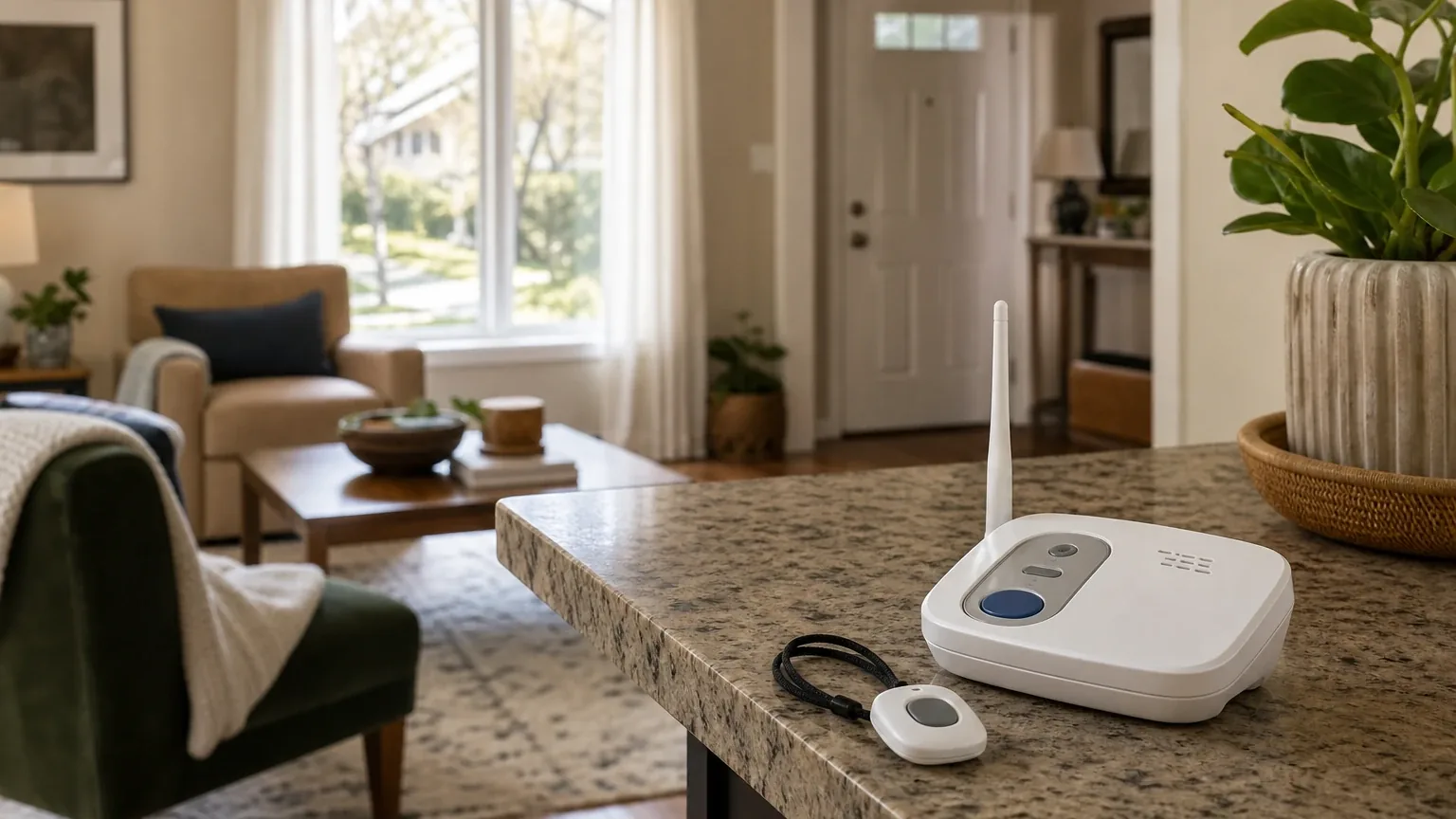
The relevant product is the LifeFone At-Home Cellular system with optional fall detection, a fixed-location base station plus a wearable help button that connects over AT&T cellular service [3]. It is distinct from LifeFone's At-Home & On-the-Go and VIPx2 products, which are the mobile options for protection outside the home [4]. Fall detection is an optional add-on rather than a standard feature, and LifeFone states it may reduce pendant battery life to roughly one year [5]. The At-Home Cellular system is a home-only product; buyers who need away-from-home coverage are pointed to a separate LifeFone tier.
What the AI Platforms Agreed About
Questions This Section Answers
- What do AI platforms agree on about LifeFone - At-Home Cellular System for cellular home monitoring?
- Is the LifeFone At-Home Cellular System contract-free, and does it require a landline?
The platforms broadly agreed on several points. First, the system is landline-free and runs on AT&T cellular service, which multiple platforms confirmed from LifeFone's own pages [6]. Second, service is month-to-month with no long-term contract, and cancellation is available by phone, email, or written notice [8]. Third, fall detection is an optional add-on priced at about $5 per month [10]. Fourth, the system is a home-only product, not a mobile or GPS solution [12]. Fifth, most platforms described the setup as simple plug-and-play with no activation or equipment fees [14]. Agreement here reflects consistent sourcing, not proof of product quality.
Where the AI Platforms Disagreed or Were Uncertain
Questions This Section Answers
- How accurate is LifeFone At-Home Cellular fall detection, and why do AI platforms disagree?
- What is the real backup battery runtime of the LifeFone At-Home Cellular base station?
The platforms disagreed on fall-detection performance. Forbes Health reported that the fall-detection pendant activated in only about one-third of its test falls [15], while NCOA's 2026 testing reported the At-Home Cellular detected all three of its fall tests [16]. LifeFone's own documentation states fall detection is "only 95% accurate" and does not detect every fall [17]. These results conflict and should not be treated as a guarantee for any specific user or fall type.
The platforms also disagreed on backup battery runtime. LifeFone advertises up to 32 hours of base-station backup [18], but SafeWise reported its tested base-station backup lasted less than 24 hours [19]. Pricing was another conflict: LifeFone's current page lists $30.95 per month on an annual plan, while older reviews list $34.95 per month for the base service [20]. Kimi rated the fit "uncertain" because it could not retrieve verified public documentation on carrier, battery, pricing, or cancellation terms (kimi:SEC-2026-1).
Use-Case-Specific Features and Capabilities
Questions This Section Answers
- What in-home range and backup battery does LifeFone - At-Home Cellular System offer for apartment and condo use?
- Does LifeFone At-Home Cellular System work without Wi-Fi or a landline?
LifeFone advertises up to 1,300 feet of range between the base station and the water-resistant help button, and Forbes Health reported approximately 1,300 feet in testing [22]. Grok, however, cited independent tests reporting 65 feet in one review and lower-than-advertised range in another (grok:5, grok:6), so range should be tested in the actual living space. The base station provides the two-way voice communication, which means voice quality depends on where the user falls relative to the base [23].
The system does not require a landline or Wi-Fi; it uses AT&T cellular service [22]. LifeFone states the base and help-button batteries are supervised, with low-battery and power-failure conditions reported to the response center [24]. The standard help-button battery is advertised at up to three years, dropping to about one year with fall detection enabled [24]. A personalized Emergency Care Plan with phone, email, and text caregiver notifications is included [22].
Pricing, Fees, Contracts, and Ongoing Costs
Questions This Section Answers
- How much does LifeFone - At-Home Cellular System cost per month, and are there setup or cancellation fees?
- What fees apply if a buyer cancels LifeFone At-Home Cellular System and does not return the equipment?
LifeFone currently advertises At-Home Cellular starting at $30.95 per month on an annual plan, with no activation or equipment fees [25]. Older independent pricing lists $34.95 per month for the base service plus $5 per month for fall detection [27]. Grok reported a tiered structure of $34.95 monthly, $32.95 quarterly, and $30.95 annual, plus $5 per month for fall detection (grok:1). Optional add-ons include daily check-in at $19 per month, activity assurance at $6 per month, and a protection plan at $5 per month (anthropic:forbes-health-review, grok:1). The applicable 2026 price should be verified at checkout.
Terms state service is month-to-month until terminated, with cancellation by phone, email, or written notice [28]. A separate cancellation notice references a 7-business-day rescission right for certain transactions [30]. The equipment is loaned, not owned, and must be returned after cancellation at the subscriber's expense; failure to return or damage to an At-Home system can trigger a stated $295 fair-market-value charge [28]. A 30-day money-back guarantee applies if equipment is returned within 30 days (anthropic:lifefone-faq-page).
Best Suited For
Questions This Section Answers
- Who is LifeFone - At-Home Cellular System best suited for in cellular home monitoring?
- Is LifeFone At-Home Cellular System a good choice for a senior in an apartment with strong AT&T coverage?
LifeFone - At-Home Cellular System is best suited for seniors who want a dedicated home-only emergency button without a landline or Wi-Fi connection, in apartments and condos with reliable AT&T cellular coverage [31]. It also fits buyers prioritizing simple setup, a long-range wearable button, and optional fall detection, and caregivers who want included emergency-care-plan notifications and supervised device batteries [32]. Buyers who value month-to-month cancellation and a lifetime price-lock guarantee are also a match (anthropic:lifefone-faq-page, grok:1). The product is designed for protection around the base station, so it suits fixed-residence use rather than active outdoor lifestyles.
Probably Not Best Suited For
Questions This Section Answers
- Who should not choose LifeFone - At-Home Cellular System for cellular home monitoring?
- Is LifeFone At-Home Cellular System a poor fit for a senior who needs protection outside the home?
It is probably not best suited for people who need protection outside the home, since the At-Home Cellular system is a fixed-location product and LifeFone's mobile tiers are the relevant category for away-from-home coverage [34]. It is also a weak fit for homes with weak or inconsistent AT&T coverage, because the base unit relies exclusively on AT&T and does not offer carrier redundancy [36]. Buyers requiring independently verified fall-detection performance should look elsewhere, given the conflicting test results [38]. Buyers who need a guaranteed backup runtime longer than the independently tested result should also reconsider [40].
When Another Option May Be Better
Questions This Section Answers
- What is a better alternative to LifeFone - At-Home Cellular System for a buyer who needs dual-carrier cellular redundancy?
- When is a mobile GPS system a better choice than LifeFone At-Home Cellular System for a senior?
Another option may be better when AT&T coverage is weak at the residence, in which case a system using Verizon or T-Mobile with confirmed local coverage is preferable [41]. A mobile GPS or at-home-and-on-the-go system is a better choice if the senior regularly leaves the home [42]. Buyers who need verified multi-carrier redundancy may prefer a provider with documented dual-SIM Verizon/AT&T automatic selection, such as the Alula option cited by kimi (kimi:SHC-ALULA-1). Buyers who want a clearly published current monthly price and transparent technical specifications may also compare against providers with more explicit public documentation (kimi:SHC-M2M-1, kimi:TMC-1).
Questions to Verify Before Buying
Questions This Section Answers
- What should a buyer confirm with LifeFone - At-Home Cellular System before signing a contract?
- Does the LifeFone At-Home Cellular System base station report adequate AT&T signal at the exact address?
Before buying, confirm that the base station reports adequate AT&T signal strength at the exact apartment, condo, or home address, and ask whether any carrier redundancy exists if AT&T service is unavailable [43]. Confirm the current monthly, quarterly, and annual price for At-Home Cellular without and with fall detection, plus any shipping, taxes, activation, equipment, replacement, or return fees [43]. Ask what the current measured or guaranteed backup-battery runtime is and how it is tested, given the conflict between the advertised 32 hours and SafeWise's sub-24-hour result [46]. Confirm where the base station must be placed for reliable two-way voice communication throughout the residence, and what the current fall-detection limitations and false-alarm policies are [48]. Finally, confirm how quickly equipment must be returned after cancellation, who pays return shipping, and whether annual or quarterly prepayment receives a refund after cancellation [50].
Final AI Consensus Verdict
LifeFone - At-Home Cellular System is a good fit for Cellular Home Monitoring, based on the majority of AI platforms that evaluated it. Five of seven platforms rated the fit "good," one rated it "strong," and one rated it "uncertain." It is a strong match for a landline-replacement buyer seeking simple, home-only cellular monitoring in a residence with strong AT&T coverage. It is not a strong fit where AT&T signal is uncertain, reliable fall detection is critical, or the user needs protection outside the home. Buyers should verify current pricing, coverage, backup runtime, and equipment-return obligations before purchasing.
How This Review Was Produced
This review was produced from the supplied platform fit-research responses for the Cellular Home Monitoring use case, using the run research date of 2026-09-27 as the study date. Seven platforms evaluated fit, and platform mentions count only platforms that named the entity during ranking discovery. All factual claims are cited to the supplied citation IDs, and company-owned citations materially outnumber independent citations. Company claims are labeled as company-reported rather than independently verified. The consensus index for this category is available at Cellular Home Monitoring, and the broader category directory is at medical alert systems.
Methodology Limitations
Platform-reported research dates differ from the authoritative run date: anthropic reported 2025-04-30 and deepseek reported 2026-02-14, while the remaining platforms reported 2026-09-27. These dates are provenance metadata and do not independently prove freshness. The supplied URLs were collected from platform responses and were not independently validated by the writer stage. Official-site retrieval failed for one or more mentions, and identity was matched via unverified reported-domain evidence, so the reported domain remains unverified. DeepSeek's response was generated without search enabled, so its claims require explicit verification before being described as current facts. The available source evidence contains qualification notes that are disclosed where relevant. Citations are platform-reported evidence, not independently verified facts. Conflicting product names, pricing, and capabilities were not resolved by guessing; buyers should verify them directly.
Sources
Company-Owned Sources
- LifeFone Official Website: https://lifefone.com/
- LifeFone At-Home Cellular System: https://lifefone.com/medical-alert-systems/at-home-cellular/
- LifeFone Fall Detection: https://lifefone.com/medical-alert-systems/fall-detection/
- LifeFone Pricing: https://lifefone.com/pricing/
- LifeFone Terms and Conditions: https://lifefone.com/terms-and-conditions/
- No Contract M2M Cellular UL Central Station Monitoring From $14.95: https://safehomecentral.com/affordable-no-contract-alarm-monitoring-from-8-95-same-day-switch/m2m-cellular-ul-central-station-monitoring-from-14-95-2/
- Upgrade Your Existing Hardwired Panel To Cellular Using Alula: https://safehomecentral.com/alarm-monitoring/upgrade-your-hardwired-alarm-panel-with-cellular-monitoring-using-alula-and-safehomecentral-com/
- Prima Cellular and WIFI Alarm Monitoring: https://safehomecentral.com/prima-cellular-and-wifi-alarm-monitoring/
- Affordable Cellular No Contract Self-Alarm Monitoring From $13.95: https://safehomecentral.com/product/self-interactive-basic-home-security-self-alarm-monitoring-monthly/
- At-Home Cellular | Medical Alert Device - LifeFone: https://www.lifefone.com/
- Comparing LifeFone’s Medical Alert Systems: https://www.lifefone.com/articles/comparing-lifefones-medical-alert-systems
- At-Home Cellular Medical Alert | LifeFone: https://www.lifefone.com/at-home-cellular
- LifeFone FAQs: https://www.lifefone.com/faq
- LifeFone Terms and Conditions: https://www.lifefone.com/media/pdf/ECPA_LF.pdf
- VIPACTIVE User Guide: https://www.lifefone.com/media/pdf/manuals/VIP_Active_user-guide.pdf
- Voice-in-Pendant User's Guide: https://www.lifefone.com/media/pdf/manuals/VIP_White_user-guide_gold.pdf
- LifeFone VIP Flex User Guide: https://www.lifefone.com/media/pdf/manuals/VIPflex_user-guide_1123D.pdf
- Notice of Cancellation - LifeFone: https://www.lifefone.com/media/wysiwyg/Notice_of_Cancellation.pdf
- Order Now | Medical Alert: https://www.lifefone.com/order-now
- Terms & Conditions | Medical Alert | LifeFone: https://www.lifefone.com/terms-and-conditions
- Alarm Systems Costs | Lowest Rates | The Monitoring Center: https://www.themonitoringcenter.com/products-and-services/alarm-monitoring-services-and-rates/
Additional AI research evidence50 records
- AI research evidence record openai:c1
- AI research evidence record openai:c2
- AI research evidence record openai:c1
- AI research evidence record openai:c2
- AI research evidence record openai:c6
- AI research evidence record openai:c1
- AI research evidence record google:1.1.1
- AI research evidence record openai:c8
- AI research evidence record perplexity:c3
- AI research evidence record perplexity:c1
- AI research evidence record google:1.1.3
- AI research evidence record openai:c2
- AI research evidence record perplexity:c15
- AI research evidence record google:1.1.6
- AI research evidence record openai:c3
- AI research evidence record perplexity:c8
- AI research evidence record openai:c7
- AI research evidence record openai:c5
- AI research evidence record openai:c4
- AI research evidence record openai:c1
- AI research evidence record perplexity:c4
- AI research evidence record openai:c1
- AI research evidence record openai:c3
- AI research evidence record openai:c6
- AI research evidence record openai:c1
- AI research evidence record google:1.1.5
- AI research evidence record perplexity:c4
- AI research evidence record openai:c8
- AI research evidence record perplexity:c3
- AI research evidence record perplexity:c7
- AI research evidence record openai:c1
- AI research evidence record openai:c3
- AI research evidence record openai:c6
- AI research evidence record openai:c2
- AI research evidence record perplexity:c15
- AI research evidence record google:2.1.2
- AI research evidence record google:2.1.8
- AI research evidence record openai:c3
- AI research evidence record perplexity:c8
- AI research evidence record openai:c4
- AI research evidence record google:2.1.2
- AI research evidence record openai:c2
- AI research evidence record openai:c1
- AI research evidence record google:2.1.8
- AI research evidence record perplexity:c4
- AI research evidence record openai:c5
- AI research evidence record openai:c4
- AI research evidence record openai:c3
- AI research evidence record openai:c7
- AI research evidence record openai:c8
Independent Sources
- LifeFone Medical Alert Device Review - Elder Guide: https://elderguide.com/lifefone-review/
- LifeFone At-Home Cellular – MedGrade: https://medgrade.org/devices/lifefone-at-home-cellular/
- LifeFone Medical Alert System Review 2026 | U.S. News: https://realestate.usnews.com/home-services/medical-alert-system/lifefone
- LifeFone Medical Alert System Review 2026 - Caring.com: https://www.caring.com/best-medical-alert-systems/lifefone-reviews/
- LifeFone At-Home Cellular System With Optional Fall Detection Review: Tried And Tested: https://www.forbes.com/health/healthy-aging/lifefone-at-home-cellular-review/
- 8 Best Medical Alert Systems Of 2026: Tested & Reviewed: https://www.forbes.com/health/medical-alert-systems/best-medical-alert-systems/
- LifeFone At-Home Cellular System Review: https://www.forbes.com/health/medical-alert-systems/lifefone-at-home-cellular-system-review/
- These alert systems can help save you or your loved ones' lives: https://www.nbcnews.com/select/shopping/best-medical-alert-systems-rcna240089
- The Best Medical Alert Systems with Fall Detection (2026: https://www.ncoa.org/product-resources/medical-alert-systems/best-medical-alert-systems-with-fall-detection/
- Lifefone Medical Alert System Review: https://www.ncoa.org/product-resources/medical-alert-systems/lifefone-review/
- LifeFone Review (2026): With Costs & Models: https://www.retirementliving.com/lifefone-review
- LifeFone Medical Alerts | Hands-On Expert Review: https://www.safewise.com/senior-safety/medical-alerts/lifefone/
- Best Cellular Home Security Systems of 2026: https://www.security.org/home-security-systems/best/cellular/
- LifeFone Medical Alert System Review 2026: https://www.seniorliving.org/medical-alert-systems/lifefone/reviews/
- LifeFone Medical Alert System Review 2026 - SeniorLiving.org: https://www.seniorliving.org/medical-alert/lifefone-review/
- Medical Guardian vs. Lifefone, Hands-On Comparison: https://www.theseniorlist.com/medical-alert-systems/medical-guardian-vs-lifefone/
- LifeFone Review | At-Home & On-the-Go Medical Alert Services: https://www.top10.com/medical-alerts/reviews/lifefone
Additional AI research evidence50 records
- AI research evidence record openai:c1
- AI research evidence record openai:c2
- AI research evidence record openai:c1
- AI research evidence record openai:c2
- AI research evidence record openai:c6
- AI research evidence record openai:c1
- AI research evidence record google:1.1.1
- AI research evidence record openai:c8
- AI research evidence record perplexity:c3
- AI research evidence record perplexity:c1
- AI research evidence record google:1.1.3
- AI research evidence record openai:c2
- AI research evidence record perplexity:c15
- AI research evidence record google:1.1.6
- AI research evidence record openai:c3
- AI research evidence record perplexity:c8
- AI research evidence record openai:c7
- AI research evidence record openai:c5
- AI research evidence record openai:c4
- AI research evidence record openai:c1
- AI research evidence record perplexity:c4
- AI research evidence record openai:c1
- AI research evidence record openai:c3
- AI research evidence record openai:c6
- AI research evidence record openai:c1
- AI research evidence record google:1.1.5
- AI research evidence record perplexity:c4
- AI research evidence record openai:c8
- AI research evidence record perplexity:c3
- AI research evidence record perplexity:c7
- AI research evidence record openai:c1
- AI research evidence record openai:c3
- AI research evidence record openai:c6
- AI research evidence record openai:c2
- AI research evidence record perplexity:c15
- AI research evidence record google:2.1.2
- AI research evidence record google:2.1.8
- AI research evidence record openai:c3
- AI research evidence record perplexity:c8
- AI research evidence record openai:c4
- AI research evidence record google:2.1.2
- AI research evidence record openai:c2
- AI research evidence record openai:c1
- AI research evidence record google:2.1.8
- AI research evidence record perplexity:c4
- AI research evidence record openai:c5
- AI research evidence record openai:c4
- AI research evidence record openai:c3
- AI research evidence record openai:c7
- AI research evidence record openai:c8
Verify This Research
Review the study details behind this page or download the public machine-readable verification record.
- Study date
- September 27, 2026
- Platforms analyzed
- 7
- Source records
- 38
- Ranking mentions
- 6 of 7
- Platform share
- 86%
- Final consensus rank
- #3
Research trail and source mix
Configured platforms
openai, anthropic, deepseek, grok, perplexity, kimi, google
Source mix
17 independent · 21 company-owned
Evidence support
27 direct · 11 partial
Important limitation
Use the run research_date as the study date. Platform-reported dates are provenance metadata and do not independently prove freshness.
Source snapshot SHA-256 77ebd03ff5329c0073f21afb5f4cc9d5e9ad98cf87eed660588dc1d26f272b0b