
Answer Capsule
Lively is a good fit for Cellular Home Monitoring when a senior or caregiver wants a landline-free, portable alert device for an apartment, condo, or modern household with reliable cellular coverage. Three of the seven included platforms named Lively during the ranking stage (deepseek, grok, perplexity), and six of seven rated it "good" or "strong" for this use case. The strongest reason to consider it is the Mobile2's all-in-one cellular design: no base station, no landline, optional fall detection, GPS, caregiver alerts, and month-to-month cancellation. The main limitation is cellular dependence combined with short battery life and inconsistent public pricing, plus unresolved questions about whether the older Mobile Plus model is still sold.
Research Snapshot
| Field | Detail |
|---|---|
| Platform mentions in ranking stage | 3 of 7 included platforms (deepseek, grok, perplexity) |
| Share of included platform responses | 42.9% |
| Average listed rank | 4.33 |
| Best listed rank | 3 (deepseek, grok) |
| Relevant product/model/plan | Lively Mobile2 All-in-One Medical Alert with Basic or Premium service, optional fall detection, and Urgent Response; Mobile Plus is a legacy reference with unclear current availability |
| Overall use-case fit | Good (six platforms rated good or strong; one rated uncertain) |
| Research date | 2026-09-27 |
What Changed Since August 2026
Lively moved down from No. 7 to No. 8, and platform mentions increased from 2 to 3. The September 2026 review reframes Lively around the Mobile2 all-in-one wearable rather than a Lively Home base station, with a more confident "good" fit for landline-free apartments and condos and clearer guidance to verify coverage at the exact address. Basic monitoring is newly reported at $24.99 per month, while the older $24.99/mo figure is no longer repeated. Battery expectations remain unresolved: current research cites standby estimates ranging from about 32 hours to roughly 80 hours, plus a claim of up to 48 hours, so buyers should treat runtime as unconfirmed. Fall detection still requires the lanyard, and Mobile Plus availability remains an open question. Differences between the two editions reflect what each article reports; they do not by themselves prove that the product, service, or price changed.
The August 2026 review preserves the earlier article for reference.
Why Lively Qualified for This Study
Questions This Section Answers
- Is Lively a good choice for Cellular Home Monitoring in an apartment or condo without a landline?
- How many AI platforms named Lively when ranking cellular medical alert systems without a landline?
Lively qualified because it was named by three of the seven included platforms during ranking discovery and because its core product matches the study's central criterion: a medical alert system that works without a landline. Deepseek ranked it third, grok ranked it third, and perplexity ranked it seventh [1].
Fit ratings were mostly positive. OpenAI, Anthropic, DeepSeek, Google, Grok, and Perplexity all rated Lively "good" or "strong" for this use case; Kimi rated it "uncertain" because its research could not verify 2026 pricing or product availability (kimi:tmc-rates). That split matters: the uncertainty is about documentation, not about the product category.
Lively's relevance rests on a specific design choice. The Mobile2 is an all-in-one wearable that communicates over cellular networks rather than through a home phone line or a base station [3]. For the target buyer — a senior or caregiver replacing a landline in an apartment, condo, or updated household — that removes the installation step entirely.
The category context also supports inclusion. Cellular monitoring generally costs more than landline or Wi-Fi monitoring but works without a phone line or internet connection, and 4G LTE is now required because 3G networks have shut down [5]. Lively sits inside that category rather than beside it.
The Product, Model, Plan, or Service Most Relevant to Cellular Home Monitoring
Questions This Section Answers
- Which Lively device and plan should a buyer choose for cellular home monitoring without a landline?
- Is the Lively Mobile Plus still available, or has the Lively Mobile2 replaced it for new customers?
The most relevant current offering is the Lively Mobile2 All-in-One Medical Alert, paired with either Basic or Premium monitoring and optional fall detection. The Mobile Plus appears in older materials and in several platform recommendations, but current official retail pages primarily document Mobile2, and no clear current official evidence establishes that Mobile Plus remains available for new purchases [7].
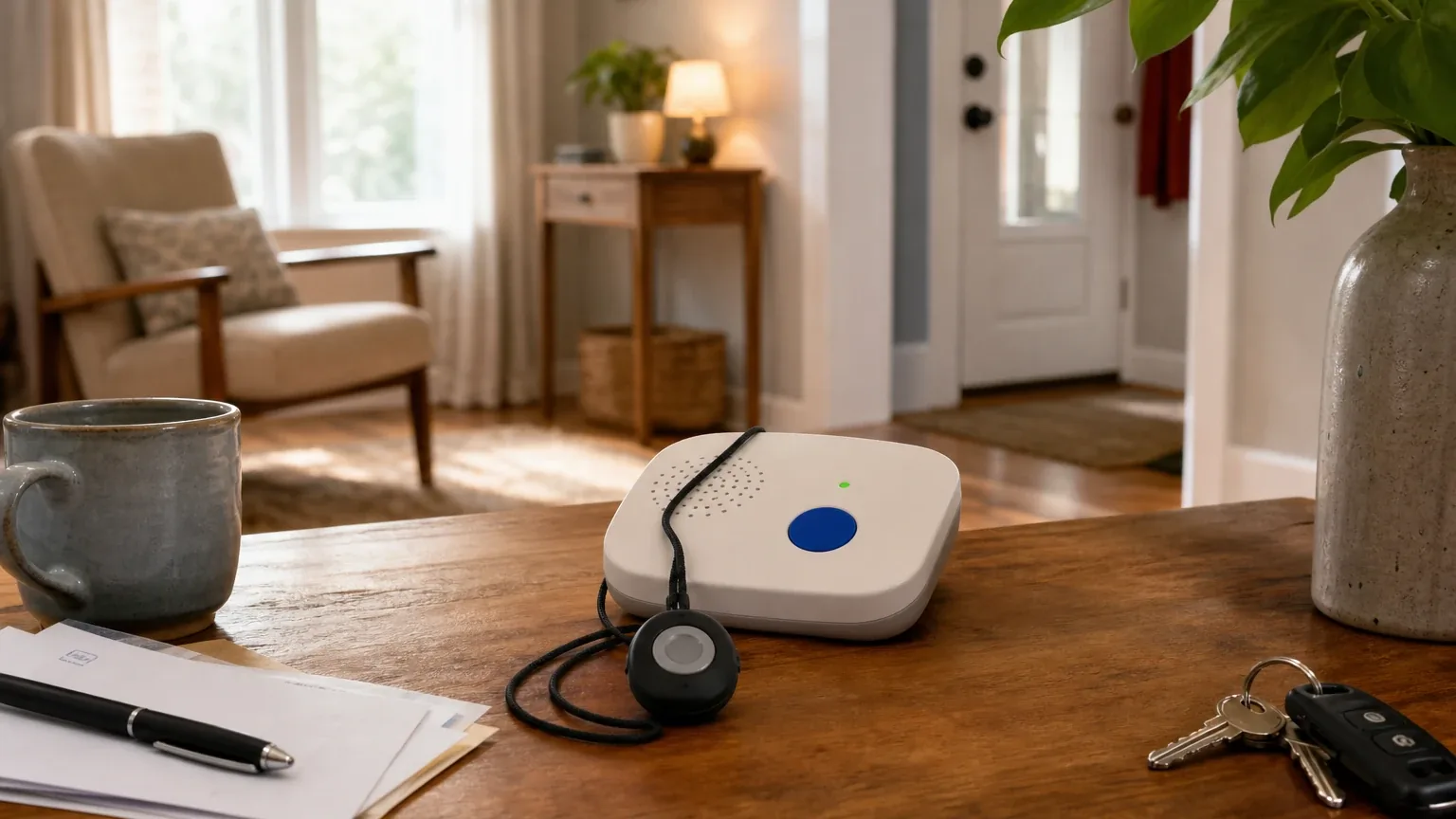
Mobile2 is a wearable pendant-style device with two-way voice communication, GPS location, a charging dock, a lanyard, and a clip [10]. It does not require a landline, a base station, or professional installation [11]. Lively describes nationwide coverage, while independent sources associate the device with Verizon's network [9].
Service tiers are consistent across most sources. Basic monitoring is $24.99 per month and Premium is $34.99 per month, with taxes and fees additional; Premium adds Lively Link family alerts, Nurse On-Call, and Care Advocate services [9]. Fall detection is an optional add-on at $9.99 per month [9].
The Mobile Plus question is a genuine open item, not a settled one. Older Lively materials describe Mobile Plus with 5Star Urgent Response, optional fall detection, and no-contract service, but those materials also use GreatCall and 5Star terminology that may not reflect current branding [7]. Buyers who specifically want Mobile Plus should confirm availability before ordering.
What the AI Platforms Agreed About
Questions This Section Answers
- What do AI platforms agree on about Lively for cellular home monitoring without a landline?
- Does Lively require a landline or base station for home monitoring?
Agreement was strong on the fundamentals and mixed on the details.
Unanimous or near-unanimous points:
- No landline or base station is required. Every platform that addressed setup described an all-in-one wearable with a charging dock rather than a home base station [13].
- Setup is simple. Activation happens online or by phone, with no professional installation [13].
- Fall detection is optional and costs extra. Multiple platforms independently reported the $9.99 per month add-on [15].
- Cancellation is flexible. Lively states there are no long-term contracts and no cancellation fees, and service can be canceled by phone or online [17].
- Cellular coverage is the gating factor. The device works only where the underlying network reaches, and coverage is not available everywhere [20].
The agreement is about product design and contract structure. It is not evidence of product quality, and no platform supplied independent verification of Lively's coverage claims or fall-detection accuracy.
Where the AI Platforms Disagreed or Were Uncertain
Questions This Section Answers
- How long does the Lively Mobile2 battery actually last between charges?
- Which cellular network does Lively use, and how much does the monthly plan really cost?
Four conflicts are material enough to affect a purchase decision.
Battery life. Estimates ranged from roughly 32 hours to 80 hours. Grok cited up to 80 hours of standby from a Lively user guide (grok:0). SafeWise and Google's research reported up to 40 hours (grok:18, google:source_safewise_review). The Senior List reported about 32 hours (google:source_seniorlist_review). Google's research noted promotional claims of up to 48 hours against independent testing closer to 32 to 40 hours (google:source_seniorliving_pricing). Anthropic reported "up to 3 days" from internal testing [21]. Actual duration depends on signal strength, GPS use, temperature, and call frequency.
Network. Lively describes nationwide coverage [22]. Independent sources associate the device with Verizon (grok:16, google:source_safehome_pricing). DeepSeek's research stated AT&T, which conflicts with the Verizon references and was not corroborated elsewhere [23]. The exact carrier arrangement should be confirmed directly.
Pricing. Core prices were consistent — $24.99 Basic, $34.99 Premium, $9.99 fall detection — but the surrounding costs were not. Device price appeared as $119.99 on the current official page, $79.99 in some independent reporting, and a $79.99–$119.99 range elsewhere [24]. A $35 activation fee was reported by multiple sources but is not clearly displayed on the current product page [22]. Kimi reported historical pricing near $49.99 per month with fall detection, which does not match current figures and reflects an older pricing era (kimi:tmc-rates).
Product lineup. Mobile Plus versus Mobile2 remains unresolved. Several platforms recommended Mobile Plus; current retail pages document Mobile2 [25].
Use-Case-Specific Features and Capabilities
Questions This Section Answers
- Does Lively Mobile2 fall detection work if the device is worn on a belt clip instead of a lanyard?
- Can caregivers track location and alerts through the Lively Link app?
Cellular connectivity. Mobile2 operates on 4G LTE and requires no landline or home Wi-Fi [27]. It works inside and outside the home wherever the network reaches, which is the core advantage for apartment and condo residents [29].
Setup. The package includes the device, charging dock, lanyard, clip, and guides. Activation is online or by phone with no installation visit [29].
Fall detection. Optional at $9.99 per month. Lively states the device uses a built-in accelerometer and patented algorithms and can automatically call Urgent Response after a detected fall, while also warning that it may not detect every fall [31]. Fall detection requires the device to be worn on the specialized lanyard around the neck; it is disabled when the device is worn on the belt clip [33].
Two-way communication and response. The device has a built-in speaker and microphone. Forbes testing documented response within about 15 seconds with clear two-way audio [35]. Urgent Response agents are described as U.S.-based and trained in emergency procedures [36].
GPS and caregiver tools. The device includes GPS location tracking, and the Lively Link app provides family alerts and location visibility [30].
Durability. Mobile2 carries an IPX7 water-resistance rating, suitable for shower use and incidental water exposure; the charging dock is not waterproof [27].
Usability limits. Independent testing reported no user volume control and a relatively bulky form factor [38]. The device does not include a separate wrist wearable as standard [37].
Pricing, Fees, Contracts, and Ongoing Costs
Questions This Section Answers
- How much does Lively Mobile2 cost per month, and what activation or restocking fees apply?
- Can a buyer cancel Lively service at any time without a penalty or partial-month refund?
Core pricing was consistent across most sources, but total first-year cost was not.
| Item | Amount | Source |
|---|---|---|
| Mobile2 device | $119.99 (official page); $79.99 reported elsewhere | [39] |
| Basic monitoring | $24.99/month plus taxes and fees | [40] |
| Premium monitoring | $34.99/month plus taxes and fees | [40] |
| Fall detection add-on | $9.99/month | [40] |
| Activation fee | $35 reported; not clearly displayed on current product page | [40] |
| Protection plan | $2.50/month per device | [40] |
| Paper billing surcharge | $5.00/month reported | (google:source_seniorliving_pricing) |
| Shipping | $8 economy or $20 expedited reported; free above a stated threshold | [40] |
| Restocking fee | $10 reported on returns within the 30-day window | (google:source_seniorlist_costs) |
Lively states plans include a $5 monthly paperless-billing discount, which is the inverse of the paper-billing surcharge reported elsewhere [40].
Contract terms are the clearest part of the offer. Lively states there are no long-term contracts and no cancellation fees, and service can be canceled by phone or through an online form [44]. Cancellation during a billing cycle takes effect at the end of that cycle, and partial-month refunds are not provided [44]. The return policy provides a 30-day window subject to like-new condition, usage limits, return authorization, and possible restocking or nonrefundable shipping charges [40].
Pricing confidence is moderate at best. Official pages disclose core prices but do not clearly expose all taxes, regulatory fees, activation-fee conditions, or current Mobile Plus commercial terms [40].
Best Suited For
Questions This Section Answers
- Who gets the most value from Lively Mobile2 for cellular home monitoring?
- Is Lively a good fit for a senior who wants one device usable inside and outside the home?
Lively fits best when the buyer wants a portable cellular alert device rather than a fixed in-home system.
- Apartment or condo residents replacing a landline with a portable cellular alert device [47].
- Seniors who want one device usable both inside and outside the home [49].
- Caregivers who prioritize simple setup, U.S.-based response personnel, GPS, and optional fall detection [49].
- Buyers who want month-to-month service and a 30-day return opportunity [52].
- Households with strong Verizon coverage in the specific rooms and travel routes the user frequents (grok:16, google:source_safehome_pricing).
Probably Not Best Suited For
Questions This Section Answers
- Who should not choose Lively for cellular home monitoring?
- Is Lively a poor fit for a senior who may forget to charge a wearable device daily?
Several buyer profiles are a poor match.
- Homes or travel areas without dependable Lively cellular coverage. The device will not function normally without network access [54].
- Users unlikely to charge a wearable regularly. Battery estimates range from about 32 hours to 3 days, and Google's research noted manufacturer guidance to charge daily (google:source_elderlife_review, google:source_seniorlist_review).
- Buyers needing a dedicated base station, multiple room wall buttons, or a long-life non-rechargeable pendant [56].
- Buyers who specifically require a current Mobile Plus model, because current official retail pages primarily identify Mobile2 [57].
- Users uncomfortable wearing a device on a neck lanyard, since fall detection depends on it [59].
- Buyers who need whole-home security monitoring such as door and window sensors, cameras, or smoke and CO integration [61].
When Another Option May Be Better
Questions This Section Answers
- What is a better alternative to Lively for a buyer who needs lower monthly monitoring costs?
- When should a buyer choose a base-station cellular system instead of Lively Mobile2?
Three situations point elsewhere.
Lower monthly cost. Dedicated cellular home monitoring from security-focused providers was reported at $9.99 to $21.99 per month for UL-listed professional monitoring, with some plans starting around $15.95 to $16.95 per month and no contracts [62]. These are home security monitoring plans rather than senior medical alert services, so the comparison is about price and monitoring infrastructure, not equivalent emergency-response features.
Fixed in-home coverage. A buyer who wants wall buttons in multiple rooms, a base station with its own backup battery, or a long-life non-rechargeable pendant should look at traditional in-home systems instead [63].
Coverage mismatch. A buyer in an area where another carrier has materially better coverage than Verizon should compare providers before committing [64].
For a broader view of how this device compares with other cellular options, see the Cellular Home Monitoring consensus index, which aggregates the same platform research across the category.
Questions to Verify Before Buying
Questions This Section Answers
-
What should a buyer confirm with Lively about coverage and total cost before signing up?
-
What battery and fall-detection details should be verified before ordering a Lively Mobile2?
-
Does the exact apartment, building interior, elevator, basement, and usual travel route have reliable Lively coverage [65]?
-
Is Mobile Plus currently available for new customers, and if so, what are its current device price, battery specification, warranty, and supported plan names [66]?
-
What exact activation, regulatory, administrative, shipping, restocking, and tax charges will appear on the order [65]?
-
What battery duration should be expected with fall detection active, frequent two-way calls, weak signal, and GPS use (grok:0, grok:18, google:source_seniorlist_review)?
-
Is fall detection enabled immediately, and can it be removed or re-added without changing the underlying plan [65]?
-
What happens if the user presses the button repeatedly, cannot speak, or is inside a concrete or metal building [69]?
-
Does Lively provide a replacement device or prorated credit if the device fails or the battery degrades [65]?
-
Can caregivers access location, battery, and alert information through the current Lively Link app, and what permissions or fees are required (google:source_safewise_review, google:source_forbes_review)?
-
What are the current return-condition, restocking-fee, and usage-limit rules for an activated Mobile2 [65]?
-
Which emergency providers or contacts are called first, and what information must be kept current in the emergency profile [69]?
Final AI Consensus Verdict
Lively Mobile2 is a good, practical fit for cellular home monitoring when the buyer wants a simple portable cellular alert device, optional fall detection, caregiver connectivity, and flexible cancellation. Six of seven included platforms rated it good or strong for this use case; one rated it uncertain because it could not verify current pricing or product availability.
The consensus is strongest on design and contract terms: no landline, no base station, simple setup, optional fall detection, and month-to-month cancellation. It is weakest on battery life, network identity, total cost, and the Mobile Plus question. Those are documentation gaps and genuine conflicts, not settled facts.
The practical takeaway: confirm coverage at the exact address, get an itemized first-year cost in writing, ask which model is actually being sold, and set realistic battery expectations before ordering. Buyers who need fixed in-home coverage, multi-room wall buttons, or the lowest possible monthly monitoring cost should compare dedicated cellular home monitoring providers first.
How This Review Was Produced
This review evaluates Lively only for the Cellular Home Monitoring use case. It is not a broad company review.
Seven AI platforms were configured for this study, and all seven produced fit-research responses. Three of the seven named Lively during the ranking stage: deepseek (rank 3), grok (rank 3), and perplexity (rank 7). The remaining four platforms evaluated Lively's fit without naming it in their ranking output.
Each platform response was treated as platform-reported evidence rather than independently verified fact. Company-owned citations materially outnumber independent citations in the supplied research, so Lively's own claims about coverage, battery, and service are labeled as company claims throughout. Where platforms disagreed, the conflict is described rather than resolved.
Methodology Limitations
- The authoritative research date for this study is 2026-09-27. One platform reported a research date of 2026-01-15, which differs from the run date; platform-reported dates are provenance metadata and do not independently prove freshness.
- Platform mentions count only platforms that named Lively during ranking discovery. All seven included platforms evaluated fit, but four did not name Lively in their ranking output.
- Conflicting product names, pricing, and capabilities were not resolved by guessing. Buyers should verify the conflicts described above directly with Lively.
- The supplied URLs were collected from platform responses and were not independently validated by the writer stage.
- Company-owned citations materially outnumber independent citations. Company claims are not described as independently verified anywhere in this review.
- One platform's research could not access official Lively pages and reported historical pricing that does not match current figures; those figures are labeled as historical and unverified.
- One platform reported AT&T as the carrier, which conflicts with multiple Verizon references. This conflict is disclosed rather than resolved.
- Citations are platform-reported evidence, not independently verified facts. No-search or limited-search model claims require verification before being treated as current facts.
- Official-site retrieval failed for one or more mentions and that some fetched domains were not corroborated by brand identity metadata. Those sources were not used as official identity signals.
- No platform supplied independent verification of Lively's coverage claims, fall-detection accuracy, or response-time consistency.
Explore more medical alert systems guidance in the category directory.
Sources
Company-Owned Sources
- No Contract M2M Cellular UL Central Station Monitoring From $14.95: https://safehomecentral.com/affordable-no-contract-alarm-monitoring-from-8-95-same-day-switch/m2m-cellular-ul-central-station-monitoring-from-14-95-2/
- Upgrade Your Existing Hardwired Panel To Cellular Using Alula: https://safehomecentral.com/alarm-monitoring/upgrade-your-hardwired-alarm-panel-with-cellular-monitoring-using-alula-and-safehomecentral-com/
- Prima Cellular and WIFI Alarm Monitoring: https://safehomecentral.com/prima-cellular-and-wifi-alarm-monitoring/
- Affordable Cellular No Contract Self-Alarm Monitoring From $13.95: https://safehomecentral.com/product/self-interactive-basic-home-security-self-alarm-monitoring-monthly/
- No Contract Uplink Cellular UL Central Station Monitoring from $16.95: https://safehomecentral.com/product/uplink-cellular-alarm-monitoring-monthly/
- Change or cancel your plan | Lively: https://shop.lively.com/blogs/help-center/change-or-cancel-your-plan
- Fall Detection: https://shop.lively.com/blogs/help-center/fall-detection
- Lively Mobile Plus - User guide: https://shop.lively.com/blogs/help-center/lively-mobile-plus
- Lively Mobile2 and Safety Devices Terms & Conditions: https://shop.lively.com/blogs/legal-pages/lively-mobile2-and-safety-devices-terms-conditions
- Medical Alert Plans for Seniors | Lively: https://shop.lively.com/pages/medical-alert-compare-plan
- Lively Mobile2 All-in-One Medical Alert: https://shop.lively.com/products/lively-mobile2-all-in-one-medical-alert
- Phone & SIM Customer Agreement - Lively: https://www.lively.com/legal/customer-agreement/
- All-new: The Highest Standard in Mobile Medical Alert: https://www.lively.com/static/09e9194d0301e82ca92a37612d158a6f/lively-mobile-plus-leads-brochure.pdf
- Alarm Systems Costs | Lowest Rates | The Monitoring Center: https://www.themonitoringcenter.com/products-and-services/alarm-monitoring-services-and-rates/
- Official pricing and terms source: https://shop.lively.com/
- Official pricing and terms source: https://shop.lively.com/blogs/legal-pages/terms-of-use
- Official pricing and terms source: https://shop.lively.com/policies/terms-of-service
Additional AI research evidence69 records
- AI research evidence record deepseek:c5
- AI research evidence record perplexity:c1
- AI research evidence record openai:c1
- AI research evidence record anthropic:c3
- AI research evidence record deepseek:c3
- AI research evidence record deepseek:c4
- AI research evidence record openai:c8
- AI research evidence record openai:c9
- AI research evidence record openai:c1
- AI research evidence record openai:c2
- AI research evidence record anthropic:c3
- AI research evidence record perplexity:c1
- AI research evidence record openai:c2
- AI research evidence record anthropic:c3
- AI research evidence record openai:c1
- AI research evidence record perplexity:c1
- AI research evidence record openai:c6
- AI research evidence record openai:c7
- AI research evidence record perplexity:c4
- AI research evidence record anthropic:c8
- AI research evidence record anthropic:c3
- AI research evidence record openai:c1
- AI research evidence record deepseek:c5
- AI research evidence record openai:c9
- AI research evidence record openai:c8
- AI research evidence record perplexity:c1
- AI research evidence record anthropic:c7
- AI research evidence record anthropic:c8
- AI research evidence record openai:c2
- AI research evidence record anthropic:c3
- AI research evidence record openai:c4
- AI research evidence record anthropic:c2
- AI research evidence record anthropic:c1
- AI research evidence record anthropic:c4
- AI research evidence record anthropic:c6
- AI research evidence record anthropic:c5
- AI research evidence record openai:c1
- AI research evidence record openai:c3
- AI research evidence record openai:c9
- AI research evidence record openai:c1
- AI research evidence record perplexity:c1
- AI research evidence record anthropic:c3
- AI research evidence record perplexity:c4
- AI research evidence record openai:c6
- AI research evidence record openai:c7
- AI research evidence record perplexity:c5
- AI research evidence record openai:c1
- AI research evidence record perplexity:c3
- AI research evidence record openai:c2
- AI research evidence record anthropic:c3
- AI research evidence record anthropic:c5
- AI research evidence record openai:c6
- AI research evidence record openai:c7
- AI research evidence record openai:c6
- AI research evidence record anthropic:c8
- AI research evidence record openai:c1
- AI research evidence record openai:c8
- AI research evidence record openai:c9
- AI research evidence record anthropic:c1
- AI research evidence record anthropic:c4
- AI research evidence record deepseek:c5
- AI research evidence record deepseek:c2
- AI research evidence record openai:c1
- AI research evidence record deepseek:c5
- AI research evidence record openai:c1
- AI research evidence record openai:c8
- AI research evidence record openai:c9
- AI research evidence record anthropic:c3
- AI research evidence record openai:c6
Independent Sources
- Lively Medical Alert Systems Review: The Best Tech-Forward Options - ElderLife Financial: https://vertexaisearch.cloud.google.com/grounding-api-redirect/AUZIYQERsiPvPouzbUDfEzWwg7SxKlhBORVH4kzWcpkTg3SgQsIHWO8j-IQyUMcqzEWScYAiVhZdiSw6Frn3zN1hTOQ7dabPxi6xk12dBV3ArT1qIxqmEQkpnpsAdPKAodbup0Ymaf-1PIoOX12daPoX_vT23KF_61iPvZFTfD2VseEIhJVx0quB7_BxgQn50LoBpNmYWT1V_nsfi4EeCWZhSuPzyrCE
- Lively Medical Alert: Costs, Systems and Plans - The Senior List: https://vertexaisearch.cloud.google.com/grounding-api-redirect/AUZIYQFHeUUJ8e8cWC5HASfQn7Go2vAxQyMq7ZUu94ct_hT86WiPCcRJ80FvkTL1yEKjftlqH9pSGiU6-YgE-GZ3U3mmdlkDEkFSSua_5vhRP1vPAmVsWpE0ifMSKFW1rhGO_x1ZQPRanaMXMQB5UgE2eMf35sMcIA==
- Lively Senior Phones & Medical Alert Systems Pricing 2026 - SafeHome.org: https://vertexaisearch.cloud.google.com/grounding-api-redirect/AUZIYQFhYK7MCkXpgYJK5eyuYXQ2nrGwl5B-anJ51mxxQ8comXJBQKucJqCpZZ1rFUEqzxWDBZOL-Gk2IiQboVm_SDVMHwB7lCgxmBFeKWE3lSeUvXkq1CIs1Mn_UQn5TE-2krCo_OYQeedBVtavLb_kOvw=
- Lively Medical Alert System Cost & Pricing in 2026 - SeniorLiving.org: https://vertexaisearch.cloud.google.com/grounding-api-redirect/AUZIYQFvfuHK2fNsgQfLCwuY0wIbfWnSv75fFelqXoAJRa-H7IFH9Hdu7ytxEsrqcm6Mened0ROPIPuNlJb3BJyC71s5aTnmlil5nMNcvjgjRJkGZwWdO2xQ1TQGbICv3x3MbOaKTdE17NKZRtReKAkC-fZE_XGe
- I Tried Lively Mobile2 Medical Alert System: Here's My Review - Forbes: https://vertexaisearch.cloud.google.com/grounding-api-redirect/AUZIYQHyX0gwB3owlnivc1Eg-QtI1--qHWxLI496QIqNBk91c2CoCfQbpWPxIzTx8vVsxeSkrmoU-RP2cWCjaajlsy6IBzrUbkXnNoxSGS4OvE5BJJN3tcNOUO1Qp7QKKqGFDM0v9zLlgpbzDY7P6V7glLN7KHJu3O14p_ZcEptIE7mE7n8ntUc=
- I Tried Lively Mobile2 Medical Alert System – Forbes Health: https://www.forbes.com/health/medical-alert-systems/lively-mobile-plus-review/
- Lively Medical Alert Review 2025: We Tried & Tested High-Tech and User-Friendly Features: https://www.ncoa.org/adviser/medical-alert-systems/lively-medical-alert-review/
- Lively Medical Alert System Review 2026: Tested and Reviewed: https://www.ncoa.org/product-resources/medical-alert-systems/lively-review/
- Lively Mobile2 Medical Alert │ 2026 Review: https://www.safewise.com/senior-safety/medical-alerts/lively/
- Best Cellular Home Security Systems of 2026 | Security.org: https://www.security.org/home-security-systems/best/cellular/
- Lively Medical Alert System Cost & Pricing in 2026: https://www.seniorliving.org/medical-alert-systems/greatcall/
- Lively Medical Alert System Review 2026 - Plans, Fees: https://www.top10.com/medical-alerts/reviews/lively
Additional AI research evidence69 records
- AI research evidence record deepseek:c5
- AI research evidence record perplexity:c1
- AI research evidence record openai:c1
- AI research evidence record anthropic:c3
- AI research evidence record deepseek:c3
- AI research evidence record deepseek:c4
- AI research evidence record openai:c8
- AI research evidence record openai:c9
- AI research evidence record openai:c1
- AI research evidence record openai:c2
- AI research evidence record anthropic:c3
- AI research evidence record perplexity:c1
- AI research evidence record openai:c2
- AI research evidence record anthropic:c3
- AI research evidence record openai:c1
- AI research evidence record perplexity:c1
- AI research evidence record openai:c6
- AI research evidence record openai:c7
- AI research evidence record perplexity:c4
- AI research evidence record anthropic:c8
- AI research evidence record anthropic:c3
- AI research evidence record openai:c1
- AI research evidence record deepseek:c5
- AI research evidence record openai:c9
- AI research evidence record openai:c8
- AI research evidence record perplexity:c1
- AI research evidence record anthropic:c7
- AI research evidence record anthropic:c8
- AI research evidence record openai:c2
- AI research evidence record anthropic:c3
- AI research evidence record openai:c4
- AI research evidence record anthropic:c2
- AI research evidence record anthropic:c1
- AI research evidence record anthropic:c4
- AI research evidence record anthropic:c6
- AI research evidence record anthropic:c5
- AI research evidence record openai:c1
- AI research evidence record openai:c3
- AI research evidence record openai:c9
- AI research evidence record openai:c1
- AI research evidence record perplexity:c1
- AI research evidence record anthropic:c3
- AI research evidence record perplexity:c4
- AI research evidence record openai:c6
- AI research evidence record openai:c7
- AI research evidence record perplexity:c5
- AI research evidence record openai:c1
- AI research evidence record perplexity:c3
- AI research evidence record openai:c2
- AI research evidence record anthropic:c3
- AI research evidence record anthropic:c5
- AI research evidence record openai:c6
- AI research evidence record openai:c7
- AI research evidence record openai:c6
- AI research evidence record anthropic:c8
- AI research evidence record openai:c1
- AI research evidence record openai:c8
- AI research evidence record openai:c9
- AI research evidence record anthropic:c1
- AI research evidence record anthropic:c4
- AI research evidence record deepseek:c5
- AI research evidence record deepseek:c2
- AI research evidence record openai:c1
- AI research evidence record deepseek:c5
- AI research evidence record openai:c1
- AI research evidence record openai:c8
- AI research evidence record openai:c9
- AI research evidence record anthropic:c3
- AI research evidence record openai:c6
Other Sources
- Lively Mobile2 User Guide - Getting Started and Device Specifications: https://assets.ctfassets.net/orf4d9wgx51u/2xOJV8SigamOIvHSArcYjm/2061a0effb13a14acad4145888bf0505/lively-mobile2-user-guide.pdf
- Lively Mobile Plus User Guide - Fall Detection and Device Specifications: https://assets.ctfassets.net/orf4d9wgx51u/3lEykg6WPiF3F9BHdkSgZR/b4419b0608be561b2d5e185fb85370ae/user-guide-Lively-Mobile-plus.pdf
- Lively Mobile2 – MedGrade Device Database: https://medgrade.org/devices/lively-mobile2/
- Fall Detection for Seniors | Lively: https://shop.lively.com/pages/fall-detection
- Personal Emergency Response – Lively from Best Buy Health: https://shop.lively.com/pages/personal-emergency-response
- Lively Mobile2 Frequently Asked Questions | Lively Direct: https://www.livelydirect.com/mobile2/pers-faqs/
Additional AI research evidence69 records
- AI research evidence record deepseek:c5
- AI research evidence record perplexity:c1
- AI research evidence record openai:c1
- AI research evidence record anthropic:c3
- AI research evidence record deepseek:c3
- AI research evidence record deepseek:c4
- AI research evidence record openai:c8
- AI research evidence record openai:c9
- AI research evidence record openai:c1
- AI research evidence record openai:c2
- AI research evidence record anthropic:c3
- AI research evidence record perplexity:c1
- AI research evidence record openai:c2
- AI research evidence record anthropic:c3
- AI research evidence record openai:c1
- AI research evidence record perplexity:c1
- AI research evidence record openai:c6
- AI research evidence record openai:c7
- AI research evidence record perplexity:c4
- AI research evidence record anthropic:c8
- AI research evidence record anthropic:c3
- AI research evidence record openai:c1
- AI research evidence record deepseek:c5
- AI research evidence record openai:c9
- AI research evidence record openai:c8
- AI research evidence record perplexity:c1
- AI research evidence record anthropic:c7
- AI research evidence record anthropic:c8
- AI research evidence record openai:c2
- AI research evidence record anthropic:c3
- AI research evidence record openai:c4
- AI research evidence record anthropic:c2
- AI research evidence record anthropic:c1
- AI research evidence record anthropic:c4
- AI research evidence record anthropic:c6
- AI research evidence record anthropic:c5
- AI research evidence record openai:c1
- AI research evidence record openai:c3
- AI research evidence record openai:c9
- AI research evidence record openai:c1
- AI research evidence record perplexity:c1
- AI research evidence record anthropic:c3
- AI research evidence record perplexity:c4
- AI research evidence record openai:c6
- AI research evidence record openai:c7
- AI research evidence record perplexity:c5
- AI research evidence record openai:c1
- AI research evidence record perplexity:c3
- AI research evidence record openai:c2
- AI research evidence record anthropic:c3
- AI research evidence record anthropic:c5
- AI research evidence record openai:c6
- AI research evidence record openai:c7
- AI research evidence record openai:c6
- AI research evidence record anthropic:c8
- AI research evidence record openai:c1
- AI research evidence record openai:c8
- AI research evidence record openai:c9
- AI research evidence record anthropic:c1
- AI research evidence record anthropic:c4
- AI research evidence record deepseek:c5
- AI research evidence record deepseek:c2
- AI research evidence record openai:c1
- AI research evidence record deepseek:c5
- AI research evidence record openai:c1
- AI research evidence record openai:c8
- AI research evidence record openai:c9
- AI research evidence record anthropic:c3
- AI research evidence record openai:c6
Verify This Research
Review the study details behind this page or download the public machine-readable verification record.
- Study date
- September 27, 2026
- Platforms analyzed
- 7
- Source records
- 38
- Ranking mentions
- 3 of 7
- Platform share
- 43%
- Final consensus rank
- #8
Research trail and source mix
Configured platforms
openai, anthropic, deepseek, grok, perplexity, kimi, google
Source mix
14 independent · 18 company-owned · 6 unclear
Evidence support
22 direct · 10 partial
Important limitation
Use the run research_date as the study date. Platform-reported dates are provenance metadata and do not independently prove freshness.
Source snapshot SHA-256 bee9ef6d39029db9ed57decc883899eab5e5372238cbb3fbf2ea26d536fe1bac