
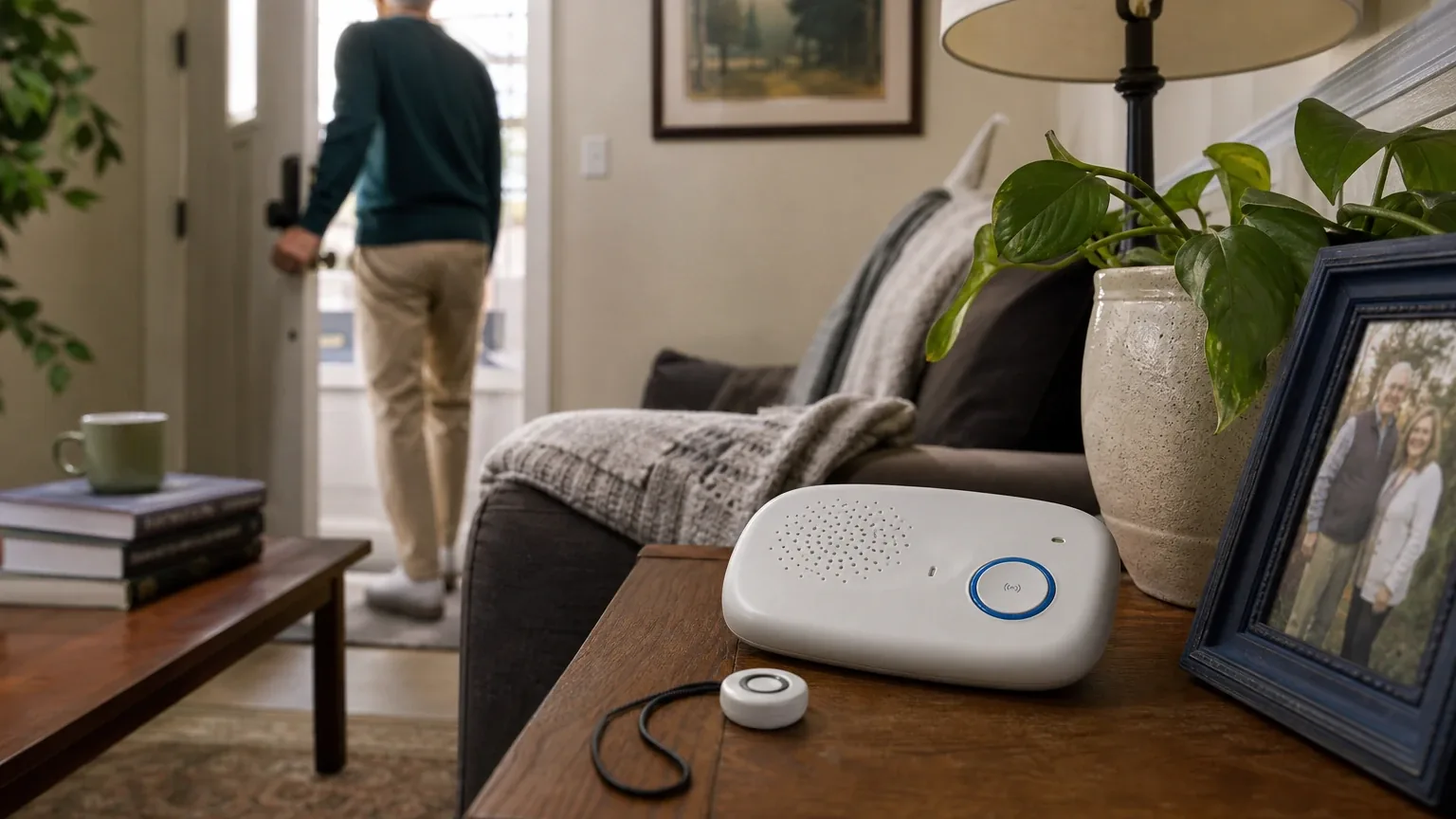
Answer Capsule
Medical Alert is a good fit for Cellular Home Monitoring when the residence has dependable cellular coverage and the buyer wants a no-landline base station with simple setup, a stated 800-foot button range, and month-to-month availability. Six of the seven platforms named Medical Alert during the ranking stage, and five of those rated it a good fit; one rated it mixed and one could not verify current 2026 details. The strongest reason to consider it is the combination of no-landline operation, optional fall detection at $10 per month, and a stated 30-hour backup battery. The main limitation is that Medical Alert does not publicly identify its cellular carrier, so address-specific coverage cannot be confirmed before purchase.
Research Snapshot
| Field | Finding |
|---|---|
| Platform mentions in ranking stage | 6 of 7 platforms (anthropic, deepseek, google, kimi, openai, perplexity) |
| Share of included platform responses | 85.7% |
| Average listed rank | 5.17 |
| Best listed rank | 4 |
| Relevant product/model/plan | Home System Cellular (also listed as Home Cellular System), with optional fall detection |
| Overall use-case fit | Good — five platforms rated good, one mixed, one uncertain |
| Research date | 2026-09-27 |
What Changed Since August 2026
Medical Alert moved up from No. 8 to No. 4, and platform mentions increased from 2 to 6. The September 2026 review describes Medical Alert's Home System Cellular in largely similar terms, so the buyer-facing substance has not materially shifted. Fall detection is still an optional add-on, now newly reported at $10 per month, while a semi-annual figure of $34.95 per month is no longer repeated. Use-case framing is broadly consistent: suitable for households without a landline or internet, with plug-in setup and month-to-month availability. The clearest buyer-relevant update concerns measured performance: the help button's practical range is described as about 200 feet, and backup battery estimates now span 32 to 60 hours. Differences between the two editions reflect what each article reports; they do not by themselves prove that the product, service, or price changed.
The August 2026 review preserves the earlier article for reference.
Why Medical Alert Qualified for This Study
Questions This Section Answers
- Why did Medical Alert qualify for a cellular home monitoring review without a landline?
- How many AI platforms named Medical Alert in the ranking stage for cellular home monitoring?
Medical Alert qualified because six of the seven included platforms named it during ranking discovery for cellular medical alert systems without a landline, and every platform that named it also evaluated it against the cellular home monitoring use case. The entity cleared the study's two-mention minimum with a wide margin, appearing in 85.7% of included platform responses.
The company sells a purpose-built cellular home base station rather than a landline system with a cellular adapter. Medical Alert's Home System is marketed as requiring no landline, with 24/7 access to help in and around the home [1]. That direct match to the use case — replacing a landline with cellular emergency monitoring in apartments, condos, and modern households — is why platforms placed it in the ranking set rather than treating it as a mobile-only or landline-only provider.
Ranking placement was mid-pack rather than top-tier. Medical Alert's average listed rank was 5.17, with a best rank of 4 and a final rank of 4. Platforms that named it: anthropic (rank 5), deepseek (rank 6), google (rank 7), kimi (rank 5), openai (rank 4), and perplexity (rank 4). One configured platform did not name the entity in the ranking stage.
This review covers Medical Alert only for Cellular Home Monitoring. It is not a broad company review, and it does not evaluate Medical Alert's mobile GPS systems, smartwatch, or landline products except where a platform raised them as an alternative.
The Product, Model, Plan, or Service Most Relevant to Cellular Home Monitoring
Questions This Section Answers
- Which Medical Alert product is the right one for cellular home monitoring without a landline?
- Does the Medical Alert Home System Cellular include fall detection, or is it a separate add-on?
The relevant offering is the Medical Alert Home System Cellular, which platforms also listed as the Home Cellular System or the Home System cellular monitoring plan. It is a plug-in in-home communicator paired with a wearable help button, and it does not require a landline or home internet connection [3].
Platforms described the same core product with slightly different names, which is a naming conflict rather than a product conflict. The recommended product strings across platforms were: Home Cellular System; Home Cellular System with optional fall detection; Home System Cellular (no landline model); Home System Cellular monitoring plan; Home System cellular plan; and Home System Cellular with optional fall detection. Buyers should confirm the exact plan name on the quote, because the public pages use both "Home System" and "Home Cellular System" language.
Stated capabilities that platforms agreed on: no landline or internet requirement, up to 800 feet of help-button range from the base unit, up to 30 hours of backup battery, two-way communication with response specialists, a waterproof wearable button available as a pendant or wristband, and optional automatic fall detection [3].
Fall detection is an add-on, not a base feature. Medical Alert lists it at an additional $10 per month [6]. Google reported that fall detection works with a dedicated fall detection pendant [7]. Medical Alert also states that fall detection does not detect 100% of all falls and that users should always push the button when they need help [8].
The Medical Alert Connect mobile app is the caregiver-facing component. Google reported that the app allows managing multiple users, receiving real-time alarm notifications, and tracking base station battery status [9]. Anthropic flagged ambiguity about whether the app is included or optional, noting that one independent source lists it as a free inclusion while primary sources do not confirm it (anthropic:src_3). That ambiguity is unresolved in the reviewed evidence.
What the AI Platforms Agreed About
Questions This Section Answers
- What do AI platforms agree on about Medical Alert for cellular home monitoring?
- Is Medical Alert's Home System Cellular really usable without a landline or internet connection?
Platforms agreed on the fundamentals of the use case. The strongest consensus points:
No landline required. Every platform that evaluated the product described it as a cellular home system that operates without a landline, internet connection, or personal cell phone [10].
Simple setup. Platforms described a plug-in base station with automatic pairing and verbal confirmation of connection. Google reported that the wearable pendant automatically pairs with the cellular base station and speaks to verbally confirm connection [13]. Deepseek described plug-and-play in-home setup requiring only power and cellular signal rather than phone-line wiring [11].
Stated 800-foot range. OpenAI, anthropic, google, and grok all reported the 800-foot help-button range figure [10]. This is a company-stated maximum, not a guaranteed outcome.
Stated 30-hour backup battery. OpenAI, anthropic, google, and grok reported the 30-hour backup battery figure [10].
Optional fall detection at $10 per month. OpenAI, anthropic, google, grok, and perplexity all reported the $10 monthly fall-detection add-on [14].
Month-to-month availability. Platforms agreed that Medical Alert advertises no long-term contracts and month-to-month billing [10].
Two-way communication and waterproof wearable. OpenAI, anthropic, and perplexity reported two-way speaker communication and a waterproof help button [10]. Medical Alert states help buttons are waterproof up to one meter of water for 30 minutes (official:C1).
Agreement here reflects consistent platform reporting, not independent verification of product quality. Most supporting citations are company-owned pages.
Where the AI Platforms Disagreed or Were Uncertain
Questions This Section Answers
- Why do AI platforms disagree about Medical Alert's pricing and cancellation terms for cellular home monitoring?
- Is Medical Alert's cellular carrier disclosed, and can a buyer verify coverage before purchase?
Platforms diverged on pricing, fees, cancellation mechanics, carrier identity, and battery verification. These are material gaps for a buyer.
Pricing. Anthropic, grok, perplexity, and google converged on $37.95 per month for monthly billing and $29.95 per month on annual billing [17]. Deepseek reported that pricing is not reliably published and that figures vary across third-party reviews, with low pricing confidence [19]. Kimi found no verified 2026 pricing at all (kimi:missing_verification_1). Medical Alert's own site states systems start at $29.95 per month and that prices vary by system, rate plan, and add-ons (official:C1).
Setup fee. Anthropic, grok, perplexity, and google reported a $99.95 one-time programming or equipment fee [17]. OpenAI's reviewed sources did not clearly display this fee, and OpenAI flagged that full annual pricing and optional-fee details were not clearly displayed in the reviewed public sources [21]. Kimi could not verify any fee structure (kimi:missing_verification_1).
Cancellation terms. Perplexity identified the sharpest conflict: Medical Alert's FAQ says there is no long-term commitment and customers can cancel at any time [22], while the support terms reference a non-refundable three-month minimum and non-refundable charges in some circumstances [23]. OpenAI reported that equipment must be returned within 30 days after termination, that monitoring charges may continue until equipment is received or a lost-unit fee is paid, and that a lost-unit fee may be up to $400 [24]. Google reported that to stop being billed, the user must cancel and physically return all leased equipment [25].
Cellular carrier. This is the most consequential unresolved question. Anthropic, deepseek, and perplexity all reported that Medical Alert does not publicly specify which carrier network powers the Home System Cellular, while competitor products explicitly state AT&T or Verizon [26]. Google reported that parent company Connect America utilizes both AT&T and Verizon LTE networks but that it is unclear from the public website whether a customer can request a specific carrier to match local signal strength [18]. Grok reported AT&T "in some reports" (grok:1). These accounts conflict and none is confirmed by a company page in the reviewed evidence.
Range in practice. Grok reported that independent testing showed roughly 200 feet of actual range against an advertised 800 feet (grok:9). No other platform reported independent range testing. This is a single-platform claim and should be treated as platform-reported rather than established.
Battery duration. OpenAI reported that the public page states up to 30 hours while the FAQ describes outage operation more generally as a limited period, and that the actual duration is not guaranteed [24]. Perplexity found no verified backup battery duration in its checked sources [27]. Kimi found no verified specification (kimi:missing_verification_1).
Equipment ownership. OpenAI reported that the reviewed public content does not clearly state whether equipment is purchased, leased, or provided under a separate plan-specific arrangement [24].
Monitoring-center claims. OpenAI reported that Medical Alert says its monitoring centers are U.S.-based, redundant, UL certified, and staffed by SIA-certified multilingual operators, but that these are company claims rather than independently verified findings [21]. Google reported that Connect America is TMA Five Diamond-certified [18]. Neither claim was independently verified in the reviewed sources.
Use-Case-Specific Features and Capabilities
Questions This Section Answers
- Does the Medical Alert Home System Cellular work in an apartment or condo with thick walls and shared building infrastructure?
- How long does the Medical Alert Home System Cellular backup battery last during a power outage?
The table below summarizes platform findings against the seven criteria used in this study. Assessments reflect platform-reported evidence, not independent testing.
| Criterion | Assessment | Platform finding |
|---|---|---|
| Cellular network coverage | Advantage, with caveats | No landline or internet needed; works in all 50 states when adequate cellular coverage exists, but carrier networks are third-party and coverage varies by building materials [28] |
| Setup simplicity | Advantage | Plug-in base station, automatic pairing, verbal connection confirmation; no phone-line wiring [30] |
| Base station signal reliability | Mixed | Advertised 800-foot range; one platform reported independent testing near 200 feet; carrier identity undisclosed (grok:9, anthropic:src_1) |
| Backup battery duration | Advantage, unverified | Stated up to 30 hours; actual duration not guaranteed and not independently verified [28] |
| Monthly monitoring fee | Advantage | $37.95 monthly, $29.95 annual billing, plus a reported $99.95 setup fee [33] |
| Fall-detection support | Neutral | Optional add-on at $10 per month; does not detect all falls [34] |
| Cancellation flexibility | Mixed | Month-to-month advertised, but equipment return required and terms reference a possible three-month minimum and non-refundable charges [36] |
For apartment and condo buyers specifically, the relevant constraints are building construction, elevator and garage coverage, and shared infrastructure. OpenAI reported that the terms state coverage can vary by building materials and other conditions, and that successful initial testing does not guarantee future connectivity [29]. OpenAI also listed verification questions covering elevators, underground parking, thick concrete walls, and outdoor areas [29]. No platform reported a residence-specific coverage checker from Medical Alert.
The subscriber carries testing responsibility. OpenAI reported that the terms require monthly testing but state the company has no obligation to monitor those tests, and that the subscriber must monitor signal strength, battery levels, and communication reliability [29].
Pricing, Fees, Contracts, and Ongoing Costs
Questions This Section Answers
- How much does Medical Alert's Home System Cellular cost per month, and is there a $99.95 setup fee?
- What fees apply if a buyer cancels Medical Alert cellular home monitoring and does not return the equipment?
Published pricing is not fully consistent across sources, and buyers should treat any single figure as unconfirmed until Medical Alert quotes the specific plan.
| Cost item | Reported amount | Source basis |
|---|---|---|
| Monthly billing | $37.95/month | (anthropic:src_3), (grok:1), [38], [39] |
| Semi-annual billing | $34.95/month | (anthropic:src_3) |
| Annual billing | $29.95/month | (anthropic:src_3), (grok:1), [38], [39] |
| One-time setup/programming fee | $99.95 | (anthropic:src_3), (grok:3), [38], [40] |
| Fall detection add-on | $10/month | [41], [42], (grok:1) |
| Shipping | $24.95 monthly; waived on semi-annual and annual plans | (anthropic:src_3), (grok:3) |
| Protection plan | $1/month (anthropic) to $5/month (perplexity) | (anthropic:src_3), [43] |
| Key lockbox | $2.99/month; free with annual plans | (anthropic:src_3) |
| Lost-unit fee | Up to $400 if equipment is not returned or is returned damaged | [44] |
Medical Alert's own site states systems start at $29.95 per month, that prices vary by system, rate plan, and add-ons, that free shipping applies only on semi-annual and annual plans, and that the free lockbox offer applies only on annual plans (official:C1). The site also states that promotional pricing is available only for new customers and that customers are charged the regular monthly fee after the promotional period ends (official:C1).
On contracts, Medical Alert advertises monthly, month-to-month plans with no long-term contract [45]. The conflicting evidence is on cancellation mechanics. Perplexity reported that the support terms reference a non-refundable three-month minimum in some cases [43]. OpenAI reported a 30-day equipment return requirement after termination, continued monitoring charges until equipment is received or a lost-unit fee is paid, and a possible lost-unit fee up to $400 [44]. Google reported that billing continues until all leased equipment is physically returned [47]. Grok reported a 30-day money-back or prorated refund option, while noting that refund details differ slightly between sources (grok:11).
OpenAI also reported that the product page says there are no hidden fees while the subscriber terms allow a possible lost-unit fee and additional charges for optional equipment or features, and that these statements concern different fee categories and should be reconciled before purchase [45].
Best Suited For
Questions This Section Answers
- Who is Medical Alert's Home System Cellular best suited for in an apartment or condo without a landline?
- Is Medical Alert a good choice for a caregiver who wants app-based battery and alarm notifications?
Medical Alert is best suited for seniors and caregivers replacing a landline with cellular in-home monitoring in apartments, condos, and modern households without a landline or home internet [48].
Platforms converged on four buyer profiles:
Households without a landline or home internet. The system does not require either, and it does not require a personal cell phone plan to function [48].
Buyers who want simple plug-in setup. Google reported automatic pairing with verbal connection confirmation, which platforms described as accessible for non-technical users [50].
Buyers prioritizing month-to-month availability and optional fall detection. Medical Alert advertises no long-term contracts, and fall detection is available as a $10 monthly add-on [48].
Caregivers who want app access. Google reported that the Medical Alert Connect app supports real-time alarm notifications and base station battery tracking [54]. Anthropic flagged that whether the app is included or optional is ambiguous in the reviewed sources (anthropic:src_3).
Buyers comfortable with a stated 800-foot in-home range and willing to verify cellular coverage at their specific address before purchase are the best match [55].
Probably Not Best Suited For
Questions This Section Answers
- Who should not choose Medical Alert for cellular home monitoring without a landline?
- Is Medical Alert a poor fit for a buyer who needs guaranteed cellular connectivity or verified performance data?
Medical Alert is probably not the best fit for buyers in homes with weak or inconsistent cellular coverage, because the system depends on third-party carrier networks and Medical Alert does not publish a residence-specific coverage checker [56].
It is also a weak fit for these buyer situations:
Buyers requiring verified multi-carrier redundancy or a guaranteed emergency connection. OpenAI reported that the terms disclaim responsibility for delays, interruptions, degradation, or failures caused by cellular networks [56]. Kimi could not confirm multi-carrier redundancy (kimi:missing_verification_1).
Users who spend substantial time away from home. A mobile GPS system may be more appropriate; the home base station has no location use outside the home [56].
Buyers who need fully transparent annual pricing, equipment-return fees, or cancellation procedures before purchase. Pricing varies across sources, the setup fee is not consistently disclosed, and cancellation terms conflict between the FAQ and the support terms [58].
Large homes, estates, or properties with detached buildings. The stated 800-foot range is shorter than competitor systems that platforms reported at 1,000 to 1,400 feet (anthropic:src_6, anthropic:src_7, anthropic:src_1).
Buyers who want the longest backup battery. The stated 30 hours is shorter than competitor figures platforms reported at 32 to 60 hours (anthropic:src_4, anthropic:src_6, anthropic:src_1).
Buyers who want to avoid upfront fees. The reported $99.95 setup fee is higher than competitors that platforms described as charging no activation fee (anthropic:src_3, anthropic:src_6).
When Another Option May Be Better
Questions This Section Answers
- What is a better alternative to Medical Alert if the buyer needs more than 800 feet of help-button range?
- When should a buyer choose a mobile GPS medical alert system instead of Medical Alert's cellular home system?
Another option may be better in five specific situations that platforms identified.
When the buyer needs longer range. Anthropic reported that LifeFone offers up to 1,300 feet, Bay Alarm Medical 1,000 feet, and Medical Guardian 1,400 feet, all exceeding Medical Alert's stated 800 feet (anthropic:src_6, anthropic:src_5, anthropic:src_7).
When the buyer needs a longer backup battery. Anthropic reported competitor figures of 32 to 60 hours against Medical Alert's stated 30 hours (anthropic:src_4, anthropic:src_6).
When the buyer wants to avoid setup fees. Anthropic reported that LifeFone and MobileHelp offer no activation fees versus Medical Alert's reported $99.95 (anthropic:src_6, anthropic:src_3).
When the buyer needs to verify cellular coverage before committing. Anthropic reported that competing services such as Bay Alarm and Vital Link explicitly mention pre-installation verification, while Medical Alert's carrier identification is unclear (anthropic:src_1, anthropic:src_5).
When the buyer needs protection away from home. OpenAI and deepseek both recommended a mobile GPS medical alert system when the senior regularly leaves the home and needs protection away from the base station [60].
Kimi, which could not verify Medical Alert's 2026 details, suggested alternatives with published no-contract cellular monitoring pricing, including Prima Cellular at $14.95 to $16.95 per month and The Monitoring Center at $9.99 to $21.99 per month (kimi:safehomecentral_prima, kimi:monitoring_center_rates). Those are alarm-monitoring services rather than medical alert systems, so they are not direct substitutes for a monitored medical alert plan.
Questions to Verify Before Buying
Questions This Section Answers
- What should a buyer confirm with Medical Alert before signing up for cellular home monitoring?
- Does the $99.95 setup fee apply to annual and semi-annual Medical Alert plans?
Platforms generated overlapping verification lists. The consolidated questions below combine the highest-value items across platforms [62].
Coverage and carrier. Which cellular carrier or carriers does the specific Home System use at the buyer's exact address, and can the buyer request the stronger carrier? Can the buyer perform a live signal test from every room, bathroom, garage, balcony, and common area where the button may be used? Does the system support the building layout, including elevators, underground parking, thick concrete walls, and outdoor areas?
Total cost. What is the exact monthly and annual price including taxes, shipping, fall detection, protection plans, extra buttons, and lockbox charges? Does the $99.95 setup fee apply to monthly, semi-annual, and annual plans, or only some options? Is the Medical Alert Connect app included in all subscription plans or an additional cost?
Fall detection. Is fall detection provided through a separate pendant, and what battery life, replacement, and return costs apply? Does fall detection work if the user is outside the 800-foot range?
Cancellation and returns. What is the exact cancellation procedure, refund policy, billing cutoff, and equipment-return deadline? What lost, damaged, or unreturned-equipment fee applies to this specific order? Are there early termination fees, restocking charges, or a three-month minimum? Is there a trial period or money-back guarantee, and what are the return conditions?
Reliability and monitoring. How often should the base unit and wearable button be tested, and how are failed tests or low-battery events communicated to caregivers? What happens if the base unit loses cellular connectivity, and is there an audible or app-based connectivity warning? If a power outage extends beyond 30 hours, will the system alert the user or caregivers when the battery is depleted? Are monitoring-center certifications and service-level or response-time commitments documented in the buyer's agreement?
Equipment. Is the equipment purchased, leased, or provided under a separate plan-specific arrangement? What is the help button battery life and replacement policy?
Final AI Consensus Verdict
Medical Alert is a good fit for cellular home monitoring, with material verification gaps. Five of the seven platforms rated it good, one rated it mixed, and one could not verify current 2026 details. The consensus position is that the Home System Cellular matches the no-landline use case well — simple plug-in setup, stated 800-foot range, stated 30-hour backup battery, waterproof wearable button, two-way communication, optional fall detection at $10 per month, and month-to-month availability.
The consensus also flags three unresolved issues. First, Medical Alert does not publicly identify its cellular carrier, so address-specific coverage cannot be confirmed before purchase. Second, pricing and fee disclosure is inconsistent across sources, with a reported $99.95 setup fee that is not uniformly displayed. Third, cancellation terms conflict between the FAQ's no-commitment language and support terms referencing a possible three-month minimum and non-refundable charges.
Platform agreement does not prove product quality. Most supporting citations are company-owned pages, and no platform reported independent verification of monitoring-center certifications, response performance, or battery duration. Buyers should confirm carrier, total cost, and cancellation mechanics directly with Medical Alert before purchasing.
How This Review Was Produced
This review was produced from a structured multi-platform research run dated 2026-09-27. Seven AI platforms evaluated Medical Alert against the Cellular Home Monitoring use case using the criteria: cellular network coverage, setup simplicity, base station signal reliability, backup battery duration, monthly monitoring fee, fall-detection support, and cancellation flexibility.
Six of the seven platforms named Medical Alert during ranking discovery. Each platform returned a fit rating, a direct answer, strengths, limitations, pricing and terms, use-case findings by criterion, and a list of questions to verify before buying. This article consolidates those responses, preserves conflicts rather than resolving them, and labels company-owned claims as company claims.
The consensus index for this category is Cellular Home Monitoring, which ranks all evaluated providers for this use case. The broader medical alert systems directory covers the full category.
Methodology Limitations
Several limitations apply to this review.
Citation ownership skew. Company-owned citations materially outnumber independent citations in the supplied evidence. Company claims about monitoring-center certifications, redundancy, and response performance were not independently verified.
Platform-reported research dates differ from the run date. The authoritative run research date is 2026-09-27. Anthropic reported a research date of 2026-01-02 and deepseek reported 2026-06-11. Those platform-reported dates are provenance metadata and do not independently prove freshness.
One platform ran without search. Deepseek's research capability record shows search disabled. Its findings are platform-reported and require verification before being described as current facts.
One platform found no verified 2026 information. Kimi reported a complete absence of verified 2026 source information about Medical Alert's cellular products and terms, and rated fit as uncertain. Missing research is not evidence of disagreement or of a product defect.
URLs were not independently validated. The supplied URLs were collected from platform responses and were not independently validated by the writer stage.
source evidence qualifications. Official-site retrieval failed for one or more mentions, that one or more fetched domains were not corroborated by brand-name or site-identity metadata and were not used as official identity signals, and that a product-labeled company mention was merged using matching company-name and supplied-domain signatures.
Unresolved conflicts. Carrier identity, equipment ownership, battery duration guarantees, and cancellation mechanics remain unresolved in the reviewed evidence. Buyers should treat all pricing figures as unconfirmed until Medical Alert quotes the specific plan.
Sources
Company-Owned Sources
- Upgrade Your Existing Hardwired Panel To Cellular Using Alula: https://safehomecentral.com/alarm-monitoring/upgrade-your-hardwired-alarm-panel-with-cellular-monitoring-using-alula-and-safehomecentral-com/
- Prima Cellular and WIFI Alarm Monitoring: https://safehomecentral.com/prima-cellular-and-wifi-alarm-monitoring/
- Personal Emergency Response System - Bay Alarm Medical: https://www.bayalarmmedical.com/medical-alert-system/in-home/
- At-Home Cellular Medical Alert | LifeFone: https://www.lifefone.com/at-home-cellular
- HomeSafe | Lifeline Medical Alert System: https://www.lifeline.com/product/homesafe-cellular/
- Medical Alert Official Website: https://www.medicalalert.com/
- Automatic Fall Detection: https://www.medicalalert.com/fall-detection/
- FAQ | Frequently Asked Questions - Medical Alert: https://www.medicalalert.com/frequently-asked-questions/
- Medical Alert Connect Mobile App: https://www.medicalalert.com/medical-alert-connect-app/
- Medical Alert Home System | No Landline Needed | 24/7 Help: https://www.medicalalert.com/product/home-system-cellular/
- Medical Alert Home System | No Landline Needed | 24/7 Help: https://www.medicalalert.com/product/home-system/
- Mobile LTE Setup Guide: https://www.medicalalert.com/support/mobile-lte/
- Subscriber Terms and Conditions: https://www.medicalalert.com/support/terms/
- Support: Subscriber Terms and Conditions - Medical Alert: https://www.medicalalert.com/terms-and-conditions/
- MGHome Cellular - Medical Alert System | Medical Guardian: https://www.medicalguardian.com/medical-alert-systems/cellular-home-alert
- Alarm Systems Costs | Lowest Rates | The Monitoring Center: https://www.themonitoringcenter.com/products-and-services/alarm-monitoring-services-and-rates/
Additional AI research evidence65 records
- AI research evidence record openai:c1
- AI research evidence record perplexity:c1
- AI research evidence record openai:c1
- AI research evidence record perplexity:c1
- AI research evidence record google:1.1.4
- AI research evidence record openai:c3
- AI research evidence record google:1.3.6
- AI research evidence record openai:c4
- AI research evidence record google:1.3.2
- AI research evidence record openai:c1
- AI research evidence record deepseek:c1
- AI research evidence record perplexity:c1
- AI research evidence record google:1.1.4
- AI research evidence record openai:c3
- AI research evidence record google:1.3.6
- AI research evidence record perplexity:c4
- AI research evidence record perplexity:c3
- AI research evidence record google:1.1.5
- AI research evidence record deepseek:c2
- AI research evidence record google:2.2.1
- AI research evidence record openai:c1
- AI research evidence record perplexity:c4
- AI research evidence record perplexity:c6
- AI research evidence record openai:c2
- AI research evidence record google:1.1.1
- AI research evidence record deepseek:c1
- AI research evidence record perplexity:c1
- AI research evidence record openai:c1
- AI research evidence record openai:c2
- AI research evidence record google:1.1.4
- AI research evidence record deepseek:c1
- AI research evidence record perplexity:c1
- AI research evidence record google:1.1.5
- AI research evidence record openai:c3
- AI research evidence record openai:c4
- AI research evidence record perplexity:c4
- AI research evidence record perplexity:c6
- AI research evidence record perplexity:c3
- AI research evidence record google:1.1.5
- AI research evidence record google:2.2.1
- AI research evidence record openai:c3
- AI research evidence record google:1.3.6
- AI research evidence record perplexity:c6
- AI research evidence record openai:c2
- AI research evidence record openai:c1
- AI research evidence record perplexity:c4
- AI research evidence record google:1.1.1
- AI research evidence record openai:c1
- AI research evidence record perplexity:c1
- AI research evidence record google:1.1.4
- AI research evidence record deepseek:c1
- AI research evidence record openai:c3
- AI research evidence record perplexity:c4
- AI research evidence record google:1.3.2
- AI research evidence record openai:c2
- AI research evidence record openai:c2
- AI research evidence record deepseek:c1
- AI research evidence record perplexity:c4
- AI research evidence record perplexity:c6
- AI research evidence record openai:c2
- AI research evidence record deepseek:c1
- AI research evidence record openai:c2
- AI research evidence record perplexity:c1
- AI research evidence record google:1.1.1
- AI research evidence record deepseek:c1
Independent Sources
- Medical Alert Reviews and Pricing (third-party: https://www.consumeraffairs.com/health/medical-alert-systems/medical-alert.html
- Medical Alert Review in 2026 - The National Council on Aging (NCOA: https://www.ncoa.org/adviser/medical-alert-systems/medical-alert-review/
- The Best Medical Alert Systems in 2026: https://www.ncoa.org/product-resources/medical-alert-systems/best-medical-alert-systems/
- Medical Alert Review in 2026: https://www.ncoa.org/product-resources/medical-alert-systems/medical-alert-review/
- Medical Alert Cost, Pricing, Packages and Monthly Plans: https://www.safehome.org/medical-alert-systems/medical-alert/
- Medical Alert Review: https://www.safewise.com/senior-safety/medical-alerts/medical-alert/
- Best Cellular Home Security Systems of 2026: https://www.security.org/home-security-systems/best/cellular/
- Medical Alert Cost, Pricing, Plans and Packages in 2026: https://www.seniorliving.org/medical-alert-systems/medical-alert/
- Medical Alert by ConnectAmerica Review in 2026: https://www.seniorliving.org/medical-alert-systems/medical-alert/reviews/
- Medical Alert Cost, Pricing, Plans and Packages in 2026 - SeniorLiving.org: https://www.seniorliving.org/medical-alerts/medical-alert-cost/
- Medical Alert Review 2026 | Response System | U.S. News: https://www.usnews.com/360-reviews/services/medical-alert-system/medical-alert
Additional AI research evidence65 records
- AI research evidence record openai:c1
- AI research evidence record perplexity:c1
- AI research evidence record openai:c1
- AI research evidence record perplexity:c1
- AI research evidence record google:1.1.4
- AI research evidence record openai:c3
- AI research evidence record google:1.3.6
- AI research evidence record openai:c4
- AI research evidence record google:1.3.2
- AI research evidence record openai:c1
- AI research evidence record deepseek:c1
- AI research evidence record perplexity:c1
- AI research evidence record google:1.1.4
- AI research evidence record openai:c3
- AI research evidence record google:1.3.6
- AI research evidence record perplexity:c4
- AI research evidence record perplexity:c3
- AI research evidence record google:1.1.5
- AI research evidence record deepseek:c2
- AI research evidence record google:2.2.1
- AI research evidence record openai:c1
- AI research evidence record perplexity:c4
- AI research evidence record perplexity:c6
- AI research evidence record openai:c2
- AI research evidence record google:1.1.1
- AI research evidence record deepseek:c1
- AI research evidence record perplexity:c1
- AI research evidence record openai:c1
- AI research evidence record openai:c2
- AI research evidence record google:1.1.4
- AI research evidence record deepseek:c1
- AI research evidence record perplexity:c1
- AI research evidence record google:1.1.5
- AI research evidence record openai:c3
- AI research evidence record openai:c4
- AI research evidence record perplexity:c4
- AI research evidence record perplexity:c6
- AI research evidence record perplexity:c3
- AI research evidence record google:1.1.5
- AI research evidence record google:2.2.1
- AI research evidence record openai:c3
- AI research evidence record google:1.3.6
- AI research evidence record perplexity:c6
- AI research evidence record openai:c2
- AI research evidence record openai:c1
- AI research evidence record perplexity:c4
- AI research evidence record google:1.1.1
- AI research evidence record openai:c1
- AI research evidence record perplexity:c1
- AI research evidence record google:1.1.4
- AI research evidence record deepseek:c1
- AI research evidence record openai:c3
- AI research evidence record perplexity:c4
- AI research evidence record google:1.3.2
- AI research evidence record openai:c2
- AI research evidence record openai:c2
- AI research evidence record deepseek:c1
- AI research evidence record perplexity:c4
- AI research evidence record perplexity:c6
- AI research evidence record openai:c2
- AI research evidence record deepseek:c1
- AI research evidence record openai:c2
- AI research evidence record perplexity:c1
- AI research evidence record google:1.1.1
- AI research evidence record deepseek:c1
Verify This Research
Review the study details behind this page or download the public machine-readable verification record.
- Study date
- September 27, 2026
- Platforms analyzed
- 7
- Source records
- 27
- Ranking mentions
- 6 of 7
- Platform share
- 86%
- Final consensus rank
- #4
Research trail and source mix
Configured platforms
openai, anthropic, deepseek, grok, perplexity, kimi, google
Source mix
11 independent · 16 company-owned
Evidence support
20 direct · 7 partial
Important limitation
Use the run research_date as the study date. Platform-reported dates are provenance metadata and do not independently prove freshness.
Source snapshot SHA-256 381567d91590c565f83acd2415d1c044d5de07e3cec94967fceba7573c8e44fd
Archived editions
Browse earlier published research snapshots for this article. The latest edition remains at the current URL.