
Answer Capsule
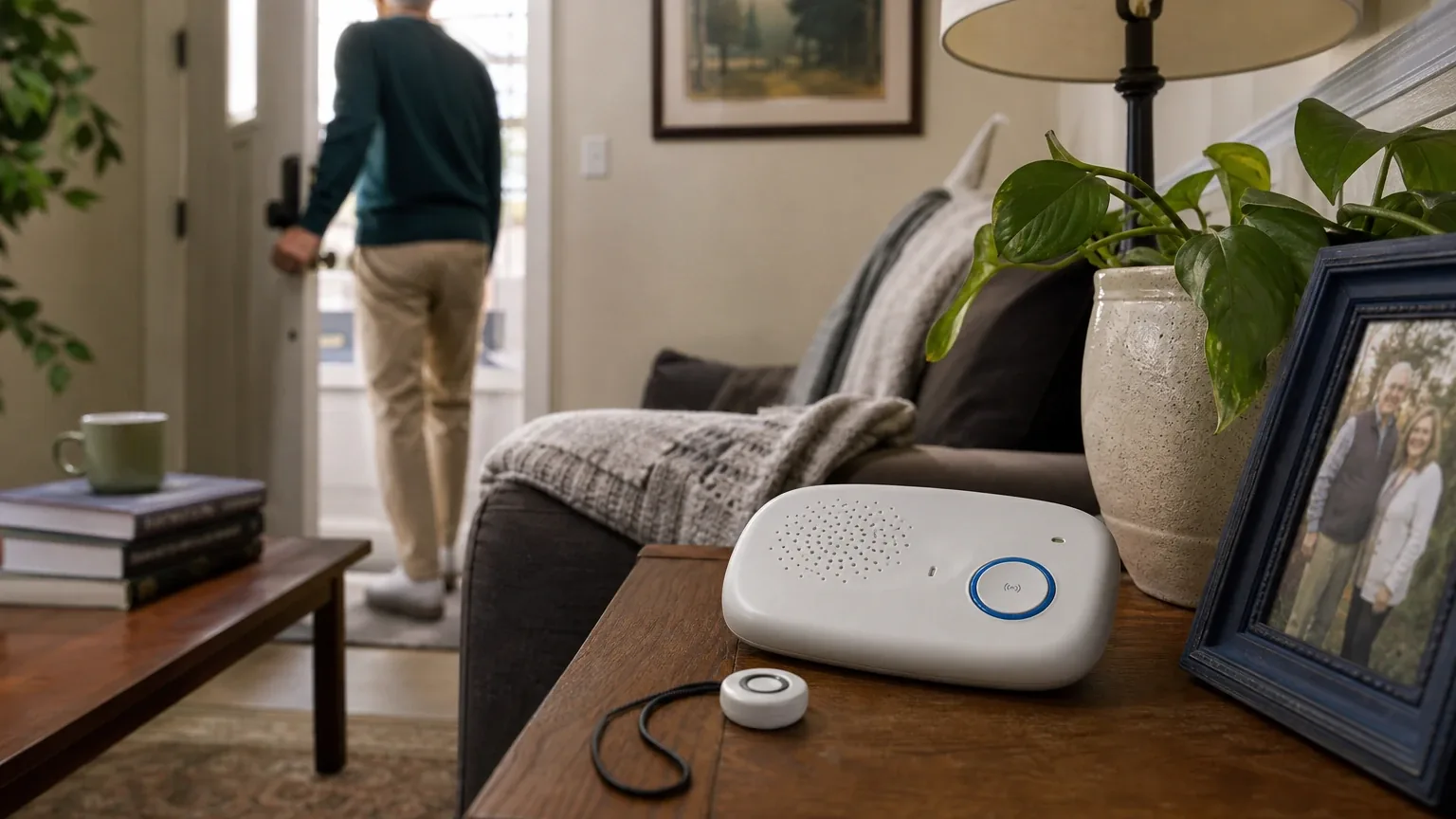
Medical Alert Home System is a good fit for seniors and caregivers replacing a landline with cellular in-home monitoring, provided AT&T coverage is verified at the specific address. Four of the seven platforms in this study named it during the ranking stage (57% of included platform responses), with an average listed rank of 3.75 and a best rank of 2. Its strongest advantage is a no-landline, no-internet base station with an advertised 800-foot wearable range, up to 30-hour backup battery, optional fall detection, and no long-term contract. The main limitation is conflicting public information: pricing, setup fees, trial and refund terms, and real-world range differ across sources, and the system is home-only with no GPS.
Research Snapshot
| Field | Detail |
|---|---|
| Platform mentions in ranking stage | 4 of 7 platforms (anthropic, kimi, openai, perplexity) |
| Share of included platform responses | 57% (0.57) |
| Average listed rank | 3.75 |
| Best listed rank | 2 (anthropic, perplexity) |
| Relevant product/model/plan | Medical Alert Home System – Cellular, preferably the annual Home Cellular plan with optional fall detection |
| Overall use-case fit | Good (six platforms rated good or strong; one rated mixed) |
| Research date | 2026-11-10 |
What Changed Since September 2026
Medical Alert Home System remained at No. 4, and platform mentions decreased from 6 to 4. The November 2026 review keeps Medical Alert Home System as a good fit for landline-free cellular monitoring, but it is now described far more carefully. The current edition treats carrier coverage, pricing, setup fees, trial and refund terms, response time, and real-world range as open conflicts rather than settled facts, and it no longer assumes the carrier is undisclosed: independent sources now point to AT&T coverage that must be verified at the address. Fall detection at $10 per month is no longer repeated, while a $34.95 monthly figure is newly reported. Reported battery life and range figures also shifted, with wider independent range testing noted. Recommended configuration is unchanged. Differences between the two editions reflect what each article reports; they do not by themselves prove that the product, service, or price changed.
The September 2026 review preserves the earlier article for reference.
Why Medical Alert Home System Qualified for This Study
Questions This Section Answers
- Why did Medical Alert Home System qualify for a cellular home monitoring ranking when it is a home-only system?
- Does Medical Alert Home System meet the no-landline requirement that defines this cellular home monitoring category?
Medical Alert Home System qualified because it directly addresses the defining requirement of this category: emergency monitoring without a landline or home internet connection. The official product page states the Home System operates through a cellular network and requires neither a landline nor internet [12]. Independent reviewers describe it as beginner-friendly and simple to set up, which matches the target buyer replacing a landline in an apartment, condo, or modern household [18].
It also cleared the study's minimum-mention threshold. Four of the seven platforms named it during ranking discovery, and it appeared as high as second on two platforms (anthropic and perplexity). The remaining three platforms (deepseek, google, grok) evaluated the entity's fit but did not name it in the ranking stage, so they are excluded from the mention count.
The system's advertised feature set maps onto the category criteria: cellular operation, self-installation, an advertised 800-foot wearable range, up to 30-hour backup battery, optional fall detection, a published monthly monitoring fee, and no long-term contract [12]. Those are the reasons it entered the study; whether it performs as advertised is covered in later sections.
The Product, Model, Plan, or Service Most Relevant to Cellular Home Monitoring
Questions This Section Answers
- Which Medical Alert Home System plan should a buyer choose for cellular home monitoring without a landline?
- What equipment comes with the Medical Alert Home System cellular package?
The relevant product is the Medical Alert Home System in its cellular configuration, sold with monthly, semiannual, or annual billing and an optional fall-detection add-on. The official package includes an in-home communicator (base station), a help button, and a manual, and the system is self-installed [12]. The help button is waterproof and available as a pendant or wristband [6].
The annual Home Cellular plan is the version most platforms point to as the best-value configuration, because it carries the lowest effective monthly rate and includes free ground shipping and a free lockbox [12]. Monthly billing is available with no long-term commitment [13].
Platforms used slightly different product names for the same offering, including "Home System Cellular," "HOME Emergency Medical Alert System – Cellular," and "Home System with the cellular option." These appear to describe the same cellular Home System rather than distinct products, but the naming is not standardized across sources and should be confirmed at checkout.
What the AI Platforms Agreed About
Questions This Section Answers
- What do AI platforms agree the Medical Alert Home System does well for cellular home monitoring?
- Do AI platforms agree that Medical Alert Home System works without a landline or internet connection?
The platforms broadly agreed on the core capabilities. All seven described a cellular home system that needs no landline, and the official page confirms no landline or internet requirement [12]. That is the strongest and most consistent finding in the study.
They also agreed on several supporting points:
- Setup simplicity. Multiple independent reviews describe easy, beginner-friendly setup and testing [18].
- Backup battery. The official specification is up to 30 hours of base-unit backup during a power outage [12].
- Optional fall detection. Automatic fall detection is an add-on, not standard, and the company states it does not detect 100% of falls [10].
- No long-term contract. The official page and independent reviews agree there is no long-term contract and monthly billing is available [12].
- Home-only scope. The Home System is for in-home use and does not provide GPS or away-from-home protection [18].
Agreement across platforms reflects consistent public information, not proof of product quality or performance at a specific address.
Where the AI Platforms Disagreed or Were Uncertain
Questions This Section Answers
- Why do sources disagree about the Medical Alert Home System monthly price and setup fee?
- Is there a trial or money-back period for the Medical Alert Home System cellular plan?
- How much real-world range can a buyer expect from the Medical Alert Home System base station?
The platforms disagreed or stayed uncertain on several material points, and buyers should treat these as open questions rather than settled facts.
Pricing and fees. The official site advertises systems starting at $29.95 per month [7]. Independent sources list the annual Home Cellular plan at about $29.95 per month, semiannual at about $34.95, and monthly at about $37.95, with a reported $99.95 equipment or setup fee [19]. One third-party review lists $34.95 per month [2]. The official page also advertises a limited-time $0 equipment fee promotion for new customers using a code at checkout [7], which may explain some of the gap. The exact conditions that trigger the $99.95 fee are unclear.
Trial and refund terms. NCOA reports no trial period [18], while another independent review reports a 30-day evaluation or money-back period [24]. Grok and Google also describe a 30-day money-back window [20]. This conflict is unresolved in the public record.
Range. The company advertises up to 800 feet [12]. Independent testing reported much shorter distances: US News reached a 350-foot maximum and AARP found about 200 feet [3]. AARP notes competitors such as Medical Guardian advertise over 1,400 feet [5]. Actual range depends on walls, layout, and base-station placement.
Carrier. The official product page does not name the carrier. Independent sources state AT&T coverage is required [19], while one FAQ source says AT&T and Verizon Wireless [16]. Google notes carrier assignment may vary by region [14].
Backup battery. The product page says 30 hours [12], while one FAQ source says 24 hours [16].
Response time. One independent test ranked response speed second-to-last at about 28 seconds [21], while another reported an average of about 10 seconds with some dropped calls [20]. These results conflict.
App experience. Some reviewers praise the caregiver app [23], while one hands-on review reported difficulty registering or using it [15].
Use-Case-Specific Features and Capabilities
Questions This Section Answers
- Does the Medical Alert Home System base station keep working during a power outage for cellular home monitoring?
- Is fall detection included with the Medical Alert Home System or does it cost extra?
The table below summarizes how the Home System maps to the category criteria, based on supplied evidence.
| Criterion | Finding | Assessment |
|---|---|---|
| Cellular network coverage | Cellular operation, no landline or internet; carrier reported as AT&T by independents, not named on product page [12] | Advantage, with coverage risk |
| Setup simplicity | Self-install, plug-and-test; reviewers call it easy and beginner-friendly [12] | Advantage |
| Base station signal reliability | Advertised 800 ft; independent tests found 200–350 ft [12] | Mixed |
| Backup battery duration | Up to 30 hours per product page; one FAQ says 24 hours [12] | Advantage, with conflict |
| Monthly monitoring fee | ~$29.95 annual, ~$34.95 semiannual, ~$37.95 monthly [19] | Competitive |
| Fall-detection support | Optional add-on, ~$10/month; not 100% accurate [10] | Neutral |
| Cancellation flexibility | No long-term contract; trial/refund terms conflict [12] | Neutral |
Two-way communication runs through the base station, and the company states help can be dispatched even if the user cannot speak [12]. Independent testing indicates the pendant and wristband themselves do not provide two-way audio, so the user must be within effective base-station audio range [15]. Fall detection uses accelerometers and barometric sensors [10]. The Medical Alert Connect app supports account management, battery status, and caregiver notifications [12].
Pricing, Fees, Contracts, and Ongoing Costs
Questions This Section Answers
- Is the Medical Alert Home System annual plan cheaper than monthly billing for cellular home monitoring?
- What extra fees should a buyer expect beyond the Medical Alert Home System monthly monitoring rate?
The annual plan is the lowest published rate, but the total first-year cost depends on whether a setup fee applies. Published figures:
- Annual Home Cellular plan: about $29.95 per month equivalent [19].
- Semiannual plan: about $34.95 per month equivalent [19].
- Monthly plan: about $37.95 per month [19].
- Reported one-time equipment or programming fee: about $99.95 [19].
- Optional fall detection: about $10 per month [19].
- Optional protection plan: about $1 per month per one source; another lists $5 per month [19].
- Optional lockbox: about $2.99 per month when not included; free with annual plans [19].
The official page states there are no long-term contracts and no hidden fees, and that free shipping applies to semiannual and annual plans while the free lockbox applies to annual plans [7]. Independent sources identify possible shipping, lost-equipment, or damage charges [19]. Whether unused prepaid annual fees are refunded after cancellation is unclear, and the trial/refund conflict noted earlier remains unresolved [18]. Buyers should confirm the full checkout total and refund policy in writing before paying.
Best Suited For
Questions This Section Answers
- Is Medical Alert Home System a good choice for a senior in an apartment or condo who is replacing a landline?
- Who benefits most from the Medical Alert Home System annual plan with optional fall detection?
The Home System is best suited to seniors who remain primarily at home and want simple, low-cost cellular monitoring without a landline. It fits apartment, condo, and typical household users where the monitored area is within the base station's effective range [12]. It suits buyers who prioritize easy setup, a waterproof wearable button, optional fall detection, and no long-term contract [18]. It also fits caregivers who want app-based notifications and battery status, provided they verify app reliability [12]. Annual-plan buyers who can prepay and want free shipping and a lockbox are a natural match [7].
Probably Not Best Suited For
Questions This Section Answers
- Is Medical Alert Home System a poor fit for a senior who needs protection away from home?
- Should a buyer with unverified AT&T coverage avoid the Medical Alert Home System?
It is probably not the best fit for users who need protection away from home or GPS tracking, since the Home System is in-home only [18]. It is a weaker choice where AT&T coverage is weak or unverified at the address [19]. Buyers who need multiple base stations, wall buttons, voice activation, or extensive customization will find fewer options here [15]. Large homes needing range beyond the tested 200–350 feet may be underserved [3]. Buyers unwilling to resolve conflicting public information on activation, shipping, trial, and return terms should proceed cautiously [18].
When Another Option May Be Better
Questions This Section Answers
- When is a competitor with longer range a better choice than Medical Alert Home System for cellular home monitoring?
- When should a buyer choose a mobile or GPS system instead of the Medical Alert Home System?
Another option may be better in several situations. For large homes needing more than the tested range, platforms point to Medical Guardian MGHome Cellular and MobileHelp Classic, both cited at about 1,400 feet [5]. Where carrier flexibility matters, Medical Guardian is described as supporting AT&T and other carriers [23]. For users who leave home regularly, a mobile or GPS system is the better category fit [18]. Where the lowest clearly published all-in price is the priority, platforms suggest comparing providers with no equipment fees [20]. These are platform-reported comparisons, not independently tested head-to-head results.
Questions to Verify Before Buying
Questions This Section Answers
- What should a buyer confirm about AT&T coverage before ordering the Medical Alert Home System?
- What should a buyer confirm about the Medical Alert Home System refund and equipment-return policy before paying?
Before ordering, confirm the following with the company:
- Which cellular carrier and network technology the specific Home Cellular unit uses, and whether coverage is verified at the exact address [19].
- The complete checkout total, including any equipment or programming fee, shipping, taxes, fall detection, protection plan, and lockbox [19].
- Whether a trial or money-back period currently exists, and the return deadline and any restocking or shipping charges [18].
- Whether unused prepaid annual fees are refunded after cancellation, and who pays return shipping [18].
- The exact backup battery specification (24 versus 30 hours) and replacement process [12].
- Whether the base station keeps monitoring during a cellular outage and how it reports low battery or weak signal [12].
- Whether caregiver app notifications are reliable and how many caregiver accounts are supported [15].
- Whether fall detection covers the same residence-wide range and what causes missed or false alerts [6].
Final AI Consensus Verdict
The consensus is a qualified good fit. Six of seven platforms rated the Home System good or strong for Cellular Home Monitoring, and one rated it mixed (grok). The strongest reason to consider it is the combination of no-landline cellular operation, simple setup, an advertised 800-foot range, up to 30-hour backup, optional fall detection, and no long-term contract at a competitive annual rate. The main limitation is that public information conflicts on pricing, setup fees, trial and refund terms, real-world range, and carrier, and the system is home-only. Buyers who verify AT&T coverage at their address and confirm the full cost and refund terms in writing will find it well aligned with landline replacement; those needing longer range, away-from-home protection, or fully transparent terms should compare alternatives.
How This Review Was Produced
This review evaluates Medical Alert Home System only for the Cellular Home Monitoring use case. It draws on fit-research responses from seven AI platforms (anthropic, deepseek, google, grok, kimi, openai, perplexity), each of which returned a fit rating, use-case findings, pricing, limitations, and questions to verify, with citations to company-owned and independent sources. Ranking statistics reflect how many platforms named the entity during ranking discovery and at what position. All citations are platform-reported evidence and were not independently validated by the writer stage. The study date is 2026-11-10. For the full field of options, see the Cellular Home Monitoring consensus index.
Methodology Limitations
Platform-reported dates are provenance metadata and do not independently prove freshness. Platform mentions count only platforms that named the entity during ranking discovery; the other platforms evaluated fit but did not rank it. Conflicting product names, pricing, and capabilities were described rather than resolved. The supplied URLs were collected from platform responses and were not independently validated. Citations are platform-reported evidence, not independently verified facts, and no-search model claims require verification before being treated as current. Agreement across platforms does not prove product quality, and no personal testing, customer experience, or guaranteed performance is claimed. Actual range, audio clarity, and battery duration cannot be guaranteed without testing at the buyer's address. For broader context on the category, see the medical alert systems directory.
Sources
Company-Owned Sources
- Medical Alert: https://www.medicalalert.com/
- What Happens to Your Medical Alert When the Power Goes Out: https://www.medicalalert.com/blog/what-happens-to-your-medical-alert-when-the-power-goes-out/
- Why Seniors Need a Medical Alert System with Fall Detection: https://www.medicalalert.com/blog/why-seniors-need-a-medical-alert-system-with-fall-detection/
- Automatic Fall Detection: https://www.medicalalert.com/fall-detection/
- Compare Medical Alert Systems: https://www.medicalalert.com/lp/
- Medical Alert Home System | No Landline Needed | 24/7 Help: https://www.medicalalert.com/product/home-system-cellular/
- Medical Alert Home System | No Landline Needed | 24/7 Help: https://www.medicalalert.com/product/home-system/
- Official pricing and terms source: https://www.medicalalert.com/terms-and-conditions/
Independent Sources
- How Much Does a Medical Alert System Cost?: https://bestcompany.com/blog/medical-alert-systems/medical-alert-system-cost
- Best Medical Alert Systems With Fall Detection: https://realestate.usnews.com/home-services/medical-alert-system/fall-detection
- Medical Alert Review 2026: https://realestate.usnews.com/home-services/medical-alert-system/medical-alert
- Best Medical Alert Systems (2026): 6 Options Compared on Real Cost: https://steadyage.com/best-medical-alert-systems/
- Medical Alert Review: Our Testing Experience: https://www.aarp.org/caregiving/home-care/medical-alert-review/
- Medical Alert Reviews (From First-hand Experiences: https://www.consumeraffairs.com/medical-alert-systems/medical-alert.html
- MedicalAlert.com: Good Fall Detection, Buggy App + Bad Returns: https://www.medicalalertbuyersguide.org/medical-alert-system/connectamerica-medical-alert-home-system-review/
- Medical Alert Review in 2026 - The National Council on Aging (NCOA: https://www.ncoa.org/adviser/medical-alert-systems/medical-alert-review/
- Medical Alert Review in 2026: https://www.ncoa.org/product-resources/medical-alert-systems/medical-alert-review/
- Medical Alert Cost, Pricing, Packages and Monthly Plans: https://www.safehome.org/medical-alert-systems/medical-alert/
- Medical Alert Review | SafeWise: https://www.safewise.com/senior-safety/medical-alerts/medical-alert/
- Best Medical Alert Systems of 2026: Tested and Ranked: https://www.seniorliving.org/medical-alert-systems/best/
- Best Cellular Medical Alert Systems in 2026: https://www.seniorliving.org/medical-alert-systems/best/without-landline/
- Medical Alert Cost, Pricing, Plans and Packages in 2026: https://www.seniorliving.org/medical-alert-systems/medical-alert/
- Medical Alert by ConnectAmerica Review in 2026: https://www.seniorliving.org/medical-alert-systems/medical-alert/reviews/
- Medical Alert Systems Price and Value in 2026 - SeniorLiving.org: https://www.seniorliving.org/medical-alert/brands/medical-alert/pricing/
- The 7 Best Medical Alert Systems (2026: https://www.theseniorlist.com/medical-alert-systems/best/
Other Sources
- Medical Alert System FAQ - Medical Alert Systems Questions: https://www.medicalcarealert.com/faq-general-questions/
Verify This Research
Review the study details behind this page or download the public machine-readable verification record.
- Study date
- November 10, 2026
- Platforms analyzed
- 7
- Source records
- 27
- Ranking mentions
- 4 of 7
- Platform share
- 57%
- Final consensus rank
- #4
Research trail and source mix
Configured platforms
openai, anthropic, deepseek, grok, perplexity, kimi, google
Source mix
17 independent · 9 company-owned · 1 unclear
Evidence support
24 direct · 3 partial
Important limitation
Use the run research_date as the study date. Platform-reported dates are provenance metadata and do not independently prove freshness.
Source snapshot SHA-256 f28053f61637734b64cdd382b73138fc06415c91e4a4a6afd1734949bbe1e19a