
Answer Capsule
GreatCall Lively Mobile Plus (now Lively Mobile2) is a mixed fit for dementia and wandering risk management. Two of seven AI research platforms named it during the ranking stage, with an average listed rank of 8.5 and a best rank of 7. The strongest reason to consider it is its reliable 24/7 Urgent Response center with rapid agent connection, two-way voice, and optional fall detection—valuable supplemental safeguards for a senior who may become disoriented. The main limitation is the absence of confirmed geofencing and the approximately 20-minute caregiver location refresh interval, which makes it passive rather than proactive for wandering prevention. For caregivers whose primary need is automatic safe-zone exit alerts or continuous tracking, dedicated dementia trackers are better options.
Research Snapshot
| Metric | Value |
|---|---|
| Platform mentions in ranking stage | 2 of 7 platforms (anthropic, deepseek) |
| Share of included platform responses | 28.6% (2 of 7) |
| Average listed rank | 8.5 |
| Best listed rank | 7 (anthropic) |
| Relevant product/model/plan | Lively Mobile2 All-in-One Medical Alert with Lively Link and optional Fall Detection |
| Overall use-case fit | Mixed (4 of 7 platforms rated mixed; 1 weak; 1 good; 1 uncertain) |
| Research date | 2026-08-10 |
Why GreatCall Lively Mobile Plus (now Lively Mobile2) Qualified for This Study
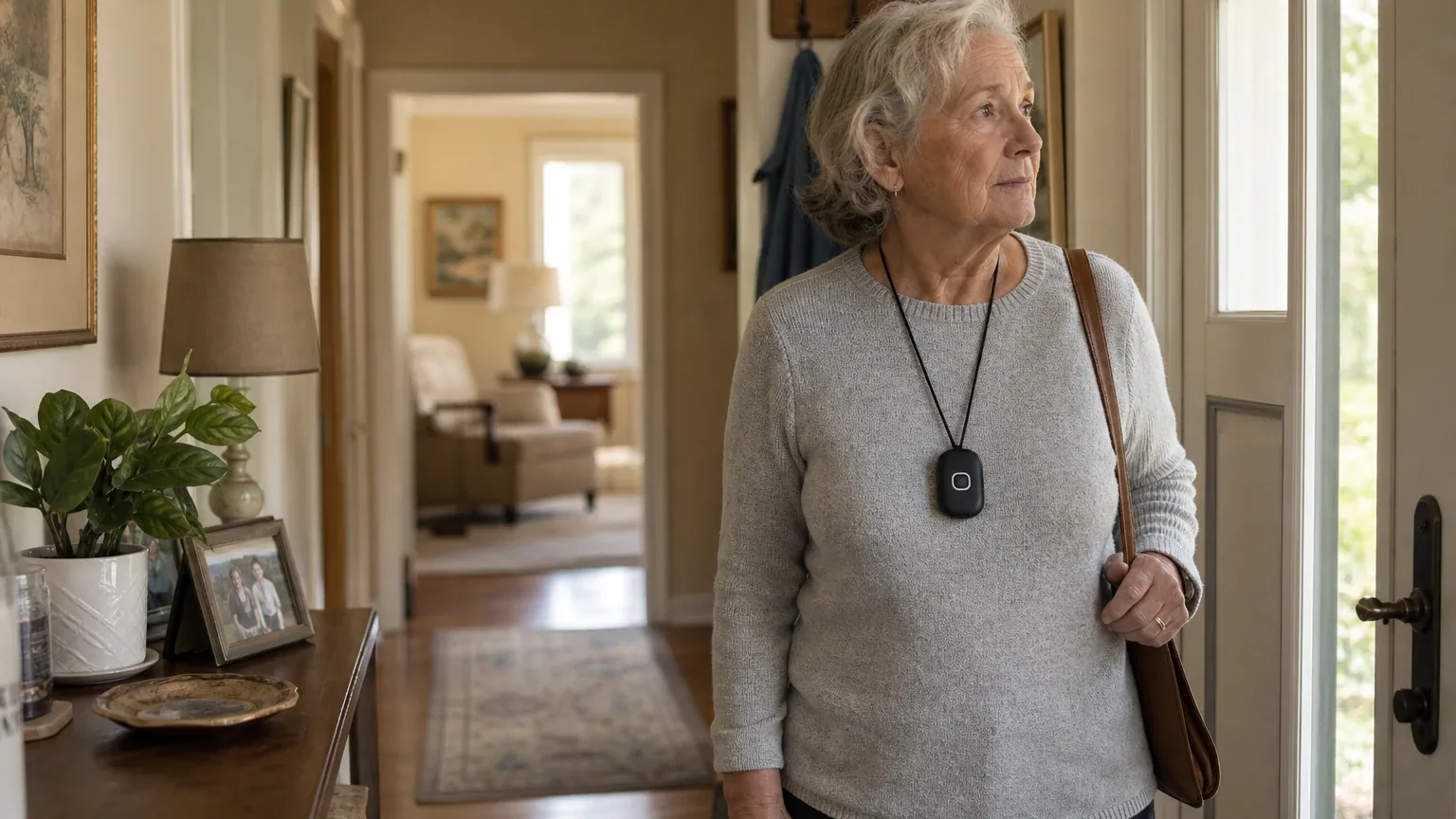
GreatCall Lively Mobile Plus (now Lively Mobile2) qualified because it is a GPS-enabled mobile medical alert system that appears in caregiver-oriented reviews for seniors with cognitive decline. The device offers portable GPS, two-way voice communication, caregiver location access through the Lively Link app, emergency-response escalation, and optional fall detection [1]. These features align with several category criteria, including GPS precision, caregiver app quality, emergency call escalation, battery life, and waterproofing. However, the entity ranked 7th and 10th on the two platforms that named it, placing it in the lower half of the competitive field for this specific use case.
The Product, Model, Plan, or Service Most Relevant to Dementia & Wandering Risk Management
The most relevant product is the Lively Mobile2 All-in-One Medical Alert paired with a Lively medical-alert service plan, the Lively Link caregiver app, and optional Fall Detection at $9.99 per month [3]. The device is a portable, cellular-based pendant that works away from home without a landline [5]. It includes a lanyard and belt clip, with additional wear accessories available [3]. The Lively Link app gives authorized caregivers access to location information, up to 30 days of location history, battery status, and notifications when Urgent Response is contacted [7].
A second product, Lively Wearable3, was recommended by two platforms but could not be verified in the current official catalog [8]. The most recent wearable referenced in independent sources is the older "Lively Wearable" fitness tracker, which requires smartphone app integration and is not recommended as a primary dementia device [9]. Buyers should treat Lively Wearable3 as unverified.
What the AI Platforms Agreed About
Strong agreement: Lively Mobile2 is not a purpose-built dementia wandering device. Five of seven platforms rated the fit as mixed or weak, and the remaining two rated it good or uncertain (openai, anthropic, google, grok, kimi, deepseek, perplexity). The consensus is that it functions adequately as a general mobile medical alert but lacks wandering-specific features.
Strong agreement: Geofencing is not confirmed. Multiple platforms noted that the checked Lively materials do not clearly document configurable geofences or automatic safe-zone exit alerts [10]. Google's review stated the Lively Link app "does not natively support setting up geofences, virtual boundaries, or safe zones" [12]. This is a critical gap for wandering prevention.
Strong agreement: The caregiver location refresh is too slow for active wandering response. Lively states that Lively Link location information updates approximately every 20 minutes, with 30-second updates only during an active emergency call [14]. One independent review documented a 30-minute location delay in a dementia patient scenario [15]. This makes real-time tracking unreliable for an actively wandering person.
Strong agreement: Emergency response is a genuine strength. Multiple platforms cited rapid response times averaging 13–14 seconds with U.S.-based, trained agents [16]. The 24/7 Urgent Response center can assess situations, confirm or estimate location, contact caregivers, and coordinate help [19]. Two-way voice communication is available directly through the device [13].
Strong agreement: Battery life requires frequent charging. Lively claims up to 40 hours, but independent testing found approximately 32 hours of actual use [20]. This necessitates near-daily charging, which poses a compliance risk for a cognitively impaired user who may forget [18].
Strong agreement: Fall Detection has a significant usage constraint. Fall Detection only works when the device is worn on the supplied lanyard; it is disabled when using the clip accessory [21]. This is problematic because clip-wearing may be more comfortable and acceptable for dementia patients who resist lanyards.
Where the AI Platforms Disagreed or Were Uncertain
Fit rating disagreement. DeepSeek rated the fit "good," describing it as suitable for seniors with mild to moderate dementia wandering risk (deepseek). Kimi rated it "weak," citing absent geofencing, no continuous proactive tracking, and removability by the wearer (kimi). Perplexity rated it "uncertain," noting that the provided search results did not contain verifiable product-specific evidence [24]. The remaining four platforms rated it "mixed."
Geofencing existence. DeepSeek stated that Lively Mobile2 "offers geofence features in the Lively app" as part of the Health & Safety plan [25]. However, OpenAI, Anthropic, Google, Grok, and Kimi all reported that geofencing could not be confirmed in official or independent sources [26]. This is a direct factual conflict that buyers must verify.
Battery life claims. Lively claims up to 40 hours [31]. The Senior List independently tested and found 32 hours [33]. Kimi reported approximately 24 hours with typical use [30]. The discrepancy likely reflects usage patterns and whether Fall Detection is enabled.
Waterproofing rating. Lively's official product page describes IPX7 water resistance [31]. Best Buy and The Senior List also cite IPX7 [34]. However, Kimi reported IPX4 (splash-resistant only) [30]. The IPX7 rating is better supported by multiple sources.
Lively Wearable3 availability. Two platforms recommended Lively Wearable3 (deepseek, perplexity), but the current official catalog lists Lively Mobile2 and does not clearly list Lively Wearable3 [35]. Anthropic found no current "Lively Wearable3" product in 2026 market research [36].
Plan names and pricing. The buyer brief refers to a "Health & Safety package," while current Lively pages use Basic and other plan terminology (openai). Package names, inclusions, and pricing are not fully consistent across public materials.
Use-Case-Specific Features and Capabilities
GPS Precision
Lively states that Mobile2 uses enhanced or patented GPS and that response agents can use location information to help determine the user's location [37]. However, Lively's terms do not guarantee an exact location, and GPS accuracy can be negatively affected by buildings, structures, terrain, weather, and other conditions [39]. One independent review documented a 30-minute location delay in a dementia patient scenario, described as "useless in emergency locating" [40]. No source provides a horizontal error margin.
Geofencing and Wandering Alerts
This is the most significant gap. The checked Lively materials describe map viewing, location history, battery information, and notifications when Urgent Response is contacted, but they do not clearly document configurable geofences or automatic alerts when a user crosses a defined boundary [41]. Google's review explicitly states the Lively Link app does not natively support geofencing [42]. DeepSeek claims geofencing exists but is "not as customizable or immediate" as dedicated dementia trackers [43]. The existence of true wandering-specific geofence alerts is therefore unclear and must be verified before purchase.
Caregiver App (Lively Link)
Lively Link allows authorized contacts to view current or recent location information, review up to 30 days of location history, monitor battery status, see device activity, and receive alerts when Urgent Response is contacted [41]. The app is free [44]. Independent App Store reviews include complaints about stale or inaccurate location information, indicating possible reliability variability [45]. The app lacks geofencing, safe itineraries, motion alerts, and advanced boundary customization that specialized dementia tracking devices offer (anthropic).
Emergency Call Escalation
Pressing the device button connects the user to 24/7 Urgent Response agents who can assess the situation, confirm or estimate location, contact caregivers, and coordinate help [46]. Average response times are 13–14 seconds [47]. Lively states that Urgent Response is not a substitute for 911 and that delays may occur when emergency services are contacted through the response center [39].
Fall Detection
Optional Fall Detection uses an accelerometer and algorithms to automatically connect the user to Urgent Response after a detected fall, even if the user cannot press the button [50]. It costs $9.99 per month [50]. Lively expressly states that fall detection may not detect every fall and requires wearing the device on the supplied lanyard [51]. One review mentions occasional false positives, but no rate is quantified [47].
Wearability and Comfort
Mobile2 includes a lanyard and clip, with additional wear accessories available [53]. The lanyard is required for Fall Detection [52]. The device is small, lightweight, and discreet [40]. However, the large red button has been documented to cause accidental activation in dementia patients who confuse it with a TV remote or calling button, generating false emergencies [40]. The device is not non-removable or tamper-resistant [55].
Battery Life
Lively states up to 40 hours of standby or use between charges and recommends charging every night [53]. Independent testing found approximately 32 hours [56]. Cellular conditions, use, temperature, and Fall Detection can reduce battery life [53]. This is workable for daily charging but creates risk if a cognitively impaired user forgets to charge the device [49].
Waterproofing
Mobile2 is described as IPX7 water resistant, suitable for shower use, and able to withstand immersion up to 1 meter for 30 minutes [53]. The charging dock is not water resistant, and the device should be dried before charging [53].
Network Dependence
The device requires charge, power, and network access to function [37]. Lively describes nationwide mobile coverage, but service may not work in remote or enclosed areas, and practical performance depends on local cellular and GPS conditions [39]. Google's review notes the device uses Verizon 4G LTE (google).
Pricing, Fees, Contracts, and Ongoing Costs
| Cost Item | Amount | Confidence |
|---|---|---|
| Lively Mobile2 device | $79.99 | High (multiple sources) |
| Activation fee | $35 (typically) | Moderate |
| Basic plan | $24.99/month | High |
| Premium plan | $34.99/month | High |
| Fall Detection add-on | $9.99/month | High |
| Lively Protection Plan | $2.50/month (optional) | Moderate |
| Paper billing | +$5/month vs. paperless | Moderate |
| Optional wristband accessory | $7.99 | Moderate |
| Replacement device fee | $15 (one per year limit) | Moderate |
| Restocking fee | $10 (activated-device returns) | Moderate |
| Shipping | $8 economy; free over $25 | Moderate |
Pricing confidence is moderate to high across platforms (openai, anthropic, google, grok). DeepSeek reported lower confidence, noting that exact 2026 pricing is not publicly available and varies by promotional offers (deepseek). Kimi reported a three-tier structure (Basic $24.99, Preferred $29.99, Ultimate $34.99) that does not match other platforms' two-tier structure (kimi). The exact current package names, inclusions, and whether Lively Link is included or separately priced should be confirmed at checkout (openai).
Contract terms: Lively states there is no long-term contract or cancellation fee [57]. Cancellation takes effect at the end of the current billing cycle; partial monthly charges are generally not refunded (openai). The official terms provide a 30-day return period for qualifying direct purchases, subject to device condition, usage limits, return shipping, and possible restocking charges (openai). Equipment and activation fees are non-refundable after 30 days [57]. Lively's terms allow it to change services, prices, fees, or features with notice of material changes (openai).
Best Suited For
- Seniors with mild cognitive decline who can still participate in a safety routine and are not yet at high wandering risk (anthropic, google, deepseek)
- Caregivers who primarily need periodic location visibility, battery monitoring, and emergency-call notifications (openai)
- Users who want a simple one-button connection to a response center rather than a complex smartphone-based system (openai)
- Situations where fall detection and two-way voice communication are important supplemental safeguards (openai)
- Budget-conscious buyers seeking basic emergency response with location tracking (anthropic)
- Seniors who need a durable, waterproof device for high-fall-risk areas like the shower [58]
Probably Not Best Suited For
- High-risk wandering requiring continuous or near-real-time caregiver tracking (openai, anthropic, kimi)
- Caregivers who require configurable geofences, exit alerts, or rapid automatic notifications when a person leaves a safe zone (openai, anthropic, google, kimi)
- People who frequently remove, lose, or forget wearable devices (openai, kimi)
- Indoor environments, dense buildings, or areas with weak cellular/GPS coverage where location precision is critical (openai)
- Seniors with moderate-to-advanced dementia experiencing active wandering (anthropic)
- Users requiring multi-day battery life without daily charging (anthropic, google)
- Seniors who repeatedly press buttons accidentally [59]
When Another Option May Be Better
- AngelSense ($44.99–$64.99/month) offers a non-removable clip-on design, continuous tracking with 10-second updates in Runner Mode, AI routine monitoring, and geofencing—better for high-risk, frequent wanderers [60].
- Otiom (€299 purchase or €29/month rent) provides month-long battery life and automatic tracking only when a zone is breached, developed with dementia caregivers [62].
- Zembro Wander Alert (€18/month plus device) offers BLE beacon integration for indoor positioning, a lockable strap option, and full waterproofing [63].
- Lifeline On the Go with Wandering provides SMS alerts with map links and 24/7 response center engagement (deepseek).
- Medical Guardian VIPx or Jiobit may be better for immediate geofence-crossing notifications (google).
- Project Lifesaver and RF-based trackers provide recovery support when cellular/GPS networks are unavailable (anthropic).
Questions to Verify Before Buying
- Does the selected current plan include Lively Link, or is Link an additional monthly charge? (openai)
- Does Lively Link support configurable geofences and automatic alerts when the user leaves or enters a safe zone? (openai, anthropic, google, grok, kimi)
- What is the typical and worst-case location-refresh delay in the buyer's home, neighborhood, and likely wandering areas? (openai)
- Can caregivers manually request a location refresh, and how quickly does the device respond when indoors? (openai)
- Which cellular network is used in the buyer's exact ZIP codes, and what happens when coverage is unavailable? (openai, google)
- What location accuracy can be expected indoors, in apartment buildings, hospitals, and memory-care facilities? (openai)
- How much battery life should be expected with Fall Detection enabled and with frequent location requests? (openai, anthropic)
- Can the device be worn on the wrist or only on the lanyard when Fall Detection is enabled? (openai, anthropic)
- What happens if the user does not respond to the Urgent Response agent, and which contacts or emergency services are called first? (openai)
- What current activation fee, taxes, government fees, restocking charges, and return-shipping costs apply to this order? (openai, google)
- Is Lively Wearable3 an active, compatible product, and what are its verified specifications? (openai, anthropic)
- Can the caregiver test GPS accuracy, alerts, battery reporting, and cancellation during the 30-day return period without losing eligibility for a refund? (openai)
- How many false emergency activations should a caregiver expect per week if the senior has mild-to-moderate dementia and tends to accidentally press buttons? (anthropic)
- Can multiple family members receive emergency and location alerts simultaneously, or only the primary caregiver? (anthropic)
Final AI Consensus Verdict
The AI consensus is that Lively Mobile2 is a mixed, not strong, fit for dementia and wandering risk management. It is a reasonable supplemental emergency-response device for a senior who will reliably wear it and for caregivers who value two-way response support, periodic location visibility, battery monitoring, and optional fall detection. It is a weaker choice when the central requirement is proactive wandering prevention, fast caregiver notification after leaving a defined area, continuous tracking, or highly precise indoor location (openai).
The device's core strengths—rapid emergency response, two-way voice, optional fall detection, IPX7 water resistance, and month-to-month flexibility—are genuine and well-documented. However, the approximately 20-minute caregiver location refresh, the unconfirmed geofencing capability, the lanyard-only Fall Detection constraint, and the near-daily charging requirement are significant gaps for wandering management (openai, anthropic, google, kimi).
For caregivers whose primary concern is active elopement or frequent wandering, dedicated dementia trackers with geofencing, continuous tracking, and non-removable designs are better choices. For seniors in early cognitive decline who can cooperate with a daily charging routine, Lively Mobile2 may serve as a reasonable part of a multi-layered safety strategy—but it should not be the sole wandering management tool (anthropic).
Before purchase, verify whether the current plan provides geofencing and whether the approximately 20-minute Lively Link refresh interval is acceptable for your specific risk level (openai).
How This Review Was Produced
This review was produced on 2026-08-10 by aggregating fit-research responses from seven AI platforms: OpenAI, Anthropic, DeepSeek, Google, Grok, Kimi, and Perplexity. Each platform evaluated GreatCall Lively Mobile Plus (now Lively Mobile2) against eight category criteria: GPS precision, geofencing alerts, caregiver app quality, wearable comfort, emergency call escalation, battery life, waterproofing, and location refresh rate. The platforms drew on 28 deduplicated sources, including company-owned materials from Lively and independent reviews from The Senior List, SafeHome, SeniorLiving.org, SafeWise, ConsumerAffairs, and others. Platform-reported dates were all 2026-08-10, matching the study date.
Methodology Limitations
- Platform mentions vs. evaluations: All seven platforms evaluated fit, but only two (Anthropic and DeepSeek) named the entity during the ranking discovery stage. The average rank of 8.5 is based on those two platforms only.
- Unresolved factual conflicts: Geofencing existence, battery life, waterproofing rating, plan names, and Lively Wearable3 availability have conflicting or unverified information across sources. This review describes the conflicts rather than resolving them by guessing.
- Anecdotal evidence: Independent App Store reviews reporting stale or inaccurate location information are anecdotal and do not establish average performance [64].
- No independent verification: The supplied URLs were collected from platform responses and were not independently validated by the writer stage.
- No personal testing: This review does not claim personal testing, customer experience, or independent verification of any product claims.
- AI agreement does not prove quality: Agreement among AI platforms reflects the supplied evidence base and does not independently establish product performance.
- Pricing variability: Current pricing is subject to promotional variation, and some platforms reported different plan structures. Exact costs should be confirmed at checkout.
See the broader Dementia & Wandering Risk Management consensus index for comparisons across qualified options.
Explore more medical alert systems guidance in the category directory.
Sources
Company-Owned Sources
- Otiom GPS for people with dementia | Otiom dementia tracker: https://otiom.com/
- Lively Link - Apps on Google Play: https://play.google.com/store/apps/details?id=com.greatcall.link&hl=en_US
- Search results set provided in prompt: https://shop.lively.com/
- Fall Detection: https://shop.lively.com/blogs/help-center/fall-detection
- Lively Mobile2: https://shop.lively.com/blogs/help-center/lively-mobile2
- Urgent Response and Link App: https://shop.lively.com/blogs/help-center/urgent-response-and-link-app
- Phone & SIM Customer Agreement: https://shop.lively.com/blogs/legal-pages/phone-sim-customer-agreement
- Medical Alerts: https://shop.lively.com/collections/medical-alerts
- Personal Emergency Response: https://shop.lively.com/pages/personal-emergency-response
- Urgent Response Service: https://shop.lively.com/pages/urgent-response
- Lively Mobile2 All-in-One Medical Alert: https://shop.lively.com/products/lively-mobile2-all-in-one-medical-alert
- Urgent Response Terms and Conditions: https://www.lively.com/legal/urgent-response-terms-conditions/
- Wander Alert with 4 BLE Beacons: https://www.zembro.com/products/wander-alert
Additional AI research evidence64 records
- AI research evidence record openai:c1
- AI research evidence record openai:c4
- AI research evidence record openai:c4
- AI research evidence record openai:c8
- AI research evidence record openai:c1
- AI research evidence record anthropic:c19
- AI research evidence record openai:c3
- AI research evidence record openai:c10
- AI research evidence record anthropic:c39
- AI research evidence record openai:c3
- AI research evidence record anthropic:c25
- AI research evidence record google:c2
- AI research evidence record kimi:c1
- AI research evidence record openai:c2
- AI research evidence record anthropic:c3
- AI research evidence record anthropic:c18
- AI research evidence record anthropic:c37
- AI research evidence record google:c1
- AI research evidence record openai:c6
- AI research evidence record anthropic:c1
- AI research evidence record anthropic:c11
- AI research evidence record anthropic:c23
- AI research evidence record openai:c9
- AI research evidence record perplexity:c1
- AI research evidence record deepseek:c1
- AI research evidence record openai:c3
- AI research evidence record anthropic:c25
- AI research evidence record google:c2
- AI research evidence record grok:c2
- AI research evidence record kimi:c1
- AI research evidence record openai:c4
- AI research evidence record anthropic:c19
- AI research evidence record anthropic:c1
- AI research evidence record anthropic:c18
- AI research evidence record openai:c10
- AI research evidence record anthropic:c39
- AI research evidence record openai:c1
- AI research evidence record openai:c2
- AI research evidence record openai:c7
- AI research evidence record anthropic:c3
- AI research evidence record openai:c3
- AI research evidence record google:c2
- AI research evidence record deepseek:c1
- AI research evidence record anthropic:c31
- AI research evidence record openai:c5
- AI research evidence record openai:c6
- AI research evidence record anthropic:c18
- AI research evidence record anthropic:c37
- AI research evidence record google:c1
- AI research evidence record openai:c8
- AI research evidence record openai:c9
- AI research evidence record anthropic:c11
- AI research evidence record openai:c4
- AI research evidence record anthropic:c19
- AI research evidence record kimi:c1
- AI research evidence record anthropic:c1
- AI research evidence record anthropic:c37
- AI research evidence record google:c1
- AI research evidence record anthropic:c3
- AI research evidence record deepseek:c2
- AI research evidence record kimi:c4
- AI research evidence record kimi:c2
- AI research evidence record kimi:c3
- AI research evidence record openai:c5
Independent Sources
- Lively Link - Ratings & Reviews: https://apps.apple.com/us/app/lively-link/id584004617?platform=iphone&see-all=reviews
- AngelSense GPS Tracker Review: Eye Opening Verdict 2026: https://elderlivinghub.com/reviews/angelsense-gps-tracker-review/
- Geofencing for Dementia Care: How It Works and Why It Matters: https://perfectalert.co.uk/blog/geofencing-for-dementia-care/
- LIVELY Wearable Fitness Tracker with Exclusive Urgent Response: https://www.amazon.com/GreatCall-Wearable-Fitness-Exclusive-Response/dp/B01IBWDEW4
- Lively Mobile2 All in One Medical Alert Black: https://www.bestbuy.com/product/lively-lively-mobile2-all-in-one-medical-alert-black/J3R8TF8K2G/sku/6572484
- Lively Mobile2 Reviews | Read Customer Service Reviews: https://www.consumeraffairs.com/medical-alert-systems/lively.html
- GreatCall Lively Review 2026 - Medical Alert Systems: https://www.safehome.org/medical-alert-systems/greatcall/reviews/
- Lively Mobile2 Review: https://www.safewise.com/senior-safety/medical-alerts/lively/
- Lively Medical Alert System Cost & Pricing in 2026: https://www.seniorliving.org/medical-alert-systems/greatcall/
- Lively Medical Alert System Review 2026: https://www.seniorliving.org/medical-alert-systems/greatcall/reviews/
- Lively Medical Alert: Costs and Plans │The Senior List: https://www.theseniorlist.com/medical-alert-systems/greatcall/
- Lively Mobile2 Medical Alert Review │The Senior List: https://www.theseniorlist.com/medical-alert-systems/greatcall/reviews/
- GreatCall (Lively) Mobile Plus Review 2026: https://www.theseniorlist.com/medical-alert-systems/lively/
Additional AI research evidence64 records
- AI research evidence record openai:c1
- AI research evidence record openai:c4
- AI research evidence record openai:c4
- AI research evidence record openai:c8
- AI research evidence record openai:c1
- AI research evidence record anthropic:c19
- AI research evidence record openai:c3
- AI research evidence record openai:c10
- AI research evidence record anthropic:c39
- AI research evidence record openai:c3
- AI research evidence record anthropic:c25
- AI research evidence record google:c2
- AI research evidence record kimi:c1
- AI research evidence record openai:c2
- AI research evidence record anthropic:c3
- AI research evidence record anthropic:c18
- AI research evidence record anthropic:c37
- AI research evidence record google:c1
- AI research evidence record openai:c6
- AI research evidence record anthropic:c1
- AI research evidence record anthropic:c11
- AI research evidence record anthropic:c23
- AI research evidence record openai:c9
- AI research evidence record perplexity:c1
- AI research evidence record deepseek:c1
- AI research evidence record openai:c3
- AI research evidence record anthropic:c25
- AI research evidence record google:c2
- AI research evidence record grok:c2
- AI research evidence record kimi:c1
- AI research evidence record openai:c4
- AI research evidence record anthropic:c19
- AI research evidence record anthropic:c1
- AI research evidence record anthropic:c18
- AI research evidence record openai:c10
- AI research evidence record anthropic:c39
- AI research evidence record openai:c1
- AI research evidence record openai:c2
- AI research evidence record openai:c7
- AI research evidence record anthropic:c3
- AI research evidence record openai:c3
- AI research evidence record google:c2
- AI research evidence record deepseek:c1
- AI research evidence record anthropic:c31
- AI research evidence record openai:c5
- AI research evidence record openai:c6
- AI research evidence record anthropic:c18
- AI research evidence record anthropic:c37
- AI research evidence record google:c1
- AI research evidence record openai:c8
- AI research evidence record openai:c9
- AI research evidence record anthropic:c11
- AI research evidence record openai:c4
- AI research evidence record anthropic:c19
- AI research evidence record kimi:c1
- AI research evidence record anthropic:c1
- AI research evidence record anthropic:c37
- AI research evidence record google:c1
- AI research evidence record anthropic:c3
- AI research evidence record deepseek:c2
- AI research evidence record kimi:c4
- AI research evidence record kimi:c2
- AI research evidence record kimi:c3
- AI research evidence record openai:c5
Verify this research
Review the study details behind this page or download the public machine-readable verification record.
- Study date
- Aug 10, 2026
- Platforms analyzed
- 7
- Source records
- 28
- Ranking mentions
- 2 of 7
- Platform share
- 29%
- Final consensus rank
- #7
Research trail and source mix
Platforms
openai, anthropic, deepseek, grok, perplexity, kimi, google
Source mix
15 independent · 13 company-owned
Evidence support
24 direct · 3 partial
Important limitation
Use the run research_date as the study date. Platform-reported dates are provenance metadata and do not independently prove freshness.
Source snapshot SHA-256 b3814e6f3592d20b8b330ca1b07f4efee30afa5d8e83445623f08d1811bba447