
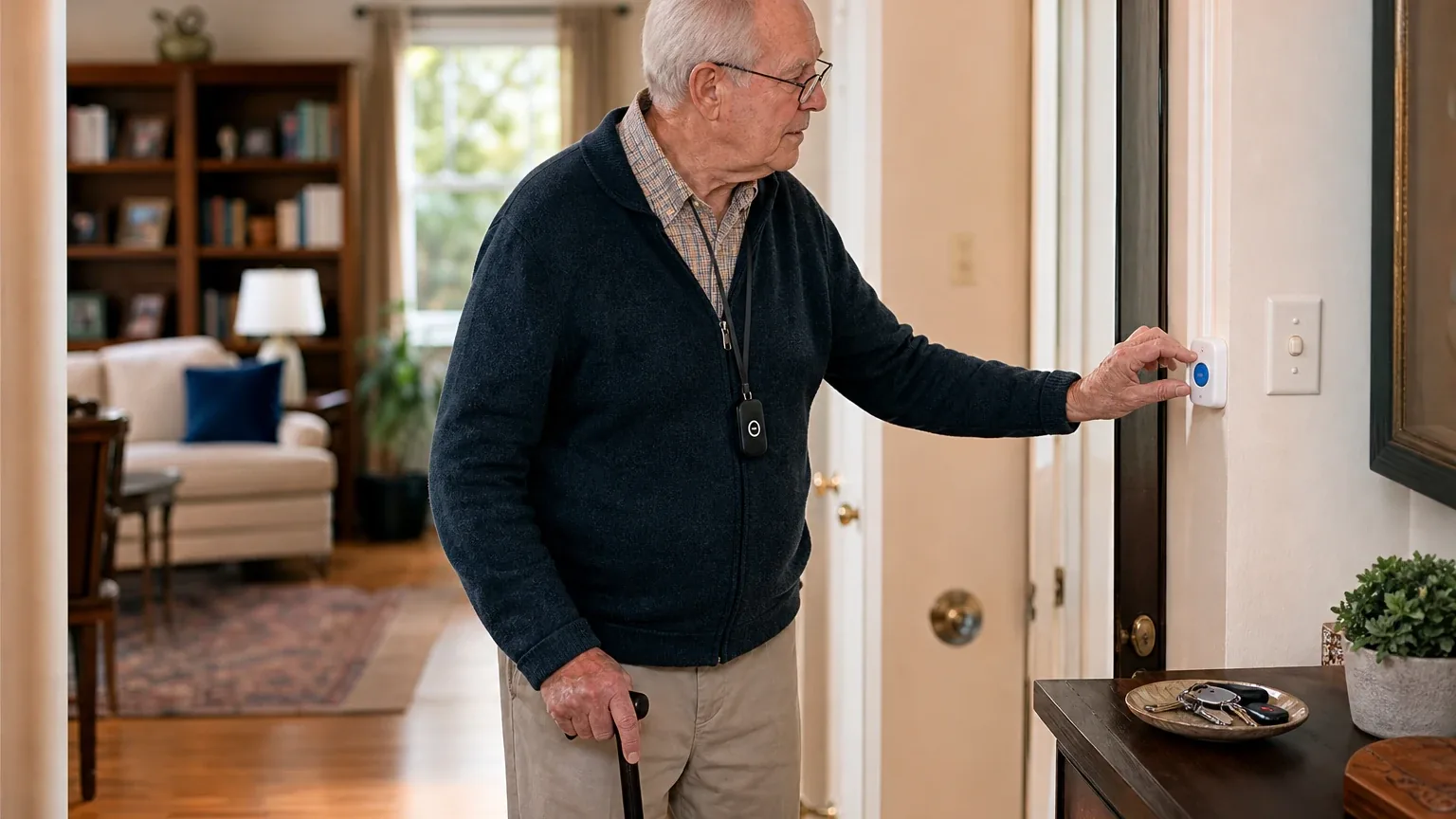
Answer Capsule
Medical Care Alert is a mixed-to-good fit for dementia and wandering risk management, not a dedicated wandering-prevention system. Two of seven platforms named it during ranking discovery (29% share), with an average listed rank of 9.5 and a best rank of 9. The strongest reason to consider it is the combination of EMT/EMD-certified operators, fast response times, and a caregiver app with home departure alerts. The main limitation is the absence of publicly verified geofencing, location refresh rates, and continuous tracking specifications—features that matter most for wandering management. Buyers should confirm these details before purchase, especially since platform fit ratings ranged from "good" to "uncertain."
Research Snapshot
| Metric | Value |
|---|---|
| Platform mentions in ranking stage | 2 of 7 (anthropic, deepseek) |
| Share of included platform responses | 29% |
| Average listed rank | 9.5 |
| Best listed rank | 9 (deepseek) |
| Relevant product/model/plan | HOME & AWAY FLEX with GPS; HOME & AWAY ULTRA/DUO with RemoteCare 24/7 App |
| Overall use-case fit | Mixed (2 good, 3 mixed, 2 uncertain) |
| Research date | 2026-08-10 |
Why Medical Care Alert Qualified for This Study
Medical Care Alert qualified because it offers GPS-enabled mobile medical alert systems that appeared in platform responses for dementia and wandering risk management. The company's HOME & AWAY product line includes GPS, Wi-Fi, and cellular location services, caregiver monitoring apps, and 24/7 emergency response—features that align with the study's evaluation criteria of GPS precision, geofencing alerts, caregiver app quality, wearable comfort, emergency call escalation, battery life, waterproofing, and location refresh rate [1].
The entity was named by two of seven platforms during the ranking discovery stage. Anthropic ranked it 10th; DeepSeek ranked it 9th. Five additional platforms evaluated its fit without naming it in the ranking stage.
The Product, Model, Plan, or Service Most Relevant to Dementia & Wandering Risk Management
The most relevant product is the HOME & AWAY FLEX, a GPS-enabled mobile medical alert pendant. Platform responses also referenced the HOME & AWAY ULTRA and DUO models, which use the RemoteCare 24/7 app, and the GPS Pendant [3].
Key specifications reported across platforms:
| Feature | Reported Specification | Source |
|---|---|---|
| Location methods | GNSS/GPS, Wi-Fi, cellular triangulation | [3], [6] |
| Weight | Approximately 1.5–1.55 ounces | [3] |
| Waterproofing | IP67, shower-safe | [3] |
| Battery life | 2–5 days in advanced mode; daily charging recommended | [3], [7] |
| Emergency response | 24/7 EMT/EMD-certified operators; average 17-second response | [8], [9] |
| Caregiver app | RemoteCare 24/7 (iOS/Android); location, battery, signal, departure alerts | [4], [10] |
| Fall detection | Optional AutoFALL, $10/month | [3], [11] |
What the AI Platforms Agreed About
Strong agreement: Medical Care Alert provides solid emergency response and location assistance, but is not a complete wandering-management solution.
All seven platforms acknowledged the HOME & AWAY FLEX offers GPS-based location services relevant to wandering scenarios. The company uses GPS, Wi-Fi, and cellular positioning—multiple location methods rather than GPS alone [12].
Strong agreement: Emergency response is a genuine strength. Platforms consistently cited 24/7 monitoring by EMT/EMD-certified operators. NCOA noted Medical Care Alert is one of only two brands tested that staff emergency centers with certified EMT/EMD professionals [16]. Google reported an average 17-second response time [17]. The monitoring agreement allows operators to contact caregivers or emergency responders and follow up by phone and text [18].
Majority agreement: The caregiver app provides useful monitoring functions. The RemoteCare 24/7 app (iOS and Android) allows caregivers to check device location, battery level, cellular signal, and receive notifications when the user leaves or returns home [19]. The app supports multiple users under a single account [20].
Majority agreement: Battery life is adequate but requires daily charging. The FLEX lists 2–5 days in advanced mode, with daily charging recommended [12]. Industry standard for mobile GPS medical alerts ranges from 1–5 days [22]. This matches competitors like LifeStation (5 days) and Philips Lifeline On the Go (4 days) [23].
Majority agreement: Water resistance supports continuous wear. The FLEX is IP67-rated and shower-safe [12]. This matters because bathrooms are high-risk fall locations for dementia patients [24].
Where the AI Platforms Disagreed or Were Uncertain
Geofencing capability: Direct conflict. DeepSeek stated the company explicitly offers geofencing features [25]. Google described a binary "@Home" departure/arrival notification rather than custom multi-point geofences [26]. OpenAI, Grok, Kimi, and Perplexity found no verified geofencing capability in public materials [27]. Anthropic noted the RemoteCare app provides home exit/return notifications but did not confirm multi-zone configuration [31].
Location refresh rate: Unverified across all platforms. No platform found a published refresh interval. Google reported that newer MINI and SmartWatch PRO models update location every 30 minutes by default to preserve battery [32]. AngelSense's "Runner Mode" updates every 10 seconds during active wandering [33]. This gap prevents verification of real-time responsiveness.
Fit rating: Split. Anthropic rated the fit "good," citing 5-day battery life, water resistance, and EMT-certified operators [34]. Google also rated "good," emphasizing the 17-second response and @Home notifications [36]. OpenAI, DeepSeek, and Grok rated "mixed." Kimi and Perplexity rated "uncertain" due to insufficient public documentation [37].
GPS accuracy: Conflicting evidence. NCOA testing found Medical Care Alert's mobile GPS accurate to the address level [38]. However, one customer review on the company's own site stated "The GPS is not as accurate as I anticipated" [39]. Forbes noted location determination may take longer in areas with weak signals [40].
Pricing transparency: Disagreement. Anthropic and Google reported high pricing confidence with $39.95/month base pricing [41]. DeepSeek and Kimi reported low confidence, noting pricing requires a direct quote [25]. OpenAI found conflicting prices across official pages: $39.95, $45.79, and $49.95 monthly figures [43].
Use-Case-Specific Features and Capabilities
GPS Precision and Location Methods
The HOME & AWAY FLEX uses GNSS/GPS, Wi-Fi, and cellular location services [44]. NCOA testing found address-level accuracy [46]. However, the company acknowledges location-based services are imperfect and depend on cellular strength and environmental conditions [47]. No measured accuracy range is published [44].
Geofencing and Wandering Alerts
This is the most significant gap. The RemoteCare 24/7 app provides "@Home" departure and arrival notifications for ULTRA and DUO models [49]. However, no platform confirmed custom multi-point geofences, scheduled safe zones, or automatic caregiver notifications when the wearer leaves a defined area [44]. DeepSeek claimed geofencing is offered but provided no technical detail [52].
Caregiver App Quality
The RemoteCare 24/7 app allows caregivers to monitor real-time battery level, cellular signal, device location, weather alerts, and receive home departure/return notifications [53]. It supports multiple users under a single account [53]. The app provides 7 days of location history and can ring the handset [49]. Independent reviews do not highlight the app as a major competitive strength compared to Medical Guardian's MyGuardian "Care Circle" feature [54].
Wearable Comfort and Compliance
The FLEX weighs approximately 1.5–1.55 ounces and is designed as a single-button pendant [44]. Its small size may support wear compliance. However, dementia-specific literature identifies device removal as a common problem—people with dementia may remove devices they do not understand [55]. Medical Care Alert offers no locking strap or removal detection, unlike competitors such as Zembro [56].
Emergency Call Escalation
Pressing the button connects the wearer to a live emergency response operator through two-way voice [44]. Operators are EMT/EMD-certified [57]. Average response time is 17 seconds [58]. The system automatically sends SMS alerts to a predetermined contact list upon emergency dispatch [59]. The monitoring agreement allows operators discretion regarding contact and dispatch decisions [47].
Battery Life and Charging Burden
The FLEX lists approximately 2–5 days in advanced mode, with daily charging recommended [44]. Battery performance depends on cellular strength, fall detection, and environmental conditions [60]. Daily charging is a meaningful risk for dementia users who may forget or resist charging [44]. Low-battery alerts go to the user, not automatically to caregivers [61].
Waterproofing
The FLEX is IP67-rated and described as shower-safe [44]. This supports continuous wear in bathrooms where falls are common [62]. IP67 is not unlimited immersion or damage-proof operation [44].
Location Refresh Rate
No verified refresh interval is published [44]. Newer MINI and SmartWatch PRO models default to 30-minute updates to preserve battery [63]. This makes them unsuitable for continuous live-tracking during wandering episodes [63].
Pricing, Fees, Contracts, and Ongoing Costs
Known Costs
| Item | Cost | Source |
|---|---|---|
| HOME & AWAY base plan | $39.95/month | [64], [65], [66] |
| Optional AutoFALL fall detection | $10/month | [67], [64] |
| Extended Protection Plan | $5/month | [68] |
| SmartWatch PRO (one-time) | $149.95 | [65] |
| Annual plan | 12th month free | [64], [69] |
Billing Options
Monthly, quarterly ($119.85/3 months), semi-annual ($239.70/6 months), and annual ($439.45/year) plans are available [64]. No activation, setup, or cancellation fees are charged [70].
Contract and Cancellation Terms
The monitoring agreement is month-to-month with cancellation at any time [70]. For rented equipment, billing stops when returned equipment is received; for purchased equipment, billing stops within one business day of cancellation [70]. A 14-day return period applies, with possible shipping deductions and a $50 restocking/reprogramming fee for unused returned equipment [70]. Unused prepaid months are refunded on a prorated basis [71].
Additional Fees
Extended Protection has deductibles: $50 for the first replacement and $150 for the second for the HOME & AWAY GPS Pendant [68]. Unreturned or damaged equipment may create replacement charges [70].
Pricing Conflicts
Official pages provide different prices for HOME & AWAY/FLEX configurations, including $39.95, $45.79, and $49.95 monthly figures [69]. The exact current price depends on model, fall-detection selection, billing term, and promotion [69]. DeepSeek reported pricing is not publicly listed and requires a quote [72].
Best Suited For
Medical Care Alert is best suited for caregivers supporting seniors in early-stage dementia with occasional wandering who can reliably wear and charge a pendant device [73]. Specific scenarios include:
- Caregivers who prioritize 24/7 live emergency response and two-way voice communication [74]
- Situations combining dementia risk with general medical alert needs, such as falls at home and away [73]
- Caregivers seeking affordable, no-contract solutions with professional monitoring [75]
- Users in areas with strong 4G LTE coverage requiring nationwide on-the-go protection [73]
- Caregivers who want automated home departure/arrival notifications [76]
Probably Not Best Suited For
- Caregivers requiring automatic exit-zone or geofence alerts when a person wanders [77]
- Users who need continuous, independently verified location tracking with documented refresh intervals [77]
- People likely to forget daily charging, remove the pendant, or leave it behind [77]
- Advanced dementia where users frequently remove wearables and behavioral interventions are essential [81]
- Caregivers requiring multi-caregiver coordination features like Medical Guardian's "Care Circle" [82]
- Buyers who need transparent published pricing before comparing options [83]
When Another Option May Be Better
- Dedicated dementia GPS trackers (Tranquil Watch, AngelSense) when automatic geofencing, wandering alerts, route history, and caregiver notifications are primary requirements [84]
- AngelSense when sub-10-second location updates are required during active wandering—its "Runner Mode" updates every 10 seconds [84]
- Tranquil Watch when instant home exit alerts are required without geofence setup, or when a locking strap prevents device removal [84]
- Medical Guardian when multi-caregiver coordination is needed—the MyGuardian app includes "Care Circle" for team collaboration [85]
- LogicMark Freedom Alert Mini when proactive geofencing alerts are needed [86]
- Zembro when a lockable strap or not-worn alerts are required [87]
- Simpler in-home systems when the person rarely leaves home and cannot reliably manage GPS-device charging [88]
Questions to Verify Before Buying
- Does the FLEX support configurable geofences or automatic alerts when the wearer leaves a defined area? [89]
- What is the actual location-refresh interval in normal use, during movement, and during an emergency? [89]
- Can caregivers receive automatic low-battery, device-off, no-motion, or loss-of-connectivity alerts? [89]
- Is the caregiver app available for both iPhone and Android, and does it provide location history, multiple caregivers, and configurable notifications? [89]
- What location accuracy should be expected outdoors, indoors, in vehicles, and in dense urban or rural areas? [89]
- What happens if GPS is unavailable—is the last known location displayed, and how old may it be? [89]
- Which cellular network and coverage map apply at the senior's home and usual travel locations? [89]
- Can the pendant be worn on a wrist or clipped to clothing, or is neck-worn use required? [89]
- What is the measured battery life with AutoFALL enabled and with frequent location updates? [89]
- What is the exact monthly price, billing interval, promotional expiration, fall-detection fee, protection-plan fee, shipping cost, and equipment-return obligation for this order? [89]
- Which emergency contacts are called or texted, in what order, and under what circumstances can operators dispatch EMS without reaching the wearer? [89]
- Are emergency operators trained in dementia-specific communication or behavioral de-escalation protocols? [93]
- Does the device have any mechanism to prevent or detect removal? [90]
- Can the buyer test the device specifically for wandering, caregiver notifications, battery alerts, and indoor/outdoor location performance during the return period? [89]
Final AI Consensus Verdict
Medical Care Alert is a mixed fit for dementia and wandering risk management. The HOME & AWAY FLEX is stronger as a monitored emergency-response pendant with location assistance than as a dedicated anti-wandering system. Two platforms rated it "good," three rated it "mixed," and two rated it "uncertain."
The strongest evidence supports its emergency response capabilities: EMT/EMD-certified operators, 17-second average response times, and automated SMS alerts to emergency contacts [94]. The RemoteCare 24/7 app provides useful caregiver monitoring including home departure alerts [97].
The critical gaps are geofencing verification, location refresh rates, and continuous tracking specifications. No platform confirmed custom multi-point geofences or published refresh intervals [99]. Newer models default to 30-minute location updates [102]. Daily charging creates a practical failure mode for cognitive-decline users [99].
Medical Care Alert is most suitable when the caregiver values live operator escalation and the senior can reliably wear and charge the device. It should not be selected without confirming geofencing, refresh rate, caregiver-alert behavior, and battery performance—these are central requirements for dementia wandering management and are not clearly verified in public documentation [99].
For a broader comparison of options for this use case, see the Dementia & Wandering Risk Management consensus index. You can also browse other medical alert systems in the category directory.
How This Review Was Produced
This review was produced by aggregating fit-research responses from seven AI platforms: OpenAI, Anthropic, DeepSeek, Grok, Perplexity, Kimi, and Google. Each platform evaluated Medical Care Alert against the study criteria of GPS precision, geofencing alerts, caregiver app quality, wearable comfort, emergency call escalation, battery life, waterproofing, and location refresh rate.
The authoritative research date is 2026-08-10. Six of seven platforms conducted research on this date; DeepSeek's research date was 2026-04-10, which is disclosed as a methodology limitation.
Platform fit ratings were: Anthropic (good), Google (good), OpenAI (mixed), DeepSeek (mixed), Grok (mixed), Kimi (uncertain), and Perplexity (uncertain).
Methodology Limitations
- Platform-reported dates differ from the authoritative run date. DeepSeek's research date was 2026-04-10, approximately four months before the other platforms. This may affect pricing and feature information.
- Platform mentions count only platforms that named the entity during ranking discovery. Two of seven platforms named Medical Care Alert in the ranking stage; five evaluated fit without naming it.
- Conflicting product names were not resolved. Platforms referenced "HOME & AWAY FLEX," "HOME & AWAY ULTRA," "DUO," and "VIP Flex." It is unclear if these are current, discontinued, or regional variants [104].
- Conflicting pricing was not resolved. Official pages list $39.95, $45.79, and $49.95 monthly figures [106]. The exact current price depends on model, fall-detection selection, billing term, and promotion.
- The supplied URLs were collected from platform responses and were not independently validated by the writer stage.
- Public evidence is primarily company-provided. Most technical specifications come from Medical Care Alert's own documentation. Independent testing data is limited to NCOA's address-level GPS accuracy finding [107].
- No dementia-specific outcomes were established. No platform cited clinical studies or independent testing of the device's effectiveness for dementia wandering prevention.
- AI-platform agreement does not prove product quality. This review reports what platforms found in public sources; it does not constitute independent product testing.
Sources
Company-Owned Sources
- Mobile GPS Medical Alert System: https://www.lifestation.com/mobile-gps/
- Freedom Alert Mini - LogicMark: https://www.logicmark.com/product/freedom-alert-mini/
- Medical Care Alert Home Page: https://www.medicalcarealert.com/
- Extended Protection Plan For Medical Alert Systems: https://www.medicalcarealert.com/extended-protection-plan/
- Fall Detection FAQ: https://www.medicalcarealert.com/faq-fall-detection-medical-alert-systems/
- Medical Alert Button FAQ's: https://www.medicalcarealert.com/faq-medical-alert-buttons/
- HOME & AWAY FLEX GPS Medical Alarm System: https://www.medicalcarealert.com/home-away-flex-gps-medical-alert-system/
- All-In-One Medical Alert System with GPS & Fall Detection - HOME & AWAY ULTRA: https://www.medicalcarealert.com/home-away-system-with-gps/
- How the RemoteCare 24/7 App Works: https://www.medicalcarealert.com/how-the-remotecare-app-works/
- How The WellBe App Works: https://www.medicalcarealert.com/how-the-wellbe-app-works/
- Monitoring Agreement: https://www.medicalcarealert.com/monitoring-agreement/
- Wander Alert with 4 BLE Beacons - Zembro: https://www.zembro.com/products/wander-alert
Additional AI research evidence107 records
- AI research evidence record openai:c1
- AI research evidence record openai:c2
- AI research evidence record openai:c1
- AI research evidence record google:c2
- AI research evidence record perplexity:c1
- AI research evidence record openai:c2
- AI research evidence record openai:c3
- AI research evidence record google:c3
- AI research evidence record anthropic:c10
- AI research evidence record anthropic:c11
- AI research evidence record anthropic:c9
- AI research evidence record openai:c1
- AI research evidence record openai:c2
- AI research evidence record anthropic:c3
- AI research evidence record grok:c1
- AI research evidence record anthropic:c10
- AI research evidence record google:c3
- AI research evidence record openai:c4
- AI research evidence record google:c2
- AI research evidence record anthropic:c11
- AI research evidence record openai:c3
- AI research evidence record anthropic:c6
- AI research evidence record anthropic:c13
- AI research evidence record anthropic:c2
- AI research evidence record deepseek:c1
- AI research evidence record google:c2
- AI research evidence record openai:c1
- AI research evidence record grok:c1
- AI research evidence record kimi:c2
- AI research evidence record perplexity:c1
- AI research evidence record anthropic:c11
- AI research evidence record google:c1
- AI research evidence record anthropic:c5
- AI research evidence record anthropic:c2
- AI research evidence record anthropic:c10
- AI research evidence record google:c3
- AI research evidence record kimi:c1
- AI research evidence record anthropic:c4
- AI research evidence record anthropic:c7
- AI research evidence record anthropic:c3
- AI research evidence record anthropic:c9
- AI research evidence record google:c4
- AI research evidence record openai:c6
- AI research evidence record openai:c1
- AI research evidence record openai:c2
- AI research evidence record anthropic:c4
- AI research evidence record openai:c4
- AI research evidence record anthropic:c3
- AI research evidence record google:c2
- AI research evidence record grok:c1
- AI research evidence record kimi:c2
- AI research evidence record deepseek:c1
- AI research evidence record anthropic:c11
- AI research evidence record anthropic:c14
- AI research evidence record anthropic:c5
- AI research evidence record kimi:c3
- AI research evidence record anthropic:c10
- AI research evidence record google:c3
- AI research evidence record google:c4
- AI research evidence record openai:c3
- AI research evidence record anthropic:c6
- AI research evidence record anthropic:c2
- AI research evidence record google:c1
- AI research evidence record anthropic:c9
- AI research evidence record google:c4
- AI research evidence record grok:c2
- AI research evidence record openai:c1
- AI research evidence record openai:c5
- AI research evidence record openai:c6
- AI research evidence record openai:c4
- AI research evidence record google:c5
- AI research evidence record deepseek:c1
- AI research evidence record anthropic:c2
- AI research evidence record openai:c1
- AI research evidence record anthropic:c9
- AI research evidence record google:c2
- AI research evidence record openai:c1
- AI research evidence record grok:c1
- AI research evidence record kimi:c2
- AI research evidence record google:c1
- AI research evidence record anthropic:c5
- AI research evidence record anthropic:c14
- AI research evidence record deepseek:c1
- AI research evidence record anthropic:c5
- AI research evidence record anthropic:c14
- AI research evidence record kimi:c2
- AI research evidence record kimi:c3
- AI research evidence record openai:c1
- AI research evidence record openai:c1
- AI research evidence record anthropic:c5
- AI research evidence record anthropic:c6
- AI research evidence record anthropic:c3
- AI research evidence record anthropic:c10
- AI research evidence record google:c3
- AI research evidence record anthropic:c10
- AI research evidence record google:c4
- AI research evidence record google:c2
- AI research evidence record anthropic:c11
- AI research evidence record openai:c1
- AI research evidence record grok:c1
- AI research evidence record kimi:c2
- AI research evidence record google:c1
- AI research evidence record openai:c3
- AI research evidence record anthropic:c2
- AI research evidence record google:c2
- AI research evidence record openai:c6
- AI research evidence record anthropic:c4
Independent Sources
- 5 Best GPS Trackers for Dementia Patients (2026): Find a Wanderer: https://elderlydaily.com/reviews/best-gps-trackers-for-dementia-patients
- Medical Care Alert Medical Alert System Review 2026: https://www.caring.com/best-medical-alert-systems/medical-care-alert-review/
- Medical Care Alert Medical Alert System Review 2026 - Caring.com: https://www.caring.com/senior-products/best-medical-alert-systems/medical-care-alert
- Medical Care Alert Review on ConsumerAffairs: https://www.consumeraffairs.com/health/medical-care-alert.html
- Medical Care Alert HOME & AWAY Ultra GPS Medical Alert System Review: https://www.forbes.com/health/medical-alert-systems/medical-care-alert-home-away-ultra-gps-review/
- Medical Care Alert Review 2026: Lower Prices and Fast Response Times: https://www.ncoa.org/adviser/medical-alert-systems/medical-care-alert-review/
- The Best Medical Alert Systems in 2026: https://www.ncoa.org/product-resources/medical-alert-systems/best-medical-alert-systems/
- Medical Alert Review in 2026: https://www.ncoa.org/product-resources/medical-alert-systems/medical-alert-review/
- Medical Care Alert Review in 2026: https://www.ncoa.org/product-resources/medical-alert-systems/medical-care-alert-review/
- Medical Care Alert vs. Medical Guardian: Tested and Compared 2026: https://www.ncoa.org/product-resources/medical-alert-systems/medical-care-alert-vs-medical-guardian-review/
- Best Medical Alert Apps for Seniors in 2026: https://www.retirementliving.com/best-medical-alert-systems/best-medical-alert-apps
- 4 Best GPS Trackers for Dementia Patients (2026 Review): https://www.safewise.com/best-gps-trackers-dementia-patients/
- Best Medical Alert Systems for Seniors with Dementia: https://www.seniorliving.org/medical-alert-systems/best/dementia/
Additional AI research evidence107 records
- AI research evidence record openai:c1
- AI research evidence record openai:c2
- AI research evidence record openai:c1
- AI research evidence record google:c2
- AI research evidence record perplexity:c1
- AI research evidence record openai:c2
- AI research evidence record openai:c3
- AI research evidence record google:c3
- AI research evidence record anthropic:c10
- AI research evidence record anthropic:c11
- AI research evidence record anthropic:c9
- AI research evidence record openai:c1
- AI research evidence record openai:c2
- AI research evidence record anthropic:c3
- AI research evidence record grok:c1
- AI research evidence record anthropic:c10
- AI research evidence record google:c3
- AI research evidence record openai:c4
- AI research evidence record google:c2
- AI research evidence record anthropic:c11
- AI research evidence record openai:c3
- AI research evidence record anthropic:c6
- AI research evidence record anthropic:c13
- AI research evidence record anthropic:c2
- AI research evidence record deepseek:c1
- AI research evidence record google:c2
- AI research evidence record openai:c1
- AI research evidence record grok:c1
- AI research evidence record kimi:c2
- AI research evidence record perplexity:c1
- AI research evidence record anthropic:c11
- AI research evidence record google:c1
- AI research evidence record anthropic:c5
- AI research evidence record anthropic:c2
- AI research evidence record anthropic:c10
- AI research evidence record google:c3
- AI research evidence record kimi:c1
- AI research evidence record anthropic:c4
- AI research evidence record anthropic:c7
- AI research evidence record anthropic:c3
- AI research evidence record anthropic:c9
- AI research evidence record google:c4
- AI research evidence record openai:c6
- AI research evidence record openai:c1
- AI research evidence record openai:c2
- AI research evidence record anthropic:c4
- AI research evidence record openai:c4
- AI research evidence record anthropic:c3
- AI research evidence record google:c2
- AI research evidence record grok:c1
- AI research evidence record kimi:c2
- AI research evidence record deepseek:c1
- AI research evidence record anthropic:c11
- AI research evidence record anthropic:c14
- AI research evidence record anthropic:c5
- AI research evidence record kimi:c3
- AI research evidence record anthropic:c10
- AI research evidence record google:c3
- AI research evidence record google:c4
- AI research evidence record openai:c3
- AI research evidence record anthropic:c6
- AI research evidence record anthropic:c2
- AI research evidence record google:c1
- AI research evidence record anthropic:c9
- AI research evidence record google:c4
- AI research evidence record grok:c2
- AI research evidence record openai:c1
- AI research evidence record openai:c5
- AI research evidence record openai:c6
- AI research evidence record openai:c4
- AI research evidence record google:c5
- AI research evidence record deepseek:c1
- AI research evidence record anthropic:c2
- AI research evidence record openai:c1
- AI research evidence record anthropic:c9
- AI research evidence record google:c2
- AI research evidence record openai:c1
- AI research evidence record grok:c1
- AI research evidence record kimi:c2
- AI research evidence record google:c1
- AI research evidence record anthropic:c5
- AI research evidence record anthropic:c14
- AI research evidence record deepseek:c1
- AI research evidence record anthropic:c5
- AI research evidence record anthropic:c14
- AI research evidence record kimi:c2
- AI research evidence record kimi:c3
- AI research evidence record openai:c1
- AI research evidence record openai:c1
- AI research evidence record anthropic:c5
- AI research evidence record anthropic:c6
- AI research evidence record anthropic:c3
- AI research evidence record anthropic:c10
- AI research evidence record google:c3
- AI research evidence record anthropic:c10
- AI research evidence record google:c4
- AI research evidence record google:c2
- AI research evidence record anthropic:c11
- AI research evidence record openai:c1
- AI research evidence record grok:c1
- AI research evidence record kimi:c2
- AI research evidence record google:c1
- AI research evidence record openai:c3
- AI research evidence record anthropic:c2
- AI research evidence record google:c2
- AI research evidence record openai:c6
- AI research evidence record anthropic:c4
Verify this research
Review the study details behind this page or download the public machine-readable verification record.
- Study date
- Aug 10, 2026
- Platforms analyzed
- 7
- Source records
- 25
- Ranking mentions
- 2 of 7
- Platform share
- 29%
- Final consensus rank
- #8
Research trail and source mix
Platforms
openai, anthropic, deepseek, grok, perplexity, kimi, google
Source mix
13 independent · 12 company-owned
Evidence support
24 direct · 1 partial
Important limitation
Use the run research_date as the study date. Platform-reported dates are provenance metadata and do not independently prove freshness.
Source snapshot SHA-256 9d85130a38a7fe9264dfb3e6876e6306f085e6d85affbd14aeb39a9afc46526a