
Answer Capsule
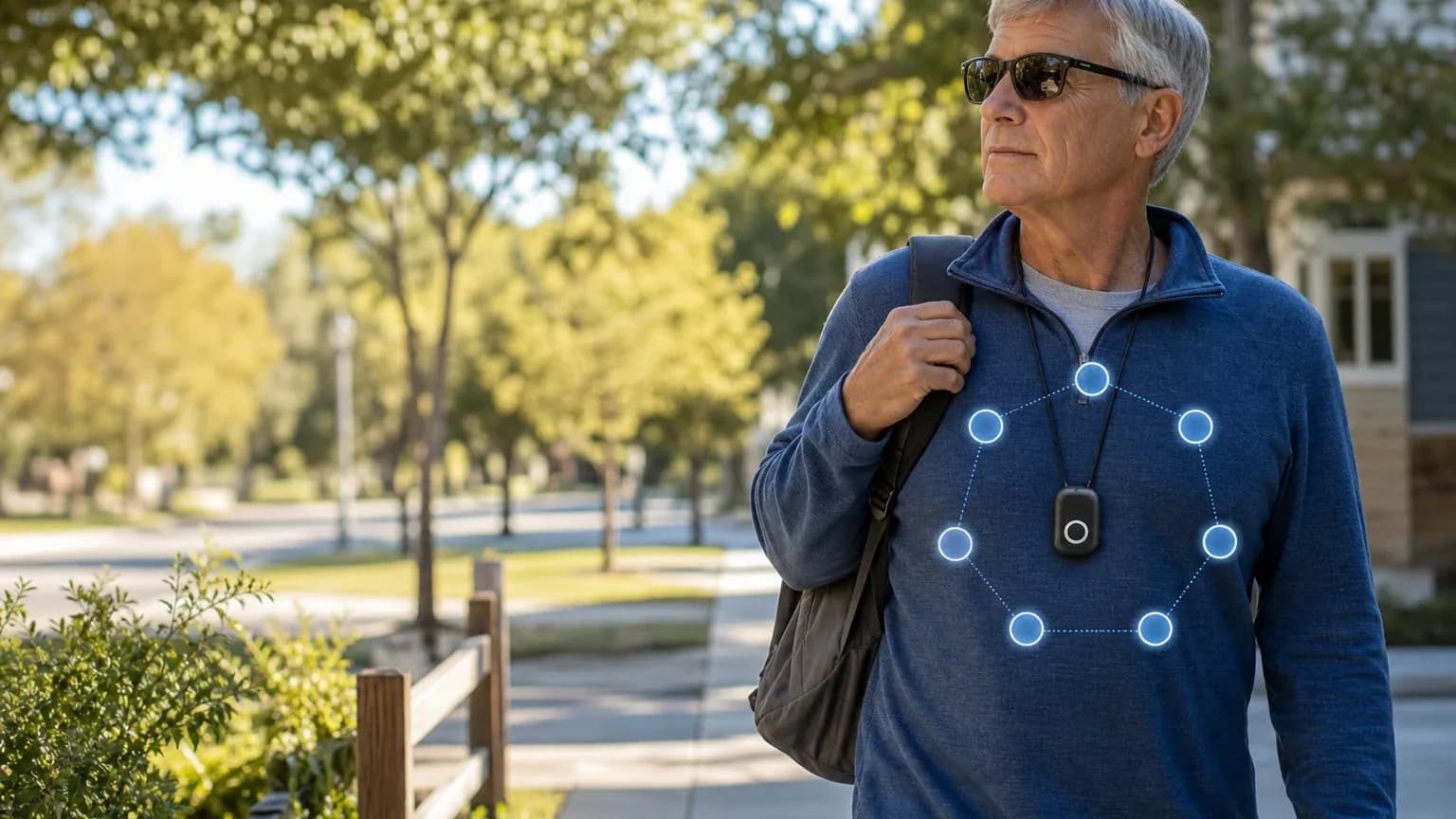
LifeStation is a good fit for active older adults who need a portable, cellular GPS medical alert device for travel, walking, driving, and time away from home. Two of seven platforms named LifeStation during the ranking stage (29% share), with an average listed rank of 5.0 and a best rank of 3. The strongest reason to consider LifeStation is the Sidekick Mobile's combination of AT&T 4G LTE connectivity, GPS/Wi-Fi/cellular location technology, IP67 water resistance, and up to five days of stated battery life in a compact 1.4–1.65-ounce pendant. The main limitation is inconsistent public pricing and unverified performance claims: independent testing found uneven fall detection, no caregiver mobile app (text-based location only), and AT&T-only coverage with no carrier redundancy. Buyers should verify current pricing, coverage in their specific travel areas, and fall detection reliability before purchasing.
Research Snapshot
| Metric | Value |
|---|---|
| Platform mentions in ranking stage | 2 of 7 platforms (deepseek, openai) |
| Share of included platform responses | 29% (2 of 7) |
| Average listed rank | 5.0 |
| Best listed rank | 3 (openai) |
| Relevant product/model/plan | Sidekick Mobile with 24/7 monitoring; optional fall detection and protection plan |
| Overall use-case fit | Good (4 platforms: good; 2 platforms: strong; 2 platforms: uncertain) |
| Research date | 2026-08-05 |
Why LifeStation Qualified for This Study
LifeStation qualified for this On-the-Go & Active Mobility review because two of the seven AI research platforms (deepseek and openai) named the company during the ranking discovery stage. The relevant product is the Sidekick Mobile, a portable GPS cellular medical alert unit with 24/7 monitoring. All seven platforms evaluated LifeStation's fit for this use case, even though only two named it in the ranking stage. The product was assessed against seven criteria: cellular network reliability, GPS location precision, two-way audio clarity, water resistance, device portability, battery life, and monthly subscription cost.
The Product, Model, Plan, or Service Most Relevant to On-the-Go & Active Mobility
The product most relevant to this use case is the LifeStation Sidekick Mobile, a wearable GPS medical alert pendant with 24/7 monitoring. All seven platforms identified this as the relevant product. Key specifications reported across platforms include:
- Network: AT&T 4G LTE (LTE bands 2, 4, and 12 per LifeStation's product page)
- Location: GPS, Wi-Fi, and cellular signal triangulation via a proprietary enhanced-location algorithm
- Audio: Built-in two-way speaker and microphone
- Water resistance: IP67 rating; LifeStation states it can be worn in the shower but should not be submerged
- Dimensions: 65 x 43 x 16 mm
- Weight: Approximately 47 grams (1.65 ounces) per LifeStation; some sources cite 1.4 ounces or 1.2 ounces
- Battery: 800 mAh lithium-ion, up to five days per full charge
- Carrying options: Lanyard, pocket, purse, or belt-area carry
LifeStation also offers the Sidekick Smart (smartwatch form, ~24-hour battery) and Pearl (smaller, ~3-day battery), but the Sidekick Mobile is the unit most aligned with extended on-the-go use.
What the AI Platforms Agreed About
Strong agreement: Portability and battery life are advantages
All seven platforms assessed device portability as an advantage or strong advantage. The Sidekick Mobile's compact size and light weight (1.2–1.65 ounces depending on source) make it suitable for walking, errands, driving, and travel. Battery life of up to five days was confirmed by independent testing reported by NCOA ("about five days of charge") and aligns with LifeStation's stated 120-hour specification. This exceeds the Sidekick Smart watch (24 hours) and Pearl (3 days).
Strong agreement: Water resistance is adequate for shower use but not submersion
Six of seven platforms noted the IP67 rating or shower-safe designation. LifeStation's official guidance states the device can be worn in the shower but should not be submerged. Independent sources (medicalalertsystemshq.com, NCOA) confirmed water-resistant capability for shower use. One platform (deepseek) noted that LifeStation's marketing did not clearly advertise an IP rating, but other platforms cited the IP67 specification directly.
Majority agreement: Two-way audio is usable
Four platforms assessed two-way audio as an advantage. Independent testing from medicalalertbuyersguide.org confirmed "more than acceptable connection speeds along with clear 2-way voice communication." TechRadar reported usable or superior audio on the mobile device during testing. No platform reported poor audio quality, though independent testing evidence is limited.
Majority agreement: No long-term contract required
Five platforms reported that LifeStation offers month-to-month billing with no long-term contracts and a 30-day money-back guarantee. U.S. News and NCOA both confirmed no cancellation fees. LifeStation's return policy states service can be canceled by telephone and equipment must generally be returned before cancellation is processed.
Majority agreement: Fall detection is unreliable
Five platforms flagged fall detection as a limitation. Forbes Health testing found the optional fall detection "proved to be uneven, failing to detect genuine falls as well as simulated slides from a chair." LifeStation itself acknowledges "fall detection technology is not always accurate." This is a material limitation for users who may be unable to press the SOS button.
Where the AI Platforms Disagreed or Were Uncertain
Fit rating disagreement
Platform fit ratings split into three groups:
| Rating | Platforms | Count |
|---|---|---|
| Strong | google, grok | 2 |
| Good | anthropic, deepseek, openai | 3 |
| Uncertain | kimi, perplexity | 2 |
The "uncertain" ratings (kimi, perplexity) were driven primarily by information opacity rather than negative findings. Kimi noted that LifeStation's marketing says "the nation's largest and most reliable 4G LTE networks" without specifying AT&T, Verizon, or T-Mobile in the materials reviewed. Perplexity's evidence set was limited and could not verify key specifications. Other platforms (openai, anthropic, google) identified AT&T as the carrier based on LifeStation's product page and PCMag's review.
Weight specification conflict
LifeStation's official product page states approximately 1.65 ounces (47 grams), while anthropic cited 1.4 ounces and kimi cited 1.2 ounces. These discrepancies may reflect different product versions, measurement methods, or outdated listings. Buyers should confirm the current weight before purchase.
Pricing conflicts
Public pricing varies materially across sources:
| Source | Monthly price | Activation fee |
|---|---|---|
| topconsumerreviews.com | $39.95–$55.85 depending on tier | Not specified |
| seniorliving.org | $39.95 base | $99.95 |
| grok (via seniorliving.org) | $37.95–$41 | $100 |
| google (via PCMag) | $37.95–$40.95 | Up to $99.95 |
| openai (via Forbes) | $39.95–$40.95 | $99.95 |
Fall detection add-on pricing ranges from approximately $6–$16 per month depending on source. Protection plan pricing ranges from approximately $4–$8 per month. LifeStation's official product page did not clearly display a definitive current price as of the research date.
Water resistance terminology
Deepseek noted that LifeStation's marketing describes the device as "water-resistant" without a clear IP rating in the materials reviewed. Other platforms cited the IP67 rating directly from LifeStation's product page and PCMag. This conflict may reflect different marketing materials or product page versions.
Caregiver app availability
Anthropic reported that LifeStation lacks a dedicated caregiver mobile app, offering only the text-based "Find My Loved One" feature. Google described "Find My Loved One" text-locating functionality and Amazon Alexa integration. No platform confirmed a full-featured caregiver app with real-time location tracking. This is a notable limitation for families wanting continuous location visibility.
Use-Case-Specific Features and Capabilities
Cellular network reliability
Assessment: Advantage with caveats. LifeStation states the Sidekick Mobile uses AT&T 4G LTE and lists LTE bands 2, 4, and 12. Independent testing from medicalalertsystemshq.com reported "most test calls were successfully completed" but noted "a few trouble spots where I faced connectivity hurdles." The device is AT&T-only with no carrier redundancy. Buyers in areas with weak AT&T coverage should consider alternatives like LifeFone VIPx, which offers network choice.
GPS location precision
Assessment: Advantage with unverified precision. LifeStation claims a proprietary algorithm combining GPS, Wi-Fi, and cellular signals provides "pinpoint location accuracy (even indoors)." No independent source provided quantitative accuracy measurements. The company states location capability is sufficient for emergency responders to locate users. Location precision may be weaker indoors or where signals are limited.
Two-way audio clarity
Assessment: Advantage. Independent testing confirmed clear two-way voice communication. TechRadar reported usable or superior audio on the mobile device. No platform reported audio quality issues, though testing evidence is limited and may not represent all environments.
Water resistance
Assessment: Advantage. IP67 rating supports temporary immersion under specified test conditions (submerged to 3 feet for 30 minutes per one source). LifeStation's consumer guidance states the device can be worn in the shower but should not be submerged. This is adequate for rain, splashes, and shower use but not swimming.
Device portability
Assessment: Advantage. Dimensions of 65 x 43 x 16 mm and weight of approximately 47 grams make the device suitable for lanyard, pocket, purse, or belt-area carry. Some reviewers considered the form factor somewhat clunky compared to smartwatches.
Battery life
Assessment: Advantage. Up to five days per full charge (800 mAh lithium-ion battery). Independent testing from NCOA confirmed approximately five days of charge. Actual life varies with cellular signal strength, GPS use, call volume, temperature, and device age. The device alerts users with voice prompts and vibration when battery is low.
Monthly subscription cost
Assessment: Neutral to limitation. Base pricing ranges from approximately $37.95–$40.95 per month depending on source and promotion. The $99.95 activation fee is higher than some competitors. Budget alternatives include Medical Alert at $27.95/month and MobileHelp at $25.95/month. Insurance discounts (e.g., Aetna members reportedly get $19.95/month) may reduce costs for eligible buyers.
Pricing, Fees, Contracts, and Ongoing Costs
Pricing confidence is low. Public pricing is inconsistent across LifeStation and independent sources. The official product page reviewed did not clearly display a definitive current price.
Known costs (as reported across platforms)
| Cost item | Reported range | Source |
|---|---|---|
| Monthly monitoring (base) | $37.95–$40.95 | PCMag, seniorliving.org, Forbes |
| Monthly monitoring (Select plan with warranty) | $47.90 | topconsumerreviews.com |
| Monthly monitoring (Supreme plan with fall detection) | $55.85 | topconsumerreviews.com |
| Activation fee | $99.95 (some sources: $100) | seniorliving.org, grok |
| Shipping | ~$12.50 (monthly billing) | openai |
| Fall detection (optional) | ~$6–$16/month | Multiple sources |
| Protection plan (optional) | ~$4–$8/month | Multiple sources |
| Additional help button | ~$4/month | anthropic |
| Lockbox | ~$3/month | anthropic, grok |
Contract and cancellation terms
- No long-term contracts required (reported by five platforms)
- Month-to-month billing available
- 30-day money-back guarantee (full refund if equipment and accessories returned within the introductory period)
- Cancel anytime by phone with device return
- No cancellation fees reported
- Discounts available for quarterly or annual pre-payment (up to one free month on annual plans)
- Equipment must generally be returned before cancellation is processed
Unverified costs
- Exact current monthly price as of August 5, 2026
- Activation fee under current promotions
- Shipping charges for quarterly or annual billing
- Replacement costs for loss, theft, water damage, or battery degradation
- Tax and government fees
Best Suited For
LifeStation Sidekick Mobile is best suited for:
- Active seniors who primarily need manually initiated emergency calls while away from home — The SOS button is the primary activation method, and independent testing found it reliable.
- Users who want a small pendant or pocket device rather than a smartwatch — The 1.4–1.65-ounce form factor is lighter than most smartwatch alternatives.
- Buyers prioritizing multi-day battery life over daily charging — Five-day battery life exceeds most competitors and minimizes charging interruptions for travelers.
- Travelers who remain within usable AT&T cellular coverage — The device operates on AT&T's 4G LTE network with no carrier fallback.
- Seniors comfortable with month-to-month subscriptions and no long-term contracts — Flexible cancellation terms reduce commitment risk.
- Users who can reliably press the SOS button — Given inconsistent fall detection results, manual activation is the primary safety mechanism.
Probably Not Best Suited For
LifeStation Sidekick Mobile is probably not best suited for:
- People who frequently travel in areas with weak or absent AT&T coverage — No carrier redundancy option exists.
- Users who may be unable to press the SOS button and require highly reliable automatic fall detection — Independent testing found uneven fall detection performance.
- Buyers seeking a caregiver app with continuous location visibility — LifeStation offers text-based "Find My Loved One" only; competitors like Bay Alarm Medical and Medical Guardian offer dedicated caregiver apps.
- Buyers unwilling to pay an activation fee or manage recurring add-on charges — The $99.95 activation fee plus optional add-ons increase total first-year cost.
- Users requiring waterproof (not water-resistant) devices for swimming — IP67 supports temporary immersion but LifeStation advises against submersion.
- Budget-conscious buyers — Competitors offer lower base pricing (Medical Alert at $27.95/month, MobileHelp at $25.95/month).
When Another Option May Be Better
Based on platform responses, consider alternatives in these scenarios:
- Weak AT&T coverage: Choose LifeFone VIPx, which offers network choice (Verizon option), if the buyer's regular locations have stronger coverage on another carrier.
- Caregiver app priority: Choose Bay Alarm Medical or Medical Guardian, which offer dedicated caregiver mobile apps with real-time tracking.
- Fall detection priority: Choose a system with stronger independently tested fall-detection results if the user may be unable to press the SOS button.
- Budget constraints: Choose Medical Alert ($27.95/month) or MobileHelp ($25.95/month) for lower base pricing.
- Smartwatch form factor: Choose the Sidekick Smart (LifeStation's own watch) or a competing smartwatch-style system if discreet wearability and activity features matter more than five-day battery life.
- Published specifications: Choose a provider with clearly published all-in pricing and verified specs (e.g., Medical Guardian Mini Guardian) if pricing transparency is a major concern.
Questions to Verify Before Buying
Before purchasing LifeStation Sidekick Mobile, verify the following with LifeStation directly:
- What is the exact current monthly price for Sidekick Mobile with 24/7 monitoring as of August 5, 2026?
- What are the activation, shipping, equipment-protection, fall-detection, replacement, and tax charges?
- Is fall detection included in the quoted plan or billed separately, and what is the current monthly amount?
- Which AT&T network profile and LTE bands are used in the buyer's ZIP codes and frequent travel destinations?
- Can LifeStation provide a coverage check for the buyer's home, vehicle routes, walking areas, and rural or vacation locations?
- What happens if the device cannot obtain GPS, Wi-Fi, or cellular location data?
- Is location shared only after an SOS/fall event, or can approved caregivers request or view location independently?
- What is the tested or expected two-way audio performance in a moving vehicle, outdoors, and noisy environments?
- What is the real-world battery duration with typical GPS use and several monitoring calls?
- What alerts indicate low battery, weak signal, failed location, or charging problems?
- What are the exact cancellation, return-shipping, refund, and prorated-refund rules for monthly, quarterly, and annual billing?
- What is the replacement process and cost for loss, theft, water damage, or battery degradation?
- What happens to emergency response if traveling outside the US? Is international coverage available or does service terminate?
- Are there insurance or organizational discounts (e.g., Aetna members reportedly get $19.95/month) that reduce costs?
Final AI Consensus Verdict
LifeStation Sidekick Mobile is a good, but not unqualified, fit for On-the-Go & Active Mobility. The device matches the core need well through mobile AT&T LTE connectivity, multi-source location technology, two-way audio, IP67 water resistance, portability, and up to five days of stated battery life. Four of seven platforms rated it "good," two rated it "strong," and two rated it "uncertain" due to information opacity.
The main reasons not to rate it higher are inconsistent public pricing, dependence on AT&T coverage with no carrier redundancy, lack of independently quantified GPS precision, mixed independent results for optional automatic fall detection, and the absence of a dedicated caregiver mobile app. The device is best for active seniors who can reliably press the SOS button and who confirm adequate AT&T coverage in their normal travel areas.
For a broader comparison of options for active seniors, see the On-the-Go & Active Mobility consensus index.
For other product categories in this space, browse the medical alert systems directory.
How This Review Was Produced
This review was produced by aggregating fit-research responses from seven AI platforms (anthropic, deepseek, google, grok, kimi, openai, perplexity) that evaluated LifeStation for the On-the-Go & Active Mobility use case. Each platform assessed LifeStation against seven criteria: cellular network reliability, GPS location precision, two-way audio clarity, water resistance, device portability, battery life, and monthly subscription cost. Platform responses included citations to 28 deduplicated sources (23 independent, 5 company-owned). The authoritative research date is August 5, 2026.
Platform fit ratings were: anthropic (good), deepseek (good), google (strong), grok (strong), kimi (uncertain), openai (good), perplexity (uncertain). Only two platforms (deepseek, openai) named LifeStation during the ranking discovery stage, representing 29% of the seven-platform panel.
Methodology Limitations
- Platform-mention distinction: All seven platforms evaluated LifeStation's fit, but only two named it during ranking discovery. The 29% share reflects ranking-stage mentions, not evaluation participation.
- Platform-reported dates differ: Deepseek's research date is January 1, 2026, while the authoritative run date is August 5, 2026. Platform-reported dates are provenance metadata and do not independently prove freshness.
- Unvalidated URLs: Supplied URLs were collected from platform responses and were not independently validated by the writer stage.
- Pricing conflicts unresolved: Public pricing varies materially across sources. This review describes the conflicts and tells buyers what to verify rather than resolving them by guessing.
- Product name inconsistencies: The device is marketed as both "Sidekick Mobile" and "Sidekick" across sources. Weight specifications vary (1.2–1.65 ounces) across sources.
- Company-owned vs. independent evidence: Five citations are company-owned (lifestation.com); 23 are independent. Company claims about "pinpoint location accuracy," "nationwide reliability," and battery life should be treated as marketing claims unless independently verified.
- No independent verification: AI-platform agreement does not prove product quality. This review reports what platforms found, not independent testing results.
- Limited independent testing: Independent testing of audio quality, GPS precision, and battery life is limited. Forbes Health tested fall detection and found uneven performance; NCOA confirmed approximately five-day battery life.
Sources
Company-owned sources
- LifeStation — "Best Mobile Medical Alert System with GPS | LifeStation" — https://www.lifestation.com/pdp-sidekick/ (cited by openai, anthropic)
- LifeStation — "Mobile GPS Medical Alert System | LifeStation.com" — https://www.lifestation.com/mobile-gps/ (cited by anthropic)
- LifeStation — "LifeStation Return Policy" — https://www.lifestation.com/return-policy/ (cited by openai)
- LifeStation — "LifeStation medical alert systems" — https://www.lifestation.com/ (cited by deepseek, google)
- LifeStation — "LifeStation Sidekick Mobile - GPS Medical Alert" — https://www.lifestation.com/products/mobile-medical-alert/ (cited by kimi)
Independent sources
- Forbes Health — "LifeStation Medical Alert System Review" — https://www.forbes.com/health/medical-alert-systems/lifestation-review/ (cited by openai, anthropic, google)
- Forbes Health — "Best Life Alert Alternatives In 2026" — https://www.forbes.com/health/wellness/best-life-alert-alternatives/ (cited by openai)
- TechRadar — "LifeStation review" — https://www.techradar.com/reviews/lifestation-review (cited by openai, google)
- ConsumerAffairs — "Read 1000+ LifeStation Reviews" — https://www.consumeraffairs.com/medical-alert-systems/lifestation.html (cited by openai, deepseek, google)
- MedicalAlertSystemsHQ — "LifeStation Mobile Medical Alert w GPS Sidekick (Tested)" — https://medicalalertsystemshq.com/reviews/lifestation-mobile-medical-alert-with-gps-review.html (cited by anthropic)
- MedicalAlertBuyersGuide — "LifeStation Review - Medical Alert Buyer's Guide" — https://www.medicalalertbuyersguide.org/medical-alert-system/lifestation-review/ (cited by anthropic, google)
- NCOA — "LifeStation Review 2026: Testing the Medical Alert System" — https://www.ncoa.org/product-resources/medical-alert-systems/lifestation-review/ (cited by anthropic, grok, google)
- TopConsumerReviews — "LifeStation Review for June 2026" — https://www.topconsumerreviews.com/best-medical-alert-systems/reviews/life-station.php (cited by anthropic)
- SeniorLiving.org — "LifeStation Medical Alert System Review 2026" — https://www.seniorliving.org/medical-alert-systems/lifestation/reviews/ (cited by anthropic, grok, google)
- U.S. News — "LifeStation Medical Alert System Review 2026" — https://realestate.usnews.com/home-services/medical-alert-system/lifestation (cited by anthropic, grok)
- PCMag — "LifeStation Sidekick Mobile Medical Alert Review" — https://www.pcmag.com/ (cited by google)
- ElderGuide — "LifeStation Medical Alert Device Review" — https://www.elderguide.com/ (cited by google)
- AgingInPlace.org — "LifeStation Medical Alert Review: What You Need To Know" — https://www.aginginplace.org/ (cited by google)
- SafeWise — "LifeStation Review - Hands-On Test Results" — https://www.safewise.com/ (cited by google)
- OpenView Partners — "Usage-Based Pricing: The next evolution in software pricing" — https://openviewpartners.com/usage-based-pricing/ (cited by perplexity; note: this source does not materially support LifeStation claims and appears to be a citation error)
Verify this research
Review the study details behind this page or download the public machine-readable verification record.
- Study date
- Aug 5, 2026
- Platforms analyzed
- 7
- Source records
- 28
- Ranking mentions
- 2 of 7
- Platform share
- 29%
- Final consensus rank
- #5
Research trail and source mix
Platforms
openai, anthropic, deepseek, grok, perplexity, kimi, google
Source mix
23 independent · 5 company-owned
Evidence support
15 direct · 5 partial
Important limitation
Use the run research_date as the study date. Platform-reported dates are provenance metadata and do not independently prove freshness.
Source snapshot SHA-256 2cf8948bdcb4b82675e22771d5f81c05d88fe097fc17fa38816c1198d2aebf99