
Answer Capsule
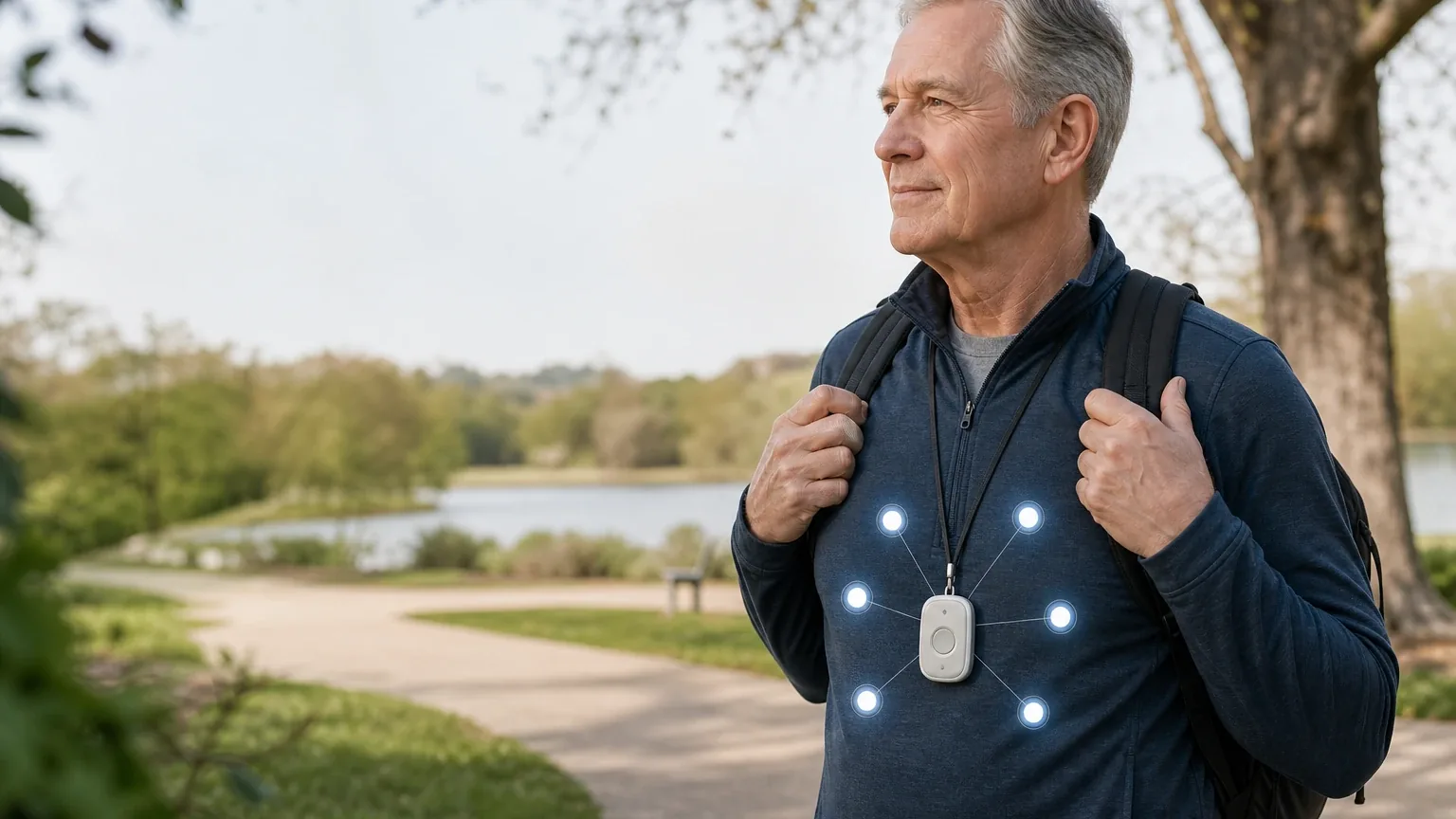
Medical Guardian is a good fit for active older adults who need a standalone mobile medical alert device with GPS, cellular connectivity, two-way audio, and water resistance for use away from home. Six of seven AI platforms named Medical Guardian in the ranking stage for On-the-Go & Active Mobility, with an average listed rank of 1.67 and a best rank of 1. The strongest reason to consider it is the combination of purpose-built mobile devices—Active Guardian, MGMini, and MGMove smartwatch—that do not require a smartphone or home base station. The main limitation is cost: monthly fees run approximately $39.95–$49.95, fall detection adds about $10/month, and equipment fees range from roughly $65 to $200, with no free trial period reported.
Research Snapshot
| Metric | Value |
|---|---|
| Platform mentions in ranking stage | 6 of 7 platforms |
| Share of included platform responses | 85.7% |
| Average listed rank | 1.67 |
| Best listed rank | 1 (Google, OpenAI, Perplexity) |
| Relevant product/model/plan | Active Guardian; MGMini; MGMove Smartwatch |
| Overall use-case fit | Good (2 platforms: strong; 3: good; 1: uncertain) |
| Research date | 2026-08-05 |
Why Medical Guardian Qualified for This Study
Medical Guardian qualified because six of seven AI platforms named it during the ranking stage for On-the-Go & Active Mobility. The platforms that named it were Anthropic, DeepSeek, Google, Kimi, OpenAI, and Perplexity. Grok did not name it in the ranking stage but did provide a fit assessment. The entity received an average listed rank of 1.67 and a best rank of 1.
The platforms identified three relevant products: the Active Guardian mobile pendant, the MGMini compact GPS device, and the MGMove smartwatch. All three are designed for use away from home without a base station.
The Product, Model, Plan, or Service Most Relevant to On-the-Go & Active Mobility
The most relevant product is the Active Guardian mobile medical alert system, described as an all-in-one mobile device with AT&T connectivity, GPS and Wi-Fi location services, an integrated two-way speaker, water resistance, and up-to-five-day battery life [1]. The MGMini is the more clearly documented current compact mobile option, wearable as a necklace or belt clip [2]. The MGMove smartwatch is relevant for users who prefer a watch form factor, with GPS and optional fall detection [3].
What the AI Platforms Agreed About
Strong agreement: Medical Guardian is a reasonable-to-strong fit for active seniors. Five of seven platforms rated the fit as "good" or "strong"; one rated it "uncertain" due to insufficient verification. No platform rated it as a poor fit.
Strong agreement: The devices are purpose-built for on-the-go use. All platforms noted that Medical Guardian offers mobile devices with GPS, cellular connectivity, and two-way audio that do not require a home base station. Kimi described the devices as "mobile-first devices not tethered to home base station" [5]. OpenAI noted Active Guardian combines an integrated speaker with GPS/Wi-Fi location services [6].
Strong agreement: Water resistance supports daily active use. Multiple platforms confirmed water resistance across the product line. Anthropic reported MGMove is IP67-rated and safe for shower use [7], MGMini is water-resistant and wearable in the shower [8], and Active Guardian is described as waterproof [9]. Kimi reported Active Guardian has IPX5 water resistance [5].
Strong agreement: Battery life varies significantly by model. The consensus is that Active Guardian and MGMini offer multi-day battery life (up to 5 days), while MGMove requires daily charging. Anthropic reported MGMove battery life of 20–24 hours [10], MGMini up to 5 days [12], and MGMini Lite 36 hours [13]. Kimi reported Active Guardian at 5 days, MGMini up to 7 days, and MGMove up to 5 days [5].
Strong agreement: Fall detection is optional and costs extra. Multiple platforms reported fall detection as a $10/month add-on. Anthropic stated fall detection adds $10/month across all models [16]. OpenAI reported optional fall detection at approximately $10 per month [18]. Kimi noted fall detection is not included in the base price on most devices [5].
Majority agreement: No long-term contract required. OpenAI cited Medical Guardian's statement that mobile products do not require long-term contracts and have no activation or cancellation fees [19]. Google confirmed no long-term binding service contracts and prorated refunds for unused prepaid months [20]. Kimi noted month-to-month plans with no long-term commitment [21].
Where the AI Platforms Disagreed or Were Uncertain
Active Guardian availability is uncertain. OpenAI flagged that current official search results prominently describe MGMini and do not clearly confirm Active Guardian as a currently sold product (openai:factual_conflicts). DeepSeek noted official-site retrieval failed, so product pages and current pricing were not directly verified (deepseek:factual_conflicts). Perplexity rated the overall fit "uncertain" because the available evidence was insufficient to verify buyer-critical details (perplexity:final_verdict).
Battery life claims conflict across sources. OpenAI reported Active Guardian at up to 5 days, MGMini at up to 5 days in some sources, and other materials distinguishing between MGMini versions (openai:factual_conflicts). Google reported MGMini at 3–5 days [22]. Kimi reported MGMini at up to 7 days [23]. Anthropic reported MGMini Lite at 36 hours [24]. These discrepancies may reflect different models or operating conditions.
Network descriptions differ. OpenAI noted older independent material identifies AT&T as the network provider, while current Medical Guardian language refers to AT&T or Verizon (openai:factual_conflicts). Anthropic reported MGMini uses AT&T or dual AT&T/Verizon with OmniSIM technology [25]. Google confirmed OmniSIM technology providing access to both AT&T and Verizon networks [27]. DeepSeek stated all devices depend on AT&T's network [28].
Pricing varies by source. OpenAI reported MGMini starting at $39.95/month and Active Guardian at approximately $44.95/month [29]. DeepSeek reported Active Guardian at ~$39.95/month, MGMini at ~$29.95/month, and MGMove at ~$49.95/month (deepseek:known_costs). Kimi reported Active Guardian at ~$39.95–$49.95/month, MGMini at ~$39.95/month, and MGMove at ~$44.95/month (kimi:known_costs). Anthropic reported MGMove at $39.95–$42.95/month [31].
Fall detection accuracy is inconsistent. Anthropic reported MGMini Lite detected 80% of test falls with zero false alarms [33], but MGMini failed to detect one of three simulated test falls [34]. This suggests different implementations across models.
Use-Case-Specific Features and Capabilities
Cellular Network Reliability
Conclusion: Medical Guardian uses major U.S. cellular networks, but coverage varies by location and model.
Medical Guardian states its mobile products include AT&T or Verizon connectivity [35]. Google confirmed OmniSIM technology on devices like MGMini provides access to both AT&T and Verizon networks [36]. Anthropic reported MGMini Lite is limited to AT&T only, unlike the standard MGMini with dual network (anthropic:limitations). DeepSeek noted AT&T coverage can vary in rural or remote areas [37]. Anthropic reported location accuracy degraded by up to 100 feet in low-coverage zones [38].
GPS Location Precision
Conclusion: GPS tracking is included on all mobile devices, but precision is not independently verified across all environments.
Active Guardian is described as having "one of the most accurate location tracking systems" [39]. MGMove showed GPS accuracy within 30 feet in clear-sky conditions [40]. WiFi-enhanced location technology is claimed to identify location within seconds [41]. However, real-world rural testing showed inconsistent accuracy, sometimes 100 feet off [38]. OpenAI noted public sources do not establish a guaranteed accuracy radius or performance in dense buildings (openai:use_case_findings).
Two-Way Audio Clarity
Conclusion: Two-way audio is built into mobile devices and generally rated as clear.
Active Guardian has an integrated two-way speaker [42]. Independent testing describes Medical Guardian audio quality as strong [43]. Anthropic reported average response times of 20–29 seconds from button press to operator connection [44], with Forbes testers noting response time up to one minute [45]. Kimi described "crystal-clear two-way voice communication" on Active Guardian [46].
Water Resistance
Conclusion: Devices are water-resistant for shower and daily use, but not for swimming.
Active Guardian is described as water resistant and showerproof [47]. MGMove is IP67-rated and safe for shower use [48]. MGMini is water-resistant and wearable in the shower [49]. Kimi reported Active Guardian has IPX5 water resistance, MGMini is water-resistant, and MGMove is splash-resistant but not fully submersible [46]. No source establishes suitability for swimming.
Device Portability
Conclusion: All three mobile devices are designed for portability without a base station.
MGMini is among the smallest mobile medical alert devices at 1.85 x 1.85 inches [50]. Active Guardian weighs 2.06 ounces [46]. MGMini can be worn as a pendant, belt clip, or lanyard [52]. MGMove is a smartwatch form factor [53]. Active Guardian is described as compact and lightweight for travel [54].
Battery Life
Conclusion: Battery life ranges from about 24 hours (MGMove) to 5–7 days (MGMini), depending on model and usage.
| Model | Reported Battery Life | Source |
|---|---|---|
| Active Guardian | Up to 5 days | [42] |
| MGMini | Up to 5 days (some sources); up to 7 days (Kimi) | [55] |
| MGMini Lite | 36 hours | [56] |
| MGMove | 20–24 hours, daily charging | [57] |
Actual battery life depends on GPS updates, signal strength, calls, and device condition (openai:use_case_findings).
Monthly Subscription Cost
Conclusion: Monthly costs are at the premium tier, with equipment fees and add-ons increasing total cost.
Reported monthly costs range from approximately $29.95 to $49.95 depending on device and source. The official site lists MGMini starting at $39.95/month [35]. Fall detection adds approximately $10/month [59]. OnGuard text/email alerts are reported at approximately $2.99/month (openai:pricing_and_terms). MyGuardian app features add approximately $5/month for MGMove [60].
Pricing, Fees, Contracts, and Ongoing Costs
Conclusion: Medical Guardian requires a recurring subscription plus equipment fees, with optional add-ons increasing total cost. No long-term contract is required, but a $350 equipment non-return charge may apply.
Known Costs
| Item | Reported Cost | Source |
|---|---|---|
| MGMini monthly | $39.95 (official starting price) | [61] |
| Active Guardian monthly | ~$44.95 (shorter billing cycles) | [62] |
| MGMove monthly | $39.95–$49.95 | anthropic:C20, deepseek:known_costs |
| MGMini equipment fee | ~$64.95–$149.95 | [63] |
| MGMove equipment fee | $199.95 | [65] |
| Fall detection add-on | ~$10/month | [66] |
| MyGuardian app (MGMove) | ~$5/month | [68] |
| OnGuard alerts | ~$2.99/month | openai:pricing_and_terms |
| Protection Plan | $6.99/month | anthropic:pricing_and_terms |
| Shipping (MGMove) | $12.50 | anthropic:pricing_and_terms |
Contract and Cancellation Terms
Medical Guardian states it does not require a long-term contract and does not charge activation or cancellation fees [61]. Unused prepaid service is eligible for a prorated refund (openai:pricing_and_terms). Equipment must be returned after cancellation; failure to return leased equipment within 30 days may incur a one-time $350 charge [69]. Anthropic noted no free trial period is offered (anthropic:limitations). Independent reports describe customer-service or billing difficulties during cancellation (openai:pricing_and_terms).
Pricing Confidence
Pricing confidence is moderate. The official site lists MGMini starting at $39.95/month, but exact 2026 pricing for Active Guardian is unclear (openai:pricing_and_terms). DeepSeek noted third-party review data may be dated relative to 2026 (deepseek:factual_conflicts). Google rated pricing confidence as "high" for the range of $39.95–$46.95/month (google:pricing_and_terms).
Best Suited For
Medical Guardian is best suited for:
- Frequent walkers, drivers, travelers, and older adults who spend extended periods away from home (openai:fit_assessment)
- Users who want a standalone device that does not require carrying a smartphone (openai:fit_assessment)
- Buyers prioritizing longer battery life and an integrated two-way speaker (openai:fit_assessment)
- Active seniors in urban/suburban areas who prioritize fast emergency response (anthropic:fit_assessment)
- Users who prefer a discreet smartwatch form factor (anthropic:strengths)
- Families wanting caregiver-facing location or battery information (openai:fit_assessment)
- Users who value water resistance for shower and daily active use (anthropic:strengths)
Probably Not Best Suited For
Medical Guardian is probably not best suited for:
- Budget-sensitive buyers seeking the lowest monthly price or no recurring subscription (openai:fit_assessment)
- Users who want a full-featured consumer smartwatch with broader health, communication, and fitness functions (openai:better_alternative_when)
- Rural or remote area residents where AT&T/Verizon coverage is inconsistent (anthropic:fit_assessment)
- Users who cannot manage daily charging routines (for MGMove) (anthropic:fit_assessment)
- Buyers who require independently published testing of GPS precision, call quality, or nationwide cellular reliability (openai:fit_assessment)
- Users who need full waterproofing for swimming (kimi:fit_assessment)
- Buyers who want fall detection included in the base price (google:fit_assessment)
When Another Option May Be Better
Consider another provider when:
- The buyer needs a lower total monthly cost or lower equipment cost (openai:better_alternative_when). Some competitors offer simpler GPS pendants for approximately $20/month (deepseek:better_alternative_when).
- Independent testing of cellular performance, GPS accuracy, or response time is a primary requirement (openai:better_alternative_when).
- The buyer frequently travels through areas where the available Medical Guardian carrier has weak coverage (openai:better_alternative_when). Consider Bay Alarm Medical or MobileHelp for dual-carrier options (deepseek:better_alternative_when).
- The user wants a full-featured consumer smartwatch with emergency calling (openai:better_alternative_when).
- The user is unlikely to charge a smartwatch or manage app-based features (openai:better_alternative_when). Consider a simpler pendant.
- Multi-week battery life without charging is required (anthropic:better_alternative_when).
- The user has significant mobility limitations and needs high fall detection accuracy (anthropic:better_alternative_when). In-home systems with chest-worn sensors have reported 98% accuracy versus 80% for wrist-worn (anthropic:better_alternative_when).
Questions to Verify Before Buying
- Is Active Guardian currently available for new U.S. customers as of August 5, 2026, or has it been replaced by MGMini or another model? (openai:questions)
- Which cellular network will the exact device use at your address and regular travel destinations: AT&T, Verizon, or another configuration? (openai:questions)
- Can Medical Guardian provide a coverage check for your home, driving routes, walking areas, and frequently visited travel locations? (openai:questions)
- What is the exact equipment fee, monthly price, annual price, shipping charge, and total first-year cost for the selected device? (openai:questions)
- Is fall detection included or an add-on, and what is its current monthly price? (openai:questions)
- What is the device's rated water-resistance or IP rating, and is swimming or only shower exposure permitted? (openai:questions)
- What battery life should be expected with frequent GPS updates, poor signal, regular two-way calls, and fall detection enabled? (openai:questions)
- Does the device support two-way communication directly, or is a separate wearable or base unit required? (openai:questions)
- How often does the system update location, and can caregivers request an on-demand location? (openai:questions)
- What happens if the device is outside cellular coverage, has a low battery, or cannot obtain a GPS fix? (openai:questions)
- What is the exact cancellation process, refund policy, return deadline, and equipment non-return charge? (openai:questions)
- Are caregiver app features, OnGuard alerts, location history, or battery notifications included in the quoted plan or billed separately? (openai:questions)
- What warranty, replacement, repair, and battery-replacement terms apply? (openai:questions)
Final AI Consensus Verdict
Medical Guardian is a good fit for On-the-Go & Active Mobility, with two platforms rating it "strong," three rating it "good," and one rating it "uncertain." The strongest case for purchase is the Active Guardian and MGMini devices, which combine GPS, two-way audio, water resistance, and multi-day battery life in a standalone form factor that does not require a smartphone or home base station. The main tradeoffs are recurring cost, optional-feature fees, uncertain current Active Guardian availability, and limited independent evidence for real-world network and GPS performance.
Purchase is most defensible after confirming the exact current model, carrier coverage, total cost, water-resistance limits, and cancellation terms (openai:final_verdict). The lack of a free trial period limits risk-free evaluation (anthropic:limitations).
For a broader comparison of top options in this category, see the On-the-Go & Active Mobility consensus index. You can also browse all medical alert systems reviews.
How This Review Was Produced
This review was produced by aggregating fit-research responses from seven AI platforms: Anthropic, DeepSeek, Google, Grok, Kimi, OpenAI, and Perplexity. Each platform evaluated Medical Guardian against seven criteria: cellular network reliability, GPS location precision, two-way audio clarity, water resistance, device portability, battery life, and monthly subscription cost. The research date for the authoritative run is August 5, 2026.
The evidence base includes 35 deduplicated citations: 24 from independent sources and 11 from company-owned sources. Independent sources include Forbes, Consumer Reports, TechRadar, The Senior List, NCOA, SafeHome.org, U.S. News, SeniorLiving.org, MedGrade, MedicalAlertAdvice, RetirementLiving, and Walmart. Company-owned sources include medicalguardian.com product pages, buyer guides, FAQs, and pricing pages.
Methodology Limitations
- Platform-reported dates differ from the authoritative run date. DeepSeek reported a research date of May 13, 2026, while the authoritative run date is August 5, 2026. Platform-reported dates are provenance metadata and do not independently prove freshness.
- Official-site retrieval failed for one or more mentions. DeepSeek and Perplexity noted that official Medical Guardian product pages could not be captured during their assessments. No failed fetch was used as a verified domain key.
- The supplied URLs were collected from platform responses and were not independently validated by the writer stage.
- Conflicting product names, pricing, and capabilities were not resolved by guessing. This review describes the conflicts and tells buyers what to verify.
- AI-platform agreement does not prove product quality. The consensus reflects what the platforms found in their research, not independent testing by this review.
- No current, independent test establishing precise GPS accuracy, nationwide cellular reliability, or device-specific two-way-audio performance was verified (openai:factual_conflicts).
- Independent customer complaints about cancellation and billing are anecdotal and should not be treated as a measured company-wide outcome (openai:factual_conflicts).
- Battery-life claims are maximum estimates and may be materially lower with frequent GPS updates, poor signal, extensive calls, or aging batteries (openai:limitations).
Sources
Company-Owned Sources
- Medical Guardian Alert System Pricing — https://www.medicalguardian.com/alert-system-pricing?conversion=blog (openai:C1)
- Medical Guardian 2025 Buyer's Guide With Pricing — https://cdn.medicalguardian.com/assets/downloads/pdf/2025-Buyers-Guide-With-Pricing-updated-compressed.pdf (openai:C5)
- Medical Guardian Buyer Guide — https://www.medicalguardian.com/assets/pdf/medical-guardian-buyers-guide.pdf (openai:C9)
- Medical Guardian FAQs — https://www.medicalguardian.com/support/faqs/ (openai:C10)
- Medical Guardian FAQ — https://www.medicalguardian.com/faq (anthropic:C3, anthropic:C6)
- Medical Guardian Active Guardian — https://www.medicalguardian.com/products/active-guardian (deepseek:C1, kimi:C1)
- Medical Guardian MGMini — https://www.medicalguardian.com/products/mgmini (deepseek:C2, kimi:C3)
- Medical Guardian MGMove — https://www.medicalguardian.com/products/mgmove (deepseek:C3, kimi:C4)
- Medical Guardian Pricing Plans — https://www.medicalguardian.com/pricing (kimi:C5)
- Medical Guardian — https://www.medicalguardian.com/ (grok:C3)
- Best Medical Alert Necklace | Fall Detection | Medical Guardian — https://vertexaisearch.cloud.google.com/grounding-api-redirect/AUZIYQGypKDxY-1RiO0pYkhD7CdonR7YQzTUFv1PruZzcrrtSP32i1Ge0rlR8tR_KGypk5T7GbZmKJH7Mo-9sIARTEGklFZHud6MVLsAoDh0zhcSwyg58WjdcnzBTP4m87rQHwdVTij5Mi4zB49P_f2cFKY-HaA7XT61H9AELAD-KeS1jqYN9cGF (google:C2)
Additional AI research evidence69 records
- AI research evidence record openai:c2
- AI research evidence record openai:c8
- AI research evidence record anthropic:c5
- AI research evidence record anthropic:c10
- AI research evidence record kimi:c1
- AI research evidence record openai:c2
- AI research evidence record anthropic:c10
- AI research evidence record anthropic:c11
- AI research evidence record anthropic:c12
- AI research evidence record anthropic:c16
- AI research evidence record anthropic:c19
- AI research evidence record anthropic:c17
- AI research evidence record anthropic:c18
- AI research evidence record kimi:c3
- AI research evidence record kimi:c4
- AI research evidence record anthropic:c20
- AI research evidence record anthropic:c21
- AI research evidence record openai:c7
- AI research evidence record openai:c1
- AI research evidence record google:c1
- AI research evidence record kimi:c5
- AI research evidence record google:c3
- AI research evidence record kimi:c3
- AI research evidence record anthropic:c18
- AI research evidence record anthropic:c1
- AI research evidence record anthropic:c3
- AI research evidence record google:c2
- AI research evidence record deepseek:c1
- AI research evidence record openai:c1
- AI research evidence record openai:c2
- AI research evidence record anthropic:c20
- AI research evidence record anthropic:c21
- AI research evidence record anthropic:c23
- AI research evidence record anthropic:c24
- AI research evidence record openai:c1
- AI research evidence record google:c2
- AI research evidence record deepseek:c1
- AI research evidence record anthropic:c2
- AI research evidence record anthropic:c4
- AI research evidence record anthropic:c5
- AI research evidence record anthropic:c6
- AI research evidence record openai:c2
- AI research evidence record openai:c6
- AI research evidence record anthropic:c8
- AI research evidence record anthropic:c7
- AI research evidence record kimi:c1
- AI research evidence record openai:c7
- AI research evidence record anthropic:c10
- AI research evidence record anthropic:c11
- AI research evidence record kimi:c3
- AI research evidence record kimi:c4
- AI research evidence record anthropic:c14
- AI research evidence record anthropic:c13
- AI research evidence record anthropic:c15
- AI research evidence record openai:c4
- AI research evidence record anthropic:c18
- AI research evidence record anthropic:c16
- AI research evidence record anthropic:c19
- AI research evidence record anthropic:c20
- AI research evidence record anthropic:c22
- AI research evidence record openai:c1
- AI research evidence record openai:c2
- AI research evidence record anthropic:c27
- AI research evidence record openai:c4
- AI research evidence record anthropic:c26
- AI research evidence record anthropic:c20
- AI research evidence record openai:c7
- AI research evidence record anthropic:c22
- AI research evidence record openai:c10
Independent Sources
- MedicalAlert.org Medical Guardian Review — https://www.medicalalert.org/best-medical-alert-systems/medical-guardian/ (openai:C2)
- Consumer Reports Buying Advice — https://www.consumerreports.org/health/medical-alert-systems/how-to-choose-a-medical-alert-system-a1228040748/ (openai:C3)
- Forbes MGMini Review — https://www.forbes.com/health/medical-alert-systems/medical-guardian-mgmini-review/ (openai:C4)
- TechRadar Medical Guardian Review — https://www.techradar.com/reviews/medical-guardian-review (openai:C6)
- Forbes Active Guardian Review — https://www.forbes.com/health/medical-alert-systems/medical-guardian-active-guardian-review/ (openai:C7, anthropic:C7, grok:C1)
- Walmart MGMini Listing — https://www.walmart.com/ip/17672609926 (anthropic:C1)
- SeniorLiving.org Medical Guardian Review — https://www.seniorliving.org/medical-alert-systems/medical-guardian/reviews/ (anthropic:C2, anthropic:C21)
- The Senior List Active Guardian Review — https://www.theseniorlist.com/medical-alert-systems/medical-guardian/active-guardian/ (anthropic:C4, anthropic:C15, grok:C2)
- MedGrade MGMove Review — https://medgrade.org/reviews/medical-guardian-mgmove-review/ (anthropic:C5, anthropic:C8)
- The Senior List Medical Guardian Review — https://www.theseniorlist.com/medical-alert-systems/medical-guardian/ (anthropic:C9, anthropic:C12, anthropic:C17)
- The Senior List MGMove Watch Review — https://www.theseniorlist.com/medical-alert-systems/medical-guardian/mgmove/ (anthropic:C10, anthropic:C22)
- NCOA Best Medical Alert Systems with Fall Detection — https://www.ncoa.org/product-resources/medical-alert-systems/best-medical-alert-systems-with-fall-detection/ (anthropic:C11, anthropic:C25)
- NCOA Medical Guardian Review — https://www.ncoa.org/product-resources/medical-alert-systems/medical-guardian-review/ (anthropic:C13, anthropic:C14, grok:C4)
- SafeHome.org MGMove Review — https://www.safehome.org/medical-alert-systems/medical-guardian/mgmove/ (anthropic:C16, anthropic:C20)
- MedicalAlertAdvice MGMove Review — https://www.medicalalertadvice.com/articles/mgmove-medical-alert-smartwatch/ (anthropic:C19, anthropic:C26)
- The Senior List MGMini Lite Review — https://www.theseniorlist.com/medical-alert-systems/medical-guardian/mgmini-lite/ (anthropic:C23)
- U.S. News Medical Guardian Review — https://realestate.usnews.com/home-services/medical-alert-system/medical-guardian (anthropic:C24)
- Amazon MGHome Cellular Listing — https://www.amazon.com/Medical-Guardian-Alarm-System-Seniors/dp/B0BYTGR5V6 (anthropic:C27)
- SafeHome.org Medical Guardian Review — https://www.safehome.org/medical-alert-systems/medical-guardian/ (deepseek:C4)
- RetirementLiving Medical Guardian Review — https://www.retirementliving.com/medical-alert-systems/medical-guardian (kimi:C2)
- SeniorLiving.org Medical Guardian Cost & Pricing — https://vertexaisearch.cloud.google.com/grounding-api-redirect/AUZIYQEVFpQkabpVQXgSKcXexMzamoCu_kOUd3gz6C0lhVwzF0SNJLHqHzpXbqSxoK-Rc4yVUc2BBGYK-tEw77Y65xpgdyzFWk_suW8RrMpz_RKhAoFy4-jbdDMF4ToHBtQ1Y4pUlPjZI-ZH0HYjuLQijQerU0xk3OZTAft8sQ== (google:C1)
- NCOA Medical Guardian Review 2026 — https://vertexaisearch.cloud.google.com/grounding-api-redirect/AUZIYQGBe3XBCz1UtgMW30gCWVv_njb1CSzXdN5WNhM6LR06NTK6XMNiJTFRNUhCkoyIkfNfLcFxzVa8qS5yZn8ZW1GDz-B4r9fHN4mHDr8kN6OVTlitUXf0yZ9qrc3i2jj0kltUGXZwykwQxxW1ZampmOSwIGLWQ0FXl_X2s5DjPtv_1nv_Hz_EoWVfpspS (google:C3)
- SafeHome.org Medical Guardian Cost & Pricing — https://vertexaisearch.cloud.google.com/grounding-api-redirect/AUZIYQElXKytooM3t8zl1zQDO4UD6TyP_9KrOVyurMr8PFvjn9I8ps-H6OH6w_khItNYtDV46QJSQTBjKcM_VokCTVvj-eQdvX7Yq9z2u8VseQGlIc5Rw7mb1hQUVruu0vYhwPEuq-Hov3rHVMcWGkzWfjjIpSkIWwyI (google:C4)
- HKMA Banking Regulatory Document Repository — https://brdr.hkma.gov.hk/ (perplexity:C1)
Additional AI research evidence69 records
- AI research evidence record openai:c2
- AI research evidence record openai:c8
- AI research evidence record anthropic:c5
- AI research evidence record anthropic:c10
- AI research evidence record kimi:c1
- AI research evidence record openai:c2
- AI research evidence record anthropic:c10
- AI research evidence record anthropic:c11
- AI research evidence record anthropic:c12
- AI research evidence record anthropic:c16
- AI research evidence record anthropic:c19
- AI research evidence record anthropic:c17
- AI research evidence record anthropic:c18
- AI research evidence record kimi:c3
- AI research evidence record kimi:c4
- AI research evidence record anthropic:c20
- AI research evidence record anthropic:c21
- AI research evidence record openai:c7
- AI research evidence record openai:c1
- AI research evidence record google:c1
- AI research evidence record kimi:c5
- AI research evidence record google:c3
- AI research evidence record kimi:c3
- AI research evidence record anthropic:c18
- AI research evidence record anthropic:c1
- AI research evidence record anthropic:c3
- AI research evidence record google:c2
- AI research evidence record deepseek:c1
- AI research evidence record openai:c1
- AI research evidence record openai:c2
- AI research evidence record anthropic:c20
- AI research evidence record anthropic:c21
- AI research evidence record anthropic:c23
- AI research evidence record anthropic:c24
- AI research evidence record openai:c1
- AI research evidence record google:c2
- AI research evidence record deepseek:c1
- AI research evidence record anthropic:c2
- AI research evidence record anthropic:c4
- AI research evidence record anthropic:c5
- AI research evidence record anthropic:c6
- AI research evidence record openai:c2
- AI research evidence record openai:c6
- AI research evidence record anthropic:c8
- AI research evidence record anthropic:c7
- AI research evidence record kimi:c1
- AI research evidence record openai:c7
- AI research evidence record anthropic:c10
- AI research evidence record anthropic:c11
- AI research evidence record kimi:c3
- AI research evidence record kimi:c4
- AI research evidence record anthropic:c14
- AI research evidence record anthropic:c13
- AI research evidence record anthropic:c15
- AI research evidence record openai:c4
- AI research evidence record anthropic:c18
- AI research evidence record anthropic:c16
- AI research evidence record anthropic:c19
- AI research evidence record anthropic:c20
- AI research evidence record anthropic:c22
- AI research evidence record openai:c1
- AI research evidence record openai:c2
- AI research evidence record anthropic:c27
- AI research evidence record openai:c4
- AI research evidence record anthropic:c26
- AI research evidence record anthropic:c20
- AI research evidence record openai:c7
- AI research evidence record anthropic:c22
- AI research evidence record openai:c10
Verify this research
Review the study details behind this page or download the public machine-readable verification record.
- Study date
- Aug 5, 2026
- Platforms analyzed
- 7
- Source records
- 35
- Ranking mentions
- 6 of 7
- Platform share
- 86%
- Final consensus rank
- #1
Research trail and source mix
Platforms
openai, anthropic, deepseek, grok, perplexity, kimi, google
Source mix
24 independent · 11 company-owned
Evidence support
24 direct · 8 partial
Important limitation
Use the run research_date as the study date. Platform-reported dates are provenance metadata and do not independently prove freshness.
Source snapshot SHA-256 f39397f9c48277dff72d29954dc3ca8b788539acb6a9af2d3d56d356c5c8ecc1