
Answer Capsule
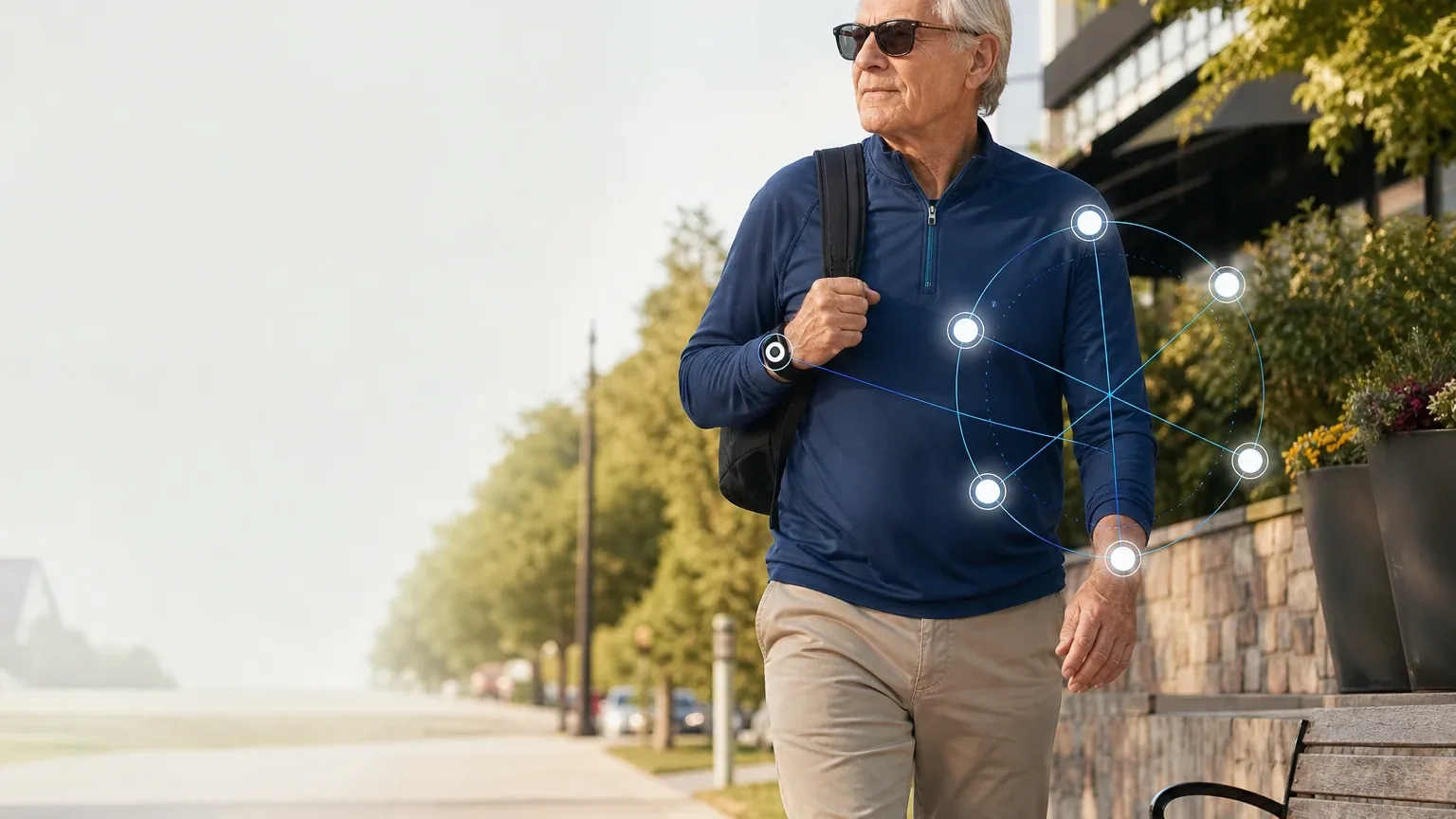
Medical Alert is a good but not top-tier fit for active older adults who travel, walk, drive, or spend extended time away from home. Two of seven AI platforms named Medical Alert during the ranking stage (Google ranked it #3, Perplexity #5), giving it an average listed rank of 4.0 and a 28.6% platform share. The strongest reason to consider Medical Alert is its Medical Alert Smartwatch, which combines GPS, cellular connectivity, two-way audio, water resistance, and optional fall detection in a standalone wearable that works without a nearby phone. The main limitation is unverified GPS reliability: independent testing found the mobile system locked a GPS location only about 50% of the time, with one case taking nearly 8 minutes to pinpoint the user. Battery life of up to two days also requires frequent charging, and the exact "Mobile2.0" product name could not be verified on the official website.
Research Snapshot
| Metric | Value |
|---|---|
| Platform mentions in ranking stage | 2 of 7 (Google, Perplexity) |
| Share of included platform responses | 28.6% |
| Average listed rank | 4.0 |
| Best listed rank | 3 (Google) |
| Relevant product/model/plan | Medical Alert Smartwatch; Mobile2.0 / Mobile System |
| Overall use-case fit | Good (2 platforms), Mixed (2), Strong (1), Uncertain (2) |
| Research date | 2026-08-05 |
Why Medical Alert Qualified for This Study
Medical Alert qualified for this On-the-Go & Active Mobility review because two of the seven AI research platforms independently named the company during the ranking discovery stage. Google ranked Medical Alert #3 and Perplexity ranked it #5 among mobile medical alert options. The company's product lineup—specifically the Medical Alert Smartwatch and the mobile/on-the-go systems—directly addresses the category criteria of cellular network reliability, GPS location precision, two-way audio clarity, water resistance, device portability, battery life, and monthly subscription cost.
The relevant products identified across platforms were the Medical Alert Smartwatch (named by all seven platforms) and the Mobile2.0 medical alert system (named by five platforms, though two platforms noted this exact product name could not be verified on the official site). Google additionally identified the Mobile Systems (Standard and Mini) as relevant products.
The Product, Model, Plan, or Service Most Relevant to On-the-Go & Active Mobility
The Medical Alert Smartwatch is the most relevant product for this use case. It is a standalone wearable device with an integrated help button, GPS location technology, two-way speaker, water resistance, and optional fall detection. The official product page advertises pricing from $34.95 per month and battery life of up to two days per charge [1]. The Smartwatch also includes step tracking and heart-rate monitoring, which may appeal to active users [1].
The Mobile2.0 / Mobile System is the second relevant product. Medical Alert describes its mobile systems as usable inside and outside the home without a base unit, with GPS-enabled protection and two-way communication [3]. The Mini Mobile System is described as the smallest and lightest design [5]. However, the exact "Mobile2.0" product name could not be verified on the official website; current official materials generally use "Mobile Systems" or "On the Go" (openai factual conflicts; anthropic factual conflicts).
What the AI Platforms Agreed About
Strong agreement: The Smartwatch form factor is well-suited for active seniors. All seven platforms identified the Medical Alert Smartwatch as a relevant product. Google rated the overall fit "strong," noting the device's "discreet smartwatch design that doubles as a fitness and step tracker" [6]. OpenAI and DeepSeek both rated the fit "good," citing the standalone wearable format as appropriate for seniors who spend substantial time away from home (openai strengths; deepseek strengths).
Strong agreement: The device includes GPS and cellular connectivity. All platforms that provided detailed findings confirmed the Smartwatch and mobile systems include GPS location technology and cellular connectivity. Google stated that "Advanced GPS locator technology is embedded in both the Mobile systems and Smartwatch, allowing response specialists to pinpoint user locations" [6]. OpenAI confirmed "GPS and cellular connectivity are directly relevant to outdoor and travel emergencies" (openai strengths).
Majority agreement: Two-way audio is a strength. Five of seven platforms noted the integrated two-way speaker as an advantage. OpenAI cited independent NCOA testing reporting "good audio quality and a strong network connection for the company's mobile system" [8]. Google stated devices feature "built-in speakers and microphones for clear communication directly with U.S.-based response specialists" [6].
Majority agreement: Water resistance supports daily wear. Five platforms confirmed the Smartwatch is described as waterproof or water-resistant and suitable for shower or bath use [9]. However, support materials state the device should not be submerged or worn in a chlorinated pool [13].
Majority agreement: No long-term contract required. Four platforms confirmed month-to-month availability with no long-term commitment [9]. Annual plans may include free shipping and a free key lockbox [9].
Where the AI Platforms Disagreed or Were Uncertain
GPS reliability is the biggest conflict. OpenAI reported that NCOA testing found GPS tracking "accurate to the address level" [14], while Anthropic cited independent testing from medicalalertbuyersguide.org showing the mobile system "locked in location only about 50% of the time, and in one case took nearly 8 minutes to pinpoint location" [15]. These are directly contradictory findings from two independent testing sources. No platform provided a standardized GPS accuracy measurement.
Fit ratings ranged from "strong" to "uncertain." Google rated Medical Alert a "strong" fit, OpenAI and DeepSeek rated it "good," Anthropic and Grok rated it "mixed," and Kimi and Perplexity rated it "uncertain." The uncertain ratings were driven by failed official-site retrievals during the research process—Kimi's search returned unrelated mobility scooter companies, and Perplexity could not verify product-specific details [16].
The "Mobile2.0" product name is unverified. Five platforms used the label "Mobile2.0," but Anthropic noted this product "does not appear to exist as a Medical Alert product" and that Lively (owned by Best Buy Health) offers a product called Lively Mobile2 (anthropic factual conflicts). OpenAI similarly noted the ranking-stage label "was not clearly matched to a current official Medical Alert product page" (openai factual conflicts).
Pricing conflicts exist. OpenAI reported the Smartwatch starts at $34.95/month [18], while Anthropic cited $39.95/month plus a $159 equipment fee [19]. Grok reported $34.95/month with annual plans and $39.95/month standard (grok pricing). Google reported a range of $34.95–$47.95/month depending on model and billing cycle (google pricing). DeepSeek cited approximately $29.95–$34.95/month for Mobile2.0 and $34.95–$39.95/month for the Smartwatch [20].
Cellular carrier is not clearly identified. DeepSeek stated the devices use AT&T [21], and an independent review identified AT&T 4G LTE for the Smartwatch [22]. However, OpenAI noted "the current official product page does not clearly identify the carrier" [23], and Google noted carriers "can vary by region and system update" (google factual conflicts).
Use-Case-Specific Features and Capabilities
Cellular Network Reliability
Mixed evidence. Medical Alert states its mobile devices work where adequate cell coverage is available, and its terms disclaim responsibility for interruptions caused by third-party carrier networks [24]. DeepSeek reported AT&T nationwide coverage [25], and an independent review identified AT&T 4G LTE for the Smartwatch [26]. However, Anthropic's cited testing suggested "cellular-based GPS location tracking as problematic" with a 50% lock-in rate [27]. The company does not control carrier network availability.
GPS Location Precision
Conflicting evidence. The Smartwatch and mobile systems include GPS location technology [28]. Google stated GPS allows response specialists to pinpoint user locations [31]. However, independent testing cited by Anthropic found the mobile system locked GPS only ~50% of the time with up to 8-minute delays [27]. NCOA testing cited by OpenAI found GPS accurate to the address level [33]. No public source establishes a tested accuracy range, update interval, or performance in urban, indoor, wooded, or rural environments.
Two-Way Audio Clarity
Generally positive but not independently benchmarked. The Smartwatch and mobile systems have integrated two-way speakers [34]. NCOA testing reported good audio quality and strong network connection for the mobile system [35]. However, Anthropic noted "no independent testing data on audio clarity specifically for Medical Alert devices" (anthropic limitations), and DeepSeek noted clarity depends on cellular reception and speaker placement (deepseek findings).
Water Resistance
Adequate for daily wear, not for swimming. Medical Alert describes the Smartwatch as waterproof and suitable for shower or bath use [28]. Support materials state mobile devices are water-resistant, should not be submerged, and should not be worn in a chlorinated pool [33]. The exact IP rating was not found in any source. DeepSeek noted the Mobile2.0 is "splash-resistant" but "not fully submersion-proof for long periods" (deepseek findings).
Device Portability
Clear strength. The Smartwatch is a standalone wearable with an integrated help button, GPS, and two-way audio [28]. Medical Alert describes its mobile systems as usable inside and outside the home without a base unit [30]. The Mini Mobile System is described as the smallest and lightest design [38]. Google noted the devices are "discreet" and suitable for on-the-go wear [31].
Battery Life
A notable limitation. The official Smartwatch page states up to two days on a single charge [28]. Actual endurance may vary with GPS use, cellular signal, calls, and fall detection [40]. DeepSeek noted the Smartwatch battery lasts approximately 1–2 days and that "independent reviewers often note that many GPS competitors have larger batteries or better battery management" [41]. Bay Alarm Medical's SOS Mobile offers up to 6 days on a single charge [43]. Battery life for the non-smartwatch Mobile System was not separately specified.
Monthly Subscription Cost
Mid-range pricing. Medical Alert states systems start at $29.95/month [29]. The Smartwatch is advertised from $34.95/month [28]. Anthropic cited $39.95/month for the Smartwatch plus a $159 equipment fee [44]. Google reported a range of $34.95–$47.95/month (google pricing). Competitors cited as cheaper include Lively Mobile2 at $24.99/month and Bay Alarm at $27.95/month [45]. Optional fall detection is available but the current official public page did not state a fixed price (openai pricing).
Pricing, Fees, Contracts, and Ongoing Costs
Pricing confidence is moderate across platforms. The table below summarizes the reported costs:
| Cost Item | Reported Amount | Source |
|---|---|---|
| Smartwatch monthly (annual plan) | $34.95/month | openai:C1; grok pricing |
| Smartwatch monthly (standard) | $39.95/month | anthropic:C3; grok pricing |
| Smartwatch monthly (range) | $34.95–$47.95/month | google pricing |
| Company-wide starting price | $29.95/month | [46] |
| Smartwatch equipment fee | $159 one-time | [47] |
| Home System programming fee | $99.95 one-time | anthropic pricing |
| Shipping | $24.95 (waived with annual/semi-annual) | grok pricing |
| Fall detection add-on | ~$10/month (not confirmed) | google pricing; anthropic pricing |
| Protection plan | ~$1/month | google pricing |
| Lockbox rental | $2.99/month (free on annual) | google pricing |
Contract terms: The Smartwatch page states no long-term commitment and month-to-month availability [48]. Cancellation can be requested by phone or email [49]. The March 2026 subscriber terms contain mandatory individual arbitration and state equipment remains company property unless otherwise specified [50]. A July 2026 article states returns may include free shipping and a prorated refund, but conditions should be confirmed in the purchase agreement [51].
Important disclosure: Pricing conflicts exist between platforms. OpenAI reported $34.95/month for the Smartwatch, while Anthropic reported $39.95/month plus a $159 equipment fee. These discrepancies may reflect different billing intervals, promotions, or outdated third-party information. Buyers should verify current pricing directly with Medical Alert.
Best Suited For
Medical Alert is best suited for:
- Active seniors who want a wearable device that works away from home without carrying a separate phone (openai fit assessment; google fit assessment)
- Users who value GPS-enabled emergency response and optional fall detection (openai fit assessment)
- Buyers who prefer a smartwatch form factor with step tracking and heart-rate monitoring (openai fit assessment; anthropic fit assessment)
- Active seniors with predictable travel patterns within areas of strong cellular coverage (anthropic fit assessment)
- Budget-conscious buyers prioritizing simplicity over advanced features (anthropic fit assessment)
- Seniors who want a brand from a well-known medical alert parent company (Connect America) (kimi fit assessment)
- Users comfortable with TMA Five Diamond-certified monitoring center quality [52]
Probably Not Best Suited For
Medical Alert is probably not best suited for:
- People who routinely travel in areas with weak or inconsistent cellular coverage (openai fit assessment)
- Users unable or unwilling to recharge a device at least every two days (openai fit assessment; anthropic fit assessment)
- Buyers seeking highly documented GPS accuracy, network redundancy, or rugged outdoor/satellite coverage (openai fit assessment)
- Seniors who frequently travel to remote areas or rely critically on GPS accuracy (anthropic fit assessment)
- Those prioritizing fastest emergency response times (anthropic fit assessment)
- Buyers seeking fall detection included in the base subscription (anthropic fit assessment)
- Shoppers who need clearly documented GPS accuracy, battery endurance, water resistance, and carrier/network details before purchase (perplexity fit assessment)
- Comparison shoppers who need transparent pricing without calling for quotes (kimi fit assessment)
When Another Option May Be Better
Multiple platforms identified specific scenarios where competitors may be stronger:
- GPS accuracy and reliability: Lively Mobile2 and Medical Guardian MGMove both tested with more consistent location tracking (anthropic better alternatives)
- Extended battery life: Bay Alarm Medical SOS Mobile offers up to 6 days on a single charge versus Medical Alert's 2 days [53]
- Fastest emergency response: Medical Guardian MGMove documented with response times under 30 seconds (anthropic better alternatives)
- Lower monthly cost: Lively Mobile2 starts at $24.99/month and Bay Alarm at $27.95/month—both below Medical Alert's $39.95/month [54]
- Fall detection included in base plan: Some competitors include fall detection without additional fees (anthropic better alternatives)
- Long-distance or international travel: Research did not confirm Medical Alert's coverage reliability internationally (anthropic better alternatives)
- Rugged outdoor use: A rugged GPS medical alert watch with replaceable batteries may be better for extended outdoor use (openai better alternatives)
- Broader smartwatch features: A mainstream Apple Watch or Samsung Galaxy Watch may be better for users wanting fitness, communication, navigation, and emergency features (openai better alternatives)
Questions to Verify Before Buying
Before purchasing, verify the following with Medical Alert directly:
- Which cellular carrier and LTE bands does the current Smartwatch or Mobile2.0 unit use? (openai questions; deepseek questions)
- Will the device work reliably on your specific walking routes, travel destinations, driving corridors, and rural locations? (openai questions)
- What GPS technologies are used, and what are the expected accuracy and update intervals outdoors, indoors, in vehicles, and under tree cover? (openai questions)
- What is the typical battery life with GPS tracking, frequent emergency calls, fall detection, and weak cellular signal? (openai questions; grok questions)
- Is the current device rated for immersion, swimming, or only shower exposure, and what is its IP rating? (openai questions; kimi questions)
- What is the exact monthly price for the selected billing interval, including fall detection, taxes, setup, shipping, and protection-plan charges? (openai questions)
- Does the current "Mobile2.0" product exist under that name, and what are its exact model number, dimensions, weight, battery rating, carrier, and warranty? (openai questions; anthropic questions)
- What are the cancellation, refund, equipment-return, and early-termination rules for annual or semiannual plans? (openai questions)
- Can you perform a location and two-way-audio test before relying on the system? (openai questions)
- How are responders given the wearer's GPS location, and what happens if GPS or cellular service is unavailable? (openai questions)
- Is fall detection included in the base subscription price, or is it an add-on? If add-on, what is the exact monthly cost? (anthropic questions)
- Does the Medical Alert Connect app provide real-time GPS tracking with unlimited location checks, or are there usage limits? (anthropic questions)
Final AI Consensus Verdict
Medical Alert is a good, but not unequivocally strong, fit for On-the-Go & Active Mobility. The consensus across seven AI platforms is that the Medical Alert Smartwatch aligns well with the use case through portable cellular operation, GPS, two-way audio, water resistance, and optional fall detection. The TMA Five Diamond-certified monitoring center is a documented strength [55].
However, the fit is tempered by several concerns. Independent testing produced conflicting results on GPS reliability—one source found address-level accuracy while another found only ~50% lock-in rates with up to 8-minute delays [56]. Battery life of up to two days requires disciplined charging habits. The exact "Mobile2.0" product name could not be verified on the official website. Pricing varies by source, and the current carrier is not clearly identified on the official product page.
The most balanced assessment comes from OpenAI: "Medical Alert is a good, but not unequivocally strong, fit for On-the-Go & Active Mobility. The Smartwatch aligns well with the use case through portable cellular operation, GPS, two-way audio, water resistance, and optional fall detection. Its main tradeoffs are dependence on cellular coverage, a relatively short advertised battery duration of up to two days, incomplete public disclosure of GPS precision and current carrier details, and uncertainty surrounding the ranking-stage label Mobile2.0."
For active seniors who remain within reliable cellular coverage and will consistently charge and wear the device, Medical Alert is a reasonable choice. For those who frequently travel to remote areas, rely critically on GPS accuracy, or need extended battery life, competitors like Lively Mobile2, Medical Guardian MGMove, or Bay Alarm Medical SOS Mobile may be stronger alternatives.
How This Review Was Produced
This review was produced through a multi-stage AI research process conducted on 2026-08-05. Seven AI platforms (OpenAI, Anthropic, DeepSeek, Grok, Perplexity, Kimi, and Google) independently evaluated Medical Alert against the On-the-Go & Active Mobility use case criteria: cellular network reliability, GPS location precision, two-way audio clarity, water resistance, device portability, battery life, and monthly subscription cost.
Each platform provided fit assessments, use-case findings, pricing information, and citations. The responses were aggregated, deduplicated, and analyzed for consensus and conflicts. The entity ranking statistics were derived from the ranking stage, where platforms named Medical Alert among the top mobile medical alert options.
The research drew on 25 deduplicated citations, of which 13 were company-owned sources (primarily medicalalert.com) and 12 were independent sources (including NCOA, SeniorLiving.org, The Senior List, SafeHome.org, and MedicalAlertBuyersGuide.org). Company-owned citations materially outnumber independent citations, so company claims should not be treated as independently verified.
Methodology Limitations
Several limitations apply to this review:
Platform-reported research dates differ. DeepSeek reported a research date of 2026-05-09, while all other platforms reported 2026-08-05. These platform-reported dates are provenance metadata and do not independently prove freshness.
Official-site retrieval failures. Kimi's search returned zero results about Medical Alert's actual products, instead returning unrelated "On The Go Mobility" scooter companies [58]. Perplexity could not verify product-specific details due to a failed official-site retrieval [61]. These platforms rated the fit "uncertain" based on missing evidence rather than negative findings.
Product name conflicts. The "Mobile2.0" label used in the ranking stage could not be verified on the official website. Anthropic noted this product "does not appear to exist as a Medical Alert product" (anthropic factual conflicts). Current official materials use "Mobile Systems" or "On the Go."
Conflicting independent test results. GPS reliability findings conflict directly between two independent sources. NCOA testing found address-level accuracy [62], while MedicalAlertBuyersGuide testing found ~50% lock-in rates [63]. Neither finding can be treated as definitive.
Pricing conflicts. Reported Smartwatch pricing ranges from $34.95/month to $47.95/month depending on source and billing interval. Some sources cite a $159 equipment fee while others do not. Current pricing should be verified directly.
Unverified claims. Several claims are platform-reported or company-reported without independent verification, including two-way audio clarity benchmarks, fall detection accuracy, GPS update intervals, and the exact IP water-resistance rating.
No personal testing. This review is based on AI platform analysis of supplied sources. No writer or platform conducted hands-on testing of Medical Alert devices.
URLs not independently validated. The supplied URLs were collected from platform responses and were not independently validated by the writer stage.
Explore more medical alert systems guidance in the category directory.
Sources
Company-Owned Sources
- Medical Alert Smartwatch product page: https://www.medicalalert.com/product/smartwatch/
- Medical Alert homepage: https://www.medicalalert.com/
- Medical Alert Subscriber Terms and Conditions: https://www.medicalalert.com/support/terms/
- Medical Alert Mobile vs. In-Home blog: https://www.medicalalert.com/blog/gps-or-in-home-medical-alert-system-which-is-right-for-you/
- Medical Alert Support: General Information: https://www.medicalalert.com/support/general/
- Medical Alert On the Go Setup Guide: https://www.medicalalert.com/support/on-the-go/
- Medical Alert Mobile LTE Setup Guide: https://www.medicalalert.com/wp-content/uploads/2025/02/Mobile-LTE-Setup-Guide.pdf
- Medical Alert On-the-Go Setup Guide PDF: https://www.medicalalert.com/wp-content/uploads/2025/01/On-the-Go-Setup-Guide.pdf
- Medical Alert Protection Plans: https://www.medicalalert.com/support/protection/
- Medical Alert Mobile System product page: https://www.medicalalert.com/product/mobile-system/
- Medical Alert Mini Mobile System product page: https://www.medicalalert.com/product/mini-mobile-system/
- Bay Alarm Medical SOS Mobile: https://www.bayalarmmedical.com/medical-alert-system/sos-mobile/
Additional AI research evidence63 records
- AI research evidence record openai:c1
- AI research evidence record anthropic:c1
- AI research evidence record openai:c4
- AI research evidence record openai:c8
- AI research evidence record anthropic:c8
- AI research evidence record google:c1
- AI research evidence record google:c2
- AI research evidence record openai:c6
- AI research evidence record openai:c1
- AI research evidence record anthropic:c1
- AI research evidence record grok:c1
- AI research evidence record deepseek:c1
- AI research evidence record openai:c7
- AI research evidence record openai:c7
- AI research evidence record anthropic:c5
- AI research evidence record kimi:c1
- AI research evidence record perplexity:c1
- AI research evidence record openai:c1
- AI research evidence record anthropic:c3
- AI research evidence record deepseek:c2
- AI research evidence record deepseek:c1
- AI research evidence record openai:c10
- AI research evidence record openai:c3
- AI research evidence record openai:c3
- AI research evidence record deepseek:c1
- AI research evidence record openai:c10
- AI research evidence record anthropic:c5
- AI research evidence record openai:c1
- AI research evidence record openai:c2
- AI research evidence record openai:c4
- AI research evidence record google:c1
- AI research evidence record google:c2
- AI research evidence record openai:c7
- AI research evidence record openai:c5
- AI research evidence record openai:c6
- AI research evidence record anthropic:c1
- AI research evidence record openai:c8
- AI research evidence record anthropic:c8
- AI research evidence record grok:c1
- AI research evidence record openai:c9
- AI research evidence record deepseek:c2
- AI research evidence record deepseek:c4
- AI research evidence record anthropic:c10
- AI research evidence record anthropic:c3
- AI research evidence record anthropic:c9
- AI research evidence record openai:c2
- AI research evidence record anthropic:c3
- AI research evidence record openai:c1
- AI research evidence record openai:c11
- AI research evidence record openai:c3
- AI research evidence record openai:c12
- AI research evidence record anthropic:c2
- AI research evidence record anthropic:c10
- AI research evidence record anthropic:c9
- AI research evidence record anthropic:c2
- AI research evidence record openai:c7
- AI research evidence record anthropic:c5
- AI research evidence record kimi:c1
- AI research evidence record kimi:c2
- AI research evidence record kimi:c3
- AI research evidence record perplexity:c1
- AI research evidence record openai:c7
- AI research evidence record anthropic:c5
Independent Sources
- NCOA Medical Alert Review: https://www.ncoa.org/product-resources/medical-alert-systems/medical-alert-review/
- SeniorLiving.org Medical Alert Review: https://www.seniorliving.org/medical-alert-systems/medical-alert/reviews/
- SeniorLiving.org Medical Alert Price and Value: https://www.seniorliving.org/medical-alert-systems/medical-alert/
- MedicalAlertBuyersGuide.org Mobile Systems Review: https://www.medicalalertbuyersguide.org/best-mobile-medical-alert-systems/
- The Senior List Best medical alert systems: https://www.theseniorlist.com/medical-alert-systems/best/
- The Senior List Medical Alert Systems Buying Guide: https://theseniorlist.com/medical-alert-systems/
- Medical News Today Medical Alert Systems Review: https://www.medicalnewstoday.com/articles/medical-alert-systems
- SafeHome.org Medical Alert Cost and Pricing: https://www.safehome.org/medical-alert-systems/medical-alert/
- SafeHome.org (general): https://www.safehome.org/
- ConsumerAffairs Best Medical Alert Systems: https://www.consumeraffairs.com/health/medical-alert-systems.html
- On The Go Mobility (unrelated company, returned in search): https://foldngo.com/
- On The Go Mobility Scooter LinkedIn (unrelated company): https://linkedin.com/company/on-the-go-mobility-scooter
Additional AI research evidence63 records
- AI research evidence record openai:c1
- AI research evidence record anthropic:c1
- AI research evidence record openai:c4
- AI research evidence record openai:c8
- AI research evidence record anthropic:c8
- AI research evidence record google:c1
- AI research evidence record google:c2
- AI research evidence record openai:c6
- AI research evidence record openai:c1
- AI research evidence record anthropic:c1
- AI research evidence record grok:c1
- AI research evidence record deepseek:c1
- AI research evidence record openai:c7
- AI research evidence record openai:c7
- AI research evidence record anthropic:c5
- AI research evidence record kimi:c1
- AI research evidence record perplexity:c1
- AI research evidence record openai:c1
- AI research evidence record anthropic:c3
- AI research evidence record deepseek:c2
- AI research evidence record deepseek:c1
- AI research evidence record openai:c10
- AI research evidence record openai:c3
- AI research evidence record openai:c3
- AI research evidence record deepseek:c1
- AI research evidence record openai:c10
- AI research evidence record anthropic:c5
- AI research evidence record openai:c1
- AI research evidence record openai:c2
- AI research evidence record openai:c4
- AI research evidence record google:c1
- AI research evidence record google:c2
- AI research evidence record openai:c7
- AI research evidence record openai:c5
- AI research evidence record openai:c6
- AI research evidence record anthropic:c1
- AI research evidence record openai:c8
- AI research evidence record anthropic:c8
- AI research evidence record grok:c1
- AI research evidence record openai:c9
- AI research evidence record deepseek:c2
- AI research evidence record deepseek:c4
- AI research evidence record anthropic:c10
- AI research evidence record anthropic:c3
- AI research evidence record anthropic:c9
- AI research evidence record openai:c2
- AI research evidence record anthropic:c3
- AI research evidence record openai:c1
- AI research evidence record openai:c11
- AI research evidence record openai:c3
- AI research evidence record openai:c12
- AI research evidence record anthropic:c2
- AI research evidence record anthropic:c10
- AI research evidence record anthropic:c9
- AI research evidence record anthropic:c2
- AI research evidence record openai:c7
- AI research evidence record anthropic:c5
- AI research evidence record kimi:c1
- AI research evidence record kimi:c2
- AI research evidence record kimi:c3
- AI research evidence record perplexity:c1
- AI research evidence record openai:c7
- AI research evidence record anthropic:c5
Verify this research
Review the study details behind this page or download the public machine-readable verification record.
- Study date
- Aug 5, 2026
- Platforms analyzed
- 7
- Source records
- 25
- Ranking mentions
- 2 of 7
- Platform share
- 29%
- Final consensus rank
- #4
Research trail and source mix
Platforms
openai, anthropic, deepseek, grok, perplexity, kimi, google
Source mix
12 independent · 13 company-owned
Evidence support
17 direct · 6 partial
Important limitation
Use the run research_date as the study date. Platform-reported dates are provenance metadata and do not independently prove freshness.
Source snapshot SHA-256 3e3909a7e1902983eb439d977fda4cd3bb1caf80f3a319e71292ced21c5b4ace