
Answer Capsule
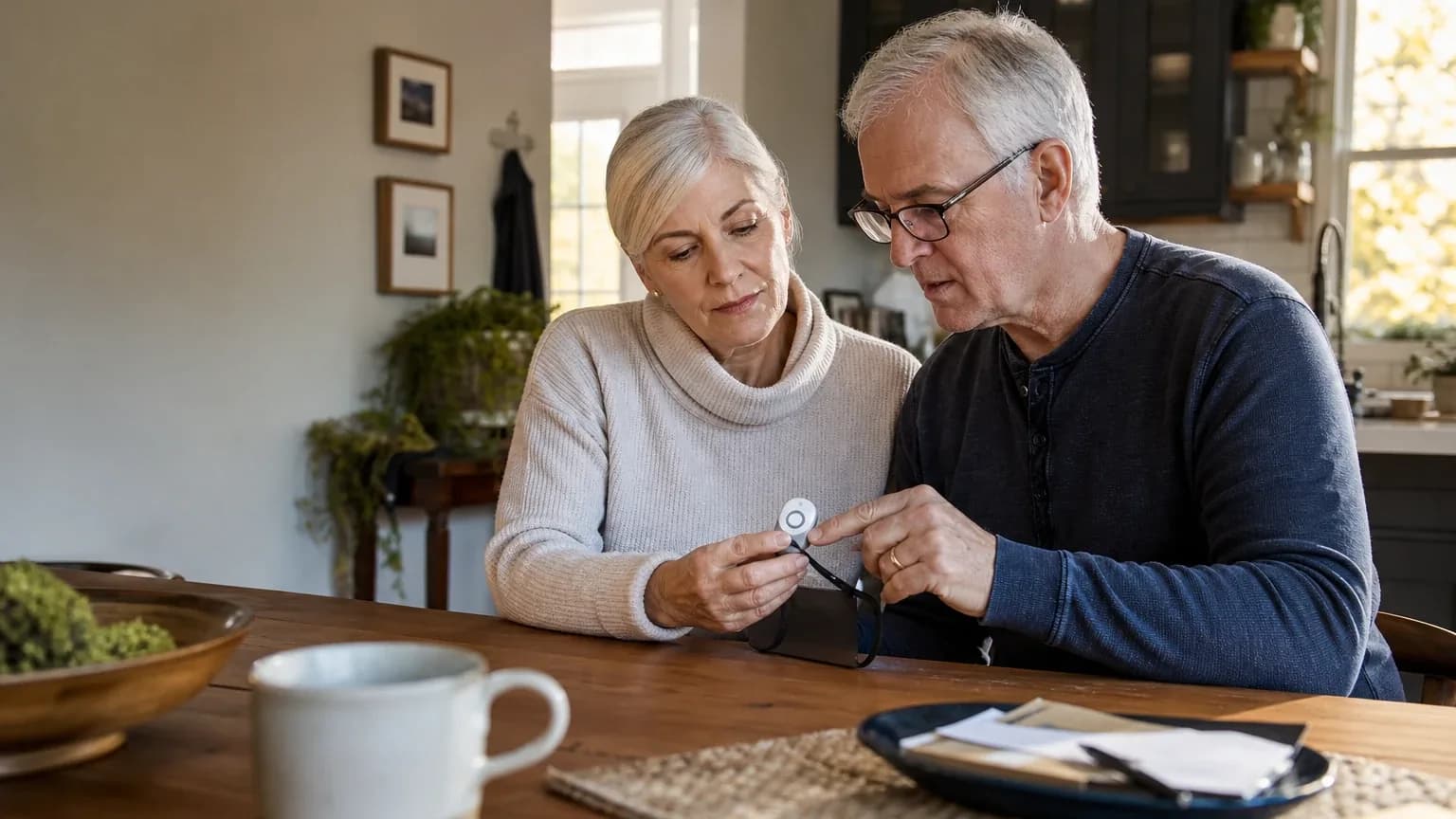
Alert1 is a good but not fully verified fit for older couples seeking shared household emergency monitoring. Two of seven AI research platforms named Alert1 during the ranking stage, placing it at rank 5 in both cases. The strongest reason to consider Alert1 is its explicit same-household spouse or additional-user discount, which independent sources describe as "steep" and potentially 25–30% of a standalone subscription cost. The main limitation is transparency: exact second-user pricing, dual-profile account structure, and per-user fall-detection options are not published and generally require a phone call to confirm. Fit ratings across platforms ranged from "strong" (2 platforms) to "uncertain" (1 platform), with 3 rating it "good" and 1 rating it "mixed." Couples should obtain a written quote and confirm dual-user workflows before purchasing.
Research Snapshot
| Metric | Value |
|---|---|
| Platform mentions in ranking stage | 2 of 7 platforms (deepseek, openai) |
| Share of included platform responses | 2 of 7 (28.6%) |
| Average listed rank | 5.0 |
| Best listed rank | 5 |
| Relevant product/model/plan | In-home medical alert plan with additional spouse button; two systems on a shared Home or Mobile plan |
| Overall use-case fit | Good (with verification required) |
| Research date | 2026-08-06 |
Why Alert1 Qualified for This Study
Alert1 qualified for this Shared Household & Two-User Protection review because it explicitly markets a second-user option for couples. The company's FAQ states: "You get a discounted price on a second unit or button to cover another person in your home" [1]. Alert1 also maintains a dedicated webpage for medical alert systems for couples, describing an "Additional Spouse Button" for in-home systems [3]. Independent review sources corroborate that Alert1 offers "steep discounts" when adding a second user to a plan [4]. The product family includes in-home systems (EZ Care, EZ Care Plus, Home & Yard), mobile GPS devices (LifeBeacon On-the-Go), and hybrid bundles, giving couples device-mixing flexibility [6].
What the AI Platforms Agreed About
Second-user discounting exists but is not transparently priced. All seven platforms acknowledged Alert1's spouse or additional-user discount. The official FAQ confirms discounted second-unit pricing but directs customers to call Member Care at 1-800-693-5433 for details [8]. One independent source claims second users pay approximately 25–30% of a standalone subscription cost, though this is not verified by Alert1 [9]. Another platform reported a specific $10/month spouse button add-on, but this figure was not corroborated by other sources [10].
Base station range is approximately 400–600 feet. Alert1's own user guides for the In-Home Classic and In-Home Wireless systems state up to 600 feet of range [11]. Independent sources from NCOA and SeniorLiving.org report 400–600 feet [13]. One platform cited a 1,300-foot figure from Alert1's couples webpage, but this conflicts with the company's own user guides and other independent reviews [15]. Actual coverage varies by walls, construction, placement, and household layout [11].
No long-term contract is required. Multiple independent sources report Alert1 offers month-to-month or annual prepayment options with no long-term contracts [16]. Cancellation is available by returning equipment [18]. Annual prepayment provides approximately $10/month savings versus month-to-month pricing [19].
Fall detection is an add-on, not included by default. Independent sources report fall detection costs approximately $5/month per device [13]. One platform reported approximately $10/month per pendant [10]. Alert1's FAQ states fall detection does not detect 100% of falls [22]. Whether fall detection can be added independently for each spouse is not clearly documented [23].
No caregiver mobile app is available. Multiple independent reviews note Alert1 does not offer a dedicated caregiver mobile app, wellness checks, or activity tracking [26]. This limits real-time family monitoring compared to competitors like Medical Guardian or MobileHelp [26].
Where the AI Platforms Disagreed or Were Uncertain
Fit ratings varied from "strong" to "uncertain." DeepSeek and Grok rated Alert1 a "strong" fit, citing the explicit spouse button option and discounted second-user pricing (deepseek:final_verdict, grok:final_verdict). OpenAI, Anthropic, and Google rated it "good," noting verification requirements (openai:final_verdict, anthropic:final_verdict, google:final_verdict). Kimi rated it "mixed," questioning whether the spouse button provides true dual-profile monitoring (kimi:final_verdict). Perplexity rated it "uncertain," stating the available evidence did not verify couple-specific details (perplexity:final_verdict).
Base station range figures conflict. Alert1's official couples webpage reportedly states up to 1,300 feet [29], while the company's own user guides state up to 600 feet [30], and independent reviews report 400–600 feet [32]. This is a material conflict for couples in larger homes.
Second-user pricing is not published. Reported figures include: 25–30% of standalone cost [34], $10/month spouse button add-on [35], and unspecified "discounted" rates requiring a phone call [36]. No platform could verify the exact couple bundle price from official sources.
Contract terms are disputed. DeepSeek reported a possible 36-month service agreement, citing reviews but noting it was not confirmed on the official site (deepseek:pricing_and_terms). All other platforms reported no long-term contract [38]. This conflict should be resolved directly with Alert1.
Dual-profile monitoring is unclear. Platforms agreed Alert1 supports adding a spouse but disagreed on whether each user receives independent profiles, separate emergency contacts, and individualized response protocols. Kimi specifically questioned whether the monitoring center can distinguish which user pressed the button [35]. No platform found documentation confirming separate user profiles.
Pricing confidence ranged from low to high. Google reported "high" confidence in pricing (google:pricing_and_terms), while Perplexity reported "low" confidence (perplexity:pricing_and_terms). OpenAI and Anthropic reported "moderate" confidence (openai:pricing_and_terms, anthropic:pricing_and_terms). DeepSeek reported "low" confidence (deepseek:pricing_and_terms).
Use-Case-Specific Features and Capabilities
Second-pendant discounting (advantage). Alert1 explicitly offers discounted pricing for a second unit or button for another person in the home [41]. The official FAQ confirms this and directs customers to call for spouse pricing [41]. Independent sources describe the discount as "steep" [43]. One source estimates second users pay 25–30% of standalone cost [45]. The exact discount is not published.
Dual-profile monitoring (unclear). Alert1 supports adding a spouse to an account via Member Care [46]. Both users are monitored 24/7 under a single account [47]. However, public materials do not clearly document whether each user has separate profiles, distinct emergency records, individualized escalation instructions, or separate caregiver notifications [41]. Kimi noted it is unclear whether the monitoring center distinguishes which user triggered an alert [49].
Base station range (mixed). Alert1's In-Home Classic and Wireless user guides state up to 600 feet of range [48]. Independent reviews report 400–600 feet [52]. One platform cited 1,300 feet from Alert1's couples webpage [47]. This range is below competitors offering 1,000–1,400 feet [54]. Actual coverage varies by home layout and construction [48].
Individual fall-detection add-ons (unclear). Fall detection is available as an add-on for approximately $5/month per device [52]. One platform reported approximately $10/month per pendant [49]. Alert1 offers fall detection on both EZ Care in-home and LifeBeacon mobile devices [55]. Whether fall detection can be purchased for only one spouse, both independently, or only as a package-level upgrade is not clearly documented [41]. The spouse button itself does not appear to include fall detection [49].
Two-way communication and emergency response (advantage). The in-home guides describe pressing either the pendant or base-unit button to connect with the Command Center, with help sent if the user cannot communicate [48]. Alert1 reports average response times of 20–45 seconds [59]. Independent testing by NCOA measured a 36-second average response time, within the 60-second passing threshold [60]. Alert1 operates 24/7 U.S.-based monitoring with 5 Diamond Certified Command Centers [61].
Device flexibility (advantage). Alert1 offers in-home systems (landline or cellular), mobile GPS devices (LifeBeacon), and hybrid bundles [62]. The On-the-Go Plus Home Fall Detection bundle costs approximately $52.95–$61.95/month [63]. Couples can mix in-home and mobile options based on individual mobility needs [62].
Water-resistant buttons and battery life (advantage). In-home help buttons are water-resistant or shower-appropriate [48]. DeepSeek reported battery life up to 5 years and waterproof buttons [47]. The In-Home Classic provides 24–48 hours of backup battery [48].
Pricing, Fees, Contracts, and Ongoing Costs
Known single-user costs (moderate confidence). Independent sources report basic in-home service at approximately $28.95/month month-to-month [64]. Annual prepayment reduces this to approximately $19.95/month equivalent [65]. In-home cellular systems (EZ Care) cost approximately $29.95/month with annual prepayment (anthropic:pricing_and_terms). LifeBeacon On-the-Go mobile systems range from approximately $34.99–$45/month depending on plan (anthropic:pricing_and_terms). The On-the-Go Plus Home Fall Detection bundle costs approximately $52.95–$61.95/month [66].
Fall detection add-on. Independent sources report approximately $5/month per device [67]. One platform reported approximately $10/month per pendant [70]. This cost scales per user, potentially eroding spouse-button savings (kimi:limitations_for_this_use_case).
Second-user pricing (not published). The exact spouse button or second-device cost requires a phone call [71]. One source claims 25–30% of standalone cost [73]. Another reports $10/month for the spouse button [70]. Neither figure is verified by Alert1.
Activation and shipping fees. Forbes Health reports a monthly-plan activation fee of approximately $19.95 [74]. SeniorLiving.org reports this fee may be waived with annual plans [75]. Shipping may apply on monthly plans (openai:pricing_and_terms). Google reported free activation when ordering online [76].
Contract and cancellation terms. Multiple independent sources report no long-term contract and no cancellation fee [77]. Alert1's reported 30-day trial requires a successful test call and return of equipment in original condition (openai:pricing_and_terms). Prepaid refunds may be prorated, but activation, warranty, prepaid shipping, or other fees may be nonrefundable (openai:pricing_and_terms). Return shipping is generally the customer's responsibility (openai:pricing_and_terms). DeepSeek reported a possible 36-month contract, but this was not confirmed on the official site (deepseek:pricing_and_terms).
Optional accessories. The Fall Protection Package costs approximately $200 one-time (anthropic:pricing_and_terms). A medication organizer accessory costs approximately $149.95 one-time (anthropic:pricing_and_terms). Device-protection packages and other monitored services can add recurring or one-time costs (openai:pricing_and_terms).
Pricing conflicts. Independent sources report different monthly rates for similar products. NCOA reports $30–$45/month [78]; SeniorLiving.org reports $19.95–$45/month depending on plan [65]; RetirementLiving.com reports $38.95/month for monthly plans and $29.95/month for annual (anthropic:factual_conflicts_or_uncertainty). Alert1's current pricing page is JavaScript-dependent in the accessible web view, so current official prices could not be independently extracted (openai:factual_conflicts_or_uncertainty).
Best Suited For
Alert1 is best suited for couples who:
- Primarily need in-home protection and want to reduce the cost of a second monitored user (openai:fit_assessment)
- Live in smaller homes where 400–600 feet of range is adequate (anthropic:fit_assessment)
- Value month-to-month flexibility without long-term contracts (anthropic:strengths_for_this_use_case)
- Prioritize fast emergency response over high-tech features like caregiver apps (anthropic:fit_assessment)
- Want device-mixing flexibility where one partner uses an in-home system and the other uses a mobile device [79]
- Are budget-conscious and want low monthly costs for two-user protection (deepseek:fit_assessment)
- Prefer simple setup with preprogrammed devices requiring minimal installation (anthropic:strengths_for_this_use_case)
Probably Not Best Suited For
Alert1 is probably not best suited for couples who:
- Need clearly documented separate user profiles, caregiver dashboards, or independently configurable monitoring workflows (openai:fit_assessment)
- Live in large or multi-story homes where 400–600 feet of range is inadequate (anthropic:fit_assessment)
- Frequently leave home unless both users receive suitable mobile devices (openai:fit_assessment)
- Want a caregiver mobile app, wellness checks, or activity tracking [80]
- Require transparent couple pricing without calling to obtain a quote (openai:fit_assessment)
- Both have high fall risk and require comprehensive individual fall detection with clear per-user costs (kimi:fit_assessment)
- Need a single mobile device that tracks both users simultaneously (deepseek:fit_assessment)
When Another Option May Be Better
- For larger homes or outdoor coverage: Bay Alarm Medical offers up to 1,000 feet of range, and Life Alert reports longer range (anthropic:better_alternative_when).
- For transparent second-user pricing: Life Alert publishes a clear $49 one-time addition fee, and Medical Guardian publishes $2.99/month per extra button (anthropic:better_alternative_when).
- For caregiver apps and activity tracking: Medical Guardian or MobileHelp offer integrated family caregiver apps (anthropic:better_alternative_when).
- For explicit dual-profile account management: Life Alert explicitly supports multiple-user accounts with clear terms (anthropic:better_alternative_when).
- For month-to-month price transparency: Medical Alert (starting $27.95/month) or Bay Alarm Medical (starting $27.95/month) may be more transparent (anthropic:better_alternative_when).
- For verified fall-detection reliability: NCOA testing found other brands' fall detection triggered consistently; Alert1 notes 100% accuracy is not guaranteed (anthropic:better_alternative_when).
- For independent dual accounts or advanced app-based profiles: Bay Alarm Medical offers free spouse monitoring noted in comparisons (grok:better_alternative_when).
Questions to Verify Before Buying
- What is the exact total monthly and annual price for two users sharing one household account? Request written pricing before committing (openai:questions_to_verify_before_buying, anthropic:questions_to_verify_before_buying).
- Is the second user receiving a separate pendant, or only an additional button paired to the same base station? (openai:questions_to_verify_before_buying)
- Can each spouse have a separate name, medical history, emergency-contact list, and response protocol? (openai:questions_to_verify_before_buying)
- Can fall detection be added for only one spouse, for both spouses independently, or only for the entire plan? (openai:questions_to_verify_before_buying)
- Does the selected in-home model use a landline or cellular connection, and what happens if the primary connection fails? (openai:questions_to_verify_before_buying)
- What is the guaranteed or tested range in this specific home, including bedrooms, bathrooms, basement, garage, and upper floors? (openai:questions_to_verify_before_buying)
- Can Alert1 provide two separate mobile devices under one discounted household account? (openai:questions_to_verify_before_buying)
- Are there activation, shipping, return, replacement, battery, protection-plan, or early-cancellation charges? (openai:questions_to_verify_before_buying)
- What are the exact refund rules for prepaid service if one spouse dies, moves, or no longer needs monitoring? (openai:questions_to_verify_before_buying)
- How are simultaneous alerts from both spouses handled, and can the Command Center distinguish which person activated the alert? (openai:questions_to_verify_before_buying)
- Does the service provide a caregiver app or web portal, and can caregivers see which spouse initiated an alert? (openai:questions_to_verify_before_buying)
- What testing procedure does Alert1 recommend to confirm both pendants work throughout the home before the trial period ends? (openai:questions_to_verify_before_buying)
- Is the $19.95 activation fee truly waived with annual plans, or are there other upfront costs? (anthropic:questions_to_verify_before_buying)
- What is the contract length? DeepSeek reported a possible 36-month commitment, but this was not confirmed on the official site (deepseek:questions_to_verify_before_buying).
Final AI Consensus Verdict
Alert1 is a good, but not fully verified, fit for Shared Household & Two-User Protection. The AI consensus across seven platforms is that Alert1's explicit spouse or additional-user discount and 600-foot in-home range are meaningful advantages for couples seeking economical household coverage. However, the buyer should obtain a written quote and confirm dual-user profile handling, per-spouse fall detection, device pairing, coverage testing, and cancellation/refund terms before purchasing (openai:final_verdict).
Alert1 is strongest for couples needing basic in-home protection at a discounted second-user price, and weaker for buyers requiring transparent couples pricing or advanced two-user account controls (openai:final_verdict). The lack of published second-user pricing, shorter base station range than competitors, absence of a caregiver app, and ambiguity around account-level monitoring profiles prevent a "strong" rating (anthropic:final_verdict).
For a broader comparison of providers evaluated for this use case, see the Shared Household & Two-User Protection consensus index. You can also browse all medical alert systems reviews in the category directory.
How This Review Was Produced
This review was produced by aggregating fit-research responses from seven AI platforms: OpenAI, Anthropic, DeepSeek, Grok, Perplexity, Kimi, and Google. Each platform evaluated Alert1 against five criteria: second-pendant discounting, dual-profile monitoring, base station range, individual fall-detection add-ons, and overall package value. The research date for this study is 2026-08-06. Platform-reported research dates are provenance metadata and do not independently prove freshness; DeepSeek's response was dated 2026-04-09, which differs from the authoritative run date.
The evidence base includes 27 deduplicated citations: 17 from independent sources (reviews, testing organizations, comparison sites) and 10 from company-owned sources (Alert1's website, user guides, and FAQ). All included platforms evaluated fit, but platform_mentions counts only platforms that named Alert1 during ranking discovery: 2 of 7 platforms (DeepSeek and OpenAI), both ranking Alert1 at position 5.
Methodology Limitations
- Platform mentions do not equal quality. Only 2 of 7 platforms named Alert1 during the ranking stage. The other 5 platforms evaluated Alert1's fit but did not rank it among finalists. This limits the strength of the consensus.
- Conflicting product information. Sources disagree on base station range (400 vs. 600 vs. 1,300 feet), fall detection pricing ($5 vs. $10/month), contract terms (none vs. 36-month), and monthly rates. These conflicts are described but not resolved.
- Unverified URLs. The supplied URLs were collected from platform responses and were not independently validated by the writer stage.
- JavaScript-dependent pricing. Alert1's current pricing page is JavaScript-dependent in the accessible web view, so current official prices could not be independently extracted (openai:factual_conflicts_or_uncertainty).
- Anecdotal customer reviews. Customer-review reports are anecdotal and may be affected by selection bias; they should not be treated as representative outcome data (openai:factual_conflicts_or_uncertainty).
- No independent testing. This review does not claim personal testing, customer experience, medical benefit, guaranteed performance, or independent verification beyond what is supplied in the platform responses.
- Platform-reported dates differ. DeepSeek's research date (2026-04-09) differs from the authoritative run date (2026-08-06), which may affect the freshness of its pricing and feature claims.
Sources
Company-owned sources:
- Alert1 FAQ: Medical Alert Support: Frequently Asked Questions — https://www.alert-1.com/system/faq/208 (openai:C1, anthropic:C2, anthropic:C4)
- Alert1 In-Home Classic Medical Alert User Guide — https://www.alert-1.com/data/uploads/contentblock/alert1-in-home-classic-medical-alert-user-guide-june22.pdf (openai:C3)
- Alert1 In-Home Wireless Medical Alert User Guide — https://www.alert-1.com/data/uploads/contentblock/alert1-in-home-wireless-medical-alert-user-guide-june22.pdf (openai:C4)
- Alert1 Medical Alert Systems for Couples — https://www.alert-1.com/medical-alert-for-couples (deepseek:C1)
- Alert1 Medical Alert Systems — https://www.alert-1.com/ (kimi:C1)
- Alert1 Low Cost, High Value Medical Alert Systems — https://vertexaisearch.cloud.google.com/grounding-api-redirect/AUZIYQF_VkoS6x2iRKgpikJK3NmKjfUNluDkihAzPshbAiopvwDFRrYkHhlXgR7p2aOgDuqcq9Or-159DRTnH7UAp9D7PSfpjQe4zCr6HIEs1iV7amLAhj1P (google:1.1.1)
- Alert1 Medical Alert System Range: In-Home or On-the-Go — https://vertexaisearch.cloud.google.com/grounding-api-redirect/AUZIYQHEf2H_fIbN-mynZbYqQkynGyEmW2d4gvcy9DibnGVB99OVZesowqhggdgJ_jPiARfQWKP0rt7BfQL36aaMY68W0roEoLDTSIBrxdV9RxLLF7jtSFGhk9gPAsNy2A== (google:1.2.2)
- Alert1 Medical Alert Systems - 24/7 Emergency Response for Seniors — https://vertexaisearch.cloud.google.com/grounding-api-redirect/AUZIYQHVSNmq1kXOoI7SG3_nbHugY1SbAcJbBjCnOyAG4CHfd1Wg7ac9Ij79l-V2TRtpvqFL7qLCaBgXFFtSh8shy1jIvCkayyrjJsZdIHcVW5k= (google:1.2.1)
- Alert1 Medical Alert Systems - Full Review — https://vertexaisearch.cloud.google.com/grounding-api-redirect/AUZIYQEPEcfn46PeQZs4Ihdiayu_2YgStmgBlpCDUo7u2AKlKgcIQAwFUEK_5oAjnHBmcvG-crzALNJpIW3YAa3F566nHjyZEhQdw5hfAbXxLLaTj-zNvJ4H-uB3hoxabtBfCyq7zE-giNnaGB7xv1NnObBn (google:1.1.7)
Additional AI research evidence82 records
- AI research evidence record openai:c1
- AI research evidence record anthropic:c2
- AI research evidence record deepseek:c1
- AI research evidence record anthropic:c1
- AI research evidence record grok:c1
- AI research evidence record anthropic:c13
- AI research evidence record kimi:c1
- AI research evidence record anthropic:c4
- AI research evidence record anthropic:c3
- AI research evidence record kimi:c1
- AI research evidence record openai:c3
- AI research evidence record openai:c4
- AI research evidence record anthropic:c5
- AI research evidence record anthropic:c7
- AI research evidence record deepseek:c1
- AI research evidence record anthropic:c10
- AI research evidence record google:1.1.1
- AI research evidence record google:1.2.1
- AI research evidence record anthropic:c11
- AI research evidence record anthropic:c8
- AI research evidence record grok:c2
- AI research evidence record anthropic:c20
- AI research evidence record openai:c1
- AI research evidence record openai:c2
- AI research evidence record openai:c5
- AI research evidence record anthropic:c21
- AI research evidence record anthropic:c22
- AI research evidence record anthropic:c23
- AI research evidence record deepseek:c1
- AI research evidence record openai:c3
- AI research evidence record openai:c4
- AI research evidence record anthropic:c5
- AI research evidence record anthropic:c7
- AI research evidence record anthropic:c3
- AI research evidence record kimi:c1
- AI research evidence record openai:c1
- AI research evidence record anthropic:c2
- AI research evidence record anthropic:c10
- AI research evidence record google:1.1.1
- AI research evidence record kimi:c2
- AI research evidence record openai:c1
- AI research evidence record anthropic:c2
- AI research evidence record anthropic:c1
- AI research evidence record grok:c1
- AI research evidence record anthropic:c3
- AI research evidence record anthropic:c4
- AI research evidence record deepseek:c1
- AI research evidence record openai:c3
- AI research evidence record kimi:c1
- AI research evidence record kimi:c2
- AI research evidence record openai:c4
- AI research evidence record anthropic:c5
- AI research evidence record anthropic:c7
- AI research evidence record anthropic:c6
- AI research evidence record anthropic:c8
- AI research evidence record grok:c2
- AI research evidence record openai:c2
- AI research evidence record openai:c5
- AI research evidence record anthropic:c19
- AI research evidence record anthropic:c18
- AI research evidence record google:1.1.1
- AI research evidence record anthropic:c13
- AI research evidence record anthropic:c14
- AI research evidence record google:1.1.2
- AI research evidence record anthropic:c15
- AI research evidence record anthropic:c14
- AI research evidence record anthropic:c5
- AI research evidence record anthropic:c8
- AI research evidence record grok:c2
- AI research evidence record kimi:c1
- AI research evidence record openai:c1
- AI research evidence record anthropic:c2
- AI research evidence record anthropic:c3
- AI research evidence record openai:c2
- AI research evidence record anthropic:c12
- AI research evidence record google:1.1.1
- AI research evidence record anthropic:c10
- AI research evidence record anthropic:c16
- AI research evidence record anthropic:c13
- AI research evidence record anthropic:c21
- AI research evidence record anthropic:c22
- AI research evidence record anthropic:c23
Independent review sources:
- Forbes Health: Alert1 Medical Alert System Review — https://www.forbes.com/health/medical-alert-systems/alert1-review/ (openai:C2)
- MedicalAlert.org: A Look at the Most Affordable Medical Alert Systems — https://www.medicalalert.org/best-medical-alert-systems/most-affordable-systems/ (openai:C5)
- AssistedLiving.org: Alert1: Plans, Features & Pricing — https://www.assistedliving.org/best-medical-alert-systems/alert1/ (openai:C6)
- SeniorLiving.org: Alert1 Medical Alert System Review and Pricing 2026 — https://www.seniorliving.org/medical-alert-systems/alert1/ (anthropic:C1, anthropic:C7, anthropic:C11, anthropic:C12, anthropic:C15, anthropic:C19, grok:C1, google:1.1.2)
- SimplyCodes: 50% Off Alert1 Medical Alert Systems Coupons — https://simplycodes.com/store/alert-1.com (anthropic:C3, anthropic:C17)
- NCOA: Alert1 Medical Alert Review 2026: Tested by Experts — https://www.ncoa.org/product-resources/medical-alert-systems/alert1-review/ (anthropic:C5, anthropic:C8, anthropic:C9, anthropic:C16, anthropic:C18, anthropic:C23, grok:C2)
- MedicalAlert.org: Alert1 vs Life Alert — https://www.medicalalert.org/best-medical-alert-systems/alert1-vs-life-alert/ (anthropic:C6)
- RetirementLiving.com: Alert1 Review (2026) — https://www.retirementliving.com/reviews/alert1 (anthropic:C10, anthropic:C20)
- Caring.com: Alert1 Medical Alert System Review 2026 — https://www.caring.com/senior-products/best-medical-alert-systems/alert1 (anthropic:C13, anthropic:C21, anthropic:C22)
- MedicalAlert.org: Alert1 Medical Alert Review — https://www.medicalalert.org/best-medical-alert-systems/alert1/ (anthropic:C14)
- MedicalAlertAdvice.com: Alert1 Medical Alert System Review (2026) — https://www.medicalalertadvice.com/alert1-review (deepseek:C2)
- RetirementLiving.com: Best Medical Alert Systems for Seniors — https://www.retirementliving.com/medical-alert-systems/ (kimi:C2)
- Caring.com: Best Medical Alert Systems for Couples — https://www.caring.com/senior-living/medical-alert-systems/best/couples/ (kimi:C3)
- 360Quadrants: Alert1 Pricing 2022 — https://vertexaisearch.cloud.google.com/grounding-api-redirect/AUZIYQE9SL_ZeSeUL5Zko52CwA1TWZbeuYvYSzjxY57nbLH8UCRDOaVYSFVrVUkw57llILr5hmgpTHzXKnSmTSt2Uqg8jelNBT8P7h7bGGAacs9arBD2m39dFcDPg0_jFfKF0vMLRF38k08DrHx_bT0hI_nH0RBqdfOPwhyWGbufNFRSp1jGxuEtv2bTI3Knz-MbmwyEpuOw9v3mrpGtuQyzsQmcXRUKdRutC-e4N4DUTlQY (google:1.1.4)
- PCMag Australia: Alert1 Home Medical Alert System - Review 2018 — https://vertexaisearch.cloud.google.com/grounding-api-redirect/AUZIYQFfcfL3GmI4JY6EX-cJx5P6U4vJL_CEvwYlXuwF3mhMP-ayk1y9V3qSsFAFBldFzLDHSpdQKFeS7S1ajKN81ko_Y78dHD-u4m8D-JeilBm2cW3tg9qV2J-FYPBjh2xls90G2v-1so57YW5aKhTLURVA_OGc35NdBiDQqbfbp_GNvEStHZ05iQM= (google:1.2.7)
- FINRA: Suitability FAQ — https://www.finra.org/rules-guidance/key-topics/suitability/faq (perplexity:C1)
Additional AI research evidence82 records
- AI research evidence record openai:c1
- AI research evidence record anthropic:c2
- AI research evidence record deepseek:c1
- AI research evidence record anthropic:c1
- AI research evidence record grok:c1
- AI research evidence record anthropic:c13
- AI research evidence record kimi:c1
- AI research evidence record anthropic:c4
- AI research evidence record anthropic:c3
- AI research evidence record kimi:c1
- AI research evidence record openai:c3
- AI research evidence record openai:c4
- AI research evidence record anthropic:c5
- AI research evidence record anthropic:c7
- AI research evidence record deepseek:c1
- AI research evidence record anthropic:c10
- AI research evidence record google:1.1.1
- AI research evidence record google:1.2.1
- AI research evidence record anthropic:c11
- AI research evidence record anthropic:c8
- AI research evidence record grok:c2
- AI research evidence record anthropic:c20
- AI research evidence record openai:c1
- AI research evidence record openai:c2
- AI research evidence record openai:c5
- AI research evidence record anthropic:c21
- AI research evidence record anthropic:c22
- AI research evidence record anthropic:c23
- AI research evidence record deepseek:c1
- AI research evidence record openai:c3
- AI research evidence record openai:c4
- AI research evidence record anthropic:c5
- AI research evidence record anthropic:c7
- AI research evidence record anthropic:c3
- AI research evidence record kimi:c1
- AI research evidence record openai:c1
- AI research evidence record anthropic:c2
- AI research evidence record anthropic:c10
- AI research evidence record google:1.1.1
- AI research evidence record kimi:c2
- AI research evidence record openai:c1
- AI research evidence record anthropic:c2
- AI research evidence record anthropic:c1
- AI research evidence record grok:c1
- AI research evidence record anthropic:c3
- AI research evidence record anthropic:c4
- AI research evidence record deepseek:c1
- AI research evidence record openai:c3
- AI research evidence record kimi:c1
- AI research evidence record kimi:c2
- AI research evidence record openai:c4
- AI research evidence record anthropic:c5
- AI research evidence record anthropic:c7
- AI research evidence record anthropic:c6
- AI research evidence record anthropic:c8
- AI research evidence record grok:c2
- AI research evidence record openai:c2
- AI research evidence record openai:c5
- AI research evidence record anthropic:c19
- AI research evidence record anthropic:c18
- AI research evidence record google:1.1.1
- AI research evidence record anthropic:c13
- AI research evidence record anthropic:c14
- AI research evidence record google:1.1.2
- AI research evidence record anthropic:c15
- AI research evidence record anthropic:c14
- AI research evidence record anthropic:c5
- AI research evidence record anthropic:c8
- AI research evidence record grok:c2
- AI research evidence record kimi:c1
- AI research evidence record openai:c1
- AI research evidence record anthropic:c2
- AI research evidence record anthropic:c3
- AI research evidence record openai:c2
- AI research evidence record anthropic:c12
- AI research evidence record google:1.1.1
- AI research evidence record anthropic:c10
- AI research evidence record anthropic:c16
- AI research evidence record anthropic:c13
- AI research evidence record anthropic:c21
- AI research evidence record anthropic:c22
- AI research evidence record anthropic:c23
Verify this research
Review the study details behind this page or download the public machine-readable verification record.
- Study date
- Aug 6, 2026
- Platforms analyzed
- 7
- Source records
- 27
- Ranking mentions
- 2 of 7
- Platform share
- 29%
- Final consensus rank
- #5
Research trail and source mix
Platforms
openai, anthropic, deepseek, grok, perplexity, kimi, google
Source mix
17 independent · 10 company-owned
Evidence support
17 direct · 9 partial
Important limitation
Use the run research_date as the study date. Platform-reported dates are provenance metadata and do not independently prove freshness.
Source snapshot SHA-256 cf982bc28ecc9ddeb04008a46651b31abd610a0710834877481e90a72b351f32