
Answer Capsule
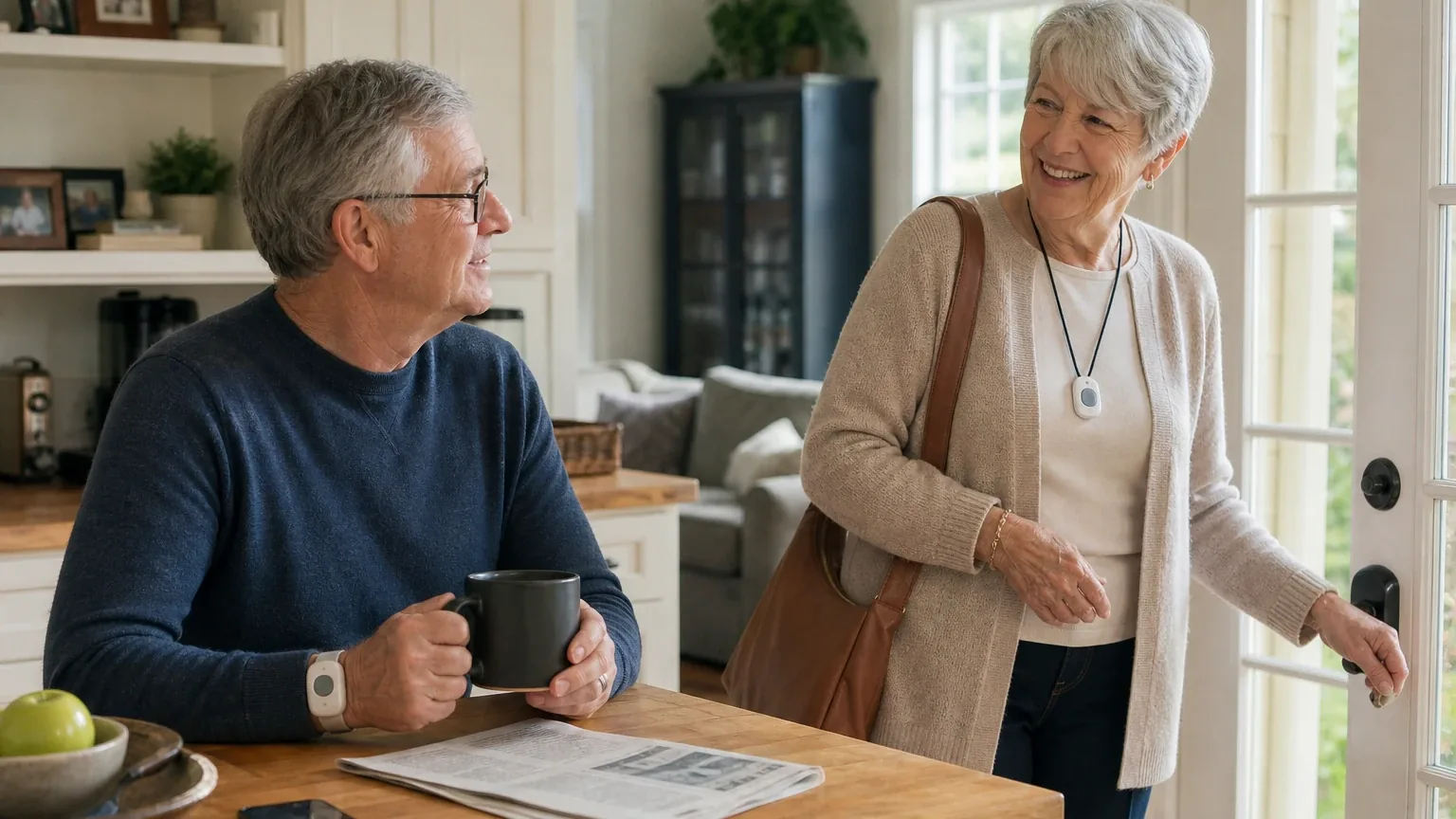
MobileHelp is a mixed fit for older Couples who need dual emergency monitoring under one shared household account. Six of the seven platforms in this study named MobileHelp during the ranking stage, and it finished with an average listed rank of 3.3 and a best rank of 1. The strongest reason to consider it is the Duo-family architecture: a long-range cellular in-home base station (up to 1,400 feet), mobile/GPS options, and a low-cost second pendant for in-home systems. The main limitation is that public information does not clearly confirm a current second-user discount, a true dual-profile shared account, or whether two fall-detection buttons can be added at one per-unit price.
Research Snapshot
| Field | Finding |
|---|---|
| Platform mentions in ranking stage | 6 of 7 platforms (anthropic, deepseek, google, grok, kimi, perplexity) |
| Share of included platform responses | 85.7% |
| Average listed rank | 3.3 |
| Best listed rank | 1 (perplexity) |
| Relevant product/model/plan | Mobile Duo Bundle; Classic Cellular with second-user option; Duo-family two-user packages |
| Overall use-case fit | Mixed — platform fit ratings ranged from "strong" (grok) to "uncertain" (anthropic) |
| Research date | 2026-09-26 |
What Changed Since August 2026
MobileHelp remained at No. 4, and platform mentions increased from 5 to 6. The September 2026 review keeps the same core buyer guidance but substantially rewrites how MobileHelp's couple fit is described, including the capsule, qualification rationale, plan discussion, and platform-agreement findings. The mixed verdict stands: the Duo-family architecture suits one-at-home, one-mobile couples, while second-user pricing, true dual-profile accounts, and current bundle availability remain unconfirmed. Fall-detection cost is now reported at $10–$11 per month per device, so two buttons add roughly $20–$22 monthly. Measured fall-button range is now given as 600 feet from a base station and 300 feet from a mobile device, replacing the discontinued-bundle price of $44.95 per month no longer repeated. Differences between the two editions reflect what each article reports; they do not by themselves prove that the product, service, or price changed.
The August 2026 review preserves the earlier article for reference.
Why MobileHelp Qualified for This Study
Questions This Section Answers
- Is MobileHelp a good choice for shared household and two-user protection for older couples?
- How many AI platforms named MobileHelp for couples, and where did it rank?
MobileHelp qualified because it was named by six of the seven platforms during ranking discovery and because its product line includes explicitly couple-oriented configurations. The platforms that named it were anthropic, deepseek, google, grok, kimi, and perplexity; openai did not name it in the ranking stage. Its average listed rank was 3.3, with a best rank of 1 from perplexity and a final rank of 4.
The qualification is architectural rather than promotional. MobileHelp publicly lists Duo and Mobile Duo packages with cellular and mobile components and monthly rates [1], and it markets a Mobile Duo Bundle with GPS and an optional fall-detection add-on [2]. It also publishes a Classic Cellular in-home system with up to 1,400 feet of stated in-home coverage [3], which matters for couples in larger homes.
That said, qualification for the study is not a quality endorsement. The platform fit ratings for this use case were split: grok rated MobileHelp "strong," deepseek, google, and kimi rated it "good," openai and perplexity rated it "mixed," and anthropic rated it "uncertain." The spread itself is the finding — MobileHelp has the right product shapes for couples, but the couple-specific details are the contested part.
The Product, Model, Plan, or Service Most Relevant to Shared Household & Two-User Protection
Questions This Section Answers
- Which MobileHelp plan should a couple choose if they want one at-home base station and one mobile device?
- Does the MobileHelp Mobile Duo Bundle include two devices for two users under one account?
The most relevant configuration for this use case is the Mobile Duo Bundle, with Classic Cellular plus a second pendant as the in-home alternative. Platforms described the relevant plan differently, which is itself informative: anthropic named the Mobile Duo Bundle (GPS-enabled two-user mobile system); deepseek named a Mobile Duo Bundle pairing one at-home base station with one mobile GPS unit; google named Classic Cellular with a second-user option; grok named the Mobile Duo Bundle; kimi named the Mobile Duo Bundle, Classic Cellular with second-user option, and a "GPS Duo"; openai named Duo or Mobile Duo Bundle with a Classic Cellular base station; and perplexity named Classic Cellular, Mobile Duo Bundle, and Home Duo Bundle (anthropic, deepseek, google, grok, kimi, openai, perplexity platform outputs).
MobileHelp's own comparison page lists Duo and Mobile Duo with package descriptions, cellular/mobile components, and monthly rates [5]. The Mobile Duo Bundle page presents a bundled GPS system and mentions an automatic fall-detection add-on [6]. The Classic Cellular page describes an in-home cellular system with optional fall detection [7].
The critical caveat: the reviewed public pages do not provide a single authoritative specification page confirming all of the ranking-stage product names and inclusions (openai platform output). Buyers should treat "Mobile Duo Bundle," "Mobile Duo Bundle (GPS)," and "second-user option" as names that require confirmation rather than settled catalog entries.
What the AI Platforms Agreed About
Questions This Section Answers
- What do AI platforms agree on about MobileHelp for couples?
- Is MobileHelp's in-home base station range good enough for a two-person household?
Agreement was strong on three points and limited on everything else.
First, in-home range. Multiple platforms and sources converge on the Classic Cellular base station providing up to 1,400 feet of coverage [9]. Google's output called this "industry-leading" for the at-home system, while kimi noted competitors advertise 1,300–1,500+ feet depending on model, so "leading" is contested but the 1,400-foot figure itself is consistent.
Second, fall detection is an optional, per-device add-on. Platforms agreed it is not included by default and is priced per device, generally around $10–$11 per month [15]. For a couple adding it to two devices, that implies roughly $20–$22 per month on top of the base plan (anthropic platform output, google platform output).
Third, cellular operation without a landline. MobileHelp's cellular systems do not require a household landline [19], and the company states its monitoring is 24/7 [21].
Beyond those three, agreement thins. The platforms did not converge on second-user pricing, dual-profile account structure, or current product availability.
Where the AI Platforms Disagreed or Were Uncertain
Questions This Section Answers
- Is the MobileHelp Mobile Duo Bundle still available in 2026, or has it been discontinued?
- Does MobileHelp support two separate monitored profiles under one shared account?
Three material conflicts surfaced, and none can be resolved from the supplied evidence.
Product availability. Multiple independent 2026 reviews state that MobileHelp has discontinued Solo, Mobile Duo, and Home Duo [22]. Yet MobileHelp's own site actively markets the Mobile Duo Bundle with pricing and feature details [26], and one source lists Mobile Duo among current products (anthropic:source-18). Anthropic's output called this "material uncertainty" and said buyers must verify availability directly with the company. Google's output went further, treating the discontinuation as settled and calling it "a major regression" for on-the-go couples.
Shared account and dual-profile monitoring. U.S. News testing documented that MobileHelp does not allow two systems under the same email/account and that partners should register with different emails and separate accounts (anthropic:source-35). That directly contradicts the use-case requirement for dual-profile monitoring under a shared account. Other platforms described the opposite: deepseek said MobileHelp promotes a two-user option under one account [27], and kimi said MobileHelp supports dual-profile monitoring with individual emergency profiles under a shared account (kimi:mobilehelp-products-1, kimi:review-mobilehelp-duo-2). Google's output flagged dual-profile monitoring as "one of the least verified capabilities across the market" [29]. This is a genuine, unresolved conflict.
Pricing. Reported monthly figures diverge widely. Classic Cellular appears at $29.95 [31], $25.95 [32], and $24.95–$29.95 (google platform output). Duo appears at $44.95 and Mobile Duo at $49.95 on a comparison page [33], while grok's sources cite $44.95–$49.95 (grok:1, grok:4) and anthropic cites $49.95 (anthropic:source-18). Fall detection is cited at both $10 and $11 per month [34]. The pages do not explain whether these differences reflect package contents, promotions, or billing conditions (openai platform output).
Use-Case-Specific Features and Capabilities
Questions This Section Answers
- How much does MobileHelp charge for a second pendant or second user on an in-home system?
- Can both spouses add fall detection on MobileHelp, and what does it cost per device?
Second-pendant discounting. This is the least settled criterion. Google's sources state that adding a spouse or roommate is free aside from the cost of extra help buttons, with the extra button running roughly $2.00–$3.99 per month [37], and one source cites extra users at $3.99 per month [40]. Grok cites an extra pendant at $2.99 per month on in-home systems (grok:6). But openai found no clearly published second-pendant discount for a couple using Classic Cellular, and perplexity found no reliable public source verifying a specific second-pendant discount (openai platform output, perplexity platform output). The low per-button figures and the "no verified discount" finding are not necessarily contradictory — a cheap extra button is not the same as a published discount — but buyers should not assume a discount exists.
Dual-profile monitoring. As noted above, sources conflict. The practical question is whether the monitoring center sees a distinct name, medical history, and emergency contact list for each pendant. Google's verification list asks exactly this: whether the dispatcher sees the spouse's specific name or just the primary account owner's name (google platform output). No supplied source answers it definitively.
Base station range. Up to 1,400 feet for Classic Cellular [41]. The Fall Button works approximately 600 feet from a cellular base station and 300 feet from a mobile device [43]. Note the gap: the base station's stated range and the fall-detection button's stated range are different numbers, and the fall button's 600-foot figure is the one that applies to automatic detection.
Individual fall-detection add-ons. The Fall Button is compatible with Duo and Classic systems and costs $11 per month [43]. MobileHelp states it does not detect 100% of falls and is not a caregiver replacement [43]. One independent tester reported 8 of 10 test falls detected (anthropic:source-26), while another said MobileHelp's fall detection "was not as accurate as the systems from Medical Guardian" (anthropic:source-2). Accuracy varies by device and testing protocol.
Overall package value. The Mobile Duo Bundle's single monthly fee for two users is the core value argument, and grok's output framed it as lower per-person cost than separate subscriptions (grok:1, grok:4). Deepseek made the same point about the bundle being cheaper than two separate full systems [44]. But the value case weakens once two fall-detection add-ons are added, and it depends on whether a current two-user bundle is actually purchasable.
Pricing, Fees, Contracts, and Ongoing Costs
Questions This Section Answers
- How much does MobileHelp cost per month for two users, and are there setup or cancellation fees?
- What are MobileHelp's contract, return, and equipment-return terms for a couple's order?
Pricing confidence across platforms was low to moderate, and the supplied figures conflict. The table below consolidates what each source reported; it is a record of conflicting reports, not a price list.
| Item | Reported figures | Source |
|---|---|---|
| Classic Cellular | $29.95/mo | [46] |
| Classic Cellular | $25.95/mo | [47] |
| Classic Cellular | $24.95–$29.95/mo | google platform output |
| Duo | $44.95/mo | [48] |
| Mobile Duo | $49.95/mo | [48], (anthropic:source-18) |
| Mobile Duo Bundle | ~$44.95–$49.95/mo | (grok:1), (grok:4) |
| Fall detection | $11/mo per device | [49], (anthropic:source-11) |
| Fall detection | $10/mo | [50] |
| Extra pendant (in-home) | $2.99/mo | (grok:6) |
| Extra user | $3.99/mo | [51] |
| Wall-mounted help buttons | $2.99/mo per button | anthropic platform output |
| Device protection plan | $6.00–$6.99/mo | anthropic platform output, google platform output |
| OnGuard Alerts | $2.99/mo | anthropic platform output |
Contract and cancellation terms are better documented than pricing, because MobileHelp's terms page is explicit. The terms state a three-month minimum service commitment, a $50 restocking fee on returns generally, a full refund with no restocking fee if equipment is returned within 15 calendar days of delivery, and a $350 equipment charge if the system is not returned within 30 days after termination [52]. Cancellation requires contacting customer service; deleting the smartphone app does not cancel service [52]. A reconnection fee may apply if service is reactivated [52].
The terms also state that MobileHelp is not an insurer and limit company liability to a maximum of $1,000 collectively [52]. Promotional discounts are forfeited if the initial order is changed within 12 months of the sale date (official:C2).
One conflict worth flagging: anthropic's output describes "no long-term contracts or cancellation fees" and a 30-day risk-free trial, while openai's reading of the terms found a three-month minimum commitment and a $50 restocking fee [52]. These may describe different order types or promotional periods, but the supplied evidence does not reconcile them. Buyers should get the applicable terms in writing for their specific order.
Best Suited For
Questions This Section Answers
- Who is MobileHelp best suited for among couples needing two-user protection?
- Is MobileHelp a good value for in-home couples who want a second pendant?
MobileHelp is best suited for couples who primarily want in-home coverage with a cheap second pendant, and for couples willing to confirm configuration by phone before ordering. Google's output was the most specific: in-home senior couples wanting to share a single subscription, couples with larger homes needing maximum base station range, and couples wanting to avoid upfront equipment purchase or activation fees (google platform output). The 1,400-foot range is the strongest single argument for a couple in a large or multi-story home.
It also suits couples who want one partner covered at home and the other covered on the go, provided they can confirm the current bundle. Deepseek's output described the one-at-home-plus-one-mobile design as matching a home-bound partner and a more mobile partner (deepseek platform output). Kimi made the same point about mix-and-match flexibility (kimi platform output).
A third fit: couples who want optional rather than built-in fall detection, and who are comfortable paying per device for it (deepseek platform output, kimi platform output).
Probably Not Best Suited For
Questions This Section Answers
- Who should not choose MobileHelp for shared household and two-user protection?
- Is MobileHelp a poor fit for couples who both need mobile GPS coverage?
Couples who need a documented, guaranteed second-pendant discount should look elsewhere, because no supplied source verifies one (openai platform output, perplexity platform output). Couples who need two fully separate monitored profiles with individualized responder lists and alert histories under one login should also be cautious: U.S. News documented that MobileHelp requires separate accounts (anthropic:source-35), and google flagged dual-profile monitoring as the least verified capability in the market [53].
Couples who both need on-the-go mobile coverage are a weaker fit now than they may have been previously, because multiple 2026 reviews report the Duo-family bundles discontinued [55]. Couples in weak AT&T coverage areas are also a weaker fit, since the mobile products depend on AT&T cellular and GPS, and MobileHelp disclaims that service availability is not available everywhere and at all times (anthropic:source-7, anthropic:source-22).
Finally, couples who need automatic fall detection on both devices at no extra cost should not choose MobileHelp, because fall detection is a paid per-device add-on [57].
When Another Option May Be Better
Questions This Section Answers
- What is a better alternative to MobileHelp for a couple who needs a unified shared account?
- When should a couple choose a competitor over MobileHelp for two-user protection?
Another option may be better in five situations drawn from the platform outputs.
When a unified shared account and caregiver dashboard are must-haves. Anthropic's output recommended considering competitors offering dual-profile accounts or in-home-plus-mobile bundled solutions, and specifically named Bay Alarm Medical as a brand that still supports shared multi-device bundles (anthropic platform output, google platform output).
When both partners need mobile GPS with fall detection at the lowest bundled price. Kimi's output suggested comparing two-unit pricing across brands and noted competitors offering simpler bundled couple pricing (kimi platform output).
When maximum base station range is the priority. Kimi named LifeStation and Medical Guardian as advertising 1,300–1,500+ feet depending on model (kimi platform output). Google's output also pointed to competitors with stronger in-home bundles.
When product availability certainty matters. Given the conflicting 2026 reports on whether Mobile Duo is discontinued, anthropic's output said competitors with consistent product line information are safer (anthropic platform output).
When landline reliability or a landline-based system with fall detection is preferred. MobileHelp's Wired Home system does not support fall detection, and MobileHelp discontinued its smartwatch option (anthropic platform output).
Questions to Verify Before Buying
Questions This Section Answers
- What should a couple confirm with MobileHelp before signing up for a two-user plan?
- How can a buyer verify MobileHelp's second-user pricing and dual-profile setup in writing?
The platform outputs converged on a similar verification list. Before authorizing an order, a couple should get written answers to these:
- Is the Mobile Duo Bundle currently available for new customers, or has it been discontinued? If available, is it sold on the website or only through direct sales (anthropic platform output, perplexity platform output)?
- For two named users at one address, what is the exact monthly monitoring price, including any second-pendant or second-user discount (openai platform output, deepseek platform output)?
- Does the account create two separate monitored profiles with individualized medical information, emergency contacts, responder instructions, and alert histories — or are two separate accounts required (openai platform output, anthropic:source-35)?
- When one spouse presses their button, does the dispatcher see that person's specific name and medical profile, or only the primary account owner's (google platform output)?
- Can both users have separate automatic fall-detection buttons, and is each charged the same monthly rate (openai platform output, anthropic platform output)?
- How many base-station pendants, mobile devices, and chargers are included in the quoted package (openai platform output)?
- Does the 1,400-foot range apply to both users' buttons in the actual home, and how is coverage tested (openai platform output, deepseek platform output)?
- Which device provides GPS coverage for each spouse, and what happens if both users are away from the base station simultaneously (openai platform output)?
- Are taxes, activation, shipping, equipment, replacement, battery, or upgrade charges added to the advertised monthly price (openai platform output, perplexity platform output)?
- Which cancellation, return, and minimum-term terms apply to this exact order, especially if a promotion is used (openai platform output, anthropic platform output)?
- What cellular network and coverage limitations apply at the home's address (anthropic platform output, grok platform output)?
- Can the buyer receive the complete two-user price and included-equipment list in writing before authorization (openai platform output)?
Final AI Consensus Verdict
MobileHelp is a mixed fit for Shared Household & Two-User Protection. It has the right general architecture — Duo-style packages, a long-range cellular home base, mobile/GPS options, and compatible fall-detection buttons — but the couple-specific buying questions are not transparently answered in the public information reviewed.
The platform fit ratings split accordingly: grok "strong," deepseek, google, and kimi "good," openai and perplexity "mixed," anthropic "uncertain." That is not consensus, and the disagreement is concentrated exactly where a couple buyer needs clarity: whether a two-user bundle is currently sold, whether a second-user discount exists, and whether two people can be monitored under one shared account with distinct profiles.
MobileHelp becomes a good fit if the company confirms two distinct monitored profiles, a favorable second-user price, two compatible fall-detection options, and adequate coverage in the home. Without those confirmations, a provider with clearer dual-user pricing and account documentation may be preferable. For couples who mainly need in-home coverage with a cheap second pendant, the case is stronger; for couples who both need mobile protection under one account, the case is weaker.
How This Review Was Produced
This review evaluates MobileHelp only for the Shared Household & Two-User Protection use case within the broader Shared Household & Two-User Protection study. It is not a general company review. The study is part of a wider body of research on medical alert systems.
Seven AI platforms were configured for the study. Six named MobileHelp during ranking discovery: anthropic, deepseek, google, grok, kimi, and perplexity. Each platform produced a fit assessment, use-case findings, pricing and terms notes, limitations, and a verification list. Those outputs were consolidated here, with conflicts preserved rather than resolved.
All platform outputs are platform-reported and were not independently verified by the writer stage. Company-owned pages are labeled as owned sources; third-party reviews are labeled as independent. Where a platform supplied no citation for a claim, the claim is described as platform-reported.
Methodology Limitations
- The authoritative run research date is 2026-09-26. Platform-reported research dates differ: deepseek reported 2026-01-15, while anthropic, google, grok, kimi, openai, and perplexity reported 2026-09-27. Platform-reported dates are provenance metadata and do not independently prove freshness.
- All included platforms evaluated fit, but the platform-mention count reflects only platforms that named MobileHelp during ranking discovery.
- Conflicting product names, pricing, and capabilities were not resolved by guessing. Where sources conflict, the conflict is described and buyers are told what to verify.
- The supplied URLs were collected from platform responses and were not independently validated by the writer stage.
- Citations are platform-reported evidence, not independently verified facts. Claims from platforms without search enabled require explicit verification before being described as current facts. Deepseek's output was produced with search disabled.
- Platform agreement on a product does not prove product quality, and nothing in this review constitutes personal testing, customer experience, medical benefit, or guaranteed performance.
- Fall detection does not detect all falls. MobileHelp states this directly, and no source in this study contradicts it.
Sources
Company-Owned Sources
- Fall Detection Button / Compare Medical Alert Systems: https://offers.mobilehelp.com/sl-fall-button/?customer_id=312-958-2181
- MobileHelp: https://www.mobilehelp.com/
- MobileHelp Fall Detection: https://www.mobilehelp.com/fall-detection/
- Emergency Monitoring: https://www.mobilehelp.com/pages/emergency-monitoring
- MobileHelp Fall Button: https://www.mobilehelp.com/pages/fall-button
- MobileHelp FAQs: https://www.mobilehelp.com/pages/faqs
- Privacy Policy: https://www.mobilehelp.com/pages/privacy-policy
- Terms and Conditions: https://www.mobilehelp.com/pages/terms-and-conditions
- MobileHelp Plans and Pricing: https://www.mobilehelp.com/pricing/
- MobileHelp Products and Plans: https://www.mobilehelp.com/products-services/
- Classic Cellular: In-Home Cellular Medical Alert System: https://www.mobilehelp.com/products/in-home-medical-alert-system
- Mobile Duo Bundle: https://www.mobilehelp.com/products/mobile-duo
- Classic Cellular - MobileHelp: https://www.mobilehelp.com/products/mobilehelp-classic
- MobileHelp® Duo | Best Medical Alert System for Seniors: https://www.mobilehelp.com/products/mobilehelp-duo/
- Official pricing and terms source: https://www.mobilehelp.com/pages/terms-of-use
Additional AI research evidence58 records
- AI research evidence record openai:c1
- AI research evidence record perplexity:c4
- AI research evidence record openai:c2
- AI research evidence record openai:c3
- AI research evidence record openai:c1
- AI research evidence record perplexity:c4
- AI research evidence record openai:c2
- AI research evidence record perplexity:c2
- AI research evidence record openai:c2
- AI research evidence record openai:c3
- AI research evidence record google:1.1.4
- AI research evidence record google:1.2.2
- AI research evidence record google:1.3.9
- AI research evidence record perplexity:c11
- AI research evidence record openai:c5
- AI research evidence record google:1.1.3
- AI research evidence record google:1.2.5
- AI research evidence record perplexity:c7
- AI research evidence record deepseek:c1
- AI research evidence record deepseek:c4
- AI research evidence record google:1.3.5
- AI research evidence record google:1.1.1
- AI research evidence record google:1.2.1
- AI research evidence record google:2.3.1
- AI research evidence record perplexity:c8
- AI research evidence record perplexity:c4
- AI research evidence record deepseek:c1
- AI research evidence record deepseek:c5
- AI research evidence record google:3.2.5
- AI research evidence record google:4.1.2
- AI research evidence record openai:c2
- AI research evidence record perplexity:c5
- AI research evidence record openai:c1
- AI research evidence record perplexity:c6
- AI research evidence record perplexity:c7
- AI research evidence record google:1.2.5
- AI research evidence record google:1.1.5
- AI research evidence record google:2.3.2
- AI research evidence record google:2.3.3
- AI research evidence record google:1.1.3
- AI research evidence record openai:c2
- AI research evidence record openai:c3
- AI research evidence record openai:c5
- AI research evidence record deepseek:c2
- AI research evidence record deepseek:c5
- AI research evidence record openai:c2
- AI research evidence record perplexity:c5
- AI research evidence record openai:c1
- AI research evidence record openai:c5
- AI research evidence record perplexity:c6
- AI research evidence record google:1.1.3
- AI research evidence record openai:c6
- AI research evidence record google:3.2.5
- AI research evidence record google:4.1.2
- AI research evidence record google:1.1.1
- AI research evidence record perplexity:c8
- AI research evidence record openai:c5
- AI research evidence record google:1.2.5
Independent Sources
- MobileHelp Medical Alert System Review 2025: https://aginginplace.org/medical-alert-systems/mobilehelp-review/
- MobileHelp Mobile Duo Bundle Review: https://medgrade.org/reviews/mobilehelp-mobile-duo-bundle-review/
- MobileHelp Medical Alert System Review 2026 | U.S. News: https://realestate.usnews.com/home-services/medical-alert-system/mobilehelp
- MobileHelp Costs, Plans, and Systems 2026 - SeniorsList: https://seniorslist.com/medical-alert-systems/mobilehelp/
- MobileHelp Medical Alert System Review 2025: https://www.aginginplace.org/mobilehelp-medical-alert-system-review/
- Most Affordable Medical Alert Systems: https://www.caring.com/best-medical-alert-systems/most-affordable-medical-alert-systems/
- Best Medical Alert Systems for Seniors in 2026: https://www.caring.com/medical-alert-systems/best-medical-alert-systems/
- Best Medical Alert Systems with Fall Detection: https://www.caring.com/senior-products/best-medical-alert-systems/best-medical-alert-systems-with-fall-detection
- MobileHelp Medical Alert System Review 2026 - Caring.com: https://www.caring.com/senior-products/best-medical-alert-systems/mobilehelp
- MobileHelp Classic Review: Tried And Tested: https://www.forbes.com/health/medical-alert-systems/mobile-help-classic-review/
- MobileHelp Coupon & Coupons: https://www.groupon.com/coupons/mobile-help
- MobileHelp Review - Medical Alert Systems: https://www.medicalalertadvice.com/mobilehelp-review/
- The 7 Best Medical Alert Systems With GPS in 2025: https://www.ncoa.org/adviser/medical-alert-systems/best-medical-alert-systems-with-gps/
- MobileHelp Review in 2026: Is It a Good Value?: https://www.ncoa.org/adviser/medical-alert-systems/mobilehelp-review/
- The Best Medical Alert Systems with Fall Detection (2026: https://www.ncoa.org/product-resources/medical-alert-systems/best-medical-alert-systems-with-fall-detection/
- MobileHelp Review in 2026: Is It a Good Value?: https://www.ncoa.org/product-resources/medical-alert-systems/mobilehelp-review/
- MobileHelp Duo With Fall Button Medical Alert System: https://www.payingforseniorcare.com/best-medical-alert-systems/mobilehelp-duo-with-fall-button
- MobileHelp Review 2026: Medical Alert System for Seniors: https://www.retirementliving.com/medical-alert-systems/mobilehelp-review/
- MobileHelp Review (2026): With Costs & Models: https://www.retirementliving.com/reviews/mobilehelp
- MobileHelp Cost, Pricing, Packages & Monthly Plans: https://www.safehome.org/medical-alert-systems/mobilehelp/
- MobileHelp Medical Alert System Pricing and Full Review – 2026 Recommendations: https://www.safehome.org/medical-alert-systems/mobilehelp/pricing/
- Most Affordable Medical Alert Systems: https://www.safewise.com/senior-safety/medical-alerts/affordable/
- MobileHelp Pricing and Plans Review: https://www.seniorhelpers.com/company/blog/best-products/mobilehelp-pricing-and-plans-review/
- MobileHelp Medical Alert System Cost & Pricing in 2026: https://www.seniorliving.org/medical-alert-systems/mobilehelp/
- MobileHelp Medical Alert System Review 2026: https://www.seniorliving.org/medical-alert-systems/mobilehelp/reviews/
- MobileHelp Medical Alert System Cost & Pricing in 2026: https://www.seniorliving.org/medical-alerts/mobilehelp/cost/
- MobileHelp Systems and Pricing Review: https://www.techwalla.com/articles/mobilehelp-review
- MobileHelp Medical Alert: Costs, Systems, and Plans: https://www.theseniorlist.com/medical-alert-systems/mobilehelp/
- MobileHelp Medical Alert: Costs, Systems, and Plans: https://www.theseniorlist.com/medical-alert-systems/mobilehelp/costs/
- MobileHelp Medical Review, Hands-On Test (2026: https://www.theseniorlist.com/medical-alert-systems/mobilehelp/reviews/
- MobileHelp Reviews | Read Customer Service Reviews of www.mobilehelp.com: https://www.trustpilot.com/review/www.mobilehelp.com
- Best Medical Alert Systems for Couples: Seven-AI Consensus: https://www.youtube.com/watch?v=R9K_mH8xkk0
Additional AI research evidence58 records
- AI research evidence record openai:c1
- AI research evidence record perplexity:c4
- AI research evidence record openai:c2
- AI research evidence record openai:c3
- AI research evidence record openai:c1
- AI research evidence record perplexity:c4
- AI research evidence record openai:c2
- AI research evidence record perplexity:c2
- AI research evidence record openai:c2
- AI research evidence record openai:c3
- AI research evidence record google:1.1.4
- AI research evidence record google:1.2.2
- AI research evidence record google:1.3.9
- AI research evidence record perplexity:c11
- AI research evidence record openai:c5
- AI research evidence record google:1.1.3
- AI research evidence record google:1.2.5
- AI research evidence record perplexity:c7
- AI research evidence record deepseek:c1
- AI research evidence record deepseek:c4
- AI research evidence record google:1.3.5
- AI research evidence record google:1.1.1
- AI research evidence record google:1.2.1
- AI research evidence record google:2.3.1
- AI research evidence record perplexity:c8
- AI research evidence record perplexity:c4
- AI research evidence record deepseek:c1
- AI research evidence record deepseek:c5
- AI research evidence record google:3.2.5
- AI research evidence record google:4.1.2
- AI research evidence record openai:c2
- AI research evidence record perplexity:c5
- AI research evidence record openai:c1
- AI research evidence record perplexity:c6
- AI research evidence record perplexity:c7
- AI research evidence record google:1.2.5
- AI research evidence record google:1.1.5
- AI research evidence record google:2.3.2
- AI research evidence record google:2.3.3
- AI research evidence record google:1.1.3
- AI research evidence record openai:c2
- AI research evidence record openai:c3
- AI research evidence record openai:c5
- AI research evidence record deepseek:c2
- AI research evidence record deepseek:c5
- AI research evidence record openai:c2
- AI research evidence record perplexity:c5
- AI research evidence record openai:c1
- AI research evidence record openai:c5
- AI research evidence record perplexity:c6
- AI research evidence record google:1.1.3
- AI research evidence record openai:c6
- AI research evidence record google:3.2.5
- AI research evidence record google:4.1.2
- AI research evidence record google:1.1.1
- AI research evidence record perplexity:c8
- AI research evidence record openai:c5
- AI research evidence record google:1.2.5
Verify This Research
Review the study details behind this page or download the public machine-readable verification record.
- Study date
- September 26, 2026
- Platforms analyzed
- 7
- Source records
- 47
- Ranking mentions
- 6 of 7
- Platform share
- 86%
- Final consensus rank
- #4
Research trail and source mix
Configured platforms
openai, anthropic, deepseek, grok, perplexity, kimi, google
Source mix
32 independent · 15 company-owned
Evidence support
38 direct · 9 partial
Important limitation
Use the run research_date as the study date. Platform-reported dates are provenance metadata and do not independently prove freshness.
Source snapshot SHA-256 8954329db0d122147e31da8eb26cf3e84f14eca2bd95168a9a6e2451657c5a2d
Archived editions
Browse earlier published research snapshots for this article. The latest edition remains at the current URL.