
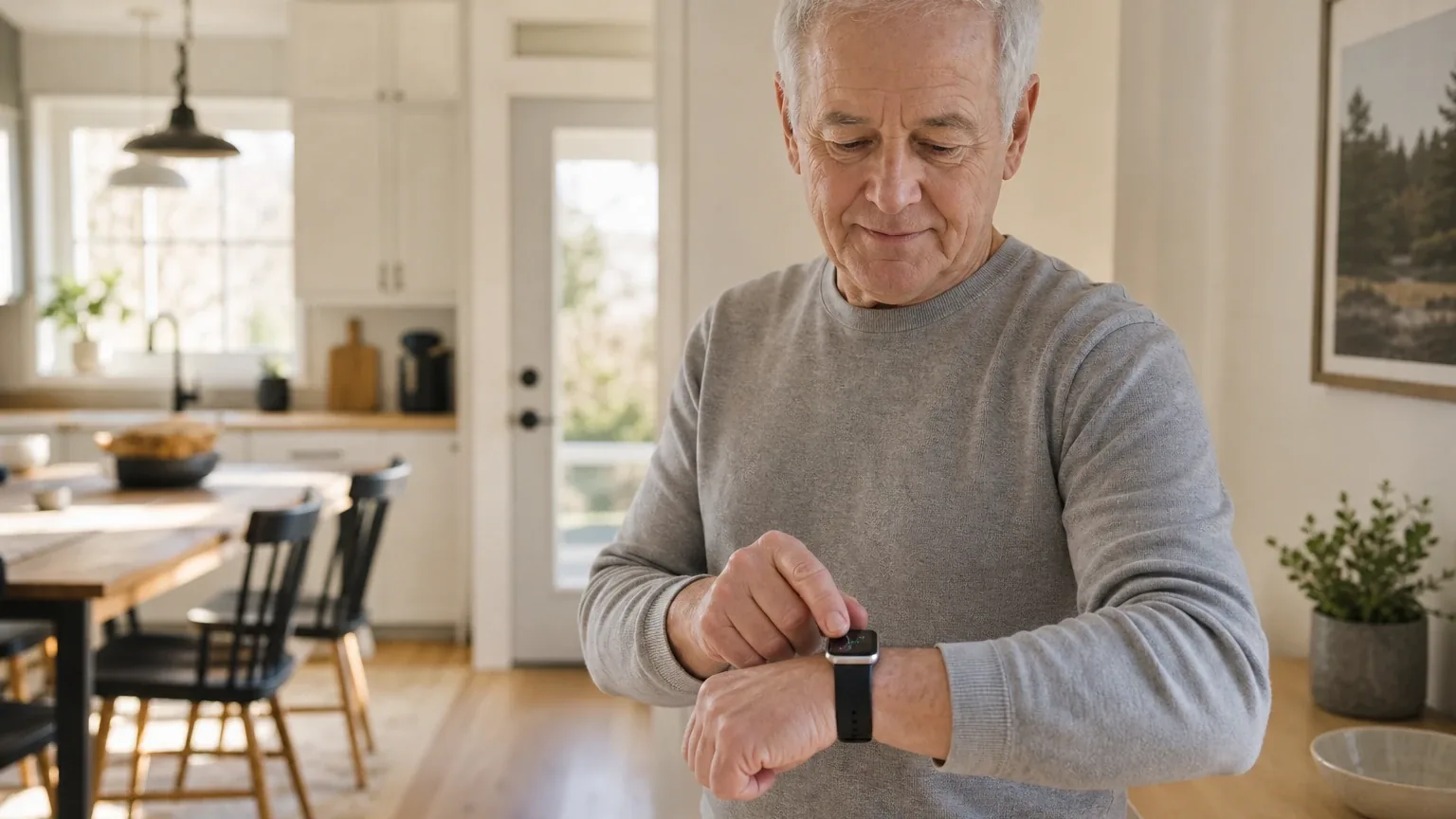
Answer Capsule
Apple is a good fit for Watch-Style Emergency Response, but not the best-in-class choice for every senior buyer. Four of seven AI platforms (Anthropic, Google, Kimi, and OpenAI) named Apple during the ranking stage, with an average listed rank of 4.5 and a best rank of 1. The strongest reason to consider Apple is its combination of automatic fall detection, direct Emergency SOS calling, GPS location sharing, and two-way voice communication in a discreet smartwatch form factor that avoids the visual stigma of traditional medical alert devices. The main limitation is the absence of a dedicated 24/7 professional monitoring center—Apple connects directly to 911 or personal emergency contacts rather than routing through a live operator—plus the requirement for daily charging, an iPhone for setup, and a separate monthly cellular plan.
Research Snapshot
| Metric | Value |
|---|---|
| Platform mentions in ranking stage | 4 of 7 platforms (Anthropic, Google, Kimi, OpenAI) |
| Share of included platform responses | 57.1% (4 of 7) |
| Average listed rank | 4.5 |
| Best listed rank | 1 (Kimi) |
| Relevant product/model/plan | Apple Watch Series 10 GPS + Cellular or Apple Watch SE 3 GPS + Cellular with activated cellular plan; optional AppleCare+ |
| Overall use-case fit | Good (5 platforms rated "good"; 2 rated "mixed") |
| Research date | 2026-08-07 |
Why Apple Qualified for This Study
Apple qualified because multiple AI platforms independently identified Apple Watch cellular models as relevant contenders in the medical alert watch category during the ranking stage. Four of seven platforms named Apple in their rankings: Anthropic ranked it 10th, Google 3rd, Kimi 1st, and OpenAI 4th. All seven platforms then provided detailed fit assessments for the watch-style emergency response use case. The relevant products are the Apple Watch Series 10 GPS + Cellular and Apple Watch SE 3 GPS + Cellular, both of which include Emergency SOS, fall detection, GPS, and two-way calling capabilities when paired with an activated cellular plan [1].
The Product, Model, Plan, or Service Most Relevant to Watch-Style Emergency Response
The most relevant configuration is the Apple Watch Series 10 GPS + Cellular or Apple Watch SE 3 GPS + Cellular with an activated compatible U.S. cellular plan. All seven platforms converged on this recommendation. The cellular model is essential because it allows the watch to make calls and send messages without the iPhone nearby [5]. Apple lists AT&T, Boost Mobile, T-Mobile, and Verizon on the SE 3 purchase flow, though eligibility and pricing vary by carrier and account type [6]. Optional AppleCare+ adds coverage for accidental damage but is not required for emergency features [7].
What the AI Platforms Agreed About
Strong agreement existed across platforms on core emergency capabilities. All seven platforms confirmed that Apple Watch supports Emergency SOS, fall detection, GPS location sharing, and two-way calling on cellular models. Five platforms (Anthropic, DeepSeek, Google, Grok, OpenAI) rated Apple a "good" fit, while two (Kimi, Perplexity) rated it "mixed."
Fall detection was the most consistently praised feature. Apple Watch SE 3 and Series 10 support Fall Detection, which alerts the wearer after a hard fall and can automatically attempt to call emergency services if the wearer remains immobile for about one minute [8]. Fall Detection is enabled by default for users 55 and older [11]. Apple explicitly states that the watch cannot detect all falls and may identify high-impact activity as a fall [13].
Emergency SOS accessibility was confirmed by multiple platforms. Emergency SOS is triggered by pressing and holding the side button, after which the watch can call emergency services, share location, and notify emergency contacts [14]. Some platforms noted that the confirmation slider adds a step that may be difficult for users with dexterity limitations [15].
GPS location sharing was a consistent advantage. Series 10 includes GPS with L1 GPS, GLONASS, Galileo, QZSS, and BeiDou [18]. During an emergency call, the watch can transmit latitude and longitude coordinates to emergency services and emergency contacts [19].
The absence of professional monitoring was the most consistent limitation. All platforms noted that Apple Watch connects directly to 911 or personal emergency contacts rather than routing through a 24/7 monitoring center with live operators [14]. This means there is no human screening before dispatch and no caregiver triage service.
Daily charging was universally identified as a practical constraint. Series 10 is rated for up to 18 hours of normal use and up to 36 hours in Low Power Mode; SE 3 is rated for up to 24 hours and up to 38 hours in Low Power Mode [23]. Real-world reports show 10–15% battery drain per hour during active GPS workouts and 17% overnight drain during sleep tracking [25].
Where the AI Platforms Disagreed or Were Uncertain
Two-way calling clarity was the most disputed factor. Apple publishes no official specifications on call audio fidelity. Independent user forums document poor call quality in noisy environments, with reports of dropped words and difficulty hearing incoming audio [26]. DeepSeek assessed calling clarity as "unclear," noting no specific third-party tests on emergency call quality [29]. Perplexity similarly marked calling clarity as "unclear" due to the absence of independent testing [30]. Google rated calling clarity as an advantage based on Apple's documented cellular calling capability [31].
Battery life estimates varied by source. Apple's official ratings are 18 hours for Series 10 and 24 hours for SE 3, but real-world reports vary widely depending on GPS use, sleep tracking, and cellular activity [32]. DeepSeek listed both models at up to 18 hours [34]. The margin of uncertainty is approximately ±20% from advertised figures [32].
Pricing conflicts existed across platforms. OpenAI reported SE 3 starting at $249 for GPS and $299 for GPS + Cellular [35]. Anthropic reported SE at $199 for the cellular variant and Series 10 at $349–$399 [36]. DeepSeek reported SE GPS + Cellular at $299–$349 and Series 10 GPS + Cellular at $499–$529 [37]. Kimi reported SE GPS + Cellular at $299 and Series 10 at $499 [38]. These discrepancies likely reflect different model years, configurations, or research dates; buyers should verify current pricing at checkout.
Cellular plan costs ranged from $10 to $20 per month. Anthropic cited $10–$15/month with AT&T at $10.99 plus ~$3.49 in fees (≈$14.48 total), Verizon at $10, and T-Mobile at $15 [39]. Grok cited $10–$15/month [42]. Kimi cited $10–$20/month [38]. Activation fees range from $0 to $35 depending on carrier [40].
Fall detection accuracy was not independently verified. Apple does not publish false-positive or false-negative rates for fall detection, and independent testing is limited [43]. DeepSeek noted that fall detection is not FDA-cleared as a medical device and may miss slow or secondary falls [44].
Use-Case-Specific Features and Capabilities
SOS Button Accessibility
Emergency SOS is initiated by pressing and holding the side button, followed by a confirmation slider [45]. Siri voice commands can also trigger emergency features [47]. The confirmation step adds friction in high-urgency situations, and no ergonomic testing has been published for older hands with arthritis or reduced dexterity [45].
GPS Accuracy
Series 10 includes enhanced GPS with L1 GPS, GLONASS, Galileo, QZSS, and BeiDou [48]. Independent sources report improved algorithms for urban tracking and faster satellite acquisition [49]. Kimi noted that Series 10 includes precision dual-frequency GPS (L1+L5) [51]. Apple does not publish a use-case-specific accuracy guarantee for senior emergency response [48].
Two-Way Calling Clarity
Cellular models support voice calls through the built-in speaker and microphone [48]. Multiple independent user discussions report voice quality issues in noisy environments, with callers experiencing dropped words and difficulty hearing incoming audio [53]. No recent independent lab testing of emergency call quality was found [53].
Fall Detection Capability
Fall Detection uses the accelerometer and gyroscope with machine learning [51]. When a hard fall is detected, the watch alerts the wearer; if the wearer remains immobile for about one minute, it can automatically attempt to call emergency services [56]. Fall Detection is enabled by default for users 55 and older [59]. Apple states that the watch cannot detect all falls and may identify high-impact activity as a fall [61].
Battery Life
Series 10 is rated for up to 18 hours of normal use and up to 36 hours in Low Power Mode [48]. SE 3 is rated for up to 24 hours and up to 38 hours in Low Power Mode [63]. Real-world reports show 10–15% battery drain per hour during active GPS workouts [64]. Daily or near-daily charging is required [63].
Display Readability
Series 10 has an always-on wide-angle OLED display rated up to 2000 nits [48]. SE 3 has an always-on OLED display up to 1000 nits [63]. Accessibility features include VoiceOver, Zoom, larger text, bold text, increased contrast, and AssistiveTouch [48]. Watch faces like "Numerals" and "X-Large" display massive digits [67]. Series 10 is the stronger choice for users needing a brighter or more readable display [63].
Subscription Pricing
No monthly Apple subscription is required for Fall Detection or Emergency SOS features themselves [63]. However, a cellular plan is required for many away-from-iPhone functions, typically costing $10–$15/month [69]. Optional AppleCare+ adds $79–$129 for two years depending on model [71].
Pricing, Fees, Contracts, and Ongoing Costs
Device costs vary by model and configuration. Apple lists Apple Watch SE 3 starting at $249 for GPS and $299 for GPS + Cellular in the U.S. [72]. Anthropic reported SE at $199 for the cellular variant and Series 10 at $349–$399 [73]. DeepSeek reported SE GPS + Cellular at $299–$349 and Series 10 GPS + Cellular at $499–$529 [74]. Series 10 pricing was not verified from the reviewed current Apple pages and should be confirmed before purchase [75].
Cellular service is the primary ongoing cost. Major U.S. carriers charge $10–$15/month for Apple Watch cellular plans, with AT&T at $10.99 plus ~$3.49 in fees (≈$14.48 total), Verizon at $10, and T-Mobile at $15 [76]. Activation fees range from $0 to $35 depending on carrier [77]. Most carriers require an active iPhone line on the same account [77].
AppleCare+ is optional. AppleCare+ for Apple Watch costs approximately $79 for SE and $129 for Series 10 for two years [74]. Monthly plans automatically renew unless canceled; Apple states cancellation can be requested at any time, subject to plan terms [81]. Service fees apply for eligible accidental-damage claims [81].
No long-term contracts are required. Cellular plans are generally month-to-month with no contract, and cancellation is typically effective the next billing cycle [76]. Switching carriers requires reactivation on the new carrier [76].
Total first-year cost is significantly higher than dedicated medical alert watches. A Series 10 GPS + Cellular at $399–$499 plus $120–$180/year for cellular plus optional AppleCare+ at $129 results in a first-year cost of roughly $650–$800 [73]. Dedicated medical alert services often include the device with a monthly monitoring subscription.
Best Suited For
Apple Watch is best suited for older adults who already use iPhones and are comfortable with smartwatch interfaces [83]. It is ideal for seniors who want a discreet, mainstream wearable that avoids the visual stigma of traditional medical alert buttons [86]. The device works well for active older adults who value GPS tracking, fitness features, and health monitoring alongside emergency capabilities [88]. It is also appropriate for seniors with engaged family caregivers who can respond to emergency notifications and assist with setup [87].
Probably Not Best Suited For
Apple Watch is probably not best suited for buyers requiring a professional 24/7 monitoring center rather than direct emergency-service calling [89]. It is also not ideal for users who may forget daily charging, as loss of charge eliminates emergency-connectivity capability [92]. Seniors with limited dexterity, vision, hearing, or technology confidence may struggle with the small on-screen controls and smartwatch complexity unless a caregiver provides setup and training [92]. Households without a compatible iPhone or supported cellular carrier cannot use the device [95]. Android users are entirely excluded [95].
When Another Option May Be Better
A dedicated medical-alert watch with professional monitoring is better when the buyer wants a 24/7 call center operator to answer calls, provide triage, and assess before dispatch [97]. Traditional services like Life Alert, Medical Guardian, or Philips Lifeline offer simpler interfaces and human response [97]. A longer-battery medical-alert device is better when the user is unlikely to charge a watch daily [100]. A simpler cellular alert watch is better when the user does not own or cannot reliably use an iPhone [100]. Budget-conscious buyers may find dedicated alert devices with lower total cost of ownership more appropriate [103].
Questions to Verify Before Buying
- Does the buyer have a compatible iPhone (iPhone 12 or later running iOS 18+), an Apple Account, and a caregiver willing to complete setup and ongoing support? [104]
- Which U.S. carrier supports the exact watch model and account, and what is the total monthly cellular cost including activation and taxes? [106]
- Can the buyer reliably charge the watch every day, and is a charging routine or backup plan available? [106]
- Is the display readable without glasses, and can the buyer successfully press and hold the side button and communicate through the speaker? [106]
- Are Fall Detection and Emergency SOS enabled, and are Medical ID and emergency contacts correctly configured? [110]
- What happens if the watch loses cellular coverage, Wi-Fi, battery power, or connection to the iPhone? [110]
- Does the buyer need professional monitoring or caregiver triage rather than direct 911 calling? [110]
- What is the current AppleCare+ price, claim fee, coverage term, and cancellation policy for the exact model? [113]
- Are there mobility, hearing, vision, or cognitive limitations that require testing the watch before purchase? [106]
- Has the buyer tested call quality on the Apple Watch speaker in background noise? This is the primary documented limitation [116].
Final AI Consensus Verdict
Apple is a good, but not best-in-class, fit for watch-style emergency response. The consensus across all seven platforms is that Apple Watch Series 10 or SE 3 GPS + Cellular offers strong emergency capabilities—automatic fall detection, direct Emergency SOS calling, GPS location sharing, and two-way voice communication—in a discreet smartwatch form factor. However, the absence of a dedicated 24/7 professional monitoring center, the requirement for daily charging, iPhone dependency, and the added cost of a cellular plan create meaningful tradeoffs versus purpose-built medical alert watches. Apple is strongest for tech-comfortable seniors already in the Apple ecosystem who value a mainstream smartwatch with integrated safety features. For buyers needing simplest operation, guaranteed professional response, or longest battery life, dedicated medical alert services remain preferable [118].
For a broader comparison of watch-style emergency response options, see the Watch-Style Emergency Response consensus index. You can also explore other medical alert systems in the category directory.
How This Review Was Produced
This review was produced by aggregating fit-research responses from seven AI platforms (Anthropic, DeepSeek, Google, Grok, Kimi, OpenAI, and Perplexity), each of which evaluated Apple against the watch-style emergency response use case using criteria including SOS button accessibility, GPS accuracy, two-way calling clarity, fall-detection capability, battery life, display readability, and subscription pricing. The research date for the authoritative run is 2026-08-07. Platform responses were normalized, deduplicated, and cross-checked against the supplied citation catalog. Fit ratings were assigned by each platform independently, and this review reports those ratings without modification.
Methodology Limitations
- Platform-reported research dates differ from the authoritative run date. DeepSeek's response is dated 2026-02-15, while all other platforms and the authoritative run are dated 2026-08-07. This may affect pricing and product availability claims from DeepSeek.
- Company-owned citations materially outnumber independent citations. Of the 43 deduplicated sources, 27 are company-owned (Apple) and 16 are independent. Company claims about fall detection, GPS, and calling capabilities should not be treated as independently verified.
- The supplied URLs were collected from platform responses and were not independently validated by the writer stage.
- Pricing conflicts exist across platforms for device costs, cellular plan fees, and AppleCare+ pricing. These likely reflect different model years, configurations, or research dates. Buyers should verify current pricing at checkout.
- No independent lab testing of emergency call quality, fall detection accuracy, or GPS accuracy for senior use was found in the supplied sources. User forum reports document call quality issues but do not constitute controlled testing.
- Apple does not publish false-positive or false-negative rates for fall detection, and no regulatory clearance for fall detection as a medical device was documented in the supplied sources.
- The deterministic identity audit contains qualification notes indicating that official-site retrieval failed for one or more mentions and that a product-labeled company mention was merged using matching company-name and supplied-domain signatures.
Sources
Company-Owned Sources
- Bad quality Bluetooth voice call - Apple Community: https://discussions.apple.com/thread/250689055
- How long does Apple Watch 10 last on GPS: https://discussions.apple.com/thread/255930604
- Can I turn up the speaker volume on my watch - Apple Community: https://discussions.apple.com/thread/7062554
- Call quality is bad - Apple Community: https://discussions.apple.com/thread/7383567
- Apple Watch User Guide / Safety and Emergency features: https://support.apple.com/
- Manage Fall Detection on Apple Watch: https://support.apple.com/en-asia/guide/watch/-apd34c409704/watchos
- Use Emergency SOS on your Apple Watch: https://support.apple.com/en-ca/108374
- Use Fall Detection with Apple Watch: https://support.apple.com/en-euro/108896
- Manage Fall Detection on Apple Watch: https://support.apple.com/en-in/guide/watch-app/apd352528731/watchos
- Safety features on Apple Watch: https://support.apple.com/en-in/guide/watchos/apd61d5f2bf2/watchos
- Use Fall Detection with Apple Watch: https://support.apple.com/en-in/HT208944
- Use Emergency SOS on your Apple Watch: https://support.apple.com/en-us/108374
- Use Fall Detection with Apple Watch: https://support.apple.com/en-us/108896
- Use Emergency SOS on your Apple Watch: https://support.apple.com/en-us/108933
- Fall Detection on Apple Watch: https://support.apple.com/en-us/108935
- Set up Apple Watch for a family member: https://support.apple.com/en-us/109036
- Apple Watch Series 10 - Tech Specs: https://support.apple.com/en-us/121202
- Apple Watch product and safety documentation: https://www.apple.com/
- Apple Watch GPS + Cellular: https://www.apple.com/apple-watch-gps-cellular/
- Apple Watch SE - Technical Specifications: https://www.apple.com/apple-watch-se/specs/
- Apple Watch Series 10 - Features: https://www.apple.com/apple-watch-series-10/
- Apple Watch Series 10 - Battery: https://www.apple.com/apple-watch-series-10/battery/
- Apple Watch Series 10 - Display: https://www.apple.com/apple-watch-series-10/display/
- AppleCare+ Terms and Conditions: https://www.apple.com/legal/sales-support/applecare/applecareplus/us/
- Buy Apple Watch SE 3: https://www.apple.com/us/shop/buy-watch/apple-watch-se
- Apple Watch - Apple: https://www.apple.com/watch/
- Apple Watch - Cellular: https://www.apple.com/watch/cellular/
Additional AI research evidence121 records
- AI research evidence record openai:c1
- AI research evidence record openai:c3
- AI research evidence record anthropic:c1
- AI research evidence record anthropic:c3
- AI research evidence record openai:c6
- AI research evidence record openai:c1
- AI research evidence record openai:c8
- AI research evidence record openai:c4
- AI research evidence record anthropic:c3
- AI research evidence record google:1.1.2
- AI research evidence record anthropic:c4
- AI research evidence record grok:c1
- AI research evidence record openai:c5
- AI research evidence record openai:c2
- AI research evidence record anthropic:c1
- AI research evidence record deepseek:c1
- AI research evidence record google:1.1.5
- AI research evidence record openai:c3
- AI research evidence record google:1.1.3
- AI research evidence record anthropic:c21
- AI research evidence record kimi:c2
- AI research evidence record google:1.1.8
- AI research evidence record openai:c1
- AI research evidence record deepseek:c5
- AI research evidence record anthropic:c11
- AI research evidence record anthropic:c8
- AI research evidence record anthropic:c9
- AI research evidence record anthropic:c10
- AI research evidence record deepseek:c3
- AI research evidence record perplexity:c1
- AI research evidence record google:1.2.9
- AI research evidence record anthropic:c11
- AI research evidence record anthropic:c12
- AI research evidence record deepseek:c5
- AI research evidence record openai:c1
- AI research evidence record anthropic:c22
- AI research evidence record deepseek:c7
- AI research evidence record kimi:c2
- AI research evidence record anthropic:c17
- AI research evidence record anthropic:c18
- AI research evidence record anthropic:c19
- AI research evidence record grok:c4
- AI research evidence record anthropic:c2
- AI research evidence record deepseek:c4
- AI research evidence record anthropic:c1
- AI research evidence record openai:c2
- AI research evidence record google:1.1.5
- AI research evidence record openai:c3
- AI research evidence record anthropic:c6
- AI research evidence record anthropic:c7
- AI research evidence record kimi:c2
- AI research evidence record deepseek:c3
- AI research evidence record anthropic:c8
- AI research evidence record anthropic:c9
- AI research evidence record anthropic:c10
- AI research evidence record openai:c4
- AI research evidence record anthropic:c3
- AI research evidence record google:1.1.2
- AI research evidence record anthropic:c4
- AI research evidence record grok:c1
- AI research evidence record openai:c5
- AI research evidence record deepseek:c5
- AI research evidence record openai:c1
- AI research evidence record anthropic:c11
- AI research evidence record anthropic:c13
- AI research evidence record anthropic:c14
- AI research evidence record anthropic:c15
- AI research evidence record google:1.2.4
- AI research evidence record anthropic:c17
- AI research evidence record grok:c4
- AI research evidence record deepseek:c7
- AI research evidence record openai:c1
- AI research evidence record anthropic:c22
- AI research evidence record deepseek:c7
- AI research evidence record openai:c3
- AI research evidence record anthropic:c17
- AI research evidence record anthropic:c18
- AI research evidence record anthropic:c19
- AI research evidence record grok:c4
- AI research evidence record kimi:c2
- AI research evidence record openai:c8
- AI research evidence record google:1.2.2
- AI research evidence record openai:c1
- AI research evidence record anthropic:c20
- AI research evidence record deepseek:c1
- AI research evidence record google:1.1.8
- AI research evidence record kimi:c2
- AI research evidence record anthropic:c13
- AI research evidence record openai:c2
- AI research evidence record anthropic:c21
- AI research evidence record kimi:c2
- AI research evidence record openai:c1
- AI research evidence record anthropic:c11
- AI research evidence record anthropic:c22
- AI research evidence record anthropic:c20
- AI research evidence record openai:c7
- AI research evidence record anthropic:c21
- AI research evidence record kimi:c2
- AI research evidence record google:1.1.8
- AI research evidence record openai:c1
- AI research evidence record deepseek:c1
- AI research evidence record anthropic:c20
- AI research evidence record anthropic:c22
- AI research evidence record anthropic:c20
- AI research evidence record openai:c7
- AI research evidence record openai:c1
- AI research evidence record anthropic:c17
- AI research evidence record anthropic:c11
- AI research evidence record anthropic:c13
- AI research evidence record openai:c2
- AI research evidence record anthropic:c3
- AI research evidence record anthropic:c21
- AI research evidence record openai:c8
- AI research evidence record deepseek:c7
- AI research evidence record anthropic:c10
- AI research evidence record anthropic:c8
- AI research evidence record anthropic:c9
- AI research evidence record openai:c1
- AI research evidence record anthropic:c21
- AI research evidence record kimi:c2
- AI research evidence record google:1.1.8
Independent Sources
- Apple Watch Series 10 Review - 9meters: https://9meters.com/technology/watches/apple-watch-series-10
- Using Apple Watch as Medical Alert for Seniors: https://empowerbrokerage.com/using-apple-watch-as-medical-alert-for-seniors/
- Is the Apple Watch Good for Seniors?: https://getjubileetv.com/blogs/jubileetv/is-the-apple-watch-good-for-seniors
- Emergency Response USA Company Profile: https://linkedin.com/company/emergency-response-usa
- Apple Watch Series 10 Specifications: Complete Technical Guide: https://ofzenandcomputing.com/apple-watch-series-10-specifications/
- Medical Alert Systems Guide - Consumer Information: https://www.consumerreports.org/cro/medical-alert-systems.htm
- Best Apple Watch For Seniors - 2026 Reviews: https://www.goinglikesixty.com/best-apple-watch-for-seniors/
- How Much Does Apple Watch Cellular Cost with Every Carrier: https://www.iphonelife.com/content/apple-watch-cellular-plans-what-it-will-cost-you-every-network
- Apple Watch with Cellular Plan Prices at Major U.S. Carriers (2026): https://www.macobserver.com/tips/round-ups/apple-watch-with-cellular-plan-prices-at-major-us-carriers/
- Apple Watch as a Medical Alert System 2025: https://www.ncoa.org/article/apple-watch-as-a-medical-alert-system
- Can You Use an Apple Watch as a Medical Alert System?: https://www.ncoa.org/article/apple-watch-as-medical-alert-system-what-to-know/
- Apple Watch for Seniors: Setup Guide 2026: https://www.onoff.gr/blog/en/apple-watch/elderly-setup-guide-2026/
- Apple Watch Fall Detection Review (2026): https://www.retirementliving.com/reviews/apple-watch-fall-detection
- Life Alert vs Apple Watch Comparison - Which is Better?: https://www.safehome.org/resources/life-alert-vs-apple-watch/
- Top 4 Best Medical Alert Watches for Seniors (2026 Edition): https://www.safewise.com/senior-safety/medical-alerts/watches/
- Which Apple Watch Has Fall Detection | WizeBand: https://www.wizeband.com/blogs/news/which-apple-watch-has-fall-detection
Additional AI research evidence121 records
- AI research evidence record openai:c1
- AI research evidence record openai:c3
- AI research evidence record anthropic:c1
- AI research evidence record anthropic:c3
- AI research evidence record openai:c6
- AI research evidence record openai:c1
- AI research evidence record openai:c8
- AI research evidence record openai:c4
- AI research evidence record anthropic:c3
- AI research evidence record google:1.1.2
- AI research evidence record anthropic:c4
- AI research evidence record grok:c1
- AI research evidence record openai:c5
- AI research evidence record openai:c2
- AI research evidence record anthropic:c1
- AI research evidence record deepseek:c1
- AI research evidence record google:1.1.5
- AI research evidence record openai:c3
- AI research evidence record google:1.1.3
- AI research evidence record anthropic:c21
- AI research evidence record kimi:c2
- AI research evidence record google:1.1.8
- AI research evidence record openai:c1
- AI research evidence record deepseek:c5
- AI research evidence record anthropic:c11
- AI research evidence record anthropic:c8
- AI research evidence record anthropic:c9
- AI research evidence record anthropic:c10
- AI research evidence record deepseek:c3
- AI research evidence record perplexity:c1
- AI research evidence record google:1.2.9
- AI research evidence record anthropic:c11
- AI research evidence record anthropic:c12
- AI research evidence record deepseek:c5
- AI research evidence record openai:c1
- AI research evidence record anthropic:c22
- AI research evidence record deepseek:c7
- AI research evidence record kimi:c2
- AI research evidence record anthropic:c17
- AI research evidence record anthropic:c18
- AI research evidence record anthropic:c19
- AI research evidence record grok:c4
- AI research evidence record anthropic:c2
- AI research evidence record deepseek:c4
- AI research evidence record anthropic:c1
- AI research evidence record openai:c2
- AI research evidence record google:1.1.5
- AI research evidence record openai:c3
- AI research evidence record anthropic:c6
- AI research evidence record anthropic:c7
- AI research evidence record kimi:c2
- AI research evidence record deepseek:c3
- AI research evidence record anthropic:c8
- AI research evidence record anthropic:c9
- AI research evidence record anthropic:c10
- AI research evidence record openai:c4
- AI research evidence record anthropic:c3
- AI research evidence record google:1.1.2
- AI research evidence record anthropic:c4
- AI research evidence record grok:c1
- AI research evidence record openai:c5
- AI research evidence record deepseek:c5
- AI research evidence record openai:c1
- AI research evidence record anthropic:c11
- AI research evidence record anthropic:c13
- AI research evidence record anthropic:c14
- AI research evidence record anthropic:c15
- AI research evidence record google:1.2.4
- AI research evidence record anthropic:c17
- AI research evidence record grok:c4
- AI research evidence record deepseek:c7
- AI research evidence record openai:c1
- AI research evidence record anthropic:c22
- AI research evidence record deepseek:c7
- AI research evidence record openai:c3
- AI research evidence record anthropic:c17
- AI research evidence record anthropic:c18
- AI research evidence record anthropic:c19
- AI research evidence record grok:c4
- AI research evidence record kimi:c2
- AI research evidence record openai:c8
- AI research evidence record google:1.2.2
- AI research evidence record openai:c1
- AI research evidence record anthropic:c20
- AI research evidence record deepseek:c1
- AI research evidence record google:1.1.8
- AI research evidence record kimi:c2
- AI research evidence record anthropic:c13
- AI research evidence record openai:c2
- AI research evidence record anthropic:c21
- AI research evidence record kimi:c2
- AI research evidence record openai:c1
- AI research evidence record anthropic:c11
- AI research evidence record anthropic:c22
- AI research evidence record anthropic:c20
- AI research evidence record openai:c7
- AI research evidence record anthropic:c21
- AI research evidence record kimi:c2
- AI research evidence record google:1.1.8
- AI research evidence record openai:c1
- AI research evidence record deepseek:c1
- AI research evidence record anthropic:c20
- AI research evidence record anthropic:c22
- AI research evidence record anthropic:c20
- AI research evidence record openai:c7
- AI research evidence record openai:c1
- AI research evidence record anthropic:c17
- AI research evidence record anthropic:c11
- AI research evidence record anthropic:c13
- AI research evidence record openai:c2
- AI research evidence record anthropic:c3
- AI research evidence record anthropic:c21
- AI research evidence record openai:c8
- AI research evidence record deepseek:c7
- AI research evidence record anthropic:c10
- AI research evidence record anthropic:c8
- AI research evidence record anthropic:c9
- AI research evidence record openai:c1
- AI research evidence record anthropic:c21
- AI research evidence record kimi:c2
- AI research evidence record google:1.1.8
Verify this research
Review the study details behind this page or download the public machine-readable verification record.
- Study date
- Aug 7, 2026
- Platforms analyzed
- 7
- Source records
- 43
- Ranking mentions
- 4 of 7
- Platform share
- 57%
- Final consensus rank
- #2
Research trail and source mix
Platforms
openai, anthropic, deepseek, grok, perplexity, kimi, google
Source mix
16 independent · 27 company-owned
Evidence support
32 direct · 10 partial
Important limitation
Use the run research_date as the study date. Platform-reported dates are provenance metadata and do not independently prove freshness.
Source snapshot SHA-256 9fdb3ba8e1add10d58caa0501f5b40e5ab6aea1ef1a189349b42117d56bdd99a