
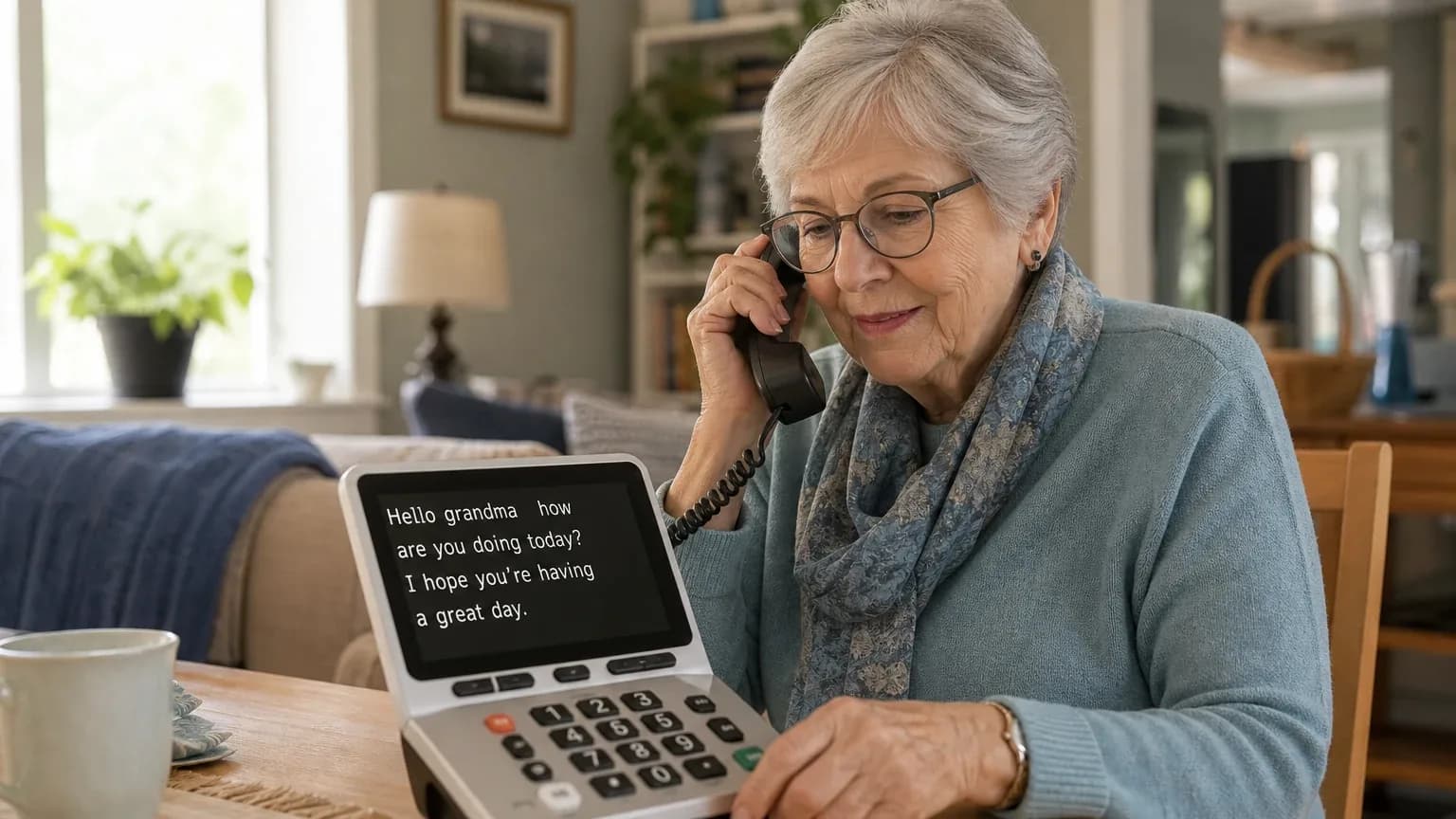
Answer Capsule
CaptionCall IP Captioned Telephone Service is a strong fit for U.S. seniors with mild-to-severe hearing loss who need real-time captions during ordinary voice calls and can complete federal IP CTS eligibility registration. Two of seven platforms named it during the ranking stage, with an average listed rank of 4.5 and a best rank of 2. The strongest reason to consider it is federally funded no-cost equipment and captioning for qualified users, combined with stated TIA-4953 amplification and TIA-1083 hearing-aid compatibility. The main limitation is that it is not a conventional amplified phone: eligibility depends on a documented hearing-loss need for captions, the user generally must speak during calls, and a visual flashing ringer was not verified in the sources checked.
Research Snapshot
| Field | Finding |
|---|---|
| Platform mentions in ranking stage | 2 of 7 platforms (anthropic, openai) |
| Share of included platform responses | 28.6% |
| Average listed rank | 4.5 |
| Best listed rank | 2 |
| Relevant product/model/plan | CaptionCall captioned telephone service, including the CaptionCall home phone and CaptionCall Mobile under the FCC Internet Protocol Captioned Telephone Service program |
| Overall use-case fit | Strong (per openai and anthropic fit ratings); good per deepseek and perplexity |
| Research date | 2026-09-26 |
Why CaptionCall IP Captioned Telephone Service Qualified for This Study
Questions This Section Answers
- Is CaptionCall IP Captioned Telephone Service a good choice for amplified and hearing-accessible phones for a senior with hearing loss?
- Why did only two of seven AI platforms name CaptionCall IP Captioned Telephone Service in the ranking stage?
CaptionCall qualified because it directly addresses the core use case: telephone conversations that are difficult because of hearing loss. It is an Internet Protocol Captioned Telephone Service (IP CTS) that displays captions as the other party speaks, and it is available at no cost to qualified users who complete hearing-loss eligibility and registration [1]. The FCC requires registration and self-certification that the user has hearing loss necessitating captioned telephone service and understands the federally funded captioning model [2].
The ranking-stage footprint was narrow. Only two of seven platforms named the entity during ranking discovery, producing a 28.6% platform share, an average listed rank of 4.5, and a best rank of 2 (anthropic ranked it 7; openai ranked it 2). That is a limited-mention profile, not broad consensus. The entity still cleared the study's two-mention minimum and advanced to a final rank of 9.
Its qualification rests on the combination of captioning plus amplification rather than captioning alone. Sorenson states that the CaptionCall phone meets TIA-4953 amplification standards and TIA-1083 hearing-aid compatibility standards, with adjustable loudness and frequency settings [3]. Independent coverage describes CaptionCall as the only captioning telephone meeting strict amplification standards for mild, moderate, or severe hearing loss under TIA-4953 (anthropic:12-2).
The Product, Model, Plan, or Service Most Relevant to Amplified & Hearing-Accessible Phones
Questions This Section Answers
- Which CaptionCall product should a senior with hearing loss choose: the home phone or CaptionCall Mobile?
- Does the CaptionCall home phone work with hearing aids and Bluetooth devices?
The relevant offering is the CaptionCall captioned telephone service, delivered through two paths: the CaptionCall home phone and CaptionCall Mobile for compatible iOS and Android devices, both under the FCC IP CTS program. Sorenson states that CaptionCall offers home-phone and mobile captioning, hearing-aid and Bluetooth compatibility, U.S.-only availability, no-cost service for qualified users, and Sorenson ownership of supplied equipment or app service [4].
Home-phone models named across platform responses include the 67TB, 67T, 78T, and 88T. Platform responses are not consistent on which model is current, so buyers should confirm the exact model at order time. One platform reported the 67TB as the home phone paired with the CaptionCall Mobile app at $0 to qualified users (anthropic:23-1). Another reported that CaptionCall model 67TB amplifies calls up to 58 dB, has an adjustable 95 dB SPL loud ringer, and carries TIA-4953 compliance [5].
For hearing-aid users, Sorenson states that CaptionCall Mobile works with compatible wireless hearing aids and Bluetooth devices and provides real-time captions [6]. Bluetooth connectivity was reported as implemented in CaptionCall 67tb phones for hands-free-profile compatible devices (anthropic:15-1). The home phone is described as TIA-1083 compliant for hearing-aid compatibility and reduced interference [7].
What the AI Platforms Agreed About
Questions This Section Answers
- Do AI platforms agree that CaptionCall IP Captioned Telephone Service is free for eligible seniors with hearing loss?
- Is CaptionCall IP Captioned Telephone Service designed for real-time captioning rather than amplification alone?
Agreement was strong on cost, captioning purpose, and eligibility structure, though not unanimous on every specification.
On cost, platforms converged. Sorenson states that CaptionCall captioning service, the CaptionCall phone, delivery, setup, and ongoing support are provided at no cost to qualified U.S. users because captioning is reimbursed through the federally administered TRS/IP CTS program [8]. Independent reviews repeat the no-cost framing: CaptionCall is completely free for eligible users (anthropic:8-1), and the cost covers device, installation, training, and ongoing support (anthropic:8-2). One platform summarized it as free for registered eligible users with no subscription or per-minute charges for qualifying calls (grok:1).
On purpose, platforms agreed that captioning is the primary accessibility mechanism, not amplification alone. CaptionCall displays captions as the other party speaks, and both the home phone and CaptionCall Mobile support captioned incoming and outgoing calls [9]. Captioning may be produced by automatic speech recognition or a communications assistant depending on service configuration [9]. Independent coverage describes a hybrid model combining automated speech recognition with human captioning agents (anthropic:5-4, anthropic:5-5).
On eligibility, platforms agreed that registration and a hearing-loss need are required. Use is limited to people whose hearing loss necessitates captioned telephone service, and IP CTS is intended for users who can speak and use residual hearing while reading captions [9]. Federal law prohibits anyone but registered users with hearing loss from using IP captioned telephones with captions turned on (anthropic:4-8).
On geography, platforms agreed the service is U.S.-only. CaptionCall and CaptionCall Mobile are presented as U.S.-only services [8], with one platform adding availability throughout the United States and Puerto Rico (anthropic:29-2).
Where the AI Platforms Disagreed or Were Uncertain
Questions This Section Answers
- What amplification level does the CaptionCall home phone actually provide, and why do sources disagree?
- Does CaptionCall IP Captioned Telephone Service include a verified flashing visual ringer?
The largest conflict is amplification specification. Reported figures range from 40 dB of gain to 58 dB of amplification to 121.5 dB SPL handset output. One independent review states the CaptionCall phone provides 40 dB of gain and that 40 dB is plenty of volume if hearing loss ranges down to moderately-severe or so, but may not be enough for severe or profound loss without hearing aids (anthropic:17-1, anthropic:17-2, anthropic:17-3). A retailer technical sheet lists the 67TB at up to 58 dB amplification [11]. Public product material reports handset output up to 121.5 dB SPL and ringer output up to 105 dB SPL under stated test conditions [12]. One platform explained the discrepancy as differing acoustic measurement methods — SPL versus relative dB gain [11]. Official sources confirm TIA-4953 and TIA-1083 compliance but do not clearly provide a current, model-specific decibel-gain number for every CaptionCall phone generation [13].
Visual ringer alerts are unresolved. Sorenson documentation confirms adjustable ringer loudness and ring settings, but the sources checked do not clearly verify a flashing visual ringer or external visual-alert accessory [14]. One platform reported bright flashers and visual alerts on home phone models (grok:0), and another reported a visual flashing ringer alert on the physical phone [11]. Another platform stated visual ringer capability was not clearly verified in the sources checked [15]. Buyers who need a documented visual alert should verify the specific model.
Captioning mode is also uncertain. Sorenson describes CaptionCall captioning as potentially involving communications assistants, while the FCC record also documents conditional certification for fully automatic ASR-only IP CTS; the exact captioning mode available to a particular user should be verified [18]. One platform reported a 2-3 second caption delay as typical [20], while another reported the mobile app delivers captions with only a fraction of a second delay (anthropic:30-14).
Outage behavior was not fully established. One platform reported that the CaptionCall handset requires external power and cannot dial during a power outage, and that Sorenson retains ownership of the phone hardware [21]. Another reported that many units include battery backup and that batteries should be replaced every 6-12 months [22]. These accounts are not reconciled in the supplied evidence.
Use-Case-Specific Features and Capabilities
Questions This Section Answers
- Does CaptionCall IP Captioned Telephone Service meet TIA-4953 amplification and TIA-1083 hearing-aid compatibility standards?
- Can CaptionCall IP Captioned Telephone Service display captions in Spanish as well as English?
Real-time captioning is the primary capability. CaptionCall displays captions as the other party speaks, and the home phone and CaptionCall Mobile support captioned incoming and outgoing calls [23]. Captioning may be produced by automatic speech recognition or a communications assistant depending on the service configuration [23]. Independent coverage describes a hybrid ASR plus human-agent model (anthropic:5-4, anthropic:5-5) and reports captions appear with minimal delay on home phones and faster on the mobile app (anthropic:30-14).
Amplification and audio clarity. Sorenson states that the CaptionCall phone meets TIA-4953 amplification standards for mild, moderate, and severe hearing loss [25]. The home phone provides adjustable amplification and frequency emphasis, and the user guide documents selectable frequency-amplification settings [25]. One platform reported that CaptionCall gives full access to powerful amplification regardless of whether captions are turned on or off (anthropic:12-5). Reported output figures vary and are covered in the disagreement section above.
Hearing-aid compatibility. The home phone is described as TIA-1083 compliant for hearing-aid compatibility and reduced interference [25]. Sorenson states that CaptionCall Mobile can work with wireless hearing aids or Bluetooth devices, subject to device compatibility [27]. Bluetooth connectivity was reported as implemented in CaptionCall 67tb phones for hands-free-profile compatible devices (anthropic:15-1).
Visual ringer alerts. This is the weakest verified factor. Sorenson documentation confirms adjustable ringer loudness and ring settings but does not clearly verify a flashing visual ringer in the checked material [28]. Platform reports conflict, as described above.
Language support. CaptionCall supports English and Spanish for real-time captions, with service available throughout the United States and Puerto Rico (anthropic:29-2). One platform reported that CaptionCall phones allow users to switch between English and Spanish for real-time captions (anthropic:39-11).
Setup and support. CaptionCall's in-home setup service includes free professional installation, device configuration, and training, with support available for the lifetime of the device, and virtual-guided setup is offered where in-home service is unavailable (anthropic:6-4, anthropic:21-5, anthropic:21-6, anthropic:38-2).
Pricing, Fees, Contracts, and Ongoing Costs
Questions This Section Answers
- How much does CaptionCall IP Captioned Telephone Service cost per month, and are there setup or cancellation fees?
- What costs does a senior still pay out of pocket with CaptionCall IP Captioned Telephone Service?
For qualified U.S. users, Sorenson states that CaptionCall captioning service, the CaptionCall phone, delivery, setup, and ongoing support are provided at no cost because captioning is reimbursed through the federally administered TRS/IP CTS program [29]. Independent reviews repeat the no-cost framing (anthropic:8-1, anthropic:8-2). One platform reported no subscription or per-minute charges for qualifying calls (grok:1).
The buyer still pays for underlying connectivity. Ordinary internet, cellular, device, electricity, and possible accessibility-equipment costs are not necessarily covered by IP CTS [29]. One independent review states that users may still need to pay for their own existing internet, smartphone, or landline telephone service (anthropic:5-3). Another platform listed internet service costs as the user's responsibility [30].
Contract and cancellation terms are not clearly established. Eligibility registration and self-certification are required, and users must stop using the service if they are no longer eligible and must not allow unregistered people to use captioning [31]. The sources checked do not clearly state a minimum contract term, cancellation process, return deadline, or replacement-device fee [31]. One platform reported no long-term contracts and that the physical phone and mobile app remain the property of Sorenson and must be returned if the service is no longer needed [32]. Another reported that equipment is loaned, not sold, and replaced at no cost if malfunctioning [33]. Another reported potential charges if equipment is lost or damaged, per provider policy [30].
Pricing confidence was rated moderate by one platform and high by others, reflecting the gap between the clear no-cost headline and the unclear edge-case terms.
Best Suited For
Questions This Section Answers
- Who is CaptionCall IP Captioned Telephone Service best suited for among seniors with hearing loss?
- Is CaptionCall IP Captioned Telephone Service a good fit for a senior who uses hearing aids and struggles on phone calls?
CaptionCall is best suited for U.S. seniors with mild-to-severe hearing impairment who need real-time captions during ordinary voice calls and can complete federal IP CTS eligibility registration. It fits users who still speak on calls and can use residual hearing together with captions [34].
It also fits home users who want a large-screen captioned phone with amplification, tone adjustment, and hearing-aid compatibility [36]. Sorenson states that the CaptionCall phone meets TIA-4953 amplification standards for mild, moderate, and severe hearing loss [36].
It fits users who qualify for the federally funded IP CTS program and want CaptionCall Mobile on a compatible iOS or Android device [38]. One platform reported CaptionCall Mobile is available for both iPhone and Android (anthropic:19-1).
It fits buyers who value in-home professional setup and ongoing support, since delivery, setup, and training are included at no cost for qualified users (anthropic:6-4, anthropic:38-2).
It fits English- and Spanish-speaking users in the United States and Puerto Rico (anthropic:29-2).
Probably Not Best Suited For
Questions This Section Answers
- Who should not choose CaptionCall IP Captioned Telephone Service for amplified and hearing-accessible phones?
- Is CaptionCall IP Captioned Telephone Service suitable for a senior who cannot speak on calls?
CaptionCall is probably not best suited for buyers who need a conventional phone only and do not need captioning [40]. It is not simply an amplified phone; eligibility depends on a hearing-loss need for captioned telephone service [40].
It is a weaker choice for users who cannot reliably speak for themselves on calls. IP CTS is intended for users who can speak and use residual hearing while reading captions [40]. It is not a general text-relay solution for people who cannot speak [40].
It is a weaker choice for buyers prioritizing a documented visual ringer or flashing-light alert, because a flashing visual ringer was not verified in the official sources checked [42].
It is a weaker choice for users without reliable internet or without a compatible smartphone when choosing CaptionCall Mobile [43]. The service is internet-protocol based, and buyers should verify the required internet connection, power and network setup, mobile-device compatibility, and what happens to captioning during an internet or power outage [40].
It is a weaker choice for households where non-registered members need frequent captioning access, since only registered eligible users may use captioning [40].
It is a weaker choice for users with severe or profound hearing loss who do not use hearing aids, because reported 40 dB gain may not be sufficient without external amplification (anthropic:17-3).
When Another Option May Be Better
Questions This Section Answers
- What is a better alternative to CaptionCall IP Captioned Telephone Service for a senior who only needs loud amplified audio?
- When should a buyer choose a different IP CTS provider instead of CaptionCall IP Captioned Telephone Service?
Choose a conventional amplified phone such as a TIA-certified model when the buyer does not need captions or does not meet IP CTS eligibility [45]. One platform noted that traditional amplified phones offer 26-53 dB and that CaptionCall focuses on captioning rather than high-dB audio boost [46].
Compare CapTel or another IP CTS provider when the buyer wants different hardware, a different captioning workflow, or potentially different availability and support [45]. One platform listed alternate IP CTS providers including ClearCaptions, CapTel from T-Mobile, Hamilton CapTel, and InnoCaption, which may offer different hardware, support models, or feature sets (anthropic:1-2). Another noted that CaptionCall Mobile is available for both iPhone and Android while ClearCaptions was reported as iPhone and iPad only (anthropic:19-1).
Choose a phone with a specifically documented flashing ringer when visual call alerts are a primary requirement [45].
Consider a mobile-focused captioning provider when the buyer primarily uses a smartphone and needs a different compatibility or portability profile [45].
Consider a state equipment program when the buyer needs a no-cost amplified phone without internet. One platform described a Florida program offering 53 dB corded amplified phones at no cost to eligible users [48].
Questions to Verify Before Buying
Questions This Section Answers
- What should a buyer confirm with CaptionCall IP Captioned Telephone Service before signing up?
- Which CaptionCall phone model and amplification specification will the buyer actually receive?
The supplied research identifies specific verification gaps. Buyers should confirm the following before enrolling.
- Which current CaptionCall phone model will be supplied, and what is its measured amplification specification in dB gain and maximum handset output? [49]
- Does the supplied model include a flashing visual ringer, voicemail light, external alert output, or only an audible ringer? [50]
- Does the user's specific hearing aid or cochlear-implant processor pair directly by Bluetooth, use a telecoil, or require an intermediary streamer? [51]
- What internet speed, router configuration, electrical power, and backup options are required? [52]
- What happens to ordinary voice calls and captions during internet, power, or service outages? [53]
- Are there any charges for installation, relocation, replacement, loss, early return, or support after the device is installed? [53]
- What current eligibility documentation and self-certification are required, and can the user retain service if hearing needs change? [56]
- Is the current service ASR-only, communications-assistant supported, or selectable, and what caption latency and correction behavior should be expected? [53]
- Is CaptionCall Mobile compatible with the buyer's exact iOS or Android version, hearing aids, carrier, and existing phone number? [51]
- What are the device ownership, return, cancellation, and data-retention rules for saved transcripts? [52]
Final AI Consensus Verdict
CaptionCall IP Captioned Telephone Service is a strong fit for eligible U.S. seniors with mild-to-severe hearing impairment who can speak on calls and benefit from both amplified audio and real-time captions. Its main advantages are federally funded no-cost access for qualified users, strong stated amplification standards, hearing-aid compatibility, and home and mobile captioning [58]. It is a weaker choice when the buyer only needs loud audio, requires a verified visual ringer, cannot use IP connectivity, or cannot participate in voice calls [58].
Platform fit ratings were strong from openai, anthropic, google, grok, and kimi, and good from deepseek and perplexity. That agreement reflects consistent reading of the same company-owned and independent sources; it does not prove product quality or independent performance. The ranking-stage footprint was limited at two of seven platforms, so this is a narrow-consensus result rather than a broad one.
How This Review Was Produced
This review evaluates CaptionCall IP Captioned Telephone Service only for the Amplified & Hearing-Accessible Phones use case within the broader Amplified & Hearing-Accessible Phones consensus study. It is not a broad company review. The study is part of the senior technology category directory.
Seven platforms evaluated fit for this use case: openai, anthropic, deepseek, grok, kimi, perplexity, and google. Two of those seven named CaptionCall during the ranking stage. All platform responses were treated as platform-reported evidence rather than independently verified facts. Company-owned sources were distinguished from independent sources throughout.
Methodology Limitations
Platform-reported research dates differ from the authoritative run date. The study date is 2026-09-26. One platform reported a research date of 2026-06-15 (deepseek), and platform-reported dates are provenance metadata that do not independently prove freshness.
The supplied URLs were collected from platform responses and were not independently validated by the writer stage. Citations are platform-reported evidence, not independently verified facts. No-search model claims require explicit verification before being described as current facts; one platform (deepseek) reported search disabled.
The available source evidence contains qualification notes that remain relevant. Official-site retrieval failed for one or more mentions, and no failed fetch was used as a verified domain key. One or more fetched domains were not corroborated by brand-name or site-identity metadata and were not used as official identity signals. Identity used unverified reported-domain evidence, and the matching reported domain was retained for downstream research but remains unverified. Company-name variants were collapsed onto one canonical brand before minimum-mentions qualification.
Conflicting product names, pricing, and capabilities were not resolved by guessing. Amplification figures conflict across sources (40 dB gain, 58 dB amplification, 121.5 dB SPL output), and the discrepancy was attributed by one platform to differing acoustic measurement methods. Visual ringer functionality, current hardware model, outage operation, replacement terms, and cancellation or return terms were not fully established from the sources checked. Independent comparative evidence on caption accuracy, latency, customer outcomes, and audio quality relative to competing providers was limited.
See the broader Seniors With Hearing Loss consensus index for comparisons across qualified options.
Sources
Company-Owned Sources
- Sorenson CaptionCall End-User License Agreement: https://es.sorenson.com/en/legal/captioncall-mobile-eula/
- VRS – Sorenson: https://es.sorenson.com/en/lp/vrs/
- Is the CaptionCall service no-cost?: https://intercom.help/captioncallmobile/en/articles/8243171-is-the-captioncall-service-no-cost
- CaptionCall official website: https://sorenson.com/
- Mobile Phone Captioning | Cell Phone Captions for Hard of: https://sorenson.com/blog/captioncall/does-captioncall-work-on-a-cell-phone-is-it-really-no-cost/
- Who Can Use CaptionCall? Qualifications for Caption Phone Service: https://sorenson.com/blog/captioncall/who-can-use-captioncall-no-cost-caption-phone-service-eligibility/
- Who Can Use CaptionCall? Qualifications for Caption Phone Service: https://sorenson.com/blog/captioncall/who-can-use-captioncall-understanding-eligibility-for-no-cost-caption-phone-service/
- Who Can Use CaptionCall? Understanding Eligibility for No-Cost Caption Phone Service: https://sorenson.com/blog/who-can-use-captioncall-understanding-eligibility/
- Captioned Phone Services | Hard-of-Hearing Captioning Assistance: https://sorenson.com/captioncall/
- Captioned Phone Service | National Telephone Captioning Services: https://sorenson.com/captioncall/captioncall-home-phone/
- Mobile Captioning | Captions App for Iphone or Android: https://sorenson.com/captioncall/captioncall-mobile/
- Hard of Hearing Phone | CaptionCall Captioned: https://sorenson.com/captioncall/captioned-phone-service-for-people-who-are-hard-of-hearing/
- At-Home Care and Captioned Phone Service for Seniors: https://sorenson.com/captioncall/professional-caregivers/
- Hearing Health Solutions | CaptionCall: https://sorenson.com/captioncall/provider/
- 911 Advisory | Sorenson Communications: https://sorenson.com/legal/911-advisory/
- Caption Phone Services | Hard-of-Hearing Captioning Assistance: https://sorenson.com/solutions/captioning/captioncall/
- Sorenson Customer Support for VRS, CaptionCall and: https://sorenson.com/support/
- CaptionCall Support: https://sorenson.com/support/captioncall-support/
- CaptionCall 67T User Guide: https://sorenson.com/wp-content/uploads/2023/08/32372_67T-UserGuide_v4_web.pdf
- CaptionCall 67Tb User Guide: https://sorenson.com/wp-content/uploads/2024/08/guide-captioncall-67tb-userguide.pdf
- Olelo - The World's Best Captioned Calls: https://www.olelophone.com/
- Official pricing and terms source: https://sorenson.com/legal/terms-of-use/
Additional AI research evidence61 records
- AI research evidence record openai:c1
- AI research evidence record openai:c3
- AI research evidence record openai:c4
- AI research evidence record openai:c2
- AI research evidence record google:2.1.4
- AI research evidence record openai:c6
- AI research evidence record openai:c4
- AI research evidence record openai:c2
- AI research evidence record openai:c1
- AI research evidence record openai:c3
- AI research evidence record google:2.1.4
- AI research evidence record openai:c5
- AI research evidence record openai:c4
- AI research evidence record openai:c8
- AI research evidence record perplexity:c2
- AI research evidence record perplexity:c5
- AI research evidence record perplexity:c8
- AI research evidence record openai:c1
- AI research evidence record openai:c3
- AI research evidence record kimi:c1
- AI research evidence record google:1.2.1
- AI research evidence record kimi:c4
- AI research evidence record openai:c1
- AI research evidence record openai:c2
- AI research evidence record openai:c4
- AI research evidence record openai:c7
- AI research evidence record openai:c6
- AI research evidence record openai:c8
- AI research evidence record openai:c2
- AI research evidence record deepseek:c2
- AI research evidence record openai:c1
- AI research evidence record google:1.4.1
- AI research evidence record kimi:c4
- AI research evidence record openai:c1
- AI research evidence record openai:c3
- AI research evidence record openai:c4
- AI research evidence record openai:c7
- AI research evidence record openai:c2
- AI research evidence record openai:c6
- AI research evidence record openai:c1
- AI research evidence record openai:c3
- AI research evidence record openai:c8
- AI research evidence record openai:c2
- AI research evidence record openai:c6
- AI research evidence record openai:c1
- AI research evidence record kimi:c2
- AI research evidence record kimi:c3
- AI research evidence record kimi:c4
- AI research evidence record openai:c4
- AI research evidence record openai:c8
- AI research evidence record openai:c6
- AI research evidence record openai:c2
- AI research evidence record openai:c1
- AI research evidence record google:1.2.1
- AI research evidence record deepseek:c2
- AI research evidence record openai:c3
- AI research evidence record google:1.4.1
- AI research evidence record openai:c1
- AI research evidence record openai:c2
- AI research evidence record openai:c4
- AI research evidence record openai:c8
Independent Sources
- Amplified Phones for Seniors (2026): Home & Cell Options: https://bestphonesforseniors.com/amplified-phones-for-seniors
- Best Caption Phones for Seniors (2026) | Caring Village: https://caringvillage.com/blog/senior-safety/best-caption-phones/
- 8 Best Amplified Phones with Captioning in 2026: https://deafvibes.com/vetted/best-amplified-phones-with-captioning/
- FCC Report and Order on IP CTS Registration and Self-Certification: https://docs.fcc.gov/public/attachments/FCC-13-118A1_Rcd.pdf
- Assistive Listening Devices in Anchorage, AK: https://drthomasmccarty.com/assistive-listening-devices/
- How to Get a Free Amplified Phone in Florida: https://ftri.org/free-amplified-phone-florida-eligibility-guide/
- Phone-Call Captioning Apps Compared: What They Can’t Do (2026: https://hearingbuddyapp.com/compare/phone-call-captioning-apps
- Try the CaptionCall Sleek Captioned Phone: https://hearinglosshelp.com/blog/try-captioncalls-sleek-new-captioned-phone/
- MID-YEAR PRODUCT REVIEW: Assistive Devices and Captioned Telephones | The Hearing Review: https://hearingreview.com/hearing-products/amplification/amplified-caption-phones/assistive
- CaptionCall 67Tb Amplified Captioning Phone User Manual: https://manuals.plus/captioncall/67tb-amplified-captioning-phone-manual
- 7 Best Captioned Telephones for Seniors in 2026 | SeniorSite: https://seniorsite.org/resource/7-best-captioned-telephones-for-seniors-in-2025
- CaptionCall Captioned Telephone: https://www.aatlantichearing.com/captioncall-captioned-telephone
- Communicate Confidently with Caption Call: https://www.audiologyonline.com/ask-the-experts/communicate-confidently-with-caption-call-22871
- An Introduction to CaptionCall by Sorenson IPCTS: https://www.audiologyonline.com/interview/introduction-to-captioncall-by-sorenson-29229
- An Introduction to CaptionCall by Sorenson IPCTS - Interview 29229: https://www.audiologyonline.com/interviews/2025-introduction-to-captioncall-by-sorenson-29229
- CaptionCall Phones Now Have Bluetooth - Release 23752: https://www.audiologyonline.com/releases/captioncall-phones-now-have-bluetooth-23752
- 7 Compelling Reasons to Choose CaptionCall: https://www.audiologyonline.com/resources/7-compelling-reasons-to-choose-22687
- CaptionCall 67TB Amplified Captioned Phone: https://www.diglo.com/captioncall-67tb-amplified-captioned-phone
- FCC Internet Protocol Captioned Telephone Service (IP CTS: https://www.fcc.gov/consumers/guides/internet-protocol-captioned-telephone-service-ip-cts
- FCC Reaches Settlement with Sorenson and CaptionCall: https://www.fcc.gov/document/fcc-reaches-settlement-sorenson-and-captioncall
- Internet Protocol Captioned Telephone Service (IP CTS: https://www.fcc.gov/ipcts
- 10 Best Amplified Phones for Hard of Hearing (August 2026: https://www.fccj.org/best-amplified-phones-for-hard-of-hearing/
- Captioned Telephones: The Definitive Guide to IP CTS (2026: https://www.hearingtracker.com/captioned-telephones
- CaptionCall Review: Captioned Phone with Big-Screen and In-Home Setup: https://www.hearingtracker.com/captioned-telephones/captioncall-review
- CaptionCall vs ClearCaptions: Which Phone is Right for You?: https://www.hearingtracker.com/captioned-telephones/captioncall-vs-clearcaptions
- CaptionCall Review: Captioned Phone with Big-Screen and In-Home Setup: https://www.hearingtracker.com/captions/captioncall
- CaptionCall vs ClearCaptions: Which Phone is Right for You?: https://www.hearingtracker.com/captions/captioncall-vs-clearcaptions
- CAPTIONCALL 78T USER MANUAL Pdf Download | ManualsLib: https://www.manualslib.com/manual/1876552/Captioncall-78t.html
- In-Depth Review of CaptionCall's Service and Phone - Soundly: https://www.soundly.com/blog/captioncall-review
Additional AI research evidence61 records
- AI research evidence record openai:c1
- AI research evidence record openai:c3
- AI research evidence record openai:c4
- AI research evidence record openai:c2
- AI research evidence record google:2.1.4
- AI research evidence record openai:c6
- AI research evidence record openai:c4
- AI research evidence record openai:c2
- AI research evidence record openai:c1
- AI research evidence record openai:c3
- AI research evidence record google:2.1.4
- AI research evidence record openai:c5
- AI research evidence record openai:c4
- AI research evidence record openai:c8
- AI research evidence record perplexity:c2
- AI research evidence record perplexity:c5
- AI research evidence record perplexity:c8
- AI research evidence record openai:c1
- AI research evidence record openai:c3
- AI research evidence record kimi:c1
- AI research evidence record google:1.2.1
- AI research evidence record kimi:c4
- AI research evidence record openai:c1
- AI research evidence record openai:c2
- AI research evidence record openai:c4
- AI research evidence record openai:c7
- AI research evidence record openai:c6
- AI research evidence record openai:c8
- AI research evidence record openai:c2
- AI research evidence record deepseek:c2
- AI research evidence record openai:c1
- AI research evidence record google:1.4.1
- AI research evidence record kimi:c4
- AI research evidence record openai:c1
- AI research evidence record openai:c3
- AI research evidence record openai:c4
- AI research evidence record openai:c7
- AI research evidence record openai:c2
- AI research evidence record openai:c6
- AI research evidence record openai:c1
- AI research evidence record openai:c3
- AI research evidence record openai:c8
- AI research evidence record openai:c2
- AI research evidence record openai:c6
- AI research evidence record openai:c1
- AI research evidence record kimi:c2
- AI research evidence record kimi:c3
- AI research evidence record kimi:c4
- AI research evidence record openai:c4
- AI research evidence record openai:c8
- AI research evidence record openai:c6
- AI research evidence record openai:c2
- AI research evidence record openai:c1
- AI research evidence record google:1.2.1
- AI research evidence record deepseek:c2
- AI research evidence record openai:c3
- AI research evidence record google:1.4.1
- AI research evidence record openai:c1
- AI research evidence record openai:c2
- AI research evidence record openai:c4
- AI research evidence record openai:c8
Other Sources
- What is CaptionCall Mobile? | CaptionCall Mobile Help Center: https://intercom.help/captioncallmobile/en/articles/6715194-what-is-captioncall-mobile
- Internet Protocol Captioned Telephone Service (IP CTS) Providers: https://www.fcc.gov/consumer-governmental-affairs/internet-protocol-captioned-telephone-service-ip-cts-providers
Additional AI research evidence61 records
- AI research evidence record openai:c1
- AI research evidence record openai:c3
- AI research evidence record openai:c4
- AI research evidence record openai:c2
- AI research evidence record google:2.1.4
- AI research evidence record openai:c6
- AI research evidence record openai:c4
- AI research evidence record openai:c2
- AI research evidence record openai:c1
- AI research evidence record openai:c3
- AI research evidence record google:2.1.4
- AI research evidence record openai:c5
- AI research evidence record openai:c4
- AI research evidence record openai:c8
- AI research evidence record perplexity:c2
- AI research evidence record perplexity:c5
- AI research evidence record perplexity:c8
- AI research evidence record openai:c1
- AI research evidence record openai:c3
- AI research evidence record kimi:c1
- AI research evidence record google:1.2.1
- AI research evidence record kimi:c4
- AI research evidence record openai:c1
- AI research evidence record openai:c2
- AI research evidence record openai:c4
- AI research evidence record openai:c7
- AI research evidence record openai:c6
- AI research evidence record openai:c8
- AI research evidence record openai:c2
- AI research evidence record deepseek:c2
- AI research evidence record openai:c1
- AI research evidence record google:1.4.1
- AI research evidence record kimi:c4
- AI research evidence record openai:c1
- AI research evidence record openai:c3
- AI research evidence record openai:c4
- AI research evidence record openai:c7
- AI research evidence record openai:c2
- AI research evidence record openai:c6
- AI research evidence record openai:c1
- AI research evidence record openai:c3
- AI research evidence record openai:c8
- AI research evidence record openai:c2
- AI research evidence record openai:c6
- AI research evidence record openai:c1
- AI research evidence record kimi:c2
- AI research evidence record kimi:c3
- AI research evidence record kimi:c4
- AI research evidence record openai:c4
- AI research evidence record openai:c8
- AI research evidence record openai:c6
- AI research evidence record openai:c2
- AI research evidence record openai:c1
- AI research evidence record google:1.2.1
- AI research evidence record deepseek:c2
- AI research evidence record openai:c3
- AI research evidence record google:1.4.1
- AI research evidence record openai:c1
- AI research evidence record openai:c2
- AI research evidence record openai:c4
- AI research evidence record openai:c8
Verify This Research
Review the study details behind this page or download the public machine-readable verification record.
- Study date
- September 26, 2026
- Platforms analyzed
- 7
- Source records
- 55
- Ranking mentions
- 2 of 7
- Platform share
- 29%
- Final consensus rank
- #9
Research trail and source mix
Configured platforms
openai, anthropic, deepseek, grok, perplexity, kimi, google
Source mix
31 independent · 22 company-owned · 2 unclear
Evidence support
33 direct · 5 partial
Important limitation
Use the run research_date as the study date. Platform-reported dates are provenance metadata and do not independently prove freshness.
Source snapshot SHA-256 87e5dd91d8a1655e79367a1dd1526e46e355415cc06dc8ef473351ff75a13a64