
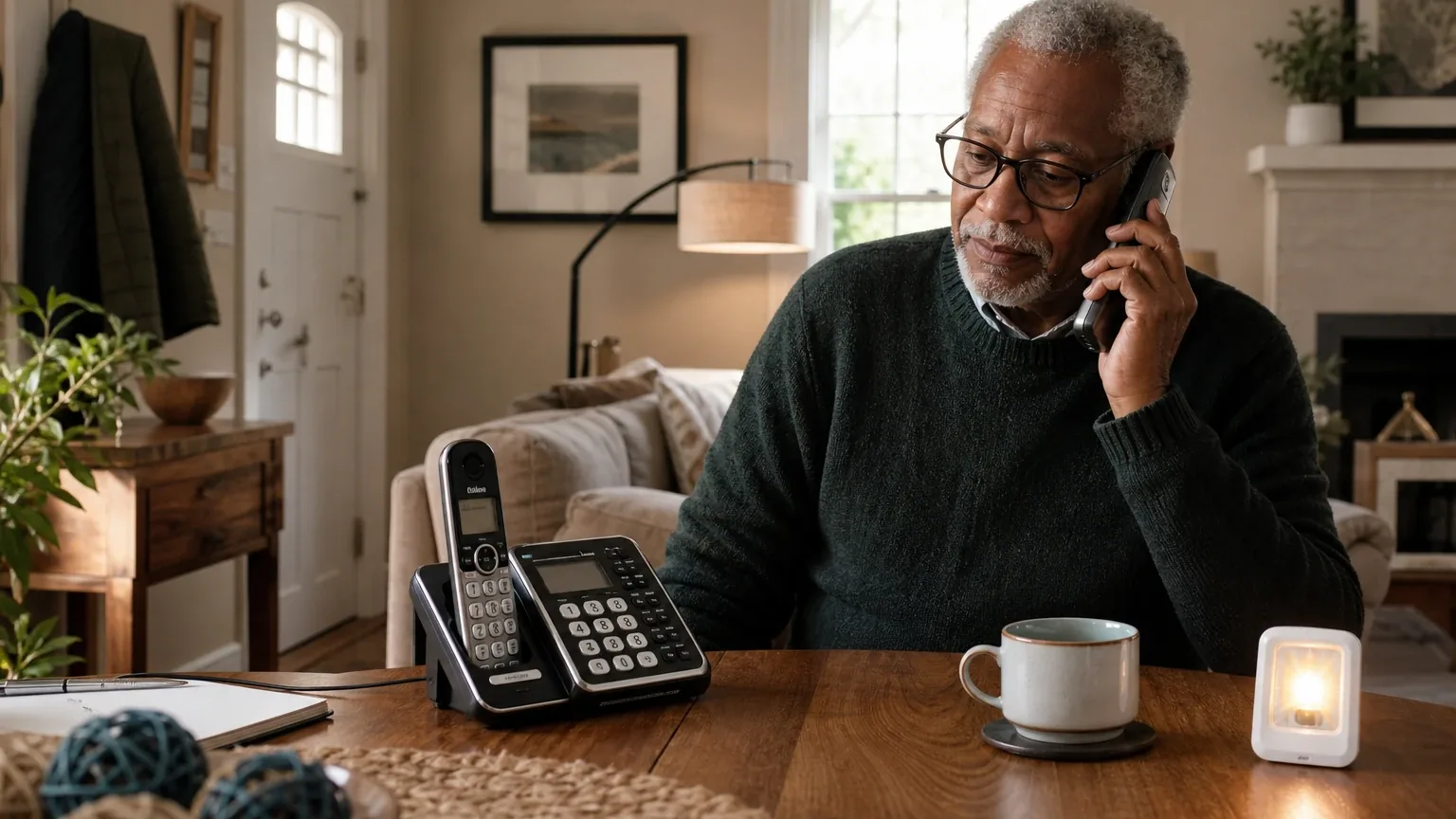
Answer Capsule
Clarity P300 is a mixed-to-good fit for amplified and hearing-accessible phones, and a good fit specifically for seniors with mild-to-moderate hearing loss who want a simple corded landline phone. Six of seven platforms named it during the ranking stage (86% of included platform responses), with an average listed rank of 5.0 and a best rank of 3. Its strongest reason to consider it is the combination of up to 26 dB amplification, hearing-aid compatibility, photo speed-dial buttons, a visual ring indicator, and power-outage operation at a low one-time price. The main limitation is that it provides no real-time captioning and its amplification is below the 40–53 dB models Clarity sells for more severe loss.
Research Snapshot
| Field | Finding |
|---|---|
| Platform mentions in ranking stage | 6 of 7 platforms (anthropic, google, grok, kimi, openai, perplexity) |
| Share of included platform responses | 86% (0.86) |
| Average listed rank | 5.0 |
| Best listed rank | 3 |
| Relevant product/model/plan | Clarity P300 Amplified Corded Photo Phone (amplified corded phone) |
| Overall use-case fit | Mixed across platforms: three "good" (anthropic, google, grok, perplexity) and three "mixed" (deepseek, kimi, openai) |
| Research date | 2026-09-26 |
What Changed Since August 2026
Clarity P300 moved up from No. 4 to No. 2, and platform mentions increased from 3 to 6. The September 2026 review shifts the subject from Clarity's phone lineup to a single model, the Clarity P300 Amplified Corded Photo Phone, so buyer guidance is now narrower and more specific. Fit language moved from strong overall to mixed-to-good, best suited to seniors with mild-to-moderate hearing loss who want a simple corded landline, with real-time captioning and higher amplification named as reasons to choose something else. The XLC3.4+ and other models are now alternatives rather than the reviewed item. Pricing evidence is thinner: the specialty-retailer range of $124-$160 is no longer repeated, and no manufacturer-direct price is verified. Otherwise the practical buying substance is largely unchanged. Differences between the two editions reflect what each article reports; they do not by themselves prove that the product, service, or price changed.
The August 2026 review preserves the earlier article for reference.
Why Clarity P300 Qualified for This Study
Questions This Section Answers
- Is Clarity P300 a good choice for amplified and hearing-accessible phones for a senior with mild hearing loss?
- How many AI platforms named Clarity P300 in the ranking stage for hearing-accessible phones?
Clarity P300 qualified because six of the seven included platforms named it during ranking discovery, and every platform that named it also produced a fit assessment for the amplified and hearing-accessible phone use case. The platform share is 86%, above the study's two-mention minimum, and its best listed rank was 3 (anthropic, openai, perplexity), with an average listed rank of 5.0 across the six naming platforms.
Qualification is not the same as endorsement. The ranking-stage recommendation lists several Clarity models, including the E814CC, XLC3, XLC3.4+, and XLC8, but the evaluated entity here is specifically the Clarity P300. Specifications for those other models should not be attributed to the P300 [1].
The P300 also qualified because it maps directly onto the category criteria used for this study: decibel amplification level, hearing aid compatibility, real-time captioning support, visual ringer alerts, and audio clarity enhancement. It satisfies four of those five criteria with documented features and fails one — real-time captioning — which is the central reason platform verdicts split between "good" and "mixed."
The Product, Model, Plan, or Service Most Relevant to Amplified & Hearing-Accessible Phones
Questions This Section Answers
- Which Clarity P300 model is being reviewed for amplified and hearing-accessible phone use?
- Does the Clarity P300 Amplified Corded Photo Phone include real-time captioning for hearing-impaired seniors?
The relevant product is the Clarity P300 Amplified Corded Photo Phone, also listed by platforms as the Clarity P300 amplified corded phone, the Clarity P300 Big Button Corded Phone, and the Clarity P300 Photo Phone. It is a single-line corded analog telephone, not a cordless handset, not a cellular device, and not a captioning telephone.
Clarity's own product page categorizes the P300 under amplified and low-vision phones and describes it as intended for mild-to-moderate hearing loss [2]. The company's site separates mild-to-moderate phones advertising roughly 25–35 dB of amplification from a severe-hearing-loss category advertising over 50 dB [3].
The P300 is not the captioning product in Clarity's line. Clarity's separate ClearWord bundle is the checked Clarity offering that explicitly describes captioning software and CaptionMate support, along with separate monthly data-plan requirements [5]. Captioning-capable Clarity hardware identified by platforms includes the XLC8-GLT with a captioning tablet and the Ensemble with a 7-inch touchscreen [6].
What the AI Platforms Agreed About
Questions This Section Answers
- What do AI platforms agree the Clarity P300 does well for seniors with hearing loss?
- Is the Clarity P300 hearing-aid compatible and does it have a visual ringer for incoming calls?
Agreement was strong, though not unanimous, on the P300's core accessibility feature set. Platforms consistently described the same five capabilities.
Amplification. Clarity states the P300 amplifies incoming sound up to 26 dB and positions it for mild-to-moderate hearing loss [8]. Independent listings corroborate the 26 dB figure [9].
Hearing-aid compatibility. Clarity identifies the P300 as hearing-aid compatible and says it can connect directly to an assistive-listening device or headset through a 2.5 mm connection [8]. Independent listings describe T-coil compatibility [15].
Visual ringer alerts. The P300 includes a bright visual ring indicator and an extra-loud adjustable ringer advertised at 75+ dB [8].
Audio clarity enhancement. The phone uses Clarity Power technology with adjustable tone control intended to make incoming speech louder and clearer and to reduce feedback or distortion [8].
Ease of use and power independence. The P300 includes nine programmable photo-memory buttons, a large dial pad, desk or wall mounting, and one-touch amplification [8]. It is a corded analog phone that Clarity says works when household power is out, and at least one listing states it is powered directly by the telephone line without an AC adapter [8].
Platforms also agreed on the boundary: the P300 is positioned for mild-to-moderate loss, not severe loss, and is not a captioning phone [8].
Where the AI Platforms Disagreed or Were Uncertain
Questions This Section Answers
- Why do AI platforms disagree about the Clarity P300's amplification level and HAC rating?
- Is the Clarity P300's visual ringer confirmed, or do sources conflict?
Four material conflicts or gaps appeared across the supplied platform responses. Buyers should treat each as unresolved rather than choosing the most convenient figure.
Amplification figure conflict. Clarity's current product literature lists up to 26 dB [28], and most independent listings repeat 26 dB [30]. However, Staples cited 18 dB [35], one retailer listing referenced 10x (20 dB) sound amplification [36], and another independent retailer listing showed a different amplification figure [37]. One platform's likely explanation is that 26 dB is the maximum when volume control and amplification are combined, while 18–20 dB is base amplification [35]. That explanation is platform-reported and not confirmed by Clarity.
HAC rating gap. Clarity's P300 page states hearing-aid compatibility but does not provide a numeric HAC rating or clearly identify TIA-1083 compliance for this model [28]. No specific M/T rating (for example M3/M4 or T3/T4) was located in the checked sources [33]. One platform reported TIA-1083 compliance on Clarity's site and retailer listings [29], which conflicts with the other platforms' finding that no such rating was verified. Separately, one source warns that hearing-aid compatibility does not guarantee freedom from interference and that users should test with their own device [39].
Visual ringer uncertainty. Most platforms confirmed a bright visual ring indicator [28]. One platform reported that publicly available product pages did not confirm a built-in visual ringer and that the presence of one is unclear [44]. The weight of supplied evidence supports the visual ringer, but the disagreement is disclosed.
Documentation inconsistency. One platform noted that Clarity's official page contains duplicated or inconsistent P300 text near the specifications, including a separate 95+ dB ringer and hearing-aid-compatible line that may belong to another model, while the clearer P300 specification states a 75+ dB ringer [28]. The checked sources also do not establish current inventory, exact warranty coverage, return eligibility, or whether all advertised accessories remain included [28].
Use-Case-Specific Features and Capabilities
Questions This Section Answers
- Does the Clarity P300 support real-time captioning for a senior who cannot understand amplified speech?
- What amplification level does the Clarity P300 provide compared with Clarity's 50 dB cordless models?
The P300 covers four of the five category criteria and misses the fifth.
| Criterion | P300 status | Evidence |
|---|---|---|
| Decibel amplification level | Up to 26 dB, positioned for mild-to-moderate loss | [46] |
| Hearing Aid Compatibility (HAC) rating | Hearing-aid compatible with T-coil reported; no numeric M/T rating verified | [46] |
| Real-time captioning support | Not supported on the P300 | [46] |
| Visual ringer alerts | Bright visual ring indicator; 75+ dB ringer | [46] |
| Audio clarity enhancement | Clarity Power technology with adjustable tone control | [46] |
Amplification context. The P300's 26 dB is materially lower than Clarity's higher-amplification models. Platforms cited the E814CC at 40 dB, the XLC3.4+ and XLC8 at 50 dB, and the AltoPlus at 53 dB [56]. One platform framed 30 dB as a 1000x loudness increase, placing 26 dB below that threshold (kimi:audex-chaamp).
Captioning boundary. The P300 product specifications do not list real-time captioning, speech-to-text, or captioned-call support [46]. One platform noted that Clarity's lineup does not feature caption-capable phones and that dedicated caption phones from other providers are required for that function (kimi:deafvibes-captioning). Another platform identified the Hamilton CapTel 840i and VTech SN5147 as captioning phones and confirmed the P300 is not listed as a captioning model [59].
Features the P300 does not document. Platforms reported no verified Bluetooth or mobile-phone pairing [46], no built-in answering machine [62], no speakerphone (kimi:telecom-store), and no talking caller ID or talking keypad (kimi:telecom-store, kimi:hearcentral-altoplus). One platform also reported that the P300 lacks tone control, which conflicts with the majority finding that adjustable tone control is present [46].
Pricing, Fees, Contracts, and Ongoing Costs
Questions This Section Answers
- How much does the Clarity P300 cost, and are there monthly service fees or contracts?
- Why do Clarity P300 prices vary so widely between retailers?
Pricing confidence is low. No current manufacturer-direct P300 price was verified on the checked Clarity pages [64]. Retailer listings showed materially different prices, and buyers should treat the purchase price as variable.
| Source type | Reported price | Citation |
|---|---|---|
| Walmart Business listing (crawled) | USD 69.99 | [65] |
| Target listing | USD 69.99 | [66] |
| Staples listing | USD 79.95 | [66] |
| Specialty retailer range | USD 74.95–89.99 | [67] |
| Amazon and specialty retailers | USD 63.45–74.95 | [69] |
| Broad retailer range | USD 37.46–88.62 | [64] |
| Third-party range | USD 55–75, with one listing at USD 179.99 | [70] |
| Platform-reported range | USD 99.95–149.95 | [71] |
Fees and contracts. No subscription or monthly service fee is identified for the basic P300 corded phone [64]. No contract is indicated for the basic hardware purchase [64]. Possible shipping and sales tax apply depending on seller and location [64]. One platform reported a one-year limited manufacturer warranty [75], and another reported a one-year limited warranty typically included [71], but Clarity's checked P300 listing did not clearly state a product-specific warranty term [64].
Captioning costs are separate. If captioning is required, a separate captioning service, data plan, or cellular device would be needed; the P300 itself is not documented as providing captioning [64]. Clarity's ClearWord bundle describes separate monthly data-plan requirements [76].
Best Suited For
Questions This Section Answers
- Who is the Clarity P300 best suited for among seniors with hearing loss?
- Is the Clarity P300 a good landline phone for a senior who needs photo speed-dial and power-outage operation?
The P300 is best suited to seniors with mild-to-moderate hearing loss who want a simple corded landline phone. Platforms converged on this profile.
Best-considered-for lists across platforms included: mild-to-moderate hearing loss; users who prefer a simple corded landline phone; users benefiting from photo speed-dial buttons, large controls, tone adjustment, and visual ring alerts; and homes where operation during a power outage is important [77]. Other platforms added seniors prioritizing large buttons and visual ringer alerts over complex features, buyers seeking hearing-aid-compatible landline phones without captioning requirements, and those preferring corded phones for reliability and power stability [78]. One platform emphasized assisted living or care settings where quick identification of contacts matters [79], and another emphasized users who struggle with memory or visual impairment and benefit from dialing via nine physical photo speed-dial buttons [80].
The common thread is low complexity plus visual and tactile accessibility, not maximum amplification.
Probably Not Best Suited For
Questions This Section Answers
- Who should not choose the Clarity P300 for amplified and hearing-accessible phone use?
- Is the Clarity P300 suitable for severe hearing loss or for a buyer who needs cordless mobility?
The P300 is a weak fit for severe hearing loss and for buyers who require real-time captioning. Platforms were consistent on these exclusions.
Platforms listed as probably-not-best-for: severe hearing impairment requiring more than 26 dB amplification; buyers requiring real-time text captioning; and buyers seeking cordless mobility, smartphone integration, or advanced call screening [81]. Others added seniors with severe hearing loss who would benefit from 40–50 dB amplified phones, users requiring real-time call captioning, those needing Bluetooth mobile phone pairing, users seeking cordless flexibility, and buyers wanting voice-to-text or conversation captioning [82]. One platform added users wanting tone adjustment for high-frequency hearing loss and individuals with vision impairments needing talking caller ID or keypad (kimi:telecom-store).
Two caveats. First, the tone-control exclusion is contested: one platform reported the P300 lacks tone control (kimi:telecom-store), while Clarity and multiple independent listings describe adjustable tone control [81]. Second, the P300 is corded only, which limits mobility and does not provide cordless handset convenience [81].
When Another Option May Be Better
Questions This Section Answers
- What is a better alternative to the Clarity P300 for a senior who needs 50 dB amplification or cordless operation?
- Which Clarity model should a buyer choose instead of the P300 if real-time captioning is essential?
Another option may be better in four common situations.
Higher amplification is needed. Platforms recommended the Clarity E814CC at 40 dB, the XLC3.4+ and XLC8 at 50 dB, and the AltoPlus at 53 dB for severe hearing loss [86]. One platform noted the E814CC is a corded/cordless combo with an answering machine [89].
Real-time captioning is essential. Platforms recommended captioning-focused devices and services rather than the P300, including Clarity's ClearWord bundle [90], the XLC8-GLT with a captioning tablet [91], the Ensemble with a 7-inch touchscreen [92], and non-Clarity caption phones such as the Hamilton CapTel 840i and VTech SN5147 [93]. Buyers should verify eligibility, captioning availability, monthly service, data requirements, and user-registration rules [90].
Cordless mobility or mobile pairing is needed. Platforms recommended the XLC8 or XLC3.4+, which offer cordless operation and Bluetooth pairing so a personal cell phone can receive the full 50 dB amplification at home [94]. One platform noted the XLC8 also offers a slow-talk feature [89].
Formal accessibility certification is a purchasing requirement. One platform advised choosing another phone with a documented TIA-4953 certification or clearly stated HAC rating when formal certification matters [96].
Questions to Verify Before Buying
Questions This Section Answers
- What should a buyer confirm with the seller about the Clarity P300 before purchasing?
- How can a buyer verify Clarity P300 amplification, HAC rating, and return terms before buying?
Platforms supplied overlapping verification lists. Consolidated, the buyer should confirm:
- The current delivered price, including shipping and tax, and whether the unit is new, refurbished, or discontinued stock [97].
- The exact HAC rating that applies to the P300, and whether it is T-coil compatible with the buyer's hearing aids or cochlear implant processor [97].
- Whether the advertised 26 dB gain is sufficient for the buyer's hearing loss, and whether the phone can be tested or returned if speech remains difficult to understand [97].
- Whether the visual ringer remains active with the buyer's telephone service, adapter, or VoIP provider [97].
- Whether the phone works with the buyer's specific landline, VoIP adapter, or other telephone service [97].
- The warranty period, repair process, and return window that apply to the exact seller and model number [97].
- If captioning is required, what separate captioning device or service will be used, and what eligibility, registration, data-plan, privacy, and ongoing-cost requirements apply [101].
- Whether the buyer needs cordless mobility, Bluetooth or mobile pairing, caller ID, answering-machine functions, or call blocking that the P300 does not document [97].
- Whether the box includes the photo cards, cords, and any wall-mount parts needed for setup [100].
- Whether the exact unit offers up to 26 dB amplification or the 18 dB figure shown by some resellers [100].
Final AI Consensus Verdict
The consensus is a mixed-to-good fit, with platforms split three "good" (anthropic, google, grok, perplexity) against three "mixed" (deepseek, kimi, openai). The split tracks one variable: how much weight a buyer places on amplification headroom and captioning.
Where platforms agreed, the P300 is a sensible low-complexity corded phone for mild-to-moderate hearing loss and for users who value photo dialing, visual ringing, tone adjustment, and power-outage operation [103]. Where platforms disagreed, the P300 should not be selected as the primary solution for severe hearing loss or real-time captioning without confirming that the buyer's hearing aids and communication needs are adequately supported [103].
Platform agreement here reflects convergence in retrieved sources, not proof of product quality. No platform reported personal testing, clinical outcomes, or independent verification of speech-understanding performance, and the checked sources do not establish medical benefit or suitability for a particular hearing profile [103].
How This Review Was Produced
This review was produced from a structured multi-platform research run dated 2026-09-26 covering the amplified and hearing-accessible phone use case within the broader topic of best phones for Seniors With Hearing Loss. Seven platforms were configured for the study, and six named Clarity P300 during ranking discovery: anthropic, google, grok, kimi, openai, and perplexity. Each platform supplied a fit assessment, use-case findings, pricing and terms, limitations, and questions to verify before buying.
Ranking statistics were calculated from the supplied platform responses: six platform mentions, an 86% share of included platform responses, an average listed rank of 5.0, and a best listed rank of 3. Fit ratings were recorded per platform as good (anthropic, google, grok, perplexity) and mixed (deepseek, kimi, openai).
All platform outputs were treated as platform-reported evidence rather than independently verified facts. Where platforms conflicted, both positions are disclosed in this review rather than resolved by choosing one. The full set of ranked options for this use case is available in the Amplified & Hearing-Accessible Phones consensus index, and related coverage is organized under the senior technology category directory.
Methodology Limitations
Several limitations apply to this review.
Platform-reported evidence. Citations are platform-reported evidence, not independently verified facts. The supplied URLs were collected from platform responses and were not independently validated by the writer stage. No-search model claims require explicit verification before being described as current facts.
Ranking versus fit. All included platforms evaluated fit, but the platform-mention count reflects only platforms that named the entity during ranking discovery. A platform can assess fit without naming the entity in ranking, and naming the entity does not imply a top ranking.
Model attribution risk. The ranking-stage recommendation lists several Clarity models, but the evaluated entity is specifically the Clarity P300. Specifications for the E814CC, XLC3.4+, and XLC8 should not be attributed to the P300 [107].
Pricing instability. Retailer prices vary substantially and may reflect different sellers, promotions, or availability dates [107]. No current manufacturer-direct P300 price was verified on the checked Clarity pages [107].
Certification gaps. Clarity's P300 page states hearing-aid compatibility but does not provide a numeric HAC rating or clearly identify TIA-1083 compliance for this model [107]. One platform reported TIA-1083 compliance, which conflicts with that finding [108].
Documentation inconsistency. The official page contains duplicated or inconsistent P300 text near the specifications, including a separate 95+ dB ringer and hearing-aid-compatible line that may belong to another model; the clearer P300 specification states a 75+ dB ringer [107].
Unverified operational details. The checked sources do not establish current inventory, exact warranty coverage, return eligibility, or whether all advertised accessories remain included [107]. Product documentation does not establish medical benefit, speech-understanding performance, or suitability for a particular hearing profile [107].
Date handling. The run research date is 2026-09-26. Platform-reported dates are provenance metadata and do not independently prove freshness.
Sources
Company-Owned Sources
- The CHAAMP Cell Phone for the Hearing Impaired, By Audex: http://audex.com/chaamp.html
- Clarity Amplified Phones Product Guide: https://www.clarityproducts.com
- Clarity — Amplified and Low Vision Phones: https://www.clarityproducts.com/amplified-and-low-vision-phones
- Clarity ClearWord: Read and hear your phone calls!: https://www.clarityproducts.com/clarity-clearword-bundle
Additional AI research evidence108 records
- AI research evidence record openai:c1
- AI research evidence record openai:c1
- AI research evidence record anthropic:c15
- AI research evidence record anthropic:c16
- AI research evidence record openai:c3
- AI research evidence record anthropic:c8
- AI research evidence record anthropic:c9
- AI research evidence record openai:c1
- AI research evidence record anthropic:c3
- AI research evidence record anthropic:c4
- AI research evidence record anthropic:c5
- AI research evidence record deepseek:c2
- AI research evidence record grok:web:0
- AI research evidence record perplexity:c1
- AI research evidence record anthropic:c6
- AI research evidence record anthropic:c7
- AI research evidence record google:1.2.3
- AI research evidence record anthropic:c11
- AI research evidence record anthropic:c12
- AI research evidence record grok:web:1
- AI research evidence record google:1.1.3
- AI research evidence record anthropic:c13
- AI research evidence record anthropic:c14
- AI research evidence record anthropic:c19
- AI research evidence record google:1.1.2
- AI research evidence record google:1.2.4
- AI research evidence record anthropic:c15
- AI research evidence record openai:c1
- AI research evidence record perplexity:c1
- AI research evidence record anthropic:c3
- AI research evidence record anthropic:c4
- AI research evidence record anthropic:c5
- AI research evidence record deepseek:c2
- AI research evidence record grok:web:0
- AI research evidence record anthropic:c2
- AI research evidence record google:1.2.3
- AI research evidence record perplexity:c3
- AI research evidence record perplexity:c2
- AI research evidence record deepseek:c4
- AI research evidence record anthropic:c11
- AI research evidence record anthropic:c12
- AI research evidence record grok:web:1
- AI research evidence record google:1.1.2
- AI research evidence record deepseek:c1
- AI research evidence record deepseek:c7
- AI research evidence record openai:c1
- AI research evidence record anthropic:c15
- AI research evidence record anthropic:c6
- AI research evidence record deepseek:c2
- AI research evidence record openai:c3
- AI research evidence record anthropic:c10
- AI research evidence record anthropic:c11
- AI research evidence record grok:web:1
- AI research evidence record anthropic:c13
- AI research evidence record perplexity:c1
- AI research evidence record anthropic:c16
- AI research evidence record deepseek:c1
- AI research evidence record google:1.1.2
- AI research evidence record deepseek:c6
- AI research evidence record anthropic:c17
- AI research evidence record anthropic:c18
- AI research evidence record anthropic:c2
- AI research evidence record google:1.2.2
- AI research evidence record openai:c1
- AI research evidence record openai:c4
- AI research evidence record perplexity:c2
- AI research evidence record google:1.2.2
- AI research evidence record google:1.2.3
- AI research evidence record grok:web:0
- AI research evidence record perplexity:c3
- AI research evidence record anthropic:c2
- AI research evidence record deepseek:c2
- AI research evidence record google:1.2.4
- AI research evidence record perplexity:c1
- AI research evidence record google:1.2.5
- AI research evidence record openai:c3
- AI research evidence record openai:c1
- AI research evidence record anthropic:c2
- AI research evidence record deepseek:c2
- AI research evidence record google:1.1.2
- AI research evidence record openai:c1
- AI research evidence record anthropic:c2
- AI research evidence record anthropic:c13
- AI research evidence record google:1.2.2
- AI research evidence record deepseek:c2
- AI research evidence record anthropic:c16
- AI research evidence record deepseek:c1
- AI research evidence record google:1.1.2
- AI research evidence record anthropic:c2
- AI research evidence record openai:c3
- AI research evidence record anthropic:c8
- AI research evidence record anthropic:c9
- AI research evidence record deepseek:c6
- AI research evidence record anthropic:c17
- AI research evidence record anthropic:c18
- AI research evidence record openai:c1
- AI research evidence record openai:c1
- AI research evidence record deepseek:c2
- AI research evidence record google:1.1.2
- AI research evidence record perplexity:c1
- AI research evidence record openai:c3
- AI research evidence record anthropic:c2
- AI research evidence record openai:c1
- AI research evidence record anthropic:c2
- AI research evidence record google:1.1.2
- AI research evidence record perplexity:c1
- AI research evidence record openai:c1
- AI research evidence record perplexity:c1
Independent Sources
- P300 Amplified Photo Phone - Ask JAN: https://askjan.org/products/P300-Amplified-Photo-Phone.cfm
- Amplified Phones for Seniors (2026): Home & Cell Options: https://bestphonesforseniors.com/amplified-phones-for-seniors
- Clarity P300 Amplified Photo Phone: https://business.walmart.com/ip/Clarity-Amplified-Corded-Photo-Phone-White/8456496
- 10 Best Smart Amplified Telephones in 2026 - Deaf Vibes: https://deafvibes.com/vetted/10-best-smart-amplified-telephones-in-2026/
- 8 Best Amplified Phones with Captioning in 2026 - Deaf Vibes: https://deafvibes.com/vetted/best-amplified-phones-with-captioning/
- Clarity Caption Telephone XLC8GLT Deluxe - FTRI: https://ftri.org/products/clarity-caption-telephone-xlc8glt-deluxe/
- Best Amplified Phones for Seniors & Hearing Loss: https://hearfitworld.com/the-complete-guide-to-amplified-phones-for-seniors-and-people-with-hearing-loss/
- Clarity XLC8 50dB Amplified Cordless Phone - Independent Living: https://independentliving.com/clarity-xlc8-50db-amplified-cordless-phone-with-bluetooth/
- Clarity P300 Amplified up to 26dB Photo Speed dial Phone - Omni Hearing USA: https://omnihearing.com/products/clarity-p300-amplified-up-to-26db-photo-speed-dial-phone
- Clarity P300 Amplified Corded Telephone: https://shop.omnihearing.ca/products/clarity-p300-amplified-up-to-26db-photo-speed-dial-phone
- Clarity Amplified Phones for Seniors, Hearing Loss, and Offices | Buyer Tips & Comparison: https://telecom-store.com/amplified-telephones/clarity-amplified-phones/
- Clarity P300 Amplified Corded Photo Phone - Telecom-Store: https://telecom-store.com/product/76593-amplified-photo-phone-white/
- Clarity P300 Amplified Corded Photo Phone - Amazon: https://www.amazon.com/Clarity-Amplified-Personal-Healthcare-Health/dp/B00EXPZ19S
- Clarity Ensemble Amplified Captioning Telephone - Corada: https://www.corada.com/products/clarity-ensemble-amplified-captioned-telephone
- Clarity P300 Photo Phone Instructions: https://www.diglo.com
- Clarity XLC8 Amplified Cordless Bluetooth Speakerphone - Diglo: https://www.diglo.com/clarity-xlc8-amplified-cordless-speakerphone-;sku=CL-XLC8;s=221;p=CL-XLC8
- Clarity Photo Phone P300 Amplified Phone - DIY Controls: https://www.diycontrols.com/p-8570-clarity-photo-phone-p300-amplified-phone.aspx
- Clarity AltoPlus Amplified Phone | Hear Central: https://www.hearcentral.com/amplified-phones/clarity-altoplus-amplified-phone
- Captioned Telephones: Amplified vs. Captioned Phones - Hearing Tracker: https://www.hearingtracker.com/captioned-telephones/amplified-vs-captioned-phones-which-is-right-for-you-
- Photo Phone by Clarity: https://www.independentliving.com
- Clarity P300 User Manual: https://www.manualslib.com/manual/37452/Clarity-P300.html
- CLARITY P300 USER MANUAL: https://www.manualslib.com/manual/937395/Clarity-P300.html
- Clarity P300 Picture Phone - Newegg.com: https://www.newegg.com/global/ar-en/clarity-telecom-p300/p/0J3-000M-00005
- Clarity P300 Picture Phone Product Details: https://www.parentgiving.com
- Clarity P300 Amplified Photo Phone - Parent Giving: https://www.parentgiving.com/products/clarity-p300-amplified-photo-phone
- Clarity P300 Amplified Photo Phone: https://www.rehab-store.com/p-plantronics-clarity-p300-amplified-photo-phone.html
- Clarity P300 Amplified Corded Photo Phone - Staples: https://www.staples.com/clarity-clap300-amplified-corded-photo-phone/product_1971681
- Clarity® P300™ Amplified Corded Photo Phone, White: https://www.target.com/p/clarity-p300-amplified-corded-photo-phone/-/A-87920609
- P300 by Clarity - Teltex: https://www.teltex.com
- Clarity P300 Amplified Photo Phone Specs: https://www.vitalitymedical.com
- Clarity P300 Amplified Photo Phone - Walmart.com: https://www.walmart.com/ip/Clarity-Amplified-Corded-Photo-Phone-White/8456496
- Clarity P300 Amplified Photo Phone - Walmart.com: https://www.walmart.com/ip/Clarity-P-300-Amplified-Phone-with-Photo-Memory-Buttons/8456496
Additional AI research evidence108 records
- AI research evidence record openai:c1
- AI research evidence record openai:c1
- AI research evidence record anthropic:c15
- AI research evidence record anthropic:c16
- AI research evidence record openai:c3
- AI research evidence record anthropic:c8
- AI research evidence record anthropic:c9
- AI research evidence record openai:c1
- AI research evidence record anthropic:c3
- AI research evidence record anthropic:c4
- AI research evidence record anthropic:c5
- AI research evidence record deepseek:c2
- AI research evidence record grok:web:0
- AI research evidence record perplexity:c1
- AI research evidence record anthropic:c6
- AI research evidence record anthropic:c7
- AI research evidence record google:1.2.3
- AI research evidence record anthropic:c11
- AI research evidence record anthropic:c12
- AI research evidence record grok:web:1
- AI research evidence record google:1.1.3
- AI research evidence record anthropic:c13
- AI research evidence record anthropic:c14
- AI research evidence record anthropic:c19
- AI research evidence record google:1.1.2
- AI research evidence record google:1.2.4
- AI research evidence record anthropic:c15
- AI research evidence record openai:c1
- AI research evidence record perplexity:c1
- AI research evidence record anthropic:c3
- AI research evidence record anthropic:c4
- AI research evidence record anthropic:c5
- AI research evidence record deepseek:c2
- AI research evidence record grok:web:0
- AI research evidence record anthropic:c2
- AI research evidence record google:1.2.3
- AI research evidence record perplexity:c3
- AI research evidence record perplexity:c2
- AI research evidence record deepseek:c4
- AI research evidence record anthropic:c11
- AI research evidence record anthropic:c12
- AI research evidence record grok:web:1
- AI research evidence record google:1.1.2
- AI research evidence record deepseek:c1
- AI research evidence record deepseek:c7
- AI research evidence record openai:c1
- AI research evidence record anthropic:c15
- AI research evidence record anthropic:c6
- AI research evidence record deepseek:c2
- AI research evidence record openai:c3
- AI research evidence record anthropic:c10
- AI research evidence record anthropic:c11
- AI research evidence record grok:web:1
- AI research evidence record anthropic:c13
- AI research evidence record perplexity:c1
- AI research evidence record anthropic:c16
- AI research evidence record deepseek:c1
- AI research evidence record google:1.1.2
- AI research evidence record deepseek:c6
- AI research evidence record anthropic:c17
- AI research evidence record anthropic:c18
- AI research evidence record anthropic:c2
- AI research evidence record google:1.2.2
- AI research evidence record openai:c1
- AI research evidence record openai:c4
- AI research evidence record perplexity:c2
- AI research evidence record google:1.2.2
- AI research evidence record google:1.2.3
- AI research evidence record grok:web:0
- AI research evidence record perplexity:c3
- AI research evidence record anthropic:c2
- AI research evidence record deepseek:c2
- AI research evidence record google:1.2.4
- AI research evidence record perplexity:c1
- AI research evidence record google:1.2.5
- AI research evidence record openai:c3
- AI research evidence record openai:c1
- AI research evidence record anthropic:c2
- AI research evidence record deepseek:c2
- AI research evidence record google:1.1.2
- AI research evidence record openai:c1
- AI research evidence record anthropic:c2
- AI research evidence record anthropic:c13
- AI research evidence record google:1.2.2
- AI research evidence record deepseek:c2
- AI research evidence record anthropic:c16
- AI research evidence record deepseek:c1
- AI research evidence record google:1.1.2
- AI research evidence record anthropic:c2
- AI research evidence record openai:c3
- AI research evidence record anthropic:c8
- AI research evidence record anthropic:c9
- AI research evidence record deepseek:c6
- AI research evidence record anthropic:c17
- AI research evidence record anthropic:c18
- AI research evidence record openai:c1
- AI research evidence record openai:c1
- AI research evidence record deepseek:c2
- AI research evidence record google:1.1.2
- AI research evidence record perplexity:c1
- AI research evidence record openai:c3
- AI research evidence record anthropic:c2
- AI research evidence record openai:c1
- AI research evidence record anthropic:c2
- AI research evidence record google:1.1.2
- AI research evidence record perplexity:c1
- AI research evidence record openai:c1
- AI research evidence record perplexity:c1
Other Sources
- Hearing Aid Compatibility: https://usaphone.org/files/acccessibility_policy.pdf
Additional AI research evidence108 records
- AI research evidence record openai:c1
- AI research evidence record openai:c1
- AI research evidence record anthropic:c15
- AI research evidence record anthropic:c16
- AI research evidence record openai:c3
- AI research evidence record anthropic:c8
- AI research evidence record anthropic:c9
- AI research evidence record openai:c1
- AI research evidence record anthropic:c3
- AI research evidence record anthropic:c4
- AI research evidence record anthropic:c5
- AI research evidence record deepseek:c2
- AI research evidence record grok:web:0
- AI research evidence record perplexity:c1
- AI research evidence record anthropic:c6
- AI research evidence record anthropic:c7
- AI research evidence record google:1.2.3
- AI research evidence record anthropic:c11
- AI research evidence record anthropic:c12
- AI research evidence record grok:web:1
- AI research evidence record google:1.1.3
- AI research evidence record anthropic:c13
- AI research evidence record anthropic:c14
- AI research evidence record anthropic:c19
- AI research evidence record google:1.1.2
- AI research evidence record google:1.2.4
- AI research evidence record anthropic:c15
- AI research evidence record openai:c1
- AI research evidence record perplexity:c1
- AI research evidence record anthropic:c3
- AI research evidence record anthropic:c4
- AI research evidence record anthropic:c5
- AI research evidence record deepseek:c2
- AI research evidence record grok:web:0
- AI research evidence record anthropic:c2
- AI research evidence record google:1.2.3
- AI research evidence record perplexity:c3
- AI research evidence record perplexity:c2
- AI research evidence record deepseek:c4
- AI research evidence record anthropic:c11
- AI research evidence record anthropic:c12
- AI research evidence record grok:web:1
- AI research evidence record google:1.1.2
- AI research evidence record deepseek:c1
- AI research evidence record deepseek:c7
- AI research evidence record openai:c1
- AI research evidence record anthropic:c15
- AI research evidence record anthropic:c6
- AI research evidence record deepseek:c2
- AI research evidence record openai:c3
- AI research evidence record anthropic:c10
- AI research evidence record anthropic:c11
- AI research evidence record grok:web:1
- AI research evidence record anthropic:c13
- AI research evidence record perplexity:c1
- AI research evidence record anthropic:c16
- AI research evidence record deepseek:c1
- AI research evidence record google:1.1.2
- AI research evidence record deepseek:c6
- AI research evidence record anthropic:c17
- AI research evidence record anthropic:c18
- AI research evidence record anthropic:c2
- AI research evidence record google:1.2.2
- AI research evidence record openai:c1
- AI research evidence record openai:c4
- AI research evidence record perplexity:c2
- AI research evidence record google:1.2.2
- AI research evidence record google:1.2.3
- AI research evidence record grok:web:0
- AI research evidence record perplexity:c3
- AI research evidence record anthropic:c2
- AI research evidence record deepseek:c2
- AI research evidence record google:1.2.4
- AI research evidence record perplexity:c1
- AI research evidence record google:1.2.5
- AI research evidence record openai:c3
- AI research evidence record openai:c1
- AI research evidence record anthropic:c2
- AI research evidence record deepseek:c2
- AI research evidence record google:1.1.2
- AI research evidence record openai:c1
- AI research evidence record anthropic:c2
- AI research evidence record anthropic:c13
- AI research evidence record google:1.2.2
- AI research evidence record deepseek:c2
- AI research evidence record anthropic:c16
- AI research evidence record deepseek:c1
- AI research evidence record google:1.1.2
- AI research evidence record anthropic:c2
- AI research evidence record openai:c3
- AI research evidence record anthropic:c8
- AI research evidence record anthropic:c9
- AI research evidence record deepseek:c6
- AI research evidence record anthropic:c17
- AI research evidence record anthropic:c18
- AI research evidence record openai:c1
- AI research evidence record openai:c1
- AI research evidence record deepseek:c2
- AI research evidence record google:1.1.2
- AI research evidence record perplexity:c1
- AI research evidence record openai:c3
- AI research evidence record anthropic:c2
- AI research evidence record openai:c1
- AI research evidence record anthropic:c2
- AI research evidence record google:1.1.2
- AI research evidence record perplexity:c1
- AI research evidence record openai:c1
- AI research evidence record perplexity:c1
Verify This Research
Review the study details behind this page or download the public machine-readable verification record.
- Study date
- September 26, 2026
- Platforms analyzed
- 7
- Source records
- 37
- Ranking mentions
- 6 of 7
- Platform share
- 86%
- Final consensus rank
- #2
Research trail and source mix
Configured platforms
openai, anthropic, deepseek, grok, perplexity, kimi, google
Source mix
32 independent · 4 company-owned · 1 unclear
Evidence support
17 direct · 5 partial
Important limitation
Use the run research_date as the study date. Platform-reported dates are provenance metadata and do not independently prove freshness.
Source snapshot SHA-256 4b302744d3137cc533c7b2060e8dd7c0dffd515d4b93ba11303d7b4ac6446481