
Answer Capsule
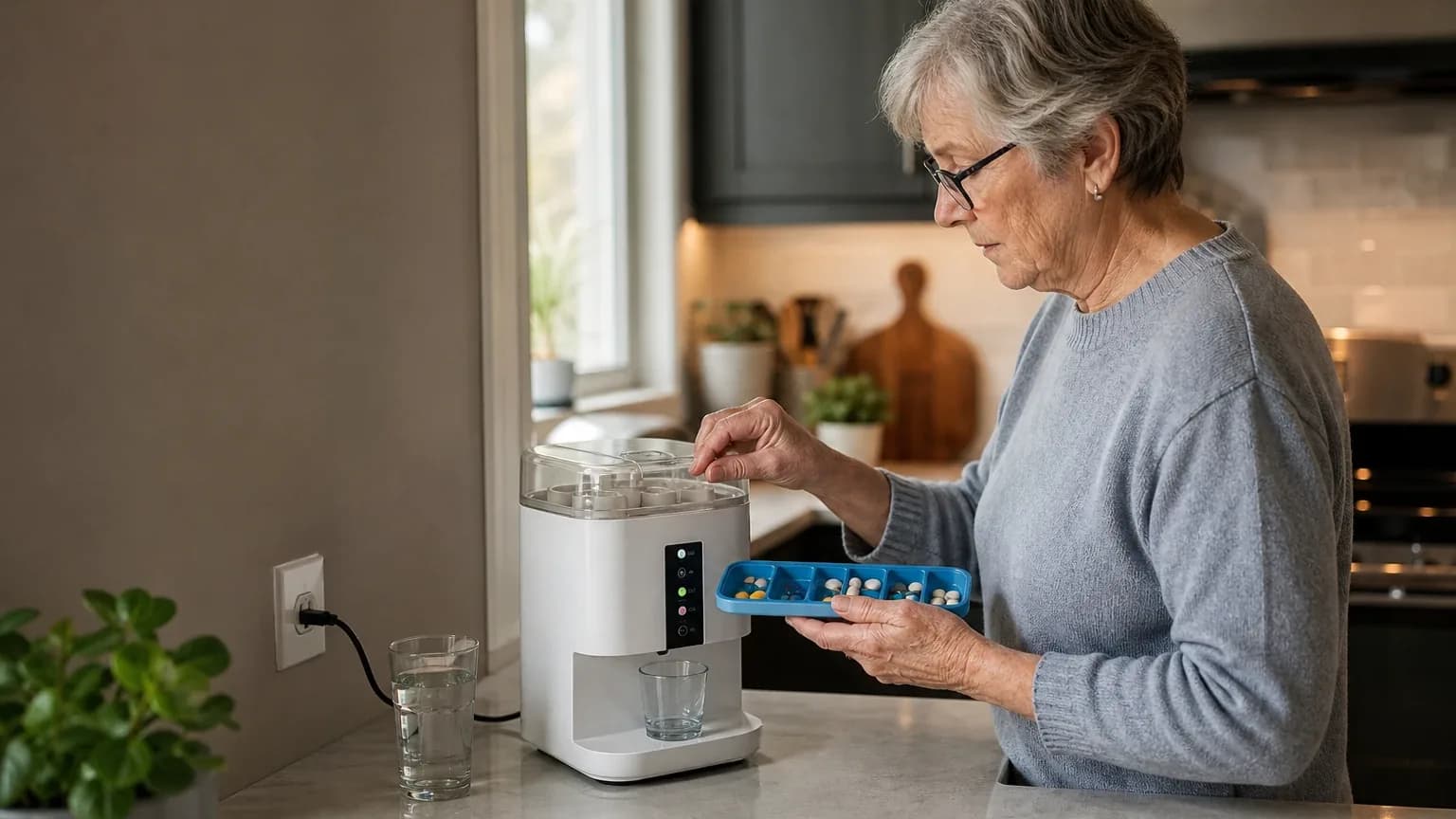
Hero Health is a good fit for Automated Medication Management when a senior takes multiple scheduled solid oral prescriptions and a caregiver wants automated dispensing plus remote missed-dose visibility. All 7 included platforms named Hero Health during the ranking stage — 100% of included platform responses — at an average listed rank of 2.0 and a best rank of 1. The strongest reason to consider it is the combination of automated dispensing, visual and audible dose alerts, caregiver escalation, and remote administrator dispensing. The main limitation is that the dispenser has no internal battery, requires 120V AC power and Wi-Fi, and operates only through a subscription that must be kept active.
Research Snapshot
| Field | Finding |
|---|---|
| Platform mentions in ranking stage | 7 of 7 included platforms (anthropic, deepseek, google, grok, kimi, openai, perplexity) |
| Share of included platform responses | 100% |
| Average listed rank | 2.0 |
| Best listed rank | 1 |
| Relevant product/model/plan | Hero Smart Dispenser with subscription service and Caregiver App |
| Overall use-case fit | Strong (1 platform); Good (6 platforms) — 7 platforms analyzed |
| Research date | 2026-09-26 |
What Changed Since August 2026
Hero Health remained at No. 1, and platform mentions increased from 6 to 7. The September 2026 review describes Hero Health much as before: a good fit for seniors managing multiple scheduled solid oral prescriptions with caregiver oversight, still best configured as the Smart Dispenser subscription rather than an outright purchase. No change to the recommended setup or to the core strengths, limitations, or suited-buyer profiles. Reported pricing differs: $59.99 per month is newly reported for the flexible plan, while $479.88 per year is no longer repeated. Among measured details, the alert that dispenses a dose roughly 30 minutes ahead is newly reported, and the previously cited six-hour battery figure is no longer repeated. Differences between the two editions reflect what each article reports; they do not by themselves prove that the product, service, or price changed.
The August 2026 review preserves the earlier article for reference.
Why Hero Health Qualified for This Study
Questions This Section Answers
- Is Hero Health a good choice for Automated Medication Management for a senior taking multiple daily prescriptions?
- How many AI platforms named Hero Health in the ranking stage for medication reminders for seniors?
Hero Health qualified because every included platform named it during ranking discovery, and it was the final rank-1 entity in this category. The platform count is 7 of 7, a 100% share of included platform responses, with an average listed rank of 2.0 and a best listed rank of 1 [1]. Ranks by platform were: anthropic 1, deepseek 1, google 1, grok 1, kimi 5, openai 2, perplexity 3.
Qualification was based on fit for the defined use case — automated medication management for Seniors taking multiple daily prescriptions and caregivers preventing missed doses or accidental double-dosing — not on general brand strength. Hero Health's flagship product is an automatic pill dispenser that loads and dispenses scheduled doses, which positions it directly against this use case [3].
This is a niche fit review. It evaluates Hero Health only for Automated Medication Management. It is not a broad company review, and it does not assess Hero Health for unrelated categories.
The Product, Model, Plan, or Service Most Relevant to Automated Medication Management
Questions This Section Answers
- Which Hero Health product or plan should a buyer choose for automated medication management with caregiver monitoring?
- Does the Hero Smart Dispenser work without a subscription, or is a membership required?
The relevant offer is the Hero Smart Dispenser with subscription service and Caregiver App — a connected automatic dispenser sold as an all-inclusive membership rather than a one-time hardware purchase [6]. Platforms described the same core product under slightly different names: "Hero Pill Dispenser," "Hero Smart Pill Dispenser," and "Hero Smart Dispenser membership" [8].
Hero states the platform can store, sort, and dispense up to a 90-day supply of 10 different pills, track 10 additional medications, and provide 24/7 support [9]. The subscription includes the dispenser, the connected app, 24/7 support, and a limited lifetime warranty during active membership [10].
The device operates only through a subscription; Hero's subscription help page states the device cannot be purchased outright, and the device must be returned after cancellation [6]. Hero's terms state that Hero retains ownership of and title to each dispenser made available for use with the services (official:C2).
What the AI Platforms Agreed About
Questions This Section Answers
- What do AI platforms agree Hero Health does well for automated medication management?
- Do AI platforms agree that Hero Health prevents missed doses and accidental double-dosing?
Agreement was strong but not unanimous on specifics. All 7 platforms described Hero Health as an automated dispenser with caregiver-facing monitoring, and 6 of 7 rated overall fit "good," with grok rating it "strong."
Points of broad agreement:
- Capacity. Multiple platforms reported up to 10 medications with up to a 90-day supply per cartridge, reducing refill frequency [11].
- Alerts. Platforms consistently described sound plus flashing-light alerts at dose time, with on-screen and app notifications [15].
- Caregiver notification. Platforms agreed the caregiver app surfaces missed doses, late doses, and low supply [19].
- Access control. Platforms agreed passcode protection and dispense limits exist as configurable safety settings [21].
- Subscription model. Platforms agreed the product is subscription-based with no outright purchase option [24].
- No built-in battery. Platforms agreed the dispenser lacks a built-in battery backup [27].
Agreement among AI platforms reflects repeated sourcing patterns, not verified product quality. Much of the shared material traces back to Hero's own documentation, and company-owned citations materially outnumber independent ones in this evidence set.
Where the AI Platforms Disagreed or Were Uncertain
Questions This Section Answers
- What is still unclear about Hero Health's battery backup and alert specifications for power outages?
- Do AI platforms disagree about Hero Health's pricing, trial length, or cancellation terms?
Several material conflicts and gaps appeared across platforms.
Battery backup. OpenAI cited Hero's terms stating the dispenser requires 120V AC electricity and has no internal battery [31]. Anthropic cited an independent review stating Hero does not include battery backup and that the company recommends adding an uninterruptible power supply [32]. Google cited independent reviews reaching the same conclusion [34]. Deepseek, by contrast, listed "battery backup supports operation during power loss" as a strength [36] — a claim that conflicts with the other platforms and with Hero's own terms. Buyers should treat the deepseek battery claim as unverified.
Pricing conflicts. Hero's subscription help page lists $59.99 monthly, $44.99 monthly with a one-year plan, and $29.99 monthly prepaid annually [37]. Hero's caregiver page publicly displays a conflicting prepaid starting price of $39.99 per month [38]. Hero's own homepage excerpt shows "Starting at $39. with prepaid plans or pay monthly at $59." (official:C1). Google reported an annual plan billed monthly at "$34.99/month to $44.99/month" [39]. The applicable price should be verified at checkout.
Trial length. Most 2026 sources cite a 30-day money-back guarantee [37], while one Hero page was reported as stating a 90-day money-back guarantee (kimi:hero-smart-dispenser). This conflict is unresolved in the supplied evidence.
Cancellation consequences. Third-party reviews describe a fixed $399 early cancellation fee [32], while Hero's official terms describe being charged the remainder of the 12-month commitment and a $1,500 Non-Returned Dispenser Fee if hardware is not returned [40]. These are different mechanisms and should be confirmed directly.
Alert specifications. No platform found a quantified alert loudness level, visual brightness specification, maximum alert duration, or guaranteed caregiver-notification delivery time beyond the stated 15-minute and one-hour rules [42].
Initiation fee. Multiple sources cite a $99.99 initiation fee, but one source indicates a code may waive it [32].
Use-Case-Specific Features and Capabilities
Questions This Section Answers
- How many medications can the Hero Smart Dispenser hold, and does it work with half pills or gummies?
- How fast does Hero Health notify a caregiver after a missed dose?
Dose compartment capacity. Hero states the dispenser stores, sorts, and dispenses up to a 90-day supply of 10 different pills, while the app can track up to 10 additional medications [44]. Independent reviews repeat the 10-medication, 90-day figure [45]. Capacity depends on pill dimensions, dosage frequency, and the number of medications loaded; the published maximums are not a guarantee for every regimen.
Medication compatibility. Hero supports any pill size or shape but does not work with half pills, gummies, powdery, sticky, or dissolvable pills [48]. This is a hard exclusion, not a preference.
Alert intensity. At dose time the device uses an on-screen message, an audible tone or beeping, and a flashing ring light, plus an early dispensing alert approximately 30 minutes before the scheduled time [49]. Independent and company sources describe a "pleasant chime" or "ding" with blinking light [51]. No decibel or brightness specification was published in the reviewed sources.
Automatic locking and overdose-risk controls. Optional menu and medication dispense passcodes can restrict settings, unscheduled doses, or selected medications [54]. Scheduled doses are available without passcode entry by default, and Hero cautions that unauthorized physical access may still be possible — this is a control against casual or accidental access, not a guaranteed tamper-proof lock [54]. Hero's terms state the dispenser "is not intended to be a hardened solution for medication security" (official:C2).
Caregiver notification speed. Caregiver Admin missed-dose alerts are sent 15 minutes after a missed dose; read-only Teammates may receive missed-dose push alerts one hour after the missed dose and do not receive missed-dose phone calls or SMS [49]. Alerts can also cover late doses, low supply, device offline status, and manual door opening [49]. One independent review described caregiver notification within an hour if the dispensing button is not pressed [55].
Remote caregiver intervention. A caregiver with administrator privileges can remotely dispense scheduled or as-needed doses through the app; Teammates cannot, and skipped doses cannot be dispensed remotely [56].
Battery backup and outage resilience. Hero's terms state the dispenser requires 120V AC electricity and has no internal battery [58]. A Safety Key allows manual access to pills during a power outage [59]. Hero recommends adding an uninterruptible power supply for continuous operation [60]. The reviewed sources do not establish how long the dispenser remains operational after an outage.
Coverage of the complete regimen. The dispenser is designed for medications stored inside Hero, while the app can track additional medications. Missed-dose alerts specifically apply to medications stored inside Hero, so app-tracked external medications may not receive the same automated dispensing and adherence workflow [49].
Support and hardware replacement. Hero advertises 24/7 support and a limited lifetime warranty or replacement commitment during active membership [61]. These are company claims and should be checked against the applicable warranty and subscription terms.
Pricing, Fees, Contracts, and Ongoing Costs
Questions This Section Answers
- How much does Hero Health cost per month, and are there setup or cancellation fees?
- What happens if a buyer cancels Hero Health before the 12-month commitment ends?
Hero operates on a subscription-only model; the device cannot be purchased outright according to its subscription help page [62]. Public Hero pages show differing prepaid-plan prices, so the checkout price should be treated as controlling.
| Plan | Listed price | Source |
|---|---|---|
| Flexible monthly, no commitment | $59.99/month | [62] |
| Annual billed monthly, 12-month commitment | $44.99/month | [62] |
| Annual prepaid | $359.88/year, equivalent to $29.99/month | [62] |
| Prepaid starting price shown on caregiver page | $39.99/month (conflicts with above) | [65] |
| Annual billed monthly (google-reported range) | $34.99–$44.99/month | [64] |
Additional fees reported. An initiation or activation fee of up to $99.99 charged at checkout, with sources indicating a code may waive it [66]. A Non-Returned Dispenser Fee of $1,500 if the dispenser is not returned within 30 days of subscription termination [67]. Potential insurance-program copays, coinsurance, deductibles, and required monthly virtual check-ins under partner remote-care programs [62]. Taxes, if applicable, are not clearly itemized in the reviewed public pricing information [62].
Contract and cancellation terms. Self-pay plans include a 30-day money-back guarantee subject to the terms [62]. The annual billed-monthly option carries a one-year commitment [62]. After cancellation, the device must be returned under Hero's subscription model [62]. Recurring charges continue until cancellation is processed; cancellation does not reverse charges already submitted [68]. Hero's terms state that annual plans renew at the end of the term at the then-current annual billed-monthly rate with a new 12-month commitment (official:C2).
Medicare and insurance. Hero indicates eligible Medicare members may receive cost assistance under Remote Therapeutic Monitoring programs, but specific eligibility criteria and reimbursement amounts are not provided in accessible sources [66]. One platform reported AARP members may be eligible for up to a $143 discount and that FSA/HSA funds can be used [66]. These are platform-reported and unverified.
Best Suited For
Questions This Section Answers
- Who gets the most value from Hero Health for automated medication management?
- Is Hero Health worth it for a caregiver who needs remote missed-dose alerts?
Hero Health is best suited to seniors taking multiple daily solid oral medications on recurring schedules, with at least one engaged caregiver [70]. The strongest match is a household that values automatic dispensing and remote caregiver assistance over one-time hardware ownership [73].
Specific fits:
- Seniors managing up to 10 medications with frequent daily doses [72].
- Caregivers who need missed-dose, late-dose, low-supply, offline, and door-opening alerts [75].
- Multi-caregiver families needing dose adherence tracking, since unlimited caregivers can be added at no extra cost per one independent review [76].
- Households with reliable Wi-Fi and stable household power, or willingness to add a UPS [77].
- Buyers comfortable with a recurring subscription rather than a one-time purchase [79].
Probably Not Best Suited For
Questions This Section Answers
- Who should not choose Hero Health for automated medication management?
- Is Hero Health suitable for a senior with dementia or severe cognitive impairment?
Several buyer profiles are poor matches based on the supplied evidence.
- Households needing battery-backed operation. Hero's terms state the dispenser requires 120V AC electricity and has no internal battery [81]. Buyers in areas with frequent outages should plan for a UPS or choose a battery-backed alternative [82].
- Regimens dominated by non-pill forms. Hero does not work with half pills, gummies, powdery, sticky, or dissolvable pills [84].
- Seniors with severe cognitive impairment or dementia without full-time caregiver supervision. One platform reported that automatic pill dispensers, including Hero, are not recommended for individuals with severe memory loss, Alzheimer's disease, or dementia, because the dispenser cannot ensure understanding of alerts or follow-through [82]. This is platform-reported.
- Buyers unwilling to pay a continuing subscription or accept device return after cancellation [85].
- Buyers needing more than 10 dispensed medications [86].
- Households without reliable Wi-Fi or smartphone access [88].
When Another Option May Be Better
Questions This Section Answers
- What is a better alternative to Hero Health for a buyer who needs built-in battery backup?
- Which alternative to Hero Health fits a buyer who wants one-time device ownership with no subscription?
Platforms named specific alternatives and the conditions that favor them.
- More than 10 dispensed medications. MedaCube holds up to 16 medications [90].
- Built-in battery backup. MedaCube includes 24-hour battery backup, and e-Pill models were reported with 12-month battery life [90].
- One-time purchase without a subscription. MedaCube at $1,299, Livi at $979, and e-Pill options at $294–$449 were cited by one platform [90]. Kimi cited MedaCube at $2,299 outright with no monthly fee for most users (kimi:medacube) — a conflicting figure that should be verified.
- Lower-cost subscription alternatives. Medikyu Single/Multi at $19.99–$29.99/month, or MedMinder at approximately $50/month per Hero's own comparison (kimi:medikyu, kimi:hero-smart-dispenser).
- Pharmacy-integrated dispensing and monitoring. The YOURmeds system, described as UK-focused at £628/year (kimi:nice-yourmeds).
- Reminder-only needs. Smartphone reminder apps or standalone alarms where locked dispensing is not required [91].
- Offline or non-connected needs. Non-connected dispensers where the household lacks reliable Wi-Fi [91].
- Clinician-verified adherence outcomes. A provider- or pharmacy-integrated program with documented results [91].
Questions to Verify Before Buying
Questions This Section Answers
- What should a buyer confirm with Hero Health before signing a contract?
- Which medications in a senior's regimen will not fit the Hero Smart Dispenser?
The platforms converged on a similar verification list. Buyers should confirm each item directly with Hero Health before purchase.
- Will every medication in the senior's regimen fit the dispenser, including pill size, shape, quantity per dose, and dosing frequency? [92]
- Which medications must remain outside the dispenser, and what exact alerts apply to those medications? [94]
- What happens to scheduled dispensing, stored doses, and caregiver alerts during a power outage or Wi-Fi outage? [95]
- Can the senior reliably hear the audible alert and see the flashing light, and can alert behavior be tested before the trial ends? [94]
- Which caregiver should be the single administrator, and are 15-minute alerts sufficient for the care plan? [98]
- Does the buyer qualify for any remote-care program, and what copays, deductibles, monthly check-ins, or provider requirements apply? [99]
- What exact price, renewal date, refund conditions, return shipping obligations, and annual commitment appear at checkout? [99]
- What are the practical limits of the warranty and replacement process, including shipping time during a device failure? [101]
- Can the caregiver test remote dispensing and passcode settings without creating an unsafe duplicate or missed dose? [103]
- What backup procedure will be used if Hero is offline or the device cannot dispense? [95]
- Is the initiation fee currently waived, and what is the exact early-cancellation charge — a fixed fee or the remaining commitment balance? [102]
- What is the actual trial length for the selected plan — 30 days or 90 days? [99]
Final AI Consensus Verdict
Hero Health is a good fit for Automated Medication Management for seniors taking multiple scheduled solid oral prescriptions when automatic dispensing, dose locking, and caregiver escalation are priorities. All 7 included platforms named it in the ranking stage, at an average listed rank of 2.0 and a best rank of 1, and 6 of 7 rated overall fit "good" with one "strong."
The strongest differentiators are automated dispensing, visual and audible alerts, caregiver escalation, and remote administrator control [107]. The main limitations are the absence of an internal battery, dependence on power and Wi-Fi, subscription-only ownership with device return after cancellation, and incomplete automation for medications outside the dispenser [110].
Buyers should treat the pricing, trial-length, and cancellation-fee conflicts in this evidence set as unresolved and verify them at checkout. Platform agreement does not prove product quality; much of the shared material traces back to Hero's own documentation.
How This Review Was Produced
This review was produced from a structured multi-platform research run dated 2026-09-26. Seven AI platforms — anthropic, deepseek, google, grok, kimi, openai, and perplexity — were asked to evaluate fit for Automated Medication Management for seniors taking multiple daily prescriptions and caregivers preventing missed doses or accidental double-dosing. Each platform returned a fit rating, use-case findings, pricing and terms, limitations, alternatives, and citations.
Hero Health was named by all 7 platforms during ranking discovery, with an average listed rank of 2.0 and a best listed rank of 1. The entity was evaluated only for this use case. Platform fit ratings were: anthropic good, deepseek good, google good, grok strong, kimi good, openai good, perplexity good.
This article is part of the broader Automated Medication Management consensus index, which tracks how AI platforms rank medication-management options for seniors.
Buyers comparing dispenser categories more broadly can browse the senior technology directory for related product research.
Methodology Limitations
- All included platforms evaluated fit, but the platform-mention count reflects only platforms that named the entity during ranking discovery.
- Platform-reported research dates differ from the authoritative run date. Deepseek's research date was 2026-06-11; all other platforms reported 2026-09-26. Platform-reported dates are provenance metadata and do not independently prove freshness.
- Deepseek ran with search disabled, so its claims are model-reported rather than retrieved. Its battery-backup claim conflicts with Hero's own terms and with other platforms.
- Company-owned citations materially outnumber independent citations in this evidence set. Company claims are not independently verified.
- The supplied URLs were collected from platform responses and were not independently validated by the writer stage.
- Citations are platform-reported evidence, not independently verified facts.
- Conflicting product names, pricing, and capabilities were not resolved by guessing; conflicts are described and buyers are directed to verify.
- No platform reported personal testing, clinical trials, or controlled studies of adherence outcomes.
- No quantified alert loudness, brightness, or guaranteed notification-delivery specification was found in the reviewed sources.
Sources
Company-Owned Sources
- Hero Instruction Manual: https://assets.herohealth.com/manuals/InstructionManual_3.0_Dec2024.pdf
- Hero — Smart Medication Management for Peace of Mind: https://herohealth.com/
- How a Hero Pill Dispenser Can Help Caregivers | Hero: https://herohealth.com/blog/medication-dispensing/how-pill-dispenser-can-aid-caregivers/
- How a Hero Medication Dispenser Can Improve Patient Safety: https://herohealth.com/blog/medication-dispensing/medication-dispenser-patient-safety/
- How to Manage As-Needed Meds - Hero medication dispenser: https://herohealth.com/blog/medication-management/how-to-manage-as-needed-meds/
- Hero: Smart Medication Dispenser & Reminders for Caregivers: https://herohealth.com/caregivers/
- Hero Smart Dispenser – See if you qualify with Medicare: https://herohealth.com/medicare/
- Hero Smart Dispenser - Monthly Subscription | Hero: https://herohealth.com/our-product-monthly/
- Smart Pill Dispenser & Medication Management Service | Hero: https://herohealth.com/our-product/
- 90-Day Pill Holder & Smart Dispenser | Hero: https://herohealth.com/pill-holder/
- Prescription Pill Dispenser with Alerts for Caregivers | Hero: https://herohealth.com/prescription-pill-dispenser/
- Stop Missing Doses: Hero Smart Dispenser and App for stress free Pill Management: https://herohealth.com/smart-pill-dispenser/
- Terms of Use: https://herohealth.com/terms/
- Original Medicare vs. Medicare Advantage: A Simple Guide to Choosing the Right Plan: https://img.herohealth.com/blog/couple-yellow.webp
- Limited Warranty, Returns and Cancellation Policy - Hero Health: https://img.herohealth.com/storefront/hero-banner-with-text.png
- Hero: Smart Medication Dispenser & Reminders for Caregivers: https://img.herohealth.com/storefront/hero-finger-press-app-orange-cut-bg-desktop.webp
- Medikyu | Smart Pill Dispensers | Medikyu Single and Medikyu Multi: https://medikyu.com/
- Hero App & Smart Dispenser — Roles, Permissions & Account Management FAQ: https://support.herohealth.com/en/articles/11407527-hero-app-smart-dispenser-roles-permissions-account-management-faq
- Notifications & Reminders: https://support.herohealth.com/en/articles/14655324-notifications-reminders
- Hero subscription options: https://support.herohealth.com/en/articles/8020001-hero-subscription-options
- What does the Hero platform include?: https://support.herohealth.com/en/articles/8020004-what-does-the-hero-platform-include
- How to dispense remotely with the Hero app?: https://support.herohealth.com/en/articles/8020031-how-to-dispense-remotely-with-the-hero-app
- How do I access pills if I lose power? | Hero Help Center: https://support.herohealth.com/en/articles/8020041-how-do-i-access-pills-if-i-lose-power
- How to add or change a passcode on the smart dispenser: https://support.herohealth.com/en/articles/8020043-how-to-add-or-change-a-passcode-on-the-smart-dispenser
- How does the Hero dispense medications?: https://support.herohealth.com/en/articles/8058271-how-does-the-hero-dispense-medications
- MedaCube Automatic Pill Dispenser - Holds Up to 16 Medications: https://www.medacube.com/products/medacube-2-0-automatic-pill-dispenser-usat
Additional AI research evidence111 records
- AI research evidence record openai:c1
- AI research evidence record anthropic:c1
- AI research evidence record deepseek:c1
- AI research evidence record perplexity:c1
- AI research evidence record google:1.2.7
- AI research evidence record openai:c9
- AI research evidence record perplexity:c2
- AI research evidence record anthropic:c1
- AI research evidence record openai:c1
- AI research evidence record openai:c8
- AI research evidence record anthropic:c1
- AI research evidence record anthropic:c2
- AI research evidence record perplexity:c3
- AI research evidence record google:1.2.7
- AI research evidence record anthropic:c3
- AI research evidence record anthropic:c4
- AI research evidence record perplexity:c4
- AI research evidence record openai:c2
- AI research evidence record anthropic:c5
- AI research evidence record anthropic:c8
- AI research evidence record anthropic:c6
- AI research evidence record anthropic:c7
- AI research evidence record openai:c4
- AI research evidence record openai:c9
- AI research evidence record perplexity:c2
- AI research evidence record google:3.1.9
- AI research evidence record anthropic:c10
- AI research evidence record google:2.1.3
- AI research evidence record google:2.1.5
- AI research evidence record openai:c7
- AI research evidence record openai:c7
- AI research evidence record anthropic:c10
- AI research evidence record anthropic:c11
- AI research evidence record google:2.1.3
- AI research evidence record google:2.1.5
- AI research evidence record deepseek:c1
- AI research evidence record openai:c9
- AI research evidence record openai:c11
- AI research evidence record google:3.1.9
- AI research evidence record google:3.1.2
- AI research evidence record google:3.1.3
- AI research evidence record openai:c2
- AI research evidence record perplexity:c4
- AI research evidence record openai:c1
- AI research evidence record anthropic:c1
- AI research evidence record anthropic:c2
- AI research evidence record google:1.2.7
- AI research evidence record anthropic:c13
- AI research evidence record openai:c2
- AI research evidence record openai:c3
- AI research evidence record anthropic:c4
- AI research evidence record perplexity:c4
- AI research evidence record google:2.1.3
- AI research evidence record openai:c4
- AI research evidence record anthropic:c9
- AI research evidence record openai:c5
- AI research evidence record openai:c6
- AI research evidence record openai:c7
- AI research evidence record anthropic:c12
- AI research evidence record anthropic:c11
- AI research evidence record openai:c8
- AI research evidence record openai:c9
- AI research evidence record perplexity:c2
- AI research evidence record google:3.1.9
- AI research evidence record openai:c11
- AI research evidence record anthropic:c10
- AI research evidence record google:3.1.3
- AI research evidence record openai:c10
- AI research evidence record perplexity:c1
- AI research evidence record openai:c1
- AI research evidence record anthropic:c1
- AI research evidence record perplexity:c3
- AI research evidence record openai:c9
- AI research evidence record google:1.2.7
- AI research evidence record openai:c2
- AI research evidence record anthropic:c8
- AI research evidence record anthropic:c11
- AI research evidence record google:2.1.3
- AI research evidence record perplexity:c2
- AI research evidence record deepseek:c1
- AI research evidence record openai:c7
- AI research evidence record anthropic:c10
- AI research evidence record google:2.1.3
- AI research evidence record anthropic:c13
- AI research evidence record openai:c9
- AI research evidence record perplexity:c3
- AI research evidence record anthropic:c1
- AI research evidence record deepseek:c1
- AI research evidence record anthropic:c16
- AI research evidence record anthropic:c10
- AI research evidence record deepseek:c1
- AI research evidence record openai:c1
- AI research evidence record anthropic:c13
- AI research evidence record openai:c2
- AI research evidence record openai:c7
- AI research evidence record anthropic:c16
- AI research evidence record perplexity:c4
- AI research evidence record openai:c5
- AI research evidence record openai:c9
- AI research evidence record perplexity:c1
- AI research evidence record openai:c8
- AI research evidence record anthropic:c10
- AI research evidence record openai:c6
- AI research evidence record openai:c4
- AI research evidence record anthropic:c12
- AI research evidence record google:3.1.2
- AI research evidence record openai:c1
- AI research evidence record openai:c2
- AI research evidence record openai:c5
- AI research evidence record openai:c7
- AI research evidence record openai:c9
Independent Sources
- Hero Pill Dispenser Review: Honest Pros, Cons & Verdict 2026: https://elderlivinghub.com/reviews/hero-pill-dispenser-review/
- Smart Pill Expert System for IoT Healthcare | PDF - Scribd: https://imgv2-2-f.scribdassets.com/img/document/918301008/149x198/f2baba827c/1758089949?v=1
- Hero - Apps on Google Play: https://play.google.com/store/apps/details?id=com.herohealth.heroconnect&hl=en-US
- The best automatic pill dispensers of 2026, according to Consumer Reports: https://qz.com/best-automatic-pill-dispensers-consumer-reports
- Hero Pill Dispenser Review 2026: Worth the Cost?: https://safeeldercare.com/hero-pill-dispenser-review/
- Hero Medication Dispenser Review: Is It Worth It? - USARx.com: https://vertexaisearch.cloud.google.com/grounding-api-redirect/AUZIYQGuut1QqERNE4RHI4Cd94LHga7q8vIN6IpMphxOhO71Ssmol0j6f3wcsJkys6-vVTGANROvcPwf7-48ZASUMsLiX6RVpex-Is-h9Qpab_ovEv4a3M_yNIA8tAjZpMFt-gaJxg==
- The technology | YOURmeds for medication support in long-term conditions | Advice | NICE: https://www.nice.org.uk/advice/mib289/chapter/The-technology
- Best pill dispensers and medication reminders: https://www.nytimes.com/wirecutter/
- This Automatic Pill Dispenser Helps My Mom Manage Her Pills: https://www.nytimes.com/wirecutter/reviews/hero-smart-pill-dispenser-review/
- Hero Medication Dispenser Review - SeniorSafetyReviews.com: https://www.seniorsafetyreviews.com/hero-medication-dispenser-review/
- Hero Medication Dispenser - Tech-enhanced Life: https://www.techenhancedlife.com/reviews/hero-medication-dispenser
- Hero Health Smart Pill Dispenser review: https://www.techwalla.com/articles/hero-health-pill-dispenser
- Hero Pill Dispenser Review: Honest Pros, Cons & Verdict 2026 - ElderLivingHub: https://www.theseniorlist.com/app/uploads/2019/04/Hero-automated-medication-dispenser-e1556303164781.jpg
- Hero Pill Dispenser Review and Pricing in 2026: https://www.theseniorlist.com/medication/dispensers/hero/
Additional AI research evidence111 records
- AI research evidence record openai:c1
- AI research evidence record anthropic:c1
- AI research evidence record deepseek:c1
- AI research evidence record perplexity:c1
- AI research evidence record google:1.2.7
- AI research evidence record openai:c9
- AI research evidence record perplexity:c2
- AI research evidence record anthropic:c1
- AI research evidence record openai:c1
- AI research evidence record openai:c8
- AI research evidence record anthropic:c1
- AI research evidence record anthropic:c2
- AI research evidence record perplexity:c3
- AI research evidence record google:1.2.7
- AI research evidence record anthropic:c3
- AI research evidence record anthropic:c4
- AI research evidence record perplexity:c4
- AI research evidence record openai:c2
- AI research evidence record anthropic:c5
- AI research evidence record anthropic:c8
- AI research evidence record anthropic:c6
- AI research evidence record anthropic:c7
- AI research evidence record openai:c4
- AI research evidence record openai:c9
- AI research evidence record perplexity:c2
- AI research evidence record google:3.1.9
- AI research evidence record anthropic:c10
- AI research evidence record google:2.1.3
- AI research evidence record google:2.1.5
- AI research evidence record openai:c7
- AI research evidence record openai:c7
- AI research evidence record anthropic:c10
- AI research evidence record anthropic:c11
- AI research evidence record google:2.1.3
- AI research evidence record google:2.1.5
- AI research evidence record deepseek:c1
- AI research evidence record openai:c9
- AI research evidence record openai:c11
- AI research evidence record google:3.1.9
- AI research evidence record google:3.1.2
- AI research evidence record google:3.1.3
- AI research evidence record openai:c2
- AI research evidence record perplexity:c4
- AI research evidence record openai:c1
- AI research evidence record anthropic:c1
- AI research evidence record anthropic:c2
- AI research evidence record google:1.2.7
- AI research evidence record anthropic:c13
- AI research evidence record openai:c2
- AI research evidence record openai:c3
- AI research evidence record anthropic:c4
- AI research evidence record perplexity:c4
- AI research evidence record google:2.1.3
- AI research evidence record openai:c4
- AI research evidence record anthropic:c9
- AI research evidence record openai:c5
- AI research evidence record openai:c6
- AI research evidence record openai:c7
- AI research evidence record anthropic:c12
- AI research evidence record anthropic:c11
- AI research evidence record openai:c8
- AI research evidence record openai:c9
- AI research evidence record perplexity:c2
- AI research evidence record google:3.1.9
- AI research evidence record openai:c11
- AI research evidence record anthropic:c10
- AI research evidence record google:3.1.3
- AI research evidence record openai:c10
- AI research evidence record perplexity:c1
- AI research evidence record openai:c1
- AI research evidence record anthropic:c1
- AI research evidence record perplexity:c3
- AI research evidence record openai:c9
- AI research evidence record google:1.2.7
- AI research evidence record openai:c2
- AI research evidence record anthropic:c8
- AI research evidence record anthropic:c11
- AI research evidence record google:2.1.3
- AI research evidence record perplexity:c2
- AI research evidence record deepseek:c1
- AI research evidence record openai:c7
- AI research evidence record anthropic:c10
- AI research evidence record google:2.1.3
- AI research evidence record anthropic:c13
- AI research evidence record openai:c9
- AI research evidence record perplexity:c3
- AI research evidence record anthropic:c1
- AI research evidence record deepseek:c1
- AI research evidence record anthropic:c16
- AI research evidence record anthropic:c10
- AI research evidence record deepseek:c1
- AI research evidence record openai:c1
- AI research evidence record anthropic:c13
- AI research evidence record openai:c2
- AI research evidence record openai:c7
- AI research evidence record anthropic:c16
- AI research evidence record perplexity:c4
- AI research evidence record openai:c5
- AI research evidence record openai:c9
- AI research evidence record perplexity:c1
- AI research evidence record openai:c8
- AI research evidence record anthropic:c10
- AI research evidence record openai:c6
- AI research evidence record openai:c4
- AI research evidence record anthropic:c12
- AI research evidence record google:3.1.2
- AI research evidence record openai:c1
- AI research evidence record openai:c2
- AI research evidence record openai:c5
- AI research evidence record openai:c7
- AI research evidence record openai:c9
Other Sources
- Hero Health Smart Pill Dispenser subscription listing: https://www.amazon.com/Hero-Health-Smart-Pill-Dispenser/dp/B07V3F5N3J
Additional AI research evidence111 records
- AI research evidence record openai:c1
- AI research evidence record anthropic:c1
- AI research evidence record deepseek:c1
- AI research evidence record perplexity:c1
- AI research evidence record google:1.2.7
- AI research evidence record openai:c9
- AI research evidence record perplexity:c2
- AI research evidence record anthropic:c1
- AI research evidence record openai:c1
- AI research evidence record openai:c8
- AI research evidence record anthropic:c1
- AI research evidence record anthropic:c2
- AI research evidence record perplexity:c3
- AI research evidence record google:1.2.7
- AI research evidence record anthropic:c3
- AI research evidence record anthropic:c4
- AI research evidence record perplexity:c4
- AI research evidence record openai:c2
- AI research evidence record anthropic:c5
- AI research evidence record anthropic:c8
- AI research evidence record anthropic:c6
- AI research evidence record anthropic:c7
- AI research evidence record openai:c4
- AI research evidence record openai:c9
- AI research evidence record perplexity:c2
- AI research evidence record google:3.1.9
- AI research evidence record anthropic:c10
- AI research evidence record google:2.1.3
- AI research evidence record google:2.1.5
- AI research evidence record openai:c7
- AI research evidence record openai:c7
- AI research evidence record anthropic:c10
- AI research evidence record anthropic:c11
- AI research evidence record google:2.1.3
- AI research evidence record google:2.1.5
- AI research evidence record deepseek:c1
- AI research evidence record openai:c9
- AI research evidence record openai:c11
- AI research evidence record google:3.1.9
- AI research evidence record google:3.1.2
- AI research evidence record google:3.1.3
- AI research evidence record openai:c2
- AI research evidence record perplexity:c4
- AI research evidence record openai:c1
- AI research evidence record anthropic:c1
- AI research evidence record anthropic:c2
- AI research evidence record google:1.2.7
- AI research evidence record anthropic:c13
- AI research evidence record openai:c2
- AI research evidence record openai:c3
- AI research evidence record anthropic:c4
- AI research evidence record perplexity:c4
- AI research evidence record google:2.1.3
- AI research evidence record openai:c4
- AI research evidence record anthropic:c9
- AI research evidence record openai:c5
- AI research evidence record openai:c6
- AI research evidence record openai:c7
- AI research evidence record anthropic:c12
- AI research evidence record anthropic:c11
- AI research evidence record openai:c8
- AI research evidence record openai:c9
- AI research evidence record perplexity:c2
- AI research evidence record google:3.1.9
- AI research evidence record openai:c11
- AI research evidence record anthropic:c10
- AI research evidence record google:3.1.3
- AI research evidence record openai:c10
- AI research evidence record perplexity:c1
- AI research evidence record openai:c1
- AI research evidence record anthropic:c1
- AI research evidence record perplexity:c3
- AI research evidence record openai:c9
- AI research evidence record google:1.2.7
- AI research evidence record openai:c2
- AI research evidence record anthropic:c8
- AI research evidence record anthropic:c11
- AI research evidence record google:2.1.3
- AI research evidence record perplexity:c2
- AI research evidence record deepseek:c1
- AI research evidence record openai:c7
- AI research evidence record anthropic:c10
- AI research evidence record google:2.1.3
- AI research evidence record anthropic:c13
- AI research evidence record openai:c9
- AI research evidence record perplexity:c3
- AI research evidence record anthropic:c1
- AI research evidence record deepseek:c1
- AI research evidence record anthropic:c16
- AI research evidence record anthropic:c10
- AI research evidence record deepseek:c1
- AI research evidence record openai:c1
- AI research evidence record anthropic:c13
- AI research evidence record openai:c2
- AI research evidence record openai:c7
- AI research evidence record anthropic:c16
- AI research evidence record perplexity:c4
- AI research evidence record openai:c5
- AI research evidence record openai:c9
- AI research evidence record perplexity:c1
- AI research evidence record openai:c8
- AI research evidence record anthropic:c10
- AI research evidence record openai:c6
- AI research evidence record openai:c4
- AI research evidence record anthropic:c12
- AI research evidence record google:3.1.2
- AI research evidence record openai:c1
- AI research evidence record openai:c2
- AI research evidence record openai:c5
- AI research evidence record openai:c7
- AI research evidence record openai:c9
Verify This Research
Review the study details behind this page or download the public machine-readable verification record.
- Study date
- September 26, 2026
- Platforms analyzed
- 7
- Source records
- 42
- Ranking mentions
- 7 of 7
- Platform share
- 100%
- Final consensus rank
- #1
Research trail and source mix
Configured platforms
openai, anthropic, deepseek, grok, perplexity, kimi, google
Source mix
15 independent · 26 company-owned · 1 unclear
Evidence support
37 direct · 4 partial
Important limitation
Use the run research_date as the study date. Platform-reported dates are provenance metadata and do not independently prove freshness.
Source snapshot SHA-256 bfa3d92180af4eda8429acd6ae531bc39acf94f5c7760435d33e68ddb25c123c
Archived editions
Browse earlier published research snapshots for this article. The latest edition remains at the current URL.