
Answer Capsule
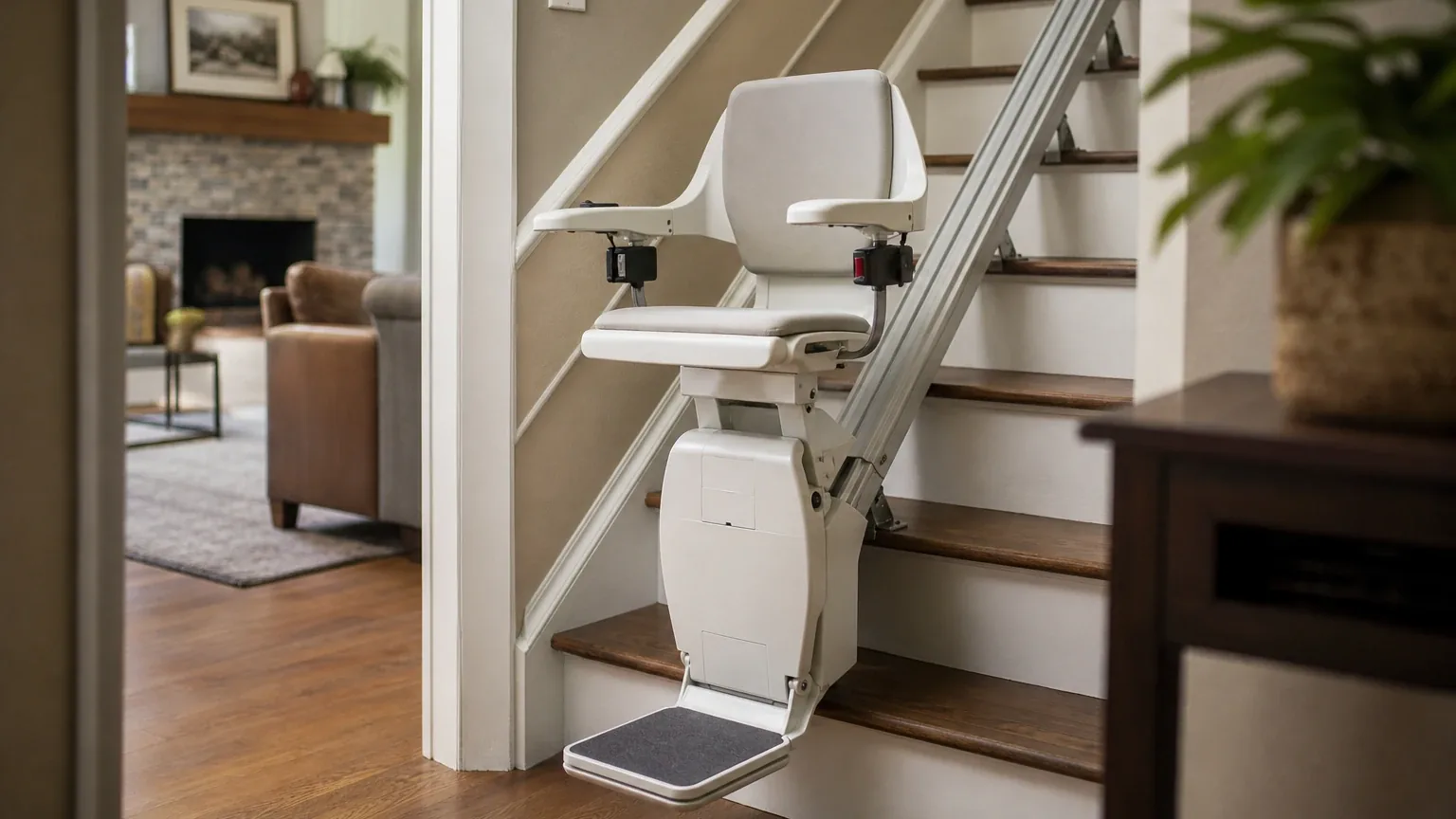
The Acorn 130 Sit/Stand is a conditional fit for homeowners needing a perching seat on tight, straight staircases. Two of seven AI platforms named it during the ranking stage (deepseek and google), with an average listed rank of 6.5 and a best rank of 4. The strongest reason to consider it is its documented 8.25-inch folded depth, which is among the slimmest available and preserves stair access when not in use [1]. The main limitation is that Acorn does not publicly publish the critical specifications for this use case—minimum staircase width for the Sit/Stand configuration, perch seat angle, and knee clearance—forcing buyers to rely on an in-home survey [3]. Platform fit ratings were split: three rated it "good," two "mixed," and two "uncertain." The product is strictly limited to straight staircases and cannot be adapted for curves or landings [5].
Research Snapshot
| Metric | Value |
|---|---|
| Platform mentions in ranking stage | 2 of 7 (deepseek, google) |
| Share of included platform responses | 28.6% (2 of 7) |
| Average listed rank | 6.5 |
| Best listed rank | 4 (google) |
| Relevant product/model/plan | Acorn 130 Sit/Stand Stairlift; Acorn 130 Perch (limited availability) |
| Overall use-case fit | Conditional/good with verification required |
| Research date | 2026-08-11 |
Why Acorn 130 Sit/Stand Qualified for This Study
The Acorn 130 Sit/Stand qualified because it is a perch-style stairlift designed for confined staircases, directly matching the buyer profile of homeowners with narrow stairs where a traditional seated lift would block access [7]. The product family was explicitly positioned as relevant to this use case by multiple platforms during the research phase.
The Sit/Stand variant differs from the standard Acorn 130 in a key dimension: its folded depth. The Sit/Stand technical table lists 8.25 inches of folded depth, compared with approximately 12.25 inches for the standard 130 [7]. This 4-inch reduction is meaningful for preserving passage space on narrow stairs.
The product is built on the Acorn 130 straight-stairlift platform, which uses an extruded-aluminum track mounted directly to the stairs rather than the wall, with no stated structural wall alterations required [7]. This installation approach is relevant for homeowners who want to avoid modifying walls.
U.S. device-registration records in the AccessGUDID database identify Acorn 130 Perch left- and right-hand models as commercially distributed, providing independent confirmation that perch variants exist in the U.S. market [10].
The Product, Model, Plan, or Service Most Relevant to Perching Seat for Tight Staircases
The most relevant product is the Acorn 130 Sit/Stand Stairlift, a dual-use model combining seated and standing/perching modes on the Acorn 130 straight-stairlift platform [11]. The ranking stage also referenced an "Acorn 130 Perch (Limited Availability)" designation, but platforms disagreed on whether this is a distinct marketed product or a variant of the Sit/Stand.
OpenAI identified the relevant product as the "Acorn Sit/Stand Stairlift based on the Acorn 130 straight-stairlift platform," noting that Acorn 130 Perch models are documented in U.S. device-registration records but current U.S. retail availability is unclear [12]. Anthropic noted that the Acorn Perch line (Acorn 120 Perch, Acorn Superglide Perch) appears to be a separate product category from the Sit/Stand, with the Perch line specifically engineered for narrow stairs [13].
DeepSeek treated "Acorn 130 Sit/Stand Stairlift" and "Acorn 130 Perch" as the same product with limited availability [15]. Grok described the relevant product as the "Acorn 130 Sit/Stand Stairlift (perch option)" [16]. This naming conflict is unresolved and should be clarified directly with Acorn before purchase.
What the AI Platforms Agreed About
Compact Folded Depth Is the Primary Advantage
There was strong agreement that the Sit/Stand's folded footprint is its standout feature. The Sit/Stand model folds to approximately 8.25 inches deep, significantly slimmer than the standard 130's 12.25 inches [17]. Google described this as "among the slimmest available, leaving stairs clear for other walkers" [18]. This compact profile directly addresses the core buyer need of preserving stair access.
Straight Staircases Only
All platforms that addressed staircase shape agreed the Sit/Stand is strictly limited to straight staircases. Google noted it "cannot be customized for stairs with curves or landings" [20]. OpenAI stated the product "is intended for straight stairs; it is not the appropriate platform for curved or winding stairs" [22]. Kimi noted it "fits straight staircases (the most common residential configuration)" [23].
Stair-Mounted Installation Without Structural Changes
Multiple platforms confirmed the rail mounts to the stairs rather than the wall, requiring no structural modifications [17]. This was cited as an advantage for homeowners who want to avoid wall alterations. Google noted the "tread-mounted rail system avoids the need for wall modifications or structural redecoration" [19].
Safety Features Are Standard
The Sit/Stand includes standard Acorn safety equipment: a footplate sensor, seat controls, remote control, seat belt, backup battery, and diagnostic display [17]. Anthropic confirmed the model includes "safety sensors to stop on obstruction, swivel seat for safe entry/exit, seatbelt, and remote control, meeting BS EN 81-40:2008 standard" [25]. DeepSeek confirmed obstruction sensors that stop the lift if an object is detected [26].
Pricing Is Not Publicly Published
All platforms agreed that Acorn does not publicly list prices for the Sit/Stand configuration. Buyers must obtain a quote after an in-home survey [17]. Third-party estimates ranged from approximately $3,000 to $5,000 for standard straight models, with the Sit/Stand potentially costing more [28].
Where the AI Platforms Disagreed or Were Uncertain
Minimum Staircase Width
Platforms reported conflicting minimum width requirements. DeepSeek cited Acorn's official site stating 26.5 inches (67 cm) minimum [30]. Anthropic and Grok cited 26 inches (66 cm) for swivel comfort [31]. Google reported a range of 26 to 29 inches across international regions and dealers [33]. OpenAI noted the standard 130 page reports 26.25 inches to swivel comfortably but stated this "is not necessarily the minimum staircase width for the Sit/Stand configuration" [34]. Kimi noted Acorn does not publish a minimum staircase width for the Sit/Stand at all [35].
This conflict matters because the use case is specifically for tight staircases. A buyer with a 25-inch-wide staircase would need to know whether the Sit/Stand fits, and the public materials do not provide a definitive answer.
Perch Seat Angle and Posture
No platform could verify the perch seat angle from public sources. DeepSeek noted "the perch seat is designed at an angle to allow the user to lean into the incline, but the exact angle is not disclosed in official materials" [30]. Kimi noted Acorn describes users standing "securely" but does not clarify whether this is true standing, perching, or leaning—"different physical clearances apply" [35]. This uncertainty affects the buyer's ability to assess knee and shin clearance.
Weight Capacity in Perching Mode
Anthropic reported a conflict: the standard Acorn 130 supports up to 25 stone (159 kg / 350 lbs) seated [36], but one source indicated the Sit/Stand supports up to 115–120 kg in standing/perching position [37]. This discrepancy was flagged as unresolved, and the lower perching capacity could exclude heavier users.
Whether "Acorn 130 Perch" Exists as a Separate Product
Anthropic explicitly questioned whether "Acorn 130 Perch" exists as a marketed product, noting the dedicated Perch line appears to be Acorn 120 Perch and Acorn Superglide Perch [38]. OpenAI noted U.S. device-registration records show Acorn 130 Perch models as commercially distributed but could not confirm current retail availability [40]. This naming and availability conflict should be resolved directly with Acorn.
Folded Footprint Measurements
While the 8.25-inch folded depth was consistently cited, platforms disagreed on other dimensions. Anthropic cited one source noting a folded width of 380mm (15 inches) for a comparable model [41], while the standard 130 folds to 12.25 inches width [42]. OpenAI listed 23.75 inches overall width for the Sit/Stand [43]. These figures are not directly comparable and should be verified against the specific configuration offered.
Use-Case-Specific Features and Capabilities
Minimum Staircase Width
Assessment: Unclear. Acorn states the standard 130 needs approximately 26.25–26.5 inches of width to swivel comfortably [44], and the FAQ cites 26 inches [46]. Google reported 26–29 inches depending on region [48]. No platform verified a specific minimum width for the U.S. Sit/Stand configuration. Buyers with staircases under 26 inches should consider alternatives with published narrower minimums, such as Bruno Helix (24.5 inches) or Harmar iQ (24 inches) [45].
Perch Seat Angle and Posture
Assessment: Unclear. The Sit/Stand is presented as an alternative for confined staircases and different mobility needs [49], and it incorporates a standing frame with a folding security bar to help users stay stable and reduce knee protrusion [50]. However, the exact perch seat angle, seat height, and weight-bearing design are not published [45]. Kimi noted competitors like Handicare explicitly describe "almost standing" perch-angle support with shortened seats for hip/knee relief, while Acorn does not [52].
Folded Footprint
Assessment: Advantage. The Sit/Stand folds to 8.25 inches deep, compared with 12.25 inches for the standard 130 [49]. This is a meaningful advantage for preserving passage space. The overall width is listed at 23.75 inches [49], and the standard 130 folds to 12.25 inches width [54]. One source noted a folded width of 380mm (15 inches) for a comparable model [55].
Rail Profile and Installation
Assessment: Advantage. The lift uses an extruded-aluminum track mounted directly to the stairs, not the wall, with no structural changes required [49]. Installation is by certified Acorn technicians after a custom home survey [45]. Google noted the exposed rack-and-pinion drive gear requires routine cleaning to prevent dust buildup [58].
Knee and Foot Clearance
Assessment: Unclear. The perch format is intended to address confined-staircase situations, and the standing frame with folding security bar reduces knee projection [50]. However, Acorn does not publicly provide a complete knee-clearance specification for this configuration [49]. The standard 130 documentation lists a 22.5-inch front-of-footrest-to-stringer dimension, which should not be assumed to apply to the Sit/Stand [44].
Swivel and Parking Options
Assessment: Unclear. The standard 130 has swivel-seat options and an optional hinged rail [44]. The Sit/Stand page does not clearly identify whether the same manual swivel, power swivel, parking, or hinge options are available in every U.S. configuration [49]. DeepSeek noted the 130 does not offer a swivel seat as standard and parking is manual via a lever [45].
Safety Sensors and Controls
Assessment: Neutral. The Sit/Stand includes a footplate sensor, seat controls, remote control, seat belt, backup battery, and diagnostic display [49]. It meets BS EN 81-40:2008 standard [59]. Obstruction sensors stop the lift if an object is detected [45]. No platform identified a distinct advantage or limitation compared to other Acorn models.
Availability of the Perch Model
Assessment: Unclear. U.S. AccessGUDID records identify Acorn 130 Perch left- and right-hand models as commercially distributed [60]. However, current U.S. consumer availability, lead time, and whether the "limited availability" designation remains accurate were not verified [60].
Pricing, Fees, Contracts, and Ongoing Costs
Pricing confidence is low across all platforms. Acorn does not publicly list prices for the Sit/Stand configuration, and buyers must obtain a quote after an in-home survey [62].
Third-party estimates for the standard Acorn 130 straight model range from approximately $3,000 to $5,000 installed [64]. Google cited third-party U.S. dealer pricing with basic straight Acorn 130 installations starting around $1,999 and standing/sit-stand versions costing up to $4,199 fully installed [66]. These figures are platform-reported and not independently verified.
Known cost components include:
- Custom installation quote based on staircase measurements and selected options [62]
- Professional installation included in quoted price [67]
- Potential ongoing electricity, battery replacement, maintenance, and service costs [62]
- Post-warranty annual service and maintenance agreements: up to $900–$1,000 per year [66]
Warranty terms reported include a 12-month manufacturer's guarantee for the 130 platform [68], with Anthropic reporting a typical two-year warranty with two free annual services [67]. DeepSeek reported a 30-day money-back guarantee after installation and 0% financing for 12 months as company claims [69]. These conflicting warranty terms should be confirmed in writing.
Medicare typically does not cover stairlifts; some private insurance may provide partial reimbursement [67].
Best Suited For
The Acorn 130 Sit/Stand is best suited for:
- Straight indoor staircases where a conventional seated lift creates excessive knee, foot, or transfer clearance problems [70]
- Multi-user households where one person prefers seated and another prefers standing/perching positions [71]
- Users who can safely maintain a supported standing or semi-standing posture and need a compact folded profile [70]
- Homes needing a rail-mounted solution without structural wall alterations [70]
- Users who experience discomfort or difficulty bending their knees to sit [74]
- Staircases with clear openings of at least 26–26.5 inches at the narrowest point [75]
Probably Not Best Suited For
The Acorn 130 Sit/Stand is probably not best suited for:
- Curved, spiral, or multi-landing staircases—the Sit/Stand is strictly limited to straight stairs [77]
- Staircases narrower than 26 inches—competing models with published 24–24.5-inch minimums may be required [80]
- Users unable to stand or perch securely during travel [81]
- Single-user households needing only a perching solution—a dedicated perch model may be more cost-effective [82]
- Heavier users in perching mode—standing/perching capacity may be lower than seated capacity [83]
- Buyers who need transparent published specifications before scheduling a site survey [84]
When Another Option May Be Better
Several platforms identified specific alternatives for buyers whose needs fall outside the Sit/Stand's strengths:
- Stannah publishes a verified 26–28 inch minimum width and a 16-inch folded footprint, making it a more verifiable option for narrow stairs [86]
- Handicare Perch models specify shortened seats and near-standing positions for hip/knee flexion relief, with powered footplate and body harness options [87]
- Bruno Helix (24.5-inch minimum) and Harmar iQ (24-inch minimum) may fit staircases narrower than the Acorn's 26-inch requirement [88]
- Acorn 120 Perch or Acorn Superglide Perch are dedicated perch models specifically engineered for narrow stairs, with a documented narrower folded profile (380mm) [89]
- Acorn 180 or other curved models are needed for curved or complex staircases [91]
Questions to Verify Before Buying
Before purchasing the Acorn 130 Sit/Stand, buyers should verify the following with an Acorn dealer or in writing:
- What is the exact minimum staircase width for the offered U.S. Sit/Stand configuration, measured at the narrowest point? [92]
- Is the "Acorn 130 Perch" a separate product from the Sit/Stand, and is it currently available for new U.S. installations? [94]
- What is the perch seat angle, seat height, and required user posture? [96]
- What are the exact folded and operating projections from the stringer, including rail, arms, footrest, and controls? [96]
- How much knee and foot clearance remains for the buyer's staircase and the user's height and leg length? [92]
- Is a manual or power swivel available, and where can the lift park at the top and bottom? [92]
- Is a hinged rail available for this exact configuration, and what are its added cost and clearance requirements? [92]
- What is the weight capacity in perching/standing mode, and does it differ from seated capacity? [99]
- What is the all-in installed price, including options, taxes, removal, delivery, warranty, maintenance, and service coverage? [96]
- What are the written warranty terms—length, exclusions, labor coverage, and post-warranty service rates? [98]
- What are the cancellation terms, deposit rules, and restocking charges? [93]
- Does the quoted price include local permit fees, installation labor, and the initial warranty service? [101]
Final AI Consensus Verdict
The AI platforms reached a conditional consensus: the Acorn 130 Sit/Stand is a credible candidate for homeowners with straight, tight staircases, but it cannot be confirmed as a best fit without dealer verification of critical specifications.
Three platforms rated it "good" (openai, deepseek, google), two rated it "mixed" (anthropic, grok), and two rated it "uncertain" (kimi, perplexity). The strongest point of agreement is the 8.25-inch folded depth, which is genuinely compact and directly addresses the core buyer need of preserving stair access [102]. The product's dual sit/stand functionality also suits multi-user households [104].
The decisive limitation is the absence of published specifications for the exact factors that define this use case: minimum staircase width for the Sit/Stand configuration, perch seat angle, knee clearance, and folded footprint dimensions beyond the 8.25-inch depth [105]. Buyers with staircases under 26 inches wide, or those who need to self-assess compatibility before scheduling a survey, should compare against competitors with transparent published specifications like Stannah or Handicare Perch [107].
The Acorn 130 Sit/Stand should be treated as a conditional candidate: promising on folded depth and installation approach, but requiring an in-home survey and written configuration confirmation before purchase. Buyers should also clarify the availability and naming of the "Acorn 130 Perch" variant, which remains unresolved across platforms [109].
For a broader comparison of perch stairlift options for narrow stairs, see the Perching Seat for Tight Staircases consensus index. You can also browse the full stairlifts category directory for other product evaluations.
How This Review Was Produced
This review was produced by aggregating fit-research responses from seven AI platforms: OpenAI, Anthropic, DeepSeek, Grok, Perplexity, Kimi, and Google. Each platform evaluated the Acorn 130 Sit/Stand specifically for the use case of "Perching Seat for Tight Staircases," drawing on a shared set of supplied sources including Acorn's official product pages, U.S. device-registration records, third-party reviews, and competitor documentation.
The research date for this study is 2026-08-11. Platform-reported research dates are provenance metadata and do not independently prove freshness. One platform (DeepSeek) reported a research date of 2026-04-10, which differs from the authoritative run date; this is disclosed as a methodology limitation.
Platform mentions in the ranking stage count only platforms that named the entity during ranking discovery. Two of seven platforms (deepseek and google) named the Acorn 130 Sit/Stand in the ranking stage. All seven platforms evaluated fit during the research phase.
Methodology Limitations
- Platform-reported dates differ from the authoritative run date. DeepSeek reported a research date of 2026-04-10, while the authoritative run date is 2026-08-11. This discrepancy may affect the currency of DeepSeek's findings.
- Platform mentions count only ranking-stage naming. Two of seven platforms named the entity during ranking discovery; all seven evaluated fit. The ranking-stage mention count does not reflect the breadth of fit evaluation.
- Conflicting product names were not resolved by guessing. The relationship between "Acorn 130 Perch" and "Acorn 130 Sit/Stand" remains unclear across platforms. Buyers should verify directly with Acorn.
- The supplied URLs were collected from platform responses and were not independently validated by the writer stage. Some URLs are Google grounding-api redirects, which may not be stable over time.
- Pricing data is platform-reported and not independently verified. Third-party price estimates range widely and should be treated as directional only.
- No platform claimed personal testing or customer experience. All findings are based on publicly available documentation and platform analysis.
- AI-platform agreement does not prove product quality. The consensus reflects what the platforms could verify from public sources, not independent performance testing.
Sources
Company-Owned Sources
- Perch Seat Stairlift | Perch Seat for Curved Stairlift: https://handicare-stairlifts.co.uk/stairlifts/stairlift-seats/seats-for-curved-stairlifts/perch/
- Straight Stairlift | Acorn 130 | Acorn Stairlifts USA: https://www.acorn-stairlifts.com/stairlift/straight
- Sit and Stand Stairlifts | Acorn Stairlifts UK: https://www.acornstairlifts.co.uk/stairlift/stairlift-sit-stand-staircase
- How Much Weight Can an Acorn Stairlift Hold: https://www.acornstairlifts.com/blog/post/4806/Tips-and-Advice/Acorn-Stairlift-FAQ-of-the-Week%E2%80%94How-Much-Weight-Can-an-Acorn-Stairlift-Hold
- Acorn Stairlifts FAQ: https://www.acornstairlifts.com/faqs/how-wide-do-stairs-need-to-be-for-a-stairlift
- Standing Stair Lift | Sitting Stair Lift | Acorn Stairlifts USA: https://www.acornstairlifts.com/stairlift/stairlift-sit-stand-staircase
- Straight Stairlifts | Acorn 130 Straight Stairlift: https://www.acornstairlifts.com/stairlift/stairlift-straight-staircase
- Straight Stairlifts | Acorn 130 Straight Stairlift: https://www.acornstairlifts.com/stairlift/stairlift-straight-staircase/scid/11020
- Acorn 130 Stairlift | Acorn Stairlifts: https://www.acornstairlifts.com/stairlifts/130
- Compact Standing Stair Lift for Narrow Stairs | The Sadler: https://www.stannah.com/en-us/stairlifts/sadler-chair
Additional AI research evidence110 records
- AI research evidence record openai:c2
- AI research evidence record google:c2
- AI research evidence record openai:c1
- AI research evidence record kimi:c1
- AI research evidence record google:c1
- AI research evidence record google:c4
- AI research evidence record openai:c2
- AI research evidence record openai:c1
- AI research evidence record openai:c3
- AI research evidence record openai:c4
- AI research evidence record anthropic:c5
- AI research evidence record openai:c4
- AI research evidence record anthropic:c7
- AI research evidence record anthropic:c8
- AI research evidence record deepseek:c1
- AI research evidence record grok:c3
- AI research evidence record openai:c2
- AI research evidence record google:c2
- AI research evidence record google:c3
- AI research evidence record google:c1
- AI research evidence record google:c4
- AI research evidence record openai:c1
- AI research evidence record kimi:c1
- AI research evidence record anthropic:c11
- AI research evidence record anthropic:c10
- AI research evidence record deepseek:c1
- AI research evidence record anthropic:c5
- AI research evidence record anthropic:c14
- AI research evidence record google:c5
- AI research evidence record deepseek:c1
- AI research evidence record anthropic:c1
- AI research evidence record grok:c1
- AI research evidence record google:c4
- AI research evidence record openai:c1
- AI research evidence record kimi:c1
- AI research evidence record anthropic:c13
- AI research evidence record anthropic:c14
- AI research evidence record anthropic:c8
- AI research evidence record anthropic:c9
- AI research evidence record openai:c4
- AI research evidence record anthropic:c4
- AI research evidence record anthropic:c3
- AI research evidence record openai:c2
- AI research evidence record openai:c1
- AI research evidence record deepseek:c1
- AI research evidence record anthropic:c1
- AI research evidence record grok:c1
- AI research evidence record google:c4
- AI research evidence record openai:c2
- AI research evidence record google:c1
- AI research evidence record kimi:c1
- AI research evidence record kimi:c3
- AI research evidence record google:c2
- AI research evidence record anthropic:c3
- AI research evidence record anthropic:c4
- AI research evidence record openai:c3
- AI research evidence record anthropic:c11
- AI research evidence record google:c3
- AI research evidence record anthropic:c10
- AI research evidence record openai:c4
- AI research evidence record anthropic:c8
- AI research evidence record openai:c2
- AI research evidence record kimi:c1
- AI research evidence record anthropic:c14
- AI research evidence record grok:c1
- AI research evidence record google:c5
- AI research evidence record anthropic:c5
- AI research evidence record openai:c3
- AI research evidence record deepseek:c1
- AI research evidence record openai:c2
- AI research evidence record anthropic:c5
- AI research evidence record anthropic:c6
- AI research evidence record anthropic:c11
- AI research evidence record google:c1
- AI research evidence record deepseek:c1
- AI research evidence record anthropic:c1
- AI research evidence record google:c1
- AI research evidence record google:c4
- AI research evidence record openai:c1
- AI research evidence record deepseek:c1
- AI research evidence record openai:c2
- AI research evidence record anthropic:c5
- AI research evidence record anthropic:c14
- AI research evidence record kimi:c1
- AI research evidence record perplexity:c1
- AI research evidence record kimi:c2
- AI research evidence record kimi:c3
- AI research evidence record deepseek:c1
- AI research evidence record anthropic:c7
- AI research evidence record anthropic:c8
- AI research evidence record anthropic:c5
- AI research evidence record openai:c1
- AI research evidence record deepseek:c1
- AI research evidence record anthropic:c8
- AI research evidence record openai:c4
- AI research evidence record openai:c2
- AI research evidence record kimi:c1
- AI research evidence record openai:c3
- AI research evidence record anthropic:c13
- AI research evidence record anthropic:c14
- AI research evidence record google:c5
- AI research evidence record openai:c2
- AI research evidence record google:c2
- AI research evidence record anthropic:c5
- AI research evidence record kimi:c1
- AI research evidence record perplexity:c1
- AI research evidence record kimi:c2
- AI research evidence record kimi:c3
- AI research evidence record anthropic:c8
- AI research evidence record openai:c4
Independent Sources
- AccessGUDID: Acorn Stairlift: https://accessgudid.nlm.nih.gov/devices/05056136800088
- Living Made Easy - Acorn Sit Or Stand Stairlift: https://livingmadeeasy.org.uk/product/acorn-sit-or-stand-stairlift
- Acorn is one of the world's most recognized stairlift brands: https://modernize.com/stair-lifts/best-brands
- IN REVIEW: The Acorn Superglide 130: https://stairliftreviewsblog.wordpress.com/2017/09/21/in-review-the-acorn-superglide-130/
- Technical Specifications - Acorn 130 Sit / Stand: https://vertexaisearch.cloud.google.com/grounding-api-redirect/AUZIYQEjsR-QWeoGFJOe114H7H1jv1_jN9-w_d_Ti6jCraGuOxNhANJPWwN3izYa7H1Rx6qZnP6KBrReBeZBMM8Nx3hwhyMmtiGu9vPeUzbGxGQlCv4NXwxYKWzA0pzMcjILYEMb0rk5mMFVnwG4GapMTLZzq0rQQ-GZBlqDeN3SniCqX5MwYBhyBh1ZkZJJdNYpC0j61OoxHDagiddcJ_DLdy4ssAq-GNxFLktDUibkQ_Rbg1gbiw==
- Acorn Stairlifts in the UK: Costs, Models & Reviews (2026): https://vertexaisearch.cloud.google.com/grounding-api-redirect/AUZIYQEMHk7YS5Sf173L8KWsjILFLU2B7gCmU0FAM2DgzhjEM3Qo2lAStNL5TH-6lj4r7jqAieUaUnSzol79wgZ3wiFdmeme1IUzwLozcF5jjEqqzEg_OuBdX0g0OzAhFH4DSUBcK8-d70u7TQ==
- Acorn Stairlifts Dealer Pricing - The Stairlift Store: https://vertexaisearch.cloud.google.com/grounding-api-redirect/AUZIYQEuLLVE-sMLkWiynXmawVE7J_J2qhnHd2u8877wYWZZ7r_rOnnPyI-TTOdkhpHVCgJy8PBymZMn95Zey1wzsx-j9BJA90tVULzCMSH6J7OzvYK8FiY=
- Acorn Stairlifts Costs, Reviews & Models: https://whatcost.co.uk/stairlifts/companies/acorn
- Acorn Superglide Perch Stair Lift: https://www.hmecatalog.com/product/acorn-superglide-perch-stair-lift-acorn-stair-lifts
- Acorn Stairlifts Rental Hire - The Accessible Planet: https://www.theaccessibleplanet.com/lifestyle/stairlifts/acorn-stairlifts-rental-hire/
Additional AI research evidence110 records
- AI research evidence record openai:c2
- AI research evidence record google:c2
- AI research evidence record openai:c1
- AI research evidence record kimi:c1
- AI research evidence record google:c1
- AI research evidence record google:c4
- AI research evidence record openai:c2
- AI research evidence record openai:c1
- AI research evidence record openai:c3
- AI research evidence record openai:c4
- AI research evidence record anthropic:c5
- AI research evidence record openai:c4
- AI research evidence record anthropic:c7
- AI research evidence record anthropic:c8
- AI research evidence record deepseek:c1
- AI research evidence record grok:c3
- AI research evidence record openai:c2
- AI research evidence record google:c2
- AI research evidence record google:c3
- AI research evidence record google:c1
- AI research evidence record google:c4
- AI research evidence record openai:c1
- AI research evidence record kimi:c1
- AI research evidence record anthropic:c11
- AI research evidence record anthropic:c10
- AI research evidence record deepseek:c1
- AI research evidence record anthropic:c5
- AI research evidence record anthropic:c14
- AI research evidence record google:c5
- AI research evidence record deepseek:c1
- AI research evidence record anthropic:c1
- AI research evidence record grok:c1
- AI research evidence record google:c4
- AI research evidence record openai:c1
- AI research evidence record kimi:c1
- AI research evidence record anthropic:c13
- AI research evidence record anthropic:c14
- AI research evidence record anthropic:c8
- AI research evidence record anthropic:c9
- AI research evidence record openai:c4
- AI research evidence record anthropic:c4
- AI research evidence record anthropic:c3
- AI research evidence record openai:c2
- AI research evidence record openai:c1
- AI research evidence record deepseek:c1
- AI research evidence record anthropic:c1
- AI research evidence record grok:c1
- AI research evidence record google:c4
- AI research evidence record openai:c2
- AI research evidence record google:c1
- AI research evidence record kimi:c1
- AI research evidence record kimi:c3
- AI research evidence record google:c2
- AI research evidence record anthropic:c3
- AI research evidence record anthropic:c4
- AI research evidence record openai:c3
- AI research evidence record anthropic:c11
- AI research evidence record google:c3
- AI research evidence record anthropic:c10
- AI research evidence record openai:c4
- AI research evidence record anthropic:c8
- AI research evidence record openai:c2
- AI research evidence record kimi:c1
- AI research evidence record anthropic:c14
- AI research evidence record grok:c1
- AI research evidence record google:c5
- AI research evidence record anthropic:c5
- AI research evidence record openai:c3
- AI research evidence record deepseek:c1
- AI research evidence record openai:c2
- AI research evidence record anthropic:c5
- AI research evidence record anthropic:c6
- AI research evidence record anthropic:c11
- AI research evidence record google:c1
- AI research evidence record deepseek:c1
- AI research evidence record anthropic:c1
- AI research evidence record google:c1
- AI research evidence record google:c4
- AI research evidence record openai:c1
- AI research evidence record deepseek:c1
- AI research evidence record openai:c2
- AI research evidence record anthropic:c5
- AI research evidence record anthropic:c14
- AI research evidence record kimi:c1
- AI research evidence record perplexity:c1
- AI research evidence record kimi:c2
- AI research evidence record kimi:c3
- AI research evidence record deepseek:c1
- AI research evidence record anthropic:c7
- AI research evidence record anthropic:c8
- AI research evidence record anthropic:c5
- AI research evidence record openai:c1
- AI research evidence record deepseek:c1
- AI research evidence record anthropic:c8
- AI research evidence record openai:c4
- AI research evidence record openai:c2
- AI research evidence record kimi:c1
- AI research evidence record openai:c3
- AI research evidence record anthropic:c13
- AI research evidence record anthropic:c14
- AI research evidence record google:c5
- AI research evidence record openai:c2
- AI research evidence record google:c2
- AI research evidence record anthropic:c5
- AI research evidence record kimi:c1
- AI research evidence record perplexity:c1
- AI research evidence record kimi:c2
- AI research evidence record kimi:c3
- AI research evidence record anthropic:c8
- AI research evidence record openai:c4
Verify this research
Review the study details behind this page or download the public machine-readable verification record.
- Study date
- Aug 11, 2026
- Platforms analyzed
- 7
- Source records
- 22
- Ranking mentions
- 2 of 7
- Platform share
- 29%
- Final consensus rank
- #3
Research trail and source mix
Platforms
openai, anthropic, deepseek, grok, perplexity, kimi, google
Source mix
12 independent · 10 company-owned
Evidence support
19 direct · 2 partial
Important limitation
Use the run research_date as the study date. Platform-reported dates are provenance metadata and do not independently prove freshness.
Source snapshot SHA-256 85bef158f5694f09ae6189e068d8357d74a0e49c0773bb9ccd406d273e26c4e6