
Answer Capsule
Apple is a mixed fit for automatic fall detection, not a clear winner. Of the 7 AI platforms that evaluated Apple for this use case, only 2 (DeepSeek and Kimi) named Apple during the ranking stage, giving it a 28.6% platform share. Apple's average listed rank was 5.5, with a best rank of 5. The strongest reason to consider Apple Watch SE 3 GPS + Cellular is its automatic fall detection with direct-to-911 calling and no monthly monitoring fee — a significant cost advantage over dedicated medical alert systems. The main limitation is the absence of a professional 24/7 monitoring center: Apple Watch calls 911 directly rather than routing through a human operator who can verify the emergency, assess the situation, and coordinate with caregivers. Five of seven platforms rated Apple as a "mixed" fit; one rated it "good" and one "strong."
Research Snapshot
| Metric | Value |
|---|---|
| Platform mentions in ranking stage | 2 of 7 (DeepSeek, Kimi) |
| Share of included platform responses | 28.6% (2 of 7) |
| Average listed rank | 5.5 |
| Best listed rank | 5 (DeepSeek) |
| Relevant product/model/plan | Apple Watch SE 3 GPS + Cellular with Fall Detection and Emergency SOS |
| Overall use-case fit | Mixed (5 of 7 platforms rated "mixed"; 1 "good"; 1 "strong") |
| Research date | 2026-08-03 (authoritative run date) |
Fit ratings by platform: Anthropic (mixed), DeepSeek (strong), Google (good), Grok (mixed), Kimi (mixed), OpenAI (mixed), Perplexity (mixed).
Why Apple Qualified for This Study
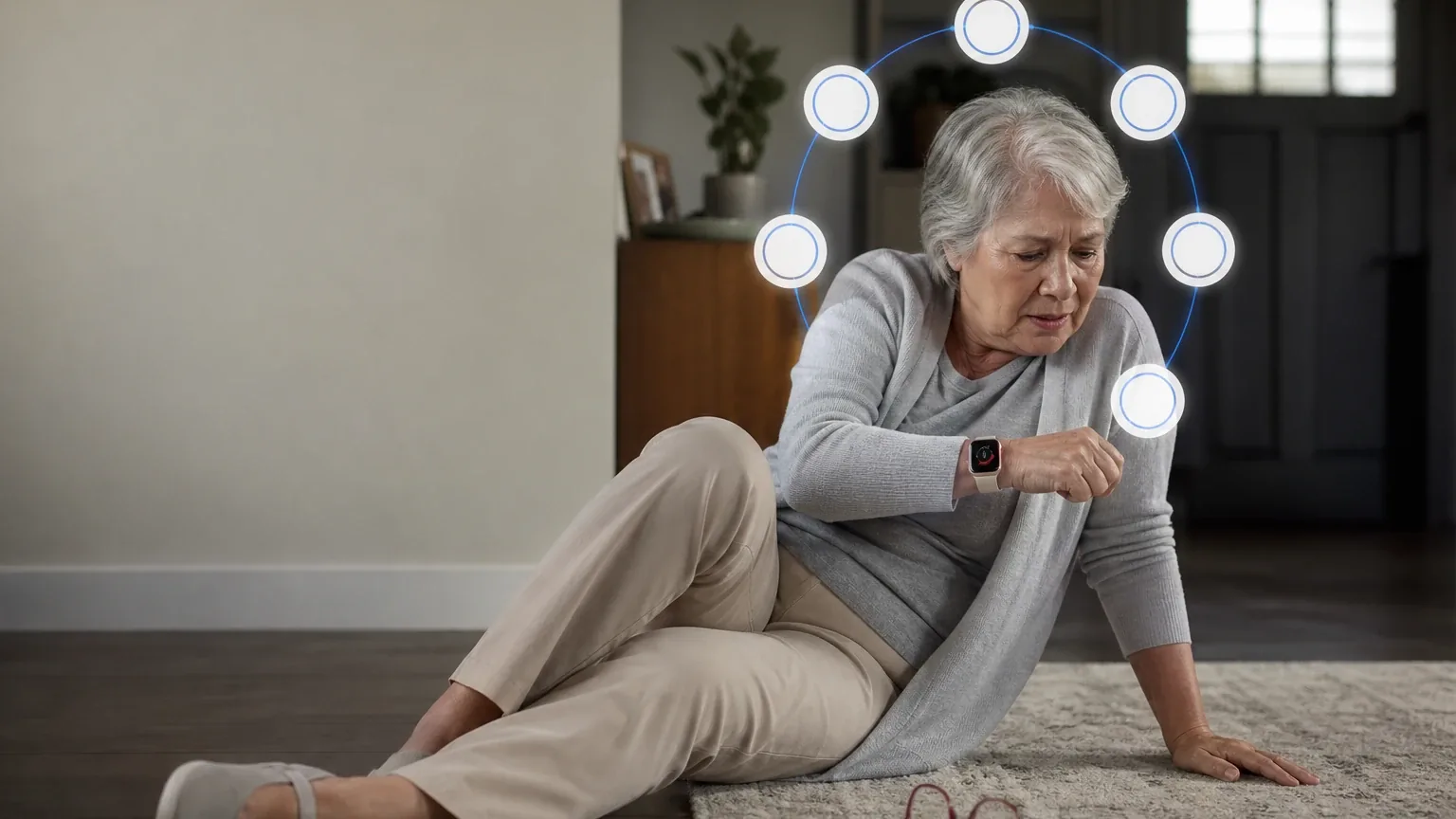
Apple qualified because its Apple Watch SE 3 includes built-in Fall Detection and Emergency SOS, which directly address the target buyer's need for automated crisis response without manual button presses. All seven platforms evaluated Apple's fit for this use case, even though only two named it during the ranking discovery stage. The relevant configuration is the GPS + Cellular model, which can place emergency calls independently of a nearby iPhone. Apple's fall detection is a consumer smartwatch feature rather than a dedicated medical alert service, which is why the fit assessment is mixed rather than uniformly positive.
The Product, Model, Plan, or Service Most Relevant to Automatic Fall Detection
The relevant product is the Apple Watch SE 3 GPS + Cellular with Fall Detection and Emergency SOS enabled. All seven platforms converged on this configuration. Key specifications reported across platforms:
- Fall detection mechanism: Accelerometer, gyroscope, and GPS detect hard falls [1]
- Automatic response: After detecting a hard fall followed by approximately one minute of immobility, the watch starts a 30-second countdown with escalating alerts, then automatically attempts to call emergency services if not cancelled [1]
- Connectivity: GPS + Cellular model can make emergency calls without the iPhone nearby; GPS-only models cannot call independently [6]
- Battery life: Up to 18–24 hours normal use; up to 38 hours in Low Power Mode [8]
- Age-based defaults: Fall Detection defaults to Always On for users 55+ during setup [10]
- Water resistance: 50 meters [5]
What the AI Platforms Agreed About
Strong agreement: Apple Watch provides genuine automatic fall detection without a manual button press. All seven platforms confirmed that the watch can detect hard falls and automatically attempt to contact emergency services. This is the core capability that qualifies Apple for this use case.
Strong agreement: There is no professional monitoring center. All seven platforms noted that Apple Watch calls 911 directly rather than routing through a private medical-alert response center. This is the single most important differentiator from dedicated medical alert systems. As Kimi stated: "Since watchOS 11, Apple Watch calls 911 directly rather than routing through a professional monitoring center. No live operator assesses the situation before emergency services are dispatched" [12].
Strong agreement: No monthly monitoring fee from Apple. All platforms that addressed pricing confirmed there is no Apple-charged subscription for fall detection. The only ongoing cost is a cellular carrier plan, commonly cited at approximately $10/month [13].
Strong agreement: Daily charging is required. Platforms consistently reported 18–24 hours of battery life, requiring nightly charging. This is a meaningful limitation versus dedicated pendants with multi-day or multi-week battery life [17].
Strong agreement: Apple does not publish a fall-detection accuracy rate. No platform found an official Apple accuracy figure. Apple explicitly states the watch cannot detect all falls [20].
Strong agreement: Direct 911 calling is the response model. The watch plays an automated audio message with location and Medical ID information to emergency services [12].
Where the AI Platforms Disagreed or Were Uncertain
Overall fit rating: Mixed to strong. Five platforms (Anthropic, Grok, Kimi, OpenAI, Perplexity) rated Apple "mixed." Google rated it "good," and DeepSeek rated it "strong." The disagreement centers on whether the absence of a monitoring center is a disqualifying limitation or an acceptable tradeoff for cost savings.
Fall-detection accuracy evidence. OpenAI cited a small independent evaluation reporting very low detection for a tested Apple Watch configuration, but explicitly cautioned that its controlled hospital-room design and limited sample make it unsuitable as a product-wide accuracy estimate [23]. No other platform found independent accuracy data. This is a factual conflict: the only independent study cited suggests poor performance, but it is not generalizable.
Battery life figures vary. Apple's official page lists up to 24 hours normal and 38 hours Low Power Mode [24]. Third-party sources cited 18 hours [25]. DeepSeek reported 18–36 hours. These are not necessarily contradictory (different usage assumptions), but buyers should expect roughly one day of use.
Device pricing varies by source. OpenAI cited $299 for GPS + Cellular [24]. DeepSeek, Kimi, and Grok cited $249 [27]. Anthropic cited $249 for GPS and $299 for cellular [30]. Perplexity could not verify pricing at all (perplexity: low confidence). Buyers should verify current pricing directly with Apple.
Cellular plan cost is an estimate, not a fixed price. Multiple platforms cited approximately $10/month, but all noted this is a third-party estimate and actual cost varies by carrier [30]. OpenAI noted Apple does not specify carrier fees on its product page [31].
Satellite emergency SOS availability is unclear. DeepSeek and Kimi mentioned satellite emergency calling, but Kimi flagged uncertainty about whether this works on standard Apple Watch SE 3 versus requiring Apple Watch Ultra 3 or iPhone 14+ (kimi: factual conflicts). This should be verified with Apple.
Use-Case-Specific Features and Capabilities
Fall-Detection Accuracy Rate
Assessment: Unclear/Limitation. Apple does not publish a sensitivity, specificity, false-positive rate, or accuracy figure for Apple Watch SE 3 [32]. Apple states the watch cannot detect all falls and may misclassify high-impact activity as a fall. The watch detects hard falls but does not reliably detect slow or soft falls [34]. One small independent study reported very low detection for a tested configuration, but the study's design limits generalizability [36].
False-Alarm Cancellation Protocol
Assessment: Advantage. After detecting a hard fall, the watch taps the wrist, sounds an alarm, and displays an alert. If the wearer is immobile for about a minute, a 30-second countdown begins with escalating alerts. The user can tap Cancel or "I'm OK" to stop the emergency call [32]. If the call has already connected, Apple instructs users not to hang up but to tell the responder help is not needed [32]. However, multiple user reports describe false triggers from routine activity such as yard work or exercise [39].
Pendant Comfort / Wearability
Assessment: Neutral/Limitation. The product is a wrist-worn smartwatch, not a pendant. Apple offers 40mm and 44mm cases with multiple band styles [40]. Wrist Detection must be enabled for automatic emergency calls [38]. There is no lanyard or pendant option. Comfort and willingness to wear continuously are user-specific.
Response Center Speed
Assessment: Limitation. There is no proprietary medical-alert response center. Automatic fall events attempt to contact local emergency services directly. Answer and dispatch speed depend on the local 911 center, network availability, and whether the call connects [42]. Apple does not publish response-time data. No platform found evidence that Apple Watch response speed meets or exceeds dedicated monitoring center benchmarks (anthropic: factual conflicts).
Cellular Coverage
Assessment: Advantage with conditions. The GPS + Cellular model can make emergency calls without the iPhone nearby when compatible cellular service is available [42]. Emergency SOS may also use Wi-Fi calling or a nearby iPhone [42]. Apple warns that some networks may not accept emergency calls if the watch is not activated, compatible, or configured for emergency calling [42]. A GPS-only model cannot place an emergency call without iPhone or Wi-Fi nearby [44].
Battery Life
Assessment: Limitation. Apple lists up to 24 hours normal and 38 hours Low Power Mode [40]. Third-party sources cite 18 hours [45]. The watch must be worn and charged for fall detection to function. Daily charging is required.
Monthly Fees
Assessment: Advantage. No Apple monthly monitoring fee. The only ongoing cost is a cellular carrier plan, commonly cited at approximately $10/month [46]. This is significantly lower than dedicated medical alert systems with fall detection, which typically charge $30–$50/month [46].
Caregiver Notification
Assessment: Advantage with caveats. After an emergency call, the watch can send emergency contacts a message with the user's location and information that a hard fall was detected [32]. Apple notes this can fail if Messages is not the selected text-messaging app or has been deleted [32]. Emergency contacts are pulled from Medical ID [49].
Pricing, Fees, Contracts, and Ongoing Costs
| Cost Item | Amount | Source Confidence |
|---|---|---|
| Apple Watch SE 3 (GPS) | $249 (one-time) | Moderate |
| Apple Watch SE 3 (GPS + Cellular) | $299 (one-time, per OpenAI); $249 cited by DeepSeek/Kimi/Grok | Moderate; conflicting |
| Cellular plan | ~$10/month (third-party estimate) | Moderate; varies by carrier |
| Apple monthly monitoring fee | $0 | High |
| AppleCare+ | Optional; $49 for 2 years (per DeepSeek) | Low; single source |
| Contract | None for device; carrier terms apply | High |
Pricing summary: The relevant GPS + Cellular model has a hardware price starting at approximately $249–$299 before taxes, accessories, and carrier service. There is no Apple monthly monitoring fee. The only ongoing cost is a cellular carrier plan, commonly estimated at $10/month. No contract is required for the device; cellular plan terms are governed by the carrier (deepseek: pricing; openai: pricing; anthropic: pricing).
Important disclosure: Pricing figures conflict across platforms. OpenAI cites $299 for GPS + Cellular; DeepSeek, Kimi, and Grok cite $249. Perplexity could not verify pricing. Buyers should confirm current pricing directly with Apple and their carrier.
Best Suited For
Based on the platform consensus, Apple Watch SE 3 GPS + Cellular is best suited for:
- Tech-comfortable seniors who already use an iPhone and are comfortable wearing and charging a smartwatch (openai; anthropic; deepseek; kimi)
- Caregivers who prefer direct automated contact with 911 rather than a private medical-alert monitoring center (openai; kimi)
- Users who want broader smartwatch functionality — health tracking, messaging, GPS, location sharing — alongside fall detection (openai; anthropic; google)
- Buyers who want no monthly monitoring fee and accept a cellular plan as the only ongoing cost (deepseek; kimi; google)
- Active seniors who want fall detection inside and outside the home with GPS coverage (deepseek)
Probably Not Best Suited For
- Seniors at high fall risk who need a 24/7 live monitoring center to triage alerts before dialing 911, reducing false-alarm dispatches (anthropic; kimi; openai)
- Users with memory loss, seizures, or conditions preventing manual response to false alarms — Apple and Bay Alarm Medical explicitly warn against relying solely on automatic detection for these groups [50]
- Seniors who cannot or will not charge a device daily (anthropic; deepseek; google)
- Users who prefer a simple pendant or wrist-button device with minimal setup and no smartphone/watch ecosystem to manage (anthropic; openai; perplexity)
- People without a compatible iPhone or reliable cellular/Wi-Fi coverage (openai; deepseek)
- Buyers requiring published fall-detection performance metrics or documented response-time SLAs (openai; anthropic)
- Users wanting guaranteed detection of slow or soft falls (kimi; grok)
When Another Option May Be Better
The platforms identified specific scenarios where a dedicated medical alert system is preferable:
- When professional monitoring is required: A dedicated medical alert provider is preferable when the buyer wants 24/7 professional monitoring, operator verification, caregiver escalation, or a documented response workflow (openai; anthropic; deepseek; kimi).
- When the user cannot manage a smartwatch: A simpler pendant or wrist-button system is preferable when the senior has limited smartphone experience or may struggle with smartwatch setup (openai; anthropic).
- When battery endurance matters: A system with a longer battery interval is preferable when daily charging is unreliable (openai; google).
- When published performance data is required: A buyer should consider other options when published fall-detection testing or vendor performance metrics are required (openai).
- When the user lacks a compatible iPhone: A cellular medical-alert device may be better when the senior does not own or cannot reliably use a compatible iPhone (openai).
- When soft-fall detection matters: Traditional systems like Lively Mobile2 or Bay Alarm Medical provide live operator intervention and may detect soft falls more reliably (kimi; grok).
Questions to Verify Before Buying
Based on the platform responses, verify the following before purchasing:
- Is the selected configuration GPS + Cellular, and is it compatible with the senior's U.S. carrier? (openai)
- What is the carrier's monthly Apple Watch charge, activation fee, minimum term, and cancellation process? (openai; anthropic)
- Does the senior have a compatible iPhone for setup, software updates, and ongoing management? (openai; deepseek)
- Will the senior reliably wear the watch during the day, at night, and in the bathroom or other high-risk locations? (openai; kimi)
- Can the senior or caregiver maintain a daily charging routine without leaving the watch unavailable? (openai; google)
- Is Fall Detection enabled, and are Medical ID and emergency contacts correctly configured? (openai; anthropic)
- What happens in the senior's home and usual travel locations when cellular coverage is weak or unavailable? (openai; kimi)
- Does the buyer require a professional response center rather than direct 911 calling? (openai; anthropic; kimi)
- How will caregivers learn about a false alarm, and can they confirm the call status? (openai)
- Does the senior's typical fall pattern involve a type of fall Apple may not detect, such as a slow slide, collapse without high impact, or a fall while the watch is not worn? (openai)
- Does the local 911 system accept automated voice messages and automated location data? (kimi)
- Is the user 18 or older (fall detection is not available for those under 18)? (deepseek)
Final AI Consensus Verdict
The AI platform consensus is that Apple Watch SE 3 GPS + Cellular is a mixed fit for automatic fall detection. It offers genuine, well-documented automatic fall detection with direct-to-911 calling and no monthly monitoring fee — a meaningful cost advantage. However, it is a consumer smartwatch, not a purpose-built medical alert device. It lacks a professional monitoring center, has no published accuracy rate, requires daily charging, and depends on cellular connectivity for independent operation.
The strongest case for Apple: no monthly monitoring fee, automatic hard-fall detection without a button press, and direct 911 escalation for tech-comfortable seniors already in the Apple ecosystem.
The strongest case against: no human operator to verify falls, no caregiver escalation workflow, unreliable detection of slow/soft falls, and daily charging requirements — all of which matter for high-fall-risk seniors.
For the target buyer — seniors at high risk of falling or caregivers prioritizing automated crisis response without manual button presses — Apple Watch is best considered as a supplement to, rather than a full replacement for, a dedicated medical alert system (anthropic). Five of seven platforms rated it "mixed," and the two platforms that named it in the ranking stage placed it at ranks 5 and 6 out of 10.
How This Review Was Produced
This review was produced by aggregating fit-research responses from seven AI platforms (OpenAI, Anthropic, DeepSeek, Grok, Perplexity, Kimi, and Google) that evaluated Apple for the use case "Automatic Fall Detection" within the category "Medical Alert Systems." Each platform provided a fit assessment, use-case findings across seven factors (fall-detection accuracy, false-alarm cancellation, pendant comfort, response center speed, cellular coverage, battery life, monthly fees), pricing information, and citations. The authoritative research date is 2026-08-03. Platform responses were collected and normalized into this consolidated report.
Methodology Limitations
- Platform mentions vs. evaluations: All seven platforms evaluated Apple's fit, but only two (DeepSeek and Kimi) named Apple during the ranking discovery stage. The 28.6% platform share reflects ranking-stage mentions, not evaluation coverage.
- Company-owned citations dominate: Of the 24 deduplicated citations, 12 are company-owned (Apple support pages and product pages), 11 are independent, and 1 is unclear. Company claims about fall-detection behavior should not be treated as independently verified.
- No independent accuracy validation: No platform found an independently verified fall-detection accuracy rate for Apple Watch SE 3. The only independent study cited [52] reported low detection but is not generalizable.
- Pricing conflicts: Device pricing conflicts across platforms ($249 vs. $299 for GPS + Cellular). Cellular plan costs (~$10/month) are third-party estimates, not Apple-published prices.
- Platform date discrepancy: Google's research date is 2026-03-06, while the authoritative run date is 2026-08-03. Platform-reported dates are provenance metadata and do not independently prove freshness.
- URLs not independently validated: The supplied URLs were collected from platform responses and were not independently validated by the writer stage.
- No personal testing: This report does not include hands-on testing, customer experience data, or independent verification of Apple's claims.
- AI agreement does not prove quality: Agreement among AI platforms reflects consistency in their assessments, not independent proof of product performance.
Sources
Company-owned (Apple):
- Apple Support — Manage Fall Detection on Apple Watch: https://support.apple.com/en-asia/guide/watch/apd34c409704/26/watchos/26 (openai:C1)
- Apple Support — Use Emergency SOS on your Apple Watch: https://support.apple.com/en-us/108374 (openai:C3)
- Apple Support — Set up cellular on Apple Watch: https://support.apple.com/en-us/119601 (openai:C4)
- Apple — Buy Apple Watch SE 3: https://www.apple.com/us/shop/buy-watch/apple-watch-se (openai:C5, C6)
- Apple — Apple Watch SE 3: https://www.apple.com/apple-watch-se-3/ (anthropic:C1, C12; google:1.1.1, 1.1.2)
- Apple Support — Manage Fall Detection: https://support.apple.com/guide/watch/manage-fall-detection-apd34c409704/watchos (anthropic:C3)
- Apple Support — Use Fall Detection with Apple Watch: https://support.apple.com/en-vn/HT208944 (anthropic:C6)
- Apple Support — Use Fall Detection with Apple Watch: https://support.apple.com/en-us/108896 (deepseek:C1; grok:web:2; kimi:C1)
- Bay Alarm Medical — Fall Detection Devices for Seniors: https://www.bayalarmmedical.com/medical-alert-system/automatic-fall-detection/ (kimi:C2)
- Lively — Fall Detection: https://shop.lively.com/blogs/help-center/fall-detection (kimi:C3)
Additional AI research evidence52 records
- AI research evidence record openai:c1
- AI research evidence record anthropic:c1
- AI research evidence record google:1.1.2
- AI research evidence record anthropic:c3
- AI research evidence record deepseek:c1
- AI research evidence record anthropic:c7
- AI research evidence record openai:c4
- AI research evidence record anthropic:c11
- AI research evidence record openai:c5
- AI research evidence record anthropic:c14
- AI research evidence record kimi:c1
- AI research evidence record kimi:c1
- AI research evidence record deepseek:c2
- AI research evidence record anthropic:c10
- AI research evidence record kimi:c7
- AI research evidence record grok:web:6
- AI research evidence record anthropic:c11
- AI research evidence record openai:c5
- AI research evidence record google:1.1.2
- AI research evidence record openai:c1
- AI research evidence record anthropic:c2
- AI research evidence record deepseek:c1
- AI research evidence record openai:c2
- AI research evidence record openai:c5
- AI research evidence record anthropic:c11
- AI research evidence record google:1.1.2
- AI research evidence record deepseek:c2
- AI research evidence record kimi:c7
- AI research evidence record grok:web:6
- AI research evidence record anthropic:c10
- AI research evidence record openai:c4
- AI research evidence record openai:c1
- AI research evidence record anthropic:c2
- AI research evidence record kimi:c6
- AI research evidence record grok:web:4
- AI research evidence record openai:c2
- AI research evidence record anthropic:c3
- AI research evidence record deepseek:c1
- AI research evidence record anthropic:c4
- AI research evidence record openai:c5
- AI research evidence record kimi:c1
- AI research evidence record openai:c3
- AI research evidence record google:1.1.2
- AI research evidence record anthropic:c8
- AI research evidence record anthropic:c11
- AI research evidence record deepseek:c2
- AI research evidence record anthropic:c10
- AI research evidence record kimi:c7
- AI research evidence record anthropic:c6
- AI research evidence record deepseek:c1
- AI research evidence record kimi:c2
- AI research evidence record openai:c2
Independent:
- SAGE Journals — Evaluation of Commercially Available Fall Detection Systems: https://journals.sagepub.com/doi/pdf/10.3233/SHTI230599?download=true (openai:C2)
- Apple Community — Fall detection false alarm issues: https://discussions.apple.com/thread/255502621 (anthropic:C4, C5)
- WearableBeat — Apple Watch Fall Detection Setup Guide: https://wearablebeat.com/articles/apple-watch-fall-detection-setup-guide/ (anthropic:C8, C13, C14)
- Technobezz — Apple Watch SE 3 cellular deal: https://www.technobezz.com/best/apple-watch-se-3-with-cellular-connectivity-drops-to-249-on-amazon (anthropic:C9)
- Macworld — Apple Watch SE 3 pricing: https://www.macworld.com/article/3159098/get-a-44mm-apple-watch-se-3-with-or-without-5g-for-just-249.html (anthropic:C10)
- Macworld — 5G Apple Watch SE 3 deal: https://www.macworld.com/article/3098867/the-5g-apple-watch-se-3-is-down-to-249-for-the-first-time.html (anthropic:C11)
- Forbes Health — Apple Watch Fall Detection Review: https://www.forbes.com/health/medical-alert-systems/apple-watch-fall-detection/ (anthropic:C15)
- MedicalAlertReview — Fall Detection Medical Alerts: https://medicalalertreview.com/fall-detection-medical-alert (deepseek:C2; kimi:C5, C7)
- NCOA — Best Medical Alert Watches of 2026: https://www.ncoa.org/product-resources/medical-alert-systems/best-medical-alert-watches/ (grok:web:4)
- SafeHome.org — Life Alert vs Apple Watch: https://www.safehome.org/compare/life-alert-vs-apple-watch/ (grok:web:6)
- MomentaryLab — Best Fall Detection Devices of 2026: https://momentarylab.com/blog/healthcare-devices/best-fall-detection-devices (kimi:C4, C6)
Additional AI research evidence52 records
- AI research evidence record openai:c1
- AI research evidence record anthropic:c1
- AI research evidence record google:1.1.2
- AI research evidence record anthropic:c3
- AI research evidence record deepseek:c1
- AI research evidence record anthropic:c7
- AI research evidence record openai:c4
- AI research evidence record anthropic:c11
- AI research evidence record openai:c5
- AI research evidence record anthropic:c14
- AI research evidence record kimi:c1
- AI research evidence record kimi:c1
- AI research evidence record deepseek:c2
- AI research evidence record anthropic:c10
- AI research evidence record kimi:c7
- AI research evidence record grok:web:6
- AI research evidence record anthropic:c11
- AI research evidence record openai:c5
- AI research evidence record google:1.1.2
- AI research evidence record openai:c1
- AI research evidence record anthropic:c2
- AI research evidence record deepseek:c1
- AI research evidence record openai:c2
- AI research evidence record openai:c5
- AI research evidence record anthropic:c11
- AI research evidence record google:1.1.2
- AI research evidence record deepseek:c2
- AI research evidence record kimi:c7
- AI research evidence record grok:web:6
- AI research evidence record anthropic:c10
- AI research evidence record openai:c4
- AI research evidence record openai:c1
- AI research evidence record anthropic:c2
- AI research evidence record kimi:c6
- AI research evidence record grok:web:4
- AI research evidence record openai:c2
- AI research evidence record anthropic:c3
- AI research evidence record deepseek:c1
- AI research evidence record anthropic:c4
- AI research evidence record openai:c5
- AI research evidence record kimi:c1
- AI research evidence record openai:c3
- AI research evidence record google:1.1.2
- AI research evidence record anthropic:c8
- AI research evidence record anthropic:c11
- AI research evidence record deepseek:c2
- AI research evidence record anthropic:c10
- AI research evidence record kimi:c7
- AI research evidence record anthropic:c6
- AI research evidence record deepseek:c1
- AI research evidence record kimi:c2
- AI research evidence record openai:c2
Ownership unclear:
- AT&T — Apple Watch SE 3 Crash & Fall Detection: https://www.att.com/device-support/article/wireless/000097448/Apple/WatchSE3 (anthropic:C7)
Additional AI research evidence52 records
- AI research evidence record openai:c1
- AI research evidence record anthropic:c1
- AI research evidence record google:1.1.2
- AI research evidence record anthropic:c3
- AI research evidence record deepseek:c1
- AI research evidence record anthropic:c7
- AI research evidence record openai:c4
- AI research evidence record anthropic:c11
- AI research evidence record openai:c5
- AI research evidence record anthropic:c14
- AI research evidence record kimi:c1
- AI research evidence record kimi:c1
- AI research evidence record deepseek:c2
- AI research evidence record anthropic:c10
- AI research evidence record kimi:c7
- AI research evidence record grok:web:6
- AI research evidence record anthropic:c11
- AI research evidence record openai:c5
- AI research evidence record google:1.1.2
- AI research evidence record openai:c1
- AI research evidence record anthropic:c2
- AI research evidence record deepseek:c1
- AI research evidence record openai:c2
- AI research evidence record openai:c5
- AI research evidence record anthropic:c11
- AI research evidence record google:1.1.2
- AI research evidence record deepseek:c2
- AI research evidence record kimi:c7
- AI research evidence record grok:web:6
- AI research evidence record anthropic:c10
- AI research evidence record openai:c4
- AI research evidence record openai:c1
- AI research evidence record anthropic:c2
- AI research evidence record kimi:c6
- AI research evidence record grok:web:4
- AI research evidence record openai:c2
- AI research evidence record anthropic:c3
- AI research evidence record deepseek:c1
- AI research evidence record anthropic:c4
- AI research evidence record openai:c5
- AI research evidence record kimi:c1
- AI research evidence record openai:c3
- AI research evidence record google:1.1.2
- AI research evidence record anthropic:c8
- AI research evidence record anthropic:c11
- AI research evidence record deepseek:c2
- AI research evidence record anthropic:c10
- AI research evidence record kimi:c7
- AI research evidence record anthropic:c6
- AI research evidence record deepseek:c1
- AI research evidence record kimi:c2
- AI research evidence record openai:c2
Verify this research
Review the study details behind this page or download the public machine-readable verification record.
- Study date
- Aug 3, 2026
- Platforms analyzed
- 7
- Source records
- 24
- Ranking mentions
- 2 of 7
- Platform share
- 29%
- Final consensus rank
- #6
Research trail and source mix
Platforms
openai, anthropic, deepseek, grok, perplexity, kimi, google
Source mix
11 independent · 12 company-owned · 1 unclear
Evidence support
20 direct · 4 partial
Important limitation
Use the run research_date as the study date. Platform-reported dates are provenance metadata and do not independently prove freshness.
Source snapshot SHA-256 f69f7c43fadbc2a2ee0578416dcf10d374ac0aa27c8a850a6c8cac3cc019e896