
Answer Capsule
LifeStation is a good but mixed fit for Cellular Home Monitoring. Four of seven platforms named LifeStation during the ranking stage (57% platform share), with an average listed rank of 7.0 and a best rank of 5. The strongest reason to consider LifeStation is its Sidekick Home system, which operates entirely on AT&T 4G LTE with no landline or Wi-Fi requirement, offers a claimed 1,300-foot pendant range, and provides month-to-month flexibility with a 30-day money-back guarantee. The main limitation is significant independent testing failures: U.S. News testing found the base unit's actual in-home range was less than 25% of the advertised 1,300 feet, and automatic fall detection failed all three testing rounds on the Sidekick Home base unit. Pricing is also inconsistent across sources, ranging from $34.95 to $50.95 per month depending on the source and plan tier.
Research Snapshot
| Metric | Value |
|---|---|
| Platform mentions in ranking stage | 4 of 7 platforms (anthropic, deepseek, grok, openai) |
| Share of included platform responses | 57.1% |
| Average listed rank | 7.0 |
| Best listed rank | 5 (grok) |
| Final rank | 6 |
| Relevant product/model/plan | LifeStation Sidekick Home (Cellular); Sidekick Home Cellular |
| Overall use-case fit | Good to mixed (ratings: strong ×2, good ×1, mixed ×2, uncertain ×2) |
| Research date | 2026-08-07 |
Why LifeStation Qualified for This Study
LifeStation qualified for this Cellular Home Monitoring study because its Sidekick Home product is explicitly designed for households without landlines. The system uses AT&T 4G LTE cellular connectivity and requires neither a landline nor home Wi-Fi, directly addressing the core use case of seniors and caregivers replacing landlines in apartments, condos, and modern households [1]. Four of seven platforms named LifeStation during the ranking discovery stage, and all seven platforms provided fit-research responses evaluating the company for this specific use case.
The Product, Model, Plan, or Service Most Relevant to Cellular Home Monitoring
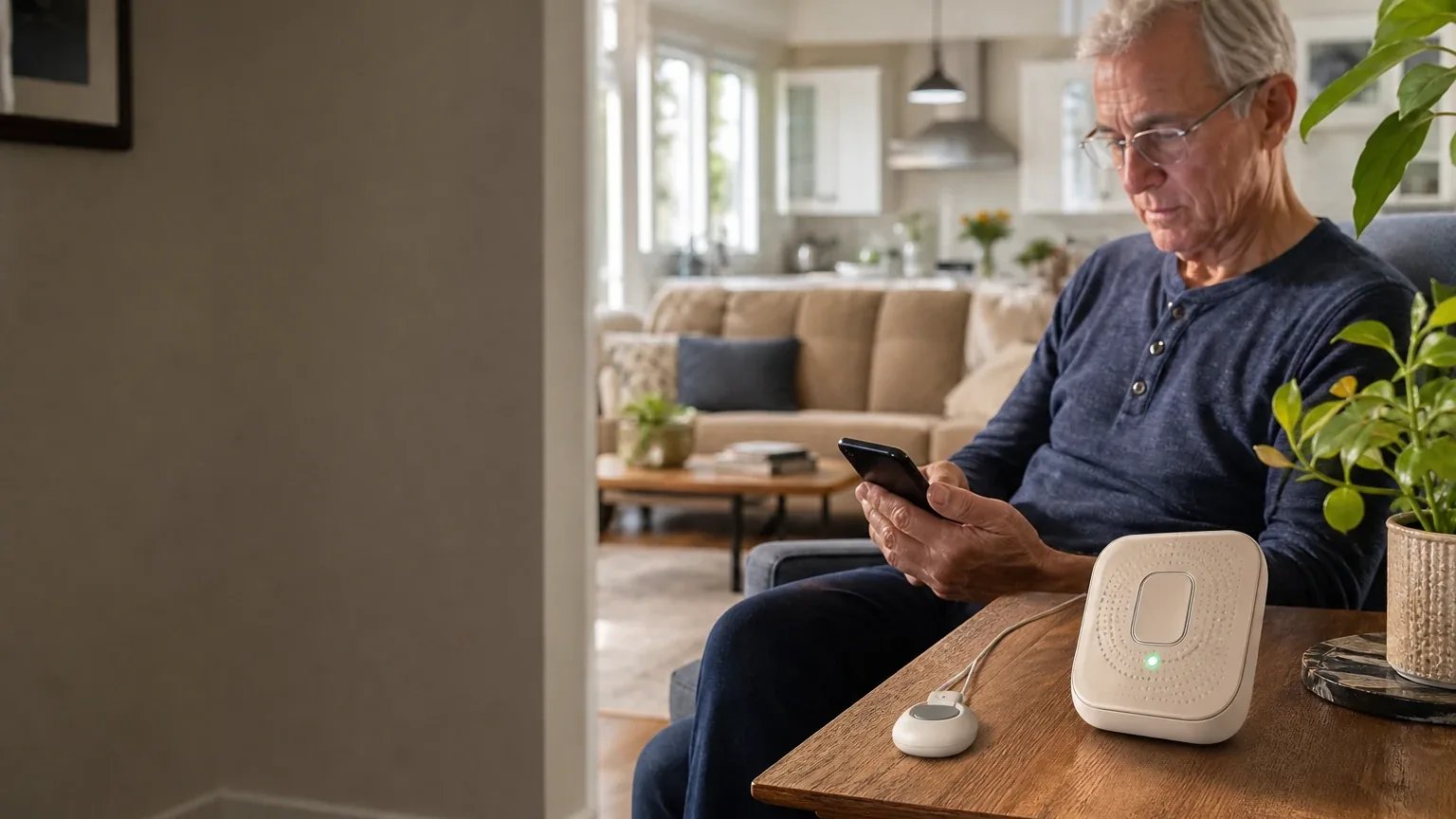
The most relevant product is the LifeStation Sidekick Home (also referenced as "Sidekick Home Cellular" and "Hospital-Grade Medical Alert for Home (Cellular)" in some platform responses). This is a cellular-based in-home medical alert system that connects through AT&T 4G LTE, eliminating the need for a landline or Wi-Fi connection [4]. The system includes a base unit and a waterproof, lightweight wearable pendant. LifeStation advertises up to 1,300 feet of pendant-to-base coverage and a base-unit backup battery lasting up to 32 hours [4]. The pendant battery is described as lasting approximately three years with automatic replacement reminders [7].
Note: The recommended product names "Sidekick Home Cellular" and "Hospital-Grade Medical Alert for Home" were not shown as distinct current product names on the reviewed official product page; the current page identifies the product as Sidekick Home.
What the AI Platforms Agreed About
Strong agreement: No-landline cellular operation is the core strength. All platforms that provided substantive responses agreed that LifeStation's Sidekick Home operates on AT&T 4G LTE and requires no landline or Wi-Fi, directly addressing the primary use-case requirement [8]. Google's review noted the system "operates entirely without a landline, leveraging nationwide cellular networks for connectivity right out of the box after charging" [12].
Strong agreement: Month-to-month flexibility with no long-term contracts. Multiple platforms confirmed LifeStation offers month-to-month service with no long-term contracts, no cancellation fees, and a 30-day money-back guarantee [13]. LifeStation's own return policy states cancellation is initiated by phone and a full refund is available within 30 days if all equipment is returned within the period [17].
Strong agreement: 24/7 U.S.-based monitoring. Platforms consistently noted LifeStation operates 24/7 monitoring centers with U.S.-based care specialists, holding TMA 5 Diamond certification and UL-listed status for centers in New Jersey and Texas [18]. One independent reviewer reported a monitoring center response time of approximately 20 seconds [18].
Majority agreement: Fall detection is an optional add-on with additional cost. Most platforms reported that fall detection is not included in the base price and requires an additional monthly fee [19]. Reported add-on costs range from $6 to $16 per month depending on the source [20].
Majority agreement: Setup is simple. Independent reviewers reported the base unit takes approximately two minutes to find and connect to the cellular network [13]. LifeStation describes Sidekick Home as easy to use with a dedicated installation guide [8].
Where the AI Platforms Disagreed or Were Uncertain
Major disagreement: In-home range performance. LifeStation advertises up to 1,300 feet of pendant-to-base coverage [22]. However, independent testing by U.S. News found the actual range was less than 25% of the advertised distance—the system failed to register alerts at 300 feet, with a maximum successful distance of approximately 140 feet in an apartment complex with walls [24]. Another tester averaged 117 feet in apartment testing [25]. This is a critical discrepancy between company claims and independent verification.
Major disagreement: Fall detection reliability. LifeStation markets fall detection as an available feature but explicitly warns it does not detect 100% of falls [22]. Independent testing by U.S. News found the Sidekick Home base unit's automatic fall detection failed to detect a fall in any of three testing rounds, described as "a significant safety issue" [26]. Forbes Health testing also found fall detection "does not consistently detect falls" [27]. However, the Sidekick mobile device detected falls reliably in all three testing rounds within five seconds [27]. This creates a confusing picture: the mobile device works, but the home base unit—the product most relevant to this use case—failed testing.
Disagreement: Monthly pricing. Reported pricing varies significantly by source:
- Official Sidekick Home page: $38.95 per month [22]
- Forbes: $36.95 per month for In-Home system [28]
- SeniorLiving.org: $35.95–$50.95 per month depending on tier [29]
- Grok-reported: $34.95–$38.95 per month [30]
- DeepSeek-reported: approximately $49.95 per month [31]
- Google-reported: approximately $34.95–$35.95 per month [32]
Disagreement: Contract terms. DeepSeek reported that LifeStation requires an annual contract with cancellation fees, citing a third-party review [33]. However, multiple other platforms and LifeStation's own materials state there are no long-term contracts and no cancellation fees [34]. This is a direct factual conflict that buyers must verify.
Disagreement: Activation fees. Company marketing claims no activation fee for Sidekick Home, but some third-party sources cite a $99.95 one-time fee for "at-home and mobile systems" [37]. Caring.com reports most customers pay no activation fees except for specific lower-tier plans [38].
Disagreement: Backup battery duration. LifeStation's official Sidekick Home page states up to 32 hours of base backup battery [22]. However, multiple independent sources report 24 hours [37]. DeepSeek reported 30 hours [31]. The discrepancy may reflect different product versions or measurement conditions.
Uncertainty: Carrier disclosure. DeepSeek and Kimi reported that the specific cellular carrier was not disclosed [40]. However, LifeStation's official pages and multiple other platforms confirm AT&T 4G LTE [22]. This conflict may stem from different product pages or outdated information.
Use-Case-Specific Features and Capabilities
Cellular Network Coverage
Assessment: Advantage with caveats. Sidekick Home connects through AT&T 4G LTE and does not require a landline, Wi-Fi, or a separate cellular bill [44]. LifeStation describes AT&T as "one of the strongest and most reliable cellular networks in the U.S." [45]. However, coverage depends entirely on usable AT&T signal at the specific residence, and LifeStation does not provide a property-specific coverage guarantee on the reviewed page [44]. Buyers in areas with weak AT&T coverage should verify signal strength before purchase.
Setup Simplicity
Assessment: Advantage. Independent reviewers reported the base unit took approximately two minutes to find and connect to the cellular network [47]. LifeStation describes Sidekick Home as easy to use with a dedicated installation guide [44]. Forbes testing found LifeStation devices easy to install overall, though the testing cited was primarily for the Sidekick mobile device rather than Sidekick Home [48].
Base Station Signal Reliability and Range
Assessment: Limitation. LifeStation advertises up to 1,300 feet of pendant coverage from the base unit [44]. Independent testing found actual range significantly lower: U.S. News testing achieved a maximum successful distance of approximately 140 feet in an apartment complex [50], and another tester averaged 117 feet [51]. Actual range varies with walls, building construction, floor level, interference, and placement [44]. For large homes or multi-floor properties, this is a critical limitation.
Backup Battery Duration
Assessment: Mixed. LifeStation's official page states up to 32 hours of base backup battery [44]. Independent sources report 24 hours [52]. The pendant battery lasts approximately three years with automatic replacement reminders [54]. The discrepancy between 24 and 32 hours should be verified with the company.
Fall-Detection Support
Assessment: Limitation. Fall detection is available for Sidekick Home but at an additional cost [55]. LifeStation explicitly warns that fall detection does not detect 100% of falls and users should press the help button when able [44]. Independent testing by U.S. News found the Sidekick Home base unit's fall detection failed all three testing rounds [58]. Forbes Health testing also found inconsistency [59]. The Sidekick mobile device performed reliably in testing, but that is a different product [59].
Monthly Monitoring Fee
Assessment: Unclear. Pricing varies significantly by source: $38.95 per month on the official page [44], $36.95 per month per Forbes [48], $35.95–$50.95 per month per SeniorLiving.org [55], and approximately $49.95 per month per DeepSeek [60]. Independent reviewers note LifeStation ranks among the more expensive options in the market [61].
Cancellation Flexibility
Assessment: Advantage. LifeStation offers month-to-month service with no long-term contracts, a 30-day money-back guarantee, and the ability to cancel anytime with 30 days' notice [47]. No cancellation fees are reported by most sources [63]. However, the customer must return equipment, and the company does not provide free return shipping labels [65]. LifeStation's return policy states cancellation is not processed until returned equipment is received unless the system was purchased [66].
Pricing, Fees, Contracts, and Ongoing Costs
Known Costs
| Cost Item | Reported Amount | Source |
|---|---|---|
| Sidekick Home monthly (official page) | $38.95/month | [67] |
| Sidekick Home monthly (Forbes) | $36.95/month | [68] |
| Sidekick Home monthly (SeniorLiving.org) | $35.95–$50.95/month | [69] |
| Sidekick Home monthly (DeepSeek) | ~$49.95/month | [70] |
| Fall detection add-on | $6–$16/month | [71] |
| Shipping | ~$12.50 | [68] |
| Activation fee | $0–$99.95 (source conflict) | [73] |
Contract and Cancellation Terms
- Month-to-month service with no long-term contracts [75]
- Cancel anytime with 30 days' notice, no cancellation fees [77]
- 30-day money-back guarantee with full refund if equipment is returned within the period [78]
- Equipment must be returned; customer bears return shipping cost [79]
- DeepSeek reported an annual contract with cancellation fees, conflicting with other sources [80]
Additional Fees to Verify
- Fall-detection pricing for the exact Sidekick Home order should be confirmed; public sources report different device-specific pricing [67]
- Shipping and any protection-plan, lockbox, accessory, or replacement-equipment fees should be confirmed at checkout [67]
- Possible health-insurance discounts are advertised, but eligibility and amount are unclear [67]
- Annual payment discounts may be available (one month free for annual billing) [69]
Pricing confidence: Moderate. The exact price, billing frequency, and any promotional or insurance discounts should be confirmed before purchase [67].
Best Suited For
LifeStation's Sidekick Home is best suited for:
- Apartment, condo, or home residents who need an in-home system without a landline or home Wi-Fi [81]
- Seniors who primarily stay at home and do not need outside-the-home GPS protection [81]
- Buyers prioritizing a long advertised pendant range and simple plug-in setup [81]
- Caregivers seeking month-to-month-style flexibility and a 30-day return period [85]
- Households with reliable AT&T 4G LTE coverage at the specific residence [81]
- Users willing to manually press the emergency button rather than relying on automatic fall detection [87]
Probably Not Best Suited For
LifeStation's Sidekick Home is probably not best suited for:
- People who need protection outside the home; a mobile GPS product is more appropriate [88]
- Homes with weak or unreliable AT&T cellular service [88]
- Buyers requiring independently verified fall-detection performance—the Sidekick Home base unit failed all independent fall-detection tests [90]
- Large homes or properties where the 1,300-foot advertised range is critical—actual tested range was less than 25% of advertised distance [91]
- Budget-conscious buyers—LifeStation pricing is among the highest in the market [92]
- Buyers requiring fully transparent checkout pricing without phone-based quotes or add-on ambiguity [88]
- Users needing caregiver location-tracking apps or medication reminders on the home base unit [89]
When Another Option May Be Better
Based on the platform responses, consider alternatives when:
- Automatic fall detection is the primary requirement: The Sidekick mobile device performs better than the home base unit, and competitors like Bay Alarm Medical or Medical Guardian may be more reliable [96]. The Sidekick Home base unit failed all independent fall-detection tests [97].
- Budget is the primary concern: LifeFone offers comparable features at $24.95 per month; Bay Alarm Medical offers home systems at $38.95 per month [96]. Roku/Noonlight offers professional monitoring at $9.99 per month [98].
- Large home requires maximum range coverage: Medical Guardian's home units or competitors with superior range testing may be better [96].
- AT&T coverage is weak at the residence: Competing carriers (Verizon, T-Mobile) may be better options if available [96].
- Price lock guarantee is important: Some competitors offer locked pricing; LifeStation does not [96].
- Long backup battery life is critical: Hygge offers 14+ days of confirmed battery backup [99].
- Upfront pricing transparency is required: Consider Hygge or MarCELL with published rates [100].
Questions to Verify Before Buying
- What is the exact monthly price for Sidekick Home at your address, including fall detection, taxes, shipping, and any discounts? [101]
- Is the system currently provisioned on AT&T 4G LTE at your address, and can LifeStation verify signal strength before purchase? [101]
- What is the actual pendant range in your specific home—multi-floor apartment, condo, or concrete/steel building? Independent testing found far less than the advertised 1,300 feet [103].
- Is the advertised 32-hour backup battery duration measured under normal monitoring conditions, and how is low-battery or power-loss status communicated? [101]
- What is the current fall-detection fee, and is the feature included with the specific quoted plan? [101]
- Are there equipment, replacement, unreturned-device, protection-plan, or accessory charges? [101]
- Does cancellation require a phone call, and when exactly does billing stop after equipment is shipped back? [105]
- Can you test the system throughout the residence during the 30-day period and receive a full refund if cellular coverage or range is inadequate? [105]
- Which monitoring center handles the account, and what escalation protocol is used if the user cannot speak? [106]
- Is Sidekick Home the correct product for the senior's use outside the residence, or is a GPS mobile device required? [101]
- Are there activation fees? Sources conflict: company claims none for Sidekick Home, but some third-party sources cite $99.95 [107].
- Are you prepared to pay return shipping costs when canceling? The company does not provide free return labels [109].
Final AI Consensus Verdict
LifeStation's Sidekick Home is a good but mixed fit for Cellular Home Monitoring. The system directly addresses the no-landline requirement with AT&T 4G LTE connectivity, simple plug-in setup, and month-to-month flexibility with a 30-day money-back guarantee. These strengths make it a reasonable choice for apartment and condo dwellers with reliable AT&T coverage who primarily stay at home.
However, the rating is significantly moderated by independent testing failures. The advertised 1,300-foot range was not reproduced in independent testing—actual range measured approximately 140 feet or less [110]. More critically, automatic fall detection on the Sidekick Home base unit failed all three independent testing rounds, raising serious safety concerns for the target demographic of seniors at fall risk [111]. Pricing is inconsistent across sources and ranks among the higher end of the market [112].
The AI consensus is that LifeStation works best for users who are willing to manually press the emergency button, have strong AT&T coverage, and prioritize flexibility over price. Buyers should treat the advertised range and fall-detection capabilities with skepticism and verify both through the 30-day trial period before committing. For users who need reliable automatic fall detection or maximum in-home range, competitors with proven performance may be better options.
For a broader comparison of top-rated systems, see the Cellular Home Monitoring consensus index. You can also browse all medical alert systems in our category directory.
How This Review Was Produced
This review was produced by aggregating fit-research responses from seven AI platforms (OpenAI, Anthropic, DeepSeek, Grok, Perplexity, Kimi, and Google) that evaluated LifeStation for the Cellular Home Monitoring use case. Each platform assessed LifeStation against seven criteria: cellular network coverage, setup simplicity, base station signal reliability, backup battery duration, monthly monitoring fee, fall-detection support, and cancellation flexibility. The research date for this study is 2026-08-07. Platform responses were compiled, deduplicated, and synthesized into this report. Four of seven platforms named LifeStation during the ranking discovery stage; all seven provided fit-research responses.
Methodology Limitations
- Platform-reported research dates differ: DeepSeek's response is dated 2026-04-12, while all other platforms are dated 2026-08-07. This date discrepancy may affect pricing and product information accuracy.
- The supplied URLs were collected from platform responses and were not independently validated by the writer stage.
- AI-platform agreement does not prove product quality; it reflects the platforms' synthesis of available evidence.
- No personal testing was conducted for this review. All performance claims are drawn from company materials or independent reviews cited by the platforms.
- Independent testing cited by some platforms evaluated the Sidekick mobile device, not clearly the Sidekick Home base-station system [113]. This creates uncertainty about which product's performance was measured.
- Pricing conflicts were not resolved by guessing; conflicting figures are presented as reported, and buyers are advised to verify directly.
- The recommended product names "Sidekick Home Cellular" and "Hospital-Grade Medical Alert for Home" were not shown as distinct current product names on the reviewed official product page.
Sources
Company-Owned Sources
- Hygge Cellular Temperature Humidity & Power Monitor: https://hyggeapps.com/products/hygge-cellular-temperature-monitor
- Sensaphone Sentry Cellular-Based Remote Monitoring System: https://sensaphone.com/products/sensaphone-sentry-monitoring-system
- LifeStation - Medical Alert System: https://www.lifestation.com/
- At Home Medical Alert Systems for Seniors: https://www.lifestation.com/in-home-medical-alert-systems/
- LifeStation Medical Alert System - Fall Detection: https://www.lifestation.com/medical-alert/fall-detection/
- Best Mobile Medical Alert System with GPS | LifeStation Sidekick: https://www.lifestation.com/pdp-sidekick/
- LifeStation Return Policy: https://www.lifestation.com/return-policy/
- Sidekick Home Medical Alert | No Landline or Wi-Fi: https://www.lifestation.com/sidekick-in-home-medical-alert-system/
- Roku Home Monitoring System: https://www.roku.com/products/smart-home/home-monitoring-system
Additional AI research evidence113 records
- AI research evidence record openai:c1
- AI research evidence record anthropic:c1
- AI research evidence record grok:c1
- AI research evidence record openai:c1
- AI research evidence record anthropic:c1
- AI research evidence record grok:c1
- AI research evidence record anthropic:c9
- AI research evidence record openai:c1
- AI research evidence record anthropic:c1
- AI research evidence record grok:c1
- AI research evidence record deepseek:c1
- AI research evidence record google:1.2.4
- AI research evidence record anthropic:c3
- AI research evidence record anthropic:c12
- AI research evidence record grok:c6
- AI research evidence record google:1.1.3
- AI research evidence record openai:c4
- AI research evidence record anthropic:c15
- AI research evidence record anthropic:c5
- AI research evidence record grok:c5
- AI research evidence record deepseek:c5
- AI research evidence record openai:c1
- AI research evidence record grok:c2
- AI research evidence record anthropic:c4
- AI research evidence record anthropic:c7
- AI research evidence record anthropic:c8
- AI research evidence record anthropic:c11
- AI research evidence record openai:c3
- AI research evidence record anthropic:c5
- AI research evidence record grok:c4
- AI research evidence record deepseek:c3
- AI research evidence record google:1.1.3
- AI research evidence record deepseek:c6
- AI research evidence record anthropic:c12
- AI research evidence record grok:c6
- AI research evidence record openai:c4
- AI research evidence record anthropic:c6
- AI research evidence record anthropic:c14
- AI research evidence record grok:c3
- AI research evidence record deepseek:c2
- AI research evidence record kimi:c1
- AI research evidence record anthropic:c1
- AI research evidence record grok:c1
- AI research evidence record openai:c1
- AI research evidence record anthropic:c1
- AI research evidence record grok:c1
- AI research evidence record anthropic:c3
- AI research evidence record openai:c3
- AI research evidence record grok:c2
- AI research evidence record anthropic:c4
- AI research evidence record anthropic:c7
- AI research evidence record anthropic:c6
- AI research evidence record grok:c3
- AI research evidence record anthropic:c9
- AI research evidence record anthropic:c5
- AI research evidence record grok:c5
- AI research evidence record deepseek:c5
- AI research evidence record anthropic:c8
- AI research evidence record anthropic:c11
- AI research evidence record deepseek:c3
- AI research evidence record anthropic:c10
- AI research evidence record deepseek:c4
- AI research evidence record anthropic:c12
- AI research evidence record grok:c6
- AI research evidence record anthropic:c13
- AI research evidence record openai:c4
- AI research evidence record openai:c1
- AI research evidence record openai:c3
- AI research evidence record anthropic:c5
- AI research evidence record deepseek:c3
- AI research evidence record grok:c5
- AI research evidence record google:1.1.3
- AI research evidence record anthropic:c6
- AI research evidence record anthropic:c14
- AI research evidence record anthropic:c3
- AI research evidence record grok:c6
- AI research evidence record anthropic:c12
- AI research evidence record openai:c4
- AI research evidence record anthropic:c13
- AI research evidence record deepseek:c6
- AI research evidence record openai:c1
- AI research evidence record anthropic:c1
- AI research evidence record grok:c1
- AI research evidence record anthropic:c3
- AI research evidence record openai:c4
- AI research evidence record grok:c6
- AI research evidence record anthropic:c8
- AI research evidence record openai:c1
- AI research evidence record anthropic:c1
- AI research evidence record anthropic:c8
- AI research evidence record anthropic:c4
- AI research evidence record anthropic:c10
- AI research evidence record deepseek:c4
- AI research evidence record kimi:c1
- AI research evidence record google:1.2.2
- AI research evidence record anthropic:c1
- AI research evidence record anthropic:c8
- AI research evidence record kimi:c5
- AI research evidence record kimi:c3
- AI research evidence record kimi:c1
- AI research evidence record openai:c1
- AI research evidence record anthropic:c1
- AI research evidence record anthropic:c4
- AI research evidence record anthropic:c5
- AI research evidence record openai:c4
- AI research evidence record anthropic:c15
- AI research evidence record anthropic:c6
- AI research evidence record anthropic:c14
- AI research evidence record anthropic:c13
- AI research evidence record anthropic:c4
- AI research evidence record anthropic:c8
- AI research evidence record anthropic:c10
- AI research evidence record openai:c3
Independent Sources
- LifeStation Medical Alert System Review 2026 | U.S. News: https://realestate.usnews.com/home-services/medical-alert-system/lifestation
- LifeStation Medical Alert System Review - Caring.com: https://www.caring.com/senior-products/best-medical-alert-systems/lifestation
- LifeStation Medical Alert System Review (2026) - Forbes: https://www.forbes.com/
- LifeStation Medical Alert System Review: https://www.forbes.com/health/medical-alert-systems/lifestation-review/
- LifeStation Medical Alert System Review: https://www.medicalalertadvice.com/reviews/lifestation/
- LifeStation Medical Alert System Pricing and Contract: https://www.medicalcarealert.com/lifestation-contract-review/
- The Best Medical Alert Systems in 2026: https://www.ncoa.org/product-resources/medical-alert-systems/best-medical-alert-systems/
- LifeStation Review 2026: Testing the Medical Alert System: https://www.ncoa.org/product-resources/medical-alert-systems/lifestation-review/
- LifeStation Sidekick Home Review - PCMag: https://www.pcmag.com/
- Cove Security System Review 2026: https://www.safewise.com/home-security-systems/cove/
- LifeStation Medical Alert System Review 2026: https://www.safewise.com/medical-alert-systems/lifestation-review/
- LifeStation Medical Alert System Cost & Pricing in 2026 - SeniorLiving.org: https://www.seniorliving.org/
- LifeStation Medical Alert System Cost & Pricing in 2026: https://www.seniorliving.org/medical-alert-systems/lifestation/
- LifeStation Medical Alert System Review 2026: https://www.seniorliving.org/medical-alert-systems/lifestation/reviews/
- LifeStation Review: https://www.techradar.com/reviews/lifestation-review
- Best Medical Alert Systems 2026: https://www.usnews.com/360-reviews/health/medical-alert-systems
Additional AI research evidence113 records
- AI research evidence record openai:c1
- AI research evidence record anthropic:c1
- AI research evidence record grok:c1
- AI research evidence record openai:c1
- AI research evidence record anthropic:c1
- AI research evidence record grok:c1
- AI research evidence record anthropic:c9
- AI research evidence record openai:c1
- AI research evidence record anthropic:c1
- AI research evidence record grok:c1
- AI research evidence record deepseek:c1
- AI research evidence record google:1.2.4
- AI research evidence record anthropic:c3
- AI research evidence record anthropic:c12
- AI research evidence record grok:c6
- AI research evidence record google:1.1.3
- AI research evidence record openai:c4
- AI research evidence record anthropic:c15
- AI research evidence record anthropic:c5
- AI research evidence record grok:c5
- AI research evidence record deepseek:c5
- AI research evidence record openai:c1
- AI research evidence record grok:c2
- AI research evidence record anthropic:c4
- AI research evidence record anthropic:c7
- AI research evidence record anthropic:c8
- AI research evidence record anthropic:c11
- AI research evidence record openai:c3
- AI research evidence record anthropic:c5
- AI research evidence record grok:c4
- AI research evidence record deepseek:c3
- AI research evidence record google:1.1.3
- AI research evidence record deepseek:c6
- AI research evidence record anthropic:c12
- AI research evidence record grok:c6
- AI research evidence record openai:c4
- AI research evidence record anthropic:c6
- AI research evidence record anthropic:c14
- AI research evidence record grok:c3
- AI research evidence record deepseek:c2
- AI research evidence record kimi:c1
- AI research evidence record anthropic:c1
- AI research evidence record grok:c1
- AI research evidence record openai:c1
- AI research evidence record anthropic:c1
- AI research evidence record grok:c1
- AI research evidence record anthropic:c3
- AI research evidence record openai:c3
- AI research evidence record grok:c2
- AI research evidence record anthropic:c4
- AI research evidence record anthropic:c7
- AI research evidence record anthropic:c6
- AI research evidence record grok:c3
- AI research evidence record anthropic:c9
- AI research evidence record anthropic:c5
- AI research evidence record grok:c5
- AI research evidence record deepseek:c5
- AI research evidence record anthropic:c8
- AI research evidence record anthropic:c11
- AI research evidence record deepseek:c3
- AI research evidence record anthropic:c10
- AI research evidence record deepseek:c4
- AI research evidence record anthropic:c12
- AI research evidence record grok:c6
- AI research evidence record anthropic:c13
- AI research evidence record openai:c4
- AI research evidence record openai:c1
- AI research evidence record openai:c3
- AI research evidence record anthropic:c5
- AI research evidence record deepseek:c3
- AI research evidence record grok:c5
- AI research evidence record google:1.1.3
- AI research evidence record anthropic:c6
- AI research evidence record anthropic:c14
- AI research evidence record anthropic:c3
- AI research evidence record grok:c6
- AI research evidence record anthropic:c12
- AI research evidence record openai:c4
- AI research evidence record anthropic:c13
- AI research evidence record deepseek:c6
- AI research evidence record openai:c1
- AI research evidence record anthropic:c1
- AI research evidence record grok:c1
- AI research evidence record anthropic:c3
- AI research evidence record openai:c4
- AI research evidence record grok:c6
- AI research evidence record anthropic:c8
- AI research evidence record openai:c1
- AI research evidence record anthropic:c1
- AI research evidence record anthropic:c8
- AI research evidence record anthropic:c4
- AI research evidence record anthropic:c10
- AI research evidence record deepseek:c4
- AI research evidence record kimi:c1
- AI research evidence record google:1.2.2
- AI research evidence record anthropic:c1
- AI research evidence record anthropic:c8
- AI research evidence record kimi:c5
- AI research evidence record kimi:c3
- AI research evidence record kimi:c1
- AI research evidence record openai:c1
- AI research evidence record anthropic:c1
- AI research evidence record anthropic:c4
- AI research evidence record anthropic:c5
- AI research evidence record openai:c4
- AI research evidence record anthropic:c15
- AI research evidence record anthropic:c6
- AI research evidence record anthropic:c14
- AI research evidence record anthropic:c13
- AI research evidence record anthropic:c4
- AI research evidence record anthropic:c8
- AI research evidence record anthropic:c10
- AI research evidence record openai:c3
Verify this research
Review the study details behind this page or download the public machine-readable verification record.
- Study date
- Aug 7, 2026
- Platforms analyzed
- 7
- Source records
- 25
- Ranking mentions
- 4 of 7
- Platform share
- 57%
- Final consensus rank
- #6
Research trail and source mix
Platforms
openai, anthropic, deepseek, grok, perplexity, kimi, google
Source mix
16 independent · 9 company-owned
Evidence support
19 direct · 5 partial
Important limitation
Use the run research_date as the study date. Platform-reported dates are provenance metadata and do not independently prove freshness.
Source snapshot SHA-256 b5629caa73bb75a61573ef5a19d5aac85e2be418b86d5d47392d3a40a031b8b8