
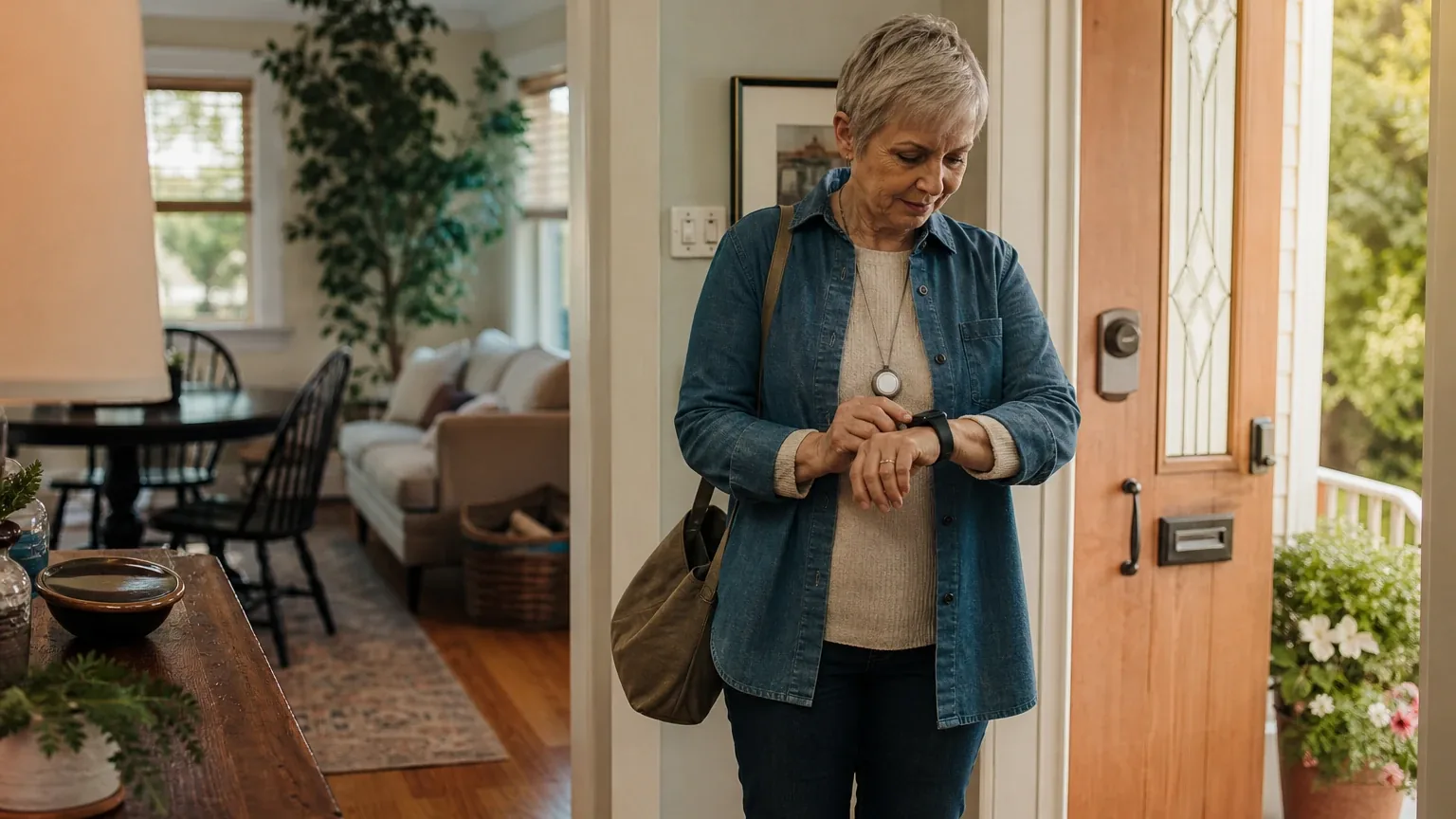
Answer Capsule
ADT Medical Alert is a mixed fit for Rural & Low-Signal Reliability. Three of the seven platforms in this study named it during the ranking stage, and all seven that evaluated it rated the fit "mixed." The strongest reason to consider it is the landline-based Medical Alert Basic, which independent reviewers repeatedly recommend for rural homes with poor cellular reception. The main limitation is that the cellular Medical Alert Plus depends on AT&T coverage that ADT itself says is not available everywhere, and ADT publishes no carrier choice, no automatic landline failover, and no address-specific coverage guarantee. Buyers should not commit without testing signal at the exact rural address.
Research Snapshot
| Field | Detail |
|---|---|
| Platform mentions in ranking stage | 3 of 7 platforms (anthropic, deepseek, google) |
| Share of included platform responses | 42.9% |
| Average listed rank | 5.33 |
| Best listed rank | 4 (deepseek) |
| Relevant product/model/plan | Medical Alert Basic (landline, $31.99/mo); Medical Alert Plus (cellular in-home, $39.99/mo); On-The-Go (cellular/GPS mobile) |
| Overall use-case fit | Mixed (7 platforms) — 7 platforms analyzed |
| Research date | 2026-11-10 |
What Changed Since September 2026
ADT Medical Alert remained at No. 6, and platform mentions decreased from 4 to 3. The November 2026 review reframes ADT around a single product, ADT Medical Alert, rather than the earlier pairing of On-The-Go with Medical Alert Plus. The landline Medical Alert Basic now carries the rural case, while the cellular Plus plan is presented as conditional on verified coverage at the address. Pricing was restated: $31.99/mo for Basic is newly reported, and $39.99 is no longer repeated as the Plus starting figure. Range and response-time evidence was also reworked, including a 150-foot pendant-to-base specification. Differences between the two editions reflect what each article reports; they do not by themselves prove that the product, service, or price changed.
The September 2026 review preserves the earlier article for reference.
Why ADT Medical Alert Qualified for This Study
Questions This Section Answers
- Why did ADT Medical Alert make the rural medical alert ranking when only three platforms named it?
- Is ADT Medical Alert a serious contender for rural seniors, or did it qualify on brand recognition alone?
ADT Medical Alert qualified because it offers a genuine landline path for low-signal homes, not because of brand size alone. Three of the seven platforms named it during ranking discovery, giving it a 42.9% share of included platform responses, an average listed rank of 5.33, and a best rank of 4 from deepseek. It cleared the study's two-mention minimum.
The qualification rests on a specific product logic. Medical Alert Basic requires a landline and is therefore the clearest non-cellular option in the ADT lineup [30]. Multiple independent reviewers explicitly recommend the Basic plan for rural areas with minimal cellular coverage [41]. That is a direct match to the study's rural and low-signal use case.
The qualification also carries caveats. One platform's official-site retrieval failed during ranking, so its adt.com evidence was treated as reported-but-unverified [29]. The available source evidence used an unverified reported-domain evidence and retained the reported domain for downstream research without independent verification. Buyers should read the ranking placement as a signal that ADT is relevant to this use case, not as proof that it performs well in any particular rural location.
The Product, Model, Plan, or Service Most Relevant to Rural & Low-Signal Reliability
Questions This Section Answers
- Which ADT Medical Alert plan should a rural senior with poor cellular coverage choose?
- Is ADT Medical Alert Plus a good choice for a rural home that has no landline?
- Does ADT Medical Alert offer a landline fallback if cellular service fails?
For rural and low-signal reliability, Medical Alert Basic is the most relevant ADT plan when a dependable landline exists, and Medical Alert Plus is the relevant plan only when cellular coverage is verified at the address. These are two different products solving two different problems, and ADT does not sell a single unit that automatically fails over between them.
Medical Alert Basic is a landline base station with a wireless help button [20]. It requires a landline, lists a 300-foot pendant range, and does not offer fall-detection monitoring [30]. Independent reviewers describe it as a solid match for people in areas with poor cell reception [48] and recommend it for rural areas with minimal cellular coverage [41]. It is not a cellular-plus-landline failover system; the buyer should confirm the home's landline still works during local power or network outages.
Medical Alert Plus is the no-landline, cellular, in-home option with optional fall detection and GPS-related capabilities listed in ADT's comparison [24]. ADT states that digital cellular service is not available everywhere or at all times [14]. Independent reviewers identify AT&T as the underlying network [40], and one customer review from rural Texas describes AT&T signal as "very marginal" [31]. ADT does not appear to offer a choice of carrier for this product [29].
On-The-Go is the mobile cellular/GPS product and is relevant only when protection outside the home is required. ADT says On-The-Go relies on cellular and GPS availability, and GPS is not operated by ADT [14]. It is not the right plan for a homebound rural senior whose main risk is inside the house.
What the AI Platforms Agreed About
Questions This Section Answers
- What do AI platforms agree ADT Medical Alert does well for rural seniors?
- Do AI platforms agree that ADT Medical Alert's landline plan is the right choice for low-signal areas?
The platforms agreed unanimously on the broad shape of the fit: all seven rated ADT Medical Alert "mixed" for rural and low-signal reliability, and none rated it a strong fit. Within that shared verdict, several specific points recurred across platforms.
Landline Basic is the low-signal path. Reviewers across platforms recommend Medical Alert Basic for rural areas with minimal cellular coverage [41]. This was the single most consistent positive finding.
Cellular Plus depends on coverage ADT does not guarantee. ADT's own terms state that digital cellular service is not available everywhere or at all times [14], and ADT says most customers are covered by AT&T LTE services [31]. Platforms treated this as a location-dependent risk rather than a defect.
Monitoring is company-owned and U.S.-based. ADT states its medical-alert monitoring centers are company-owned and U.S.-based with 24/7 monitoring [28]. One independent review reports six U.S.-based monitoring centers [45]. This is company-reported or reviewer-reported, not independently audited.
Terms are flexible. ADT plans are month-to-month with no long-term contract and no termination fee [14]. Multiple independent reviewers also describe a lifetime price-lock [5].
Fall detection is not on Basic. Fall detection is optional on Plus and On-The-Go and unavailable on the landline Basic plan [24].
Agreement among platforms reflects shared source material, much of it ADT's own pages. It does not prove product quality or rural performance.
Where the AI Platforms Disagreed or Were Uncertain
Questions This Section Answers
- Why do AI platforms disagree about ADT Medical Alert's response time and device range for rural homes?
- Is ADT Medical Alert's advertised 600-foot range reliable in a real rural house?
The platforms disagreed or stayed uncertain on five material points, and each one matters to a rural buyer.
Response time. ADT advertises a 15-second average alarm acknowledgement based on 2025 data [28]. ADT's FAQ separately says in-home base stations have an average response time of 30 seconds or less [25]. Independent testing reported roughly 14–15 seconds in some reviews [51] and about 55 seconds to reach an agent in another [49]. These figures measure different things or conflict, and none is a dispatch guarantee.
Device range. ADT's current support page states the pendant or wristband must be within 150 feet of the Medical Alert Plus base station [3]. An older ADT guide lists up to 600 feet line of sight [17]. Independent reviewers cite 600 feet [47], and one hands-on test measured a maximum of 450 feet, short of the advertised 600 [6]. The applicable hardware revision should be confirmed before purchase.
Backup battery. Current ADT support material states up to 24 hours of base-station backup [3]. An older ADT manual states up to 30 hours [17], one independent review reports up to 30 hours [38], and another reports up to 20 hours for Basic and Plus [47]. The buyer should confirm the runtime for the exact unit being shipped.
Pricing. The ranking-stage starting price of $31.99/month applies to Medical Alert Basic, not Medical Alert Plus. Current cited ADT materials list Basic at $31.99/month and Plus at $39.99/month, each with a $99.99 activation fee [30]. Some ADT pages show promotional Plus pricing of $37.99/month with quarterly billing [16], and one platform reported activation fees ranging from $29 to $99 depending on promotion [10]. Deepseek reported low pricing confidence and could not confirm current prices from its cited page [29].
Carrier and rural performance. AT&T is the network identified by independent reviewers [40], but ADT's public materials do not identify the carrier or provide a location-specific coverage guarantee [14]. One platform found no disclosed carrier partnership at all [37]. No platform supplied systematic rural reliability data.
Use-Case-Specific Features and Capabilities
Questions This Section Answers
- Does ADT Medical Alert's speaker and two-way voice work well enough for a rural senior who cannot reach the phone?
- What happens with ADT Medical Alert during a rural power outage?
ADT Medical Alert covers the basics of in-home emergency response but is not engineered specifically for long-range rural properties. The table below maps each study criterion to what the supplied evidence actually shows.
| Criterion | What the evidence shows | Assessment |
|---|---|---|
| Cellular carrier coverage | Plus uses cellular; ADT says service is not available everywhere; AT&T identified by independent reviewers; no carrier choice found [14] | Limitation |
| Landline fallback options | Basic requires a landline and is recommended for low-signal areas; no automatic failover on any unit [30] | Advantage (Basic only) |
| GPS reliability | GPS applies to On-The-Go, not in-home Plus; depends on cellular and GPS availability [14] | Neutral to unclear |
| Speaker volume | Two-way voice documented; independent review rated Plus speaker excellent with powerful volume [22] | Advantage, single test |
| Dispatch protocol | Company-owned U.S. monitoring; contract says ADT attempts contact, then emergency authorities and/or contacts [28] | Advantage, company-reported |
| Backup battery life | 24 hours per current support page; older manual says 30; one review says 20 [3] | Unclear |
| Device range | 150 feet per current support page; 600 feet per older manual and marketing; 450 feet in one hands-on test [3] | Unclear |
| Monitoring center responsiveness | 15-second acknowledgement claim vs. 30-second FAQ figure vs. 14–55 seconds in independent tests [28] | Unclear |
Two additional capabilities matter for rural homes. ADT documents two-way voice communication, a signal-strength display, and volume controls on the Medical Alert Plus base station [22]. Basic and Plus both include home temperature monitoring with alert thresholds at 105°F and 35°F, which may help in rural homes vulnerable to heating or cooling failures [28]. Temperature alerts do not replace welfare checks or emergency services.
Fall detection is optional on Plus at $11/month and unavailable on Basic [24]. ADT states the fall-detection pendant does not detect 100% of falls [24]. One 2026 hands-on test reported reliable detection within about five seconds for simulated falls [6], but that is a single test, not a guarantee.
Pricing, Fees, Contracts, and Ongoing Costs
Questions This Section Answers
- How much does ADT Medical Alert cost per month for a rural senior, including the activation fee?
- Is ADT Medical Alert worth the $99 activation fee compared with providers that waive it?
ADT Medical Alert is priced in the middle of the market, with a $99.99 activation fee that some competitors do not charge. Current cited ADT materials list Medical Alert Basic at $31.99/month and Medical Alert Plus at $39.99/month, each with a $99.99 activation fee before taxes [30]. Quarterly or annual billing can reduce the stated monthly monitoring price by about $2, subject to displayed terms [30].
| Cost item | Amount | Source basis |
|---|---|---|
| Medical Alert Basic (landline) | $31.99/month | [30] |
| Medical Alert Plus (cellular) | $39.99/month; $37.99/month equivalent on quarterly billing | [14] |
| On-The-Go (mobile) | $41.99/month | [48] |
| Activation fee | $99.99 for Basic and Plus | [30] |
| Fall detection add-on | $11/month, Plus and On-The-Go only | [24] |
| Extra pendant or wristband | $14.99 one-time plus $3/month monitoring | [30] |
| Waterproof wall button | $2.99/month | [30] |
| ADT lockbox | $29.99 one-time | [30] |
Contract terms are favorable on paper. ADT states a month-to-month agreement with no long-term contract and no termination fee, and systems remain ADT property [14]. Independent reviewers confirm month-to-month billing and cancellation at any time [31]. Several reviewers also describe a lifetime price-lock that prevents future rate increases on the same plan [5].
Two cost caveats deserve attention. First, the $99.99 activation fee is a real upfront cost that some competitors waive; MobileHelp and Bay Alarm Medical are named as providers that do not charge an activation fee [5], and Bay Alarm Medical's in-home plans are cited at $27.95/month, about $4 less than ADT Basic [50]. Second, one platform reported activation fees as low as $29 depending on promotion [10], so the checkout price should be confirmed rather than assumed. Taxes and possible professional-installation charges are extra [30].
Best Suited For
Questions This Section Answers
- Is ADT Medical Alert Basic a good choice for a rural senior who has a working landline but poor cell service?
- Who gets the most value from ADT Medical Alert's month-to-month terms in a rural setting?
ADT Medical Alert is best suited to rural households that can name their connectivity path in advance. The strongest match is a rural home with a working landline and poor cellular reception, using Medical Alert Basic. Independent reviewers explicitly recommend Basic for that situation [41], and one verified customer review describes ADT offering a full refund if no signal is available at a rural location [31].
The second match is a rural home with verified cellular coverage, using Medical Alert Plus for extended in-home range and optional fall detection [24]. Buyers who prioritize U.S.-based, company-owned monitoring and month-to-month cancellation flexibility are also a reasonable fit, because those terms reduce switching risk if local coverage testing fails [28].
A third, narrower match is a senior who stays primarily indoors with predictable movement patterns and does not need protection across a large yard, outbuilding, or acreage. The 150-foot current support specification and the 450-foot tested range both fall well short of what a large rural property requires [3].
Probably Not Best Suited For
Questions This Section Answers
- Is ADT Medical Alert a bad choice for a rural senior with no landline and weak AT&T coverage?
- Does ADT Medical Alert work for a rural senior who spends time outdoors across a large property?
ADT Medical Alert is probably not the best fit for three rural buyer situations. The first is a home with weak, intermittent, or unverified cellular coverage and no dependable landline. Medical Alert Plus depends on cellular service ADT says is not available everywhere [14], and no automatic landline failover was found [14].
The second is a senior who routinely moves beyond the home or property boundary while needing GPS-based protection. GPS is associated with On-The-Go rather than the standard in-home Plus system, and On-The-Go still depends on cellular and GPS availability [14]. A dedicated mobile system is the more relevant category.
The third is a buyer who needs a clearly documented, long-duration power-outage battery or independently verified rural dispatch performance. The battery and range specifications conflict across current support material and older manuals [3], and ADT's response-time claims are not directly comparable with independent testing [28]. Buyers who need fall detection on a landline plan are also a poor match, because Basic does not offer it [30].
When Another Option May Be Better
Questions This Section Answers
- When is a competitor like Medical Guardian or Bay Alarm Medical a better rural choice than ADT Medical Alert?
- Should a rural senior with no landline and no AT&T signal choose a satellite device instead of ADT Medical Alert?
Another option may be better in five specific situations, each tied to a documented ADT limitation.
When range is the binding constraint. Medical Guardian is cited at 1,400 feet of in-home range, versus ADT's 600-foot marketing figure and 450-foot tested figure [44]. A rural property with outbuildings or a large yard should compare on this number first.
When the buyer wants to avoid the activation fee. Bay Alarm Medical and MobileHelp are named as providers that do not charge an activation fee, and Bay Alarm Medical's in-home plans are cited at $27.95/month [5].
When a caregiver app matters. Medical Guardian includes a caregiver app at no additional cost, and ADT does not offer this feature [50].
When fall detection must be included. Competitors include fall detection in standard plans, while ADT charges $11/month on Plus and does not offer it on Basic [48].
When there is no landline and no usable AT&T signal. One platform suggested dedicated satellite messenger devices with a physical SOS button as an alternative for extreme low-signal areas [37]. That suggestion is platform-reported and was not tested against ADT for this use case. Buyers should treat it as a category to research, not a verified substitute.
For a broader view of how providers compare across this use case, see the Rural & Low-Signal Reliability consensus index, and browse the full medical alert systems directory for alternatives.
Questions to Verify Before Buying
Questions This Section Answers
- What should a rural buyer confirm with ADT Medical Alert before signing up for the landline Basic plan?
- What signal and battery details should a buyer verify before relying on ADT Medical Alert Plus?
Before buying, a rural buyer should confirm ten things directly with ADT, because the supplied evidence leaves each one unresolved.
- Which cellular carrier and network technology does the exact Medical Alert Plus unit use at this address? [14]
- Can ADT perform or support a signal test at the home, including bedrooms, basement, bathroom, garage, and intended yard areas? [14]
- What is the exact wearable-to-base range for the hardware revision being shipped, and is it measured through walls or only line of sight? [3]
- Does the service provide any landline fallback or alternate communications path if cellular service fails? [14]
- What is the guaranteed or tested backup-battery duration for the supplied base station, and is the battery replaceable? [3]
- For On-The-Go, how accurate is GPS at this rural address, and what happens when GPS or cellular positioning is unavailable? [14]
- What exactly does ADT's published response-time figure measure, and how are emergency contacts and local 911 or public-safety agencies contacted? [28]
- Are there rural-address exclusions, delayed dispatch practices, or county-specific limitations? [14]
- What are the equipment-return, final-billing, and cancellation procedures under the month-to-month agreement? [14]
- Can the buyer conduct a supervised test call from every intended use area before relying on the system? [49]
Final AI Consensus Verdict
The consensus verdict is mixed fit, with no platform rating ADT Medical Alert a strong choice for rural and low-signal reliability. All seven platforms that evaluated the fit landed on "mixed," and the three that named it during ranking placed it between fourth and sixth.
The case for ADT Medical Alert rests on one product: Medical Alert Basic, the landline option that independent reviewers repeatedly recommend for rural homes with poor cellular reception [41]. The case against it rests on the cellular Plus plan, which depends on AT&T coverage ADT does not guarantee [14], and on unresolved conflicts in range, battery, and response-time specifications [3].
A rural buyer should treat ADT Medical Alert as a conditional choice. If a dependable landline exists, Basic is a credible low-signal option with month-to-month terms and company-owned U.S. monitoring. If the plan is cellular, the purchase should follow an address-specific signal test, not a coverage map. Buyers who need long in-home range, included fall detection, a caregiver app, or no activation fee should compare against the alternatives named above before committing.
How This Review Was Produced
This review was produced from a seven-platform ranking and fit-research study with a research date of 2026-11-10. The platforms were OpenAI (gpt-5.6-luna), Anthropic (claude-haiku-4-5-20251001), Google (gemini-3.5-flash), Grok (x-ai/grok-4.3), Perplexity (perplexity/sonar), DeepSeek (deepseek-v4-flash), and Kimi (moonshotai/kimi-k2.6).
Each platform was asked to evaluate ADT Medical Alert for the Rural & Low-Signal Reliability use case against eight criteria: cellular carrier coverage, landline fallback options, GPS reliability, speaker volume, dispatch protocol, backup battery life, device range, and monitoring center responsiveness. Three platforms named ADT Medical Alert during ranking discovery; all seven produced a fit assessment.
The report uses only the supplied platform responses and their cited sources. Company-owned sources are ADT pages and manuals. Independent sources are third-party reviews, hands-on tests, and customer-review compilations. No product was tested by the author of this review, and no claim of personal testing, customer experience, medical benefit, or guaranteed performance is made.
Methodology Limitations
Several limitations apply to this review and should be weighed before purchase.
Platform research dates differ. DeepSeek's research date is 2026-06-15, while the other six platforms and the authoritative run date are 2026-11-10. Platform-reported dates are provenance metadata and do not independently prove freshness.
One official-site retrieval failed. DeepSeek's official-site retrieval failed during ranking, so its adt.com evidence is reported-but-unverified [29]. The available source evidence used an unverified reported-domain evidence and retained the reported domain for downstream research without independent verification.
Citations are platform-reported. The supplied URLs were collected from platform responses and were not independently validated by the writer stage. Citations are platform-reported evidence, not independently verified facts.
Pricing and specifications conflict. The supplied materials disagree on the Plus starting price, activation fee, device range, backup battery duration, and response time. This review describes the conflicts rather than resolving them.
No rural performance testing exists in the inputs. No platform supplied systematic rural reliability data, address-specific coverage results, or independent verification of dispatch performance in a rural county.
Platform agreement is not quality proof. All seven platforms rated the fit "mixed," but that agreement reflects shared source material, much of it ADT's own pages, and does not establish product quality.
See the broader Rural Seniors consensus index for comparisons across qualified options.
Sources
Company-Owned Sources
- ADT Medical Alert Plus System 4G Cellular: https://help.adt.com/article/Medical-Alert-Plus-System-4G-Cellular-CBS5
- ADT Terms & Conditions for Medical Alert Systems: https://www.adt.com/about-adt/legal/home-health-term-and-conditions
- Monitoring Terms and Conditions: https://www.adt.com/about-adt/legal/monitoring-terms-and-conditions
- ADT Health Medical Alert Systems: https://www.adt.com/cf/bps/health/
- Medical Alert Plus System User Guide: https://www.adt.com/content/dam/adt-core/downloads/manuals/MedicalAlertPlusSystemUserGuide.pdf
- IMPORTANT TERMS AND CONDITIONS: https://www.adt.com/content/dam/adt/downloads/legal/5406UE06_Health_Contract.pdf
- ADT Medical Alert Basic System: https://www.adt.com/content/dam/adt/downloads/manuals/ADT_MedAlert_Basic_Quick_Install_Guide.pdf
- ADT Medical Alert Basic User Guide: https://www.adt.com/content/dam/adt/downloads/manuals/ADT_MedAlert_Basic_User_Guide.pdf
- On-The-Go Personal Emergency Response System: https://www.adt.com/content/dam/adt/downloads/manuals/ADT_MedAlert_OnTheGo_User_Guide.pdf
- Medical Alert Plus Base Station Features: https://www.adt.com/content/dam/adt/downloads/manuals/ADT_MedAlert_Plus_User_Guide.pdf
- Medical Alert Systems | ADT Health: https://www.adt.com/health
- ADT’s Medical Alert Options: https://www.adt.com/health/compare
- ADT Medical Alert Systems FAQs: https://www.adt.com/health/faqs
- Products: https://www.adt.com/health/products
- Life Safety Systems | Home Health Solutions & Resources: https://www.adt.com/health/special-offers
- ADT Health: Why ADT: https://www.adt.com/health/why-adt
- ADT Medical Alert Systems: https://www.adt.com/medical-alert
- Medical Alert Basic Packages: https://www.adt.com/shop/health/medical-alert-basic.html
Independent Sources
- ADT Medical Alert Review 2026: https://bestguide.com/review/adt-medical-alert-review/
- ADT Medical Alert Review: Honest Pros, Cons & Verdict 2026: https://elderlivinghub.com/reviews/adt-medical-alert-review/
- ADT Medical Alert Plus: https://medgrade.org/devices/adt-medical-alert-plus/
- ADT Medical Alert Review 2026: https://medicalalertreview.com/adt-medical-alert-review
- ADT Health Medical Alert Review and Prices 2027: https://realestate.usnews.com/home-services/medical-alert-system/adt
- ADT - Medical Alert Systems: https://top5-medicalalertsystems.com/reviews/adt/
- ADT Medical Alert Cost & Pricing in 2026 - SeniorLiving.org: https://vertexaisearch.cloud.google.com/grounding-api-redirect/AUZIYQEatBB41Eru0mMa6a_a7antI6VvBQjw8Gcc2O8hZtM_6_Lw8QcLi8W-__a2C-yc8y_K7K4WiEnZ-XvGDGN_shHM8pL8WMXwWFE1_GoahBUtWKccNKxpR3BPlQWoi39HvJj25JPXKG-0001XkgE=
- ADT Medical Alert Cost, Packages, Pricing & Monthly Plan | ADT Health - SafeHome.org: https://vertexaisearch.cloud.google.com/grounding-api-redirect/AUZIYQEwqKKEaEFWWJo-OeaIYs4hG2YeIlrxyy8NsR7uRngoNP0WB_N3sW476bNvmCjG_PTtdt4rShDi2bWW8HYL56F57terx82VIizs2JeNY9LU3Gs208Tqeszjrr5Y5eCzMdgWQwWscpAF1A==
- ADT Medical Alert Review - MedicalAlertBuyersGuide: https://vertexaisearch.cloud.google.com/grounding-api-redirect/AUZIYQGgp-CZApBSAp_aAlFEOA23DmtejHMxxI2Ky2vWvmBl9bnp3VMXl-w2vZGoM6b-Ej-8s5ckXp-YvCM2NpXyBeRd2s73Js17Mas2wWG9s4Q3_3nqy2Nw6Z3ycLG03e7Hr1KjkJymWJrxLQrZxvfQVULpaVW0JsHFcMu1rmeaqBWKEfR9ez14LERIt2aT
- ADT Medical Alert Review: Honest Pros, Cons & Verdict 2026 - ElderLivingHub: https://vertexaisearch.cloud.google.com/grounding-api-redirect/AUZIYQGRBNZuxXrldkkAIzMZo91C3vWOj2qf3_teo1Nrdc00FJqfuylN369EJ1NpuOjgb6_4oFrGr7T9582FjYX5VitjvgzelDFS9FKcyvfUSgQBtEcGKnnpRsq6GEIc3aQCEtvpJmuBMD8DriLfM0lr61MXNA==
- ADT Medical Alert Reviews (From First-hand Experiences: https://www.consumeraffairs.com/medical-alert-systems/adt.html
- ADT Medical Alert Systems Review: What Experts Say (2024: https://www.forbes.com/health/medical-alert-systems/adt-medical-alert-review/
- Best Internet Providers For Rural Areas – Forbes Home: https://www.forbes.com/home-improvement/internet/best-rural-internet-providers/
- Do Medical Alert Devices Work in Rural Areas?: https://www.inkl.com/news/do-medical-alert-devices-work-in-rural-areas-here-s-what-to-know
- ADT Medical Alert Reviews: https://www.medicalalertadvice.com/reviews/adt-medical-alert-review/
- ADT Medical Alert Review: https://www.medicalalertbuyersguide.org/medical-alert-system/adt-medical-alert-review/
- Web search results for rural internet and connectivity including T-Mobile, Starlink, Garmin alternatives: https://www.outdoorgearlab.com/reviews/camping-and-hiking/personal-locator-beacon/t-mobile-t-satellite
- ADT Medical Alert Plus Review: https://www.pcmag.com/reviews/adt-medical-alert-plus
- ADT Medical Alert vs. Medical Care Alert (2026: https://www.retirementliving.com/best-medical-alert-systems/adt-medical-alert-vs-medical-care-alert
- ADT Medical Alert System Review (2026: https://www.retirementliving.com/reviews/adt-medical-alert-systems
- ADT Medical Alert Cost, Packages, Pricing & Monthly Plan: https://www.safehome.org/medical-alert-systems/adt-health/reviews
- ADT Medical Alert Cost, Packages, Pricing & Monthly Plan: https://www.safehome.org/medical-alert-systems/adt/
- ADT Medical Alert Review: https://www.safewise.com/adt-medical-alert-review/
- 7 Best Medical Alert Systems of 2026: https://www.safewise.com/senior-safety/medical-alerts/
- ADT Medical Alert System Review: https://www.safewise.com/senior-safety/medical-alerts/adt/
- T-Mobile 5G Home Internet Review: Plans, Pricing, and More: https://www.satelliteinternet.com/providers/t-mobile/
- ADT Medical Alert Cost & Pricing in 2026: https://www.seniorliving.org/medical-alert-systems/adt/
- ADT Medical Alert System Reviews and Ratings in 2026: https://www.seniorliving.org/medical-alert-systems/adt/reviews/
- Best Medical Alert Systems of 2026: Tested and Ranked: https://www.seniorliving.org/medical-alert-systems/best/
- ADT Medical Alert Costs: Our Analysis 2026: https://www.theseniorlist.com/medical-alert-systems/adt/
- ADT Medical Alert Systems Review, Our Hands-On Test: https://www.theseniorlist.com/medical-alert-systems/adt/reviews/
- The 7 Best Medical Alert Systems (2026: https://www.theseniorlist.com/medical-alert-systems/best/
Verify This Research
Review the study details behind this page or download the public machine-readable verification record.
- Study date
- November 10, 2026
- Platforms analyzed
- 7
- Source records
- 52
- Ranking mentions
- 3 of 7
- Platform share
- 43%
- Final consensus rank
- #6
Research trail and source mix
Configured platforms
openai, anthropic, deepseek, grok, perplexity, kimi, google
Source mix
33 independent · 19 company-owned
Evidence support
43 direct · 7 partial
Important limitation
Use the run research_date as the study date. Platform-reported dates are provenance metadata and do not independently prove freshness.
Source snapshot SHA-256 6d92eeeca9677edb007d412f0fb37f20b126861e8334c26d5f1a8a8d19e9b11a