
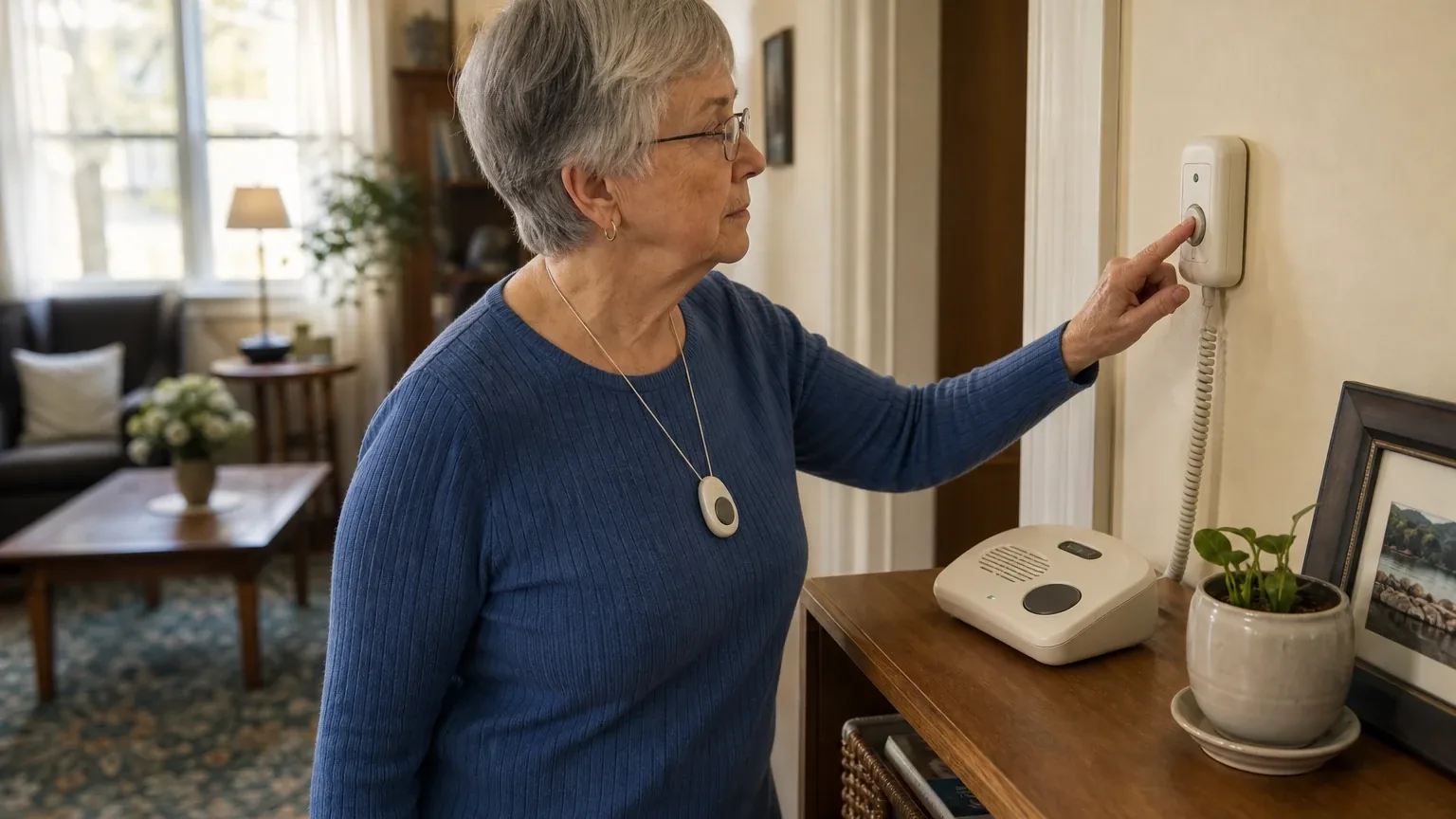
Answer Capsule
LifeFone is a good, though not unequivocal, fit for Rural & Low-Signal Reliability. All seven platforms that named it in the ranking stage placed it in their lists, at an average rank of 2.43 and a best rank of 2. Its strongest rural advantage is architectural: buyers can choose a landline-based at-home system that does not depend on cellular coverage at all, or cellular and mobile systems using AT&T and Verizon networks [24]. The main limitation is verification. No supplied source independently validates rural GPS precision, speaker intelligibility, or dispatch performance, and LifeFone's terms disclaim guarantees about responder contact, speed, or effectiveness [28]. Platform fit ratings split: one "strong," two "good," four "mixed."
Research Snapshot
| Field | Detail |
|---|---|
| Platform mentions in ranking stage | 7 of 7 configured platforms (anthropic, deepseek, google, grok, kimi, openai, perplexity) |
| Share of included platform responses | 100% |
| Average listed rank | 2.43 |
| Best listed rank | 2 (anthropic, grok, kimi, openai) |
| Relevant product/model/plan | At-Home Landline System; At-Home Cellular (AT&T); At-Home & On-the-Go VIPx/VIPx2 with GPS |
| Overall use-case fit | Strong (1 platform); Good (2 platforms); Mixed (4 platforms) — 7 platforms analyzed |
| Research date | 2026-11-10 |
What Changed Since September 2026
LifeFone remained at No. 2, and platform mentions were unchanged at 7. The November 2026 review shifts the unit of comparison from the VIPx2 bundle to LifeFone's lineup as a whole, with the At-Home Landline system now framed as the most rural-relevant choice and the cellular units treated as conditional. Buyer fit is now rated good rather than mixed, and the strongest stated advantage remains the landline path that bypasses cellular coverage entirely. Pricing evidence is more current: $24.95/month is newly reported for At-Home Landline on annual billing, while $39.95 per month is no longer repeated. Response-time evidence is also fresher, with a 25-second average across test calls now cited. Buyers should still verify address-level carrier coverage and landline compatibility before ordering. Differences between the two editions reflect what each article reports; they do not by themselves prove that the product, service, or price changed.
The September 2026 review preserves the earlier article for reference.
Why LifeFone Qualified for This Study
Questions This Section Answers
- Why did every platform in this study rank LifeFone for rural seniors rather than leaving it out?
- Does LifeFone's high ranking for rural seniors mean its low-signal performance has been independently verified?
LifeFone qualified because every platform that evaluated the rural category named it, and none placed it below third. The seven ranks were 2, 3, 3, 2, 2, 2, and 3 across anthropic, deepseek, google, grok, kimi, openai, and perplexity, producing a 100% mention share and an average rank of 2.43. That consistency is a discovery result, not a performance result: platforms converged on LifeFone because it sells a genuine landline option alongside cellular and GPS products, which is unusual in this category [24].
The qualification does not establish quality. Company-owned citations materially outnumber independent ones in the supplied research, and one platform (deepseek) ran without search enabled and reported that official-site retrieval failed, leaving its product claims unverified [4]. Another (kimi) also reported that the official site could not be verified during retrieval [4]. Buyers should read the ranking as "widely considered relevant," not "proven reliable in low signal."
The Product, Model, Plan, or Service Most Relevant to Rural & Low-Signal Reliability
Questions This Section Answers
- Which LifeFone plan should a rural senior with a working landline choose for low-signal reliability?
- Is the LifeFone At-Home Cellular system a safe choice for a rural home where only Verizon coverage is usable?
The At-Home Landline System is the most relevant LifeFone product for this use case, because it is the only option that removes cellular coverage from the emergency path entirely. Independent reviewers describe it as the best LifeFone choice for rural buyers and note it does not require a strong cellular signal, with a stated 1,300-foot range from the base unit [38]. LifeFone's own materials describe landline as the most reliable connection type [17].
The second most relevant option is the At-Home & On-the-Go VIPx2, which LifeFone states uses AT&T or Verizon 4G LTE service, supports Wi-Fi, GPS, and cellular location, offers unlimited range, and lists battery life up to 18 days under stated conditions [21]. The VIPx is described similarly, with GPS, cellular, and Wi-Fi location and a warning in its user guide that adequate cellular coverage is required because poor coverage may prevent calls, location, or automatic detection [20].
The At-Home Cellular system is the weakest fit for a Verizon-only rural address. Multiple platforms state it runs on AT&T's network specifically [38], while mobile systems support AT&T or Verizon [6]. One independent source notes AT&T has thinner rural coverage than Verizon, though it characterizes the gap as roughly 2% [39]. Buyers should confirm which network the specific device will use before ordering.
What the AI Platforms Agreed About
Questions This Section Answers
- Do the platforms agree that LifeFone's landline option is the right pick for a rural home with poor cellular reception?
- Do the platforms agree on LifeFone's backup battery and in-home range specifications for rural properties?
Agreement was strongest on three points. First, the landline option is the rural-safe choice: openai, anthropic, deepseek, grok, perplexity, and google all identify the At-Home Landline system as the lowest-risk LifeFone product where a working phone line exists [24]. Second, cellular dependence is the core risk: platforms consistently note that cellular and mobile products inherit AT&T or Verizon coverage limits at the specific address [24]. Third, the commercial terms are low-risk: month-to-month service with no long-term contract, no activation fee, and a stated 30-day trial appear across company and independent sources [28].
On specifications, the 32-hour base-station backup battery and 1,300-foot in-home range are reported consistently by company pages and independent reviewers [23]. One independent review notes LifeFone offers the same range for landline and cellular systems, which it calls unusual [36].
Where the AI Platforms Disagreed or Were Uncertain
Questions This Section Answers
- Why do the platforms rate LifeFone's rural fit differently when they all ranked it near the top?
- How reliable is LifeFone's GPS location for a rural senior who wanders outdoors?
Fit ratings diverged sharply despite near-identical rankings. Google rated LifeFone "strong," citing dual-carrier choice, landline fallback, 32-hour backup, and 1,300-foot range [4]. OpenAI and anthropic rated it "good." Deepseek, grok, kimi, and perplexity rated it "mixed," each citing unverified rural performance rather than a specific failure [7]. The disagreement is about evidence, not about the product's design.
Three specific conflicts matter to buyers:
Range. Grok reported that the At-Home Cellular system was advertised at 1,300 feet but tested at only 65 feet, and flagged this as possibly isolated rather than typical [34]. No other platform reported a comparable test result, so the discrepancy is unresolved.
Response time. Independent figures range from 14 seconds for At-Home Cellular [31] to 25 seconds across ten test calls [38] to 60 seconds on tested devices [34]. ElderGuide reports a 15-second average [2]. These reflect different test conditions and cannot be reconciled from the supplied evidence.
GPS accuracy. NCOA reports the monitoring center could GPS-locate testers [31], while SafeWise reports the VIP Flex detected the wrong location in one of three tests [34]. One platform noted USNews testing was inconclusive because responses were automated rather than live-agent confirmed [34].
Pricing. Deepseek and kimi report a $19.95/month landline starting price [4], while the current order page and multiple independent reviews list $24.95/month on annual billing [27]. The lower figure appears to be older or promotional.
Use-Case-Specific Features and Capabilities
Questions This Section Answers
- Does LifeFone's 1,300-foot in-home range hold up across a large rural property with outbuildings?
- Can a rural senior rely on LifeFone's fall detection and speaker audio in a noisy or outdoor setting?
Cellular carrier coverage. LifeFone states its cellular systems use LifeFone service on AT&T and Verizon rather than the subscriber's own plan, and advises checking coverage by ZIP code [24]. At-home cellular is AT&T-specific; mobile systems support either carrier [6]. Actual performance at the home, outbuildings, and travel routes remains location-dependent.
Landline fallback. The At-Home Landline system provides a non-cellular path, but compatibility varies by landline provider, and the wired system may occupy the primary phone line during an alarm, preventing simultaneous ordinary calls including 911 calls [24]. Buyers with VoIP-based rural lines should confirm compatibility specifically.
GPS reliability. LifeFone describes Wi-Fi, GPS, and cellular location plus caregiver location features [18]. It does not publish independent rural accuracy results, and the VIPx manual warns poor coverage may prevent location entirely [26].
Speaker volume. LifeFone describes two-way communication and says agents first attempt contact through the base unit, escalating to the home phone when needed [19]. No supplied source provides decibel measurements or intelligibility testing for noisy, large, or outdoor rural environments.
Dispatch protocol. Alarms route to a response center, and agents may contact responders or emergency services per subscriber instructions [29]. The terms state the center may be operated by LifeFone or a separate provider and disclaim guarantees about responder contact, speed, safety, or effectiveness [28].
Backup battery. The current comparison page lists 32 hours for at-home systems and up to 18 days for VIPx2; fall detection may reduce battery life [27]. One independent review puts the fall-detection pendant battery at roughly one year versus two to five years without it [38].
Device range. Up to 1,300 feet for at-home systems and unlimited for VIPx2 subject to cellular service [27]. Terrain, buildings, vegetation, and radio interference can materially reduce the stated home range.
Pricing, Fees, Contracts, and Ongoing Costs
Questions This Section Answers
- Is LifeFone's At-Home Landline plan worth $24.95 per month for a rural senior compared with its advertised $19.95 starting price?
- What fees does a rural senior owe if they cancel LifeFone and fail to return the equipment?
Current annual-billing-equivalent prices are $24.95/month for At-Home Landline, $30.95/month for At-Home Cellular, and $39.95/month for At-Home & On-the-Go VIPx2 [27]. Independent reviews corroborate these figures and add monthly-billing rates of $29.95 and $34.95 respectively [13]. The $19.95 landline figure reported by two platforms should be treated as stale until confirmed at checkout [4].
Service is described as month-to-month with no minimum commitment and cancellation at any time [28]. The 30-day trial requires equipment return at the customer's expense, and partial months are generally not refunded [28]. Failure to return loaned equipment within 30 days can trigger equipment-value charges of $295 for at-home systems and $195 for all-in-one on-the-go systems [28]. Additional help buttons are listed at $39.95 each plus shipping [27]. Fall detection is an added monthly feature, commonly cited at $5/month [13]. LifeFone states a lifetime price guarantee for the selected service, but written terms and checkout disclosures should be reviewed [28].
Best Suited For
Questions This Section Answers
- Is LifeFone a good choice for a rural senior who has a working landline but unreliable cell signal?
- Is LifeFone worth it for a rural couple who want in-home coverage and a second pendant?
LifeFone fits best where a working landline exists or where AT&T or Verizon coverage has been confirmed at the address. Rural homes with a compatible landline and limited cellular coverage are the clearest match [24]. Buyers who want both in-home protection and mobile GPS coverage fit the VIPx2 profile [21]. Couples benefit from a free spouse pendant on at-home plans, which reduces cost for two-person rural households [13]. Households wanting month-to-month service, a stated 30-day trial, and no activation or equipment fee are also well matched [28]. Budget-conscious buyers who can use the landline plan get the lowest entry point in the lineup [13].
Probably Not Best Suited For
Questions This Section Answers
- Is LifeFone a poor choice for a rural senior with no landline and no usable AT&T or Verizon signal?
- Should a buyer who needs published independent dispatch and audio testing avoid LifeFone?
LifeFone is a weak fit where neither AT&T nor Verizon works reliably and no compatible landline exists [24]. It is also a weak fit for buyers who require published independent testing of dispatch response times, GPS accuracy, speaker volume, or rural coverage, because no supplied source provides it [28]. Buyers who need guaranteed emergency-responder availability or guaranteed response outcomes should look elsewhere, since the terms explicitly disclaim those guarantees [28]. Rural areas with Verizon-only coverage are a poor match for the At-Home Cellular system specifically, which is AT&T-only [38].
When Another Option May Be Better
Questions This Section Answers
- When is a competitor better than LifeFone for a rural senior who needs verified GPS accuracy?
- Should a rural senior choose a satellite-capable option instead of LifeFone for off-grid emergencies?
A competitor may be better when it offers documented compatibility with the specific local carrier or landline environment and LifeFone cannot verify usable signal at the property [24]. A different provider may be preferable when the buyer requires independently audited response-time data or independently tested rural GPS accuracy [24]. Where the senior needs consistently loud, independently tested audio across a large property, another brand with published measurements may serve better [24]. For true off-grid emergencies, satellite-based options are a different category: one platform noted T-Mobile's satellite Text-to-911 for compatible smartphones and Rogers' satellite messaging, and observed that LifeFone has not announced equivalent integration [12]. Buyers prioritizing the fastest mobile fall-detection response should note one platform's comparison to a competitor reporting 10–12 second averages versus LifeFone's 30–35 seconds [35].
Questions to Verify Before Buying
Questions This Section Answers
- What should a rural buyer confirm with LifeFone about carrier coverage before signing up?
- What should a buyer ask LifeFone about landline compatibility and 911 behavior during an alarm?
Confirm these before committing:
- Which network the specific device will use at the address, and whether LifeFone can test signal at the home, yard, barn, driveway, and usual travel locations [24].
- Whether the exact local telephone provider is compatible with the landline system, and what happens to ordinary phone and 911 calls during an alarm [24].
- Current monthly, quarterly, annual, fall-detection, caregiver-app, location-service, shipping, and accessory charges [27].
- Measured battery life with fall detection enabled, and what low-battery warnings are provided [24].
- Actual two-way speaker volume and range in the senior's home and outdoors [19].
- Which monitoring center receives alarms, where it is located, and its documented average answer time [28].
- How local 911, EMS, fire, police, and designated contacts are selected and contacted for rural addresses [29].
- GPS accuracy indoors, under tree cover, and outside cellular coverage [26].
- Fees if the device is lost, damaged, or returned after cancellation [28].
- Whether a supervised test alarm can be run from every critical location before the trial ends [24].
Final AI Consensus Verdict
LifeFone earns a good, conditional fit for Rural & Low-Signal Reliability. The design case is real: a landline option that bypasses cellular entirely, dual-carrier cellular and mobile products, a stated 32-hour base backup, and a 1,300-foot in-home range all map directly onto rural failure points [24]. The commercial terms are unusually low-risk for the category, with month-to-month service and a stated trial [28].
The evidence case is thinner. Platform fit ratings split 1 strong, 2 good, 4 mixed, and the split tracks verification rather than product design. No supplied source independently validates rural GPS precision, speaker intelligibility, or dispatch performance, and the company terms disclaim responder guarantees [28]. One independent test reported a range result far below the advertised figure [34], and GPS accuracy results conflict across reviewers [31]. Purchase is most defensible after a location-specific coverage check and a supervised trial from the senior's actual living and outdoor areas. For the full field, see the Rural & Low-Signal Reliability consensus index.
How This Review Was Produced
This report evaluates LifeFone only for Rural & Low-Signal Reliability, using seven platform research responses collected for a 2026-11-10 study of medical alert systems for Rural Seniors. Each platform independently researched LifeFone against eight criteria: cellular carrier coverage, landline fallback, GPS reliability, speaker volume, dispatch protocol, backup battery life, device range, and monitoring center responsiveness. Rankings, fit ratings, pricing, and limitations were extracted from those responses and reconciled where they conflicted. Company-owned pages were used for specifications and terms; independent reviews were used where available. No product was tested by the writer, and no claim here should be read as independent verification of performance. For broader category context, see the medical alert systems directory.
Methodology Limitations
- All seven platforms evaluated fit, but mention counts reflect only platforms that named LifeFone during ranking discovery.
- Platform-reported research dates differ from the run date: deepseek reported 2026-06-15 while the other six reported 2026-11-10. Provenance dates do not independently prove freshness.
- Deepseek ran without search enabled and reported that official-site retrieval failed; its product claims are unverified [4]. Kimi also reported that the official site could not be verified [4].
- The official-site retrieval for this study returned an HTTP 403 and no excerpts, so company specifications rest on platform-reported page content rather than a verified fetch.
- Company-owned citations materially outnumber independent citations. Company claims are not described here as independently verified.
- Conflicting product names, prices, and capabilities were not resolved by guessing; conflicts are described and buyers are directed to verify.
- Supplied URLs were collected from platform responses and were not independently validated by the writer stage.
- No supplied source provides independent rural testing of GPS precision, speaker volume, or dispatch response times.
Explore more medical alert systems guidance in the category directory.
Sources
Company-Owned Sources
- LifeFone Medical Alert Systems: https://lifefone.com/
- LifeFone About / Monitoring: https://lifefone.com/about-us/
- LifeFone FAQ: https://lifefone.com/faq.html
- LifeFone Products: https://lifefone.com/products/
- Frequently Asked Questions - Rural Choice: https://ruralchoice.net/faq.html
- T-Mobile Makes Text to 911 Available Off-Grid to Any Wireless User with a Compatible Smartphone: https://www.businesswire.com/news/home/20251104225835/en/T-Mobile-Makes-Text-to-911-Available-Off-Grid-to-Any-Wireless-User-with-a-Compatible-Smartphone-even-Verizon-and-ATT-Customers
- Comparing LifeFone's Medical Alert Systems: https://www.lifefone.com/articles/comparing-lifefones-medical-alert-systems
- LifeFone Medical Alert Overview: https://www.lifefone.com/articles/medical-alert-overview
- The VIPx Caregiver Mobile App | LifeFone: https://www.lifefone.com/articles/the-vipx-caregiver-mobile-app
- Will You Hear Me When I Push the Button?: https://www.lifefone.com/articles/will-you-hear-me-when-i-push-the-button
- VIPx ® | Medical Alert System | LifeFone: https://www.lifefone.com/at-home-and-on-the-go-vipx
- At-Home & On-the-Go VIPx2 | LifeFone: https://www.lifefone.com/at-home-and-on-the-go-vipx2
- At-Home Cellular: https://www.lifefone.com/at-home-cellular
- At-Home Landline: https://www.lifefone.com/at-home-landline
- FAQ's | Medical Alert | LifeFone: https://www.lifefone.com/faq
- LifeFone Emergency Care Plan Agreement: https://www.lifefone.com/media/pdf/ECPA_LF.pdf
- VIPx user guide PDF: https://www.lifefone.com/media/pdf/manuals/VIPx_user-guide_orange0823.pdf
- Order Now | Medical Alert | LifeFone: https://www.lifefone.com/order-now
- Terms & Conditions | Medical Alert | LifeFone: https://www.lifefone.com/terms-and-conditions
- Emergency Response Centers | LifeFone: https://www.lifefone.com/us-response-centers
- Satellite-to-Mobile messaging and satellite-ready apps - Rogers: https://www.rogers.com/mobility/satellite?icid=R_WIR_CMH_R7QOAB
Independent Sources
- LifeFone Review 2026: Analyzing Cost and Fall Detection: https://bestguide.com/review/lifefone/
- LifeFone Medical Alert Device Review: https://elderguide.com/medical-alert-devices/lifefone-review/
- LifeFone Review 2026: Plans, Real Costs & Who It Suits: https://elderlydaily.com/reviews/lifefone-review
- LifeFone At-Home Landline System with Optional Fall Detection User Guide: https://manuals.plus/lifefone/at-home-landline-system-with-optional-fall-detection-manual
- LifeFone Medical Alert System Review 2026: At-Home & On-the-Go: https://medalertguide.com/lifefone-medical-alert-review/
- LifeFone Alert System Review (2026): Our Test Results - AARP: https://www.aarp.org/
- LifeFone Medical Alert System Review 2026 - Caring.com: https://www.caring.com/senior-products/best-medical-alert-systems/lifefone
- LifeFone Medical Alert System Review – Forbes Health: https://www.forbes.com/health/healthy-aging/lifefone-medical-alert-system-review/
- LifeFone VIPx Review: Tested: https://www.forbes.com/health/medical-alert-systems/lifefone-vipx-review-tried-and-tested/
- LifeFone Review 2026: We Tested the Medical Alert System: https://www.ncoa.org/product-resources/medical-alert-systems/lifefone-review/
- LifeFone Review (2026): With Costs & Models: https://www.retirementliving.com/reviews/lifefone-medical-alert-services
- LifeFone Medical Alerts Hands-On Expert Review: https://www.safewise.com/senior-safety/medical-alerts/lifefone/
- Best Medical Alert Systems With Fall Detection for Seniors: https://www.seniorliving.org/medical-alert-systems/best/fall-detection/
- LifeFone Medical Alert System Review 2026: https://www.seniorliving.org/medical-alert-systems/lifefone/reviews/
- LifeFone Medical Alert System Review 2026 - SeniorLiving.org: https://www.seniorliving.org/medical-alerts/lifefone/
- LifeFone Medical Alert Review, Hands-On Test: https://www.theseniorlist.com/medical-alert-systems/lifefone/reviews/
- AT&T Coverage Maps: Compare 5G and 4G LTE Networks: https://www.whistleout.com/CellPhones/Guides/att-coverage-map
Verify This Research
Review the study details behind this page or download the public machine-readable verification record.
- Study date
- November 10, 2026
- Platforms analyzed
- 7
- Source records
- 39
- Ranking mentions
- 7 of 7
- Platform share
- 100%
- Final consensus rank
- #2
Research trail and source mix
Configured platforms
openai, anthropic, deepseek, grok, perplexity, kimi, google
Source mix
18 independent · 21 company-owned
Evidence support
30 direct · 8 partial
Important limitation
Use the run research_date as the study date. Platform-reported dates are provenance metadata and do not independently prove freshness.
Source snapshot SHA-256 f3ea28ae64da7159adb72f3c3ad7bab09ff1e7dba3f2652aa337b4a454fee245