
Answer Capsule
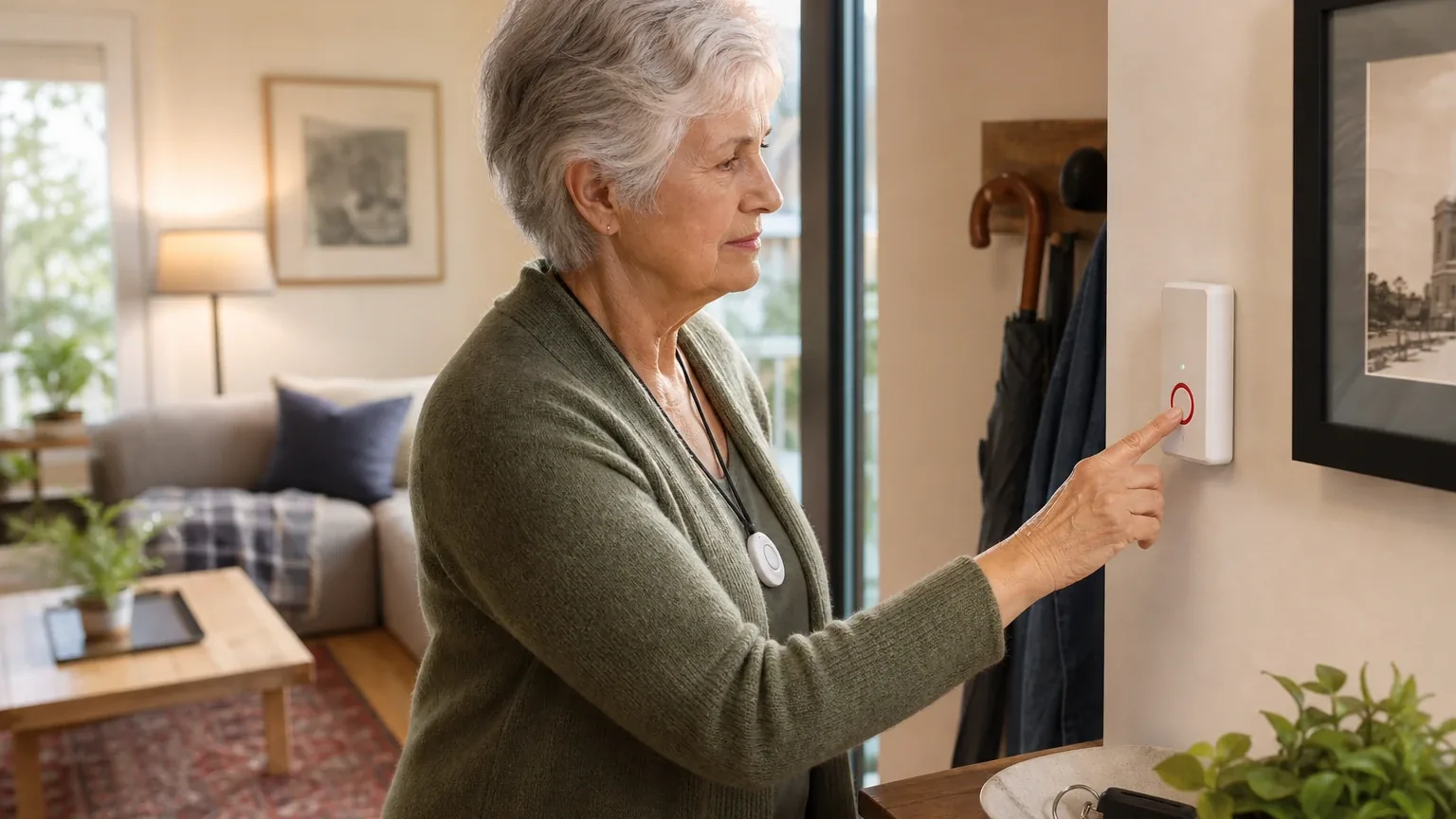
Aloe Care Health is a mixed fit for Rural & Low-Signal Reliability. Two of seven platforms named it during the ranking stage, at an average listed rank of 8.5. Its strongest rural-relevant asset is a combined home-and-mobile bundle — a 4G Smart Hub, a 200-foot Care Button, the GPS-enabled Mobile Companion 2, included fall detection, and a caregiver app — backed by advertised 24/7 monitoring [1]. The main limitation is single-carrier dependency: Aloe Care documents the Mobile Companion 2 as AT&T-dependent with no documented landline fallback, and independent reviewers report only 4–6 hours of hub backup power [3]. Buyers should verify AT&T signal at the exact address before purchasing.
Research Snapshot
| Field | Finding |
|---|---|
| Platform mentions in ranking stage | 2 of 7 platforms (deepseek, perplexity) |
| Share of included platform responses | 28.6% |
| Average listed rank | 8.5 |
| Best listed rank | 8 (perplexity) |
| Relevant product/model/plan | Essentials Plus with 4G Smart Hub, Mobile Companion 2, Care Button, monitoring service, and caregiver app; Essentials also cited |
| Overall use-case fit | Mixed |
| Research date | 2026-09-27 |
Why Aloe Care Health Qualified for This Study
Questions This Section Answers
- Is Aloe Care Health a good choice for rural seniors who need reliable medical alert coverage in low-signal areas?
- How many AI platforms ranked Aloe Care Health for rural and low-signal reliability, and where did it place?
Aloe Care Health qualified because it cleared the study's minimum-mention threshold of two platforms, not because platforms rated it highly. DeepSeek listed it at rank 9 and Perplexity at rank 8, producing an average listed rank of 8.5 and a final rank of 10 across the ranking stage (deepseek, perplexity). That is a bottom-of-list placement, and the 28.6% platform share means five of the seven included platforms did not name Aloe Care Health at all during ranking discovery.
Qualification is also a function of the entity's product architecture. Aloe Care sells a cellular hub, a wearable button, a GPS-capable mobile device, and a caregiver app under one service — a configuration that maps directly onto the study's rural criteria, including cellular carrier coverage, landline fallback, GPS reliability, device range, backup battery life, and dispatch protocol [5]. The company also advertises a Five Diamond Emergency Response Center and 24/7/365 emergency response, which is the kind of monitoring claim the study screens for [7].
The qualification is therefore structural rather than merit-based. Aloe Care Health is a legitimate candidate for this use case because it competes in the category and publishes enough product detail to evaluate, but its ranking-stage footprint is thin and its placement is low. Readers should treat the two mentions as evidence of relevance, not of rural performance.
The Product, Model, Plan, or Service Most Relevant to Rural & Low-Signal Reliability
Questions This Section Answers
- Which Aloe Care Health plan is the best fit for a rural senior who needs both in-home and on-the-go emergency coverage?
- Does the Aloe Care Health Essentials Plus bundle include GPS, fall detection, and a caregiver app for rural use?
The most relevant configuration is Essentials Plus, which bundles the 4G Smart Hub, the Mobile Companion 2, a Care Button, professional monitoring, and caregiver-app access [9]. Aloe Care's own product page lists Essentials Plus at $59.99 per month with a $349.99 one-time hardware cost, and describes coverage "At Home & On-the-Go" [9]. The Mobile Companion 2 is also sold standalone at $44.99 per month with $149.99 hardware, and Essentials — the home-only tier — at $39.99 per month with $199.99 hardware [11].
For rural buyers, the bundle matters because the two devices fail differently. The Smart Hub is a plug-in base station that Aloe Care says does not require home Wi-Fi for its core cellular connection, which removes one rural broadband dependency [12]. The Mobile Companion 2 is the piece that travels, and it is the piece most exposed to coverage gaps: Aloe Care's own support documentation states the device depends on AT&T network coverage and that "where AT&T coverage is limited, you may encounter diminished device capabilities" [13].
Platforms named slightly different plan labels. OpenAI and Anthropic both centered on Essentials Plus; DeepSeek and Perplexity referenced "Essentials or Total with Cellular Hub and Caregiver app" alongside Essentials Plus; Google listed Essentials, Essentials Plus, and Mobile Companion 2; Grok named Essentials Plus only (openai, anthropic, deepseek, perplexity, google, grok). The naming inconsistency is a real buyer problem, not a cosmetic one — see the disagreement section below.
What the AI Platforms Agreed About
Questions This Section Answers
- What do AI platforms agree on about Aloe Care Health's biggest weakness for rural and low-signal reliability?
- Is Aloe Care Health's lack of a landline fallback option a confirmed limitation for rural buyers?
Platforms converged on the core limitation: Aloe Care Health is cellular-dependent with no documented landline fallback. OpenAI, Anthropic, Grok, Google, and Perplexity all reached that conclusion from Aloe Care's own materials or from independent reviews [15]. CNET's review, cited by Google, states Aloe Care uses 4G cellular coverage only and does not support landlines [17]. SafeWise, cited by Grok, states the mobile device may not work well in rural or mountainous regions and that no landline option exists (grok:3).
Platforms also agreed on the AT&T dependency itself, because it comes from Aloe Care's own support page rather than from third-party inference. OpenAI, Anthropic, and Grok each cited the same Mobile Companion 2 overview stating AT&T network dependency and diminished capabilities where coverage is limited [19].
A third area of agreement is the feature set's genuine strength. Platforms consistently credited Aloe Care with combined home and mobile coverage, GPS location features, included fall detection, two-way voice communication, caregiver-app visibility, and advertised 24/7 professional monitoring [15]. Google's cited sources also note a TMA Five Diamond Certified monitoring center and voice-activated emergency calling from the hub [24].
Finally, platforms agreed that fall detection is not a guarantee. Aloe Care's own materials state fall detection is "not guaranteed to detect all falls," and OpenAI and Anthropic both flagged that disclaimer [15].
Where the AI Platforms Disagreed or Were Uncertain
Questions This Section Answers
- Does the Aloe Care Health Essentials Plus plan ship with AT&T-only or multi-carrier 4G connectivity in 2026?
- How long does the Aloe Care Health Smart Hub backup battery actually last during a rural power outage?
The sharpest disagreement concerns carrier architecture. Aloe Care's consumer-facing Mobile Companion 2 documentation names AT&T specifically [27]. But an Aloe Care solutions page describes a Smart Hub 2 with multi-carrier 4G connectivity and an integrated Wi-Fi hotspot [29]. OpenAI and Anthropic both flagged that it is unclear whether Smart Hub 2 is included in consumer Essentials Plus or is a separate solutions-channel product. Google's cited sources add a third variant, with one review describing the Mobile Companion 2 as using AT&T or Verizon 4G LTE [32]. Buyers cannot resolve this from public materials and should confirm the exact hardware and carrier for the unit they will receive.
Backup battery duration is the second unresolved item. Aloe Care's support page describes the Smart Hub battery only as lasting "several hours" [33]. Independent reviews estimate 4–6 hours [34]. Kimi's response cited "up to 12 hours" from company materials, which conflicts with every other figure and could not be verified because the official site retrieval failed during that platform's research (kimi:aloecare-official-unclear). Treat the 4–6 hour range as the best-supported estimate and the 12-hour figure as unverified.
Pricing is inconsistent across sources. Aloe Care's own page shows Essentials at $39.99/month with $199.99 hardware and Essentials Plus at $59.99/month with $349.99 hardware [39]. Independent reviews report a range from roughly $24.99 to $59.99 per month depending on tier and source [40]. DeepSeek reported that it could not capture current pricing at a confidence level sufficient to report known costs (deepseek). Some of this spread reflects promotions, including a "$1 device" offer visible on the official page (official:C1).
Cancellation terms conflict internally. Aloe Care's store advertises no long-term contract and cancel-anytime service [43], while the company's Terms of Service state month-to-month service with 30 days' written notice for termination [44]. Both are company-owned sources.
Device range is disputed in practice. Aloe Care specifies the Care Button for use up to 200 feet from the Smart Hub [45]. U.S. News testing, cited by Grok, reported an actual in-home range of 35–90 feet (grok:0). Competitors are cited at 1,000–1,400 feet [35].
Response time is also mixed. MedGrade documented 10–15 seconds via voice activation but occasionally five or more rings, roughly 25–30 seconds, before an operator connected [50]. Forbes reported "slow response times" without specifics [51]. SafeWise's hands-on test reported approximately 30 seconds for a monitor to answer a test call [52]. No platform found a published response-time SLA.
Use-Case-Specific Features and Capabilities
Questions This Section Answers
- How does Aloe Care Health's 200-foot Care Button range compare with competitors for large rural properties?
- Does Aloe Care Health's caregiver app work when the senior's cellular signal is weak?
Aloe Care's rural-relevant strengths are real but narrow. The Essentials Plus bundle covers home and away, the hub runs on cellular without home Wi-Fi, the Mobile Companion 2 carries GPS and fall detection, and the caregiver app surfaces device status, battery level, network strength, and location [53]. Independent testing cited by Anthropic reported multi-constellation GPS with roughly 30-foot variance in urban field trials and a 120-hour on-the-go battery for the Mobile Companion 2 [56]. SafeWise's hands-on review reported location accuracy within approximately 50 feet but also observed an incorrect nearby-house label [58].
The limitations are equally concrete. Live Locator requires LTE plus GPS or Wi-Fi coverage and increases battery consumption, per Aloe Care's own support page [59]. The Care Button's 200-foot specification is the shortest range among the competitors platforms cited, against 1,000–1,400 feet for Medical Care Alert, MobileHelp, and Medical Guardian [57]. Grok's cited U.S. News testing found real-world range of 35–90 feet, well below the advertised figure (grok:0). Backup power is estimated at 4–6 hours versus 30–80 hours for competitors [57].
Speaker volume is unquantified. Aloe Care markets "amplified clarity for hearing impaired," and SafeWise found hub audio clear but initially too loud with adjustable volume, and voice activation less reliable when the tester was around a bathroom corner [55]. No decibel specification is published.
Dispatch protocol is advertised but not documented in detail. Aloe Care advertises 24/7/365 emergency response and a Five Diamond Emergency Response Center [64]. No platform found published dispatch-center certifications, escalation standards, or rural-specific dispatch procedures. Kimi's searches for monitoring-center certification and rural dispatch verification returned no independent confirmation (kimi:no-monitoring-center-independent-verification, kimi:no-rural-dispatch-verification).
The caregiver app is a genuine advantage for families at a distance, but it does not overcome a dead zone. It reports network strength and location, which helps families detect problems, but the underlying emergency call still depends on the senior's cellular connection [54].
Pricing, Fees, Contracts, and Ongoing Costs
Questions This Section Answers
- How much does Aloe Care Health Essentials Plus cost per month, and what is the upfront hardware fee?
- Are there cancellation fees or contract terms a rural buyer should confirm before ordering Aloe Care Health?
Aloe Care uses a hardware-purchase plus monthly-monitoring model. The company's own page lists Essentials at $39.99/month with $199.99 hardware, Mobile Companion 2 standalone at $44.99/month with $149.99 hardware, and Essentials Plus at $59.99/month with $349.99 hardware [67]. OpenAI and Anthropic both reported the same Essentials Plus figures of $349.99 upfront and $59.99 per month [68]. Grok reported the same Essentials Plus pricing with high confidence (grok).
Independent sources diverge. Kimi reported Essentials at approximately $24.99/month and a Total plan at approximately $39.99/month with hardware between $149 and $299 (kimi). Perplexity reported Essentials at $39.99/month with $199.99 hardware on one Aloe Care page while noting third-party figures ranging from $39.99 to $59.99 per month [67]. Google's cited sources list $199.99 plus $39.99/month for Essentials, $149.99 plus $44.99/month for Mobile Companion 2, and $349.99 plus $59.99/month for Essentials Plus [71]. DeepSeek reported that it could not capture current pricing at a confidence level sufficient to report known costs (deepseek).
Contract terms conflict between company sources. The store advertises no long-term contract and cancel-anytime service [72]. The Terms of Service state month-to-month service with 30 days' written notice for termination and note that service fees may change [73]. A 30-day money-back guarantee is advertised, but eligibility conditions are not fully specified in the reviewed materials (openai, grok).
Additional costs are incompletely documented. Taxes and checkout charges are not itemized in the public listing; shipping was shown as free on the reviewed checkout page but should be confirmed at checkout (openai). A spouse-monitoring add-on at $29.99/month appears in comparison materials, but its applicability across plans is unconfirmed (anthropic). Fall detection is included in Essentials Plus and Mobile Companion 2 pricing rather than sold as a separate monthly add-on, which several platforms noted as a cost advantage versus competitors that charge extra [74].
Best Suited For
Questions This Section Answers
- Who gets the most value from Aloe Care Health for rural and low-signal reliability?
- Is Aloe Care Health worth it for a rural senior who wants both in-home and mobile coverage?
Aloe Care Health is best suited to rural households with confirmed, dependable AT&T LTE coverage at the exact installation address and along the senior's usual travel routes. Platforms consistently framed the product as strong where signal exists and weak where it does not (openai, anthropic, grok, google, perplexity).
It also fits seniors who need both in-home and on-the-go coverage from one provider, rather than a home-only system plus a separate mobile pendant [75]. Families that value remote visibility — battery status, network strength, location, and environmental sensors — get more from the caregiver app than from a traditional pendant-only system [77].
It suits users who want fall detection included in the monthly price rather than as a paid add-on, and who can test the system regularly and keep the Mobile Companion 2 charged [79]. Voice-activated calling from the hub is a practical benefit for seniors who cannot reliably press or wear a button [80].
Finally, it fits buyers who prefer no long-term contract and are willing to verify terms in writing, given the conflict between cancel-anytime marketing and the 30-day notice in the Terms of Service [81].
Probably Not Best Suited For
Questions This Section Answers
- Who should not choose Aloe Care Health for rural and low-signal reliability?
- Is Aloe Care Health a poor choice for a rural home with no AT&T signal and no landline?
Aloe Care Health is a poor fit for homes with weak, intermittent, or absent AT&T coverage. Every platform that assessed carrier coverage flagged this, and Aloe Care's own documentation states capabilities diminish where AT&T coverage is limited [83].
It is also a poor fit for buyers who require a landline fallback or an independently redundant communications path. No platform found a documented landline option for the consumer plans [86].
Seniors who need long-duration operation through extended power outages should look elsewhere. The best-supported backup estimate is 4–6 hours, against 30–80 hours for competitors [86].
Large properties are a poor match. The 200-foot Care Button specification is the shortest among cited competitors, and one independent test measured 35–90 feet in practice [91]. Detached buildings, barns, and long driveways fall outside documented coverage.
Buyers who require independently documented rural dispatch performance, published response-time guarantees, or verified GPS precision in remote terrain will not find that evidence for Aloe Care Health (kimi:no-rural-dispatch-verification, kimi:no-independent-gps-rural-testing, openai).
When Another Option May Be Better
Questions This Section Answers
- What is a better alternative to Aloe Care Health for a rural buyer who needs landline fallback or multi-carrier redundancy?
- When should a rural buyer choose a competitor with longer backup battery life over Aloe Care Health?
Another option may be better in four specific situations, and platforms named candidates for each.
When landline fallback is essential, Medical Care Alert, MobileHelp Wired, and LifeFone are cited as offering landline options, while Aloe Care does not [93]. When extended backup power matters, Medical Care Alert is cited at 80 hours and MobileHelp at 30 hours, against Aloe Care's 4–6 hours [93]. When the property is large, Medical Care Alert is cited at 1,000–1,400 feet and MobileHelp Classic at 1,400 feet, against Aloe Care's 200 feet [93]. When AT&T coverage is unavailable, platforms recommend carriers using Verizon or T-Mobile networks [96].
Budget is a separate trigger. MobileHelp Classic is cited at $19.95/month with $49.95 hardware, materially below Essentials Plus at $59.99/month with $349.99 hardware [94]. Buyers who need a published response-time figure may prefer MobileHelp, cited at a 21-second response, over Aloe Care's variable 10–30 second range [97].
If the priority is a standalone mobile GPS pendant with verified rural carrier coverage, or a product with published third-party rural testing, platforms suggest looking beyond Aloe Care Health (deepseek, kimi).
Questions to Verify Before Buying
Questions This Section Answers
- What should a rural buyer confirm with Aloe Care Health about AT&T signal strength before signing up?
- What backup battery, dispatch, and cancellation details should a buyer get in writing from Aloe Care Health?
Buyers should get written answers to the following before ordering, because the reviewed public materials do not resolve them.
Confirm the exact AT&T LTE signal strength and reliability at the senior's home, yard, driveway, outbuildings, and usual travel locations (openai, anthropic, grok). Ask whether the specific Essentials Plus hardware shipped in 2026 uses AT&T only or includes multi-carrier connectivity, given the Smart Hub 2 conflict [98]. Ask whether any landline, Wi-Fi, or alternate-carrier fallback exists if cellular service fails (openai, anthropic, perplexity).
Request the exact Smart Hub backup-battery runtime under normal monitoring and during an emergency call, and the Mobile Companion 2 runtime with fall detection, GPS, and Live Locator active (openai, anthropic, perplexity). Ask how the monitoring center escalates when the senior cannot speak, GPS is uncertain, or the primary caregiver does not answer, and whether it contacts local 911 directly (openai, anthropic). Ask how rural addresses, private roads, locked gates, and 911 jurisdiction boundaries are handled (openai).
Verify whether the Care Button reliably reaches the hub through the home's walls and from the specific outdoor areas the senior uses (openai, anthropic). Confirm the exact return, refund, equipment-return, and cancellation requirements under the current order terms, given the conflict between cancel-anytime marketing and the 30-day written notice in the Terms of Service [101]. Ask whether Aloe Care can arrange a pre-purchase or post-delivery signal and emergency-call test at the address (openai, anthropic).
Final AI Consensus Verdict
Aloe Care Health is a mixed fit for Rural & Low-Signal Reliability, and the platform consensus is unusually consistent on why. Six of seven platforms rated it mixed; Kimi rated it uncertain because official-site retrieval failed during its research (openai, anthropic, deepseek, google, grok, perplexity, kimi). No platform rated it a strong fit.
The case for Aloe Care Health rests on integration: one provider covering home and away, a hub that does not need home Wi-Fi, GPS and fall detection included rather than surcharged, and a caregiver app that gives remote family real visibility [103]. The case against rests on single-carrier dependency with no documented landline fallback, a 4–6 hour backup estimate, a 200-foot button range that one test measured far shorter, and no published dispatch SLA or rural performance data [107].
Platform agreement here reflects shared source material — largely Aloe Care's own documentation plus a small set of independent reviews — not independent verification of rural performance. Two ranking-stage mentions at an average rank of 8.5 is a thin footprint. The practical verdict: Aloe Care Health is worth considering only after address-level AT&T testing and written confirmation of backup runtime, fallback options, and cancellation terms. Where AT&T signal is weak or a landline fallback is required, platforms point to landline-capable competitors instead.
How This Review Was Produced
This review evaluates Aloe Care Health only for the Rural & Low-Signal Reliability use case within the broader medical alert systems category. It draws on seven platform responses collected for the 2026-09-27 research run, plus the ranking-stage statistics showing which platforms named the entity and where it placed. The full consensus index for this use case is available at Rural & Low-Signal Reliability.
Platforms evaluated fit against eight configured criteria: cellular carrier coverage, landline fallback options, GPS reliability, speaker volume, dispatch protocol, backup battery life, device range, and monitoring center responsiveness. Each platform returned a fit rating, a direct answer, strengths, limitations, pricing and terms, and questions to verify before buying. This review synthesizes those responses and preserves their conflicts rather than resolving them.
Methodology Limitations
Several limitations constrain what this review can claim.
Platform-reported research dates differ from the authoritative run date of 2026-09-27. Anthropic's response is dated 2026-01-15 and DeepSeek's 2026-06-11; the remaining five platforms are dated 2026-09-27. Platform-reported dates are provenance metadata and do not independently prove freshness.
Platform mentions count only platforms that named the entity during ranking discovery, not platforms that evaluated fit. All seven platforms assessed fit, but only two named Aloe Care Health in the ranking stage.
Citations are platform-reported evidence, not independently verified facts. The supplied URLs were collected from platform responses and were not independently validated during writing. DeepSeek's response had search disabled, so its claims are model-reported rather than retrieved. Kimi's official-site retrieval failed, so its company claims are unverified.
Conflicting product names, pricing, and capabilities were not resolved by guessing. The Smart Hub 2 multi-carrier question, the 4–6 hour versus 12-hour battery conflict, the pricing spread, and the cancel-anytime versus 30-day-notice conflict are all reported as unresolved.
Independent response-time and GPS results come from single-review tests, not statistically representative rural performance data. No platform found published rural-specific performance metrics, dispatch-center certifications, or a response-time SLA for Aloe Care Health. No platform reported personal testing by this review's authors, and no medical benefit or guaranteed performance is claimed.
See the broader Rural Seniors consensus index for comparisons across qualified options.
Sources
Company-Owned Sources
- Aloe Care Health Solutions – Smart Hub 2: https://solutions.aloecare.com/
- How It Works | Aloe Care Health: https://solutions.aloecare.com/how-it-works
- Aloe Care Health Store: https://store.aloecare.com/
- The Caregiver App: https://support.aloecare.com/hc/en-us/article_attachments/38303493390615
- Mobile Companion 2 - Overview: https://support.aloecare.com/hc/en-us/articles/21548270083991-Mobile-Companion-2-Overview
- What is the Live Locator feature?: https://support.aloecare.com/hc/en-us/articles/21579907467671-What-is-the-Live-Locator-feature
- Does an Aloe Care device require power cords to work?: https://support.aloecare.com/hc/en-us/articles/360021837433-Does-an-Aloe-Care-device-require-power-cords-to-work
- Smart Hub - Power Off: https://support.aloecare.com/hc/en-us/articles/8558545814295-Smart-Hub-Power-Off
- Aloe Care Health: https://www.aloecare.com/
- Aloe Care Health official site content: https://www.aloecare.com/how-it-works/
- Terms of Service | Aloe Care Health: https://www.aloecare.com/legal/terms-of-service
- Aloe Care Health Plans: https://www.aloecare.com/location/charlotte
- Products | Aloe Care Health: https://www.aloecare.com/products
- Essentials | Aloe Care Health: https://www.aloecare.com/products/essentials
- Essentials Plus | Aloe Care Health: https://www.aloecare.com/products/essentials-plus
- Official pricing and terms source: https://www.aloecare.com#ach-plans
Additional AI research evidence107 records
- AI research evidence record openai:c1
- AI research evidence record anthropic:c1
- AI research evidence record openai:c4
- AI research evidence record anthropic:c4
- AI research evidence record openai:c1
- AI research evidence record anthropic:c1
- AI research evidence record openai:c6
- AI research evidence record google:1.1.9
- AI research evidence record openai:c1
- AI research evidence record anthropic:c1
- AI research evidence record perplexity:c1
- AI research evidence record openai:c10
- AI research evidence record openai:c4
- AI research evidence record anthropic:c2
- AI research evidence record openai:c1
- AI research evidence record anthropic:c4
- AI research evidence record google:1.2.3
- AI research evidence record perplexity:c11
- AI research evidence record openai:c4
- AI research evidence record anthropic:c2
- AI research evidence record anthropic:c1
- AI research evidence record google:1.1.5
- AI research evidence record perplexity:c8
- AI research evidence record google:1.1.9
- AI research evidence record google:2.1.6
- AI research evidence record anthropic:c11
- AI research evidence record openai:c4
- AI research evidence record anthropic:c2
- AI research evidence record openai:c13
- AI research evidence record anthropic:c12
- AI research evidence record perplexity:c3
- AI research evidence record google:2.2.7
- AI research evidence record openai:c8
- AI research evidence record openai:c9
- AI research evidence record anthropic:c4
- AI research evidence record google:1.2.5
- AI research evidence record perplexity:c7
- AI research evidence record perplexity:c11
- AI research evidence record perplexity:c1
- AI research evidence record perplexity:c13
- AI research evidence record perplexity:c14
- AI research evidence record google:2.1.3
- AI research evidence record openai:c12
- AI research evidence record openai:c11
- AI research evidence record openai:c1
- AI research evidence record anthropic:c1
- AI research evidence record anthropic:c5
- AI research evidence record anthropic:c6
- AI research evidence record google:2.2.4
- AI research evidence record anthropic:c3
- AI research evidence record anthropic:c8
- AI research evidence record openai:c7
- AI research evidence record openai:c1
- AI research evidence record openai:c5
- AI research evidence record anthropic:c1
- AI research evidence record anthropic:c3
- AI research evidence record anthropic:c4
- AI research evidence record openai:c7
- AI research evidence record openai:c3
- AI research evidence record anthropic:c5
- AI research evidence record anthropic:c6
- AI research evidence record google:2.2.4
- AI research evidence record google:1.2.5
- AI research evidence record openai:c6
- AI research evidence record google:1.1.9
- AI research evidence record deepseek:c2
- AI research evidence record perplexity:c1
- AI research evidence record anthropic:c1
- AI research evidence record perplexity:c13
- AI research evidence record perplexity:c14
- AI research evidence record google:2.1.3
- AI research evidence record openai:c12
- AI research evidence record openai:c11
- AI research evidence record anthropic:c4
- AI research evidence record openai:c1
- AI research evidence record anthropic:c1
- AI research evidence record openai:c5
- AI research evidence record google:1.2.6
- AI research evidence record anthropic:c4
- AI research evidence record google:2.1.6
- AI research evidence record openai:c11
- AI research evidence record openai:c12
- AI research evidence record openai:c4
- AI research evidence record anthropic:c2
- AI research evidence record google:1.2.3
- AI research evidence record anthropic:c4
- AI research evidence record perplexity:c11
- AI research evidence record anthropic:c5
- AI research evidence record google:1.2.5
- AI research evidence record perplexity:c7
- AI research evidence record openai:c1
- AI research evidence record google:2.2.4
- AI research evidence record anthropic:c4
- AI research evidence record anthropic:c5
- AI research evidence record google:2.2.4
- AI research evidence record google:2.2.7
- AI research evidence record anthropic:c3
- AI research evidence record openai:c13
- AI research evidence record anthropic:c12
- AI research evidence record perplexity:c3
- AI research evidence record openai:c11
- AI research evidence record openai:c12
- AI research evidence record openai:c1
- AI research evidence record openai:c5
- AI research evidence record anthropic:c1
- AI research evidence record anthropic:c4
- AI research evidence record openai:c4
Independent Sources
- Aloe Care Health Review - Aging.com: https://aging.com/best-medical-alert-systems/aloe-care/
- Medical Care Alert vs Aloe Care Health Comparison – ElderGuide: https://elderguide.com/medical-alert-devices/medical-care-alert-vs-aloe-care-health/
- Medical Guardian vs Aloe Care Health Comparison – ElderGuide: https://elderguide.com/medical-alert-devices/medical-guardian-vs-aloe-care-health/
- MobileHelp vs Aloe Care Health Comparison – ElderGuide: https://elderguide.com/mobile-help-vs-aloe-care-health/
- Aloe Care Health Mobile Companion 2 vs LifeFone Comparison – MedGrade: https://medgrade.org/compare/?device1=3411&device2=3402
- Aloe Care Health Essentials Plus – MedGrade Device Review: https://medgrade.org/devices/aloe-care-health-essentials-plus/
- Aloe Care Health Mobile Companion 2 – MedGrade Clinical Evaluation: https://medgrade.org/devices/aloe-care-health-mobile-companion-2/
- Aloe Care Health Review - Medical Alert Insight: https://medicalalertinsight.com/aloe-care-health-review/
- Aloe Care Medical Alert Review: Is It Worth Buying? | Millennial Hawk: https://millennialhawk.com/aloe-care-medical-alert-review/
- Aloe Care Health Medical Alert System Review 2026 | U.S. News: https://realestate.usnews.com/home-services/medical-alert-system/aloe-care-health
- Aloe Care Health Medical Alert System Review 2026: https://vertexaisearch.cloud.google.com/grounding-api-redirect/AUZIYQGEtrFVoGtoY0kTgeu3v19hIYdgrwD-07_BrcPd7_EGmnyBZ89nHLU-_yLHypr8eoBpcm3ls8wkuuq-3i03dcPhjE6ZQYwYkGNWc9RjmKg9JeTJ5293PkaeVA9Ir3QmHRlvbz3mpzuWX0anbnNpa2mgr39QVxdUGq-FXoeYVXciHBfhEMWl5HU=
- Aloe Care Health Review (2026) - Details, Pricing & Features: https://vertexaisearch.cloud.google.com/grounding-api-redirect/AUZIYQHEx5ZKAbfXNKTRD2bTbIbuKB5S37wDyqkpkOngRGVKaqZEdcsVYQz49DkdyIhBhShCspYitcUNOo7G2xn6F6WCftmkYfXLYRroXpDyK4CGfBt-6e42-dfTOJdOgrWj-f2KZEouileTU4AU4reKlo6ClJWS
- Aloe Care Health Medical Alert System Review 2026 - Caring.com: https://www.caring.com/senior-products/best-medical-alert-systems/aloe-care-health
- Aloe Care Health Essentials Plus Review – Forbes: https://www.forbes.com/health/medical-alert-systems/aloe-care-health-essentials-plus-review/
- Search result: independent Aloe Care GPS rural testing: https://www.google.com/search?q=aloe+care+gps+rural+testing+review
- Search result: no verified Aloe Care carrier documentation: https://www.google.com/search?q=aloe+care+health+cellular+carrier+partner
- Search result: Aloe Care monitoring center certification: https://www.google.com/search?q=aloe+care+monitoring+center+UL+certification
- Search result: Aloe Care rural dispatch verification: https://www.google.com/search?q=aloe+care+rural+emergency+dispatch+gps+accuracy
- Aloe Care Health Review 2025: Tested by Experts & Reviewers: https://www.ncoa.org/adviser/medical-alert-systems/aloe-care-health-review/
- Aloe Care Medical Alert - Paying for Senior Care: https://www.payingforseniorcare.com/best-medical-alert-systems/aloe-care
- Aloe Care Health Review – PCMag: https://www.pcmag.com/reviews/aloe-care-health
- Aloe Care Health Review | SafeWise: https://www.safewise.com/aloe-care-review/
- Aloe Care Health | Hands-On Expert Review: https://www.safewise.com/senior-safety/medical-alerts/aloe-care-health/
- Aloe Care Health Review (2026) - Details, Pricing & Features: https://www.top10.com/medical-alerts/reviews/aloe-care-health
Additional AI research evidence107 records
- AI research evidence record openai:c1
- AI research evidence record anthropic:c1
- AI research evidence record openai:c4
- AI research evidence record anthropic:c4
- AI research evidence record openai:c1
- AI research evidence record anthropic:c1
- AI research evidence record openai:c6
- AI research evidence record google:1.1.9
- AI research evidence record openai:c1
- AI research evidence record anthropic:c1
- AI research evidence record perplexity:c1
- AI research evidence record openai:c10
- AI research evidence record openai:c4
- AI research evidence record anthropic:c2
- AI research evidence record openai:c1
- AI research evidence record anthropic:c4
- AI research evidence record google:1.2.3
- AI research evidence record perplexity:c11
- AI research evidence record openai:c4
- AI research evidence record anthropic:c2
- AI research evidence record anthropic:c1
- AI research evidence record google:1.1.5
- AI research evidence record perplexity:c8
- AI research evidence record google:1.1.9
- AI research evidence record google:2.1.6
- AI research evidence record anthropic:c11
- AI research evidence record openai:c4
- AI research evidence record anthropic:c2
- AI research evidence record openai:c13
- AI research evidence record anthropic:c12
- AI research evidence record perplexity:c3
- AI research evidence record google:2.2.7
- AI research evidence record openai:c8
- AI research evidence record openai:c9
- AI research evidence record anthropic:c4
- AI research evidence record google:1.2.5
- AI research evidence record perplexity:c7
- AI research evidence record perplexity:c11
- AI research evidence record perplexity:c1
- AI research evidence record perplexity:c13
- AI research evidence record perplexity:c14
- AI research evidence record google:2.1.3
- AI research evidence record openai:c12
- AI research evidence record openai:c11
- AI research evidence record openai:c1
- AI research evidence record anthropic:c1
- AI research evidence record anthropic:c5
- AI research evidence record anthropic:c6
- AI research evidence record google:2.2.4
- AI research evidence record anthropic:c3
- AI research evidence record anthropic:c8
- AI research evidence record openai:c7
- AI research evidence record openai:c1
- AI research evidence record openai:c5
- AI research evidence record anthropic:c1
- AI research evidence record anthropic:c3
- AI research evidence record anthropic:c4
- AI research evidence record openai:c7
- AI research evidence record openai:c3
- AI research evidence record anthropic:c5
- AI research evidence record anthropic:c6
- AI research evidence record google:2.2.4
- AI research evidence record google:1.2.5
- AI research evidence record openai:c6
- AI research evidence record google:1.1.9
- AI research evidence record deepseek:c2
- AI research evidence record perplexity:c1
- AI research evidence record anthropic:c1
- AI research evidence record perplexity:c13
- AI research evidence record perplexity:c14
- AI research evidence record google:2.1.3
- AI research evidence record openai:c12
- AI research evidence record openai:c11
- AI research evidence record anthropic:c4
- AI research evidence record openai:c1
- AI research evidence record anthropic:c1
- AI research evidence record openai:c5
- AI research evidence record google:1.2.6
- AI research evidence record anthropic:c4
- AI research evidence record google:2.1.6
- AI research evidence record openai:c11
- AI research evidence record openai:c12
- AI research evidence record openai:c4
- AI research evidence record anthropic:c2
- AI research evidence record google:1.2.3
- AI research evidence record anthropic:c4
- AI research evidence record perplexity:c11
- AI research evidence record anthropic:c5
- AI research evidence record google:1.2.5
- AI research evidence record perplexity:c7
- AI research evidence record openai:c1
- AI research evidence record google:2.2.4
- AI research evidence record anthropic:c4
- AI research evidence record anthropic:c5
- AI research evidence record google:2.2.4
- AI research evidence record google:2.2.7
- AI research evidence record anthropic:c3
- AI research evidence record openai:c13
- AI research evidence record anthropic:c12
- AI research evidence record perplexity:c3
- AI research evidence record openai:c11
- AI research evidence record openai:c12
- AI research evidence record openai:c1
- AI research evidence record openai:c5
- AI research evidence record anthropic:c1
- AI research evidence record anthropic:c4
- AI research evidence record openai:c4
Verify This Research
Review the study details behind this page or download the public machine-readable verification record.
- Study date
- September 27, 2026
- Platforms analyzed
- 7
- Source records
- 50
- Ranking mentions
- 2 of 7
- Platform share
- 29%
- Final consensus rank
- #10
Research trail and source mix
Configured platforms
openai, anthropic, deepseek, grok, perplexity, kimi, google
Source mix
33 independent · 17 company-owned
Evidence support
35 direct · 11 partial
Important limitation
Use the run research_date as the study date. Platform-reported dates are provenance metadata and do not independently prove freshness.
Source snapshot SHA-256 0457b972051e43b6ed3fb24088aef9d9caa74053d79e537142d3b728c6f4e494