
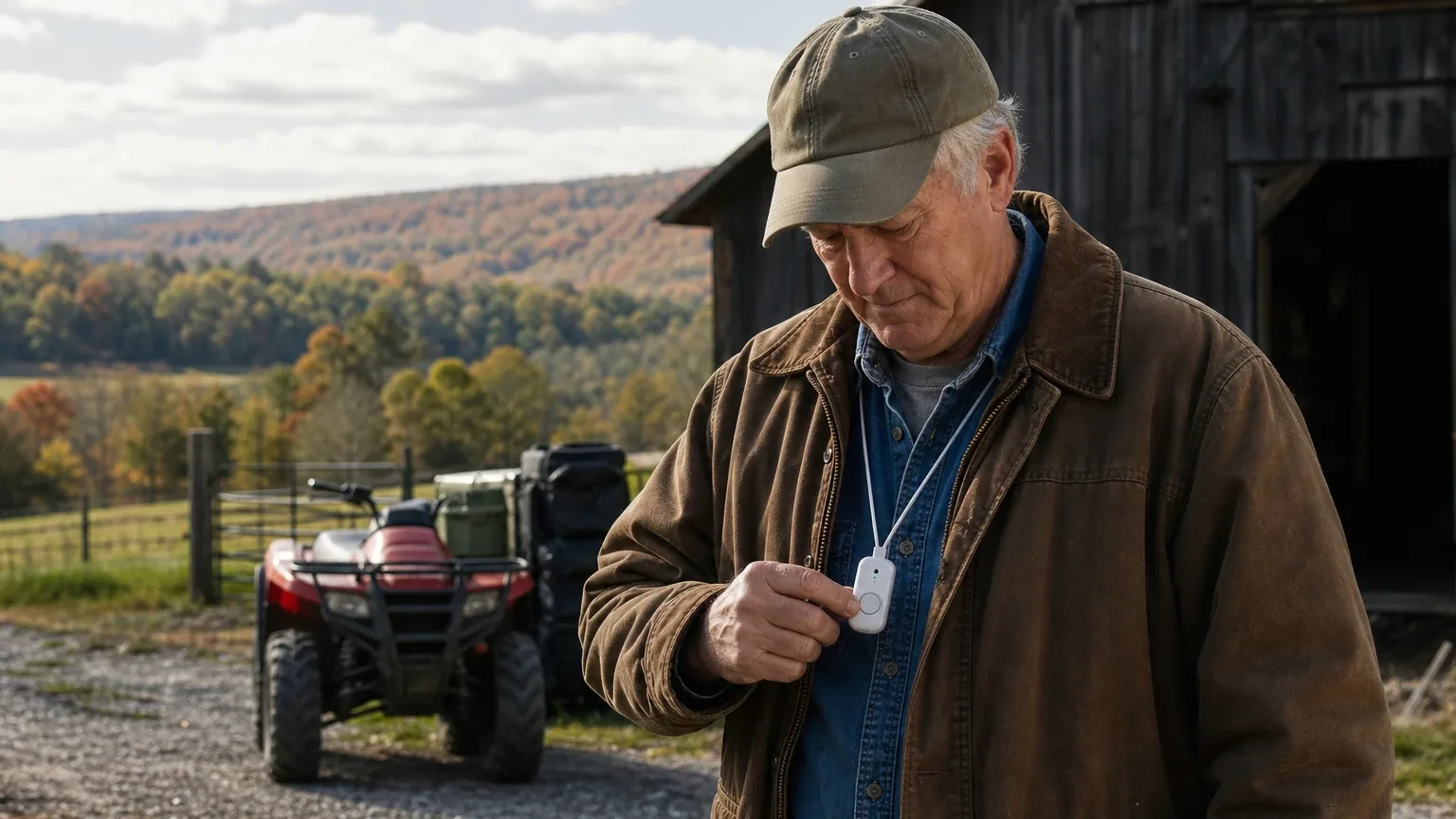
Answer Capsule
Medical Care Alert is a good but not fully verified fit for rural seniors. Of the 7 AI platforms that evaluated this use case, 2 named Medical Care Alert during the ranking stage (anthropic and google), representing 29% of included platform responses. The strongest reason to consider it is the selectable AT&T or Verizon cellular option plus a landline-capable HOME system, which lets buyers match the device to the strongest local carrier. The main limitation is the absence of independent rural performance data: no platform identified third-party testing of signal reliability, response times, speaker volume, or GPS accuracy in low-coverage areas, and company-published battery and range specifications conflict across pages.
Research Snapshot
| Metric | Value |
|---|---|
| Platform mentions in ranking stage | 2 of 7 (anthropic, google) |
| Share of included platform responses | 29% |
| Average listed rank | 6.0 |
| Best listed rank | 4 (google) |
| Relevant product/model/plan | HOME-LTE cellular system (AT&T or Verizon); HOME landline version; HOME & AWAY FLEX GPS for mobile use |
| Overall use-case fit | Good (4 platforms), Mixed (1), Uncertain (2) |
| Research date | 2026-08-10 |
Why Medical Care Alert Qualified for This Study
Medical Care Alert entered this rural-reliability evaluation because its product line directly addresses the category criteria. The HOME system supports either AT&T or Verizon cellular service, giving buyers a carrier choice that can be matched to the strongest local network [1]. The company also offers a landline-connected HOME version for households where cellular coverage is absent or unreliable [1]. These two attributes—carrier selection and landline fallback—are the primary reasons the platform responses rated it as a candidate for rural and low-signal use.
The ranking-stage product description identified the "Cellular system with AT&T or Verizon wireless coverage option" and the "HOME Landline or Cellular" plan as the relevant configurations (anthropic, google). The entity was named by 2 of 7 platforms during ranking discovery, with an average listed rank of 6.0 and a best rank of 4.
What the AI Platforms Agreed About
Strong agreement: Carrier choice is the core rural advantage. Four platforms (openai, anthropic, deepseek, google) independently identified the AT&T-or-Verizon selection as the most relevant feature for rural buyers. The HOME cellular system uses a built-in 4G LTE SIM card and does not require the customer's personal phone, Wi-Fi, or separate cellular account [4]. The company states nationwide coverage across all 50 states, but actual coverage remains location-dependent [6].
Strong agreement: A landline option exists and matters. The HOME system can operate over supported POTS, DSL, or some VoIP services, providing a non-cellular deployment path for rural homes with a functioning landline [7]. Unsupported services include MagicJack, Vonage, Dish satellite phone service, and some other VoIP configurations [8]. No platform found evidence of automatic cellular-plus-landline failover; the buyer must choose one connection path [9].
Strong agreement: The 1,000-foot button range is a genuine rural asset. Multiple platforms cited the HOME system's wearable button range of up to 1,000 feet from the base console [10]. This exceeds or matches competitors such as Bay Alarm (1,000 feet) and Medical Alert (800 feet) [13]. A separate HOME AutoFALL configuration lists 400 feet, indicating range varies by model [14].
Majority agreement: Backup battery is a stated strength, but duration conflicts. The FAQ states a 72-hour backup battery for the HOME cellular system, while another company page states 24 hours [7]. Anthropic's review noted the FAQ specifies 72 hours for cellular models and 24 hours for landline models [16]. Google's review cited 24 to 72 hours depending on the console version [5]. The HOME & AWAY FLEX mobile unit supports up to 5 days of battery life with daily charging recommended [17].
Majority agreement: Monitoring is U.S.-based with EMT/EMD-certified operators. The company states that EMT/EMD-certified operators answer 24/7, assess the situation, dispatch local police, fire, or EMS when needed, and contact listed responders by phone and SMS [18]. Medical Care Alert claims three U.S.-based monitoring centers with redundant infrastructure [18]. Kimi noted the company is owned by Bay Alarm Medical, which operates CSAA Five Diamond certified monitoring centers, though this certification is for the parent brand, not specifically verified for Medical Care Alert [20].
Where the AI Platforms Disagreed or Were Uncertain
Fit rating split: Good vs. Uncertain. Four platforms (openai, anthropic, deepseek, google) rated Medical Care Alert a "good" fit for rural reliability. Two platforms (kimi, perplexity) rated it "uncertain," and one (grok) rated it "mixed." The uncertain ratings stem from the same root cause: no platform could verify the company's rural performance claims through independent sources.
Battery life conflict is unresolved. The FAQ's 72-hour claim directly conflicts with the 24-hour figure on the cellular systems page [21]. Anthropic's review attempted to reconcile this by attributing 72 hours to cellular models and 24 hours to landline models [23], but google noted the exact console hardware shipped may determine the actual duration [24]. This is a material specification that buyers must confirm in writing before purchase.
Range figures vary by model and page. The 1,000-foot figure appears on the cellular systems page and in Forbes' tested review [25], while the fall detection page lists 400 feet for a HOME AutoFALL configuration [27]. Anthropic noted the HOME & YARD pendant has a 400-foot range [28]. The discrepancy likely reflects different base stations and pendants, but the company does not clearly map which range applies to which configuration.
GPS capability is disputed. Deepseek stated "no GPS capability is mentioned" for the HOME system [29], while anthropic and grok confirmed the HOME & AWAY FLEX uses GPS, Wi-Fi, and cellular triangulation [30]. The resolution: HOME-LTE is primarily an in-home system without mobile GPS; the separate HOME & AWAY FLEX provides mobile GPS. The company's monitoring agreement expressly states that location services "can be imperfect or unable to determine a precise location" [32]. Grok additionally noted the FLEX uses AT&T only and that triangulation accuracy is lower in rural areas due to tower spacing [31].
Pricing transparency is inconsistent. Google reported high pricing confidence with specific figures: $29.95/month for HOME landline, $34.95/month for HOME cellular, and $10/month optional fall detection [24]. OpenAI reported moderate confidence with HOME starting at $29.95/month and cellular $5 more [21]. Anthropic reported low confidence, noting equipment costs and activation fees were not publicly disclosed (anthropic). Deepseek and kimi both reported low confidence, with deepseek noting pricing "is not publicly listed on the website" [29]. These conflicting assessments reflect different pages and possibly different promotional periods.
T-Mobile support is ambiguous. Anthropic noted the company's FAQs mention T-Mobile as a carrier option in some sections, but the primary marketing focus is AT&T and Verizon (anthropic). Grok stated the FLEX mobile unit uses AT&T only [31]. This inconsistency should be clarified before purchase if T-Mobile is the strongest local carrier.
Use-Case-Specific Features and Capabilities
Cellular Carrier Coverage
The HOME cellular system supports either AT&T or Verizon 4G LTE via a built-in SIM card [33]. The company states nationwide coverage across all 50 states [36]. Buyers can select the carrier that is stronger at their specific location. However, the company directs users to AT&T and Verizon coverage maps to verify local availability and states that "coverage is not guaranteed and is subject to change without notice" [38]. No platform found evidence of automatic dual-carrier failover.
Landline Fallback Options
The HOME system supports traditional landline (POTS), DSL, and some VoIP services [33]. This provides a non-cellular option for rural homes with a functioning compatible landline. The cellular version costs approximately $5 more per month than the landline version [33]. Unsupported services include MagicJack, Vonage, Dish satellite phone service, and some other VoIP configurations [40]. This is not an automatic fallback arrangement; the buyer must choose one connection path.
GPS Reliability
The HOME-LTE system is primarily in-home and does not provide mobile GPS [42]. The HOME & AWAY FLEX uses GPS, Wi-Fi, and cellular triangulation [43]. The company's monitoring agreement states that location services "can be imperfect or unable to determine a precise location" [45]. Grok noted reduced accuracy in rural areas due to tower spacing [44]. ConsumerAffairs notes GPS generally works in rural areas because there is less interference from satellites, but this is a general observation, not a Medical Care Alert-specific test [46].
Speaker Volume and Two-Way Communication
The HOME system includes a two-way speakerphone console [47]. Forbes' tested review found that the wearable buttons do not contain speakers, meaning the senior must be close enough to hear and speak to the base console during an alarm [48]. No platform identified a published decibel rating or hearing-distance test result. Anthropic noted audio volume is adjustable during conversation but no decibel specifications are published [41].
Dispatch Protocol
The company states EMT/EMD-certified operators answer 24/7, assess the situation, dispatch local police, fire, or EMS when needed, and contact listed responders by phone and SMS [49]. The monitoring agreement states the service is not a substitute for calling 911 directly and limits company liability, including for equipment or monitoring failure [51]. No platform found independently audited median answer times or dispatch times for rural calls.
Backup Battery Life
The HOME cellular system is advertised with a 72-hour backup battery in the FAQ [33] and 24 hours on another company page [53]. Anthropic's review attributes 72 hours to cellular models and 24 hours to landline models [54]. Google's review cites 24 to 72 hours depending on the console version [35]. The HOME & AWAY FLEX supports up to 5 days of battery life with daily charging recommended [52]. For comparison, Medical Alert's Home System lists up to 30 hours of backup battery [55].
Device Range
The HOME wearable buttons have a range of up to 1,000 feet from the base console [47]. A HOME AutoFALL configuration lists 400 feet [57], and the HOME & YARD pendant has a 400-foot range [56]. Forbes' tested review confirmed the 1,000-foot button range [48]. Range may not represent performance through walls, terrain, barns, or outbuildings.
Monitoring Center Responsiveness
Medical Care Alert claims three U.S.-based monitoring centers, on-site operators, and redundant infrastructure [49]. The company does not publish response-time metrics [58]. The industry standard for medical alert response time is 15-45 seconds [59]. Deepseek noted the website claims an average response time under 30 seconds, but this is unverified by independent sources [60]. No platform found evidence of TMA Five Diamond certification for Medical Care Alert specifically, though the parent company Bay Alarm Medical operates CSAA Five Diamond certified centers [61].
Pricing, Fees, Contracts, and Ongoing Costs
Pricing confidence varies significantly across platforms, from "high" (google) to "low" (anthropic, deepseek, kimi, perplexity). The most detailed pricing comes from google's review of the company website:
| Item | Cost |
|---|---|
| HOME landline system | $29.95/month |
| HOME cellular system | $34.95/month (discounted to ~$32.04/month with annual billing) |
| Optional automatic fall detection | $10.00/month |
| Additional fall detection pendant | $65.00 one-time equipment fee |
| Waterproof wall button | $39.95 one-time fee |
| Shipping | $11.95 for monthly/quarterly billing (free with annual plans) |
OpenAI's review confirms HOME service starting around $29.95 per month, with cellular service described as $5 more per month in the FAQ [64]. A separate current page lists HOME AutoFALL at $39.95 per month [65]. The HOME & AWAY GPS/FLEX pricing appears around $45.79 to $49.95 per month depending on plan and fall detection [65]. Grok reported HOME at $29.95/month and FLEX at $39.95/month, with annual plans including 1 month free [66].
Contract terms: The monitoring agreement is month-to-month with cancellation permitted at any time [67]. For rented equipment, billing stops when returned equipment is received; purchased-equipment service may stop within one business day of cancellation request [67]. Google confirmed no long-term contracts and no cancellation fees, with prorated refunds for unused prepaid months once equipment is returned [63].
Return period: The agreement provides a 14-day risk-free return period, with possible shipping deductions and a $50 restocking/reprogramming fee for unused returned equipment [67]. Google noted this 14-day trial is brief for rural seniors attempting to test connection drops across a large property [63].
Additional fees: The company states there are no activation, setup, deposit, cancellation, or recurring up-charge fees under its standard offering [67]. The extended protection plan has deductibles and replacement limits; without it, replacement systems cost $350 and replacement pendants range from $29.95 to $200 depending on device [67]. The optional extended protection plan is advertised at $5 per month or $60 annually [67].
Pricing conflicts to verify: Public pages show different starting prices and plan structures, including $29.95, $39.95, $45.79, and $49.95 monthly figures (openai). Anthropic noted equipment purchase vs. rental costs are not specified in available materials (anthropic). Deepseek reported pricing "is not publicly listed on the website" and buyers must contact for a quote [68].
Best Suited For
Medical Care Alert is best suited for rural seniors who:
- Have confirmed AT&T or Verizon coverage at their exact address and want to select the stronger carrier (openai, anthropic, google, deepseek)
- Retain a functioning landline and want a non-cellular deployment option in areas with weak or absent cellular signal [69]
- Live on larger properties where the 1,000-foot button range covers yards, porches, and immediate external areas [72]
- Experience power outages and need a base console with stated backup battery protection of 24-72 hours [69]
- Want U.S.-based monitoring with EMT/EMD-certified operators and dispatch to local EMS [75]
- Prefer month-to-month terms with no stated activation or cancellation fees, reducing purchasing risk [77]
Probably Not Best Suited For
Medical Care Alert is probably not the best choice for:
- Properties in cellular dead zones where neither AT&T nor Verizon is dependable, since the company does not publish location-specific signal guarantees (openai, anthropic, grok)
- Buyers requiring satellite connectivity, dual-carrier automatic failover, or independently validated rural response performance (openai, anthropic)
- Seniors who need to speak directly to operators through their wearable button, since the pendant does not contain a speaker and communication requires proximity to the base console [78]
- Active seniors needing multi-day battery life for off-property travel, since mobile systems are limited to about 3-5 days [79]
- Buyers who want a longer trial period to test weak local signals, since the trial is limited to 14 days [80]
- Seniors needing highly precise GPS location tracking in buildings, wooded areas, canyons, or remote acreage without first testing GPS and cellular performance [81]
When Another Option May Be Better
Several platforms identified specific scenarios where competitors may be preferable:
- Published response-time guarantees or monitoring center certifications: Medical Guardian (8-second average, TMA Five Diamond certified) and Bay Alarm (16-second average, 4.8-star rating) publish response metrics that Medical Care Alert does not [83].
- Single-carrier reliability: If one carrier substantially outperforms the other in a specific area, a provider that specializes in that carrier may be preferable (anthropic).
- Alternative carriers: Buyers in areas where T-Mobile is the strongest carrier may find competitors with clearer T-Mobile support; Medical Care Alert's T-Mobile availability is ambiguous (anthropic).
- Local dispatch partnerships: Rural EMS response times average 6-40 minutes longer than urban; Medical Care Alert does not advertise local dispatch partnerships (anthropic).
- GPS tracking priority: Systems like Medical Guardian or LifeFone with demonstrated GPS performance may be better for seniors who wander or spend significant time outdoors (deepseek, kimi).
- Automatic fall detection with verified performance: Bay Alarm Medical and MobileHelp offer fall detection with more transparent specifications (deepseek).
Questions to Verify Before Buying
Before purchasing Medical Care Alert for a rural home, buyers should confirm:
- Which exact HOME-LTE model and hardware revision will be shipped? (openai)
- Can the buyer select AT&T or Verizon after a signal test at the exact rural address, and is there a trial or return process if coverage is inadequate? (openai, anthropic)
- Does the selected model support automatic failover between cellular and landline, or must the buyer choose only one connection path? (openai, anthropic)
- What is the tested backup battery duration for the exact console under normal operation and during an outage? (openai, google)
- What is the actual range through the home's walls and from the house to any detached structures the senior uses? (openai)
- What is the console and pendant speaker loudness, and is there a volume test or accessibility option for hearing loss? (openai, kimi)
- What are the current median call-answer and dispatch times, including rural calls? (openai, anthropic)
- Is the monitoring center TMA Five Diamond certified or hold any other industry certifications? (anthropic)
- For HOME & AWAY GPS, what location accuracy should be expected indoors, under tree cover, and in mountainous or remote areas? (openai, grok)
- What exact monthly price applies after promotional periods, and are there billing-frequency, shipping, equipment-return, or replacement charges? (openai, anthropic)
- Is the selected equipment rented or purchased, and what must be returned at cancellation? (openai)
- Can the buyer perform a supervised test call from every important room and from the property areas where the senior may fall? (openai)
- If AT&T coverage fails, can the buyer switch to Verizon mid-contract without penalty, or must they cancel and re-subscribe? (anthropic)
- What is the pricing and false-negative detection rate for the AutoFALL fall detection feature? (anthropic)
Final AI Consensus Verdict
Medical Care Alert is a good fit for rural seniors, but not a fully verified strong fit. The consensus across platforms is that the selectable AT&T or Verizon cellular option, the landline-capable HOME system, the 1,000-foot button range, and the stated backup battery protection are meaningful advantages for rural and low-signal environments. Four of seven platforms rated it "good," one rated it "mixed," and two rated it "uncertain."
The primary concern is verification. The reviewed evidence is predominantly company-owned; independent validation of rural coverage, answer times, dispatch times, speaker loudness, GPS precision, and outage performance was not identified. Company-published battery and range specifications conflict across pages, and pricing transparency varies by source. The company's own monitoring agreement states that location services "can be imperfect or unable to determine a precise location" [84], and its coverage disclaimer states coverage "is not guaranteed and is subject to change without notice" [85].
Purchase is most defensible after confirming carrier coverage at the exact address, obtaining the current model-specific battery and range specifications in writing, and performing a supervised test call from every important room and property area. For buyers who prioritize published response-time guarantees, monitoring center certifications, or independently tested rural performance, competitors like Medical Guardian and Bay Alarm Medical may be better documented options [86].
For a broader comparison of rural-reliability options, see the Rural & Low-Signal Reliability consensus index. You can also browse all medical alert systems reviews.
How This Review Was Produced
This review was produced by aggregating fit-research responses from 7 AI platforms (openai, anthropic, deepseek, grok, perplexity, kimi, google), each of which evaluated Medical Care Alert against the rural and low-signal reliability criteria: cellular carrier coverage, landline fallback options, GPS reliability, speaker volume, dispatch protocol, backup battery life, device range, and monitoring center responsiveness. The authoritative research date is 2026-08-10.
Each platform's response included a fit rating, use-case findings, pricing and terms assessment, and citations to source materials. These responses were synthesized into this report, with factual claims cited to their original sources using the platform's citation IDs. The entity ranking statistics reflect which platforms named Medical Care Alert during the ranking discovery stage (2 of 7 platforms), not the fit-evaluation stage (all 7 platforms provided fit assessments).
Methodology Limitations
Several limitations apply to this review:
-
Company-owned sources dominate. Of the 26 deduplicated citations, 17 are company-owned (medicalcarealert.com, medicalalert.com, bayalarmmedical.com) and 9 are independent (ncoa.org, forbes.com, consumeraffairs.com, seniorliving.org, theseniorlist.com, nytimes.com, consumerreports.org). Company claims should not be treated as independently verified.
-
Platform-reported research dates differ. Deepseek's research date is 2026-04-08, while all other platforms and the authoritative run date are 2026-08-10. This discrepancy is disclosed as provenance metadata and does not independently prove freshness.
-
Official-site retrieval failed for one or more mentions. Perplexity reported that official website retrieval failed, and kimi noted no direct retrieval from medicalcarealert.com succeeded. These platforms rated the entity "uncertain" partly due to this limitation.
-
Conflicting specifications were not resolved by guessing. Battery life (24 vs. 72 hours), device range (400 vs. 1,000 feet), and pricing figures ($29.95-$49.95/month) conflict across company pages. This report describes the conflicts and tells buyers what to verify rather than selecting one figure as correct.
-
The supplied URLs were collected from platform responses and were not independently validated by the writer stage.
-
AI-platform agreement does not prove product quality. The consensus described here reflects what the platforms found in their research, not independent testing of the product.
-
No platform reported personal testing of Medical Care Alert devices in rural conditions, with the exception of Forbes' tested review of the HOME system, which confirmed the 1,000-foot button range but noted the pendant lacks a speaker [87].
Explore more medical alert systems guidance in the category directory.
Sources
Company-Owned Sources
- Bay Alarm Medical Monitoring Center Information: https://www.bayalarmmedical.com/about/
- Home System | Medical Alert: https://www.medicalalert.com/product/home-system-cellular/
- Official Medical Care Alert Website: https://www.medicalcarealert.com/
- Does My Voice Over Internet Protocol VoIP Phone Work With Medical Alert Systems?: https://www.medicalcarealert.com/blog/does-my-voice-over-internet-protocol-voip-phone-work-with-medical-alert-systems/
- Cellular Medical Alert Systems: https://www.medicalcarealert.com/cellular-medical-alert-systems-medical-care-alert/
- Automatic Fall Detection Devices for Seniors: https://www.medicalcarealert.com/fall-detection-systems/
- Medical Alert System FAQ - Medical Alert Systems Questions: https://www.medicalcarealert.com/faq-general-questions/
- Medical Alert Systems FAQs: https://www.medicalcarealert.com/faq/
- HOME & AWAY FLEX GPS Medical Alert System: https://www.medicalcarealert.com/home-away-flex-gps-medical-alert-system/
- In Home Medical Alert Systems for Seniors | HOME System: https://www.medicalcarealert.com/home-cellular-system/
- HOME Emergency Medical Alert System: https://www.medicalcarealert.com/home-medical-alert-system-2/
- Medical Care Alert - Home Medical Alert Systems: https://www.medicalcarealert.com/home-medical-alert-systems
- How It Works: https://www.medicalcarealert.com/how-it-works/
- FAQ Batteries For Medical Devices | Medical Care: https://www.medicalcarealert.com/Medical-alert-batteries/
- Medical Care Alert Monitoring Center: https://www.medicalcarealert.com/medical-care-alert-monitoring-center/
- Monitoring Agreement: https://www.medicalcarealert.com/monitoring-agreement/
- Medical Care Alert Service Areas: https://www.medicalcarealert.com/service-areas/
Additional AI research evidence87 records
- AI research evidence record openai:c1
- AI research evidence record openai:c2
- AI research evidence record anthropic:c4
- AI research evidence record anthropic:c1
- AI research evidence record google:c1
- AI research evidence record openai:c2
- AI research evidence record openai:c1
- AI research evidence record openai:c3
- AI research evidence record anthropic:c4
- AI research evidence record openai:c6
- AI research evidence record anthropic:c5
- AI research evidence record google:c3
- AI research evidence record anthropic:c13
- AI research evidence record openai:c10
- AI research evidence record openai:c9
- AI research evidence record anthropic:c12
- AI research evidence record anthropic:c10
- AI research evidence record openai:c7
- AI research evidence record google:c2
- AI research evidence record kimi:c3
- AI research evidence record openai:c1
- AI research evidence record openai:c9
- AI research evidence record anthropic:c12
- AI research evidence record google:c1
- AI research evidence record openai:c6
- AI research evidence record google:c3
- AI research evidence record openai:c10
- AI research evidence record anthropic:c5
- AI research evidence record deepseek:c1
- AI research evidence record anthropic:c6
- AI research evidence record grok:c2
- AI research evidence record openai:c5
- AI research evidence record openai:c1
- AI research evidence record anthropic:c1
- AI research evidence record google:c1
- AI research evidence record openai:c2
- AI research evidence record grok:c1
- AI research evidence record anthropic:c3
- AI research evidence record anthropic:c16
- AI research evidence record openai:c3
- AI research evidence record anthropic:c4
- AI research evidence record openai:c4
- AI research evidence record anthropic:c6
- AI research evidence record grok:c2
- AI research evidence record openai:c5
- AI research evidence record anthropic:c7
- AI research evidence record openai:c6
- AI research evidence record google:c3
- AI research evidence record openai:c7
- AI research evidence record google:c2
- AI research evidence record openai:c8
- AI research evidence record anthropic:c10
- AI research evidence record openai:c9
- AI research evidence record anthropic:c12
- AI research evidence record anthropic:c11
- AI research evidence record anthropic:c5
- AI research evidence record openai:c10
- AI research evidence record anthropic:c9
- AI research evidence record anthropic:c8
- AI research evidence record deepseek:c1
- AI research evidence record kimi:c3
- AI research evidence record anthropic:c15
- AI research evidence record google:c1
- AI research evidence record openai:c1
- AI research evidence record openai:c4
- AI research evidence record grok:c1
- AI research evidence record openai:c8
- AI research evidence record deepseek:c1
- AI research evidence record openai:c1
- AI research evidence record anthropic:c4
- AI research evidence record google:c1
- AI research evidence record openai:c6
- AI research evidence record google:c3
- AI research evidence record anthropic:c10
- AI research evidence record openai:c7
- AI research evidence record google:c2
- AI research evidence record openai:c8
- AI research evidence record google:c3
- AI research evidence record anthropic:c10
- AI research evidence record google:c1
- AI research evidence record openai:c5
- AI research evidence record grok:c2
- AI research evidence record anthropic:c15
- AI research evidence record openai:c5
- AI research evidence record anthropic:c3
- AI research evidence record anthropic:c15
- AI research evidence record google:c3
Independent Sources
- 6 Best Medical Alert Systems with GPS Compared | ConsumerAffairs: https://www.consumeraffairs.com/medical-alert-systems/best-gps-medical-alert-system.html
- Medical Care Alert Information Gap - No Retrieved Independent Source: https://www.consumerreports.org/cro/medical-alert-systems.htm
- Medical Care Alert HOME Medical Alert System Review: Tried And Tested - Forbes: https://www.forbes.com/health/medical-alerts/medical-care-alert-home-review/
- Medical Care Alert Review 2026: Lower Prices and Fast Response Times: https://www.ncoa.org/adviser/medical-alert-systems/medical-care-alert-review/
- Medical Alert Features: Which Do You Need?: https://www.ncoa.org/article/medical-alert-features/
- Medical Care Alert Review in 2026: https://www.ncoa.org/product-resources/medical-alert-systems/medical-care-alert-review/
- The 3 Best Medical Alert Systems of 2026: https://www.nytimes.com/wirecutter/reviews/the-best-medical-alert-systems/
- Best Cellular Medical Alert Systems in 2026: https://www.seniorliving.org/medical-alert-systems/best/without-landline/
- The 7 Best Medical Alert Systems (2026): https://www.theseniorlist.com/medical-alert-systems/best/
Additional AI research evidence87 records
- AI research evidence record openai:c1
- AI research evidence record openai:c2
- AI research evidence record anthropic:c4
- AI research evidence record anthropic:c1
- AI research evidence record google:c1
- AI research evidence record openai:c2
- AI research evidence record openai:c1
- AI research evidence record openai:c3
- AI research evidence record anthropic:c4
- AI research evidence record openai:c6
- AI research evidence record anthropic:c5
- AI research evidence record google:c3
- AI research evidence record anthropic:c13
- AI research evidence record openai:c10
- AI research evidence record openai:c9
- AI research evidence record anthropic:c12
- AI research evidence record anthropic:c10
- AI research evidence record openai:c7
- AI research evidence record google:c2
- AI research evidence record kimi:c3
- AI research evidence record openai:c1
- AI research evidence record openai:c9
- AI research evidence record anthropic:c12
- AI research evidence record google:c1
- AI research evidence record openai:c6
- AI research evidence record google:c3
- AI research evidence record openai:c10
- AI research evidence record anthropic:c5
- AI research evidence record deepseek:c1
- AI research evidence record anthropic:c6
- AI research evidence record grok:c2
- AI research evidence record openai:c5
- AI research evidence record openai:c1
- AI research evidence record anthropic:c1
- AI research evidence record google:c1
- AI research evidence record openai:c2
- AI research evidence record grok:c1
- AI research evidence record anthropic:c3
- AI research evidence record anthropic:c16
- AI research evidence record openai:c3
- AI research evidence record anthropic:c4
- AI research evidence record openai:c4
- AI research evidence record anthropic:c6
- AI research evidence record grok:c2
- AI research evidence record openai:c5
- AI research evidence record anthropic:c7
- AI research evidence record openai:c6
- AI research evidence record google:c3
- AI research evidence record openai:c7
- AI research evidence record google:c2
- AI research evidence record openai:c8
- AI research evidence record anthropic:c10
- AI research evidence record openai:c9
- AI research evidence record anthropic:c12
- AI research evidence record anthropic:c11
- AI research evidence record anthropic:c5
- AI research evidence record openai:c10
- AI research evidence record anthropic:c9
- AI research evidence record anthropic:c8
- AI research evidence record deepseek:c1
- AI research evidence record kimi:c3
- AI research evidence record anthropic:c15
- AI research evidence record google:c1
- AI research evidence record openai:c1
- AI research evidence record openai:c4
- AI research evidence record grok:c1
- AI research evidence record openai:c8
- AI research evidence record deepseek:c1
- AI research evidence record openai:c1
- AI research evidence record anthropic:c4
- AI research evidence record google:c1
- AI research evidence record openai:c6
- AI research evidence record google:c3
- AI research evidence record anthropic:c10
- AI research evidence record openai:c7
- AI research evidence record google:c2
- AI research evidence record openai:c8
- AI research evidence record google:c3
- AI research evidence record anthropic:c10
- AI research evidence record google:c1
- AI research evidence record openai:c5
- AI research evidence record grok:c2
- AI research evidence record anthropic:c15
- AI research evidence record openai:c5
- AI research evidence record anthropic:c3
- AI research evidence record anthropic:c15
- AI research evidence record google:c3
Verify this research
Review the study details behind this page or download the public machine-readable verification record.
- Study date
- Aug 10, 2026
- Platforms analyzed
- 7
- Source records
- 26
- Ranking mentions
- 2 of 7
- Platform share
- 29%
- Final consensus rank
- #5
Research trail and source mix
Platforms
openai, anthropic, deepseek, grok, perplexity, kimi, google
Source mix
9 independent · 17 company-owned
Evidence support
21 direct · 3 partial
Important limitation
Use the run research_date as the study date. Platform-reported dates are provenance metadata and do not independently prove freshness.
Source snapshot SHA-256 d935483ea13e0e52c088f5b9838108f1d0e780d61244a7a10679c3aaea8c1ec4