
Answer Capsule
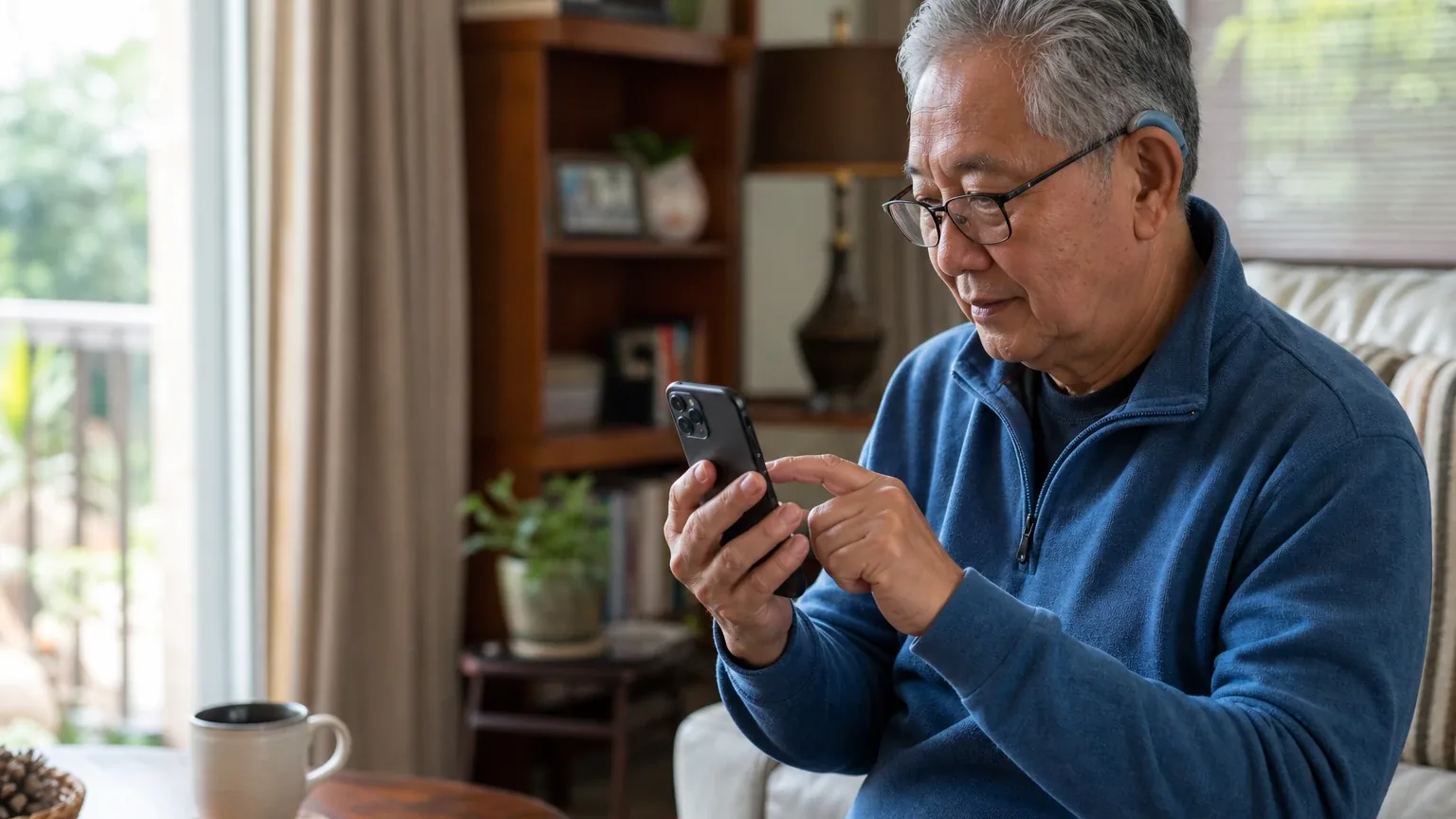
The Apple iPhone is a good-to-strong fit for seniors with mild-to-severe hearing loss who need amplified call audio or real-time text captioning, according to the AI platforms that evaluated it. Three of seven platforms named the iPhone during the ranking stage (Google, Grok, OpenAI), and all seven platforms that assessed fit rated it positively—five rated it "good," two rated it "strong," and one rated it "mixed." The strongest reason to consider the iPhone is its integrated hearing-accessibility ecosystem: Live Captions, Made for iPhone (MFi) hearing aid streaming, LED flash alerts, and certified conversational gain up to 19.9 dB without hearing aids on newer models. The main limitation is that Apple does not publish a handset call-amplification level in decibels comparable to dedicated amplified phones, and maximum loudness generally depends on paired hearing aids, AirPods, or other accessories.
Research Snapshot
| Metric | Value |
|---|---|
| Platform mentions in ranking stage | 3 of 7 platforms (Google, Grok, OpenAI) |
| Share of included platform responses | 42.9% (3 of 7) |
| Average listed rank | 3.0 |
| Best listed rank | 3 |
| Fit ratings across all 7 platforms | 2 strong, 4 good, 1 mixed |
| Relevant product/model/plan | iPhone 11 or later on current iOS; iPhone 16e recommended (via Consumer Cellular or major carriers) |
| Overall use-case fit | Good to strong for hearing-accessible smartphone use; not a substitute for dedicated amplified phones |
| Research date | 2026-08-11 |
Why Apple iPhone Qualified for This Study
Apple iPhone qualified for this review because it was named by at least two AI platforms during the ranking stage for the "Best Phones for Seniors With Hearing Loss" category. Three platforms—Google, Grok, and OpenAI—listed the iPhone in their rankings, all at position 3. The category criteria included decibel amplification level, Hearing Aid Compatibility (HAC) rating, real-time captioning support, visual ringer alerts, and audio clarity enhancement. Apple's iPhone addresses most of these criteria through built-in iOS accessibility features, though its decibel amplification specification is not published in the same way as dedicated amplified phones.
The Product, Model, Plan, or Service Most Relevant to Amplified & Hearing-Accessible Phones
The most relevant product configuration is the iPhone 16e running a current supported iOS version, paired with a U.S. cellular plan—particularly through Consumer Cellular or major carriers. All seven platforms converged on iPhone 11 or later as the minimum viable hardware, with the iPhone 16e identified as the recommended current entry point. Apple lists iPhone 11 and later among devices compatible with iOS 26, supporting the recommendation to use a current supported iOS version [1]. The iPhone 16e is identified by Apple as hearing-aid compatible [2], and FCC testing shows conversational gain values of 13.0 dB with a hearing aid and 19.9 dB without a hearing aid for the iPhone 16e [3].
What the AI Platforms Agreed About
Strong agreement: Real-time captioning is a core strength
All seven platforms identified Live Captions as a major advantage. Live Captions is available on iPhone 11 or later and provides real-time speech-to-text transcription for phone calls, FaceTime, podcasts, videos, and in-person conversations [4]. The feature is on-device and does not require internet for processing, though accuracy varies [6]. One independent source notes Live Captions is limited to English (US) and English (Canada) when the primary language is English [7].
Strong agreement: Hearing aid compatibility is well-supported
Six of seven platforms rated HAC as an advantage. Most iPhone devices meet FCC Hearing Aid Compatibility requirements with M3/M4 acoustic coupling and T3/T4 inductive coupling ratings [8]. The iPhone 16 family, including the iPhone 16e, is rated M3/T4 for compatibility with older standards [9]. Newer models like the iPhone 16 and 16e are fully compliant with the 2019 ANSI C63.19 standards [10]. Apple warns that HAC ratings do not guarantee satisfactory performance with an individual hearing aid [11].
Strong agreement: Visual alerts are built in
All platforms that assessed visual ringer alerts confirmed the iPhone supports LED flash for alerts, screen flashing, and vibration-based signaling. The LED Flash for Alerts feature enables the camera LED to flash on incoming calls and notifications, accessible via Settings > Accessibility > Audio/Visual [12]. iOS 26.2 added front display flashing as an option [13]. iPhone can flash the rear LED, the screen, or both for incoming notifications [14].
Strong agreement: Audio clarity enhancement exists but is accessory-dependent
Six of seven platforms noted that audio enhancement features—Headphone Accommodations, Live Listen, and MFi hearing aid streaming—are valuable but depend on compatible accessories. Headphone Accommodations allows customization of amplification, tone, and ambient noise reduction for connected audio devices [15]. Live Listen streams audio from the iPhone microphone to compatible hearing devices or supported headphones [16]. Direct integration with Made for iPhone hearing aids enables call streaming and control [17].
Majority agreement: Conversational gain is certified on newer models
Three platforms (Google, Grok, Anthropic) cited specific conversational gain figures. Recent iPhone models tested under the 2019 ANSI HAC standards feature certified conversational gain of 13–16 dB with hearing aids and 18–19.9 dB without hearing aids [19]. The iPhone 16e offers 16 dB conversational gain with hearing aids and 18 dB without, per one carrier listing [21]. Grok reported 13–19 dB for iPhone 16 models [22].
Where the AI Platforms Disagreed or Were Uncertain
Decibel amplification level: Unclear or limitation
This was the most significant disagreement. OpenAI assessed decibel amplification as "unclear," noting Apple does not publish a maximum call-audio amplification level in decibels for iPhone 16e or iPhone 11 and later [23]. DeepSeek rated it "neutral," stating the iPhone does not provide a built-in decibel amplification control beyond standard volume [25]. Kimi rated it a "limitation," estimating iPhone maximum call volume at approximately 20–25 dB above baseline—not comparable to dedicated amplified phones offering 50–53 dB [26]. Google rated it an "advantage" based on certified conversational gain figures [28]. Perplexity rated it a "limitation," noting the sources checked do not establish a phone-specific decibel amplification level comparable to purpose-built amplified phones [29].
Overall fit rating: Good to strong, with one mixed
Google and Grok rated the iPhone a "strong" fit. OpenAI, Anthropic, DeepSeek, and Perplexity rated it "good." Kimi rated it "mixed," stating the iPhone "fundamentally lacks the hardware amplification power and simplicity of purpose-built amplified phones" (kimi final verdict). This mixed rating reflects the view that the iPhone excels as a software-based accessibility platform but is not a dedicated amplified phone.
Live Captions language restriction
Anthropic flagged that Live Captions is limited to English (US) and English (Canada) [31]. Other platforms did not emphasize this restriction. The basis for this limitation—whether technical or a rollout timeline—is unclear from the sources (anthropic factual conflicts).
HAC rating specifics for iPhone 16e
OpenAI noted that Apple's public specifications state iPhone 16e is hearing-aid compatible but do not provide a readily comparable M/T rating under the newer ANSI standard (openai factual conflicts). Google's sources indicate the iPhone 16 family is rated M3/T4 for older standards and compliant with 2019 ANSI C63.19 [32]. This discrepancy reflects the transition from the older M/T rating system to the newer ANSI standard.
Use-Case-Specific Features and Capabilities
Decibel amplification level
The iPhone's certified conversational gain on newer models ranges from 13.0 dB to 19.9 dB depending on model and whether hearing aids are used [34]. The iPhone 16 Pro supports volume control with a conversational gain of 16 dB with hearing aids and 18 dB without, under the 2019 ANSI standard [35]. This is substantially lower than dedicated amplified phones offering 50–53 dB [36]. Apple does not publish a handset call-amplification level in decibels for ordinary call audio [38].
Hearing Aid Compatibility (HAC) rating
Most traditional iPhones (iPhone 11 to iPhone 15 series) have a strong M3/T4 acoustic/inductive coupling rating [39]. The iPhone 16 and 16e are fully compliant with the 2019 ANSI C63.19 standards [40]. Apple explains that FCC HAC status generally involves M3/M4 acoustic coupling and T3/T4 inductive coupling, but the 2019 ANSI standard does not use the older M/T rating system [41]. HAC ratings do not guarantee satisfactory performance with an individual hearing aid [42].
Real-time captioning support
Live Captions provides on-device, real-time speech-to-text transcription for live conversations, audio from apps, and phone calls [43]. It is available on iPhone 11 or later running iOS 16+ [44]. The feature can be customized for text size and color [43]. Availability varies by language, country, and region, and caption accuracy may vary [45]. Live Captions is limited to English (US) and English (Canada) [47].
Visual ringer alerts
iPhone supports LED Flash for Alerts, which triggers the camera's LED flash to blink when notifications, calls, or alarms come through [48]. iOS 26.2 added front display flashing [49]. The feature is accessible via Settings > Accessibility > Audio/Visual > LED Flash for Alerts [50]. Vibration alerts and customizable vibration patterns are also available [51].
Audio clarity enhancement
Headphone Accommodations allows customization of amplification, tone, and ambient noise reduction for connected audio devices [52]. Live Listen turns the iPhone into a remote microphone to stream ambient sound directly to AirPods or MFi hearing aids [53]. Sound Recognition listens for and alerts users to doorbells, smoke alarms, or running water [53]. Mono audio mixing supports users who hear better in one ear [55].
Pricing, Fees, Contracts, and Ongoing Costs
Known device costs
The iPhone 16e starts at $599 for 128GB [56]. Apple Certified Refurbished iPhone 16e pricing was observed at $419 for 128GB and $509 for 256GB, both unlocked, at the time checked [58]. The iPhone 16e 256GB is $699 and 512GB is $899 (anthropic pricing). A compatible power adapter may need to be purchased separately because the iPhone 16e box includes a USB-C cable but not a power adapter (openai pricing).
Carrier and service costs
Consumer Cellular plans range from $20/month (1GB, unlimited talk/text) to $50/month (unlimited data) [59]. Consumer Cellular offers the iPhone 16e at $599 outright or financed at approximately $23 down and $24/month via EasyPay installment plans [57]. No contract is required when purchasing outright with month-to-month carrier service (anthropic pricing). Installment plans typically lock the buyer into a 24-month service agreement (anthropic pricing). Consumer Cellular offers a 45-day trial with a 500MB data limit (anthropic pricing).
Additional fees
Carrier activation fees typically range from $10–$25 depending on promotions (google pricing). Optional AppleCare+ protection ranges from $149 to over $199 upfront or billed monthly (google pricing). Compatible hearing aids, AirPods, Beats headphones, cases, and accessories may add substantial ongoing or one-time costs (openai pricing). MFi hearing aids typically cost $1,000 to $3,000 per pair (deepseek pricing). AirPods Pro (for Conversation Boost) cost around $249 (deepseek pricing).
Pricing confidence
Pricing confidence varied by platform: Google rated it "high," Anthropic rated it "high," OpenAI rated it "moderate," DeepSeek rated it "moderate," Kimi rated it "moderate," Grok rated it "low," and Perplexity rated it "low." The Apple refurbished pricing observed is time-sensitive and may not represent current new-device pricing (openai factual conflicts).
Best Suited For
The Apple iPhone is best suited for seniors with mild-to-severe hearing loss who:
- Already use Made for iPhone (MFi) hearing aids or compatible Bluetooth hearing devices, enabling direct audio streaming and control (openai best_considered_for, google best_considered_for)
- Need real-time captions, RTT, visual or vibrating alerts, and configurable audio accessibility settings (openai best_considered_for)
- Are comfortable with a touchscreen smartphone and an ongoing cellular data plan (openai best_considered_for)
- Value long software support—iPhone models receive updates for approximately 5–6 years after release, with iPhone 16 series expected through 2030+ [60]
- Want a portable, multi-function device that reduces the need for a separate landline caption phone (kimi strengths)
- Prefer a broad app ecosystem with integrated accessibility features (anthropic best_considered_for)
Probably Not Best Suited For
The Apple iPhone is probably not the best choice for:
- Seniors with severe-to-profound hearing loss who require 30+ dB amplification across call audio without hearing aids (anthropic probably_not_best_for, deepseek probably_not_best_for)
- Users who need very loud built-in speaker output without hearing aids, headphones, or additional accessories (openai probably_not_best_for)
- Seniors who prefer physical buttons and minimal setup—the touchscreen interface, Bluetooth pairing, and accessibility configuration may be difficult for some (openai probably_not_best_for, google probably_not_best_for)
- Users whose primary language is not English (US/Canada), as Live Captions is not available in other languages (anthropic probably_not_best_for)
- Buyers seeking a simple landline-style phone with a published high-volume decibel rating (openai probably_not_best_for)
- Those seeking free phones through FCC/ADA caption phone programs—the iPhone is not eligible for free provision through these programs (kimi probably_not_best_for)
When Another Option May Be Better
Consider a dedicated amplified phone when the buyer's primary requirement is very loud built-in call audio, large physical controls, simple operation, and a published amplification rating (openai better_alternative_when). Dedicated amplified phones like the Clarity AltoPlus offer 50–53 dB amplification with TIA-4953 certification for mild, moderate, and severe hearing loss [61]. These devices also offer 50–100 dBA ringers, large buttons, and telecoil support [63].
Consider a captioned telephone or captioning-focused service when real-time telephone captions are the central requirement and the buyer does not want to use a smartphone (openai better_alternative_when). CapTel and similar caption phones are available at no cost through federally managed ADA/FCC programs for qualified users [64].
Consider Android or another phone when the buyer's specific hearing aid is not MFi-compatible but works better with that platform (openai better_alternative_when). Consider a newer iPhone model when longer expected software support, improved hardware, or current retail availability is more important than minimizing purchase price (openai better_alternative_when).
Consider a basic flip phone like the Jitterbug Flip2 when the buyer prioritizes loudspeaker amplification for speaker-phone calls (100+ dB with dedicated hearing aid mode) or prefers physical buttons and a non-touchscreen interface (anthropic better_alternative_when).
Questions to Verify Before Buying
- What is the exact model number and HAC information for the iPhone being purchased in the United States? (openai questions)
- Has the buyer's specific hearing-aid model been tested with the exact iPhone model and current iOS version? (openai questions, anthropic questions)
- Does the buyer need Live Captions for ordinary phone calls, and is the required captioning workflow supported by the chosen carrier, app, and iOS version? (openai questions)
- Are Live Captions available in the buyer's preferred language and region, and is the accuracy acceptable in typical conversations? (openai questions)
- Will the buyer use direct hearing-aid streaming, Live Listen, AirPods, or the handset speaker? (openai questions)
- Does the selected carrier support the needed network, eSIM setup, calling features, and any RTT or captioning service the buyer intends to use? (openai questions)
- What are the carrier's total monthly costs, activation charges, financing obligations, promotional-credit conditions, and cancellation terms? (openai questions)
- Is a power adapter, hearing-device accessory, protective case, or technical setup assistance needed? (openai questions)
- Can the buyer trial the phone with their hearing aids before the return period expires? (openai questions)
- What is the buyer's current hearing loss severity? The iPhone's 16–19.9 dB amplification may be insufficient for severe-to-profound loss (anthropic questions).
Final AI Consensus Verdict
The AI platforms collectively rate the Apple iPhone as a good-to-strong fit for seniors with mild-to-severe hearing loss who need amplified call audio or real-time text captioning. The iPhone's integrated accessibility ecosystem—Live Captions, MFi hearing aid streaming, LED flash alerts, Headphone Accommodations, and certified conversational gain up to 19.9 dB—makes it a compelling choice for tech-comfortable seniors, particularly those who already use compatible hearing aids. The iPhone 16e at $599 (or $419 refurbished) is the recommended entry point.
However, the iPhone is not a dedicated amplified phone. Apple does not publish a handset call-amplification level in decibels comparable to purpose-built devices, and maximum loudness generally depends on paired hearing aids, AirPods, or other accessories. Buyers with severe-to-profound hearing loss who need 30+ dB amplification, or who prefer physical buttons and simple operation, should compare against dedicated amplified phones from Clarity, Panasonic, or Jitterbug, or captioned telephone services like CapTel.
The consensus recommendation: verify hearing aid compatibility with the exact iPhone model before purchase, confirm Live Captions availability in the buyer's language, and assess whether accessory-dependent amplification meets the buyer's needs. For the broader landscape of options, see the Amplified & Hearing-Accessible Phones consensus index. For related senior technology options, browse the senior technology category directory.
How This Review Was Produced
This review was produced by aggregating fit-research responses from seven AI platforms—Google, Grok, OpenAI, Anthropic, DeepSeek, Perplexity, and Kimi—each of which evaluated the Apple iPhone against the category criteria for amplified and hearing-accessible phones. The research date for the authoritative run is 2026-08-11. Six of seven platforms conducted their research on this date; DeepSeek's research date was 2026-04-09, which is disclosed as a methodology limitation.
Each platform provided citations to support its claims. Company-owned sources (primarily Apple support pages and carrier listings) materially outnumber independent sources (27 owned versus 12 independent and 2 unclear). Company claims should not be treated as independently verified. The supplied URLs were collected from platform responses and were not independently validated by the writer stage.
Methodology Limitations
- Company-owned evidence dominance: Apple-owned sources account for the majority of citations. Independent verification of Apple's accessibility claims is limited.
- Platform date discrepancy: DeepSeek's research was conducted on 2026-04-09, approximately four months before the authoritative run date of 2026-08-11. Pricing and feature availability may have changed.
- Decibel specification gap: Apple does not publish a handset call-amplification level in decibels. Conversational gain figures come from FCC testing records and carrier listings, which may vary between testing laboratories and cellular bands.
- Pricing volatility: Refurbished pricing, carrier promotions, and financing terms are time-sensitive and were not independently verified.
- HAC rating transition: The shift from the older M/T rating system to the 2019 ANSI standard creates ambiguity in comparing HAC ratings across models and sources.
- Unverified URLs: The supplied URLs were collected from platform responses and were not independently validated by the writer stage.
- AI agreement does not prove product quality: Consensus among AI platforms reflects the sources they accessed, not independent testing or user experience.
Explore more senior technology guidance in the category directory.
Sources
Company-Owned Sources
- About Hearing Aid Compatibility requirements for iPhone: https://support.apple.com/en-ie/106349
- Accessibility features for hearing on iPhone: https://support.apple.com/en-ie/guide/iphone/iphb210be03a/ios
- Accessibility features for hearing on iPhone - Apple Support (IN): https://support.apple.com/en-in/guide/iphone/iph3e2e23d1/ios
- Get live captions of spoken audio on iPhone - Apple Support (IN): https://support.apple.com/en-in/guide/iphone/iphe0990f7bb/ios
- Hearing accessibility features in iOS - Apple Support (IN): https://support.apple.com/en-in/HT207013
- How to download iOS 26: https://support.apple.com/en-mide/123705
- Customize headphone audio levels on your iPhone or iPad - Apple Support: https://support.apple.com/en-us/102663
- About Hearing Aid Compatibility (HAC) requirements for iPhone - Apple Support: https://support.apple.com/en-us/106349
- Use Made for iPhone hearing devices: https://support.apple.com/en-us/108780
- Hearing accessibility features in iOS: https://support.apple.com/en-us/111765
- iPhone 16e - Tech Specs: https://support.apple.com/en-us/122208
- Flash the iPhone screen or indicator light for notifications: https://support.apple.com/guide/iphone/flash-indicator-light-screen-notifications-iph79ced06b1/26/ios
- Get live captions of spoken audio on iPhone - Apple Support: https://support.apple.com/guide/iphone/get-live-captions-of-spoken-audio-iphe0990f7bb/ios
- Accessibility features for hearing on iPhone - Apple Support: https://support.apple.com/guide/iphone/overview-accessibility-features-hearing-iphb210be03a/ios
- Use hearing devices with iPhone - Apple Support: https://support.apple.com/guide/iphone/use-hearing-devices-iph5cf59b2b6/ios
- Use iPhone as a remote microphone with Live Listen: https://support.apple.com/guide/iphone/use-live-listen-iph8bf9386f5/ios
- iPhone 16 Pro - Info - Apple: https://support.apple.com/kb/manuals/iphone/iphone-16-pro-info.pdf
- Apple iPhone Accessibility - Live Captions and Hearing Features: https://www.apple.com/accessibility/
- Accessibility - Features - Apple: https://www.apple.com/accessibility/features/
- iPhone - Accessibility - Hearing - Apple: https://www.apple.com/accessibility/hearing/
- Apple Accessibility for iPhone: https://www.apple.com/accessibility/iphone/
- Refurbished iPhone 16: https://www.apple.com/shop/refurbished/iphone/iphone-16
- The Complete Guide to the Best Phone for Hard of Hearing Seniors - CapTel Captioned Telephone: https://www.captel.com/2026/03/the-best-phone-for-hard-of-hearing-seniors/
- What to Look for in a Hearing Aid Compatible Telephone: https://www.captel.com/2026/04/what-to-look-for-in-a-hearing-aid-compatible-telephone-tips/
- Apple iPhone 16e 128GB Black | Cellcom: https://www.cellcom.com/shop/devices/phones/apple/iphone-16e-128gb-black
- iPhone 16e has arrived! - Consumer Cellular Blog: https://www.consumercellular.com/blog/iphone-16e-has-arrived/
- Lively amplified phones: https://www.livelydirect.com/phones/
Additional AI research evidence64 records
- AI research evidence record openai:c9
- AI research evidence record openai:c3
- AI research evidence record google:3.1.8
- AI research evidence record anthropic:c2
- AI research evidence record google:1.3.6
- AI research evidence record kimi:c6
- AI research evidence record anthropic:c3
- AI research evidence record anthropic:c1
- AI research evidence record google:1.2.6
- AI research evidence record google:1.2.7
- AI research evidence record openai:c4
- AI research evidence record anthropic:c6
- AI research evidence record anthropic:c8
- AI research evidence record openai:c6
- AI research evidence record anthropic:c4
- AI research evidence record openai:c8
- AI research evidence record openai:c7
- AI research evidence record google:1.2.4
- AI research evidence record google:3.1.3
- AI research evidence record google:3.1.8
- AI research evidence record anthropic:c7
- AI research evidence record grok:c1
- AI research evidence record openai:c1
- AI research evidence record openai:c2
- AI research evidence record deepseek:c1
- AI research evidence record kimi:c3
- AI research evidence record kimi:c4
- AI research evidence record google:3.1.8
- AI research evidence record perplexity:c1
- AI research evidence record perplexity:c4
- AI research evidence record anthropic:c3
- AI research evidence record google:1.2.6
- AI research evidence record google:1.2.7
- AI research evidence record google:3.1.8
- AI research evidence record google:3.1.3
- AI research evidence record kimi:c3
- AI research evidence record kimi:c4
- AI research evidence record openai:c2
- AI research evidence record google:1.2.7
- AI research evidence record google:1.2.6
- AI research evidence record openai:c4
- AI research evidence record anthropic:c1
- AI research evidence record google:1.3.6
- AI research evidence record anthropic:c2
- AI research evidence record openai:c1
- AI research evidence record openai:c5
- AI research evidence record anthropic:c3
- AI research evidence record google:1.1.4
- AI research evidence record anthropic:c8
- AI research evidence record anthropic:c6
- AI research evidence record kimi:c6
- AI research evidence record anthropic:c4
- AI research evidence record google:1.1.2
- AI research evidence record anthropic:c9
- AI research evidence record anthropic:c10
- AI research evidence record anthropic:c11
- AI research evidence record google:2.1.8
- AI research evidence record openai:c10
- AI research evidence record anthropic:c12
- AI research evidence record anthropic:c13
- AI research evidence record kimi:c1
- AI research evidence record kimi:c4
- AI research evidence record kimi:c3
- AI research evidence record kimi:c2
Independent Sources
- FCC ID BCG-E8727A - iPhone: https://fccid.io/BCG-E8727A
- Assistive Technology: Live Captions (iOS) – IXD@Pratt: https://ixd.prattsi.org/2025/02/assistive-technology-live-captions-ios/
- Hearing aid compatibility - CREDO Mobile Support Center: https://support.credomobile.com/hc/en-us/articles/211756286-Hearing-aid-compatibility
- Amplified Phones: Clarity Altoplus | Amplifon CA: https://www.amplifon.com/ca/assistive-listening-devices/amplified-phones/clarity-altoplus
- Hearing Aid Compatibility Chart - Appalachian Wireless: https://www.appalachianwireless.com/support/hac-chart
- Alto Plus Amplified Telephone: https://www.ftri.org/products/alto-plus
- Federal Register / Vol. 89, No. 220 / Hearing Aid Compatibility: https://www.govinfo.gov/content/pkg/FR-2024-11-13/pdf/2024-25088.pdf
- Make Your iPhone Display Flash for Alerts - MacRumors: https://www.macrumors.com/how-to/ios-26-2-make-your-iphone-screen-flash-for-alerts/
- 10 iPhone Accessibility Features for People With Hearing Difficulties - makeuseof: https://www.makeuseof.com/iphone-accessibility-features-for-people-with-hearing-difficulties/
- Best Cell Phones for Hearing Impaired Seniors in 2026 - Senior Living: https://www.seniorliving.org/cell-phone/best/hearing-impaired/
- The Best iPhones for Seniors in 2026 - Senior Living: https://www.seniorliving.org/cell-phone/best/iphone/
- How to make your camera flash light up when you get an iPhone alert - TapSmart: https://www.tapsmart.com/tips-and-tricks/led-flash-alerts/
Additional AI research evidence64 records
- AI research evidence record openai:c9
- AI research evidence record openai:c3
- AI research evidence record google:3.1.8
- AI research evidence record anthropic:c2
- AI research evidence record google:1.3.6
- AI research evidence record kimi:c6
- AI research evidence record anthropic:c3
- AI research evidence record anthropic:c1
- AI research evidence record google:1.2.6
- AI research evidence record google:1.2.7
- AI research evidence record openai:c4
- AI research evidence record anthropic:c6
- AI research evidence record anthropic:c8
- AI research evidence record openai:c6
- AI research evidence record anthropic:c4
- AI research evidence record openai:c8
- AI research evidence record openai:c7
- AI research evidence record google:1.2.4
- AI research evidence record google:3.1.3
- AI research evidence record google:3.1.8
- AI research evidence record anthropic:c7
- AI research evidence record grok:c1
- AI research evidence record openai:c1
- AI research evidence record openai:c2
- AI research evidence record deepseek:c1
- AI research evidence record kimi:c3
- AI research evidence record kimi:c4
- AI research evidence record google:3.1.8
- AI research evidence record perplexity:c1
- AI research evidence record perplexity:c4
- AI research evidence record anthropic:c3
- AI research evidence record google:1.2.6
- AI research evidence record google:1.2.7
- AI research evidence record google:3.1.8
- AI research evidence record google:3.1.3
- AI research evidence record kimi:c3
- AI research evidence record kimi:c4
- AI research evidence record openai:c2
- AI research evidence record google:1.2.7
- AI research evidence record google:1.2.6
- AI research evidence record openai:c4
- AI research evidence record anthropic:c1
- AI research evidence record google:1.3.6
- AI research evidence record anthropic:c2
- AI research evidence record openai:c1
- AI research evidence record openai:c5
- AI research evidence record anthropic:c3
- AI research evidence record google:1.1.4
- AI research evidence record anthropic:c8
- AI research evidence record anthropic:c6
- AI research evidence record kimi:c6
- AI research evidence record anthropic:c4
- AI research evidence record google:1.1.2
- AI research evidence record anthropic:c9
- AI research evidence record anthropic:c10
- AI research evidence record anthropic:c11
- AI research evidence record google:2.1.8
- AI research evidence record openai:c10
- AI research evidence record anthropic:c12
- AI research evidence record anthropic:c13
- AI research evidence record kimi:c1
- AI research evidence record kimi:c4
- AI research evidence record kimi:c3
- AI research evidence record kimi:c2
Other Sources
- iPhone Hearing Aids: How iPhones Can Boost Your Hearing - Olive Union: https://us.oliveunion.com/blogs/auditory-health/iphone-hearing-aids-how-iphones-can-boost-your-hearing
- iPhone 16e is available at Consumer Cellular - Facebook: https://www.facebook.com/ConsumerCellular/videos/iphone-16e-is-available-at-consumer-cellular-featuring-a-supersized-battery-lif/1344402633519965/
Additional AI research evidence64 records
- AI research evidence record openai:c9
- AI research evidence record openai:c3
- AI research evidence record google:3.1.8
- AI research evidence record anthropic:c2
- AI research evidence record google:1.3.6
- AI research evidence record kimi:c6
- AI research evidence record anthropic:c3
- AI research evidence record anthropic:c1
- AI research evidence record google:1.2.6
- AI research evidence record google:1.2.7
- AI research evidence record openai:c4
- AI research evidence record anthropic:c6
- AI research evidence record anthropic:c8
- AI research evidence record openai:c6
- AI research evidence record anthropic:c4
- AI research evidence record openai:c8
- AI research evidence record openai:c7
- AI research evidence record google:1.2.4
- AI research evidence record google:3.1.3
- AI research evidence record google:3.1.8
- AI research evidence record anthropic:c7
- AI research evidence record grok:c1
- AI research evidence record openai:c1
- AI research evidence record openai:c2
- AI research evidence record deepseek:c1
- AI research evidence record kimi:c3
- AI research evidence record kimi:c4
- AI research evidence record google:3.1.8
- AI research evidence record perplexity:c1
- AI research evidence record perplexity:c4
- AI research evidence record anthropic:c3
- AI research evidence record google:1.2.6
- AI research evidence record google:1.2.7
- AI research evidence record google:3.1.8
- AI research evidence record google:3.1.3
- AI research evidence record kimi:c3
- AI research evidence record kimi:c4
- AI research evidence record openai:c2
- AI research evidence record google:1.2.7
- AI research evidence record google:1.2.6
- AI research evidence record openai:c4
- AI research evidence record anthropic:c1
- AI research evidence record google:1.3.6
- AI research evidence record anthropic:c2
- AI research evidence record openai:c1
- AI research evidence record openai:c5
- AI research evidence record anthropic:c3
- AI research evidence record google:1.1.4
- AI research evidence record anthropic:c8
- AI research evidence record anthropic:c6
- AI research evidence record kimi:c6
- AI research evidence record anthropic:c4
- AI research evidence record google:1.1.2
- AI research evidence record anthropic:c9
- AI research evidence record anthropic:c10
- AI research evidence record anthropic:c11
- AI research evidence record google:2.1.8
- AI research evidence record openai:c10
- AI research evidence record anthropic:c12
- AI research evidence record anthropic:c13
- AI research evidence record kimi:c1
- AI research evidence record kimi:c4
- AI research evidence record kimi:c3
- AI research evidence record kimi:c2
Verify this research
Review the study details behind this page or download the public machine-readable verification record.
- Study date
- Aug 11, 2026
- Platforms analyzed
- 7
- Source records
- 41
- Ranking mentions
- 3 of 7
- Platform share
- 43%
- Final consensus rank
- #3
Research trail and source mix
Platforms
openai, anthropic, deepseek, grok, perplexity, kimi, google
Source mix
12 independent · 27 company-owned · 2 unclear
Evidence support
37 direct · 4 partial
Important limitation
Use the run research_date as the study date. Platform-reported dates are provenance metadata and do not independently prove freshness.
Source snapshot SHA-256 ecdbf1316d0941321148a2c8725b39e7f190a280cb9e7ead88a2e678cb49a5e9