
Answer Capsule
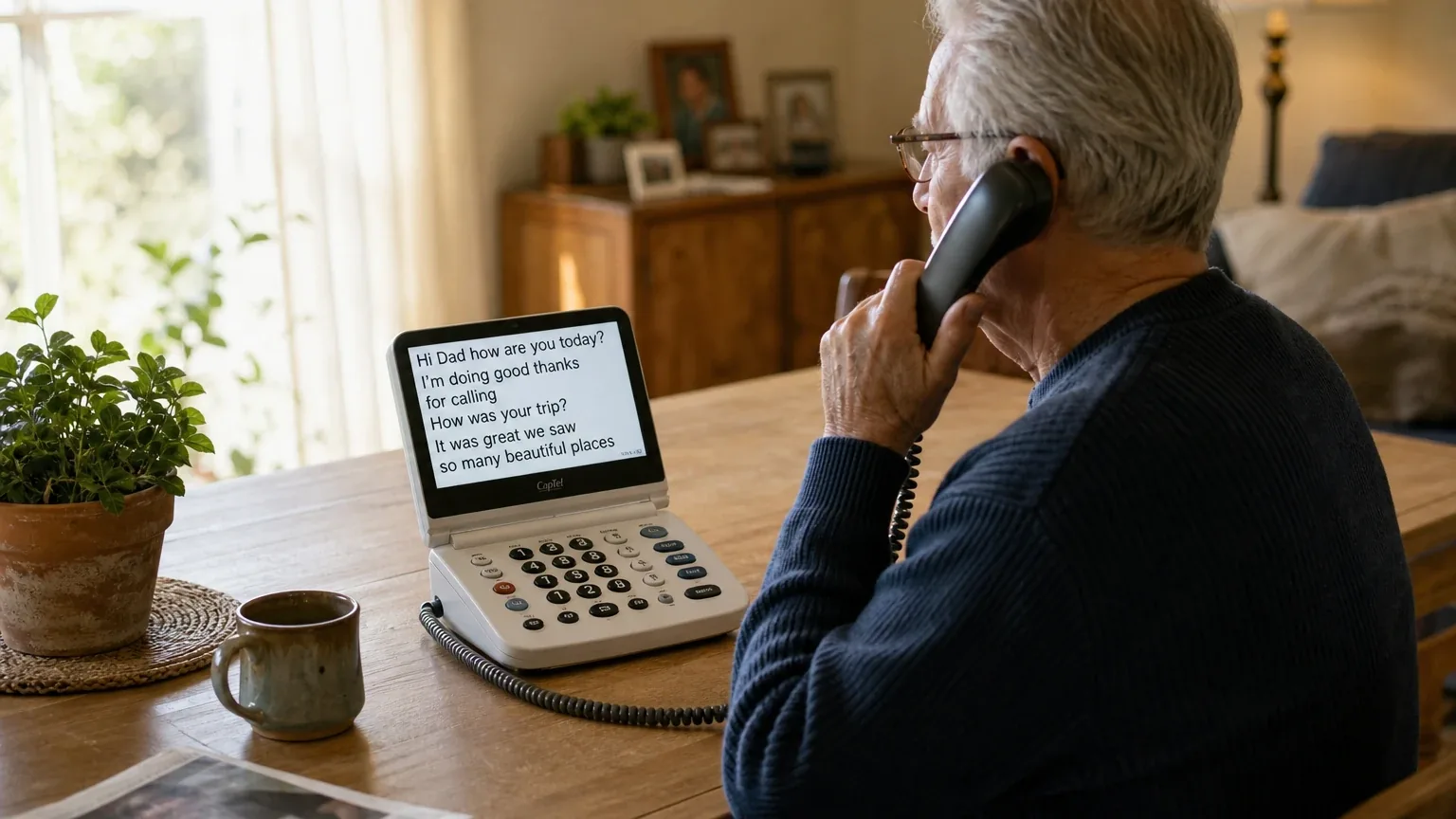
The CapTel 840 is a strong-to-good fit for U.S. seniors with mild-to-severe hearing loss who need both amplified call audio and real-time text captioning, provided they have a compatible analog telephone line. Five of seven AI platforms named the CapTel 840 during the ranking stage, and it achieved an average listed rank of 3.4 with a best rank of #1. The strongest reason to consider it: it is the only CapTel model that works without high-speed internet, making it essential for rural seniors or households without broadband. The main limitation: incoming callers must dial a toll-free captioning service first before the user receives captions, and analog captioning services have been phased out in more than 20 U.S. states, restricting availability.
Research Snapshot
| Metric | Value |
|---|---|
| Platform mentions in ranking stage | 5 of 7 platforms (anthropic, deepseek, google, grok, kimi) |
| Share of included platform responses | 71.4% (5 of 7) |
| Average listed rank | 3.4 |
| Best listed rank | #1 (grok, kimi) |
| Relevant product/model/plan | CapTel 840 Captioned Telephone (analog model, no internet required) |
| Overall use-case fit | Strong-to-good; mixed for users with internet access or severe hearing loss |
| Research date | 2026-08-11 |
Why CapTel 840 Qualified for This Study
The CapTel 840 qualified because it directly addresses the category criteria for amplified and hearing-accessible phones. Platform responses documented its decibel amplification level (up to 40 dB gain on captioned calls), Hearing Aid Compatibility (HAC) with telecoil support, real-time captioning support, visual ringer alerts, and audio clarity enhancement through tone control [1].
Five of seven platforms named the CapTel 840 during the ranking discovery stage: anthropic, deepseek, google, grok, and kimi. Two platforms (openai and perplexity) evaluated fit but did not name it during ranking. The platform fit ratings were: grok and openai rated it "strong," anthropic, deepseek, and google rated it "good," kimi rated it "mixed," and perplexity rated it "uncertain" due to lack of verified product documentation in its source set.
The Product, Model, Plan, or Service Most Relevant to Amplified & Hearing-Accessible Phones
The most relevant product is the CapTel 840 Captioned Telephone, an analog corded desktop phone that combines handset amplification with real-time text captioning of phone conversations. It requires a standard analog telephone line and electrical power but does not require high-speed internet [7].
The official CapTel website currently emphasizes the CapTel 840PLUS as the analog successor or closely related model, creating ambiguity about whether the original 840 is still sold [10]. The 840PLUS user manual and product sheet document the same core features: up to 40 dB gain, HAC handset, adjustable caption display, and analog-line operation.
For users with high-speed internet, the CapTel 840i, 2400i, or 880i are the relevant alternatives. The 840i offers automatic captioning on all direct incoming calls without the caller dialing a service first, at the same $75 retail price [14].
What the AI Platforms Agreed About
Strong agreement: The CapTel 840 provides up to 40 dB amplification on captioned calls. Four platforms (openai, anthropic, grok, google) documented this figure from company and independent sources [17]. One platform (anthropic) noted that when captions are off, gain drops to 0-18 dB, citing Corada.com specifications [25].
Strong agreement: The CapTel 840 is hearing aid compatible with telecoil support. All CapTel models are described as HAC-compatible, and the 840 handset is specifically identified as HAC [18]. The phone supports induction neckloops and assistive audio devices via 2.5mm and 3.5mm jacks [31].
Strong agreement: The captioning service is free for eligible users. The service is funded through the FCC's Telecommunications Relay Service (TRS) fund, and eligible users with certified hearing loss pay nothing for the service [33]. Eligible users may also receive the phone hardware at no cost through state equipment distribution programs [39].
Strong agreement: The CapTel 840 does not require high-speed internet. This is its key differentiator from the 840i, 2400i, and 880i models, which all require internet connections [41]. It works over standard analog telephone lines.
Majority agreement: Incoming callers must dial a captioning service first. In 1-Line mode, callers must dial the captioning service (877-243-2823) and then enter the user's phone number to deliver captions [45]. An optional 2-Line mode allows direct dialing but requires a second phone line [47].
Majority agreement: The phone includes tone control for audio clarity. Tone control adjusts specific sound frequencies rather than just increasing volume, which can be more effective for certain hearing loss patterns [49].
Majority agreement: The retail price is approximately $75. CapTel's official pricing page states a $75 direct-purchase price [33], and independent sources confirm this figure [40].
Where the AI Platforms Disagreed or Were Uncertain
Disagreement: Visual ringer alerts. Openai rated visual ringer alerts as "unclear," stating that a dedicated visual ring-flasher specification for the 840 was not clearly verified [53]. Anthropic rated this factor as "neutral," documenting that the display lights up and flashes "RING" when a call arrives, with adjustable ringer volume [55]. Deepseek rated it as an "advantage," stating the 840 includes a visual ring flasher on the base [58]. Kimi rated it "unclear," noting specific visual ringer details were not confirmed [59]. Google did not directly address visual ringer alerts in its use-case findings.
Disagreement: Amplification with captions off. Anthropic reported 0-18 dB gain when captions are off, citing Corada.com [57]. Other platforms did not document this distinction. Openai noted the 40 dB figure is specifically for captioned calls and that amplification behavior with captions off should be verified [53].
Disagreement: Model naming and current status. Openai noted the official site prominently presents the CapTel 840PLUS, making the exact currently sold model unclear [60]. Anthropic flagged that "840 PLUS," "840PLUS," and "840" appear in different sources and may or may not be interchangeable [61]. Perplexity could not verify whether the 840 is still sold or supported [63].
Disagreement: Overall fit rating. Grok and openai rated the fit "strong." Anthropic, deepseek, and google rated it "good." Kimi rated it "mixed," arguing the 840 is a niche product whose primary value is internet-independent captioning rather than superior amplification [59]. Perplexity rated it "uncertain" due to lack of verified product documentation in its source set [63].
Uncertainty: Caption speed comparison. Anthropic noted that CapTel FAQs reference whether captions are faster with internet-based models (2400i/880i/840i) than with the 840, but no quantified speed data was available [65].
Uncertainty: Exact HAC rating. Deepseek noted that specific HAC ratings (e.g., M4/T4) are not listed on the official product page [58]. Kimi similarly flagged that the specific TIA-1083 or TIA-4953 certification status is not verified [59].
Conflict: State availability. Google reported that analog captioning services have been phased out in more than 20 U.S. states, including Texas, Florida, Washington, and North Carolina, making the 840 unusable or unavailable for shipment in those regions [66]. Other platforms did not document this restriction.
Use-Case-Specific Features and Capabilities
Decibel Amplification Level
The CapTel 840 provides adjustable volume amplification of up to 40 dB gain on captioned calls [67]. The maximum setting is described as very loud and should be used only by people who need amplification [68]. When captions are off, gain is reported at 0-18 dB [75]. This matches the industry baseline for mild-to-moderate hearing loss but is at the lower end for severe loss; some competitors offer 45-53 dB [69].
Hearing Aid Compatibility (HAC)
The handset is fully HAC-compatible and supports telecoil-equipped hearing aids [68]. The phone supports induction neckloops and assistive audio devices via 2.5mm and 3.5mm jacks [82]. CapTel states its phones are designed to work with hearing aids without interference, static, or buzzing [80].
Real-Time Captioning Support
The CapTel 840 displays word-for-word captions of the caller's speech on a large display during calls [67]. Outgoing calls automatically connect to the captioning service. Incoming callers must first dial the captioning service (877-243-2823) and enter the user's phone number to deliver captions [85]. Captions are available for calls within the United States only [67].
Visual Ringer Alerts
The display lights up and flashes "RING" when a call arrives [90]. Ringer volume is adjustable (off, low, medium, high) with a range of 0-87 dB at 1 meter [91]. Deepseek reported a visual ring flasher on the base [92], but openai could not clearly verify a dedicated visual ring-flasher specification for the 840 [68]. There is no flashing light on the handset base like some competitor models [90].
Audio Clarity Enhancement
The phone includes tone control that adjusts specific sound frequencies, which can be more effective than simple amplification for certain hearing loss patterns [94]. It supports compatible headsets, neckloops, and external speakers [96].
Display and Caption Customization
The CapTel 840 features a large, tilting 7-inch display (840×480 pixels) with four adjustable caption font sizes (small, medium, large, extra-large) and customizable background and text colors [69]. This accommodates low-vision users, though the display is smaller than the CapTel 880i's extra-large display or the 2400i's color touchscreen [97].
Additional Features
The phone includes a built-in answering machine that records and displays captioned voice messages [69], phone book storage (95+ entries), caller ID, and speed dial [69]. It uses traditional buttons rather than a touchscreen, which may appeal to seniors less comfortable with technology [69].
Pricing, Fees, Contracts, and Ongoing Costs
Known costs:
- Retail purchase price: $75 when purchased directly from CapTel [99]
- Federal program cost: $0 for eligible users with certified hearing loss [100]
- Monthly captioning service: $0 (federally funded through the FCC TRS fund) [99]
- Phone line service: user's existing provider cost (not included)
- Power: standard electrical outlet
Additional fees:
- Optional 2-Line mode requires paying for a second phone line from the telephone provider [108]
- Some independent retailers may sell the phone for over $100, though specific sellers and current prices were not identified [100]
- Long-distance telephone charges and applicable internet-service charges may apply [99]
Contract and cancellation terms:
- No recurring monthly contract; the captioning service is month-to-month through the federal program [100]
- Federal program eligibility requires Third Party Certification of Hearing Loss from a physician or audiologist [100]
- Federal regulations prohibit use by individuals without qualifying hearing loss [104]
- Retail units typically include a 5-year manufacturer warranty and a 90-day return window [102]
- Eligibility and equipment-distribution terms vary by state [99]
Pricing confidence: Moderate-to-high across platforms. Openai rated confidence "moderate" because the exact current price of the 840 model specifically was not independently confirmed [99]. Anthropic, grok, kimi, and google rated confidence "high." Deepseek rated confidence "moderate," noting retail prices vary and were not independently verified [110].
Best Suited For
The CapTel 840 is best suited for:
- Seniors without high-speed internet access who need real-time captioning; it is the only CapTel model that works over standard analog telephone lines without internet [111]
- Rural users with only analog phone service [112]
- Users with mild-to-severe hearing impairment who can benefit from reading captions while listening [115]
- Users needing up to 40 dB gain on captioned calls [115]
- Users with telecoil-equipped hearing aids [119]
- Budget-conscious buyers who qualify for no-cost equipment through federal or state programs [122]
- Seniors who prefer traditional, physical-button phone layouts over touchscreen models [116]
Probably Not Best Suited For
The CapTel 840 is probably not best suited for:
- Residents of states that have phased out analog captioning services — more than 20 states including Texas, Florida, Washington, and North Carolina no longer support or distribute analog captioned telephone services [125]
- Users with high-speed internet — the CapTel 840i offers automatic incoming captions at the same $75 price [126]
- Users who want seamless automatic captioning on all incoming calls without callers dialing a service number first [126]
- Users with severe hearing loss needing more than 40 dB amplification — competitors offer 45-53 dB [130]
- Users with low vision requiring extra-large displays — the CapTel 880i is purpose-built for this [130]
- Tech-savvy users wanting touchscreen interfaces — the CapTel 2400i offers a touchscreen with dial-by-picture and contact import [130]
- Users who make frequent international calls — captioning is U.S.-only [133]
- Users who need Bluetooth hearing aid streaming — the 840 lacks Bluetooth connectivity [131]
- Users who want a cordless or mobile phone — the 840 is a corded desktop model [136]
When Another Option May Be Better
- CapTel 840i — Choose when the household has high-speed internet. It offers automatic captioning on all direct incoming calls (no caller dial-in needed) and the same 40 dB amplification at the same $75 retail price [137].
- CapTel 2400i — Choose when a touchscreen, dial-by-picture features, Bluetooth connectivity, or a more modern interface is important [140].
- CapTel 880i — Choose when unusually large caption text and low-vision accessibility are more important than the standard 840 form factor [140].
- Clarity AltoPlus — Choose when severe hearing loss requires more than 40 dB amplification. It provides up to 53 dB incoming amplification and 15 dB outgoing speech amplification, with an oversized bright visual ringer and 100 dBA ringer volume [142].
- A conventional amplified HAC phone — Choose when captions are unnecessary and the buyer wants a simpler, lower-dependency telephone [143].
Questions to Verify Before Buying
- Is the offered device the original CapTel 840, CapTel 840PLUS, or another replacement model? The official site currently emphasizes 840PLUS, and the exact retail status of the 840 is unclear [144].
- Does your state still support and distribute analog (non-internet) captioned telephone services? Analog services have been phased out in more than 20 states [147].
- Do you have a traditional analog telephone line? Digital cable or VoIP service may require the CapTel 840i instead [144].
- Are you comfortable asking callers to dial a captioning service first (877-243-2823)? If not, the 840i offers automatic incoming captions [149].
- What is the exact amplification range with captions on and captions off? The 40 dB figure applies to captioned calls; behavior with captions off should be verified [145].
- Are you eligible for the no-cost federal program? Eligibility requires Third Party Certification of Hearing Loss from a physician or audiologist [146].
- Does your hearing aid have a functioning telecoil? Additional neckloop or headset may be needed [152].
- Does the exact model provide a dedicated visual ring flasher? Documentation is conflicting across sources [145].
- What are the current return, replacement, warranty, and shipping terms? Retail units typically include a 5-year warranty and 90-day return window, but verify for your purchase [147].
- Will you need to caption international calls? Captions are available for U.S. calls only [144].
Final AI Consensus Verdict
The AI platforms reached a strong-to-good consensus that the CapTel 840 is a fit for U.S. seniors with hearing loss who need both amplified call audio and real-time text captioning, with the critical caveat that it requires a compatible analog telephone line. Five of seven platforms named it during ranking, and it achieved the #1 rank on two platforms.
The strongest consensus points: the 840 provides up to 40 dB amplification on captioned calls, is hearing aid compatible with telecoil support, offers free captioning service for eligible users through the FCC TRS fund, and is the only CapTel model that works without high-speed internet.
The main limitations are equally clear: incoming callers must dial a captioning service first, analog captioning services have been phased out in more than 20 states, and the 40 dB amplification is at the lower end for severe hearing loss. For users with internet access, the CapTel 840i offers superior convenience at the same price. For users needing more amplification, dedicated amplified phones like the Clarity AltoPlus (53 dB) are stronger options.
The primary purchase risks are model-status ambiguity (840 vs. 840PLUS), analog-line dependence, state-level availability restrictions, and insufficiently clear documentation of a dedicated visual ringer. Buyers should verify state availability and analog-line compatibility before purchasing.
For a broader comparison of amplified and hearing-accessible phone options, see the Amplified & Hearing-Accessible Phones consensus index. You can also explore other senior technology categories for related assistive devices.
How This Review Was Produced
This review was produced by aggregating fit-research responses from seven AI platforms: openai, anthropic, deepseek, google, grok, kimi, and perplexity. Each platform evaluated the CapTel 840 against the category criteria for amplified and hearing-accessible phones: decibel amplification level, Hearing Aid Compatibility (HAC) rating, real-time captioning support, visual ringer alerts, and audio clarity enhancement.
The authoritative research date for this study is 2026-08-11. Six of seven platforms reported research dates matching this date. Deepseek reported a research date of 2025-02-20, which is a platform-reported provenance date and does not independently prove freshness.
Platform fit ratings were: grok and openai rated "strong"; anthropic, deepseek, and google rated "good"; kimi rated "mixed"; and perplexity rated "uncertain." Platform mentions in the ranking stage (5 of 7) and average listed rank (3.4) were calculated from the entity ranking statistics.
Methodology Limitations
- Company-owned sources materially outnumber independent sources. Of 36 deduplicated citations, 24 are company-owned (captel.com, federalrelay.us) and 12 are independent. Company claims should not be treated as independently verified.
- The supplied URLs were collected from platform responses and were not independently validated by the writer stage.
- Platform-reported research dates differ from the authoritative run date. Deepseek reported a research date of 2025-02-20, which is earlier than the authoritative 2026-08-11 date. This may mean some Deepseek findings are based on older information.
- Perplexity could not verify core product specifications from its source set and rated the fit "uncertain" based on absence of verification rather than confirmed capabilities [157].
- Conflicting product names (840 vs. 840PLUS) were not resolved by guessing; the conflict is described and buyers are directed to verify the exact model.
- No independent clinical or comparative evidence was found showing that the device improves hearing outcomes; the assessment is based primarily on manufacturer specifications and program information [158].
- AI-platform agreement does not prove product quality. The consensus reflects what the platforms found in their source sets, not independent testing.
- No personal testing, customer experience, or guaranteed performance is claimed in this review.
Explore more senior technology guidance in the category directory.
Sources
Company-Owned Sources
- CapTel Knowledgebase Archive: https://captel.com/customer_service/kb/article/difference-captel-840-840i
- What is CapTel?: https://www.captel.com/
- Captioned Phones for Hearing Loss: FAQs Answered: https://www.captel.com/2019/11/captioned-phones-hearing-loss-faqs/
- Captioned Phones for Hearing Loss: FAQs Answered: https://www.captel.com/2020/02/faqs-about-captioned-phones-for-hearing-loss/
- CapTel 840 Phone Guide for Hearing Loss Users: https://www.captel.com/2020/03/capttel-840-phone-hearing-loss-guide/
- Are CapTel Captioned Phones Hearing Aid Compatible?: https://www.captel.com/2020/05/captel-hearing-aid-compatible-captel/
- Captioned Telephones for Hearing Loss: FAQs Answered: https://www.captel.com/2021/03/faqs-about-using-captioned-hearing-loss-telephones/
- Which CapTel Phone Model is Right for Me?: https://www.captel.com/2025/08/which-captel-phone-model-is-right-for-me/
- Best Corded Phone for Hard of Hearing Individuals: https://www.captel.com/2026/03/best-corded-phones-for-hard-of-hearing-individuals/
- The Complete Guide to the Best Phone for Hearing Loss: https://www.captel.com/2026/03/the-complete-guide-to-the-best-phone-for-hearing-loss/
- Easy-to-Use Phones for Hard of Hearing Seniors: https://www.captel.com/2026/04/easy-to-use-phones-for-hard-of-hearing-seniors/
- What to Look for in a Hearing Aid Compatible Telephone: https://www.captel.com/2026/04/what-to-look-for-in-a-hearing-aid-compatible-telephone-tips/
- CapTel 840: https://www.captel.com/captel-840/
- CapTel 840: Best Captioned Phone for Hearing Loss Communication: https://www.captel.com/captel/phones/captel-840/
- CapTel 840 PLUS Manual & Specs: https://www.captel.com/custserv/manuals/CapTel_840_PLUS_user_guide.pdf
- CapTel 840 PLUS Product Sheet: https://www.captel.com/documents/CapTel_840PLUS_spec_sheet.pdf
- How Much Does CapTel Cost?: https://www.captel.com/knowledgebase/how-much-does-captel-cost/
- Enhance Your Calls with an External Speaker: https://www.captel.com/knowledgebase/using-an-external-speaker-with-captel/
- Hamilton CapTel 840i Captioned Telephone User Manual and Specifications: https://www.captel.com/manuals/305-021651-840i-SP-How-to.pdf
- CapTel 840PLUS User Manual and Specifications: https://www.captel.com/manuals/305-022050-840Plus-How-to.pdf
- Get a CapTel Phone at No Cost: https://www.captel.com/nocost/
- CapTel 840 Support & Troubleshooting Guide: https://www.captel.com/support/captel-840/
- I don't have two telephone lines – can I still use my CapTel 840 phone?: https://www.captel.com/support/faqs/i-dont-have-two-telephone-lines-can-i-still-use-my-captel-840-phone
- Federal Relay - Captioned Telephone: https://www.federalrelay.us/captel.html
Additional AI research evidence158 records
- AI research evidence record openai:c1
- AI research evidence record openai:c2
- AI research evidence record anthropic:c1
- AI research evidence record anthropic:c4
- AI research evidence record anthropic:c8
- AI research evidence record anthropic:c11
- AI research evidence record anthropic:c13
- AI research evidence record anthropic:c14
- AI research evidence record kimi:c5
- AI research evidence record openai:c1
- AI research evidence record openai:c2
- AI research evidence record google:1.1.1
- AI research evidence record google:1.2.8
- AI research evidence record anthropic:c5
- AI research evidence record anthropic:c7
- AI research evidence record google:1.1.2
- AI research evidence record openai:c1
- AI research evidence record openai:c2
- AI research evidence record anthropic:c1
- AI research evidence record anthropic:c2
- AI research evidence record anthropic:c3
- AI research evidence record grok:c1
- AI research evidence record google:1.2.4
- AI research evidence record google:1.2.8
- AI research evidence record anthropic:c10
- AI research evidence record openai:c3
- AI research evidence record anthropic:c4
- AI research evidence record grok:c2
- AI research evidence record kimi:c3
- AI research evidence record google:1.1.1
- AI research evidence record google:2.1.5
- AI research evidence record openai:c6
- AI research evidence record openai:c7
- AI research evidence record anthropic:c20
- AI research evidence record deepseek:c2
- AI research evidence record grok:c4
- AI research evidence record kimi:c7
- AI research evidence record google:1.2.6
- AI research evidence record anthropic:c17
- AI research evidence record anthropic:c18
- AI research evidence record anthropic:c13
- AI research evidence record anthropic:c14
- AI research evidence record kimi:c5
- AI research evidence record google:1.1.2
- AI research evidence record anthropic:c5
- AI research evidence record anthropic:c6
- AI research evidence record anthropic:c7
- AI research evidence record google:1.2.2
- AI research evidence record anthropic:c11
- AI research evidence record anthropic:c12
- AI research evidence record kimi:c4
- AI research evidence record anthropic:c19
- AI research evidence record openai:c2
- AI research evidence record openai:c5
- AI research evidence record anthropic:c8
- AI research evidence record anthropic:c9
- AI research evidence record anthropic:c10
- AI research evidence record deepseek:c1
- AI research evidence record kimi:c1
- AI research evidence record openai:c1
- AI research evidence record anthropic:c18
- AI research evidence record anthropic:c19
- AI research evidence record perplexity:c1
- AI research evidence record kimi:c2
- AI research evidence record anthropic:c15
- AI research evidence record google:1.2.4
- AI research evidence record openai:c1
- AI research evidence record openai:c2
- AI research evidence record anthropic:c1
- AI research evidence record anthropic:c2
- AI research evidence record anthropic:c3
- AI research evidence record grok:c1
- AI research evidence record google:1.2.4
- AI research evidence record google:1.2.8
- AI research evidence record anthropic:c10
- AI research evidence record kimi:c1
- AI research evidence record openai:c3
- AI research evidence record anthropic:c4
- AI research evidence record grok:c2
- AI research evidence record kimi:c3
- AI research evidence record google:1.1.1
- AI research evidence record google:2.1.5
- AI research evidence record openai:c4
- AI research evidence record grok:c3
- AI research evidence record anthropic:c5
- AI research evidence record anthropic:c6
- AI research evidence record anthropic:c7
- AI research evidence record google:1.2.2
- AI research evidence record anthropic:c16
- AI research evidence record anthropic:c8
- AI research evidence record anthropic:c9
- AI research evidence record deepseek:c1
- AI research evidence record openai:c5
- AI research evidence record anthropic:c11
- AI research evidence record anthropic:c12
- AI research evidence record openai:c6
- AI research evidence record kimi:c5
- AI research evidence record kimi:c6
- AI research evidence record openai:c7
- AI research evidence record anthropic:c18
- AI research evidence record anthropic:c19
- AI research evidence record google:1.2.4
- AI research evidence record grok:c4
- AI research evidence record kimi:c7
- AI research evidence record anthropic:c20
- AI research evidence record deepseek:c2
- AI research evidence record google:1.2.6
- AI research evidence record anthropic:c7
- AI research evidence record anthropic:c17
- AI research evidence record deepseek:c1
- AI research evidence record anthropic:c13
- AI research evidence record anthropic:c14
- AI research evidence record kimi:c5
- AI research evidence record google:1.1.2
- AI research evidence record openai:c1
- AI research evidence record anthropic:c1
- AI research evidence record grok:c1
- AI research evidence record google:1.2.4
- AI research evidence record openai:c3
- AI research evidence record kimi:c3
- AI research evidence record google:2.1.5
- AI research evidence record anthropic:c17
- AI research evidence record anthropic:c18
- AI research evidence record grok:c4
- AI research evidence record google:1.2.4
- AI research evidence record anthropic:c5
- AI research evidence record google:1.1.2
- AI research evidence record anthropic:c6
- AI research evidence record google:1.2.2
- AI research evidence record anthropic:c1
- AI research evidence record kimi:c1
- AI research evidence record kimi:c6
- AI research evidence record openai:c1
- AI research evidence record anthropic:c16
- AI research evidence record kimi:c4
- AI research evidence record deepseek:c1
- AI research evidence record anthropic:c5
- AI research evidence record anthropic:c7
- AI research evidence record google:1.1.2
- AI research evidence record anthropic:c1
- AI research evidence record kimi:c6
- AI research evidence record kimi:c1
- AI research evidence record openai:c1
- AI research evidence record openai:c1
- AI research evidence record openai:c2
- AI research evidence record anthropic:c18
- AI research evidence record google:1.2.4
- AI research evidence record google:1.1.2
- AI research evidence record anthropic:c5
- AI research evidence record anthropic:c6
- AI research evidence record anthropic:c10
- AI research evidence record openai:c3
- AI research evidence record google:2.1.5
- AI research evidence record anthropic:c8
- AI research evidence record deepseek:c1
- AI research evidence record anthropic:c16
- AI research evidence record perplexity:c1
- AI research evidence record openai:c1
Independent Sources
- CapTel 840 Plus Caption Phone Features: https://caconnect.org/equipment/captel-840-plus-caption-phone/
- Understanding Caption Phones and Smartphone Apps: Features, Costs, and How to Get Started: https://hearinghealthmatters.org/hearing-healthcare/2024/captioning-phone-apps-review/
- Captioned Telephone for Standard ANALOG Phone Line (CapTel 840): https://hearwi.org/telephones-accessories/p/captel-phone
- CapTel 840, 840i Cheat Sheet: https://manualzz.com/doc/1879883/captel%C2%AE-840-840i-cheat-sheet
- CapTel 840 Caption Phone Review - Caring.com: https://www.caring.com/best-phones-for-hearing-impaired/captel-840/
- Hamilton CapTel Captioned Telephone Specifications: https://www.corada.com/products/hamilton-captel-captioned-telephone
- CapTel 840 Analog Model - Diglo: https://www.diglo.com/captel-840-captioned-telephone-analog
- Alto Plus Amplified Telephone: https://www.ftri.org/products/alto-plus
- CapTel 840 Analog Captioned Phone (No Internet Required): https://www.hearworldusa.com/amplified-telephones/corded-amplified-phones/captel-840-analog-captioned-phone-no-internet-required/
- CapTel 840i Captioned Telephone Online Shop: https://www.hearworldusa.com/amplified-telephones/corded-amplified-phones/captel-840i-captioned-phone/
- CapTel 840 Analog Captioned Phone (No Internet Required) - Hear World Communications: https://www.hearworldusa.com/captel-840-analog-captioned-phone-no-internet-required/
- Phones for Hard of Hearing Users - Soundly: https://www.soundly.com/blog/phones-for-hearing-loss
Additional AI research evidence158 records
- AI research evidence record openai:c1
- AI research evidence record openai:c2
- AI research evidence record anthropic:c1
- AI research evidence record anthropic:c4
- AI research evidence record anthropic:c8
- AI research evidence record anthropic:c11
- AI research evidence record anthropic:c13
- AI research evidence record anthropic:c14
- AI research evidence record kimi:c5
- AI research evidence record openai:c1
- AI research evidence record openai:c2
- AI research evidence record google:1.1.1
- AI research evidence record google:1.2.8
- AI research evidence record anthropic:c5
- AI research evidence record anthropic:c7
- AI research evidence record google:1.1.2
- AI research evidence record openai:c1
- AI research evidence record openai:c2
- AI research evidence record anthropic:c1
- AI research evidence record anthropic:c2
- AI research evidence record anthropic:c3
- AI research evidence record grok:c1
- AI research evidence record google:1.2.4
- AI research evidence record google:1.2.8
- AI research evidence record anthropic:c10
- AI research evidence record openai:c3
- AI research evidence record anthropic:c4
- AI research evidence record grok:c2
- AI research evidence record kimi:c3
- AI research evidence record google:1.1.1
- AI research evidence record google:2.1.5
- AI research evidence record openai:c6
- AI research evidence record openai:c7
- AI research evidence record anthropic:c20
- AI research evidence record deepseek:c2
- AI research evidence record grok:c4
- AI research evidence record kimi:c7
- AI research evidence record google:1.2.6
- AI research evidence record anthropic:c17
- AI research evidence record anthropic:c18
- AI research evidence record anthropic:c13
- AI research evidence record anthropic:c14
- AI research evidence record kimi:c5
- AI research evidence record google:1.1.2
- AI research evidence record anthropic:c5
- AI research evidence record anthropic:c6
- AI research evidence record anthropic:c7
- AI research evidence record google:1.2.2
- AI research evidence record anthropic:c11
- AI research evidence record anthropic:c12
- AI research evidence record kimi:c4
- AI research evidence record anthropic:c19
- AI research evidence record openai:c2
- AI research evidence record openai:c5
- AI research evidence record anthropic:c8
- AI research evidence record anthropic:c9
- AI research evidence record anthropic:c10
- AI research evidence record deepseek:c1
- AI research evidence record kimi:c1
- AI research evidence record openai:c1
- AI research evidence record anthropic:c18
- AI research evidence record anthropic:c19
- AI research evidence record perplexity:c1
- AI research evidence record kimi:c2
- AI research evidence record anthropic:c15
- AI research evidence record google:1.2.4
- AI research evidence record openai:c1
- AI research evidence record openai:c2
- AI research evidence record anthropic:c1
- AI research evidence record anthropic:c2
- AI research evidence record anthropic:c3
- AI research evidence record grok:c1
- AI research evidence record google:1.2.4
- AI research evidence record google:1.2.8
- AI research evidence record anthropic:c10
- AI research evidence record kimi:c1
- AI research evidence record openai:c3
- AI research evidence record anthropic:c4
- AI research evidence record grok:c2
- AI research evidence record kimi:c3
- AI research evidence record google:1.1.1
- AI research evidence record google:2.1.5
- AI research evidence record openai:c4
- AI research evidence record grok:c3
- AI research evidence record anthropic:c5
- AI research evidence record anthropic:c6
- AI research evidence record anthropic:c7
- AI research evidence record google:1.2.2
- AI research evidence record anthropic:c16
- AI research evidence record anthropic:c8
- AI research evidence record anthropic:c9
- AI research evidence record deepseek:c1
- AI research evidence record openai:c5
- AI research evidence record anthropic:c11
- AI research evidence record anthropic:c12
- AI research evidence record openai:c6
- AI research evidence record kimi:c5
- AI research evidence record kimi:c6
- AI research evidence record openai:c7
- AI research evidence record anthropic:c18
- AI research evidence record anthropic:c19
- AI research evidence record google:1.2.4
- AI research evidence record grok:c4
- AI research evidence record kimi:c7
- AI research evidence record anthropic:c20
- AI research evidence record deepseek:c2
- AI research evidence record google:1.2.6
- AI research evidence record anthropic:c7
- AI research evidence record anthropic:c17
- AI research evidence record deepseek:c1
- AI research evidence record anthropic:c13
- AI research evidence record anthropic:c14
- AI research evidence record kimi:c5
- AI research evidence record google:1.1.2
- AI research evidence record openai:c1
- AI research evidence record anthropic:c1
- AI research evidence record grok:c1
- AI research evidence record google:1.2.4
- AI research evidence record openai:c3
- AI research evidence record kimi:c3
- AI research evidence record google:2.1.5
- AI research evidence record anthropic:c17
- AI research evidence record anthropic:c18
- AI research evidence record grok:c4
- AI research evidence record google:1.2.4
- AI research evidence record anthropic:c5
- AI research evidence record google:1.1.2
- AI research evidence record anthropic:c6
- AI research evidence record google:1.2.2
- AI research evidence record anthropic:c1
- AI research evidence record kimi:c1
- AI research evidence record kimi:c6
- AI research evidence record openai:c1
- AI research evidence record anthropic:c16
- AI research evidence record kimi:c4
- AI research evidence record deepseek:c1
- AI research evidence record anthropic:c5
- AI research evidence record anthropic:c7
- AI research evidence record google:1.1.2
- AI research evidence record anthropic:c1
- AI research evidence record kimi:c6
- AI research evidence record kimi:c1
- AI research evidence record openai:c1
- AI research evidence record openai:c1
- AI research evidence record openai:c2
- AI research evidence record anthropic:c18
- AI research evidence record google:1.2.4
- AI research evidence record google:1.1.2
- AI research evidence record anthropic:c5
- AI research evidence record anthropic:c6
- AI research evidence record anthropic:c10
- AI research evidence record openai:c3
- AI research evidence record google:2.1.5
- AI research evidence record anthropic:c8
- AI research evidence record deepseek:c1
- AI research evidence record anthropic:c16
- AI research evidence record perplexity:c1
- AI research evidence record openai:c1
Verify this research
Review the study details behind this page or download the public machine-readable verification record.
- Study date
- Aug 11, 2026
- Platforms analyzed
- 7
- Source records
- 36
- Ranking mentions
- 5 of 7
- Platform share
- 71%
- Final consensus rank
- #1
Research trail and source mix
Platforms
openai, anthropic, deepseek, grok, perplexity, kimi, google
Source mix
12 independent · 24 company-owned
Evidence support
33 direct · 3 partial
Important limitation
Use the run research_date as the study date. Platform-reported dates are provenance metadata and do not independently prove freshness.
Source snapshot SHA-256 7468d38fe37b54401195128e0ecc7157721ab63dd977d649097bdcca031ced7f