
Answer Capsule
ClearCaptions Blue is a strong fit for eligible U.S. seniors with mild-to-severe hearing loss who need real-time call captioning combined with amplified audio and visual alerts on a dedicated home phone. Five of seven AI platforms rated it "strong" or "good" for this use case, while one rated it "mixed" and one "uncertain." Two of seven platforms named it during ranking discovery, with a best rank of #2 and an average listed rank of 5.5. The strongest reason to consider it: qualified users receive the phone hardware and captioning service at no direct cost under the federally funded TRS program, with white-glove in-home setup and a lifetime warranty. The main limitation: ClearCaptions does not publish a verified numeric decibel amplification specification or a specific HAC M/T rating, making it difficult to compare against conventional amplified phones with documented 40–53 dB output.
Research Snapshot
| Metric | Value |
|---|---|
| Platform mentions in ranking stage | 2 of 7 platforms (anthropic, grok) |
| Share of included platform responses | 2 of 7 (28.6%) |
| Average listed rank | 5.5 |
| Best listed rank | 2 (grok) |
| Final rank | 7 |
| Relevant product/model/plan | ClearCaptions Blue Captioned Telephone Service; ClearCaptions home phone with captioning service |
| Overall use-case fit | Strong (5 of 7 platforms rated strong or good) |
| Research date | 2026-08-11 |
Why ClearCaptions Blue Qualified for This Study
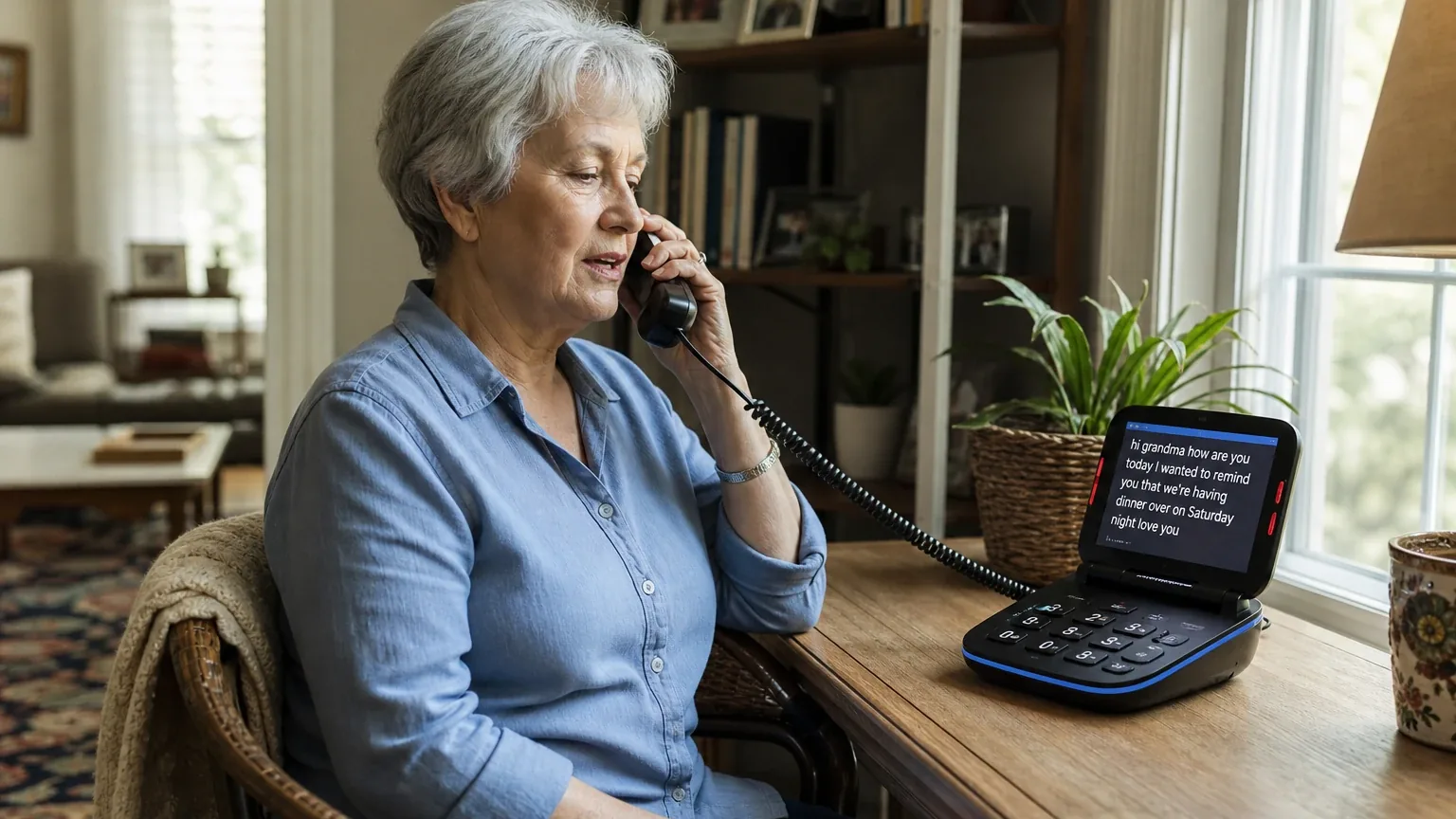
ClearCaptions Blue qualified for the Amplified & Hearing-Accessible Phones category because it addresses four of the five category criteria: real-time captioning support, hearing aid compatibility, visual ringer alerts, and audio clarity enhancement. The device is a dedicated home caption phone with a touchscreen, physical keypad, amplified handset and speakerphone, and a built-in visual flasher [1]. It is listed in FCC-related equipment records as hearing-aid compatible [3], and company materials describe Bluetooth connectivity for compatible hearing aids and cochlear implant processors [4].
The product is positioned specifically for seniors with hearing loss who need more than just louder audio. Independent reviews describe it as combining a traditional phone with a touchscreen that displays captions of the caller's speech in near real-time [2]. The service is funded through the federally administered TRS Fund under Title IV of the Americans with Disabilities Act, making it available at no direct cost to qualified U.S. residents [7].
The Product, Model, Plan, or Service Most Relevant to Amplified & Hearing-Accessible Phones
The relevant product is the ClearCaptions Blue Captioned Telephone Service, which includes the ClearCaptions Blue home phone hardware plus the ongoing IP CTS (Internet Protocol Captioned Telephone Service) captioning service. All seven platforms identified this as the relevant product or plan for this use case.
The Blue phone features an 8-inch color touchscreen for caption display, a physical keypad, amplified handset and speakerphone audio, an Amplify button for quick volume boosts, and a built-in flasher for incoming calls, voicemail, and missed calls [9]. It supports multiple connection options including landline, internet, and smartphone connections [10]. The device also integrates FEMA Emergency Alert System messages tied to the user's registered 911 location [12].
What the AI Platforms Agreed About
Strong agreement: Real-time captioning is the core value
All seven platforms agreed that ClearCaptions Blue's primary accessibility feature is near-real-time text captioning of the caller's speech, displayed on a large touchscreen [14]. Captioning may involve a live communications assistant in addition to speech recognition [14]. The caption display is customizable in terms of font size, speed, and color [20].
Strong agreement: No direct cost for qualified users
Six of seven platforms confirmed that the phone hardware and captioning service are provided at no direct cost to qualified U.S. residents with hearing loss, funded through the FCC-administered TRS Fund [21]. The only ongoing cost identified is the user's home internet connection [25].
Strong agreement: Internet is required
All platforms that addressed connectivity agreed that ClearCaptions Blue requires a stable home internet connection (Wi-Fi or Ethernet) to render captions [26]. The device also requires standard AC power and a phone line connection [27].
Strong agreement: Hearing aid compatibility is a feature
Multiple platforms confirmed that the Blue phone is designed to work with hearing aids, with Bluetooth connectivity to stream caller audio directly to compatible hearing aids and cochlear implant processors [28]. The device is listed as hearing-aid compatible in FCC-related equipment records [31].
Majority agreement: Visual alerts are included
Four platforms confirmed the built-in visual flasher for incoming calls, voicemail, and missed calls [32]. Two platforms additionally noted FEMA emergency alert integration [15].
Majority agreement: White-glove setup and support
Four platforms noted that ClearCaptions provides no-cost in-home installation, setup, and orientation from a company representative, along with a lifetime warranty and ongoing technical support [34].
Where the AI Platforms Disagreed or Were Uncertain
Decibel amplification specification: The central conflict
The most significant disagreement concerns the phone's amplification level. Google reported that the phone offers up to 40 dB of gain with an FCC waiver allowing the volume to stay locked at the user's preferred level rather than resetting after each call [36]. However, OpenAI, Anthropic, DeepSeek, Grok, and Kimi all reported that no numeric decibel specification was published or verified in the sources they checked [38]. Google also noted that some third-party retail listings erroneously mention 50 dB, whereas official documentation and FCC filings verify up to 40 dB [36].
This conflict matters because competing products publish specific numbers: CaptionCall claims TIA-4953 certification with 53 dB incoming amplification [43], and the Clarity XLC8 offers 50 dB incoming amplification [44]. Buyers who need a documented amplification level cannot verify ClearCaptions Blue's performance from the available evidence.
HAC rating: Unverified
No platform found a specific HAC M/T rating (e.g., M3/T3, M4/T4) for ClearCaptions Blue. OpenAI noted the device is listed as hearing-aid compatible in FCC equipment records [45], and Anthropic noted that most modern caption phones are TIA-1083 certified for hearing aid compatibility [46], but the specific rating for Blue was not confirmed in any source checked [47].
Fit rating: Strong to uncertain
Platform fit ratings ranged from "strong" (OpenAI, DeepSeek, Grok, Google) to "good" (Anthropic) to "mixed" (Kimi) to "uncertain" (Perplexity). Perplexity rated the fit uncertain because the evidence it checked did not verify key buyer criteria such as decibel amplification, HAC rating, visual ringer features, or pricing terms [48]. Kimi rated the fit mixed, citing the iOS-only mobile app, English-only captions, and lack of published amplification specs [42].
Mobile app availability: Conflicting reports
Anthropic reported that the ClearCaptions Mobile App provides free captions on both iOS and Android smartphones [49]. Kimi, however, reported that the mobile app is iOS-only with no Android compatibility [42]. This conflict should be verified directly with ClearCaptions.
Language support: English only
Anthropic and Kimi both reported that ClearCaptions captioning supports English only, with no Spanish, French, or other language support [50]. This limits the product for non-English speakers.
Use-Case-Specific Features and Capabilities
Real-time captioning support
The core feature converts the caller's speech into text displayed on the phone's touchscreen during calls [51]. Captioning may use a combination of live communications assistants and speech recognition software [52]. Caption display settings are customizable for font size, speed, and color [53]. Caption accuracy and delay can vary with connectivity, speech patterns, accents, and call conditions [51].
Decibel amplification level
The phone includes adjustable handset volume, a high-volume amplification mode, and an Amplify button for quick volume boosts [55]. Google reports up to 40 dB of gain with an FCC waiver allowing persistent volume override [57]. However, no verified numeric maximum decibel level was found in most sources checked [59]. The phone appears designed for moderate amplification paired with visual captioning rather than serving as a high-gain amplified phone [62].
Hearing Aid Compatibility (HAC)
The device is listed as hearing-aid compatible in FCC-related equipment records [63]. Company materials describe Bluetooth connectivity to stream caller voice directly to compatible hearing aids and cochlear implant processors [64]. A specific HAC M/T rating was not verified in any source checked [66].
Visual ringer alerts
The phone has a built-in flasher that alerts users to incoming calls, voicemail messages, and missed calls [55]. It also integrates FEMA Emergency Alert System messages with visual and audible weather and safety warnings [52].
Audio clarity enhancement
The phone provides amplified handset and speakerphone audio with adjustable volume and tone controls [55]. Independent evidence confirms amplification controls but does not establish performance for every degree or type of hearing loss [68]. The phone lacks the specialized frequency-shaping audio processing found in dedicated amplified phones like Clarity models [62].
Emergency alerting
Unique among competitors, ClearCaptions Blue can receive FEMA Emergency Alert System messages tied to the user's registered 911 location, at no extra charge [67]. Alerts may briefly interrupt service and may be repeated twice [67].
Pricing, Fees, Contracts, and Ongoing Costs
Known costs
The phone hardware and captioning service are provided at no direct cost to qualified U.S. residents with hearing loss [69]. The service is funded through the federally administered TRS Fund, reimbursed by telecommunications carrier contributions [74].
Ongoing costs
The user is responsible for their home internet connection, which is required for the captioning service [75]. Depending on the connection method, the user may also need active telephone service (analog, cable, DSL, VoIP, or FIOS) [76]. Some platforms noted that certain taxes or fees may apply [72].
Contract and cancellation terms
No contract is required for eligible users [69]. A 30-day refund is available from service activation date [69]. Users can request service cancellation anytime without penalty, and inactive devices must be returned to ClearCaptions [69]. Users must complete registration and self-certification of hearing loss, and incorrect registration information or prohibited use can result in service termination [77].
Pricing confidence
Pricing confidence varied by platform: Anthropic and Google rated it "high," OpenAI, DeepSeek, and Kimi rated it "moderate," and Perplexity rated it "low" because its checked evidence did not substantiate the free-service claim [78]. The no-cost service is conditional on eligibility, registration, self-certification, and service requirements; it should not be interpreted as universally free for every caller or household [70].
Best Suited For
ClearCaptions Blue is best suited for:
- Seniors with mild-to-severe hearing impairment who benefit from reading live captions while listening [79]
- Qualified U.S. residents seeking captioning and phone hardware at no direct cost [82]
- Users who want a dedicated home phone with a large touchscreen, physical keypad, and visual call alerts [84]
- Hearing aid or cochlear implant users seeking Bluetooth connectivity to stream caller audio [86]
- Seniors who want white-glove in-home setup, guided training, and a lifetime warranty at no additional charge [88]
- Users who need visual ringer alerts and FEMA emergency alert integration [84]
- English-speaking users in the United States and territories [91]
Probably Not Best Suited For
ClearCaptions Blue is probably not best suited for:
- Buyers who need a verified numeric amplification level (40–50+ dB) or advanced tone controls — no published decibel specification was verified [92]
- Users without dependable home internet — the captioning service requires a stable high-speed connection [95]
- Non-English speakers — captioning supports English only [97]
- Users who primarily need a mobile phone or portable solution — the device is a dedicated home phone [96]
- Android smartphone users wanting mobile caption continuity — the mobile app may be iOS-only [94]
- Users who cannot meet IP captioned telephone registration and self-certification requirements [99]
- Buyers outside the United States — the service is U.S.-only [101]
- Users who want a phone that can be freely shared with people who do not meet captioned-service eligibility requirements [99]
When Another Option May Be Better
The AI platforms identified several scenarios where another product may be a better fit:
- Maximum decibel amplification as primary need: CaptionCall holds TIA-4953 certification and claims 53 dB incoming amplification [102]. Dedicated amplified phones like the Clarity XLC8 offer 50 dB incoming amplification [103], and the Clarity AltoPlus offers 53 dB [104].
- No internet access: Hamilton CapTel 840i works without internet, and traditional amplified phones from Clarity or Motorola do not require internet [103].
- Multilingual support: CaptionCall offers Spanish captioning [102], while ClearCaptions is English-only [105].
- Smartphone-only solution: InnoCaption mobile app provides captions without home phone hardware [102].
- Android mobile integration: Hamilton CapTel offers iOS and Android apps [106].
- Simpler setup without regulatory paperwork: Privately purchased amplified phones avoid FCC eligibility requirements [106].
- Wider device form factor selection: Hamilton CapTel offers multiple models [102].
Questions to Verify Before Buying
Before purchasing, verify the following with ClearCaptions directly:
- What exact hardware model will be supplied, and is it specifically Blue? Company materials use both Blue and Ensemble terminology [107].
- What is the handset and speakerphone maximum output in dB SPL, and under what test conditions? No verified numeric specification was found [108].
- What are the phone's formal FCC HAC M and T ratings? No specific rating was verified [110].
- Will the user's specific hearing aids or cochlear implant processor pair with the phone by Bluetooth or telecoil? [111]
- Is broadband internet required from a particular provider, with minimum speed or router requirements? [113]
- Are caption delays, outages, or call types such as international, emergency, conference, or relay calls subject to restrictions? [115]
- What happens if the user changes address, telephone provider, internet provider, or no longer wants captioning? [116]
- Are there equipment-return, replacement, damage, shipping, or early-termination charges? [117]
- Can a caregiver assist with setup and account management while preserving the registered user's eligibility and privacy? [115]
- Can the buyer test the phone's amplification, captions, visual alerts, and hearing-aid compatibility before committing? [115]
- Is the mobile app available for Android, or iOS only? Platform responses conflict [118].
- Does the 30-day refund policy apply to the service, equipment, or both? [117]
- Is the lifetime warranty limited to manufacturing defects, or does it cover accidental damage? [120]
- Are there any taxes, surcharges, or regulatory fees that might apply in your state? [121]
- Can the phone function as a basic amplified phone if captioning service is interrupted? [119]
Final AI Consensus Verdict
ClearCaptions Blue is a strong fit for eligible U.S. seniors who need real-time captioning plus amplified audio and visual alerts on a dedicated home phone. Five of seven AI platforms rated it "strong" or "good" for this use case, with the strongest endorsements coming from platforms that emphasized the no-cost service model, white-glove setup, and captioning-first design.
The product's core value proposition is clear: qualified users receive the phone hardware and captioning service at no direct cost, funded through the federally administered TRS program, with in-home installation and a lifetime warranty [122]. The combination of real-time captions, amplified audio, Bluetooth hearing aid streaming, and visual alerts makes it a comprehensive accessibility solution for seniors with mild-to-severe hearing loss.
The main purchasing gaps are the absence of a verified numeric decibel specification and a specific HAC M/T rating. Buyers who need precisely documented amplification performance should compare it with a conventional amplified phone or request technical specifications directly from ClearCaptions. The service also requires reliable home internet, English-language captioning, and FCC eligibility certification, which limits its applicability for some users.
For the right user — an English-speaking U.S. senior with hearing loss, reliable internet, and a preference for captions plus amplification — ClearCaptions Blue represents a strong value proposition within the IP CTS market. For buyers who prioritize maximum decibel amplification, mobile solutions, or multilingual support, alternatives like CaptionCall, Hamilton CapTel, or dedicated amplified phones may be better choices.
How This Review Was Produced
This review was produced by aggregating fit-research responses from seven AI platforms — OpenAI, Anthropic, DeepSeek, Grok, Perplexity, Kimi, and Google — each of which evaluated ClearCaptions Blue against the category criteria for Amplified & Hearing-Accessible Phones. The authoritative research date is 2026-08-11. Platform-reported research dates varied: DeepSeek reported 2026-04-14, while all other platforms reported 2026-08-11.
Each platform provided a fit assessment, use-case findings across five category criteria, pricing and terms information, and citations to supporting sources. The citations were deduplicated into a catalog of 28 unique sources, comprising 16 independent sources, 10 company-owned sources, and 2 sources with unclear ownership. The supplied URLs were collected from platform responses and were not independently validated by the writer stage.
The entity ranking statistics reflect that 2 of 7 platforms named ClearCaptions Blue during the ranking discovery stage, with an average listed rank of 5.5 and a best rank of 2. The final rank was 7.
Methodology Limitations
This review has several limitations that buyers should consider:
- Platform mentions do not equal fit ratings: All seven platforms evaluated ClearCaptions Blue's fit, but only two platforms (Anthropic and Grok) named it during the ranking discovery stage. The fit ratings and ranking mentions measure different things.
- Platform-reported research dates differ: DeepSeek reported a research date of 2026-04-14, while the authoritative run date is 2026-08-11. Platform-reported dates are provenance metadata and do not independently prove freshness.
- Conflicting product information was not resolved: The review describes conflicts (e.g., decibel amplification, mobile app availability, model terminology) rather than guessing at resolutions. Buyers should verify these details directly.
- The supplied URLs were not independently validated: URLs were collected from platform responses and may contain redirects, outdated content, or inaccuracies.
- AI-platform agreement does not prove product quality: The consensus described in this review reflects what the AI platforms found in their sources, not independent testing or verification.
- No personal testing was conducted: This review does not include hands-on testing, customer experience verification, or independent measurement of amplification, caption accuracy, or hearing aid compatibility.
- Pricing confidence varied by platform: While most platforms rated pricing confidence as high or moderate, Perplexity rated it low because its checked evidence did not substantiate the free-service claim.
- Company-owned evidence is identified as such: Claims sourced from ClearCaptions' own materials are company-reported and may reflect marketing positioning rather than independently verified performance.
Explore more senior technology guidance in the category directory.
Sources
Company-Owned Sources
- ClearCaptions - Captioned Telephone Service: https://clearcaptions.com/
- Things to Know Before Getting a Caption Phone: https://clearcaptions.com/blog/hearing-technology/things-to-know-before-getting-a-caption-phone/
- Why Experience Matters: Choosing the Most Trusted Caption Phone Service: https://clearcaptions.com/blog/hearing-technology/why-experience-matters/
- Captioned Telephones | Captioning Phone for Your Home: https://clearcaptions.com/how-it-works/home-phone/
- No-Cost Caption Phone for Hearing Impaired: https://clearcaptions.com/how-it-works/why-its-free/
- Caption Phone FAQs - ClearCaptions: https://clearcaptions.com/support/faq/how-clearcaptions-works/
- ClearCaptions® Unveils Blue, New Innovative Caption Phone: https://clearcaptions.com/wp-content/uploads/2019/05/J2222-Press-Release-PSTN-Blue-Release_FINAL.pdf
- Blue Install Checklist: https://clearcaptions.com/wp-content/uploads/2020/10/Blue-Installation-Checklist_100220.pdf
- Captioned Telephones | Captioning Phone for Your Home - ClearCaptions: https://vertexaisearch.cloud.google.com/grounding-api-redirect/AUZIYQEtDan20qFJN74p0nZtivzqpxjgDoXyPNJDXWTF0jGKAaFUPmrbydkHaJKI-xsBeAjVhXKo1RM1FxVKX77NdfzosNmSg1eobWeh72Qz-TPBtslbFjgbz-ET8jMC_DUt3qRhyZDtVlZj_Q==
- ClearCaptions® Unveils Blue, New Innovative Caption Phone Blending Modern Tech and Accessibility: https://vertexaisearch.cloud.google.com/grounding-api-redirect/AUZIYQHpM-of_b0gM3MUayzEyacbrs_xy8ATDUtBIpaipf4DAiLbdxge7cHg-g54Ov2wQ2RigKnRIt2kslozBu17gQJSF2-SUbkLiJ0jTG3BDMUDMxOE8OFJrH36Hoz5gvFeJaw15KgnPM9jr_7RxWSmtr3wNqBzC-UR3W_WZk7hsYqYOYP4jBgM3EYWx5k_hXxEDQgX9JNnWAPP86VP
Additional AI research evidence123 records
- AI research evidence record openai:c1
- AI research evidence record anthropic:c2
- AI research evidence record openai:c3
- AI research evidence record openai:c4
- AI research evidence record anthropic:c8
- AI research evidence record grok:c1
- AI research evidence record anthropic:c9
- AI research evidence record openai:c5
- AI research evidence record openai:c1
- AI research evidence record kimi:c4
- AI research evidence record grok:c1
- AI research evidence record kimi:c1
- AI research evidence record anthropic:c1
- AI research evidence record openai:c5
- AI research evidence record anthropic:c1
- AI research evidence record deepseek:c1
- AI research evidence record grok:c1
- AI research evidence record kimi:c4
- AI research evidence record google:c2
- AI research evidence record anthropic:c2
- AI research evidence record anthropic:c9
- AI research evidence record openai:c7
- AI research evidence record kimi:c3
- AI research evidence record google:c5
- AI research evidence record anthropic:c10
- AI research evidence record anthropic:c12
- AI research evidence record google:c6
- AI research evidence record openai:c4
- AI research evidence record anthropic:c8
- AI research evidence record google:c1
- AI research evidence record openai:c3
- AI research evidence record openai:c1
- AI research evidence record kimi:c1
- AI research evidence record anthropic:c15
- AI research evidence record anthropic:c17
- AI research evidence record google:c3
- AI research evidence record google:c4
- AI research evidence record openai:c2
- AI research evidence record anthropic:c3
- AI research evidence record deepseek:c1
- AI research evidence record grok:c1
- AI research evidence record kimi:c5
- AI research evidence record anthropic:c5
- AI research evidence record anthropic:c7
- AI research evidence record openai:c3
- AI research evidence record anthropic:c6
- AI research evidence record kimi:c6
- AI research evidence record perplexity:c1
- AI research evidence record anthropic:c19
- AI research evidence record anthropic:c14
- AI research evidence record openai:c5
- AI research evidence record anthropic:c1
- AI research evidence record anthropic:c2
- AI research evidence record kimi:c4
- AI research evidence record openai:c1
- AI research evidence record grok:c1
- AI research evidence record google:c3
- AI research evidence record google:c4
- AI research evidence record openai:c2
- AI research evidence record anthropic:c3
- AI research evidence record deepseek:c1
- AI research evidence record kimi:c5
- AI research evidence record openai:c3
- AI research evidence record openai:c4
- AI research evidence record anthropic:c8
- AI research evidence record kimi:c6
- AI research evidence record kimi:c1
- AI research evidence record openai:c6
- AI research evidence record anthropic:c9
- AI research evidence record openai:c7
- AI research evidence record deepseek:c1
- AI research evidence record grok:c1
- AI research evidence record google:c5
- AI research evidence record kimi:c3
- AI research evidence record anthropic:c10
- AI research evidence record google:c6
- AI research evidence record openai:c5
- AI research evidence record perplexity:c1
- AI research evidence record openai:c5
- AI research evidence record anthropic:c1
- AI research evidence record deepseek:c1
- AI research evidence record anthropic:c9
- AI research evidence record openai:c7
- AI research evidence record openai:c1
- AI research evidence record kimi:c4
- AI research evidence record anthropic:c8
- AI research evidence record google:c1
- AI research evidence record anthropic:c15
- AI research evidence record grok:c1
- AI research evidence record kimi:c1
- AI research evidence record anthropic:c14
- AI research evidence record openai:c2
- AI research evidence record anthropic:c3
- AI research evidence record kimi:c5
- AI research evidence record anthropic:c12
- AI research evidence record openai:c7
- AI research evidence record anthropic:c14
- AI research evidence record deepseek:c1
- AI research evidence record openai:c5
- AI research evidence record grok:c1
- AI research evidence record anthropic:c9
- AI research evidence record anthropic:c5
- AI research evidence record anthropic:c7
- AI research evidence record kimi:c8
- AI research evidence record anthropic:c14
- AI research evidence record kimi:c5
- AI research evidence record openai:c1
- AI research evidence record openai:c2
- AI research evidence record anthropic:c3
- AI research evidence record kimi:c6
- AI research evidence record openai:c4
- AI research evidence record anthropic:c8
- AI research evidence record anthropic:c12
- AI research evidence record google:c6
- AI research evidence record openai:c5
- AI research evidence record openai:c7
- AI research evidence record anthropic:c9
- AI research evidence record anthropic:c19
- AI research evidence record kimi:c5
- AI research evidence record anthropic:c15
- AI research evidence record grok:c1
- AI research evidence record anthropic:c9
- AI research evidence record anthropic:c15
Independent Sources
- ClearCaptions Mobile App: https://apps.apple.com/us/app/clearcaptions-mobile/id1389230518
- Best Caption Phones for Seniors (2026): https://caringvillage.com/blog/senior-safety/best-caption-phones/
- Clarity XLC8 50dB Amplified Cordless Phone with Bluetooth: https://independentliving.com/clarity-xlc8-50db-amplified-cordless-phone-with-bluetooth/
- ACTA Filing: ClearCaptions Blue: https://part68.org/filings/us-7flte01acc0031-original-12-8-2018/
- Comprehensive Guide to Installing and Setting Up Your ClearCaption's Blue Phone: https://vertexaisearch.cloud.google.com/grounding-api-redirect/AUZIYQEvmtVC4jjCYHfZ5rkplJmTI1Ek0NQXCTjkjcKSlAGTBOBASANsAGM-BxlsVilElic5lHYytRz-vih0LiN4Y7GJoNkqJ-0eR4MZ-CbS9UBJyfd66Yt1IJUkqMhBf4c8C0onscNBflrICPeeaw_AUQdqkcNj0VUUT9x97piX4j8fLw9YvBRx8c-kAxrosw-aS2qOnXK0SIX1Vl9-nq3JzE0yMoEesQ==
- What are ClearCaptions' Products and Services? - Ask the Experts 26222: https://vertexaisearch.cloud.google.com/grounding-api-redirect/AUZIYQEznY2Q9s8Aa5dSBQRk-VyaO2A4SYY5p60tyrp2Rwe4Zq5jD3M8175vqC7r5Y17GgwN6LlaWljhbOf5iCJh5u7NTh4eWR_znrV0-fx6YT_BaTYeSazOblwJx61Q8PtCgnMkPdg7gDmsRyURQu62A-kxk3PgyYXUjI0Q1Vd_A1WCuRhc48mAyYKJ3_2BfsEQQ1-khyMF
- ClearCaptions Caption Phone Review: https://www.caring.com/senior-products/best-phones-for-hearing-impaired/clearcaptions
- Amplified Telephones - FCC: https://www.fcc.gov/general/amplified-telephones
- Alto Plus Amplified Telephone: https://www.ftri.org/products/alto-plus
- CaptionCall LLC Receives TIA 4953 Certification: https://www.globenewswire.com/news-release/2016/11/15/1059780/0/en/CaptionCall-LLC-Receives-TIA-4953-Certification.html
- Captioned Telephones: The Definitive Guide to IP CTS (2026): https://www.hearingtracker.com/captioned-telephones
- The Clear Caption Phone: A Comprehensive Review of ClearCaptions: https://www.hearingtracker.com/captioned-telephones/clearcaptions-review
- How to Find Free Phones for Seniors with Hearing Loss: https://www.hearingtracker.com/captioned-telephones/how-to-find-free-phones-for-hearing-loss
- Captioned Phones: Best Caption Phones for Seniors: https://www.nilssonaudiology.com/captioned-phones/
- What Is Product-Market Fit? Examples, Tips, and How to Measure: https://www.salesforce.com/blog/sales/product-market-fit/
Additional AI research evidence123 records
- AI research evidence record openai:c1
- AI research evidence record anthropic:c2
- AI research evidence record openai:c3
- AI research evidence record openai:c4
- AI research evidence record anthropic:c8
- AI research evidence record grok:c1
- AI research evidence record anthropic:c9
- AI research evidence record openai:c5
- AI research evidence record openai:c1
- AI research evidence record kimi:c4
- AI research evidence record grok:c1
- AI research evidence record kimi:c1
- AI research evidence record anthropic:c1
- AI research evidence record openai:c5
- AI research evidence record anthropic:c1
- AI research evidence record deepseek:c1
- AI research evidence record grok:c1
- AI research evidence record kimi:c4
- AI research evidence record google:c2
- AI research evidence record anthropic:c2
- AI research evidence record anthropic:c9
- AI research evidence record openai:c7
- AI research evidence record kimi:c3
- AI research evidence record google:c5
- AI research evidence record anthropic:c10
- AI research evidence record anthropic:c12
- AI research evidence record google:c6
- AI research evidence record openai:c4
- AI research evidence record anthropic:c8
- AI research evidence record google:c1
- AI research evidence record openai:c3
- AI research evidence record openai:c1
- AI research evidence record kimi:c1
- AI research evidence record anthropic:c15
- AI research evidence record anthropic:c17
- AI research evidence record google:c3
- AI research evidence record google:c4
- AI research evidence record openai:c2
- AI research evidence record anthropic:c3
- AI research evidence record deepseek:c1
- AI research evidence record grok:c1
- AI research evidence record kimi:c5
- AI research evidence record anthropic:c5
- AI research evidence record anthropic:c7
- AI research evidence record openai:c3
- AI research evidence record anthropic:c6
- AI research evidence record kimi:c6
- AI research evidence record perplexity:c1
- AI research evidence record anthropic:c19
- AI research evidence record anthropic:c14
- AI research evidence record openai:c5
- AI research evidence record anthropic:c1
- AI research evidence record anthropic:c2
- AI research evidence record kimi:c4
- AI research evidence record openai:c1
- AI research evidence record grok:c1
- AI research evidence record google:c3
- AI research evidence record google:c4
- AI research evidence record openai:c2
- AI research evidence record anthropic:c3
- AI research evidence record deepseek:c1
- AI research evidence record kimi:c5
- AI research evidence record openai:c3
- AI research evidence record openai:c4
- AI research evidence record anthropic:c8
- AI research evidence record kimi:c6
- AI research evidence record kimi:c1
- AI research evidence record openai:c6
- AI research evidence record anthropic:c9
- AI research evidence record openai:c7
- AI research evidence record deepseek:c1
- AI research evidence record grok:c1
- AI research evidence record google:c5
- AI research evidence record kimi:c3
- AI research evidence record anthropic:c10
- AI research evidence record google:c6
- AI research evidence record openai:c5
- AI research evidence record perplexity:c1
- AI research evidence record openai:c5
- AI research evidence record anthropic:c1
- AI research evidence record deepseek:c1
- AI research evidence record anthropic:c9
- AI research evidence record openai:c7
- AI research evidence record openai:c1
- AI research evidence record kimi:c4
- AI research evidence record anthropic:c8
- AI research evidence record google:c1
- AI research evidence record anthropic:c15
- AI research evidence record grok:c1
- AI research evidence record kimi:c1
- AI research evidence record anthropic:c14
- AI research evidence record openai:c2
- AI research evidence record anthropic:c3
- AI research evidence record kimi:c5
- AI research evidence record anthropic:c12
- AI research evidence record openai:c7
- AI research evidence record anthropic:c14
- AI research evidence record deepseek:c1
- AI research evidence record openai:c5
- AI research evidence record grok:c1
- AI research evidence record anthropic:c9
- AI research evidence record anthropic:c5
- AI research evidence record anthropic:c7
- AI research evidence record kimi:c8
- AI research evidence record anthropic:c14
- AI research evidence record kimi:c5
- AI research evidence record openai:c1
- AI research evidence record openai:c2
- AI research evidence record anthropic:c3
- AI research evidence record kimi:c6
- AI research evidence record openai:c4
- AI research evidence record anthropic:c8
- AI research evidence record anthropic:c12
- AI research evidence record google:c6
- AI research evidence record openai:c5
- AI research evidence record openai:c7
- AI research evidence record anthropic:c9
- AI research evidence record anthropic:c19
- AI research evidence record kimi:c5
- AI research evidence record anthropic:c15
- AI research evidence record grok:c1
- AI research evidence record anthropic:c9
- AI research evidence record anthropic:c15
Other Sources
- Caption call phone writes captions of what your callers say so you understand every word of every call!! - Facebook: https://vertexaisearch.cloud.google.com/grounding-api-redirect/AUZIYQG80eK_qhn6Nvq9WPI8spNRnslLmx1eDmGWBt9CKhZTG0akmehhfiLRIKFTW2grF77hgtrgtmUca2Al9oXXw2NxO5cTmWWG26ecyVj86wO9kERYNhmPq94mj-u33MmIdSwJuvU_vJj1ld38cTiaD-Trx3j9HKZjuWkMeRJPbcTTNHc=
Additional AI research evidence123 records
- AI research evidence record openai:c1
- AI research evidence record anthropic:c2
- AI research evidence record openai:c3
- AI research evidence record openai:c4
- AI research evidence record anthropic:c8
- AI research evidence record grok:c1
- AI research evidence record anthropic:c9
- AI research evidence record openai:c5
- AI research evidence record openai:c1
- AI research evidence record kimi:c4
- AI research evidence record grok:c1
- AI research evidence record kimi:c1
- AI research evidence record anthropic:c1
- AI research evidence record openai:c5
- AI research evidence record anthropic:c1
- AI research evidence record deepseek:c1
- AI research evidence record grok:c1
- AI research evidence record kimi:c4
- AI research evidence record google:c2
- AI research evidence record anthropic:c2
- AI research evidence record anthropic:c9
- AI research evidence record openai:c7
- AI research evidence record kimi:c3
- AI research evidence record google:c5
- AI research evidence record anthropic:c10
- AI research evidence record anthropic:c12
- AI research evidence record google:c6
- AI research evidence record openai:c4
- AI research evidence record anthropic:c8
- AI research evidence record google:c1
- AI research evidence record openai:c3
- AI research evidence record openai:c1
- AI research evidence record kimi:c1
- AI research evidence record anthropic:c15
- AI research evidence record anthropic:c17
- AI research evidence record google:c3
- AI research evidence record google:c4
- AI research evidence record openai:c2
- AI research evidence record anthropic:c3
- AI research evidence record deepseek:c1
- AI research evidence record grok:c1
- AI research evidence record kimi:c5
- AI research evidence record anthropic:c5
- AI research evidence record anthropic:c7
- AI research evidence record openai:c3
- AI research evidence record anthropic:c6
- AI research evidence record kimi:c6
- AI research evidence record perplexity:c1
- AI research evidence record anthropic:c19
- AI research evidence record anthropic:c14
- AI research evidence record openai:c5
- AI research evidence record anthropic:c1
- AI research evidence record anthropic:c2
- AI research evidence record kimi:c4
- AI research evidence record openai:c1
- AI research evidence record grok:c1
- AI research evidence record google:c3
- AI research evidence record google:c4
- AI research evidence record openai:c2
- AI research evidence record anthropic:c3
- AI research evidence record deepseek:c1
- AI research evidence record kimi:c5
- AI research evidence record openai:c3
- AI research evidence record openai:c4
- AI research evidence record anthropic:c8
- AI research evidence record kimi:c6
- AI research evidence record kimi:c1
- AI research evidence record openai:c6
- AI research evidence record anthropic:c9
- AI research evidence record openai:c7
- AI research evidence record deepseek:c1
- AI research evidence record grok:c1
- AI research evidence record google:c5
- AI research evidence record kimi:c3
- AI research evidence record anthropic:c10
- AI research evidence record google:c6
- AI research evidence record openai:c5
- AI research evidence record perplexity:c1
- AI research evidence record openai:c5
- AI research evidence record anthropic:c1
- AI research evidence record deepseek:c1
- AI research evidence record anthropic:c9
- AI research evidence record openai:c7
- AI research evidence record openai:c1
- AI research evidence record kimi:c4
- AI research evidence record anthropic:c8
- AI research evidence record google:c1
- AI research evidence record anthropic:c15
- AI research evidence record grok:c1
- AI research evidence record kimi:c1
- AI research evidence record anthropic:c14
- AI research evidence record openai:c2
- AI research evidence record anthropic:c3
- AI research evidence record kimi:c5
- AI research evidence record anthropic:c12
- AI research evidence record openai:c7
- AI research evidence record anthropic:c14
- AI research evidence record deepseek:c1
- AI research evidence record openai:c5
- AI research evidence record grok:c1
- AI research evidence record anthropic:c9
- AI research evidence record anthropic:c5
- AI research evidence record anthropic:c7
- AI research evidence record kimi:c8
- AI research evidence record anthropic:c14
- AI research evidence record kimi:c5
- AI research evidence record openai:c1
- AI research evidence record openai:c2
- AI research evidence record anthropic:c3
- AI research evidence record kimi:c6
- AI research evidence record openai:c4
- AI research evidence record anthropic:c8
- AI research evidence record anthropic:c12
- AI research evidence record google:c6
- AI research evidence record openai:c5
- AI research evidence record openai:c7
- AI research evidence record anthropic:c9
- AI research evidence record anthropic:c19
- AI research evidence record kimi:c5
- AI research evidence record anthropic:c15
- AI research evidence record grok:c1
- AI research evidence record anthropic:c9
- AI research evidence record anthropic:c15
Verify this research
Review the study details behind this page or download the public machine-readable verification record.
- Study date
- Aug 11, 2026
- Platforms analyzed
- 7
- Source records
- 28
- Ranking mentions
- 2 of 7
- Platform share
- 29%
- Final consensus rank
- #7
Research trail and source mix
Platforms
openai, anthropic, deepseek, grok, perplexity, kimi, google
Source mix
16 independent · 10 company-owned · 2 unclear
Evidence support
20 direct · 7 partial
Important limitation
Use the run research_date as the study date. Platform-reported dates are provenance metadata and do not independently prove freshness.
Source snapshot SHA-256 70572376a1f309d52849d490bfd353e82ec5cf36ba3edad51a41f4d86928628c