
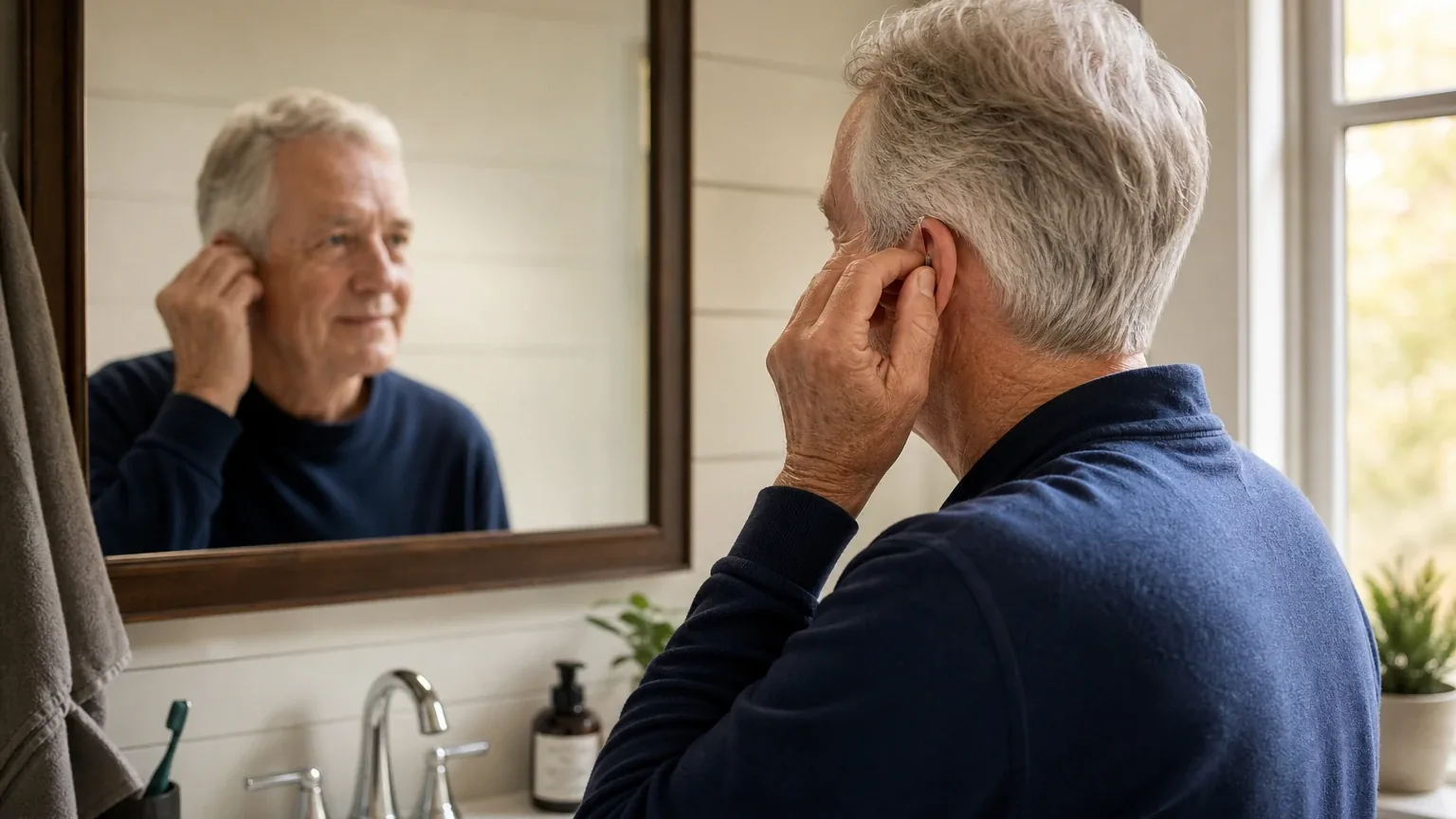
Answer Capsule
Eargo is a conditional fit for older adults seeking General Hearing Support, with a split consensus across seven AI research platforms. Three platforms (OpenAI, DeepSeek, and Kimi) rated it "good" or "mixed-good," while two (Google and Grok) rated it "weak" or "uncertain," and two (Anthropic and Perplexity) landed at "mixed" or "uncertain." Eargo was named by 3 of 7 platforms in the ranking stage, with an average listed rank of 5.33 and a best rank of 3. The strongest reason to consider Eargo is its virtually invisible completely-in-canal (CIC) design with self-fitting and remote telecare support, ideal for seniors with mild-to-moderate high-frequency loss who prioritize discretion. The main limitation is critical operational uncertainty: parent company LXE Hearing began winding down U.S. operations in July 2026, with support and warranty services only guaranteed through September 15, 2026.
Research Snapshot
| Metric | Value |
|---|---|
| Platform mentions in ranking stage | 3 of 7 platforms (Anthropic, DeepSeek, OpenAI) |
| Share of included platform responses | 42.9% (3 of 7) |
| Average listed rank | 5.33 |
| Best listed rank | 3 (Anthropic) |
| Relevant product/model/plan | Eargo 7, Eargo 8, Eargo SE (all OTC completely-in-canal) |
| Overall use-case fit | Conditional — good for discreet mild-to-moderate loss; weak due to company wind-down |
| Research date | 2026-08-13 |
Why Eargo Qualified for This Study
Eargo qualified for this General Hearing Support evaluation because it appeared in the ranking stage of the "Best Hearing Aids for Seniors" topic across multiple AI platforms. The entity was named by Anthropic (rank 3), DeepSeek (rank 7), and OpenAI (rank 6) during ranking discovery. Four additional platforms (Google, Grok, Kimi, Perplexity) evaluated Eargo's fit for the use case even though they did not name it in their final ranking lists. All seven platforms assessed Eargo against the category criteria of speech clarity, background-noise reduction, audiology support, comfort and fit, trial period, warranty, pricing transparency, and customer support quality.
The Product, Model, Plan, or Service Most Relevant to General Hearing Support
The most relevant products for general hearing support are the Eargo 7, Eargo 8, and Eargo SE — all over-the-counter (OTC) completely-in-canal hearing aids. All seven platforms identified these three models as the relevant product family, though DeepSeek incorrectly described the Eargo 7 as "behind-the-ear style" while all other platforms correctly identified it as completely-in-canal [1].
The Eargo 7 uses Flexi Fibers and an EarTip system for fit customization, the Eargo 8 is the flagship model with Smart Sound Adjust technology, and the Eargo SE is the entry-level option [4]. All models are FDA-cleared OTC devices intended for adults 18 and older with perceived mild-to-moderate hearing loss [6].
What the AI Platforms Agreed About
Strong agreement: Eargo is designed for mild-to-moderate hearing loss, not severe or profound loss. All seven platforms independently confirmed this limitation. FDA guidance states OTC hearing aids are intended for adults with perceived mild-to-moderate hearing loss and are not intended to treat severe or profound loss [8]. Eargo's own materials describe its devices for adults needing "more clarity rather than more volume" [9]. Kimi noted that prescription devices are required for moderately-severe to severe loss, which OTC devices lack amplification power to address [11].
Strong agreement: The completely-in-canal design is a major strength for discretion. All platforms praised the virtually invisible form factor. Eargo's CIC design with soft silicone tips (Trumpet/Flexi Fibers) addresses aesthetic concerns common among older adults [13]. Google noted strong "own-voice" comfort scores (3.2/5 for Eargo 8) that reduce the occlusion effect [17].
Strong agreement: Eargo offers a 45-day trial period. All platforms that provided pricing and terms data confirmed the 45-day right-to-return period for direct purchases from Eargo.com [9]. The return period begins at delivery, and devices must be returned in working condition [21].
Strong agreement: No Bluetooth audio streaming on CIC models. All platforms that addressed connectivity confirmed that Eargo 7, 8, and SE do not support Bluetooth audio streaming for music or phone calls due to the completely-in-canal design [24]. Bluetooth connectivity is housed in the charger case rather than the hearing devices [24]. Only the separate Link by Eargo earbud-style model offers Bluetooth [26].
Strong agreement: Rechargeable batteries eliminate ongoing battery costs. All models feature rechargeable batteries with up to 16 hours per charge and a portable charging case providing 5+ additional charges [28].
Where the AI Platforms Disagreed or Were Uncertain
Major disagreement: Company operational status. This is the most significant conflict in the evidence. Google and Grok reported that LXE Hearing (Eargo's parent company formed by the Eargo-hearX merger) began winding down U.S. operations on July 15, 2026, with customer support and warranty services only guaranteed through September 15, 2026 [30]. Anthropic confirmed this wind-down but noted existing devices "should continue providing amplification" and apps "remain operational for now" [32]. ConsumerAffairs reported Eargo "stopped all U.S. operations in 2026" and is "currently out of business" [33]. However, OpenAI, DeepSeek, and Kimi did not mention any operational disruption in their assessments, and Perplexity's official-site retrieval failed without noting wind-down. This conflict is unresolved and critical for buyers.
Disagreement: Speech clarity performance. Independent lab testing by HearAdvisor produced conflicting results. The Eargo 7 scored a B grade with speech clarity of 2.7/5 in quiet environments, described as "above OTC average but mixed in absolute terms" [34]. The Eargo 8 scored a very low 0.3/5 for speech-in-noise performance, while the Eargo 7 scored 0.4/5 [35]. However, Reviewed.com found the Eargo 7 has "the absolute best noise-reduction capabilities of any over-the-counter hearing aid I have ever used" [36]. DeepSeek noted user reviews are mixed on background-noise reduction, with many users still reporting difficulty in noisy public settings [37].
Disagreement: Pricing. Reported prices vary significantly across platforms. DeepSeek reported Eargo 7 at $2,650, Eargo 8 at $2,450 (promo $1,950), and Eargo SE at $1,450 [38]. Anthropic reported Eargo SE at $1,699, Eargo 8 at $2,699, and Eargo 7 at $2,550 [39]. OpenAI reported Eargo SE at $1,650 and an overall range of $799-$2,950 [40]. Kimi reported Eargo 7 at approximately $2,950 [42]. Google reported Eargo 8 at $2,699 and Eargo SE at $1,699 [43]. These discrepancies likely reflect promotional pricing and timing differences, but current model-specific pricing should be verified directly.
Disagreement: Warranty duration for Eargo 7. Anthropic noted that marketing materials and older sources vary between 1-year and 2-year warranty terms for the Eargo 7, with current status unclear as the Eargo 8 has become flagship [44]. The reviewed Eargo warranty document lists two years for Eargo 7 and one year for Eargo SE [45]. DeepSeek claimed a 2-year warranty on all models [38].
Disagreement: Fit rating. Platform fit ratings ranged from "good" (OpenAI, DeepSeek) to "mixed" (Anthropic, Kimi) to "uncertain" (Grok, Perplexity) to "weak" (Google). This split reflects differing weight placed on the company wind-down risk versus product features.
Use-Case-Specific Features and Capabilities
Speech Clarity
Eargo positions its devices for adults needing more clarity rather than more volume, targeting mild-to-moderate high-frequency hearing loss [46]. The Sound Adjust+ technology automatically adjusts for speech versus background noise [48]. However, independent lab testing shows mixed results: Eargo 7 scored 2.7/5 for speech clarity in quiet environments [49], while Eargo 8 scored 0.3/5 for speech-in-noise [50]. These scores suggest the devices perform adequately in quiet conversation but struggle in noisy public settings.
Background-Noise Reduction
Eargo reports noise reduction and feedback cancellation on Eargo SE [46], while Eargo 8 features automatic environmental adaptation and Smart Sound Adjust [51]. Reviewed.com independently found the Eargo 7 has "the absolute best noise-reduction capabilities of any over-the-counter hearing aid I have ever used" [52]. However, HearAdvisor's lab scores for speech-in-noise were very low for both Eargo 7 (0.4/5) and Eargo 8 (0.3/5) [50]. DeepSeek noted many users still report difficulty in noisy public settings [53].
Audiology Support
Eargo provides remote support from licensed hearing professionals averaging 18 years of industry experience, available via phone, video, email, and app [54]. Support hours are Monday-Friday 8am-8pm CST and Saturday 8am-5pm CST [55]. The telecare model provides remote professional access without clinic visits [56]. However, there is no in-person audiology verification or real-ear measurement [58].
Comfort and Fit
All Eargo models use completely-in-canal designs with soft silicone tips (Trumpet/Flexi Fibers) that reduce occlusion effect [60]. Multiple user reviews report exceptional comfort and invisibility [63]. However, CIC devices may not fit narrow or irregular ear canals, and Eargo's own guidance identifies canal-shape limitations [64]. Some users report difficulty with tip insertion and removal [63].
Trial Period
Eargo offers a 45-day risk-free return period for direct purchases [46]. The return period begins at delivery, and devices must be returned in working condition [68]. Loss or substantial damage during the return period can reduce the refund or prevent return [65]. Third-party retailer purchases (Best Buy, Amazon, Walmart) may have different return terms, with some limiting returns to 14 days [71].
Warranty
The reviewed Eargo warranty lists two years for Eargo 7, one year for Eargo SE, and $395 per-unit loss or out-of-warranty replacement fees for Eargo 7 versus $295 per unit for Eargo SE [65]. Eargo 8 includes a 2-year warranty with unlimited repairs and one-time loss/damage coverage [72]. Eargo Care can extend the original warranty by one year when available [65]. Warranty excludes water damage (SE immersion at all; Eargo 8 extended immersion), earwax buildup, and improper use [74].
Pricing Transparency
Pricing transparency is inconsistent. Eargo's comparison page lists an overall range of $799-$2,950 [47], while individual model prices vary by source. DeepSeek reported clear pricing on the official website [69], but OpenAI noted the Eargo 7 product page returned a 404 during retrieval [75]. Kimi noted Eargo's direct-to-consumer model offers clearer device-only pricing than bundled audiology services but may obscure total cost of ownership [76].
Customer Support Quality
Eargo advertises U.S.-based support through phone, chat, email, and video guides [46]. Multiple independent reviews praise responsiveness and support quality [55]. However, the company wind-down creates critical uncertainty about future support availability [71].
Pricing, Fees, Contracts, and Ongoing Costs
| Model | Reported Price Range | Warranty | Loss/Replacement Fee |
|---|---|---|---|
| Eargo SE | $1,450-$1,699 | 1 year | $295 per unit |
| Eargo 7 | $2,550-$2,950 | 1-2 years (conflicting) | $395 per unit |
| Eargo 8 | $2,450-$2,699 | 2 years | Not specified |
Financing is available at $55/month for Eargo SE and $88/month for Eargo 8 with 0% APR up to 24 months with approved credit [79]. No activation, fitting, or programming fees apply since the devices are self-fitting [79]. Shipping is free, and returns include a free label [80]. No long-term service contracts are required [80].
Additional costs may include replacement ear tips, wax guards, and cleaning accessories [79]. Charging case replacement is available for purchase [79]. HSA/FSA eligible but no Medicare coverage [82].
Pricing confidence is low-to-moderate due to conflicting reported prices across platforms and promotional variability. The Eargo 7 official product page returned a 404 during retrieval, preventing current price verification [83].
Best Suited For
Eargo is best suited for older adults with perceived mild-to-moderate, primarily high-frequency hearing loss who:
- Prioritize virtually invisible completely-in-canal devices for aesthetic reasons [84]
- Are comfortable using a smartphone app for self-fitting and adjustments [87]
- Want OTC access without prescription or audiologist clinic visits [89]
- Value remote telecare support from licensed hearing professionals [90]
- Want rechargeable devices without disposable battery handling [91]
- Seek a 45-day trial period to reduce purchase risk [89]
- Need devices for everyday conversation and television in relatively quiet settings [89]
Probably Not Best Suited For
Eargo is probably not best suited for:
- Seniors with severe or profound hearing loss requiring prescription-grade amplification [94]
- Users with asymmetric, sudden, painful, or rapidly progressing hearing loss who need medical evaluation [96]
- People with narrow, irregular, draining, or perforated ear canals where CIC fit is unsuitable [98]
- Buyers requiring device-level Bluetooth audio streaming for music or phone calls [99]
- Users needing telecoil or Auracast connectivity for theaters, churches, or public transit [96]
- Seniors with limited smartphone comfort or dexterity/vision challenges who struggle with app-based fitting and small device handling [95]
- Cost-sensitive buyers comparing to sub-$1,000 OTC alternatives or Costco prescription aids around $1,600 [104]
- Buyers requiring long-term warranty and support certainty given the company wind-down [105]
When Another Option May Be Better
A prescription hearing aid is better when the buyer has severe, asymmetric, rapidly worsening, or medically complicated hearing loss, or needs audiologist programming and real-ear verification [107]. Prescription devices offer superior noise-filtering in crowded rooms and advanced features rarely found in OTC models [108].
A behind-the-ear or receiver-in-canal OTC device may be better when the buyer needs stronger output, easier handling, larger controls, or more direct Bluetooth functionality [110].
A lower-cost OTC option (such as MDHearing, Lexie by hearX, Sony, or Jabra) may be better when price is the primary criterion and the buyer does not need Eargo's discreet CIC design or remote support model [112].
Costco prescription aids around $1,600 offer better value for budget-conscious buyers [112].
Jabra Enhance offers a 100-day trial versus Eargo's 45 days [112].
Competitors offering 3-4 year warranties are better when extended warranty coverage is critical [112].
More established brands (GN Hearing, Signia, Oticon) offer greater continuity given LXE Hearing's wind-down [114].
Questions to Verify Before Buying
- Operational continuity: As of the purchase date, is LXE Hearing continuing U.S. support, repairs, and app updates? What is the timeline for potential service discontinuation? [116]
- App support: Will the Eargo mobile app continue receiving updates if the wind-down accelerates? Are there offline or alternative adjustment methods if the app becomes unavailable? [116]
- Warranty claims: Can warranty claims be processed if the parent company ceases operations? Are there third-party repair options? [116]
- Current pricing: What is the current delivered price for Eargo 7, Eargo 8, and Eargo SE, including taxes, shipping, financing charges, and optional coverage? [118]
- Return policy source: Where are you purchasing — directly from Eargo.com (45-day guarantee applies) or a third-party retailer (different return terms may apply)? [120]
- Hearing loss severity: Have you confirmed with an audiologist that your hearing loss is mild-to-moderate? Eargo is not appropriate for severe or profound loss. [121]
- Speech-in-noise performance: Given the low independent lab scores (0.3-0.4/5), does the noise reduction feature meet your primary listening use cases in restaurants or public settings? [123]
- Bluetooth requirement: Do you need audio streaming for music or phone calls? Eargo CIC models do not support Bluetooth. [124]
- Smartphone capability: Are you comfortable with iOS/Android app-based fitting, customization, and troubleshooting? [122]
- Dexterity and vision: Can you confidently insert, remove, and maintain a completely-in-canal device? [127]
- Warranty length for Eargo 7: Confirm the current warranty term (1-year vs. 2-year) as sources conflict. [129]
- Water exposure: Will you expose devices to water? Eargo SE warranty excludes immersion at all; Eargo 8 excludes extended immersion. [129]
Final AI Consensus Verdict
Eargo is a conditional fit for General Hearing Support. The AI platforms agree that Eargo offers exceptional discretion, comfortable CIC design, self-fitting convenience, remote telecare support, rechargeable batteries, and a 45-day trial period — all valuable for older adults with mild-to-moderate hearing loss who prioritize invisibility and OTC access.
However, the consensus is undermined by three material concerns. First, critical operational uncertainty: LXE Hearing's July 2026 U.S. wind-down means support, warranty processing, and app maintenance are only guaranteed through September 15, 2026 [131]. Second, mixed independent speech-clarity performance: HearAdvisor lab scores of 0.3-0.4/5 for speech-in-noise suggest poor performance in noisy public settings [134]. Third, premium OTC pricing ($1,699-$2,699) approaches prescription entry points without delivering equivalent feature depth [135].
The strongest model is the Eargo 8 due to its 2-year warranty and latest features [137]. The Eargo SE offers better value at the entry price point [136]. The Eargo 7 is transitioning out as newer models release [136].
Bottom line: Eargo is a good fit for discretion-focused seniors with confirmed mild-to-moderate hearing loss who are comfortable with smartphone-based self-fitting and accept the risks of orphaned hardware. Buyers should verify company operational status, current pricing, and warranty terms before purchase. For those needing long-term support certainty, stronger speech-in-noise performance, or Bluetooth streaming, prescription alternatives or more established OTC brands are better choices.
For a broader comparison of hearing aid options for seniors, see the General Hearing Support consensus index. You can also explore other senior technology categories.
How This Review Was Produced
This review was produced by aggregating fit-research responses from seven AI platforms (Anthropic, DeepSeek, Google, Grok, Kimi, OpenAI, and Perplexity) that evaluated Eargo for the General Hearing Support use case within the "Best Hearing Aids for Seniors" topic. Each platform assessed Eargo against eight category criteria: speech clarity, background-noise reduction, audiology support, comfort and fit, trial period, warranty, pricing transparency, and customer support quality.
The authoritative research date is 2026-08-13. Platform-reported research dates differ: DeepSeek reported 2026-06-10, while all other platforms reported 2026-08-13. This date discrepancy is a methodology limitation.
The evidence base includes 45 deduplicated sources: 31 independent sources (reviews, directories, journalism, government, and professional organizations) and 14 company-owned sources (Eargo's website, blog, warranty document, and terms of service). Company-owned evidence was distinguished from independent evidence throughout this review.
Methodology Limitations
-
Platform-reported dates differ from the authoritative run date. DeepSeek's research date of 2026-06-10 predates the authoritative 2026-08-13 date by approximately two months. This may affect pricing and availability information.
-
The supplied URLs were collected from platform responses and were not independently validated by the writer stage. Some URLs may be outdated or inaccessible.
-
The Eargo 7 official product page returned a 404 during retrieval for OpenAI and Perplexity, preventing current product-page details and price verification [139].
-
Conflicting pricing data across platforms could not be resolved without guessing. Reported prices for the same models varied by hundreds of dollars across platforms.
-
Independent comparative evidence for speech-in-noise performance is limited to HearAdvisor lab testing, which produced conflicting results for Eargo 7 (2.7/5 quiet speech clarity) versus Eargo 8 (0.3/5 speech-in-noise).
-
Company operational status is uncertain. Multiple independent sources report LXE Hearing's wind-down, but company-owned sources do not address this directly, and some platforms did not mention it.
-
AI-platform agreement does not prove product quality. This review reports what the platforms found in their research; it does not constitute independent verification of Eargo's performance claims.
-
Warranty terms can vary by purchase date, product version, seller, and optional Eargo Care coverage [141].
-
No independent clinical trials specific to Eargo's effectiveness were identified in the source set; most evidence is from user reviews and lab testing [142].
Sources
Company-Owned Sources
- Eargo Limited Warranty: https://assets.eargo.com/warranty/Eargo-Limited-Warraty-Feb-10-2025-MKT-0168-Rev-L-Final.pdf
- 45-Day Right to Return | Eargo Help: https://help.eargo.com/en/articles/4144617-45-day-right-to-return
- 45-Day Right to Return | Eargo Help: https://support.eargo.com/en/articles/5610052-45-day-right-to-return
- Meet Eargo 8 | Eargo Blog: https://www.eargo.com/blog/eargo-news/meet-eargo-8/
- The Future of Hearing Is Here: Meet Eargo’s Newest Devices: https://www.eargo.com/blog/eargo-news/the-future-of-hearing-Is-here/
- What Are the Top Benefits of CIC Hearing Aids?: https://www.eargo.com/blog/hearing-aids/benefits-of-completely-in-canal-CIC-hearing-aids/
- What You Need to Know About Over-the-Counter Hearing Aids: https://www.eargo.com/blog/hearing-aids/hearing-aid-style-considerations-and-comparisons/
- Clearing Up the Confusion Around Bluetooth and Hearing Aids: https://www.eargo.com/blog/hearing-technology/clearing-up-the-confusion-around-bluetooth-and-hearing-aids/
- Sound Adjust+: Making Conversation Clearer, Faster: https://www.eargo.com/blog/hearing-technology/making-conversation-clearer-faster-better-hearing-made-simple/
- Shop Eargo SE Hearing Aids: https://www.eargo.com/eargo-se
- Hearing Aid Comparison: https://www.eargo.com/hearing-aid-comparison/
- Eargo 7 Hearing Aids - Official Product Page: https://www.eargo.com/hearing-aids/eargo-7
- Eargo Support and Telecare: https://www.eargo.com/support
- Terms of Service | Eargo: https://www.eargo.com/terms-of-use/
Additional AI research evidence142 records
- AI research evidence record openai:c2
- AI research evidence record anthropic:c4
- AI research evidence record deepseek:c1
- AI research evidence record openai:c1
- AI research evidence record kimi:c4
- AI research evidence record openai:c4
- AI research evidence record anthropic:c28
- AI research evidence record openai:c4
- AI research evidence record openai:c1
- AI research evidence record openai:c2
- AI research evidence record kimi:c1
- AI research evidence record kimi:c2
- AI research evidence record anthropic:c4
- AI research evidence record anthropic:c5
- AI research evidence record anthropic:c15
- AI research evidence record openai:c5
- AI research evidence record google:c2
- AI research evidence record openai:c6
- AI research evidence record anthropic:c37
- AI research evidence record anthropic:c40
- AI research evidence record anthropic:c43
- AI research evidence record deepseek:c1
- AI research evidence record google:c4
- AI research evidence record openai:c8
- AI research evidence record anthropic:c14
- AI research evidence record anthropic:c20
- AI research evidence record google:c3
- AI research evidence record anthropic:c1
- AI research evidence record kimi:c4
- AI research evidence record google:c1
- AI research evidence record grok:c2
- AI research evidence record anthropic:c17
- AI research evidence record anthropic:c33
- AI research evidence record anthropic:c6
- AI research evidence record google:c2
- AI research evidence record anthropic:c2
- AI research evidence record deepseek:c2
- AI research evidence record deepseek:c1
- AI research evidence record anthropic:c23
- AI research evidence record openai:c7
- AI research evidence record openai:c2
- AI research evidence record kimi:c4
- AI research evidence record google:c3
- AI research evidence record anthropic:c39
- AI research evidence record openai:c6
- AI research evidence record openai:c1
- AI research evidence record openai:c2
- AI research evidence record anthropic:c3
- AI research evidence record anthropic:c6
- AI research evidence record google:c2
- AI research evidence record openai:c3
- AI research evidence record anthropic:c2
- AI research evidence record deepseek:c2
- AI research evidence record anthropic:c16
- AI research evidence record anthropic:c28
- AI research evidence record deepseek:c3
- AI research evidence record kimi:c4
- AI research evidence record kimi:c2
- AI research evidence record kimi:c3
- AI research evidence record anthropic:c4
- AI research evidence record anthropic:c5
- AI research evidence record anthropic:c15
- AI research evidence record anthropic:c32
- AI research evidence record openai:c5
- AI research evidence record openai:c6
- AI research evidence record anthropic:c37
- AI research evidence record anthropic:c40
- AI research evidence record anthropic:c43
- AI research evidence record deepseek:c1
- AI research evidence record google:c4
- AI research evidence record google:c1
- AI research evidence record anthropic:c9
- AI research evidence record anthropic:c13
- AI research evidence record anthropic:c39
- AI research evidence record openai:c7
- AI research evidence record kimi:c5
- AI research evidence record anthropic:c17
- AI research evidence record anthropic:c33
- AI research evidence record anthropic:c23
- AI research evidence record deepseek:c1
- AI research evidence record kimi:c4
- AI research evidence record grok:c1
- AI research evidence record openai:c7
- AI research evidence record anthropic:c4
- AI research evidence record openai:c2
- AI research evidence record kimi:c4
- AI research evidence record anthropic:c28
- AI research evidence record deepseek:c1
- AI research evidence record openai:c1
- AI research evidence record deepseek:c3
- AI research evidence record anthropic:c1
- AI research evidence record anthropic:c37
- AI research evidence record grok:c1
- AI research evidence record openai:c4
- AI research evidence record anthropic:c28
- AI research evidence record kimi:c1
- AI research evidence record kimi:c2
- AI research evidence record openai:c5
- AI research evidence record openai:c8
- AI research evidence record anthropic:c14
- AI research evidence record google:c2
- AI research evidence record kimi:c5
- AI research evidence record deepseek:c2
- AI research evidence record anthropic:c23
- AI research evidence record google:c1
- AI research evidence record anthropic:c17
- AI research evidence record openai:c4
- AI research evidence record kimi:c1
- AI research evidence record kimi:c2
- AI research evidence record openai:c2
- AI research evidence record anthropic:c14
- AI research evidence record anthropic:c23
- AI research evidence record deepseek:c1
- AI research evidence record anthropic:c17
- AI research evidence record google:c1
- AI research evidence record google:c1
- AI research evidence record anthropic:c17
- AI research evidence record openai:c2
- AI research evidence record openai:c7
- AI research evidence record anthropic:c40
- AI research evidence record openai:c4
- AI research evidence record anthropic:c28
- AI research evidence record google:c2
- AI research evidence record openai:c8
- AI research evidence record anthropic:c14
- AI research evidence record deepseek:c2
- AI research evidence record anthropic:c32
- AI research evidence record kimi:c2
- AI research evidence record anthropic:c39
- AI research evidence record openai:c6
- AI research evidence record google:c1
- AI research evidence record anthropic:c17
- AI research evidence record anthropic:c33
- AI research evidence record google:c2
- AI research evidence record kimi:c5
- AI research evidence record anthropic:c23
- AI research evidence record anthropic:c9
- AI research evidence record anthropic:c10
- AI research evidence record openai:c7
- AI research evidence record perplexity:c1
- AI research evidence record openai:c6
- AI research evidence record deepseek:c2
Independent Sources
- Eargo - Real Customer Reviews | BestCompany: https://bestcompany.com/hearing-aids/eargo
- A Primer on Buying Hearing Aids: https://hearinghealthfoundation.org/blogs/a-primer-on-buying-hearing-aids
- Eargo 8 OTC Hearing Aid Debuts | The Hearing Review: https://hearingreview.com/hearing-products/hearing-aids/otc/eargo-8-otc-hearing-aid-debuts
- Don't Buy Eargo 7 Hearing Aids Until You Read This: https://medium.com/@hearinghealth3/dont-buy-eargo-7-hearing-aids-49fd331f30df
- OTC vs Prescription Hearing Aids: https://nationalhearinginstitute.org/articles/otc-vs-prescription-hearing-aids/
- Eargo Hearing Aid Full Review 2026 | SeniorsList: https://seniorslist.com/hearing-aids/eargo-reviews/
- Amazon.com: EARGO 7 Virtually Invisible Self-Fitting FDA-Cleared OTC CIC Hearing Aids: https://www.amazon.com/EARGO-Self-Fitting-FDA-Cleared-Hearing-Aids/dp/B0BSHCNP5W
- Amazon.com: EARGO 8 Virtually Invisible Self-Fitting FDA-Cleared OTC CIC Hearing Aids: https://www.amazon.com/EARGO-Virtually-Invisible-Self-Fitting-FDA-Cleared/dp/B0F5YN26MD
- A Guide for Primary Care Physicians: Helping Patients With Hearing Loss: https://www.asha.org/siteassets/audiology/primary-care-physicians-guide.pdf
- THE AUDIOLOGIST'S GUIDE TO HEARING AIDS, PERSONAL SOUND AMPLIFICATION PRODUCTS, HEARABLES, AND OVER-THE-COUNTER DEVICES: https://www.audiology.org/wp-content/uploads/2023/03/Audiologist-Guide_March-2023.pdf
- Eargo 7 Self Fitting OTC CIC Hearing Aid - Best Buy: https://www.bestbuy.com/product/eargo-7-self-fitting-otc-cic-hearing-aid-black/J3R8HJT9J2
- Eargo 8 Self Fitting OTC CIC Hearing Aid - Best Buy: https://www.bestbuy.com/product/eargo-8-self-fitting-otc-cic-hearing-aid-black/J3R8HJTS5X
- Eargo Reviews | Read Customer Service Reviews | ConsumerAffairs: https://www.consumeraffairs.com/health/eargo-inc.html
- OTC Hearing Aids: What You Should Know: https://www.fda.gov/medical-devices/hearing-aids/otc-hearing-aids-what-you-should-know
- Eargo 8 Expert Review - HearAdvisor: https://www.hearadvisor.com/hearing-aids/eargo-8
- Eargo 7 Expert Review | HearAdvisor: https://www.hearadvisor.com/products/eargo-7
- Eargo Hearing Aids Review from Hearing Tracker: https://www.hearingtracker.com/hearing-aids/eargo
- Eargo 8 Review: Features, Pricing, and Eargo 7 Comparison | HearingTracker: https://www.hearingtracker.com/hearing-aids/eargo-8
- Eargo Hearing Aids: Models, Features, Prices, and Reviews | HearingTracker: https://www.hearingtracker.com/hearing-aids/eargo-hearing-aids
- Eargo SE: Essential Hearing Aid Performance in a Tiny CIC Package | HearingTracker: https://www.hearingtracker.com/hearing-aids/eargo-se
- Eargo and Lexie Parent LXE Hearing Begins U.S. Wind-Down; Support Beyond Sept. 15 Uncertain: https://www.hearingtracker.com/news/eargo-and-lexie-parent-lxe-hearing-begins-u-s-wind-down
- The 2 Best Over-the-Counter Hearing Aids of 2026: https://www.nytimes.com/wirecutter/reviews/best-over-the-counter-hearing-aids/
- Eargo Hearing Aids Reviews (With Costs) | Retirement Living: https://www.retirementliving.com/reviews/eargo-hearing-aids
- Eargo 7 review: High-quality hearing aids with costly noise reduction: https://www.reviewed.com/accessibility/content/eargo-7-review-hearing-aids-cost-high-quality-noise-reduction
- Eargo Hearing Aid Cost and Pricing in 2026 | SeniorLiving.org: https://www.seniorliving.org/hearing-aids/eargo/
- Eargo Hearing Aid Cost and Pricing in 2026 - SeniorLiving.org: https://www.seniorliving.org/hearing-aids/eargo/cost/
- Eargo 8 Hearing Aid: Review & Prices | Soundly: https://www.soundly.com/product/eargo-8
- Eargo Hearing Aid Costs, Our In-Depth Analysis | The Senior List: https://www.theseniorlist.com/hearing-aids/eargo/
- Eargo Hearing Aids Review, Audiologist-Reviewed | The Senior List: https://www.theseniorlist.com/hearing-aids/eargo/reviews/
- Eargo Reviews | Read Customer Service Reviews of eargo.com | Trustpilot: https://www.trustpilot.com/review/eargo.com
- Eargo SE Nearly Invisible Design Rechargeable OTC Hearing Aids | Walmart.com: https://www.walmart.com/ip/Eargo-SE-Self-Fitting-Rechargeable-OTC-Hearing-Aids/5612423483
Additional AI research evidence142 records
- AI research evidence record openai:c2
- AI research evidence record anthropic:c4
- AI research evidence record deepseek:c1
- AI research evidence record openai:c1
- AI research evidence record kimi:c4
- AI research evidence record openai:c4
- AI research evidence record anthropic:c28
- AI research evidence record openai:c4
- AI research evidence record openai:c1
- AI research evidence record openai:c2
- AI research evidence record kimi:c1
- AI research evidence record kimi:c2
- AI research evidence record anthropic:c4
- AI research evidence record anthropic:c5
- AI research evidence record anthropic:c15
- AI research evidence record openai:c5
- AI research evidence record google:c2
- AI research evidence record openai:c6
- AI research evidence record anthropic:c37
- AI research evidence record anthropic:c40
- AI research evidence record anthropic:c43
- AI research evidence record deepseek:c1
- AI research evidence record google:c4
- AI research evidence record openai:c8
- AI research evidence record anthropic:c14
- AI research evidence record anthropic:c20
- AI research evidence record google:c3
- AI research evidence record anthropic:c1
- AI research evidence record kimi:c4
- AI research evidence record google:c1
- AI research evidence record grok:c2
- AI research evidence record anthropic:c17
- AI research evidence record anthropic:c33
- AI research evidence record anthropic:c6
- AI research evidence record google:c2
- AI research evidence record anthropic:c2
- AI research evidence record deepseek:c2
- AI research evidence record deepseek:c1
- AI research evidence record anthropic:c23
- AI research evidence record openai:c7
- AI research evidence record openai:c2
- AI research evidence record kimi:c4
- AI research evidence record google:c3
- AI research evidence record anthropic:c39
- AI research evidence record openai:c6
- AI research evidence record openai:c1
- AI research evidence record openai:c2
- AI research evidence record anthropic:c3
- AI research evidence record anthropic:c6
- AI research evidence record google:c2
- AI research evidence record openai:c3
- AI research evidence record anthropic:c2
- AI research evidence record deepseek:c2
- AI research evidence record anthropic:c16
- AI research evidence record anthropic:c28
- AI research evidence record deepseek:c3
- AI research evidence record kimi:c4
- AI research evidence record kimi:c2
- AI research evidence record kimi:c3
- AI research evidence record anthropic:c4
- AI research evidence record anthropic:c5
- AI research evidence record anthropic:c15
- AI research evidence record anthropic:c32
- AI research evidence record openai:c5
- AI research evidence record openai:c6
- AI research evidence record anthropic:c37
- AI research evidence record anthropic:c40
- AI research evidence record anthropic:c43
- AI research evidence record deepseek:c1
- AI research evidence record google:c4
- AI research evidence record google:c1
- AI research evidence record anthropic:c9
- AI research evidence record anthropic:c13
- AI research evidence record anthropic:c39
- AI research evidence record openai:c7
- AI research evidence record kimi:c5
- AI research evidence record anthropic:c17
- AI research evidence record anthropic:c33
- AI research evidence record anthropic:c23
- AI research evidence record deepseek:c1
- AI research evidence record kimi:c4
- AI research evidence record grok:c1
- AI research evidence record openai:c7
- AI research evidence record anthropic:c4
- AI research evidence record openai:c2
- AI research evidence record kimi:c4
- AI research evidence record anthropic:c28
- AI research evidence record deepseek:c1
- AI research evidence record openai:c1
- AI research evidence record deepseek:c3
- AI research evidence record anthropic:c1
- AI research evidence record anthropic:c37
- AI research evidence record grok:c1
- AI research evidence record openai:c4
- AI research evidence record anthropic:c28
- AI research evidence record kimi:c1
- AI research evidence record kimi:c2
- AI research evidence record openai:c5
- AI research evidence record openai:c8
- AI research evidence record anthropic:c14
- AI research evidence record google:c2
- AI research evidence record kimi:c5
- AI research evidence record deepseek:c2
- AI research evidence record anthropic:c23
- AI research evidence record google:c1
- AI research evidence record anthropic:c17
- AI research evidence record openai:c4
- AI research evidence record kimi:c1
- AI research evidence record kimi:c2
- AI research evidence record openai:c2
- AI research evidence record anthropic:c14
- AI research evidence record anthropic:c23
- AI research evidence record deepseek:c1
- AI research evidence record anthropic:c17
- AI research evidence record google:c1
- AI research evidence record google:c1
- AI research evidence record anthropic:c17
- AI research evidence record openai:c2
- AI research evidence record openai:c7
- AI research evidence record anthropic:c40
- AI research evidence record openai:c4
- AI research evidence record anthropic:c28
- AI research evidence record google:c2
- AI research evidence record openai:c8
- AI research evidence record anthropic:c14
- AI research evidence record deepseek:c2
- AI research evidence record anthropic:c32
- AI research evidence record kimi:c2
- AI research evidence record anthropic:c39
- AI research evidence record openai:c6
- AI research evidence record google:c1
- AI research evidence record anthropic:c17
- AI research evidence record anthropic:c33
- AI research evidence record google:c2
- AI research evidence record kimi:c5
- AI research evidence record anthropic:c23
- AI research evidence record anthropic:c9
- AI research evidence record anthropic:c10
- AI research evidence record openai:c7
- AI research evidence record perplexity:c1
- AI research evidence record openai:c6
- AI research evidence record deepseek:c2
Verify this research
Review the study details behind this page or download the public machine-readable verification record.
- Study date
- Aug 13, 2026
- Platforms analyzed
- 7
- Source records
- 45
- Ranking mentions
- 3 of 7
- Platform share
- 43%
- Final consensus rank
- #3
Research trail and source mix
Platforms
openai, anthropic, deepseek, grok, perplexity, kimi, google
Source mix
31 independent · 14 company-owned
Evidence support
41 direct · 1 partial
Important limitation
Use the run research_date as the study date. Platform-reported dates are provenance metadata and do not independently prove freshness.
Source snapshot SHA-256 7647053460848cabf2dd4b7fb3ae3b3d805f22ae309289a811bfcde7d08b7a14