
Answer Capsule
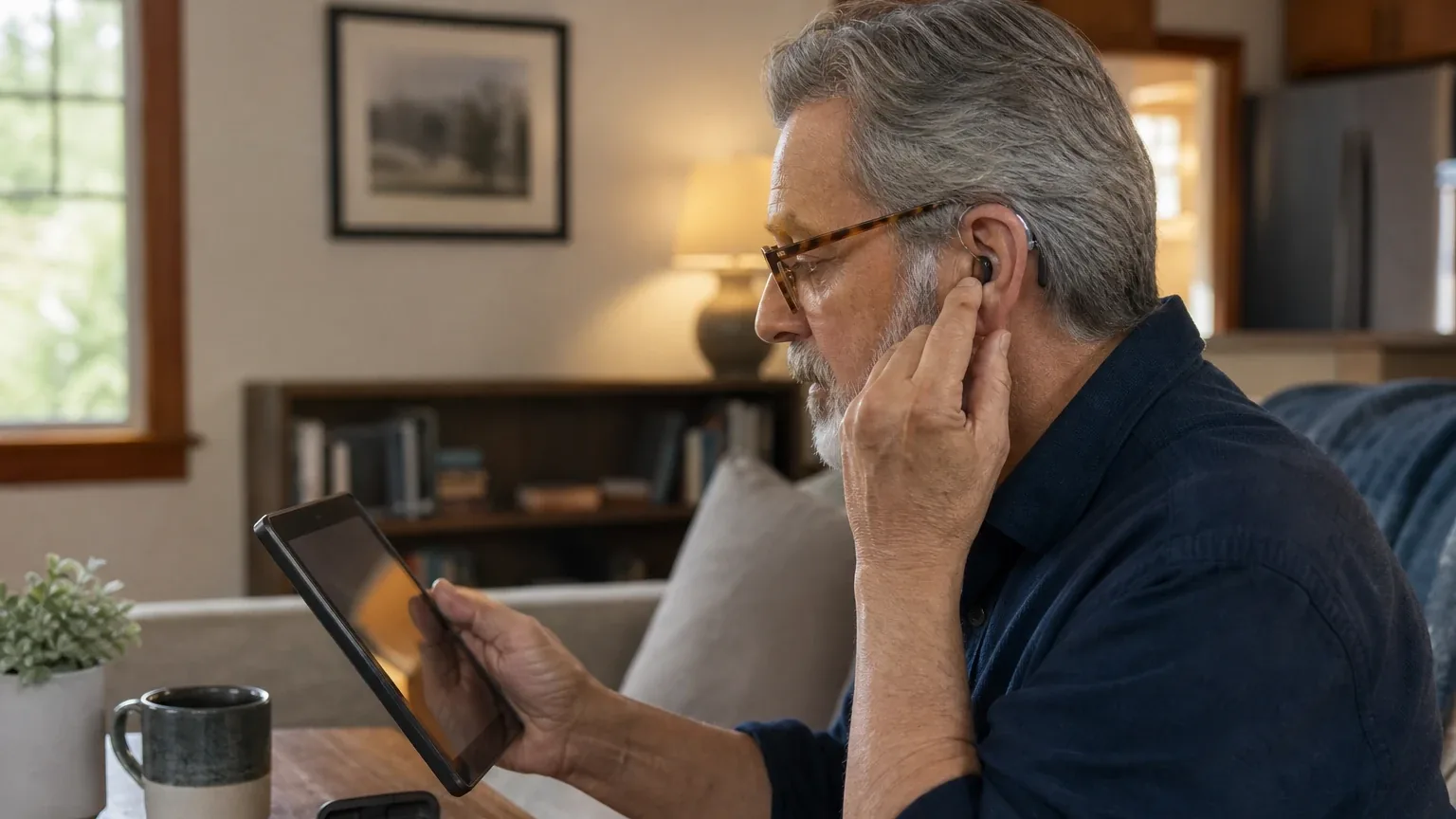
Jabra Enhance is a good fit for older adults with mild-to-moderate hearing loss seeking premium OTC receiver-in-canal (RIC) hearing aids with included remote audiology support. Two of seven platforms named Jabra Enhance in the ranking stage, with an average listed rank of 1.5 and a best rank of 1. The strongest reason to consider it is the included three-year audiology-care plan with remote adjustments, which is uncommon in the OTC category. The main limitation is below-average speech-in-noise performance in lab testing, which may disappoint buyers who frequently navigate loud restaurants or crowded public venues. Pricing conflicts exist across sources, with the official list price at $1,995 per pair and promotional pricing reported between $1,695 and $1,795.
Research Snapshot
| Metric | Value |
|---|---|
| Platform mentions in ranking stage | 2 of 7 platforms |
| Share of included platform responses | 28.6% (2 of 7) |
| Average listed rank | 1.5 |
| Best listed rank | 1 |
| Relevant product/model/plan | Enhance Select 700 with included three-year audiology-care plan (OTC RIC) |
| Overall use-case fit | Good (4 of 7 platforms rated strong or good; 1 mixed; 1 uncertain) |
| Research date | 2026-08-13 |
Why Jabra Enhance Qualified for This Study
Jabra Enhance qualified for this General Hearing Support study because two of the seven configured AI platforms named it during the ranking discovery stage. OpenAI ranked it first and Anthropic ranked it second, producing an average listed rank of 1.5 across those two platforms. The entity was evaluated against category criteria including speech clarity, background-noise reduction, audiology support, comfort and fit, trial period, warranty, pricing transparency, and customer support quality.
The relevant product for this use case is the Enhance Select 700, an OTC receiver-in-canal hearing aid sold directly to consumers with a bundled three-year audiology-care plan. All seven platforms that provided fit-research responses evaluated this model, though one platform (Perplexity) rated its fit as uncertain due to insufficient verified evidence in its supplied sources.
The Product, Model, Plan, or Service Most Relevant to General Hearing Support
The Jabra Enhance Select 700 is the flagship OTC hearing aid from Jabra Enhance, launched in September 2025 as the replacement for the Select 500 [1]. It is a rechargeable receiver-in-ear (RIE) device marketed as the world's smallest rechargeable model at 2.12 grams [2]. The recommended configuration includes a three-year audiology-care plan with remote adjustments, a three-year warranty with loss-and-damage protection, and a 100-day risk-free trial.
Key specifications reported across sources include Bluetooth LE Audio and Auracast support, hands-free calling on compatible iOS and Android devices, IP68 water resistance, and a rechargeable battery delivering approximately 30 hours per charge with a portable charging case holding up to three additional charges [3]. The device uses SoundScape technology with Auto Focus, which the company says automatically prioritizes speech and reduces background noise [5].
The Select 700 is FDA-compliant for adults 18 and older with self-perceived mild-to-moderate hearing loss only. It is not suitable for severe or profound hearing loss [6].
What the AI Platforms Agreed About
Strong agreement: The included three-year audiology-care plan is a major differentiator. All seven platforms that provided responses acknowledged the three-year remote audiology support as a distinguishing feature. Anthropic described it as "best pro support among OTC devices" with telehealth consultations, remote programming, and video appointments available seven days per week [8]. OpenAI noted this is "more support than many basic OTC products" [9]. DeepSeek highlighted unlimited remote adjustments by licensed audiologists and unlimited virtual visits [10]. Google called it "one of the longest remote audiology support plans included in the initial purchase price" [11].
Strong agreement: The 100-day trial period is among the most generous in the OTC market. Five platforms specifically cited the 100-day risk-free trial with full refund and no restocking fees [12]. Anthropic called it "the most generous return window in the market for OTC hearing aids" [13].
Strong agreement: The three-year warranty with loss-and-damage protection is a meaningful benefit. Multiple platforms cited the three-year manufacturer warranty covering defects and repairs plus loss-and-damage protection [17]. Google noted this is "one of the longest warranty periods in the OTC category" [19].
Strong agreement: The device is limited to mild-to-moderate hearing loss. All platforms that addressed candidacy agreed the Select 700 is not suitable for severe or profound hearing loss [20].
Majority agreement: The device is a good or strong fit for the target buyer. Four platforms rated the fit as strong (DeepSeek, Google, Grok) or good (OpenAI, Anthropic). One platform rated it mixed (Kimi), and one rated it uncertain (Perplexity).
Where the AI Platforms Disagreed or Were Uncertain
Speech-in-noise performance is the most significant disagreement. Anthropic reported HearAdvisor lab testing showing speech-in-noise at only 0.9/5 on initial fit, below the category average of 3.49/5, with a 30% improvement after remote tuning by the audiology team [25]. Google reported a "B" SoundScore of 3.91/5 from HearAdvisor, placing it in the top 25% of OTC devices tested [28]. OpenAI's WIRED review found Auto Focus "potentially useful but reported that it did not consistently solve noisy-restaurant listening in testing" [29]. Grok stated independent reviews note "strong performance in noisy environments" [30]. These conflicting assessments mean buyers should not assume consistent speech-in-noise performance.
Pricing varies by source and timing. The official product page lists $1,995 per pair [31]. Independent sources report promotional pricing between $1,695 and $1,795 [33]. DeepSeek reported a price of $1,195 per pair, which conflicts with all other sources and appears to be either an error or a different model [35]. Kimi could not verify pricing and estimated a range of $800–$2,500 based on market data [36]. Buyers must verify current pricing at the point of sale.
Battery life claims vary. Initial specifications noted 24+ hours, while later sources report 30+ hours [37]. Actual battery life depends on usage, streaming, and volume.
The Select 700 versus Select 300 comparison is unresolved. HearAdvisor data shows the Select 300 scores higher (Grade A, 4.3/5) than the Select 700 (Grade B, 3.9/5), yet the Select 700 is positioned as the flagship model [39]. The Select 300 also supports severe hearing loss, while the Select 700 caps at moderate [40]. It is unclear whether the premium price of the Select 700 derives from design, features, or other factors not captured in lab scores.
Perplexity could not verify core claims. Perplexity rated the fit as uncertain, stating the supplied evidence was insufficient to confirm pricing, warranty, trial terms, or feature performance [41]. This platform's response relied on a single non-product source and should be treated as a limitation of that platform's research rather than evidence against the product.
Use-Case-Specific Features and Capabilities
Speech Clarity
The Select 700 uses SoundScape Auto Focus technology, which Jabra says automatically prioritizes speech and reduces background noise [42]. Lab testing shows strong own-voice comfort at 4.3/5 and speech-in-quiet performance at 3.3/5, above category average [43]. Testers reported clear dialogue in TV watching and face-to-face conversations in controlled settings [44]. However, speech-in-noise performance scored only 0.9/5 on initial fit, below the category average, though users reported 30% improvement after remote tuning [45].
Background-Noise Reduction
The device includes adaptive noise reduction, environmental programs, and adjustable noise filtering [42]. The Restaurant program is specifically intended for speech in noisy group settings [47]. The app supports environments including All-Around, Restaurant, Outdoor, and Music [48]. Real-world benefit may vary by hearing loss and environment.
Audiology Support
Direct purchases include three years of remote professional support with video consultations, remote programming, and adjustments available seven days per week [49]. Support is available in 50 U.S. states and D.C. only [50]. The audiology team may not be able to remotely program for certain types of hearing loss [50]. WIRED reported receiving requested tuning changes within about an hour during testing [51].
Comfort and Fit
The Select 700 is marketed as the world's smallest rechargeable RIE at 2.12 grams, described as "nearly invisible" and designed to tuck behind the ear [52]. It includes three dome styles in different sizes [54]. Users report strong comfort after an adjustment period, though new users may need several days to adapt [54].
Trial Period and Warranty
The 100-day risk-free trial includes a full refund with no restocking fees or return shipping charges [55]. The three-year warranty covers defects and repairs plus loss-and-damage protection [56]. The loss-and-damage deductible amount is not disclosed [50].
Connectivity and TV Listening
The device supports Bluetooth LE Audio, Auracast, and hands-free calling on compatible iOS and Android devices [57]. An optional TV Streamer+ accessory sends television audio directly to the aids, but it is an additional purchase [47]. Independent testing praised connectivity but criticized media-streaming quality [51]. The device has no telecoil for public loop systems [59].
Battery and Charging
The rechargeable battery delivers approximately 30 hours per charge, with a portable charging case holding up to three full charges [60]. No disposable batteries are required, which is easier for seniors with dexterity challenges [61].
Pricing, Fees, Contracts, and Ongoing Costs
| Cost Item | Amount | Source |
|---|---|---|
| List price per pair | $1,995 | [62] |
| Promotional price per pair | $1,695–$1,795 | [64] |
| Three-year audiology care | Included in purchase price | [66] |
| Three-year warranty with loss/damage | Included in purchase price | [67] |
| 100-day trial | Included | [68] |
| Optional portable charging case | $250 | [69] |
| Optional desktop charging case | $150 | [69] |
| Optional TV Streamer+ | Price not disclosed | [70] |
| Optional MultiMic+ | Price not disclosed | [70] |
Financing is available through Bread Pay at 0% to 34.99% APR, with examples showing $39–$65 per month depending on model and credit qualification [71]. A minimum $50 purchase is required for financing, and a down payment may be required [71].
The pricing confidence across platforms is moderate to high, with the primary uncertainty being promotional pricing and whether the $1,195 figure reported by DeepSeek reflects a different model or an error [72]. After the three-year audiology support period ends, the cost of ongoing remote support is not disclosed [71].
Best Suited For
Jabra Enhance Select 700 is best suited for older adults with mild-to-moderate hearing loss who:
- Prefer direct-to-consumer OTC purchase without clinic visits [73]
- Value included professional remote audiology support and programming [73]
- Are first-time hearing aid users who want a long trial period and guidance [75]
- Prioritize discreet design and all-day comfort [76]
- Need Bluetooth streaming, hands-free calling, and app control [78]
- Want a three-year warranty with loss-and-damage protection [79]
- Are comfortable using a smartphone app for adjustments [80]
- Primarily listen in quiet-to-moderate environments such as home, TV, and one-on-one conversation [82]
Probably Not Best Suited For
Jabra Enhance Select 700 is probably not the best choice for:
- Older adults with severe or profound hearing loss, which requires prescription devices with wider fitting ranges [83]
- Seniors who prefer or need in-person audiologist visits and fittings [85]
- Users frequently in loud restaurants, crowds, or public venues where speech-in-noise performance is the primary concern [86]
- Buyers on tight budgets, since ELEHEAR Beyond Pro offers top-5% lab performance at $599, about $1,400 less [87]
- Those without smartphone access or comfort with app-based adjustment [88]
- Seniors outside the 50 U.S. states and D.C., where audiology support is unavailable [89]
- Users with non-standard hearing loss types that remote programming may not accommodate [89]
- Individuals who need telecoil compatibility for public loop systems in theaters, churches, or courthouses [90]
- Users prioritizing high-quality music or media streaming, which scored only 2.0/5 out of the box [91]
When Another Option May Be Better
Consider alternatives in these situations:
- Severe or progressive hearing loss: Prescription hearing aids from audiologists offer wider fitting ranges and in-person calibration [92]. The Jabra Enhance Select 300 supports mild, moderate, and severe loss, making it a potential upgrade path within the same brand [94].
- Frequent loud environments: Premium prescription models or top-tier OTC alternatives with stronger speech-in-noise performance may be better [95].
- Budget constraints: ELEHEAR Beyond Pro at $599 offers top-5% lab performance without audiology support [96]. Jabra's own Select 50R at $1,195 offers a lower-cost entry point [96].
- In-person care preference: Traditional clinic-based prescription hearing aids provide real-ear verification and hands-on fitting [97].
- No smartphone access: Fully analog hearing aids or simpler pre-set models may be more appropriate [99].
- Tinnitus masking needs: Jabra does not offer tinnitus masking; competitors like Lively or Eargo may include this feature [96].
- Music or streaming priority: The Select 700's music score of 2.0/5 is weak compared to music-focused hearing aids [100].
- Costco members: The Jabra Enhance Pro 30 at Costco is comparable or lower in price but requires membership and in-person visits [101].
Questions to Verify Before Buying
- Does your hearing loss fall within the mild-to-moderate range? Use the in-app test or a professional audiogram to confirm; the Select 700 is not suitable for severe or profound loss [102].
- Are you comfortable managing hearing aids entirely through a smartphone app, or do you require in-person appointments? Jabra offers remote support only [104].
- Do you have a compatible smartphone and reliable internet for setup and remote adjustments? [105]
- Is your state one of the 50 U.S. states or D.C., and is audiology support available at your address? [106]
- Have you been formally diagnosed with a specific type of hearing loss? Remote programming may not work for all types [106].
- Do you frequently attend public venues with hearing loop systems? The Select 700 has no telecoil; the MultiMic accessory is a workaround [107].
- What is the current promotional price and sale end date? Prices vary by retailer and timing [108].
- Does your health insurance plan cover any portion of OTC hearing aid costs? Jabra does not publish a simple insurance coverage list [110].
- What is the exact deductible for loss-and-damage protection, and what scenarios are covered? [106]
- After the three-year audiology support period ends, what is the cost for ongoing remote support or adjustments? [111]
- Have you compared the Select 700 to Jabra's own Select 300, which scores higher in lab tests, to confirm the premium justifies the price? [112]
- Will the aids work with your exact iPhone or Android model for streaming and hands-free calls? [113]
- What is the current price of the TV Streamer+ and Multi Mic+, and are either required for your television or public-setting needs? [114]
Final AI Consensus Verdict
The AI platform consensus is that the Jabra Enhance Select 700 is a good fit for older adults with mild-to-moderate hearing loss seeking premium OTC hearing aids with professional remote support. Four of seven platforms rated the fit as strong or good, one rated it mixed, one rated it uncertain, and one did not provide a fit rating.
The strongest case for the Select 700 is its bundled package: three years of remote audiology care, a 100-day risk-free trial, a three-year warranty with loss-and-damage protection, and a discreet rechargeable design. This combination is uncommon in the OTC category and reduces risk for first-time hearing aid users.
The most significant concern is speech-in-noise performance. Lab testing shows below-average initial performance, though remote tuning reportedly improves it by 30%. Buyers who frequently navigate loud restaurants or crowded venues should weigh this limitation carefully. The premium price of $1,695–$1,995 also places the Select 700 at the top of the OTC market, where lower-cost alternatives may offer comparable lab performance without audiology support.
The 100-day trial substantially reduces downside risk and is recommended as a key decision tool. Buyers should verify hearing loss severity, state eligibility for audiology support, smartphone comfort level, and use-case priorities before purchasing.
For a broader comparison of hearing aid options for seniors, see the General Hearing Support consensus index. You can also explore other products in the senior technology category directory.
How This Review Was Produced
This review was produced by aggregating fit-research responses from seven AI platforms: OpenAI, Anthropic, DeepSeek, Grok, Perplexity, Kimi, and Google. Each platform evaluated Jabra Enhance against category criteria including speech clarity, background-noise reduction, audiology support, comfort and fit, trial period, warranty, pricing transparency, and customer support quality. The research date for the authoritative run is 2026-08-13.
Platform responses were compiled from supplied citations, which include company-owned sources (jabraenhance.com, jabraofficial.com) and independent sources (WIRED, Hearing Tracker, HearAdvisor, NCOA, SeniorLiving.org, Soundly, and others). The entity ranking statistics reflect only platforms that named Jabra Enhance during the ranking discovery stage: OpenAI (rank 1) and Anthropic (rank 2).
Methodology Limitations
Several limitations apply to this review:
- Platform-reported research dates differ. DeepSeek reported a research date of 2026-04-12, while all other platforms reported 2026-08-13. This date discrepancy is disclosed as provenance metadata and does not independently prove freshness.
- Platform mentions count only ranking-stage naming. Two of seven platforms named Jabra Enhance during ranking discovery. The other five platforms evaluated fit but did not name the entity in the ranking stage.
- Supplied URLs were not independently validated. The URLs were collected from platform responses and were not verified by the writer stage.
- Pricing conflicts were not resolved by guessing. The official list price is $1,995, but promotional pricing varies by source and timing. DeepSeek reported $1,195, which conflicts with all other sources and may reflect an error or a different model.
- Perplexity's response relied on insufficient evidence. This platform rated the fit as uncertain because its supplied sources did not include verified product details.
- Company-owned evidence is distinguished from independent evidence. Claims sourced from jabraenhance.com or jabraofficial.com are company-reported and may not be independently verified.
- AI-platform agreement does not prove product quality. The consensus reflects the platforms' assessment of available evidence, not independent testing by this review.
- No personal testing was conducted. This review did not test the product, experience customer service, or verify medical benefits.
- The official-site retrieval failed for one or more mentions. No failed fetch was used as a verified domain key.
Sources
Company-Owned Sources
- Jabra Enhance Select 700 Hearing Aid: https://cdn.jabraenhance.com/shared/userguides/enhance-select-700.pdf
- Top features of your hearing aid explained: https://help.jabraenhance.com/daily-usage-and-maintainance/top-features-of-your-hearing-aid-explained
- How do I know which hearing profile works best for me?: https://help.jabraenhance.com/how-do-i-know-which-hearing-profile-works-best-for-me
- Jabra Enhance Select 700 - Official Website: https://jabraofficial.com/jabra-hearing-aids/
- Top features of your hearing aid explained - Help Center - Jabra Enhance: https://support.jabraenhance.com/hc/en-us/articles/top-features-of-your-hearing-aid
- Jabra Enhance Select Hearing Aids - Buy Online: https://www.jabraenhance.com/
- Jabra Enhance Select Hearing Aids - Jabra Enhance: https://www.jabraenhance.com/product
- Enhance Select 700: https://www.jabraenhance.com/product/enhanceselect700
- Jabra Enhance Select Hearing Aids: https://www.jabraenhance.com/product/select-hearing-aids
- Enhance Select 700 - Official Product Page: https://www.jabraenhance.com/products/enhance-select-700
Additional AI research evidence114 records
- AI research evidence record google:1.2.7
- AI research evidence record anthropic:c12
- AI research evidence record anthropic:c29
- AI research evidence record google:1.2.1
- AI research evidence record openai:c2
- AI research evidence record anthropic:c1
- AI research evidence record anthropic:c2
- AI research evidence record anthropic:c11
- AI research evidence record openai:c4
- AI research evidence record deepseek:c1
- AI research evidence record google:1.1.1
- AI research evidence record anthropic:c15
- AI research evidence record anthropic:c16
- AI research evidence record anthropic:c17
- AI research evidence record grok:c2
- AI research evidence record google:1.1.3
- AI research evidence record anthropic:c18
- AI research evidence record openai:c2
- AI research evidence record google:1.1.5
- AI research evidence record anthropic:c1
- AI research evidence record anthropic:c2
- AI research evidence record anthropic:c3
- AI research evidence record grok:c1
- AI research evidence record google:1.1.8
- AI research evidence record anthropic:c4
- AI research evidence record anthropic:c6
- AI research evidence record anthropic:c7
- AI research evidence record google:1.1.6
- AI research evidence record openai:c1
- AI research evidence record grok:c1
- AI research evidence record openai:c2
- AI research evidence record google:1.1.1
- AI research evidence record anthropic:c21
- AI research evidence record openai:c5
- AI research evidence record deepseek:c1
- AI research evidence record kimi:c4
- AI research evidence record anthropic:c29
- AI research evidence record google:1.2.1
- AI research evidence record anthropic:c31
- AI research evidence record anthropic:c34
- AI research evidence record perplexity:c1
- AI research evidence record openai:c2
- AI research evidence record anthropic:c4
- AI research evidence record anthropic:c5
- AI research evidence record anthropic:c6
- AI research evidence record anthropic:c7
- AI research evidence record openai:c3
- AI research evidence record google:1.2.9
- AI research evidence record anthropic:c8
- AI research evidence record anthropic:c10
- AI research evidence record openai:c1
- AI research evidence record anthropic:c12
- AI research evidence record anthropic:c13
- AI research evidence record anthropic:c14
- AI research evidence record anthropic:c15
- AI research evidence record anthropic:c18
- AI research evidence record anthropic:c24
- AI research evidence record google:1.1.1
- AI research evidence record anthropic:c19
- AI research evidence record anthropic:c29
- AI research evidence record anthropic:c30
- AI research evidence record openai:c2
- AI research evidence record google:1.1.1
- AI research evidence record anthropic:c21
- AI research evidence record openai:c5
- AI research evidence record anthropic:c8
- AI research evidence record anthropic:c18
- AI research evidence record anthropic:c15
- AI research evidence record anthropic:c29
- AI research evidence record openai:c3
- AI research evidence record anthropic:c23
- AI research evidence record deepseek:c1
- AI research evidence record anthropic:c8
- AI research evidence record openai:c2
- AI research evidence record anthropic:c16
- AI research evidence record anthropic:c12
- AI research evidence record anthropic:c13
- AI research evidence record anthropic:c24
- AI research evidence record anthropic:c18
- AI research evidence record anthropic:c27
- AI research evidence record anthropic:c28
- AI research evidence record anthropic:c5
- AI research evidence record anthropic:c1
- AI research evidence record anthropic:c2
- AI research evidence record anthropic:c8
- AI research evidence record anthropic:c6
- AI research evidence record anthropic:c32
- AI research evidence record anthropic:c28
- AI research evidence record anthropic:c10
- AI research evidence record anthropic:c19
- AI research evidence record anthropic:c5
- AI research evidence record anthropic:c1
- AI research evidence record anthropic:c2
- AI research evidence record anthropic:c34
- AI research evidence record anthropic:c6
- AI research evidence record anthropic:c32
- AI research evidence record kimi:c1
- AI research evidence record kimi:c5
- AI research evidence record anthropic:c28
- AI research evidence record anthropic:c5
- AI research evidence record anthropic:c33
- AI research evidence record anthropic:c1
- AI research evidence record anthropic:c2
- AI research evidence record anthropic:c8
- AI research evidence record anthropic:c28
- AI research evidence record anthropic:c10
- AI research evidence record anthropic:c19
- AI research evidence record anthropic:c21
- AI research evidence record openai:c5
- AI research evidence record anthropic:c35
- AI research evidence record anthropic:c23
- AI research evidence record anthropic:c31
- AI research evidence record openai:c1
- AI research evidence record openai:c3
Independent Sources
- Jabra Enhance Hearing Aids Review (2025: https://aginginplace.org/hearing-health/jabra-hearing-aids-review/
- Jabra Enhance Select 700 Review 2026: Price, Specs & Alternatives | Hearing Buddy: https://hearingbuddy.org/reviews/jabra-enhance-select-700
- Jabra Enhance Select 700 Review 2026: Price, Specs & Alternatives: https://hearingbuddyapp.com/hearing-aids/jabra-enhance-select-700
- A Primer on Buying Hearing Aids: https://hearinghealthfoundation.org/blogs/a-primer-on-buying-hearing-aids
- Jabra Enhance Launches Enhance Select 700 Rechargeable OTC RIE: https://hearingreview.com/hearing-products/hearing-aids/ote/jabra-enhance-launches-enhance-select-700-rechargeable-otc-rie
- Jabra Enhance Hearing Aids Review 2026: https://hearliferestored.com/jabra-enhance-review-2026
- Jabra Enhance Select 700 Review: High Marks, Premium Price - Hearing Scout: https://listings.hearingscout.com/jabra-enhance-select-700-review
- Jabra Enhance Select 700 Review: Capable But Complex: https://medgrade.org/reviews/jabra-enhance-select-700-review/
- How Much Do Hearing Aids Cost in 2026? OTC vs Prescription Price Guide: https://nationalhearinginstitute.org/articles/how-much-do-hearing-aids-cost-2026/
- OTC vs Prescription Hearing Aids: https://nationalhearinginstitute.org/articles/otc-vs-prescription-hearing-aids/
- Jabra Enhance Select 700 Complete Bundle | AARP Hearing Solutions: https://www.aarphearingsolutions.com/PDT-53035.html
- A Guide for Primary Care Physicians: Helping Patients With Hearing Loss: https://www.asha.org/siteassets/audiology/primary-care-physicians-guide.pdf
- THE AUDIOLOGIST'S GUIDE TO HEARING AIDS, PERSONAL SOUND AMPLIFICATION PRODUCTS, HEARABLES, AND OVER-THE-COUNTER DEVICES: https://www.audiology.org/wp-content/uploads/2023/03/Audiologist-Guide_March-2023.pdf
- Jabra Enhance Select 700 hearing aids: price, models, review: https://www.earpros.com/hearing-aid-brands/jabra-enhance-hearing-aids/select-700
- Jabra Enhance Select 700 Hearing Aid Review: https://www.hearadvisor.com/products/jabra-enhance-select-700
- Jabra Enhance Select 700 vs. Jabra Enhance Select 300: https://www.hearingtracker.com/hearing-aids/compare/jabra-enhance-select-700-vs-jabra-select-300-rechargeable
- Jabra Enhance Select Hearing Aids: Expert Reviews: https://www.hearingtracker.com/hearing-aids/jabra-enhance
- Jabra Enhance Select 700 Review: Premium OTC Sound: https://www.hearingtracker.com/hearing-aids/jabra-enhance-select-700
- Are Jabra Enhance Hearing Aids Right for You?: https://www.ncoa.org/product-resources/hearing-aids/jabra-enhance-review/
- Search results provided with the request: https://www.salesforce.com/blog/sales/product-market-fit/
- Jabra Enhance Hearing Aid Costs and Pricing in 2026 - SeniorLiving.org: https://www.seniorliving.org/hearing-aids/jabra-enhance/costs/
- Jabra Enhance Hearing Aid Costs and Pricing in 2026: https://www.seniorliving.org/hearing-aids/lively/
- Jabra Enhance Hearing Aids Review 2026: https://www.seniorliving.org/hearing-aids/lively/reviews/
- Jabra Enhance Select 700 Hearing Aid: Review & Prices: https://www.soundly.com/product/jabra-enhance-select
- Jabra Enhance Select 700 Review: Still Great Hearing Aids: https://www.wired.com/review/jabra-enhance-select-700/
- Jabra Enhance Select 700 - Hands-On Review: https://www.youtube.com/watch?v=zo-CsTclbEk
Additional AI research evidence114 records
- AI research evidence record google:1.2.7
- AI research evidence record anthropic:c12
- AI research evidence record anthropic:c29
- AI research evidence record google:1.2.1
- AI research evidence record openai:c2
- AI research evidence record anthropic:c1
- AI research evidence record anthropic:c2
- AI research evidence record anthropic:c11
- AI research evidence record openai:c4
- AI research evidence record deepseek:c1
- AI research evidence record google:1.1.1
- AI research evidence record anthropic:c15
- AI research evidence record anthropic:c16
- AI research evidence record anthropic:c17
- AI research evidence record grok:c2
- AI research evidence record google:1.1.3
- AI research evidence record anthropic:c18
- AI research evidence record openai:c2
- AI research evidence record google:1.1.5
- AI research evidence record anthropic:c1
- AI research evidence record anthropic:c2
- AI research evidence record anthropic:c3
- AI research evidence record grok:c1
- AI research evidence record google:1.1.8
- AI research evidence record anthropic:c4
- AI research evidence record anthropic:c6
- AI research evidence record anthropic:c7
- AI research evidence record google:1.1.6
- AI research evidence record openai:c1
- AI research evidence record grok:c1
- AI research evidence record openai:c2
- AI research evidence record google:1.1.1
- AI research evidence record anthropic:c21
- AI research evidence record openai:c5
- AI research evidence record deepseek:c1
- AI research evidence record kimi:c4
- AI research evidence record anthropic:c29
- AI research evidence record google:1.2.1
- AI research evidence record anthropic:c31
- AI research evidence record anthropic:c34
- AI research evidence record perplexity:c1
- AI research evidence record openai:c2
- AI research evidence record anthropic:c4
- AI research evidence record anthropic:c5
- AI research evidence record anthropic:c6
- AI research evidence record anthropic:c7
- AI research evidence record openai:c3
- AI research evidence record google:1.2.9
- AI research evidence record anthropic:c8
- AI research evidence record anthropic:c10
- AI research evidence record openai:c1
- AI research evidence record anthropic:c12
- AI research evidence record anthropic:c13
- AI research evidence record anthropic:c14
- AI research evidence record anthropic:c15
- AI research evidence record anthropic:c18
- AI research evidence record anthropic:c24
- AI research evidence record google:1.1.1
- AI research evidence record anthropic:c19
- AI research evidence record anthropic:c29
- AI research evidence record anthropic:c30
- AI research evidence record openai:c2
- AI research evidence record google:1.1.1
- AI research evidence record anthropic:c21
- AI research evidence record openai:c5
- AI research evidence record anthropic:c8
- AI research evidence record anthropic:c18
- AI research evidence record anthropic:c15
- AI research evidence record anthropic:c29
- AI research evidence record openai:c3
- AI research evidence record anthropic:c23
- AI research evidence record deepseek:c1
- AI research evidence record anthropic:c8
- AI research evidence record openai:c2
- AI research evidence record anthropic:c16
- AI research evidence record anthropic:c12
- AI research evidence record anthropic:c13
- AI research evidence record anthropic:c24
- AI research evidence record anthropic:c18
- AI research evidence record anthropic:c27
- AI research evidence record anthropic:c28
- AI research evidence record anthropic:c5
- AI research evidence record anthropic:c1
- AI research evidence record anthropic:c2
- AI research evidence record anthropic:c8
- AI research evidence record anthropic:c6
- AI research evidence record anthropic:c32
- AI research evidence record anthropic:c28
- AI research evidence record anthropic:c10
- AI research evidence record anthropic:c19
- AI research evidence record anthropic:c5
- AI research evidence record anthropic:c1
- AI research evidence record anthropic:c2
- AI research evidence record anthropic:c34
- AI research evidence record anthropic:c6
- AI research evidence record anthropic:c32
- AI research evidence record kimi:c1
- AI research evidence record kimi:c5
- AI research evidence record anthropic:c28
- AI research evidence record anthropic:c5
- AI research evidence record anthropic:c33
- AI research evidence record anthropic:c1
- AI research evidence record anthropic:c2
- AI research evidence record anthropic:c8
- AI research evidence record anthropic:c28
- AI research evidence record anthropic:c10
- AI research evidence record anthropic:c19
- AI research evidence record anthropic:c21
- AI research evidence record openai:c5
- AI research evidence record anthropic:c35
- AI research evidence record anthropic:c23
- AI research evidence record anthropic:c31
- AI research evidence record openai:c1
- AI research evidence record openai:c3
Verify this research
Review the study details behind this page or download the public machine-readable verification record.
- Study date
- Aug 13, 2026
- Platforms analyzed
- 7
- Source records
- 36
- Ranking mentions
- 2 of 7
- Platform share
- 29%
- Final consensus rank
- #4
Research trail and source mix
Platforms
openai, anthropic, deepseek, grok, perplexity, kimi, google
Source mix
26 independent · 10 company-owned
Evidence support
35 direct · 1 partial
Important limitation
Use the run research_date as the study date. Platform-reported dates are provenance metadata and do not independently prove freshness.
Source snapshot SHA-256 e09c7785f2b43ac0c151f14552b8f7847103a111a7921ed63363c5606afa7d11