
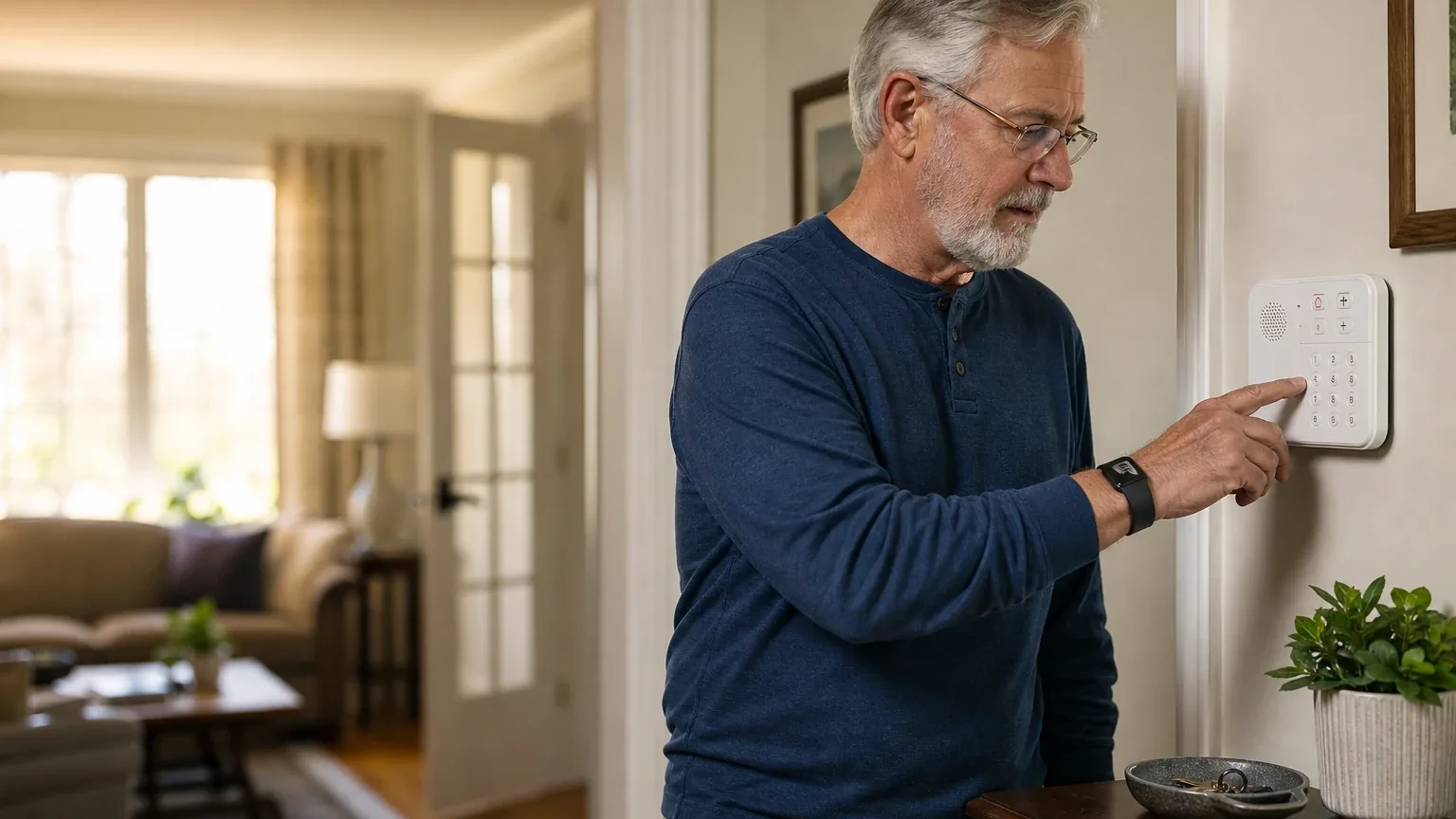
Answer Capsule
SimplyHome is a mixed-to-uncertain fit for households seeking a single system that combines burglary protection with panic buttons, emergency dispatch, or medical alert accessories. Two of seven AI platforms named SimplyHome during the ranking stage, giving it a platform share of 28.6% and an average listed rank of 2.0. The strongest reason to consider SimplyHome is its highly customizable caregiver notification system with waterproof panic pendants, 24/7 Response Center option, and sensor-based monitoring for falls, wandering, stove safety, and medication routines. The main limitation is that SimplyHome is not clearly documented as a conventional burglary-alarm system; no platform confirmed traditional police-dispatch intrusion protection, and pricing transparency is inconsistent across sources. Buyers prioritizing medical alert and caregiver coordination over active burglary deterrence should shortlist SimplyHome, but must verify current pricing, contract terms, and Response Center escalation protocols before purchasing.
Research Snapshot
| Metric | Value |
|---|---|
| Platform mentions in ranking stage | 2 of 7 platforms (deepseek, kimi) |
| Share of included platform responses | 28.6% |
| Average listed rank | 2.0 |
| Best listed rank | 1 (deepseek) |
| Relevant product/model/plan | SimplyHome System with Firefly or Butler configuration and optional 24/7 Response Center; entry-level SimplyHome Personal Emergency Response System (PERS) with panic pendant |
| Overall use-case fit | Mixed to uncertain |
| Research date | 2026-08-12 |
Why SimplyHome Qualified for This Study
SimplyHome qualified for this Security Plus Emergency Response review because it appeared in the ranking stage of the broader study on best home security systems with medical alert features. Two platforms (deepseek and kimi) named SimplyHome during ranking discovery, with deepseek ranking it first and kimi ranking it third. The company's product line includes the SimplyHome System with Firefly and Butler configurations, plus an entry-level Personal Emergency Response System (PERS) with a wearable panic pendant. These products address several category criteria, including panic button availability, medical alert accessory support, 24/7 monitoring, emergency escalation protocol, and caregiver notifications [1].
The Product, Model, Plan, or Service Most Relevant to Security Plus Emergency Response
The most relevant offering is the SimplyHome System with Firefly or Butler configuration and optional 24/7 Response Center. All seven platforms identified this configuration as the primary product for this use case. The Firefly model is described as a sleek, discrete design with direct user portal control and Ring doorbell integration, while the Butler model requires contacting customer service to change rules and alerts [4]. The entry-level SimplyHome Personal Emergency Response System (PERS) with a waterproof panic pendant is also relevant for households primarily seeking medical alert functionality [6].
What the AI Platforms Agreed About
Strong consensus on panic button and medical alert capabilities
All platforms that provided detailed findings agreed that SimplyHome offers panic pendants and medical alert accessories. The PERS includes a panic button usable as a watch or lanyard, and the pendant is described as waterproof for use in the shower [8]. The broader SimplyHome System supports panic pendants, bed and chair sensors, motion sensors, door sensors, stove sensors, and other environmental sensors [10]. Grok noted that the system includes bed/chair sensors, fall detection capability via sensors, and stove sensors [12].
Strong consensus on 24/7 Response Center availability
Multiple platforms confirmed that SimplyHome offers a 24/7 Response Center as an option. OpenAI stated that the Response Center is staffed 24/7 and can receive emergency notifications [8]. Anthropic described the call center as staffed with trained responders 24/7 who alert caregivers and can contact emergency services if needed [13]. Google's findings noted that when triggered, the response center can communicate via the base station's two-way speaker, notify designated caregiver contacts, or dispatch emergency services [14].
Strong consensus on caregiver notification strength
All platforms agreed that caregiver notifications are a core strength. The system supports text, email, and phone notifications to multiple recipients in a chosen order, plus a caregiver/service-provider Responder App and portal [10]. Kimi confirmed that SimplyHome emphasizes caregiver notifications as a core feature, sending alerts based on sensor activity patterns such as no movement detected or door left open [17].
Majority consensus on no annual contracts
Anthropic and grok both reported that SimplyHome does not require annual contracts. Anthropic stated that subscriptions can be cancelled the next month without penalty [18], and grok confirmed "no annual contracts; pay for what is needed" [12]. However, this finding is based on company-owned sources and conflicts with the older service agreement's description of month-to-month terms with written termination notice [19].
Where the AI Platforms Disagreed or Were Uncertain
Burglary protection capability: the central disagreement
The most significant disagreement concerns whether SimplyHome provides burglary protection. OpenAI rated burglary protection as a limitation, noting that door, motion, and window-related alerts are supported, but the reviewed materials do not clearly establish a full conventional burglar-alarm package, guaranteed police dispatch, or professional alarm verification [20]. Anthropic was more definitive, stating that SimplyHome "fundamentally lacks burglary protection, intrusion detection, and professional security dispatch" and that door/window sensors monitor daily activities rather than unauthorized entry [22]. Google similarly found that while the system communicates with door and motion sensors, they are primarily used to monitor daily patterns rather than detect intruders, and the system does not provide traditional loud intruder sirens or standard police-dispatch burglary alarms [24].
Fit rating: mixed to uncertain to weak
Platform fit ratings varied considerably. OpenAI rated SimplyHome as a "mixed" fit, grok and google also rated it "mixed," while deepseek, kimi, and perplexity rated it "uncertain," and anthropic rated it "weak." This spread reflects the fundamental uncertainty about whether SimplyHome can serve as a combined security-plus-medical-alert system.
Pricing transparency: conflicting reports
Pricing findings conflict across platforms. OpenAI reported Firefly purchase prices of $849.95-$1,149.90 and monthly service fees of $79.95-$149.95, with moderate pricing confidence [20]. Grok added Butler pricing of $1,249.90-$1,549.90 purchase [27]. Google confirmed the same Firefly and Butler purchase prices with high pricing confidence [24]. However, anthropic reported that "SimplyHome does not publish standard pricing for equipment or monthly monitoring subscriptions on its consumer-facing website" with low pricing confidence [28]. Kimi stated that no pricing information is publicly available and that SimplyHome appears to require direct consultation for quotes [29]. Deepseek similarly reported that pricing is not publicly available [30].
Contract terms: dated agreement vs. current claims
The only publicly available service agreement is dated September 1, 2018, and describes a month-to-month term with written termination notice, partial-month fees not prorated or refunded, and a refund schedule for purchased equipment (100% within 30 days, 50% from 30-90 days, 25% from 90-180 days, excluding monthly service, shipping, programming, and installation fees; consumables such as panic pendants are non-refundable) [31]. Anthropic and grok both reported no annual contracts with month-to-month cancellation, but these claims come from company pages that may reflect current terms [32]. The conflict between the 2018 agreement and current website claims should be resolved with the company before purchase.
Use-Case-Specific Features and Capabilities
Panic button availability
SimplyHome offers panic pendants that can be worn as a necklace or wristband, plus a Help button on the base unit. The PERS pendant is waterproof for use in the shower [33]. Deepseek noted that the Butler console includes a wireless emergency button that can act as a panic button, though details on range and response are not fully public [36].
Medical alert accessory support
Published supported devices include panic pendants, bed and chair sensors, motion sensors, door sensors, stove sensors, and other environmental sensors [37]. The Firefly model addresses cooking safety, falls, medication compliance, sleep patterns, wandering, and elopement through sensor-based activity monitoring [39]. Fall detection capability via sensors is noted, but automatic fall detection is not clearly specified for every configuration [37].
24/7 monitoring
SimplyHome states that its Response Center is staffed 24/7 and can receive emergency notifications [33]. The monitoring center partner handles medical and panic signals for SimplyHome while also monitoring traditional burglar and fire alarms for other dealers [41]. However, no platform confirmed whether the Response Center is a UL-certified monitoring center or a less formal call center [42].
Emergency escalation protocol
For the PERS, the call center alerts listed responders and contacts emergency services if responders cannot be reached or if emergency services are requested immediately [33]. The monitoring center attempts to speak to the client through the base station first when an alarm button is pressed [43]. However, anthropic noted that emergency services are contacted only if caregivers cannot be reached or if emergency services are explicitly requested, not as a primary security response to break-ins [44]. The exact escalation sequence for every Firefly or Butler configuration should be confirmed because alerts are customizable [37].
Caregiver notifications
The system supports text, email, and phone notifications to multiple recipients in a chosen order, plus a caregiver/service-provider Responder App and portal [37]. Caregivers can define rules based on activity or lack thereof recorded by door, bed, chair, and motion sensors [47].
Connectivity and resilience
Internet and cellular models are available, subject to coverage or broadband requirements [37]. The PERS documentation describes battery backup of at least 72 hours for the base unit during power outages [35]. However, actual backup duration varies by hardware and connection type in newer FAQ material [33].
Pricing, Fees, Contracts, and Ongoing Costs
Known equipment costs
| Item | Price Range | Source |
|---|---|---|
| Firefly System Purchase | $849.95-$1,149.90 | [48], [49], [50] |
| Butler System Purchase | $1,249.90-$1,549.90 | [49], [50] |
| Monthly Services Fee (Firefly and Butler) | $79.95-$149.95 | [48], [49], [50] |
Contract and cancellation terms
The publicly available service agreement dated September 1, 2018 describes a month-to-month term and written termination notice. Partial-month service fees are not prorated or refunded. Purchased-equipment refunds are described as 100% within 30 days, 50% from 30-90 days, and 25% from 90-180 days, excluding monthly service, shipping, programming, and installation fees; consumables such as panic pendants are non-refundable [51]. Anthropic and grok report no annual contracts with month-to-month cancellation, but these claims are from company pages and may reflect current terms [52]. The 2018 agreement is old relative to the 2026 research date and should not be treated as the current contract without confirmation.
Additional fees
The service agreement permits charges for shipping, programming, installation, connectivity changes, device updates, third-party fees, and certain on-site support calls [51]. Anthropic noted uninstall and reinstall fees, programming fees for system changes, and an Implementation Roadmap consulting package with undisclosed costs [53]. The current price page does not disclose a complete equipment price for Butler or a separate Response Center fee [48].
Pricing confidence
Pricing confidence varies by platform: google reported high confidence, openai and grok reported moderate confidence, and anthropic, deepseek, kimi, and perplexity reported low confidence. The conflict stems from whether the current website publishes pricing or requires consultation.
Best Suited For
SimplyHome is best suited for aging-in-place households that prioritize customized medical-alert, caregiver-notification, and daily-living support over conventional burglary protection. Specific best-fit scenarios include:
- Households needing a waterproof panic pendant, two-way communication, caregiver alerts, and customized safety rules [54]
- Families wanting one platform for emergency alerts, falls, wandering, stove safety, medication routines, and caregiver monitoring [55]
- Caregivers seeking passive monitoring and proactive alerts without emphasis on intrusion detection [57]
- Facilities or home support providers managing individuals with dementia, elopement risk, or medication compliance needs [56]
- Users with disabilities requiring environmental control and smart home automation [58]
Probably Not Best Suited For
SimplyHome is probably not best suited for:
- Buyers primarily seeking standard burglar-alarm equipment with clearly published police-dispatch procedures [59]
- Households needing integrated burglary alarm with police dispatch [61]
- Buyers requiring transparent online pricing, standardized packages, or a clearly stated no-contract policy [62]
- Households needing wearable protection that reliably works well outside the home [64]
- Budget-conscious buyers, as equipment and monthly fees are significantly higher than standard medical alert or DIY security systems [65]
When Another Option May Be Better
Consider alternatives in these scenarios:
- Primary burglary focus: Choose a conventional professionally monitored security provider when burglary protection, alarm verification, and police/fire dispatch procedures are the main priorities [66].
- Simple medical alert need: Choose a dedicated medical-alert provider when the primary need is a simple, standardized medical-alert service with clearly published monitoring and wearable options [66].
- Transparent pricing: Choose a lower-cost DIY security platform when transparent pricing and self-installation matter more than customized caregiver and daily-living support [66].
- Combined security and medical alert: Consider dedicated medical alert systems like Life Alert that have expanded to include home monitoring, or traditional security companies with medical panic buttons [67].
Questions to Verify Before Buying
Before purchasing SimplyHome for Security Plus Emergency Response, verify the following with the company:
- Is the SimplyHome System with Firefly or Butler currently sold directly to U.S. aging-in-place households, or only through agencies and care providers? [69]
- What exact equipment, sensors, pendant type, cellular hardware, installation, and Response Center service are included in the quoted price? [69]
- Is the Response Center the first responder for panic-button, burglary, smoke, fall, and environmental alerts, or only for selected alert types? [69]
- What is the precise escalation sequence, including when family, caregivers, the Response Center, 911, fire services, or local responders are contacted? [71]
- Does the pendant support automatic fall detection, GPS, two-way voice, and use away from the home? [71]
- What are the current contract length, cancellation notice, refund, return, equipment-ownership, and price-increase terms? [73]
- Are there fees for installation, programming changes, cellular service, replacement pendants, false alarms, relocation, or on-site visits? [73]
- What battery backup duration applies to the exact base unit and cellular model? [71]
- What happens if internet or cellular service fails, and how is the household notified? [69]
- Can the system provide a standard burglary alarm, audible siren, professional alarm verification, and documented police/fire dispatch? [69]
- Is the 24/7 Response Center staffed by CSAA-certified operators with direct dispatch to 911, or does it notify caregivers first? [76]
- Is professional monitoring available in the buyer's specific zip code? [76]
Final AI Consensus Verdict
SimplyHome is a mixed-to-uncertain fit for Security Plus Emergency Response. The AI platforms agree that SimplyHome excels at panic buttons, caregiver notifications, sensor-based activity monitoring, and optional 24/7 response—all valuable for aging-in-place households. However, no platform confirmed that SimplyHome provides conventional burglary protection with police dispatch, audible sirens, or professional alarm verification. The company's own materials emphasize remote support and daily-living monitoring rather than traditional home security.
The strongest case for SimplyHome is for households where medical alert and caregiver coordination are the primary needs and burglary protection is secondary. The strongest case against is for buyers who want one integrated system with verified burglary alarm capability and transparent pricing. Given the conflicting pricing reports, the dated service agreement, and the lack of independent verification of monitoring-center accreditation or dispatch performance, buyers should obtain a current written quote and confirm all escalation and security features before purchasing.
For a full comparison of providers in this category, see the Security Plus Emergency Response consensus index. For broader options, browse the home safety category directory.
How This Review Was Produced
This review was produced on 2026-08-12 by aggregating fit-research responses from seven AI platforms: openai, anthropic, deepseek, grok, perplexity, kimi, and google. Each platform evaluated SimplyHome against the category criteria of panic button availability, medical alert accessory support, 24/7 monitoring, emergency escalation protocol, caregiver notifications, contract terms, and equipment cost. Platform responses were analyzed for consensus, disagreement, and evidence quality. All factual claims are cited to the supplied source catalog.
Methodology Limitations
Several limitations apply to this review:
- Platform-reported dates differ: Deepseek's research date is 2026-04-14, while the authoritative run date is 2026-08-12. This discrepancy is disclosed as a methodology limitation.
- Platform mentions vs. fit evaluations: All seven platforms evaluated SimplyHome's fit, but only two platforms (deepseek and kimi) named SimplyHome during the ranking discovery stage. Platform mentions count only ranking-stage appearances.
- Company-owned evidence base: No deduplicated independent citation was supplied. The evidence base is company-owned or platform-reported, and no independent source verifies monitoring-center accreditation, dispatch times, false-alarm practices, or emergency-call outcomes.
- Unvalidated URLs: The supplied URLs were collected from platform responses and were not independently validated by the writer stage.
- Conflicting product information: Product names, pricing, and capabilities conflict across sources. These conflicts are described rather than resolved by guessing.
- AI agreement does not prove quality: Agreement among AI platforms reflects analysis of supplied sources and does not constitute independent verification of product performance.
Sources
Company-Owned Sources
- Home: https://simply-home.com/
- Call Center Partner Gives A Behind The Scenes Look - Simply Home: https://simply-home.com/call-center-partner-gives-a-behind-the-scenes-look
- FAQ: SimplyHome Personal Emergency Response System: https://simply-home.com/faq-simplyhome-personal-emergency-response-system/
- Personal Emergency Response System - Simply Home: https://simply-home.com/personal-emergency-response-system
- SimplyHome Responder App FAQ: https://simply-home.com/simplyhome-responder-app-faq
- SimplyHome - The Solution for Seniors Aging at Home (Guest Blog Post: https://simply-home.com/simplyhome-the-solution-for-seniors-aging-at-home-guest-blog-post
- The SimplyHome System: https://simply-home.com/the-simplyhome-system/
Additional AI research evidence76 records
- AI research evidence record openai:c1
- AI research evidence record openai:c2
- AI research evidence record google:1.1.1
- AI research evidence record anthropic:c5
- AI research evidence record anthropic:c7
- AI research evidence record openai:c1
- AI research evidence record google:1.2.2
- AI research evidence record openai:c1
- AI research evidence record google:1.2.6
- AI research evidence record openai:c2
- AI research evidence record anthropic:c3
- AI research evidence record grok:c1
- AI research evidence record anthropic:c1
- AI research evidence record google:2.2.5
- AI research evidence record openai:c3
- AI research evidence record google:1.4.5
- AI research evidence record kimi:c1
- AI research evidence record anthropic:c6
- AI research evidence record openai:c4
- AI research evidence record openai:c2
- AI research evidence record openai:c3
- AI research evidence record anthropic:c3
- AI research evidence record anthropic:c4
- AI research evidence record google:1.1.1
- AI research evidence record google:1.4.6
- AI research evidence record google:2.2.1
- AI research evidence record grok:c1
- AI research evidence record anthropic:c2
- AI research evidence record kimi:c1
- AI research evidence record deepseek:c1
- AI research evidence record openai:c4
- AI research evidence record anthropic:c6
- AI research evidence record openai:c1
- AI research evidence record google:1.2.2
- AI research evidence record google:1.2.6
- AI research evidence record deepseek:c1
- AI research evidence record openai:c2
- AI research evidence record anthropic:c3
- AI research evidence record anthropic:c4
- AI research evidence record grok:c1
- AI research evidence record google:2.2.1
- AI research evidence record kimi:c1
- AI research evidence record google:2.2.5
- AI research evidence record anthropic:c1
- AI research evidence record openai:c3
- AI research evidence record google:1.4.5
- AI research evidence record google:1.4.6
- AI research evidence record openai:c2
- AI research evidence record grok:c1
- AI research evidence record google:1.1.1
- AI research evidence record openai:c4
- AI research evidence record anthropic:c6
- AI research evidence record anthropic:c2
- AI research evidence record openai:c1
- AI research evidence record openai:c2
- AI research evidence record anthropic:c4
- AI research evidence record anthropic:c3
- AI research evidence record kimi:c1
- AI research evidence record openai:c2
- AI research evidence record anthropic:c3
- AI research evidence record grok:c1
- AI research evidence record anthropic:c2
- AI research evidence record kimi:c1
- AI research evidence record openai:c1
- AI research evidence record google:1.1.1
- AI research evidence record openai:c1
- AI research evidence record anthropic:c3
- AI research evidence record kimi:c1
- AI research evidence record openai:c2
- AI research evidence record anthropic:c2
- AI research evidence record openai:c1
- AI research evidence record anthropic:c1
- AI research evidence record openai:c4
- AI research evidence record google:1.2.6
- AI research evidence record anthropic:c3
- AI research evidence record kimi:c1
Other Sources
- Introducing: SimplyHome System Firefly: https://simply-home.com/introducing-simplyhome-system-firefly/
- The SimplyHome Firefly (sensor based technology for Remote Support: https://www.closingthegap.com/guide-product/the-simplyhome-firefly-sensor-based-technology-for-remote-support/
- SimplyHome System FAQ: https://www.simply-home.com/all-product-help-page/simplyhome-system-faq
- FAQ: SimplyHome Personal Emergency Response System: https://www.simply-home.com/blog-overview/faq-simplyhome-personal-emergency-response-system
Additional AI research evidence76 records
- AI research evidence record openai:c1
- AI research evidence record openai:c2
- AI research evidence record google:1.1.1
- AI research evidence record anthropic:c5
- AI research evidence record anthropic:c7
- AI research evidence record openai:c1
- AI research evidence record google:1.2.2
- AI research evidence record openai:c1
- AI research evidence record google:1.2.6
- AI research evidence record openai:c2
- AI research evidence record anthropic:c3
- AI research evidence record grok:c1
- AI research evidence record anthropic:c1
- AI research evidence record google:2.2.5
- AI research evidence record openai:c3
- AI research evidence record google:1.4.5
- AI research evidence record kimi:c1
- AI research evidence record anthropic:c6
- AI research evidence record openai:c4
- AI research evidence record openai:c2
- AI research evidence record openai:c3
- AI research evidence record anthropic:c3
- AI research evidence record anthropic:c4
- AI research evidence record google:1.1.1
- AI research evidence record google:1.4.6
- AI research evidence record google:2.2.1
- AI research evidence record grok:c1
- AI research evidence record anthropic:c2
- AI research evidence record kimi:c1
- AI research evidence record deepseek:c1
- AI research evidence record openai:c4
- AI research evidence record anthropic:c6
- AI research evidence record openai:c1
- AI research evidence record google:1.2.2
- AI research evidence record google:1.2.6
- AI research evidence record deepseek:c1
- AI research evidence record openai:c2
- AI research evidence record anthropic:c3
- AI research evidence record anthropic:c4
- AI research evidence record grok:c1
- AI research evidence record google:2.2.1
- AI research evidence record kimi:c1
- AI research evidence record google:2.2.5
- AI research evidence record anthropic:c1
- AI research evidence record openai:c3
- AI research evidence record google:1.4.5
- AI research evidence record google:1.4.6
- AI research evidence record openai:c2
- AI research evidence record grok:c1
- AI research evidence record google:1.1.1
- AI research evidence record openai:c4
- AI research evidence record anthropic:c6
- AI research evidence record anthropic:c2
- AI research evidence record openai:c1
- AI research evidence record openai:c2
- AI research evidence record anthropic:c4
- AI research evidence record anthropic:c3
- AI research evidence record kimi:c1
- AI research evidence record openai:c2
- AI research evidence record anthropic:c3
- AI research evidence record grok:c1
- AI research evidence record anthropic:c2
- AI research evidence record kimi:c1
- AI research evidence record openai:c1
- AI research evidence record google:1.1.1
- AI research evidence record openai:c1
- AI research evidence record anthropic:c3
- AI research evidence record kimi:c1
- AI research evidence record openai:c2
- AI research evidence record anthropic:c2
- AI research evidence record openai:c1
- AI research evidence record anthropic:c1
- AI research evidence record openai:c4
- AI research evidence record google:1.2.6
- AI research evidence record anthropic:c3
- AI research evidence record kimi:c1
Verify this research
Review the study details behind this page or download the public machine-readable verification record.
- Study date
- Aug 12, 2026
- Platforms analyzed
- 7
- Source records
- 12
- Ranking mentions
- 2 of 7
- Platform share
- 29%
- Final consensus rank
- #5
Research trail and source mix
Platforms
openai, anthropic, deepseek, grok, perplexity, kimi, google
Source mix
0 independent · 7 company-owned · 5 unclear
Evidence support
12 direct · 0 partial
Important limitation
Use the run research_date as the study date. Platform-reported dates are provenance metadata and do not independently prove freshness.
Source snapshot SHA-256 68387bd3b11d7d6d6d8e507f1617ed9a4bac980aa305caf9835709c12f81fda0