
Answer Capsule
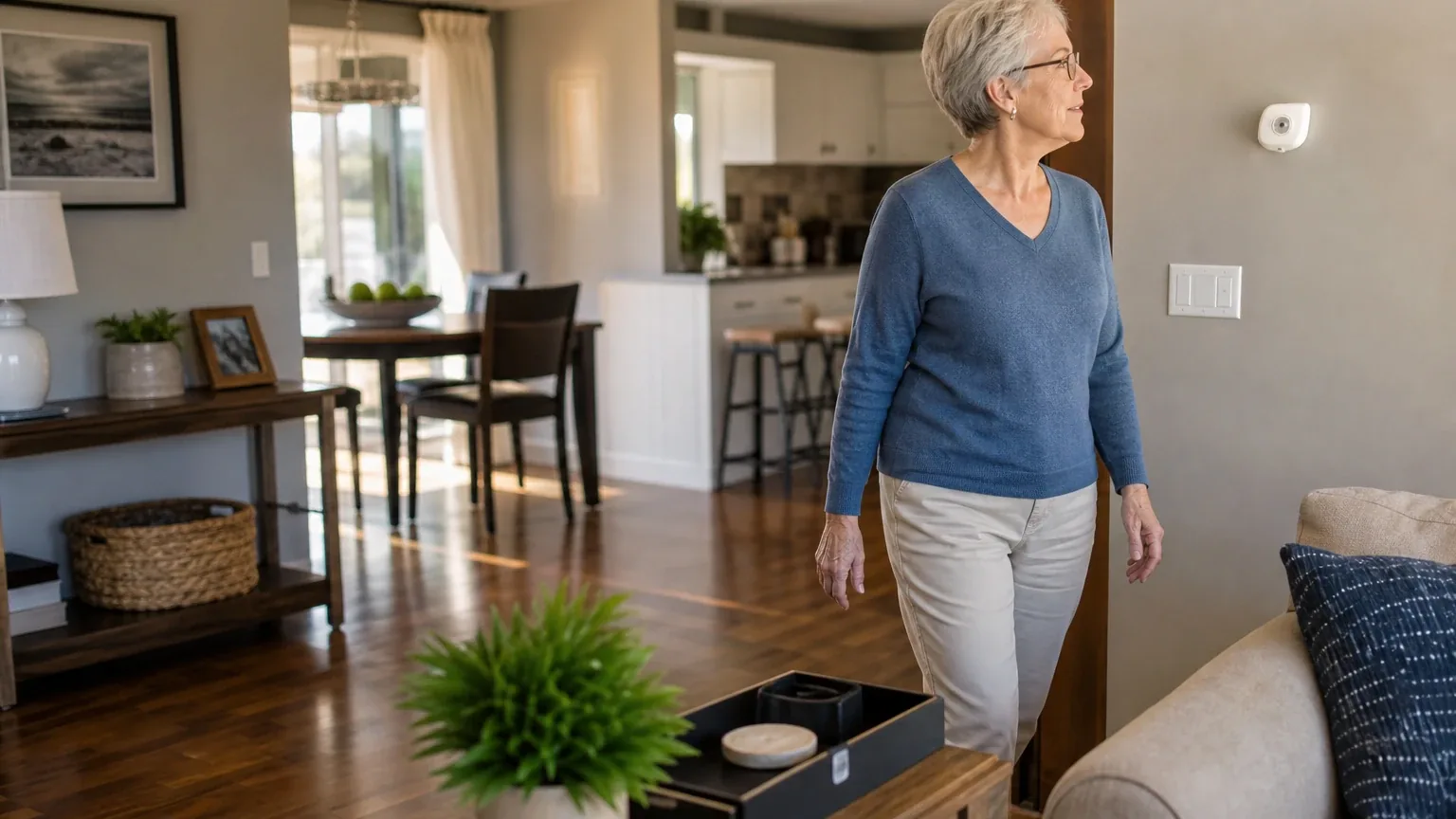
CarePredict is a good but conditional fit for Non-Intrusive Ambient Safety Monitoring. Three of seven AI research platforms (Anthropic, DeepSeek, Google) named CarePredict during the ranking stage, giving it a 43% platform share with an average listed rank of 4.0 and a best rank of 2. The strongest reason to consider CarePredict is its camera-free, AI-driven detection of daily routine changes using the Tempo Series 3 wearable and Context Beacons, which aligns well with verifying well-being without video surveillance. The main limitation is that the system is wearable-first rather than truly ambient: if the senior does not consistently wear the Tempo device, monitoring stops entirely, and the current kit does not clearly document dedicated door, bed, or standalone motion sensors. Fit ratings ranged from "strong" to "weak" across platforms, reflecting this fundamental design tension.
Research Snapshot
| Metric | Value |
|---|---|
| Platform mentions in ranking stage | 3 of 7 (Anthropic, DeepSeek, Google) |
| Share of included platform responses | 43% (3 of 7) |
| Average listed rank | 4.0 |
| Best listed rank | 2 (Anthropic) |
| Relevant product/model/plan | CarePredict @Home Kit with Tempo Series 3 Wearable and Monthly Single Subscription |
| Overall use-case fit | Good, with significant caveats |
| Research date | 2026-08-12 |
Why CarePredict Qualified for This Study
CarePredict qualified because it appeared in the ranking stage of the broader "Best Remote Monitoring Systems for Seniors" study, named by three of seven platforms (Anthropic, DeepSeek, and Google) [1]. The entity was evaluated against five category criteria: sensor variety, AI routine anomaly detection, caregiver app design, privacy protection, and monthly subscription pricing.
The relevant product is the CarePredict @Home Kit with Tempo Series 3 Wearable, which includes one Tempo Series 3 wrist-worn device, a duo battery charger, two rechargeable batteries, and four Context Beacons intended for bedroom, bathroom, kitchen, and living-room placement [4]. The system requires a monthly subscription to function [5].
What the AI Platforms Agreed About
Camera-Free Design Is a Core Strength (Unanimous)
All seven platforms that provided fit assessments agreed that CarePredict operates without cameras, which aligns with the privacy-sensitive nature of non-intrusive ambient monitoring. The system uses a wearable plus wall-mounted Context Beacons rather than video surveillance [7]. This was described as preserving the senior's dignity and privacy while still enabling remote oversight.
AI Routine Anomaly Detection Is the Primary Differentiator (Strong Agreement)
Six of seven platforms identified AI-driven routine analysis as a key advantage. CarePredict states that machine learning identifies daily patterns and changes in activities such as eating, cooking, walking, sleeping, showering, and toileting, then alerts caregivers to deviations that may signal health issues [13]. The company claims the system can detect early signs of decline, including potential indicators of depression, malnutrition, and urinary tract infections [15]. These are company claims; independent public validation of alert accuracy for home use was not identified [17].
Wearable Compliance Is the Critical Limitation (Strong Agreement)
Six of seven platforms flagged the wearable requirement as the primary practical limitation. The Tempo Series 3 is the centerpiece of the system, and if the senior removes or forgets the device, monitoring degrades or stops entirely [18]. Kimi went furthest, rating CarePredict a "weak" fit specifically because the wearable requirement conflicts with the definition of non-intrusive ambient monitoring [11]. Google similarly noted the system is "wearable-first rather than a passive, ambient home sensor network" [12].
Pricing Structure Is Consistent (Majority Agreement)
Four platforms (OpenAI, Anthropic, Grok, Google) reported consistent pricing: $499 upfront for the kit and $69.99 per month for the required subscription [17]. Additional Tempo wearables cost $300 each, and additional Context Beacons cost $60 each [17]. The first month is free, and there is no annual contract [20].
Not an Emergency Response System (Majority Agreement)
Multiple platforms noted that CarePredict is not designed as a personal emergency response device. The company explicitly states that Tempo is not a personal emergency response device and is not intended to replace medical devices or professional care [26]. The button is designed for non-emergency help only [26]. Alerts go to designated caregivers rather than a professional monitoring center [17].
Where the AI Platforms Disagreed or Were Uncertain
Overall Fit Rating: From "Strong" to "Weak"
Platforms diverged significantly on how well CarePredict fits the non-intrusive ambient monitoring use case:
| Platform | Fit Rating | Rationale |
|---|---|---|
| DeepSeek | Strong | Camera-free wearable plus AI routine analysis aligns well |
| OpenAI | Good | Strong differentiator but wearable-dependent |
| Anthropic | Good | Behavioral insight over emergency response |
| Grok | Mixed | Wearable requirement limits "ambient" claim |
| Mixed | Wearable-first, not truly passive | |
| Perplexity | Uncertain | Could not verify sensor suite or pricing |
| Kimi | Weak | Wearable conflicts with ambient-only definition |
The disagreement centers on whether a wearable-based system can be considered "ambient." DeepSeek and OpenAI accepted the wearable as part of a non-intrusive approach, while Kimi and Google argued that the wearable requirement fundamentally contradicts the buyer's stated preference for non-body-worn monitoring [27].
Sensor Variety: Unresolved
Platforms disagreed on whether the system includes dedicated door, bed, or standalone motion sensors. OpenAI noted the current kit includes four Context Beacons but does not clearly document dedicated bed, door, or standalone motion sensors [29]. Anthropic similarly found no explicit mention of door or bed sensors [30]. DeepSeek claimed the system detects motion, door events, and bed presence but acknowledged this relies on the wearable's accelerometer rather than dedicated sensors [32]. Google stated flatly that CarePredict "does not use ambient wall-mounted motion detectors, door contacts, or bed sensors" [28]. This conflict should be verified directly with the company before purchase.
Pricing Transparency: Conflicting Reports
DeepSeek reported that pricing is not publicly disclosed and requires a sales inquiry [35], while four other platforms found published pricing of $499 plus $69.99/month [29]. Kimi reported a hardware cost of approximately $450 and a subscription range of $39.99–$69.99 [38]. Anthropic noted promotional pricing variations, including $399.99 and $449.99, making the current authoritative price unclear [36]. The DeepSeek response was dated 2026-04-12, four months before the authoritative research date of 2026-08-12, which may explain the discrepancy.
Trial Terms: Conflicting Descriptions
The product page states a 45-day money-back guarantee and a first month of subscription free, while the subscription page describes a 45-day free trial [29]. The relationship between the product guarantee, trial timing, and cancellation/refund process is unclear and should be confirmed before purchase [29].
Use-Case-Specific Features and Capabilities
Sensor Variety (Motion/Door/Bed)
Assessment: Limitation. The current kit includes the Tempo Series 3 wearable and four Context Beacons for room-level location (bedroom, bathroom, kitchen, living room) [40]. The Tempo includes advanced motion sensors for gesture recognition, enabling detection of activities like eating, drinking, and grooming based on hand movements [42]. However, public product information does not clearly document dedicated bed, door, or standalone motion sensors in the current consumer kit [40]. Bed occupancy is inferred from the wearable rather than a dedicated bed mat [45].
AI Routine Anomaly Detection
Assessment: Advantage. CarePredict states that machine learning identifies daily patterns and changes, monitoring activities of daily living and providing proactive alerts [46]. The system tracks gait, sleep, movement, and specific hand-to-mouth gestures to learn a baseline and alert caregivers to early signs of decline such as missed meals, increased bathroom visits, or restlessness [43]. These are company claims; independent public validation of alert accuracy for home use was not identified [40].
Caregiver App Design
Assessment: Advantage. The TouchPoint app supports iOS and Android, providing real-time alerts, activity tracking, in-app texting, unlimited Care Circle members, activity-level scores, and two-way voice communication through the wearable [40]. The setup process requires account creation, caregiver-circle configuration, beacon placement, wearable connection, and Wi-Fi testing [49]. AARP has described the app as allowing family members to receive alerts and coordinate care with room-level location insights [51].
Privacy Protection
Assessment: Unclear. The system is camera-free in the described kit, using a wearable plus Context Beacons [53]. However, public product pages reviewed did not clearly specify data retention, encryption, caregiver-permission granularity, deletion rights, or whether audio is continuously recorded [40]. The company's privacy policy states it takes reasonable steps to protect information but cannot guarantee absolute security [56]. No specific HIPAA certification was mentioned in public documentation [56]. The wearable collects continuous biometric and location data, creating different privacy considerations than purely ambient systems [57].
Monthly Subscription Pricing
Assessment: Limitation. The official store lists the @Home Kit at $499, the subscription at $69.99 per month, an additional Tempo at $300, and a Context Beacon at $60 [40]. The subscription page states there is no annual contract and that the kit requires the subscription to function [59]. Total first-year cost is approximately $839.88 at regular pricing [61]. This is relatively significant for a single monitored person compared to some alternatives [40].
Pricing, Fees, Contracts, and Ongoing Costs
Known Costs
| Item | Price | Source |
|---|---|---|
| CarePredict @Home Kit (1 Tempo Series 3, charger, 2 batteries, 4 Context Beacons) | $499 | [63] |
| Monthly Single Subscription | $69.99/month | [66] |
| Additional Tempo wearable | $300 | [63] |
| Additional Context Beacon | $60 | [63] |
| First-year total (kit + 12 months) | ~$839.88 | [69] |
Contract and Cancellation Terms
The subscription page states monthly billing with no annual contract [66]. The product page references a 45-day money-back guarantee and a first month free [63]. The full cancellation policy terms were not available in the reviewed public excerpts [63]. The exact refund and cancellation treatment during or after the free trial should be verified [63].
Additional Fees
Professional installation is mentioned as available, but its price is unclear [63]. Taxes, shipping, replacement equipment, and possible service or support fees are unclear [63]. Anthropic noted that multi-person subscriptions are available at $138/month for two people through third-party resellers [67]. Kimi noted potential shipping costs and replacement wearable costs if lost or damaged [71].
Pricing Conflicts
DeepSeek reported that pricing is not publicly disclosed and requires inquiry [72], while four other platforms found published pricing. Kimi reported a hardware cost of approximately $450 and a subscription range of $39.99–$69.99 [71]. Anthropic noted promotional pricing variations including $399.99 and $449.99 [69]. The current authoritative price should be confirmed directly with CarePredict.
Best Suited For
CarePredict is best suited for long-distance caregivers who can obtain regular wearable use from the senior and who prioritize behavioral insight over emergency response [73]. Specific best-fit scenarios include:
- Routine-change and activity-level monitoring rather than only emergency alerting [73]
- Camera-free room-level location and caregiver communication [73]
- Families wanting multiple caregivers in one app with unlimited Care Circle members [73]
- Seniors who are willing and compliant to wear a smart wristband continuously, including during sleep and showers [78]
- Identifying early signs of health decline through precise gesture and room-level tracking [79]
- Cognitively intact seniors aging in place where predictive health monitoring is valued over emergency buttons [74]
Probably Not Best Suited For
CarePredict is probably not best suited for:
- Seniors unlikely or unwilling to wear and recharge a device consistently [80]
- Buyers requiring independently verified door, bed, or passive motion sensors throughout the home [80]
- Buyers seeking the lowest recurring cost [80]
- Buyers needing a professionally monitored emergency-response service rather than caregiver alerts [86]
- Seniors with dementia or other conditions causing inability to consistently wear a device [81]
- Caregivers preferring simpler systems with fewer data points to interpret [87]
- Privacy-conscious seniors who object to any body-worn technology [82]
When Another Option May Be Better
Platforms suggested alternatives in specific scenarios:
- If the senior refuses to wear a device, consider a camera-free system with passive room sensors such as Vayyar or Neatly [89], or FutureCare HomeKit or Zemplee Sense [90].
- If budget is a primary concern, other systems like Lively or GreatCall may offer lower-cost options [89], or PriviCare at $159–$189/year [90].
- If single-room monitoring is needed, PoMful at $258/year may suffice [90].
- If presence detection beyond motion is required, eSphere may be a better fit [90].
- If specific door or bed sensors are required for fall risk assessment, choose a system with dedicated bed, door, bathroom, and motion sensors [91].
- If 24/7 emergency dispatch is the primary requirement, choose a professionally monitored medical-alert service [91].
Questions to Verify Before Buying
Before purchasing CarePredict for non-intrusive ambient safety monitoring, verify the following with the company:
- Does the current kit include any dedicated door, bed, bathroom, or passive motion sensors beyond the four Context Beacons? [94]
- What exact events generate alerts, and can caregivers customize thresholds, schedules, quiet hours, and recipients? [94]
- What are the documented false-positive and missed-event rates for falls and routine anomalies? [94]
- What happens if the Tempo battery is depleted, the wearable is removed, Wi-Fi fails, or the internet connection is interrupted? [94]
- Is two-way audio push-to-talk only, or can caregivers listen without the senior initiating communication? [94]
- What data is collected, how is it encrypted, how long is it retained, and how can the account or recordings be deleted? [94]
- Does the service provide emergency dispatch, or are alerts sent only to designated caregivers? [94]
- What are the complete 45-day trial, money-back guarantee, cancellation, return-shipping, and prorated-refund terms? [94]
- What are the installation, replacement-battery, lost-device, shipping, tax, and support costs? [94]
- Is the current Tempo Series 3 hardware and app actively supported through the intended purchase period? [94]
- How long does it take for the AI to learn baseline behaviors before anomaly detection becomes reliable? [97]
- Does CarePredict comply with HIPAA, and is patient data encrypted in transit and at rest? [98]
Final AI Consensus Verdict
CarePredict is a good, but not unequivocally strong, fit for camera-free remote senior monitoring in the non-intrusive ambient safety monitoring category. The AI consensus across seven platforms is that CarePredict's strongest differentiator is AI-assisted detection of changes in wearable-measured daily routines, combined with room-level beacons and caregiver communication [101]. This aligns well with the buyer's goal of verifying well-being without cameras.
However, the system's complete dependence on wearable compliance is a critical practical limitation [105]. The current kit does not clearly document dedicated bed, door, or standalone motion sensors [101]. The mandatory $69.99 monthly subscription is relatively significant [101]. Public independent evidence on detection accuracy, false-alert rates, uptime, and long-term caregiver outcomes is limited [101].
CarePredict should not be treated as a guaranteed medical, emergency-response, or continuous-care substitute [111]. It is best suited for caregivers who can obtain regular wearable use from the senior and who value predictive health monitoring over simple emergency alerts. For buyers specifically requiring dedicated door, bed, or broad passive motion sensors, or for seniors who will not reliably wear a device, alternative ambient-only systems may be more appropriate.
For a broader comparison of options in this category, see the Non-Intrusive Ambient Safety Monitoring consensus index. For other senior technology categories, visit the senior technology directory.
How This Review Was Produced
This review was produced by aggregating fit-research responses from seven AI platforms (OpenAI, Anthropic, DeepSeek, Grok, Perplexity, Kimi, and Google) that evaluated CarePredict against the use case of non-intrusive ambient safety monitoring. Each platform assessed CarePredict against five criteria: sensor variety, AI routine anomaly detection, caregiver app design, privacy protection, and monthly subscription pricing. The authoritative research date is 2026-08-12.
Platform fit ratings were: Anthropic (good), DeepSeek (strong), Google (mixed), Grok (mixed), Kimi (weak), OpenAI (good), and Perplexity (uncertain). Three of seven platforms (Anthropic, DeepSeek, Google) named CarePredict during the ranking stage of the broader study.
Methodology Limitations
Several limitations apply to this review:
- Company-owned citations materially outnumber independent citations (17 owned vs. 10 independent). Company claims about AI accuracy, fall detection, and routine analysis should not be treated as independently verified [112].
- Platform-reported research dates differ from the authoritative run date. DeepSeek's response was dated 2026-04-12, four months before the authoritative research date of 2026-08-12, which may explain pricing transparency discrepancies [115].
- The supplied URLs were collected from platform responses and were not independently validated by the writer stage.
- No personal testing, customer experience, or independent verification of CarePredict's performance claims was conducted for this review.
- Public independent evidence on detection accuracy, false-alert rates, uptime, and long-term caregiver outcomes is limited [112].
- Conflicting product names were reported across platforms, including "Starter Kit" and "Home - Starter Kit," but the currently verifiable official store listing reviewed was "The CarePredict @Home Kit" [112].
- AI-platform agreement does not prove product quality; it reflects the platforms' assessment of available public information.
Sources
Company-Owned Sources
- CarePredict@Home – CarePredict @ Home: https://shop.carepredict.com/
- Monthly Subscription – CarePredict @ Home: https://shop.carepredict.com/products/monthly-subscription
- Monthly Subscription: https://shop.carepredict.com/products/monthly-subscription?variant=51838559912120
- The CarePredict @Home Kit: https://shop.carepredict.com/products/the-carepredict-home-kit
- CarePredict – Home: https://www.carepredict.com
- CarePredict At Home - Indicates serious issues before they happen: https://www.carepredict.com/at-home-3/
- CarePredict At Home - Indicates serious issues before they happen: https://www.carepredict.com/carepredict-home/
- CarePredict at Home Information: https://www.carepredict.com/go
- Privacy Policy: https://www.carepredict.com/legal/privacy-policy
- CarePredict Launches Tempo Series 3: https://www.carepredict.com/news/carepredict-launches-tempo-series-3
- CarePredict Launches First-of-Its-Kind Real-Time Senior Living Care Charting: https://www.carepredict.com/press-releases/carepredict-launches-carepoint-real-time-senior-living-care-charting
- The CarePredict @Home Kit: https://www.carepredict.com/product/the-carepredict-home-kit/
- CarePredict @Home Kit with Tempo Series 3 Wearable: https://www.carepredict.com/products/carepredict-home-kit
- CarePredict Technology: https://www.carepredict.com/technology
Additional AI research evidence116 records
- AI research evidence record anthropic:c1
- AI research evidence record deepseek:c1
- AI research evidence record google:c1
- AI research evidence record openai:c1
- AI research evidence record anthropic:c10
- AI research evidence record openai:c2
- AI research evidence record anthropic:c1
- AI research evidence record anthropic:c2
- AI research evidence record deepseek:c1
- AI research evidence record grok:c1
- AI research evidence record kimi:c1
- AI research evidence record google:c1
- AI research evidence record openai:c3
- AI research evidence record anthropic:c5
- AI research evidence record anthropic:c6
- AI research evidence record google:c3
- AI research evidence record openai:c1
- AI research evidence record anthropic:c10
- AI research evidence record kimi:c2
- AI research evidence record openai:c2
- AI research evidence record anthropic:c12
- AI research evidence record anthropic:c13
- AI research evidence record grok:c3
- AI research evidence record google:c2
- AI research evidence record google:c4
- AI research evidence record anthropic:c15
- AI research evidence record kimi:c1
- AI research evidence record google:c1
- AI research evidence record openai:c1
- AI research evidence record anthropic:c3
- AI research evidence record anthropic:c4
- AI research evidence record deepseek:c1
- AI research evidence record google:c2
- AI research evidence record google:c4
- AI research evidence record deepseek:c4
- AI research evidence record anthropic:c12
- AI research evidence record grok:c3
- AI research evidence record kimi:c3
- AI research evidence record openai:c2
- AI research evidence record openai:c1
- AI research evidence record anthropic:c4
- AI research evidence record anthropic:c3
- AI research evidence record google:c3
- AI research evidence record google:c1
- AI research evidence record deepseek:c1
- AI research evidence record openai:c3
- AI research evidence record anthropic:c5
- AI research evidence record anthropic:c6
- AI research evidence record openai:c4
- AI research evidence record anthropic:c7
- AI research evidence record anthropic:c8
- AI research evidence record google:c2
- AI research evidence record anthropic:c1
- AI research evidence record anthropic:c2
- AI research evidence record grok:c1
- AI research evidence record anthropic:c9
- AI research evidence record kimi:c1
- AI research evidence record kimi:c2
- AI research evidence record openai:c2
- AI research evidence record google:c4
- AI research evidence record anthropic:c12
- AI research evidence record anthropic:c13
- AI research evidence record openai:c1
- AI research evidence record google:c1
- AI research evidence record google:c4
- AI research evidence record openai:c2
- AI research evidence record anthropic:c13
- AI research evidence record grok:c3
- AI research evidence record anthropic:c12
- AI research evidence record google:c2
- AI research evidence record kimi:c3
- AI research evidence record deepseek:c4
- AI research evidence record openai:c1
- AI research evidence record anthropic:c15
- AI research evidence record anthropic:c6
- AI research evidence record anthropic:c4
- AI research evidence record anthropic:c7
- AI research evidence record google:c1
- AI research evidence record google:c3
- AI research evidence record openai:c1
- AI research evidence record anthropic:c10
- AI research evidence record kimi:c1
- AI research evidence record google:c1
- AI research evidence record anthropic:c3
- AI research evidence record openai:c2
- AI research evidence record anthropic:c15
- AI research evidence record anthropic:c14
- AI research evidence record kimi:c2
- AI research evidence record deepseek:c1
- AI research evidence record kimi:c1
- AI research evidence record openai:c1
- AI research evidence record anthropic:c3
- AI research evidence record anthropic:c15
- AI research evidence record openai:c1
- AI research evidence record anthropic:c3
- AI research evidence record google:c1
- AI research evidence record anthropic:c11
- AI research evidence record anthropic:c9
- AI research evidence record anthropic:c15
- AI research evidence record openai:c2
- AI research evidence record openai:c1
- AI research evidence record anthropic:c6
- AI research evidence record deepseek:c1
- AI research evidence record google:c3
- AI research evidence record anthropic:c10
- AI research evidence record kimi:c1
- AI research evidence record google:c1
- AI research evidence record anthropic:c3
- AI research evidence record openai:c2
- AI research evidence record anthropic:c11
- AI research evidence record anthropic:c15
- AI research evidence record openai:c1
- AI research evidence record openai:c3
- AI research evidence record anthropic:c6
- AI research evidence record deepseek:c4
- AI research evidence record anthropic:c11
Independent Sources
- Senior Monitoring Systems: How to Choose in 2026: https://haelohealth.com/blog/senior-monitoring-systems
- 15 Best Elderly Monitoring Devices for Peace of Mind in 2026: https://seniorsite.org/resource/15-best-elderly-monitoring-devices-for-peace-of-mind-in-2026
- CarePredict vs SeniorThrive: Built for Facilities or Built for Families: https://vertexaisearch.cloud.google.com/grounding-api-redirect/AUZIYQEWLR08s_2oa4TtL4mKxafAE4IT7QwHKOfLjzy2hH2iGsqyHooEV4J7byQ193O_nBMk4fTXpWPYkuY6WfBucWA_eDoAJ0GWVd9KfKvtW64DViwYXmVVaph7ineYUF9UF1YvFBgwyKvDjET8UWY3vJg==
- Tempo by CarePredict Medical Alert Review 2026 - Caring.com: https://vertexaisearch.cloud.google.com/grounding-api-redirect/AUZIYQFA2pSm6ITTVO-DQkzCkmARu1kfSKArZBRfYKwcw0ThUiBAJ673xYoc4id9_kpyYZO9heYgXVFXBMBo2sVgEPv1vb7DweFQ6rkzBqA2SQMSAIxXHwLuRdeyofS9M04ciUobsCEnmmqrHbv_PGN14-C3b9Pttc28QQKTYg3L9kZId-J1EUaOC0zdGuUQ
- New Home Monitoring Devices Offer Help to Caregivers: https://www.aarp.org/caregiving/home-care/ces-caregiving-products/
- Tempo by CarePredict Medical Alert Review 2026: https://www.caring.com/senior-products/best-medical-alert-systems/tempo-medical-alert
- CarePredict Home Kit & Tempo Series 3 Wearable for Seniors: https://www.gadgetgram.com/2020/07/22/carepredict-home-kit-and-tempo-series-3-wearable-for-seniors/
- CarePredict Launches First-of-Its-Kind Real-Time Senior Living Care Charting: https://www.prnewswire.com/news-releases/carepredict-launches-first-of-its-kind-real-time-senior-living-care-charting-302398142.html
- CarePredict Pricing, Reviews, & More: https://www.seniorsafetyreviews.com/carepredict-pricing-reviews/
Additional AI research evidence116 records
- AI research evidence record anthropic:c1
- AI research evidence record deepseek:c1
- AI research evidence record google:c1
- AI research evidence record openai:c1
- AI research evidence record anthropic:c10
- AI research evidence record openai:c2
- AI research evidence record anthropic:c1
- AI research evidence record anthropic:c2
- AI research evidence record deepseek:c1
- AI research evidence record grok:c1
- AI research evidence record kimi:c1
- AI research evidence record google:c1
- AI research evidence record openai:c3
- AI research evidence record anthropic:c5
- AI research evidence record anthropic:c6
- AI research evidence record google:c3
- AI research evidence record openai:c1
- AI research evidence record anthropic:c10
- AI research evidence record kimi:c2
- AI research evidence record openai:c2
- AI research evidence record anthropic:c12
- AI research evidence record anthropic:c13
- AI research evidence record grok:c3
- AI research evidence record google:c2
- AI research evidence record google:c4
- AI research evidence record anthropic:c15
- AI research evidence record kimi:c1
- AI research evidence record google:c1
- AI research evidence record openai:c1
- AI research evidence record anthropic:c3
- AI research evidence record anthropic:c4
- AI research evidence record deepseek:c1
- AI research evidence record google:c2
- AI research evidence record google:c4
- AI research evidence record deepseek:c4
- AI research evidence record anthropic:c12
- AI research evidence record grok:c3
- AI research evidence record kimi:c3
- AI research evidence record openai:c2
- AI research evidence record openai:c1
- AI research evidence record anthropic:c4
- AI research evidence record anthropic:c3
- AI research evidence record google:c3
- AI research evidence record google:c1
- AI research evidence record deepseek:c1
- AI research evidence record openai:c3
- AI research evidence record anthropic:c5
- AI research evidence record anthropic:c6
- AI research evidence record openai:c4
- AI research evidence record anthropic:c7
- AI research evidence record anthropic:c8
- AI research evidence record google:c2
- AI research evidence record anthropic:c1
- AI research evidence record anthropic:c2
- AI research evidence record grok:c1
- AI research evidence record anthropic:c9
- AI research evidence record kimi:c1
- AI research evidence record kimi:c2
- AI research evidence record openai:c2
- AI research evidence record google:c4
- AI research evidence record anthropic:c12
- AI research evidence record anthropic:c13
- AI research evidence record openai:c1
- AI research evidence record google:c1
- AI research evidence record google:c4
- AI research evidence record openai:c2
- AI research evidence record anthropic:c13
- AI research evidence record grok:c3
- AI research evidence record anthropic:c12
- AI research evidence record google:c2
- AI research evidence record kimi:c3
- AI research evidence record deepseek:c4
- AI research evidence record openai:c1
- AI research evidence record anthropic:c15
- AI research evidence record anthropic:c6
- AI research evidence record anthropic:c4
- AI research evidence record anthropic:c7
- AI research evidence record google:c1
- AI research evidence record google:c3
- AI research evidence record openai:c1
- AI research evidence record anthropic:c10
- AI research evidence record kimi:c1
- AI research evidence record google:c1
- AI research evidence record anthropic:c3
- AI research evidence record openai:c2
- AI research evidence record anthropic:c15
- AI research evidence record anthropic:c14
- AI research evidence record kimi:c2
- AI research evidence record deepseek:c1
- AI research evidence record kimi:c1
- AI research evidence record openai:c1
- AI research evidence record anthropic:c3
- AI research evidence record anthropic:c15
- AI research evidence record openai:c1
- AI research evidence record anthropic:c3
- AI research evidence record google:c1
- AI research evidence record anthropic:c11
- AI research evidence record anthropic:c9
- AI research evidence record anthropic:c15
- AI research evidence record openai:c2
- AI research evidence record openai:c1
- AI research evidence record anthropic:c6
- AI research evidence record deepseek:c1
- AI research evidence record google:c3
- AI research evidence record anthropic:c10
- AI research evidence record kimi:c1
- AI research evidence record google:c1
- AI research evidence record anthropic:c3
- AI research evidence record openai:c2
- AI research evidence record anthropic:c11
- AI research evidence record anthropic:c15
- AI research evidence record openai:c1
- AI research evidence record openai:c3
- AI research evidence record anthropic:c6
- AI research evidence record deepseek:c4
- AI research evidence record anthropic:c11
Verify this research
Review the study details behind this page or download the public machine-readable verification record.
- Study date
- Aug 12, 2026
- Platforms analyzed
- 7
- Source records
- 27
- Ranking mentions
- 3 of 7
- Platform share
- 43%
- Final consensus rank
- #2
Research trail and source mix
Platforms
openai, anthropic, deepseek, grok, perplexity, kimi, google
Source mix
10 independent · 17 company-owned
Evidence support
20 direct · 6 partial
Important limitation
Use the run research_date as the study date. Platform-reported dates are provenance metadata and do not independently prove freshness.
Source snapshot SHA-256 9a735335d0a2fd9f0034628f1ed8befeb4e1762a3d8fba9fe4bb1eaa191314f7