
Answer Capsule
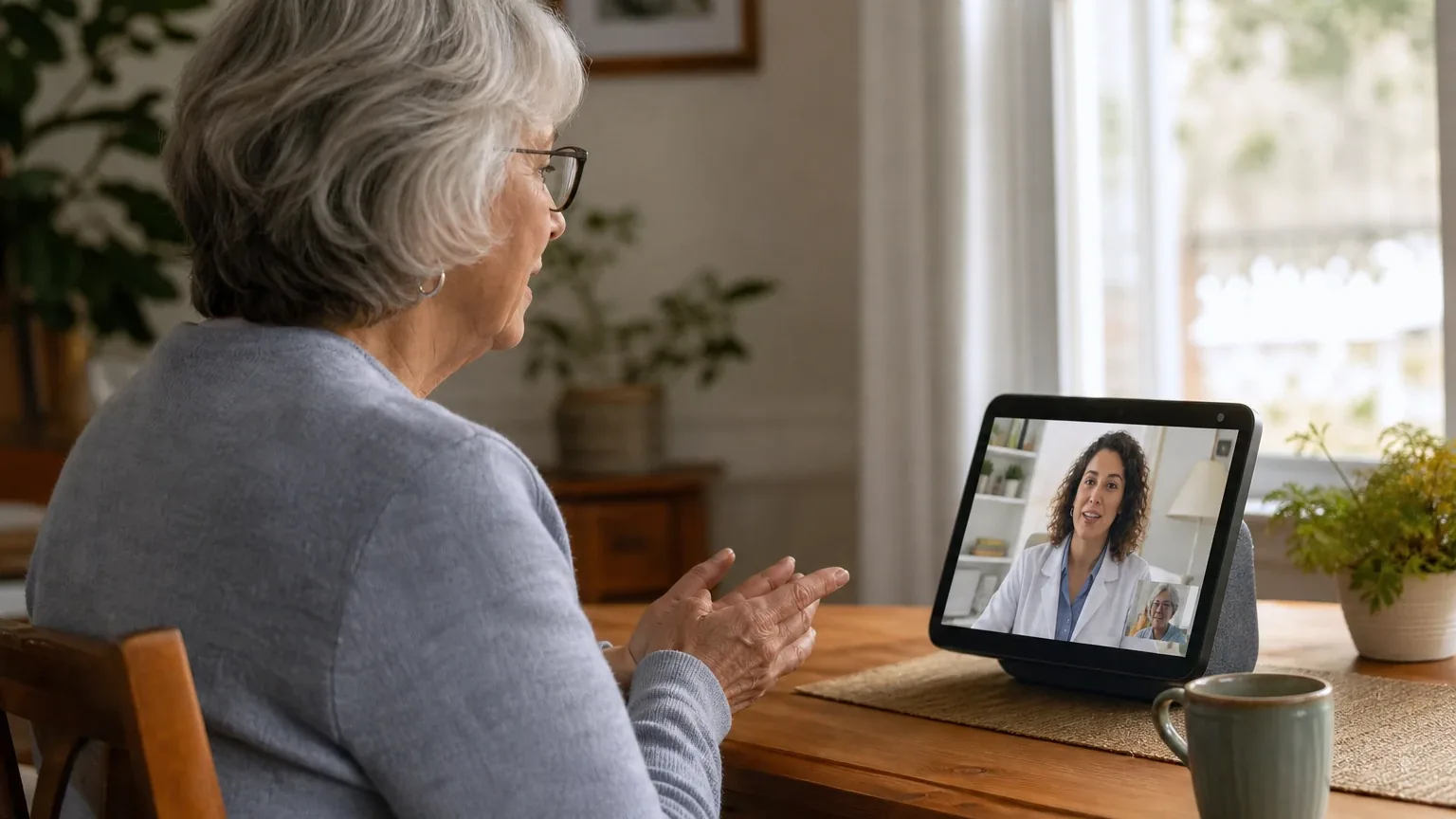
Amazon Echo Show is a mixed-to-good fit for simplified video calling and telehealth for older adults. Five of seven AI research platforms named Echo Show during the ranking stage (71% platform share), with an average listed rank of 5.6 and a best rank of 1. The strongest reason to consider it: permission-based Drop In auto-answer calling lets approved family members connect without the senior touching the screen, and voice-activated calling eliminates app navigation. The main limitation: Echo Show is not a telehealth device—it lacks a web browser, is not HIPAA-compliant, and does not support most healthcare provider platforms, so medical video visits typically require a separate tablet or computer. Platform fit ratings ranged from "strong" to "uncertain," with the most detailed assessments concluding Echo Show excels at family check-ins but fails as a standalone telehealth solution.
Research Snapshot
| Metric | Value |
|---|---|
| Platform mentions in ranking stage | 5 of 7 platforms |
| Share of included platform responses | 71.4% |
| Average listed rank | 5.6 |
| Best listed rank | 1 (Anthropic) |
| Relevant product/model/plan | Echo Show 8 (4th Gen, 2025); Echo Show 11 (2025); Echo Show 15 (2nd Gen) |
| Overall use-case fit | Mixed-to-good for family calling; weak for clinical telehealth |
| Research date | 2026-08-12 |
Why Amazon Echo Show Qualified for This Study
Amazon Echo Show qualified for this study because it was named by five of seven AI research platforms during the ranking stage for best video calling devices for seniors. The platforms that named it were Anthropic, DeepSeek, Google, Kimi, and OpenAI. Perplexity and Grok did not name it during ranking discovery, though Grok provided a fit assessment. The recommended products were consistently Echo Show 8 models (2nd, 3rd, and 4th generations), Echo Show 11, Echo Show 10, and Echo Show 15. The device was evaluated against five category criteria: display size and clarity, auto-answer functionality, single-touch operation, speaker volume, and contact white-listing privacy features.
What the AI Platforms Agreed About
Strong agreement: Drop In provides effective auto-answer calling
All platforms that provided detailed assessments agreed that Alexa Drop In is the core feature making Echo Show suitable for seniors. Drop In allows pre-approved contacts to open a video connection without the senior needing to answer [1]. Amazon describes Drop In as optional and permission-based, with a visual indicator and audio tone when someone connects [2]. One source notes Drop In connects automatically after a short chime, and customers prefer this for regular scheduled calls [4]. A government health service guide confirms an Echo Show auto-answers a Drop In call when paired with a loved one's Alexa app, requiring no touch interactions [8].
Strong agreement: Voice-activated calling reduces barriers
Platforms unanimously agreed that voice commands ("Alexa, call [name]") eliminate the need to navigate apps or dial numbers [9]. This is particularly valuable for seniors with limited dexterity or vision. Amazon describes Echo Show 8 as supporting one-tap calling through a Top Connections widget and hands-free voice calling [13].
Strong agreement: No monthly subscription for basic calling
Multiple platforms confirmed that Alexa-to-Alexa calling and Drop In are included at no monthly cost [9]. No long-term hardware contract was identified [14]. This contrasts with purpose-built senior devices that require subscriptions, such as ViewClix at $9.95/month [9].
Majority agreement: Large displays suit aging eyes
Four platforms noted that Echo Show's multiple screen sizes (8 to 15 inches) benefit seniors with declining eyesight [15]. The Echo Show 15 (2nd Gen) has a 15.6-inch 1080p touchscreen with 400-nit brightness [14]. Echo Show 8 (4th Gen) and Echo Show 11 feature 13MP cameras with auto-framing [17].
Majority agreement: Physical privacy controls exist
Platforms noted physical camera shutters and microphone off buttons on Echo Show devices [18]. Users can turn off both camera and microphone completely [19].
Where the AI Platforms Disagreed or Were Uncertain
Telehealth suitability: The central disagreement
This is the most significant divergence. Anthropic rated Echo Show "good" overall but stated flatly that it is not a telehealth device, lacks a web browser, and cannot join most doctor's visits [20]. Kimi rated it "mixed," noting no HIPAA compliance and no native healthcare platform integration [22]. OpenAI rated it "mixed," noting consumer Echo Show is not a dedicated senior telehealth platform [25]. Grok rated it "strong" for simplified video calling but noted it is "not certified for medical telehealth" [26]. DeepSeek rated it "strong" overall but acknowledged telehealth app compatibility depends on specific platforms and may change [27]. Perplexity rated the fit "uncertain," stating the supplied evidence did not verify core senior-use features [28].
Zoom compatibility: Conflicting and version-dependent
Anthropic reported that as of late 2023, only Echo Show 8 (1st–2nd gen) and Echo Show 10 (3rd gen) officially support Zoom, and the hands-free "Alexa, join meeting" command no longer works reliably [29]. However, Amazon announced Zoom meeting joining on Echo Show 8 in the United States in December 2020 [30]. The status of Zoom on Echo Show 8 (4th Gen, 2025) and Echo Show 11 is unclear, with some sources suggesting support and others indicating limitations [29]. Buyers who need Zoom should verify compatibility with the specific model and current software version before purchase.
Model generation confusion
OpenAI flagged a factual conflict: the ranking references Echo Show 8 (4th Gen), while Amazon's documentation identifies Echo Show 8 (3rd Gen, 2025 release) and separately states Echo Show 8 (4th Gen) and Echo Show 11 are unsupported by Alexa Smart Properties, the managed-property program for institutional senior care [25]. This matters for professionally managed deployments but does not necessarily affect ordinary consumer use.
Privacy and data collection concerns
Anthropic reported that Amazon removed local voice processing from Echo Show 10 and Show 15 in March 2025, meaning all voice requests are sent to the cloud [31]. Mozilla Foundation notes Echo Show collects voice recordings, transcripts, and usage data, with interest-based ads enabled by default [32]. The status of local vs. cloud processing on Echo Show 8 (4th Gen) and Show 11 is unclear [31].
Use-Case-Specific Features and Capabilities
Display size and clarity
Echo Show 15 (2nd Gen) has a 15.6-inch 1080p touchscreen with 400-nit brightness, dual woofers, and dual tweeters [33]. Echo Show 8 (4th Gen) has an 8.7-inch display with 1340x800 resolution, while Echo Show 11 has an 11-inch Full-HD display [34]. Studies show seniors prefer larger screens due to declining eyesight [35]. The Echo Show 8 provides a balance between screen size and price [35].
Auto-answer functionality
Drop In is the primary auto-answer mechanism. It is opt-in and requires both parties to enable it in settings [36]. Amazon describes Drop In as optional and permission-based, with a visual indicator and audio tone when someone connects [37]. Older documentation described a 10-second frosted-glass delay allowing the recipient to decline before being shown [36]. Drop In permissions can be granted or revoked per contact [38].
Single-touch operation
Echo Show 8 supports one-tap calling through a Top Connections widget [40]. Voice commands are the primary interface, reducing the need for precise touchscreen navigation [42]. However, the cited materials do not establish that all models provide a permanently visible, senior-optimized one-touch contact interface [40].
Speaker volume and audio quality
Echo Show 8 (4th Gen, 2025) features spatial audio with front-facing stereo speakers and a custom woofer [43]. Echo Show 11 also includes spatial audio [44]. The Echo Show 8 has a 2-inch speaker; for those with hearing impairments, external speakers or higher-volume models like Echo Show 10 may be preferable [45]. Independent loudness testing for specific recommended models was not verified [46].
Contact white-listing and privacy
Drop In permissions are set per contact, enabling a controlled family contact list [38]. Amazon's terms warn that granting permission to a contact can extend Drop In permission to members of that contact's household [38]. Physical camera shutter and microphone off button provide privacy controls [48].
Telehealth compatibility: The critical limitation
Echo Show does not support most telehealth platforms. It lacks a standard web browser and does not have apps for Teladoc, MDLive, Doxy.me, MyChart, or most provider portals [51]. Seniors cannot receive a telehealth link, tap it on Echo Show, and join a doctor's visit [51]. Rare exceptions exist only via third-party Alexa skills with limited functionality [52]. Echo Show is not HIPAA-compliant; standard Zoom plans do not include Business Associate Agreements (BAAs), and only Zoom Workplace for Healthcare with BAA qualifies [53]. COVID-era enforcement discretion ended May 11, 2023 [53].
Skype compatibility
Skype works on all Echo Show models for voice calling. Users say "Alexa, Skype [contact name]" after signing in via the Alexa app with a Microsoft account [54].
Pricing, Fees, Contracts, and Ongoing Costs
Pricing confidence varies by platform. Google reported high confidence with these list prices: Echo Show 8 (4th Gen) at $179.99, Echo Show 11 at $219.99, Echo Show 10 (3rd Gen) at $249.99, and Echo Show 15 (2nd Gen) at $299.99 [55]. Anthropic reported Echo Show 8 (4th Gen) at $180 regular, discounted to $125–$150; Echo Show 11 at $220 regular, discounted to $150–$180; Echo Show 15 at $300 regular, discounted to $255 [56]. DeepSeek reported Echo Show 8 (3rd Gen) at approximately $149.99 [59]. Kimi reported Echo Show 8 (3rd Gen) at approximately $149.99 and Echo Show 10 (3rd Gen) at approximately $249.99 [60]. OpenAI reported low pricing confidence, stating current US retail pricing was not reliably verified [61].
No mandatory monthly fee applies for basic Alexa-to-Alexa communication [62]. Amazon Prime membership is not required for video calling [62]. Optional costs include Alexa Emergency Assist for emergency dispatch [64], Alexa+ subscription for generative AI features [62], and third-party streaming or telehealth service subscriptions [61]. Alexa Communication cannot be used to access emergency services such as 911 [61]. The Alexa Together caregiver subscription was discontinued in May 2025 [65].
Best Suited For
- Older adults who can use basic voice commands or a few large touchscreen controls [67]
- Families wanting permissioned, near-instant video check-ins through Alexa Drop In [69]
- Households already using Alexa devices and willing to configure contacts and privacy settings [68]
- Seniors with low dexterity or low vision who benefit from hands-free calling and large displays [71]
- Homes where the device can remain plugged in at a permanent location [68]
- Families seeking no-subscription family communication [68]
Probably Not Best Suited For
- Users needing a dedicated, caregiver-managed senior communication device with a locked-down contact list [74]
- Clinical telehealth requiring verified healthcare-provider compatibility, regulated workflows, or documented privacy/compliance terms [74]
- Users who need fully unattended operation without Amazon-account, Alexa-app, Wi-Fi, and contact configuration [74]
- Seniors without a stable Wi-Fi connection [78]
- Seniors with severe speech impediments who struggle to wake or command voice assistants [78]
- Families prioritizing strong privacy who object to Amazon's data collection and cloud voice processing [80]
- Non-Amazon ecosystem users seeking platform independence [82]
When Another Option May Be Better
- For clinical telehealth: Choose a purpose-built telehealth tablet or provider-supported device when clinician compatibility, appointment workflows, or healthcare privacy documentation are central requirements [84]. HIPAA-compliant options include VSee, SecureVideo One-Click, or BlueJeans Telehealth with BAA [85].
- For a dedicated senior device: Choose a purpose-built senior video-calling device when the buyer needs a simplified, caregiver-managed interface with fewer unrelated functions [84]. GrandPad or ViewClix are designed specifically for seniors [88].
- For cellular connectivity: Choose GrandPad if the senior has no Wi-Fi and requires built-in cellular service [89].
- For web browser access: Choose an iPad, Android tablet, or laptop if the senior needs to access patient portals and telehealth links [90].
- For larger screens: Choose Echo Show 15 or 21 when viewing distance and screen size matter more than compact placement [84].
- For budget under $100: A generic Android tablet ($60–$100) offers more flexibility, though requires more setup [88].
Questions to Verify Before Buying
- What exact model and generation is being purchased, and is it supported by the intended Alexa, Zoom, or healthcare deployment? Model generations differ materially, and Amazon's documentation conflicts on Echo Show 8 (4th Gen) support [92].
- Does the specific model support Zoom on the current software version? Zoom support has changed multiple times and is version-dependent [93].
- Can the family configure a restricted contact list and disable all unwanted inbound calling or Drop In permissions? Drop In permissions can extend to members of an approved contact's household [94].
- Does the intended telehealth provider support video visits directly on this model, or is a separate phone, tablet, or computer required? Most telehealth platforms do not work on Echo Show [95].
- Is the older adult comfortable with Alexa voice commands, the touchscreen, and the device's broader smart-display interface? The general interface may expose entertainment, shopping, and smart-home functions [96].
- Are the camera shutter, microphone mute, Do Not Disturb, and Drop In controls easy for the user and caregiver to operate? [96]
- What is the current delivered US price, return window, warranty, and any required subscription or third-party account? Pricing is dynamic and model-specific [96].
- What backup communication method will be used because Alexa Communication does not provide access to 911? [96]
- Is the privacy tradeoff of Amazon data collection and cloud voice processing acceptable to the family? [98]
- Does the senior's home have strong, stable Wi-Fi? Echo Show requires a reliable connection [100].
Final AI Consensus Verdict
Amazon Echo Show is a mixed-to-good fit for simplified video calling and telehealth for older adults. The AI platforms reached strong consensus that Echo Show excels at family video calling through voice commands and permission-based Drop In auto-answer, with large display options, physical privacy controls, and no mandatory monthly subscription. However, the platforms also converged on a critical limitation: Echo Show is not a telehealth device. It lacks a web browser, is not HIPAA-compliant, and does not support most healthcare provider platforms. For medical video visits, a separate tablet or computer is required. The device is best suited for tech-comfortable families who can manage setup and configuration, and who prioritize effortless family check-ins over clinical telehealth capability. Buyers should verify model-specific Zoom support, configure Drop In permissions carefully, and accept Amazon's data collection practices. For comprehensive senior care involving both family calls and doctor visits, Echo Show pairs best with a separate tablet.
For a broader comparison of top-rated devices for this use case, see the Simplified Video Calling & Telehealth consensus index. You can also explore other options in the senior technology category directory.
How This Review Was Produced
This review synthesizes fit-research responses from seven AI platforms: Anthropic, DeepSeek, Google, Grok, Kimi, OpenAI, and Perplexity. Each platform evaluated Amazon Echo Show against five category criteria: display size and clarity, auto-answer functionality, single-touch operation, speaker volume, and contact white-listing privacy features. The research date for the authoritative run is 2026-08-12. Platform-reported research dates were 2026-08-12 for all platforms except DeepSeek, which reported 2026-04-06. The entity ranking statistics reflect platforms that named Echo Show during the ranking discovery stage (5 of 7 platforms). Fit ratings by platform were: Anthropic "good," DeepSeek "strong," Google "good," Grok "strong," Kimi "mixed," OpenAI "mixed," and Perplexity "uncertain."
Methodology Limitations
- Platform-reported dates differ: DeepSeek reported a research date of 2026-04-06, while the authoritative run date is 2026-08-12. Platform-reported dates are provenance metadata and do not independently prove freshness.
- Conflicting product names: The ranking references Echo Show 8 (4th Gen), while Amazon's documentation identifies Echo Show 8 (3rd Gen, 2025 release) and states Echo Show 8 (4th Gen) is unsupported by Alexa Smart Properties. This conflict was not resolved by guessing; buyers should verify the exact model.
- Pricing variability: Current US prices, bundles, availability, warranty details, and return terms were not reliably captured from all sources. Pricing is dynamic and model-specific.
- Unverified URLs: The supplied URLs were collected from platform responses and were not independently validated by the writer stage.
- No independent testing: This review does not claim personal testing, customer experience, medical benefit, guaranteed performance, or independent verification unless supplied.
- AI agreement does not prove quality: Agreement among AI platforms reflects consistency in their assessments, not independent product verification.
- Telehealth compatibility unverified: No source checked verified HIPAA eligibility, a business associate agreement, or clinical telehealth certification for ordinary consumer Echo Show.
Explore more senior technology guidance in the category directory.
Sources
Company-Owned Sources
- Amazon Chime now supports joining meetings from Echo Show 8: https://aws.amazon.com/about-aws/whats-new/2020/12/amazon-chime-supports-joining-meetings-from-echo-show-8/
- Join Zoom meetings with Alexa on Echo Show 8: https://aws.amazon.com/about-aws/whats-new/2020/12/join-zoom-meetings-with-alexa-on-echo-show-8/
- Alexa Skill Blueprints Terms of Use: https://blueprints.amazon.com/help/terms?page=terms-of-use
- Alexa Smart Properties Device Purchase and Setup: https://developer.amazon.com/de-DE/docs/alexa/alexa-smart-properties/device-setup.html
- Device Specifications: Echo Show | Amazon Fire Device Specifications: https://developer.amazon.com/docs/device-specs/device-specifications-echo-show.html
- Understand Smart Home Zigbee Support: https://developer.amazon.com/en-US/docs/alexa/smarthome/zigbee-support.html
- Policies for Alexa Smart Properties: https://developer.amazon.com/pt-BR/docs/alexa/alexa-smart-properties/policies.html
- Amazon Echo Show 8 Product Description: https://music.amazon.com/merch/artists/B0BW4SQFPK/items/B0CDR2MP7Q
- HIPAA-Compliant Video Conferencing Platform | SecureVideo: https://securevideo.com/
- Say Hello to your Telemedicine Receptionist: https://simplevisit.com/solution/
- Joy Tablet vs. Amazon Echo Show: 2026 Comparison - ONSCREEN, Inc: https://vertexaisearch.cloud.google.com/grounding-api-redirect/AUZIYQEC3E8YRGCi4aiLK2evXkPEcJVHY0VkVJNUsK-KyJCfKaa87arCxyU-9Glfy12O74RorJQprnevgAtkFQlfhs3z7ZxRIZRtOTBDUeb7_Xpp_QDU2I3Zr7FjROXFpHfADx1RkEusT2PwvytGBzrmHIop
- Alexa Together discontinued, how to manage as a remote caregiver? - Amazon Forum: https://vertexaisearch.cloud.google.com/grounding-api-redirect/AUZIYQGdu6_wqQO3gGbYp8zoT5YuxpG0UXnG-1PndA6W56ch8MIz39OaBRTHRr3HyCwtBerfM8e67CcCjNbrU3bs0A5xA3M67efetcUxTxYnS7HyXvJZWIXZfv21h0n_9X1IWUBy8ftKSYsHoFDO1LEj6SxY-IHQI8ntjDz3RprI5zFmESL4FC-mnRO1JCfYH-pbvsDbzMmta4ME_qlJ_vlLlCcy6pZWtz3RY_t0v3Wnf8s=
- 2025's Best Video Calling Devices for Seniors - ONSCREEN, Inc: https://vertexaisearch.cloud.google.com/grounding-api-redirect/AUZIYQH7CZEeZHTDL4JeqMVMcM6zkrx7_MfCLcK08xs5-NgrYGNQ0DuIpKux9rEKxZNnzGQWNVtWjpPnWiUbBn0KHuBbKPy30TF0ZwZWkxu-c7gm9G73GBUYpccV3CwOnv3sxHSSKxNNKYt_mrLPboh1E6XZc668Ccm-ikVx
- VSee Clinic for Solo Providers - Simple & Robust Telemedicine: https://vsee.com/clinic/solo
- Amazon Alexa Privacy Hub: https://www.amazon.com/alexa-privacy/privacy
- Amazon Echo Show 8 (3rd Gen, 2023 release) – Product Page: https://www.amazon.com/All-New-Echo-Show-8/dp/B0BLS3BQZ8
- Echo Show 8 - Amazon.com: https://www.amazon.com/All-New-Echo-Show-8/dp/B0BLS3Y632
- Search results provided in prompt: https://www.amazon.com/Amazon-Echo-Show-15/dp/B0BL5RX8B3
- Amazon.com Help: Use Drop In on Echo Show: https://www.amazon.com/gp/help/customer/display.html?nodeId=G4XQ8B3T7R9KVK5J
- Help with Alexa answering incoming video call: https://www.amazonforum.com/s/question/0D54P00006zSv8WSAS/help-with-alexa-answering-incoming-video-call
- Telehealth Pricing - BlueJeans: https://www.bluejeansbyverizon.com/pricing/telehealth
- Device Specifications: Echo Show: https://www.developer.amazon.com/docs/device-specs/device-specifications-echo-show.html
Additional AI research evidence101 records
- AI research evidence record openai:c3
- AI research evidence record openai:c4
- AI research evidence record anthropic:c2
- AI research evidence record anthropic:c5
- AI research evidence record deepseek:c2
- AI research evidence record grok:c1
- AI research evidence record google:c1
- AI research evidence record google:c5
- AI research evidence record anthropic:c1
- AI research evidence record deepseek:c1
- AI research evidence record kimi:c1
- AI research evidence record google:c7
- AI research evidence record openai:c5
- AI research evidence record openai:c1
- AI research evidence record anthropic:c4
- AI research evidence record google:c11
- AI research evidence record anthropic:c11
- AI research evidence record openai:c6
- AI research evidence record anthropic:c32
- AI research evidence record anthropic:c40
- AI research evidence record anthropic:c41
- AI research evidence record kimi:c2
- AI research evidence record kimi:c3
- AI research evidence record kimi:c4
- AI research evidence record openai:c9
- AI research evidence record grok:c1
- AI research evidence record deepseek:c1
- AI research evidence record perplexity:c1
- AI research evidence record anthropic:c43
- AI research evidence record openai:c7
- AI research evidence record anthropic:c34
- AI research evidence record anthropic:c30
- AI research evidence record openai:c1
- AI research evidence record anthropic:c11
- AI research evidence record anthropic:c4
- AI research evidence record anthropic:c36
- AI research evidence record openai:c4
- AI research evidence record openai:c3
- AI research evidence record anthropic:c2
- AI research evidence record openai:c5
- AI research evidence record anthropic:c9
- AI research evidence record anthropic:c1
- AI research evidence record anthropic:c13
- AI research evidence record anthropic:c14
- AI research evidence record deepseek:c3
- AI research evidence record openai:c2
- AI research evidence record grok:c1
- AI research evidence record openai:c6
- AI research evidence record deepseek:c2
- AI research evidence record anthropic:c32
- AI research evidence record anthropic:c40
- AI research evidence record anthropic:c41
- AI research evidence record anthropic:c37
- AI research evidence record anthropic:c39
- AI research evidence record google:c1
- AI research evidence record anthropic:c20
- AI research evidence record anthropic:c21
- AI research evidence record anthropic:c24
- AI research evidence record deepseek:c1
- AI research evidence record kimi:c1
- AI research evidence record openai:c1
- AI research evidence record anthropic:c1
- AI research evidence record grok:c1
- AI research evidence record google:c4
- AI research evidence record google:c9
- AI research evidence record google:c10
- AI research evidence record openai:c1
- AI research evidence record anthropic:c1
- AI research evidence record openai:c3
- AI research evidence record anthropic:c5
- AI research evidence record google:c1
- AI research evidence record kimi:c1
- AI research evidence record anthropic:c4
- AI research evidence record openai:c1
- AI research evidence record anthropic:c40
- AI research evidence record kimi:c2
- AI research evidence record google:c3
- AI research evidence record google:c1
- AI research evidence record deepseek:c1
- AI research evidence record anthropic:c30
- AI research evidence record anthropic:c34
- AI research evidence record anthropic:c1
- AI research evidence record kimi:c1
- AI research evidence record openai:c1
- AI research evidence record kimi:c2
- AI research evidence record kimi:c3
- AI research evidence record kimi:c4
- AI research evidence record anthropic:c1
- AI research evidence record google:c1
- AI research evidence record anthropic:c40
- AI research evidence record google:c11
- AI research evidence record openai:c9
- AI research evidence record anthropic:c43
- AI research evidence record openai:c3
- AI research evidence record anthropic:c40
- AI research evidence record openai:c1
- AI research evidence record google:c4
- AI research evidence record anthropic:c30
- AI research evidence record anthropic:c34
- AI research evidence record deepseek:c1
- AI research evidence record google:c1
Independent Sources
- Amazon's all-new Echo Show 8/11 touchscreen smart displays drop to best prices ever today: https://9to5toys.com/2026/02/01/amazon-new-echo-show-8-11-smart-displays-best-prices/
- Amazon early spring sale delivers new all-time low pricing on latest Echo Show 8/11 smart displays: https://9to5toys.com/2026/03/15/amazon-early-spring-sale-echo-show-8-11-deals/
- Latest Amazon Echo Show 8 and Show 11 just hit all-time low pricing in early Prime Day sale: https://9to5toys.com/2026/06/15/amazon-echo-show-prime-day-best-price/
- No Hands! Easy Video Visits Using Amazon Echo Show: https://at3center.net/2020/04/21/look-mom-no-hands-easy-video-visits-using-amazon-echo-show/
- Amazon is removing a key privacy feature from its Echo smart speakers: https://dartmouth.theweektoday.com/affiliate-post/amazon-removing-key-privacy-feature-its-echo-smart-speakers-%E2%80%94-and-alexa-blame/74776
- 5 Best Video Calling Devices (2026): One-Touch & Simple | ElderlyDaily: https://elderlydaily.com/reviews/best-video-calling-devices-for-elderly
- Echo Show for Seniors: Can It Replace a Tablet for Telehealth?: https://eldersafetyhub.com/blog/echo-show-for-seniors-telehealth
- How to Fix the 2023 Problem in Joining Zoom Meetings on Echo Show or Fire TV: https://frankseasytechcorner.substack.com/p/how-to-fix-the-2023-problem-in-joining
- HIPAA Compliant Telehealth: Platform and Hosting Rules 2026: https://hipaacomplianthosting.com/blog/hipaa-compliant-telehealth
- Using Amazon's Echo Show and Alternatives for Senior Video Calli: https://onscreeninc.com/blogs/news/using-amazons-echo-show-and-alternatives-for-senior-video-calling-october-2022
- How To Video Call From An Amazon Echo Show (Including Skype & Zoom: https://screenrant.com/amazon-echo-show-how-video-call-skype-zoom/
- Set Up Amazon Echo Show Elderly Parent: Easy Video Calls: https://seniorshomesafety.com/articles/how-to-set-up-an-amazon-echo-show-for-an-elderly-parent-for-easy-video-calls.html
- Slickdeals Echo Show 8 newest model deal: https://slickdeals.net/f/17906547-amazon-echo-show-8-newest-model-with-spatial-audio-smart-home-hub-and-alexa-charcoal-79-99
- Amazon disputes claims that Echo Show's Drop-In feature is a security risk: https://techcrunch.com/2017/06/28/amazon-disputes-claims-that-echo-shows-drop-in-feature-is-a-security-risk/?ncid=rss
- Alexa Together Discontinued? Best Alternatives (2026) - Beside Care: https://vertexaisearch.cloud.google.com/grounding-api-redirect/AUZIYQE4Oz7B--JrudKPgMVskYgEtgZbGPJZZgyPaOhZchzgHzPhV0uDPVqPBkmbfHsSlzC2yTLPywBN_1dXQGavGAudx6p2YGHC4YtXK7epVS8WSqNx3Ay_GvCWy-e0O0P6AsTk6oyKjCG3BDHSrBWtFhpBatYWAZk8o-RxxkC6E9Uv4UY=
- Best Video Calling Devices for the Elderly - Age Space: https://vertexaisearch.cloud.google.com/grounding-api-redirect/AUZIYQEbQWce0IG1M-s4_HD2triWIFf26kO8EO7Rtf6Ks1uvuR04SSPBdn-gHj_iyJsPr-QZo2ozwpYxo0mIzvkhppwfhbSjgwvUnhlCjqw95PWeHYznsmnyTr0dve_R81y3WGafa5Y6_yg5-kI91sac-ZNq
- The Best Smart Displays We've Tested for 2026 - PCMag: https://vertexaisearch.cloud.google.com/grounding-api-redirect/AUZIYQFb4WtfZqrdvGIQ_HULgjnk5AiDipRuHLLdbh_OpgyCf-q5_rEIBqDxcsY7aMQdU0BS-wSuWuEQgIX8zJYGETyu4tSmsQ7lHdwLQKIO35n-edNCA_vKws0ILsx4EP0SbrJjgLBTScmjbXw=
- Alexa for Seniors: Complete Guide to Features, Benefits, and Best Devices: https://vertexaisearch.cloud.google.com/grounding-api-redirect/AUZIYQFRQypjolawgcjYN8KpLUJ6oM0sqdjDkcX9RxwNxvM6FKZLcuswuSnHClSZNAoCN1pI_ZZEE6I-V2GSTalMT4iLEaB4_wy-WmMhEIp68B1lI3kju-mO0jsRvZg=
- 5 Best Video Calling Devices (2026): One-Touch & Simple | ElderlyDaily: https://vertexaisearch.cloud.google.com/grounding-api-redirect/AUZIYQGgQSOLAN7P9pwuCpFjUq-XIZ52OznHqGMFqbVH7u9ShdQYMM77x2G6AxBA3rMKEiSbZeh9EdpXxM2VUo1n0lQWstP1ve92oeUz5dj2WfuhWPe1c3YLba5d093UxdcQGwTMfb7AuYjJ90wxbu27uzkiKAvoe0cvWmChjzpf
- Alexa for Seniors: Complete Setup & Benefits Guide - Chapter Medicare: https://vertexaisearch.cloud.google.com/grounding-api-redirect/AUZIYQHm7pOw9wfAqMFYN0u4BoASrjvYOYlbSEHoasGgl7jzRHfMMhmfY67DH7Ityz82KOVg2Vr-5OBeWCDJs_cmt6gQiWAHN7eyVY50fPAor0nd1w7ABaWP5EBbblJKA1Kj_7dTip8S0yCboX7ewlnQEj5BicIhxVJNZ_TauLNDam_83lNdL3J32SGf
- Best Smart Home Devices for Seniors 2026: Safety, Independence & Easy Setup: https://vertexaisearch.cloud.google.com/grounding-api-redirect/AUZIYQHpK2ipSZFEHANSdiI9KZjXm8C3gD2RM6T4WtWwwL7NioRyq8oTZPU1RxFVXh48L6kPhXZS6A_sGkVJKBBgiLHjFV4TAcVBrQeEbFpCVzDzIzmlkbLAuGotdJ1l8XcYxsgjX9rms31SgcQyXqkxyKBL4GQ8QyhM9q-KVWOhHzrk3TfK
- Guide to simple video calling devices | NHS Highland: https://vertexaisearch.cloud.google.com/grounding-api-redirect/AUZIYQHxjFVRl7ygwT3Rl0bka3gsM4gPKuuvSxjpoY7I0HF_7-ASWf01Xe59WIrobY_tQ5HpnX4Je1QwgWsz6h-vgaGEYkFtlT_SFxaKnBzoPtrRzgNcbQcvQITfV8PutMxWLb6iKhvmIlXOVBvgHnFYfRtMaF5n8zFDCbTg-D2nIiOVU-mmqXdsh1ZbTT2IffBcH0Ax2PUxZC_GiGuUuAsIn9tscq-YbwJZ3JXbiYAg--NKdNoFfp7getJNC2e7
- Help with Alexa answering incoming video call: https://www.amazonforum.com/s/question/0D54P00006zSv8WSAS/help-with-alexa-answering-incoming-video-call?language=en_US
- Amazon Echo Show 8 and Show 11 hands-on: https://www.engadget.com/home/smart-home/amazon-echo-show-8-and-show-11-hands-on-a-cuter-more-unified-smart-display-173918264.html
- Amazon Echo Show | Privacy & security guide | Mozilla Foundation: https://www.mozillafoundation.org/en/privacynotincluded/amazon-echo-show/
- Amazon expands Echo Show family with prettier, smarter, and more powerful 8 and 11-inch models: https://www.phonearena.com/news/amazon-echo-show-8-echo-show-11-official-features-prices-release-dates_id174552
- Amazon Echo Show Review 2026 | Let Us Show You the Show | Security.org: https://www.security.org/smart-home/alexa/review/echo-show/
- Echo Show For Video Calls: Skype, Zoom and More: https://www.smarthomepoint.com/echo-show-video-call-guide/
- Amazon Echo Show 8 (4th Gen, 2025) review: https://www.the-ambient.com/reviews/amazon-echo-show-8-4th-gen-2025-review/
Additional AI research evidence101 records
- AI research evidence record openai:c3
- AI research evidence record openai:c4
- AI research evidence record anthropic:c2
- AI research evidence record anthropic:c5
- AI research evidence record deepseek:c2
- AI research evidence record grok:c1
- AI research evidence record google:c1
- AI research evidence record google:c5
- AI research evidence record anthropic:c1
- AI research evidence record deepseek:c1
- AI research evidence record kimi:c1
- AI research evidence record google:c7
- AI research evidence record openai:c5
- AI research evidence record openai:c1
- AI research evidence record anthropic:c4
- AI research evidence record google:c11
- AI research evidence record anthropic:c11
- AI research evidence record openai:c6
- AI research evidence record anthropic:c32
- AI research evidence record anthropic:c40
- AI research evidence record anthropic:c41
- AI research evidence record kimi:c2
- AI research evidence record kimi:c3
- AI research evidence record kimi:c4
- AI research evidence record openai:c9
- AI research evidence record grok:c1
- AI research evidence record deepseek:c1
- AI research evidence record perplexity:c1
- AI research evidence record anthropic:c43
- AI research evidence record openai:c7
- AI research evidence record anthropic:c34
- AI research evidence record anthropic:c30
- AI research evidence record openai:c1
- AI research evidence record anthropic:c11
- AI research evidence record anthropic:c4
- AI research evidence record anthropic:c36
- AI research evidence record openai:c4
- AI research evidence record openai:c3
- AI research evidence record anthropic:c2
- AI research evidence record openai:c5
- AI research evidence record anthropic:c9
- AI research evidence record anthropic:c1
- AI research evidence record anthropic:c13
- AI research evidence record anthropic:c14
- AI research evidence record deepseek:c3
- AI research evidence record openai:c2
- AI research evidence record grok:c1
- AI research evidence record openai:c6
- AI research evidence record deepseek:c2
- AI research evidence record anthropic:c32
- AI research evidence record anthropic:c40
- AI research evidence record anthropic:c41
- AI research evidence record anthropic:c37
- AI research evidence record anthropic:c39
- AI research evidence record google:c1
- AI research evidence record anthropic:c20
- AI research evidence record anthropic:c21
- AI research evidence record anthropic:c24
- AI research evidence record deepseek:c1
- AI research evidence record kimi:c1
- AI research evidence record openai:c1
- AI research evidence record anthropic:c1
- AI research evidence record grok:c1
- AI research evidence record google:c4
- AI research evidence record google:c9
- AI research evidence record google:c10
- AI research evidence record openai:c1
- AI research evidence record anthropic:c1
- AI research evidence record openai:c3
- AI research evidence record anthropic:c5
- AI research evidence record google:c1
- AI research evidence record kimi:c1
- AI research evidence record anthropic:c4
- AI research evidence record openai:c1
- AI research evidence record anthropic:c40
- AI research evidence record kimi:c2
- AI research evidence record google:c3
- AI research evidence record google:c1
- AI research evidence record deepseek:c1
- AI research evidence record anthropic:c30
- AI research evidence record anthropic:c34
- AI research evidence record anthropic:c1
- AI research evidence record kimi:c1
- AI research evidence record openai:c1
- AI research evidence record kimi:c2
- AI research evidence record kimi:c3
- AI research evidence record kimi:c4
- AI research evidence record anthropic:c1
- AI research evidence record google:c1
- AI research evidence record anthropic:c40
- AI research evidence record google:c11
- AI research evidence record openai:c9
- AI research evidence record anthropic:c43
- AI research evidence record openai:c3
- AI research evidence record anthropic:c40
- AI research evidence record openai:c1
- AI research evidence record google:c4
- AI research evidence record anthropic:c30
- AI research evidence record anthropic:c34
- AI research evidence record deepseek:c1
- AI research evidence record google:c1
Verify this research
Review the study details behind this page or download the public machine-readable verification record.
- Study date
- Aug 12, 2026
- Platforms analyzed
- 7
- Source records
- 52
- Ranking mentions
- 5 of 7
- Platform share
- 71%
- Final consensus rank
- #2
Research trail and source mix
Platforms
openai, anthropic, deepseek, grok, perplexity, kimi, google
Source mix
29 independent · 23 company-owned
Evidence support
40 direct · 12 partial
Important limitation
Use the run research_date as the study date. Platform-reported dates are provenance metadata and do not independently prove freshness.
Source snapshot SHA-256 2fefc84eddf51f4b76a2524584a2f7280120c72fb17a7a41d374ac8c010e9f26