
Answer Capsule
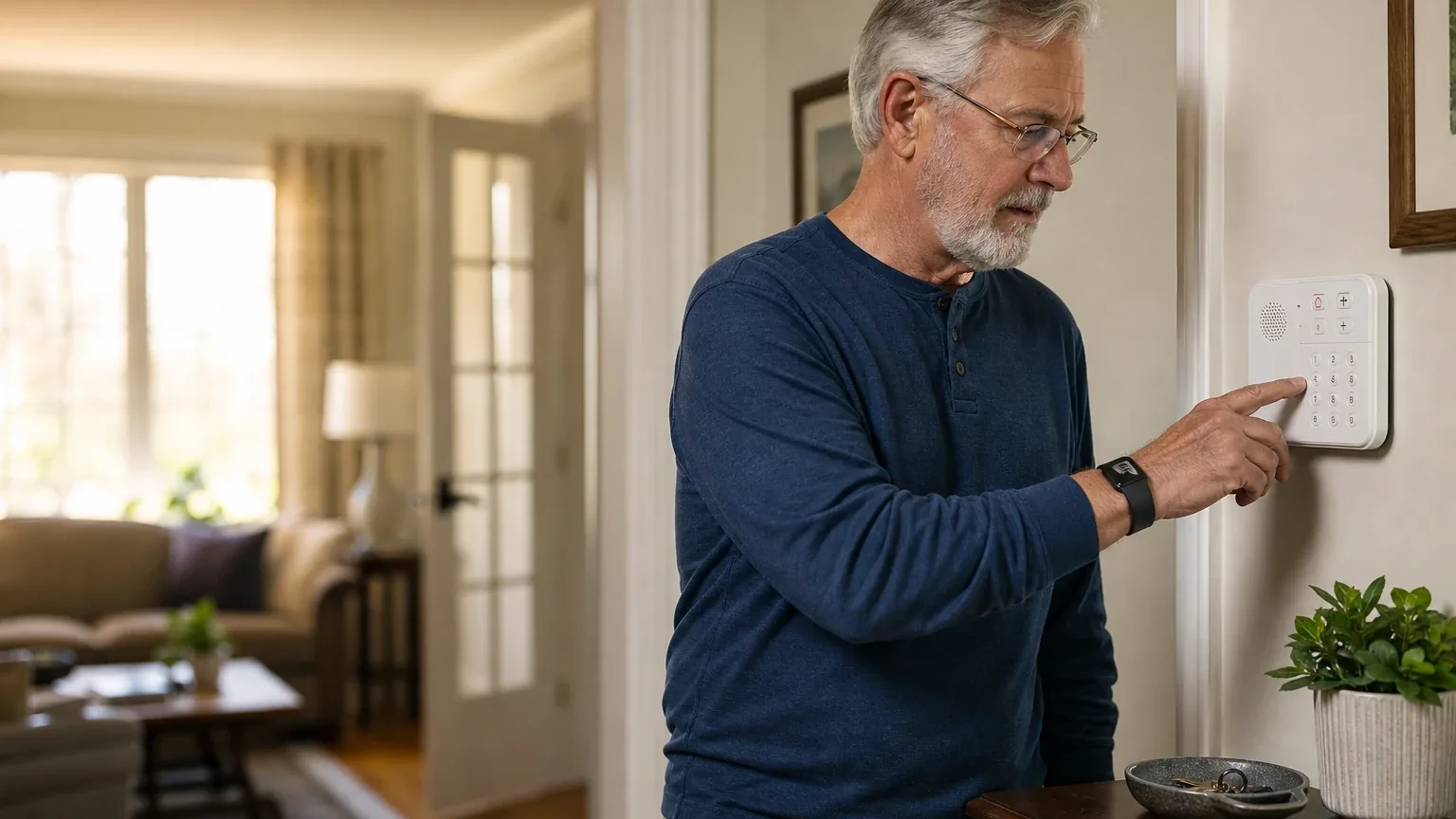
SimplyHome is a good fit for family Caregivers who need permissioned, sensor-based alerts and remote status checks for an aging parent living independently. Two of the seven platforms in this study named SimplyHome during the ranking stage, and both placed it in their top four. The strongest reason to consider it is the combination of configurable multi-sensor alert routing, a shared Responder App for multiple caregivers, and an optional 24/7 Response Center. The main limitation is verification: pricing conflicts across sources, unclear emergency-dispatch scope, and almost no independent performance data mean buyers must confirm critical details directly with the company before committing.
Research Snapshot
| Field | Finding |
|---|---|
| Platform mentions in ranking stage | 2 of 7 platforms (anthropic, kimi) |
| Share of included platform responses | 28.6% |
| Average listed rank | 3.0 |
| Best listed rank | 2 (kimi) |
| Relevant product/model/plan | SimplyHome System — Apollo Firefly, with Responder App and optional 24/7 Response Center; Butler is the alternative model |
| Overall use-case fit | Good, with important verification requirements |
| Research date | 2026-09-27 |
Why SimplyHome Qualified for This Study
Questions This Section Answers
- Is SimplyHome a good choice for Remote Caregiver Visibility & Alerts?
- Why did only two of seven AI platforms rank SimplyHome for caregiver monitoring?
SimplyHome qualified because it was named during ranking discovery by two of the seven platforms in this study — anthropic and kimi — which placed it at ranks 4 and 2 respectively. That gives it an average listed rank of 3.0 and a best listed rank of 2. The remaining five platforms evaluated the entity's fit but did not name it in their ranking stage, so its 28.6% platform share reflects ranking-stage mentions only, not a negative fit judgment from the other platforms.
The entity is a company-level candidate, not a single product. Platforms consistently pointed to the SimplyHome System, specifically the Apollo Firefly model, paired with the Responder App and an optional 24/7 Response Center, as the configuration most relevant to caregiver visibility [1]. The Butler model appears as an alternative in several responses [1].
SimplyHome's positioning is primarily aimed at care provider organizations, group homes, and agencies supporting individuals with intellectual and developmental disabilities, with family caregivers as a secondary audience [5]. That positioning matters for this use case: the product's sensor breadth and multi-caregiver coordination tools transfer well to aging-in-place families, but the company's marketing and support model were not built around a solo family buyer.
The Product, Model, Plan, or Service Most Relevant to Remote Caregiver Visibility & Alerts
Questions This Section Answers
- Which SimplyHome model should a caregiver choose for remote visibility and alerts — Apollo Firefly or Butler?
- What does the SimplyHome Responder App actually do for family caregivers?
The Apollo Firefly with the Responder App is the configuration most platforms identified for this use case. Firefly is described as integrating door, motion, bed, chair, stove, water, and garage sensors, plus panic pendants, with smart-device controls for thermostats, lights, locks, and outlets, and Ring Doorbell integration [6]. The Butler model is the alternative, listed at a higher hardware price, and at least one platform reports that Butler alert and rule changes require customer service while Firefly rules can be edited directly in the portal [9].
The Responder App is the caregiver-facing layer. It is described as supporting scheduling, task assignment, check-ins, visit records, and a shared portal, with email and text alert routing and an unlimited contact list [10]. One platform reports the app is a free download with a separate check-in service fee of $14.95–$19.95 per month per client supported [11].
The optional 24/7 Response Center is a separate escalation path. SimplyHome also markets a Remote DSP service staffed around the clock, with a company-claimed greater-than-90% call-resolution rate before escalation to in-person staff [13]. These are company claims, not independently verified performance data.
What the AI Platforms Agreed About
Questions This Section Answers
- What do AI platforms agree SimplyHome does well for caregiver alerts and multi-user access?
- Is SimplyHome's sensor-based monitoring better than camera-based monitoring for an aging parent?
Five of the seven platforms rated SimplyHome a good fit for this use case, one rated it mixed, and one rated it uncertain. Across the platforms that named it, several findings recurred.
Sensor breadth for passive visibility. Platforms agreed that SimplyHome's core strength is a wide range of activity sensors — door, motion, bed, chair, stove, water, garage, and panic pendant — that support passive monitoring of daily routines without continuous indoor cameras [15]. Documented alert examples include falls and inactivity, wandering, cooking safety, medication routines, sleep, and bathroom events [18].
Multi-caregiver alert routing. Platforms agreed that alerts can be routed to multiple designated recipients by text, email, or phone, with different people receiving different alerts based on sensor event, time, or lack of activity [20]. One platform reports the Responder App supports an unlimited contact list [21].
Shared caregiver coordination. The Responder App and web portal were consistently described as supporting multiple caregivers managing one or more individuals, with scheduling, task assignment, and check-ins [23].
Privacy-preserving design. Platforms agreed that a sensor-first approach reduces reliance on continuous indoor video, which several framed as better for resident dignity [24].
Setup and customization support. SimplyHome describes a customization and implementation process with installed in-home technology, training, troubleshooting, and reassessment [26].
Where the AI Platforms Disagreed or Were Uncertain
Questions This Section Answers
- Does SimplyHome's 24/7 Response Center contact 911, or only family and remote support staff?
- Is SimplyHome's pricing and contract information reliable enough to budget from?
Platforms diverged or stayed silent on several material points.
Emergency dispatch scope. No platform established that the optional 24/7 Response Center contacts 911 or provides professional emergency dispatch. One platform stated plainly that no automatic 911 dispatch or professional emergency response routing is mentioned, and that the model relies on a family caregiver to call 911 when an alert arrives [27]. Another said it is unclear whether the center contacts 911, family contacts, local caregivers, or only provides remote support [28]. Buyers should not assume emergency dispatch or medical response.
Pricing conflicts. The current system page lists Firefly hardware at $849.95–$1,149.90 and Butler at $1,249.90–$1,549.90, with monthly service of $79.95–$149.95 [29]. But an older Firefly product page lists a $649.95 base unit and $64.95 monthly fee [32]. One platform reported no published pricing at all on the public site [33], and another could not verify 2026 pricing (kimi:search_unclear_1). The older figures should not be treated as current.
Contract terms. One platform reports no annual contract, month-to-month cancellation, and no disclosed early-termination fees [34]. Another reports leasing is available but lease duration, ownership, early-termination charges, renewal, and return requirements are not published [29]. A third found no clearly published contract length or cancellation policy [35].
Monitoring reliability. No independent source reviewed establishes alert-delivery reliability, false-alert rates, uptime, emergency-dispatch performance, or caregiver outcomes [28]. The greater-than-90% call-resolution figure is a company claim.
Privacy specifics. The public privacy policy discloses collection of activity, usage, device, location, and push-notification data, and states users can manage some mobile permissions, but it does not provide a product-specific permission matrix, retention schedule, caregiver access log, or detailed deletion controls [36]. One platform found no mention of encryption standards, HIPAA compliance, or data retention policies [37].
Positioning. One platform noted the company markets primarily to I/DD providers and group homes, with family caregivers secondary [38]. Another could not confirm the Apollo Firefly's 2026 availability or specifications at all (kimi:search_unclear_1).
Use-Case-Specific Features and Capabilities
Questions This Section Answers
- How does SimplyHome handle alert customization and escalation for family caregivers?
- What camera and video capability does SimplyHome offer for remote check-ins?
The table below summarizes platform-reported capabilities against the criteria used in this study. All findings are platform-reported from company-owned sources unless noted.
| Criterion | Platform-reported finding | Assessment |
|---|---|---|
| Multi-user app access | Responder App and portal support multiple caregivers; one platform reports unlimited contact list members; exact user limits and role permissions unclear [39] | Advantage |
| Alert customization | Configurable rules route text, email, or phone alerts to selected people by sensor event, time, or inactivity; escalation retries and acknowledgement workflows unspecified [41] | Advantage |
| Camera/sensor integration | Door, motion, bed, chair, stove, water, garage, panic pendant sensors; Ring Doorbell integration on Firefly; no built-in indoor cameras [42] | Neutral |
| Emergency contact routing | Alerts route to designated family or caregivers, or optionally to a 24/7 Response Center; whether the center contacts 911 is unclear [45] | Unclear |
| Privacy controls | Sensor-first design limits video; privacy policy discloses broad data collection without a product-level permission matrix or retention schedule [48] | Limitation |
| Monitoring center reliability | Company claims 24/7 support and >90% call resolution before escalation; no independent uptime or dispatch data found [45] | Unclear |
| Setup support | Customization process, installed in-home technology, training, troubleshooting, and reassessment described [49] | Advantage |
Two additional details matter for buyers. First, connectivity: the system page states internet or cellular models are available, and the system includes battery backup and local memory, but email and text alerts cannot be sent during an internet outage [46]. Second, video: Firefly materials identify Ring Doorbell integration, and SimplyHome separately describes video check-ins and two-way communication through certain products, but public sources do not establish that a full indoor-camera system is included with every Apollo Firefly purchase [41].
Pricing, Fees, Contracts, and Ongoing Costs
Questions This Section Answers
- How much does SimplyHome cost per month, and what hardware fees apply to Apollo Firefly?
- Are there setup, sensor, or cancellation fees a caregiver should budget for?
Current published figures, where they exist, come from company-owned pages and conflict with older listings. The table below separates what is documented from what is not.
| Cost item | Reported figure | Source status |
|---|---|---|
| Apollo Firefly hardware | $849.95–$1,149.90 | Current system page [52] |
| Butler hardware | $1,249.90–$1,549.90 | Current system page [52] |
| Monthly service fee | $79.95–$149.95 | Current system page [52] |
| Older Firefly listing | $649.95 base unit, $64.95/month | Older product page; not current [55] |
| Responder App check-in service | $14.95–$19.95/month per client | Company page [56] |
| Per-sensor costs | Not publicly disclosed | Multiple platforms [53] |
| 24/7 Response Center pricing | Not publicly disclosed | Multiple platforms [53] |
| Installation, cellular, relocation, programming fees | Not quantified | Multiple platforms [52] |
Contract terms are reported inconsistently. One platform reports no annual contract, month-to-month cancellation, immediate next-month cancellation, upgrade flexibility, and no disclosed early-termination fees [59]. Another reports leasing is available but lease duration, ownership, early-termination charges, renewal, and return requirements are not published [52]. A third found no clearly published contract length or cancellation policy [58]. One platform reported no published pricing at all on the public site [60].
Total cost may be materially higher than a consumer DIY system once hardware, sensors, installation, monthly service, and optional response services are combined [52]. One platform noted Medicaid waiver or LTSS funding may be available depending on state and eligibility [54], and company materials reference state coverage variability (official:C1).
Best Suited For
Questions This Section Answers
- Who gets the most value from SimplyHome for remote caregiver visibility?
- Is SimplyHome a good fit for a family with multiple caregivers sharing alert duties?
SimplyHome is best suited to families prioritizing configurable activity-based alerts, remote status visibility, multi-caregiver coordination, and privacy-preserving sensors over camera-centered home security [61]. Specific fits include:
- Aging parents living independently where caregivers need alerts for inactivity, wandering, cooking, medication routines, doors, beds, chairs, bathrooms, or panic-button events [63].
- Families needing multiple authorized caregivers, customized alert recipients, and a shared portal or app [65].
- Buyers who want sensor-based monitoring with limited or optional video rather than continuous indoor cameras [67].
- Care situations requiring installation, configuration, ongoing support, or optional human response-center escalation [68].
- Households with existing Wi-Fi or capable cellular service [69].
Probably Not Best Suited For
Questions This Section Answers
- Who should not choose SimplyHome for Remote Caregiver Visibility & Alerts?
- Is SimplyHome suitable for a caregiver who needs guaranteed emergency dispatch or medically validated fall detection?
SimplyHome is probably not the best fit for several buyer profiles, based on platform-reported limitations:
- Buyers wanting a conventional DIY security system with a large consumer ecosystem, standardized professional monitoring, and clearly published month-to-month terms [70].
- Families requiring guaranteed emergency-service dispatch or medically validated fall detection; public materials do not establish either [72].
- Households that need extensive live video coverage as the primary remote-check method [74].
- Renters unable to install permanent sensors or modify smart-home devices [75].
- Buyers prioritizing simplicity over customization, since the system requires portal setup and rule configuration [75].
- Caregivers unwilling to manage monthly subscription costs plus per-sensor purchases [75].
When Another Option May Be Better
Questions This Section Answers
- What is a better alternative to SimplyHome for a caregiver who needs published pricing or camera-first monitoring?
- When should a caregiver choose a conventional security provider or medical-alert provider instead of SimplyHome?
Platforms identified several scenarios where a different category of product fits better.
Choose a conventional professionally monitored security provider when the primary requirement is standardized intrusion, fire, or emergency dispatch with clearly documented monitoring procedures [77]. Choose a consumer smart-home platform when the buyer values low upfront cost, broad camera compatibility, and DIY installation more than care-specific alert logic [77]. Choose a dedicated medical-alert provider when the central requirement is a wearable emergency button with explicitly documented 24/7 emergency response and fall-detection options [77].
For camera-first monitoring, a dedicated camera-based security platform may fit better [78]. For buyers who need published pricing before contacting sales, a vendor with transparent self-serve pricing may be preferable [79]. For buyers who need independently verified monitoring performance with published SLAs, a vendor with third-party reviews may be preferable [78]. One platform named specific alternatives with published pricing or care-circle features as comparison points for buyers who need price clarity or verified monitoring (kimi:comparison_context_1, kimi:comparison_context_2, kimi:comparison_context_3); these were cited as market context, not as evaluated recommendations in this study.
Questions to Verify Before Buying
Questions This Section Answers
- What should a caregiver confirm with SimplyHome before signing a contract?
- Which sensors, users, and response services are included in a SimplyHome quote?
The platforms converged on a verification checklist. Buyers should confirm each item in writing before committing.
- Exactly which Apollo Firefly configuration, sensors, cellular or internet connection, installation services, and Responder App capabilities are included in the quoted price [80].
- How many family members or caregivers can be added, and whether permissions can be separated between viewing data, changing rules, receiving alerts, and contacting responders [80].
- Whether alerts require acknowledgement, escalate automatically to backup contacts, and record whether someone responded [80].
- What happens during internet, cellular, power, app, or cloud outages, and whether local battery backup is included [80].
- Whether the optional Response Center contacts 911, family members, local caregivers, or only provides remote-support calls [83].
- The Response Center's hours, staffing model, escalation procedures, service-level commitments, and limitations [80].
- Which cameras, doorbells, microphones, two-way audio devices, and video-check-in functions are supported by the quoted model [80].
- How false alarms, missed alerts, sensor placement, and changing care needs are handled after installation [80].
- What personal and activity data are retained, for how long, where they are stored, and whether the resident or family can delete or export them [85].
- The lease term, monthly minimum, cancellation notice, early-termination fees, equipment-return obligations, warranty, and replacement charges [80].
- Whether sensors and accessories are purchased separately, and costs for adding rooms, a second residence, or additional caregivers [80].
- Whether SimplyHome can provide independent uptime, alert-delivery, or response-performance data for the exact service package offered [80].
Final AI Consensus Verdict
SimplyHome is a good fit for Remote Caregiver Visibility & Alerts, with important verification requirements. Five of seven platforms rated it good, one mixed, and one uncertain. Apollo Firefly plus the Responder App is unusually aligned with remote caregiver visibility because it combines configurable multi-sensor alerts, caregiver routing, activity history, and professional setup [89]. It should be shortlisted when the family needs care-specific monitoring and coordination.
It is not a clear best choice for buyers who primarily need conventional security dispatch, a low-cost DIY camera system, or a medically defined emergency-response service [89]. The recurring caveats across platforms are pricing conflicts, undisclosed per-sensor and Response Center costs, unclear emergency-dispatch scope, and the absence of independent reliability data. Buyers should treat company claims as company claims and verify the checklist above before signing.
How This Review Was Produced
This review evaluates SimplyHome only for the Remote Caregiver Visibility & Alerts use case. It draws on structured fit-research responses from seven AI platforms: openai, anthropic, deepseek, grok, perplexity, kimi, and google. Each platform assessed the entity against the study criteria — multi-user app access, alert customization, camera/sensor integration, emergency contact routing, privacy controls, monitoring center reliability, and setup support — and reported its own citations. Two platforms named SimplyHome during ranking discovery; all seven evaluated fit. The study research date is 2026-09-27. Platform-reported research dates differ: anthropic and deepseek reported 2026-01-15, while google, grok, kimi, openai, and perplexity reported 2026-09-27.
Methodology Limitations
Several limitations apply to this review.
- Platform-reported research dates differ from the authoritative run date of 2026-09-27. Those dates are provenance metadata and do not independently prove freshness.
- All included platforms evaluated fit, but platform mentions count only platforms that named the entity during ranking discovery.
- Conflicting product names, pricing, and capabilities were not resolved by guessing; conflicts are described and buyers are told what to verify.
- The supplied URLs were collected from platform responses and were not independently validated by the writer stage.
- Company-owned citations materially outnumber independent citations. Company claims are not described as independently verified.
- Citations are platform-reported evidence, not independently verified facts. Claims from platforms without search enabled require explicit verification before being described as current facts.
- No independent source reviewed establishes alert-delivery reliability, false-alert rates, uptime, emergency-dispatch performance, or caregiver outcomes.
- AI-platform agreement does not prove product quality.
Explore more home safety guidance in the category directory.
Sources
Company-Owned Sources
- Remote Family Monitoring Without Cameras | I'm Alive: https://imalive.co/remote-family-monitoring
- Homepage | My Connected Caregiver | Remote Health Monitoring tool: https://myconnectedcaregiver.com/
- Nomo Monitoring System for Elderly in the Home | Best Home Monitoring System for Elderly: https://nomosmartcare.com/pages/home-monitoring-systems-for-the-elderly
- SimplyHome Home Page: https://simply-home.com/
- Introducing: SimplyHome System Firefly: https://simply-home.com/blog/introducing-simplyhome-system-firefly
- Empowered Outcomes with Firefly - Simply Home: https://simply-home.com/empowered-outcomes-with-the-firefly/
- Falls & Inactivity - Simply Home: https://simply-home.com/falls-and-inactivity/
- Introducing: SimplyHome System Firefly: https://simply-home.com/introducing-simplyhome-system-firefly/
- Our Process - Simply Home: https://simply-home.com/our-process/
- Privacy Policy - Simply Home: https://simply-home.com/privacy-policy/
- Remote DSP - Simply Home: https://simply-home.com/remote-dsp/
- Responder App Dashboard - Simply Home: https://simply-home.com/responder-app
- Responder App Dashboard: https://simply-home.com/responder-app-dashboard/
- The Simplyhome System - Simply Home: https://simply-home.com/simplyhome-system
- Simplyhome System FAQ - Simply Home: https://simply-home.com/simplyhome-system-faq/
- The Seness by NucleusCare: The Latest in 2-way Audio and Video Technology: https://simply-home.com/the-seness-by-nucleuscare-the-latest-in-2-way-audio-and-video-technology/
- The SimplyHome System: https://simply-home.com/the-simplyhome-system/
- Toileting & Bathing - Simply Home: https://simply-home.com/toileting-and-bathing/
- SimplyHome System Firefly one sheeter: https://static1.squarespace.com/static/587923d39f745695a9b5207b/t/60e71943e3ef5a3c9659a49b/1625758020081/2021+Firefly+One+Sheeter+4.12.21.pdf
- SimplyHome: https://www.simply-home.com/
- Responder App FAQ — SimplyHome: https://www.simply-home.com/all-product-help-page/simplyhome-responder-app-faq
- Responder App + Dashboard — SimplyHome: https://www.simply-home.com/responder-app-dashboard
Additional AI research evidence91 records
- AI research evidence record openai:c1
- AI research evidence record anthropic:c2
- AI research evidence record perplexity:c1
- AI research evidence record google:1.1.1
- AI research evidence record anthropic:c1
- AI research evidence record anthropic:c2
- AI research evidence record openai:c1
- AI research evidence record google:1.3.4
- AI research evidence record perplexity:c1
- AI research evidence record openai:c6
- AI research evidence record anthropic:c4
- AI research evidence record google:1.2.4
- AI research evidence record anthropic:c3
- AI research evidence record openai:c8
- AI research evidence record openai:c1
- AI research evidence record anthropic:c2
- AI research evidence record google:1.1.1
- AI research evidence record openai:c4
- AI research evidence record openai:c9
- AI research evidence record openai:c5
- AI research evidence record anthropic:c4
- AI research evidence record perplexity:c2
- AI research evidence record openai:c6
- AI research evidence record openai:c2
- AI research evidence record perplexity:c1
- AI research evidence record openai:c7
- AI research evidence record anthropic:c3
- AI research evidence record openai:c8
- AI research evidence record openai:c1
- AI research evidence record anthropic:c5
- AI research evidence record google:1.1.1
- AI research evidence record anthropic:c7
- AI research evidence record deepseek:c1
- AI research evidence record anthropic:c6
- AI research evidence record perplexity:c1
- AI research evidence record openai:c2
- AI research evidence record anthropic:c4
- AI research evidence record anthropic:c1
- AI research evidence record openai:c6
- AI research evidence record anthropic:c4
- AI research evidence record openai:c5
- AI research evidence record anthropic:c2
- AI research evidence record openai:c1
- AI research evidence record google:1.3.4
- AI research evidence record openai:c8
- AI research evidence record anthropic:c3
- AI research evidence record perplexity:c1
- AI research evidence record openai:c2
- AI research evidence record openai:c7
- AI research evidence record openai:c10
- AI research evidence record perplexity:c4
- AI research evidence record openai:c1
- AI research evidence record anthropic:c5
- AI research evidence record google:1.1.1
- AI research evidence record anthropic:c7
- AI research evidence record anthropic:c4
- AI research evidence record google:1.2.4
- AI research evidence record perplexity:c1
- AI research evidence record anthropic:c6
- AI research evidence record deepseek:c1
- AI research evidence record openai:c1
- AI research evidence record perplexity:c1
- AI research evidence record openai:c9
- AI research evidence record anthropic:c2
- AI research evidence record openai:c6
- AI research evidence record anthropic:c4
- AI research evidence record openai:c2
- AI research evidence record openai:c7
- AI research evidence record anthropic:c5
- AI research evidence record openai:c1
- AI research evidence record deepseek:c1
- AI research evidence record openai:c8
- AI research evidence record anthropic:c3
- AI research evidence record anthropic:c2
- AI research evidence record anthropic:c5
- AI research evidence record google:1.1.1
- AI research evidence record openai:c1
- AI research evidence record perplexity:c1
- AI research evidence record deepseek:c1
- AI research evidence record openai:c1
- AI research evidence record anthropic:c4
- AI research evidence record anthropic:c3
- AI research evidence record openai:c8
- AI research evidence record perplexity:c1
- AI research evidence record openai:c2
- AI research evidence record anthropic:c6
- AI research evidence record anthropic:c5
- AI research evidence record deepseek:c1
- AI research evidence record openai:c1
- AI research evidence record anthropic:c2
- AI research evidence record anthropic:c3
Independent Sources
- The SimplyHome Firefly (sensor based technology for Remote Support: https://www.closingthegap.com/guide-product/the-simplyhome-firefly-sensor-based-technology-for-remote-support/
- SimplyHome Launches Innovative Remote DSP Service to Transform Long-Term Support Solutions (LTSS: https://www.newswire.com/news/simplyhome-launches-innovative-remote-dsp-service-to-transform-long-22378825
Additional AI research evidence91 records
- AI research evidence record openai:c1
- AI research evidence record anthropic:c2
- AI research evidence record perplexity:c1
- AI research evidence record google:1.1.1
- AI research evidence record anthropic:c1
- AI research evidence record anthropic:c2
- AI research evidence record openai:c1
- AI research evidence record google:1.3.4
- AI research evidence record perplexity:c1
- AI research evidence record openai:c6
- AI research evidence record anthropic:c4
- AI research evidence record google:1.2.4
- AI research evidence record anthropic:c3
- AI research evidence record openai:c8
- AI research evidence record openai:c1
- AI research evidence record anthropic:c2
- AI research evidence record google:1.1.1
- AI research evidence record openai:c4
- AI research evidence record openai:c9
- AI research evidence record openai:c5
- AI research evidence record anthropic:c4
- AI research evidence record perplexity:c2
- AI research evidence record openai:c6
- AI research evidence record openai:c2
- AI research evidence record perplexity:c1
- AI research evidence record openai:c7
- AI research evidence record anthropic:c3
- AI research evidence record openai:c8
- AI research evidence record openai:c1
- AI research evidence record anthropic:c5
- AI research evidence record google:1.1.1
- AI research evidence record anthropic:c7
- AI research evidence record deepseek:c1
- AI research evidence record anthropic:c6
- AI research evidence record perplexity:c1
- AI research evidence record openai:c2
- AI research evidence record anthropic:c4
- AI research evidence record anthropic:c1
- AI research evidence record openai:c6
- AI research evidence record anthropic:c4
- AI research evidence record openai:c5
- AI research evidence record anthropic:c2
- AI research evidence record openai:c1
- AI research evidence record google:1.3.4
- AI research evidence record openai:c8
- AI research evidence record anthropic:c3
- AI research evidence record perplexity:c1
- AI research evidence record openai:c2
- AI research evidence record openai:c7
- AI research evidence record openai:c10
- AI research evidence record perplexity:c4
- AI research evidence record openai:c1
- AI research evidence record anthropic:c5
- AI research evidence record google:1.1.1
- AI research evidence record anthropic:c7
- AI research evidence record anthropic:c4
- AI research evidence record google:1.2.4
- AI research evidence record perplexity:c1
- AI research evidence record anthropic:c6
- AI research evidence record deepseek:c1
- AI research evidence record openai:c1
- AI research evidence record perplexity:c1
- AI research evidence record openai:c9
- AI research evidence record anthropic:c2
- AI research evidence record openai:c6
- AI research evidence record anthropic:c4
- AI research evidence record openai:c2
- AI research evidence record openai:c7
- AI research evidence record anthropic:c5
- AI research evidence record openai:c1
- AI research evidence record deepseek:c1
- AI research evidence record openai:c8
- AI research evidence record anthropic:c3
- AI research evidence record anthropic:c2
- AI research evidence record anthropic:c5
- AI research evidence record google:1.1.1
- AI research evidence record openai:c1
- AI research evidence record perplexity:c1
- AI research evidence record deepseek:c1
- AI research evidence record openai:c1
- AI research evidence record anthropic:c4
- AI research evidence record anthropic:c3
- AI research evidence record openai:c8
- AI research evidence record perplexity:c1
- AI research evidence record openai:c2
- AI research evidence record anthropic:c6
- AI research evidence record anthropic:c5
- AI research evidence record deepseek:c1
- AI research evidence record openai:c1
- AI research evidence record anthropic:c2
- AI research evidence record anthropic:c3
Other Sources
- Memphis SimplyHome Remote Support Office - YouTube: https://www.youtube.com/watch?v=A9ZHmIwAFYRe7vFQW4
Additional AI research evidence91 records
- AI research evidence record openai:c1
- AI research evidence record anthropic:c2
- AI research evidence record perplexity:c1
- AI research evidence record google:1.1.1
- AI research evidence record anthropic:c1
- AI research evidence record anthropic:c2
- AI research evidence record openai:c1
- AI research evidence record google:1.3.4
- AI research evidence record perplexity:c1
- AI research evidence record openai:c6
- AI research evidence record anthropic:c4
- AI research evidence record google:1.2.4
- AI research evidence record anthropic:c3
- AI research evidence record openai:c8
- AI research evidence record openai:c1
- AI research evidence record anthropic:c2
- AI research evidence record google:1.1.1
- AI research evidence record openai:c4
- AI research evidence record openai:c9
- AI research evidence record openai:c5
- AI research evidence record anthropic:c4
- AI research evidence record perplexity:c2
- AI research evidence record openai:c6
- AI research evidence record openai:c2
- AI research evidence record perplexity:c1
- AI research evidence record openai:c7
- AI research evidence record anthropic:c3
- AI research evidence record openai:c8
- AI research evidence record openai:c1
- AI research evidence record anthropic:c5
- AI research evidence record google:1.1.1
- AI research evidence record anthropic:c7
- AI research evidence record deepseek:c1
- AI research evidence record anthropic:c6
- AI research evidence record perplexity:c1
- AI research evidence record openai:c2
- AI research evidence record anthropic:c4
- AI research evidence record anthropic:c1
- AI research evidence record openai:c6
- AI research evidence record anthropic:c4
- AI research evidence record openai:c5
- AI research evidence record anthropic:c2
- AI research evidence record openai:c1
- AI research evidence record google:1.3.4
- AI research evidence record openai:c8
- AI research evidence record anthropic:c3
- AI research evidence record perplexity:c1
- AI research evidence record openai:c2
- AI research evidence record openai:c7
- AI research evidence record openai:c10
- AI research evidence record perplexity:c4
- AI research evidence record openai:c1
- AI research evidence record anthropic:c5
- AI research evidence record google:1.1.1
- AI research evidence record anthropic:c7
- AI research evidence record anthropic:c4
- AI research evidence record google:1.2.4
- AI research evidence record perplexity:c1
- AI research evidence record anthropic:c6
- AI research evidence record deepseek:c1
- AI research evidence record openai:c1
- AI research evidence record perplexity:c1
- AI research evidence record openai:c9
- AI research evidence record anthropic:c2
- AI research evidence record openai:c6
- AI research evidence record anthropic:c4
- AI research evidence record openai:c2
- AI research evidence record openai:c7
- AI research evidence record anthropic:c5
- AI research evidence record openai:c1
- AI research evidence record deepseek:c1
- AI research evidence record openai:c8
- AI research evidence record anthropic:c3
- AI research evidence record anthropic:c2
- AI research evidence record anthropic:c5
- AI research evidence record google:1.1.1
- AI research evidence record openai:c1
- AI research evidence record perplexity:c1
- AI research evidence record deepseek:c1
- AI research evidence record openai:c1
- AI research evidence record anthropic:c4
- AI research evidence record anthropic:c3
- AI research evidence record openai:c8
- AI research evidence record perplexity:c1
- AI research evidence record openai:c2
- AI research evidence record anthropic:c6
- AI research evidence record anthropic:c5
- AI research evidence record deepseek:c1
- AI research evidence record openai:c1
- AI research evidence record anthropic:c2
- AI research evidence record anthropic:c3
Verify This Research
Review the study details behind this page or download the public machine-readable verification record.
- Study date
- September 27, 2026
- Platforms analyzed
- 7
- Source records
- 25
- Ranking mentions
- 2 of 7
- Platform share
- 29%
- Final consensus rank
- #9
Research trail and source mix
Configured platforms
openai, anthropic, deepseek, grok, perplexity, kimi, google
Source mix
2 independent · 22 company-owned · 1 unclear
Evidence support
20 direct · 2 partial
Important limitation
Use the run research_date as the study date. Platform-reported dates are provenance metadata and do not independently prove freshness.
Source snapshot SHA-256 98571c89fefca3faedf716dd3d2e012441cb615bd7a10e72e29bc3403514b82f